
Essential Cookie Tools: Bake Perfect Cookies Every Time with These 8 Must-Haves

There’s a special kind of magic that happens when you bake cookies. From the comforting aroma filling your kitchen to the first warm, chewy bite, cookies evoke pure joy and nostalgia. They are the ultimate comfort food, low-fuss, and perfect for sharing with loved ones. Whether it’s the classic chocolate chip, a festive holiday treat, or a sneaky taste of raw cookie dough, these delightful morsels hold a cherished place in our hearts and homes.
As a passionate home baker and recipe developer, I’ve spent countless hours perfecting my cookie recipes. While a great recipe is undoubtedly the foundation, I’ve learned that having the right tools makes an incredible difference in the final outcome. These aren’t fancy, expensive gadgets; most are incredibly affordable, often under $20, and will significantly elevate your baking game. Today, I’m thrilled to share my tried-and-true favorites – the essential cookie tools that I believe every baker should have to achieve consistently fabulous results.
Ready to transform your cookie baking from good to absolutely glorious? Let’s dive into the 8 indispensable baking tools that will help you create the best cookies every single time.
Our Favorite Cookie Tools, At A Glance:
- Oven Thermometer
- An Inexpensive Kitchen Scale
- Cookie Scoops
- Light-Colored Baking Sheets
- Pre-Cut Parchment Sheets
- A Large Round Cookie Cutter
- Flexible Edge Paddle Attachment
- A Stand Mixer
- PS: More Great Baking Tips To Try
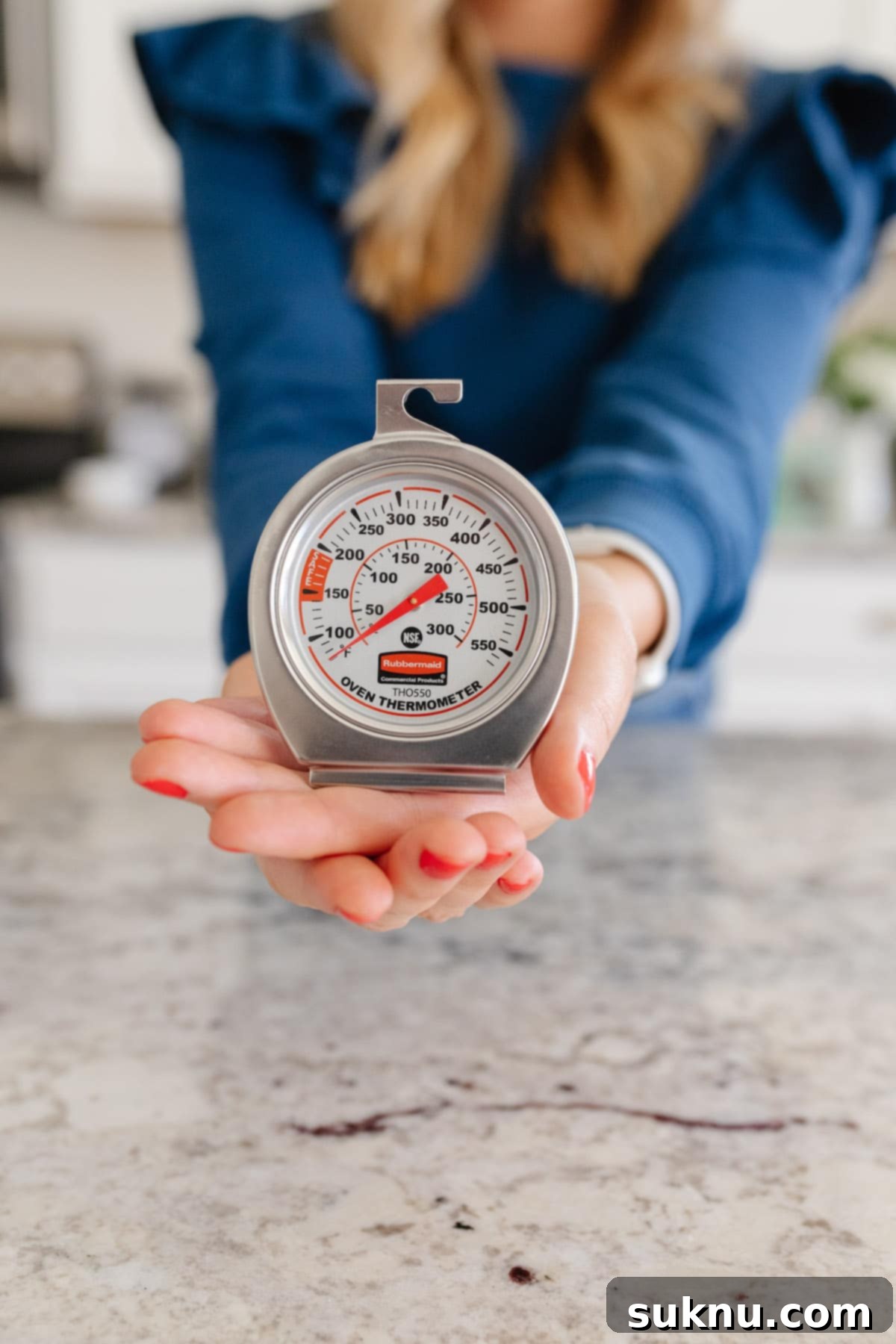
1. An Oven Thermometer (Or Two!) – The Secret to Consistent Baking
If there’s one tool that can instantly improve the quality of everything you bake, it’s an inexpensive oven thermometer. Most ovens, even brand new ones, are notorious for inaccurate temperature readings. What your oven’s display tells you and what the actual temperature inside the cavity truly is can be two very different numbers, sometimes off by as much as 50-100 degrees Fahrenheit! This discrepancy can easily lead to burnt edges, undercooked centers, or unevenly baked cookies.
I highly recommend using at least one, and ideally two, oven thermometers. Placing one on each side of your oven helps you not only verify the overall temperature accuracy but also identify any hot or cold spots. Knowing these variations allows you to adjust your baking strategy, perhaps rotating your baking sheets halfway through, to ensure perfectly even results every time. This simple, affordable gadget is a game-changer for achieving consistent bake times and perfectly golden, set cookies.
BONUS BAKING TIP: Always use your oven thermometer to confirm your oven is truly preheated before introducing your cookie dough. Many ovens beep to signal preheating long before they’ve reached the target temperature. Waiting those crucial extra few minutes for the temperature to stabilize means you can rely on the recipe’s recommended baking times and achieve predictable, delicious outcomes.
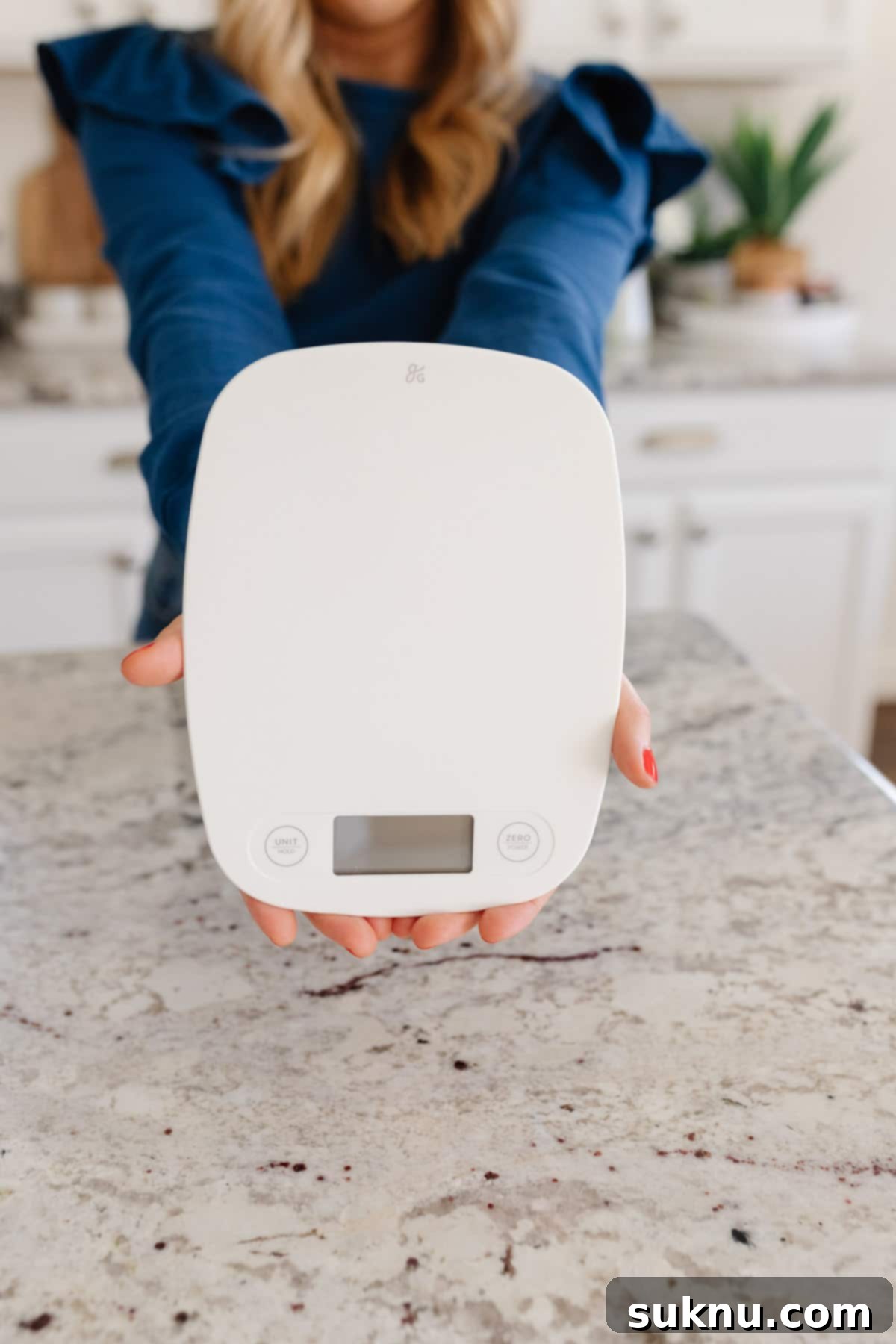
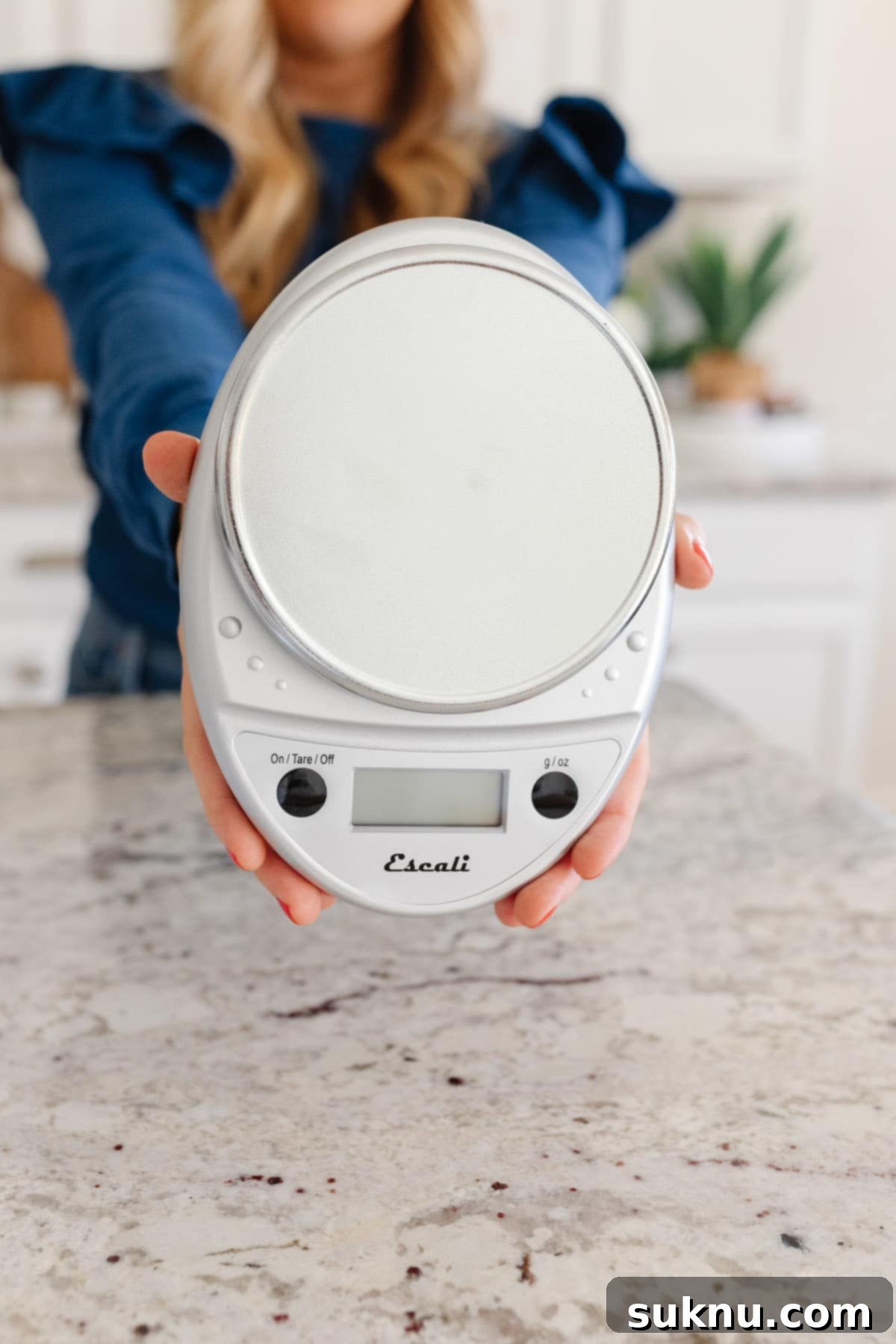
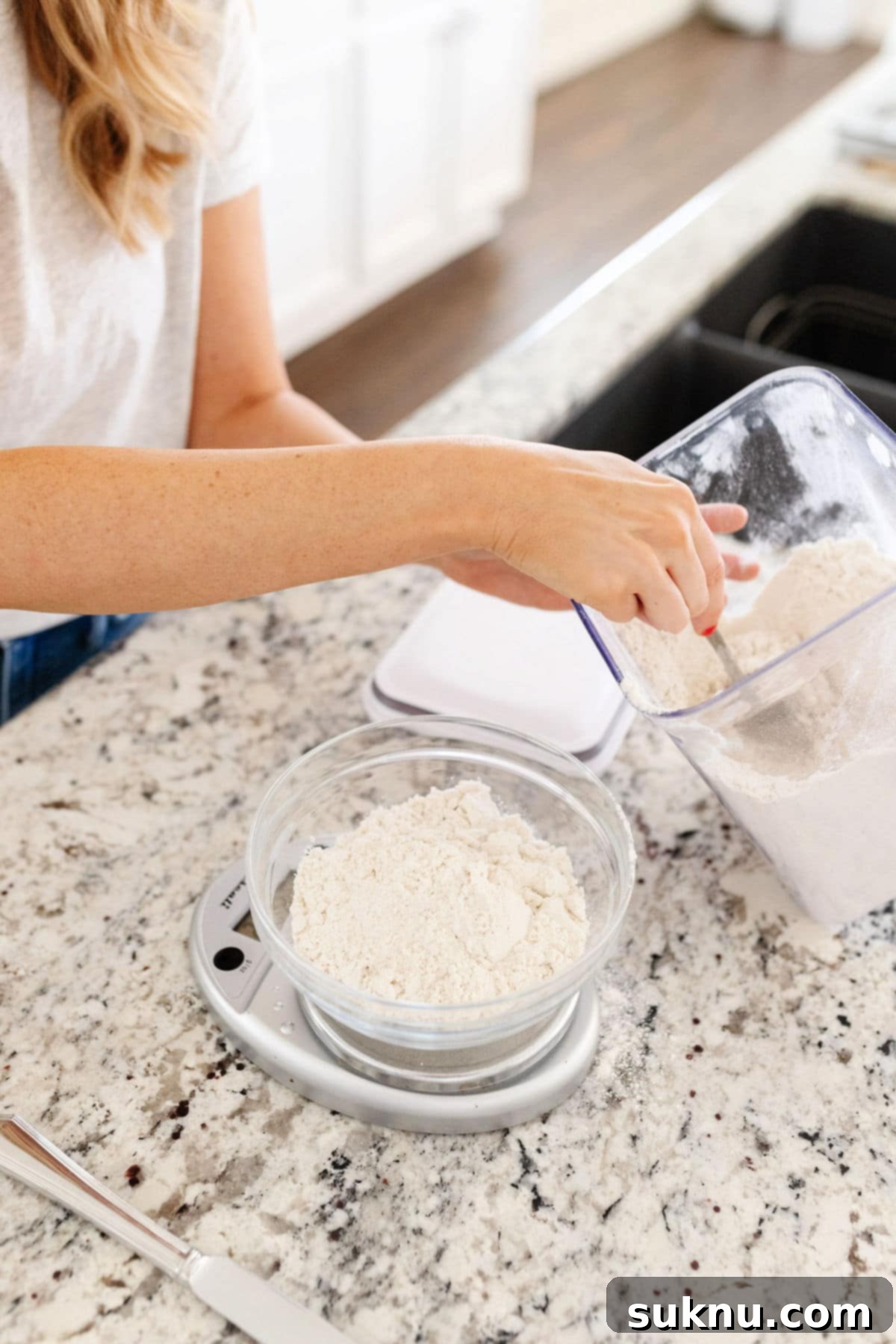
2. An Inexpensive Kitchen Scale – The Key to Baking Precision
For a modest investment, typically less than $20, a kitchen scale will revolutionize your baking. Measuring dry ingredients by weight rather than volume is the single most effective way to ensure accuracy in your recipes. Even the most careful bakers can unintentionally pack in too much flour when using measuring cups, leading to an extra tablespoon or two (or even more!). This seemingly small error can significantly impact the texture of your baked goods, resulting in dense, tough, or dry cookies, especially critical in gluten-free baking where ingredient ratios are particularly sensitive.
Weighing your dry ingredients only adds a minute or two to your prep time but guarantees precise results every time. It’s standard practice in professional kitchens for a reason: consistency. Once you adopt this method, you’ll wonder how you ever baked without it. The improved texture and reliability of your cookies will be so remarkable that you’ll never want to go back to measuring cups for flour again!
You don’t need a fancy model; a basic digital kitchen scale works wonders. I’ve personally used a silver kitchen scale for years and recently added a slim-profile white kitchen scale to my collection. Both are incredibly affordable, take up minimal counter space, and perform flawlessly, making precision baking accessible to everyone.
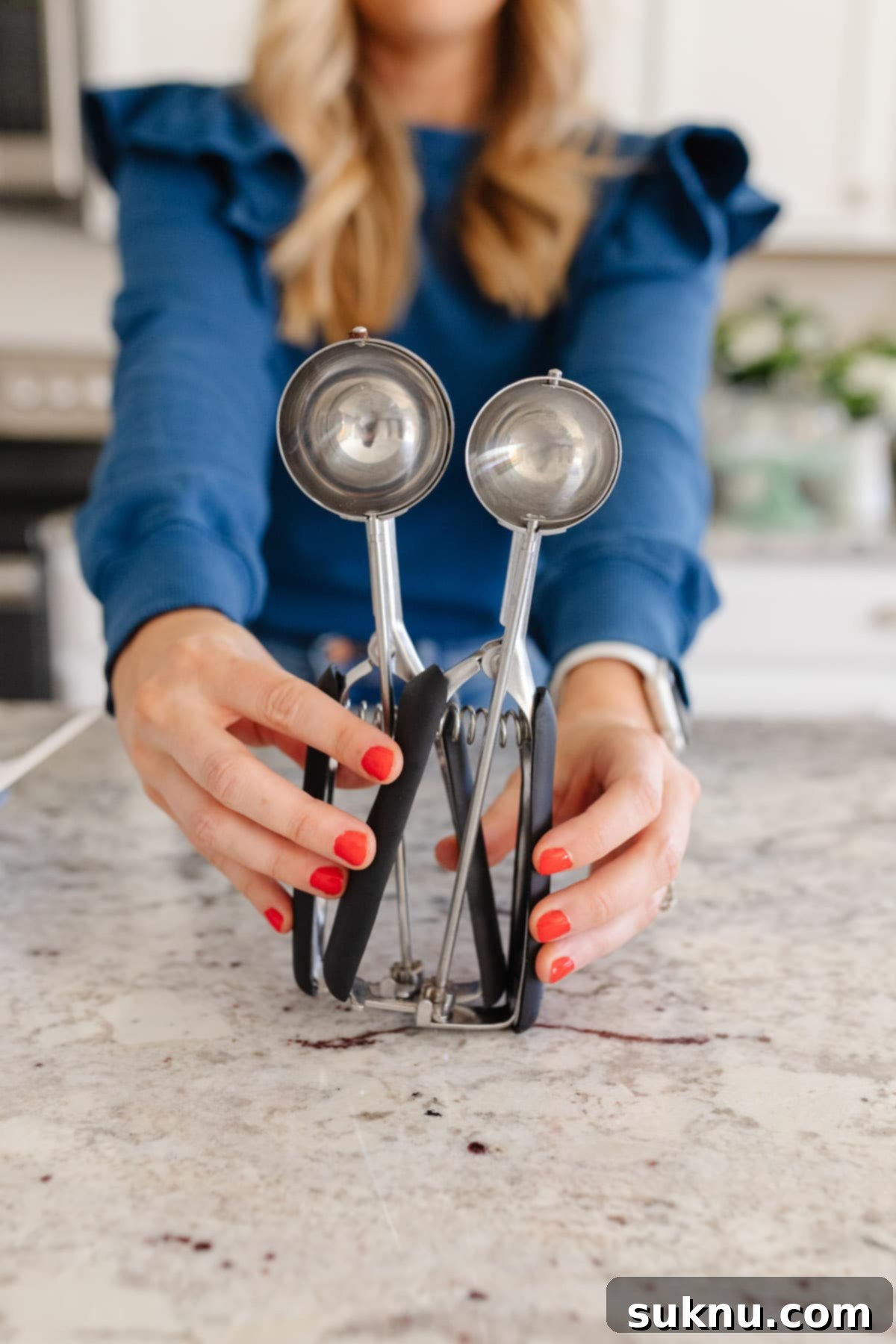
3. Cookie Scoops – For Uniformity and Efficiency
Cookie scoops are a baking tool I truly adore for their incredible versatility and the professional finish they give your cookies. Owning a set of three sizes—small (roughly #60 or 1 tablespoon), medium (#40 or 2 tablespoons), and large (#20 or 3 tablespoons)—will serve you well beyond just cookies. These scoops ensure that each cookie is perfectly uniform in size and shape, leading to even baking and a beautiful, consistent appearance across your entire batch.
In my kitchen, these scoops are in near-daily use for a variety of tasks:
- Portioning cookie dough for baking, ensuring every cookie bakes evenly.
- Preparing cookie dough for freezing, making future baking sessions quick and easy.
- Adding muffin or cupcake batter to liners without messy drips.
- Portioning meatballs, energy bites, or even ice cream, making them a true multi-purpose kitchen essential.
If you’re just starting your collection or working with a tighter budget, I recommend prioritizing the medium scoop first, as it’s ideal for standard-sized cookies and many other baking tasks. Next, consider the large scoop for bigger, bakery-style cookies. The small scoop (like this one) is perfect for smaller treats like truffles, mini muffins, or tiny meatballs.
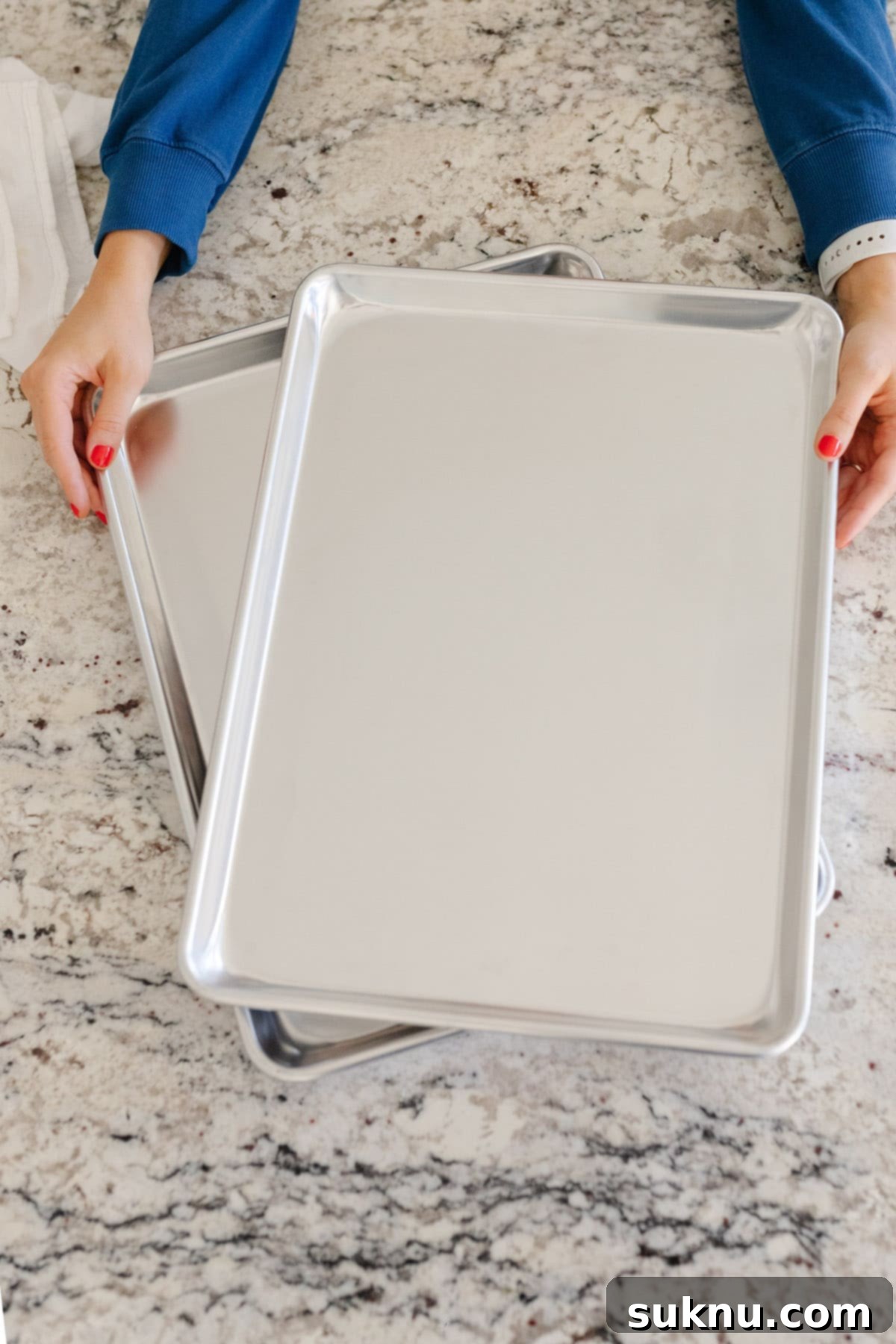
4. Light-Colored Baking Sheets – For Perfectly Golden Bottoms
The type of baking sheet you use profoundly impacts how your cookies bake. Light-colored aluminum sheet pans are a critical component for achieving beautifully golden, perfectly baked cookie bottoms, without the risk of scorching. Unlike dark metal, ceramic, or glass pans, light-colored pans conduct heat more gently and evenly.
Darker pans absorb and retain more heat, often leading to rapidly browning or even burnt cookie bottoms, while the tops might still be undercooked. Light-colored aluminum, however, reflects heat, ensuring a more gradual and consistent bake across the entire cookie. This allows the cookies to cook through and achieve that desirable golden hue without becoming overly crispy or charred on the bottom. I’ve always had excellent results with NordicWare, but many reputable brands offer fantastic light-colored sheet pans that will serve you well in your quest for perfect cookies.
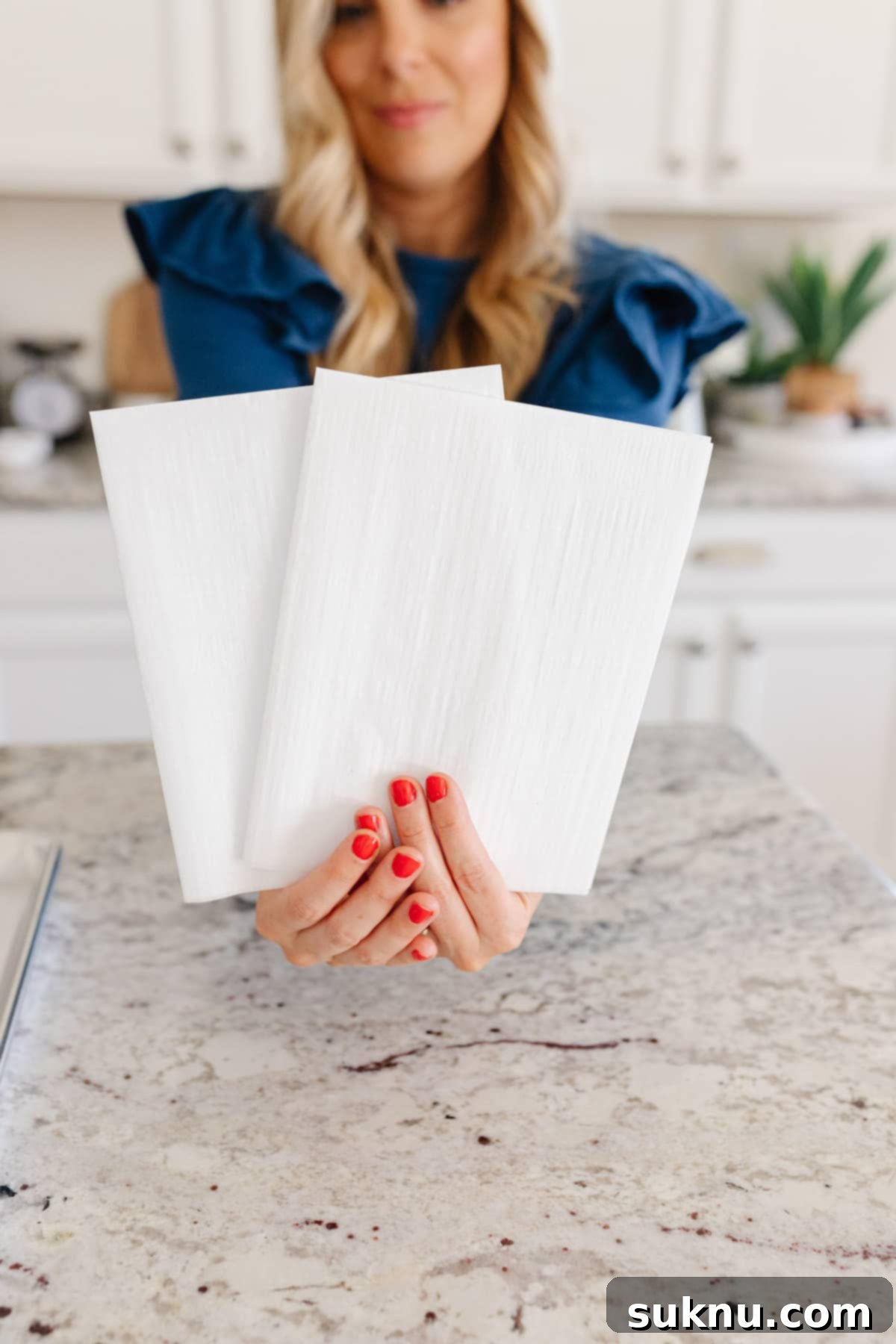
5. Pre-Cut Parchment Sheets – The Ultimate Baking Convenience
While not strictly essential for every bake, once you experience the convenience of pre-cut parchment paper, you’ll wonder how you ever lived without it. These handy sheets are a significant time-saver, eliminating the need to tear, measure, and trim parchment from a roll, especially when you’re baking frequently.
Parchment paper offers a non-stick surface that prevents cookies from sticking to your baking sheets, ensuring they release cleanly without breaking. It also aids in even browning by creating a slight buffer between the hot metal and your cookie dough. Beyond these benefits, parchment paper makes cleanup a breeze – simply lift and discard, leaving your baking sheets pristine. For those with limited storage space, folded parchment sheets are a great option. For avid bakers like myself, investing in larger packs of pre-cut parchment paper is incredibly practical. This simple addition to your baking arsenal will make your cookie-making process smoother and more enjoyable.
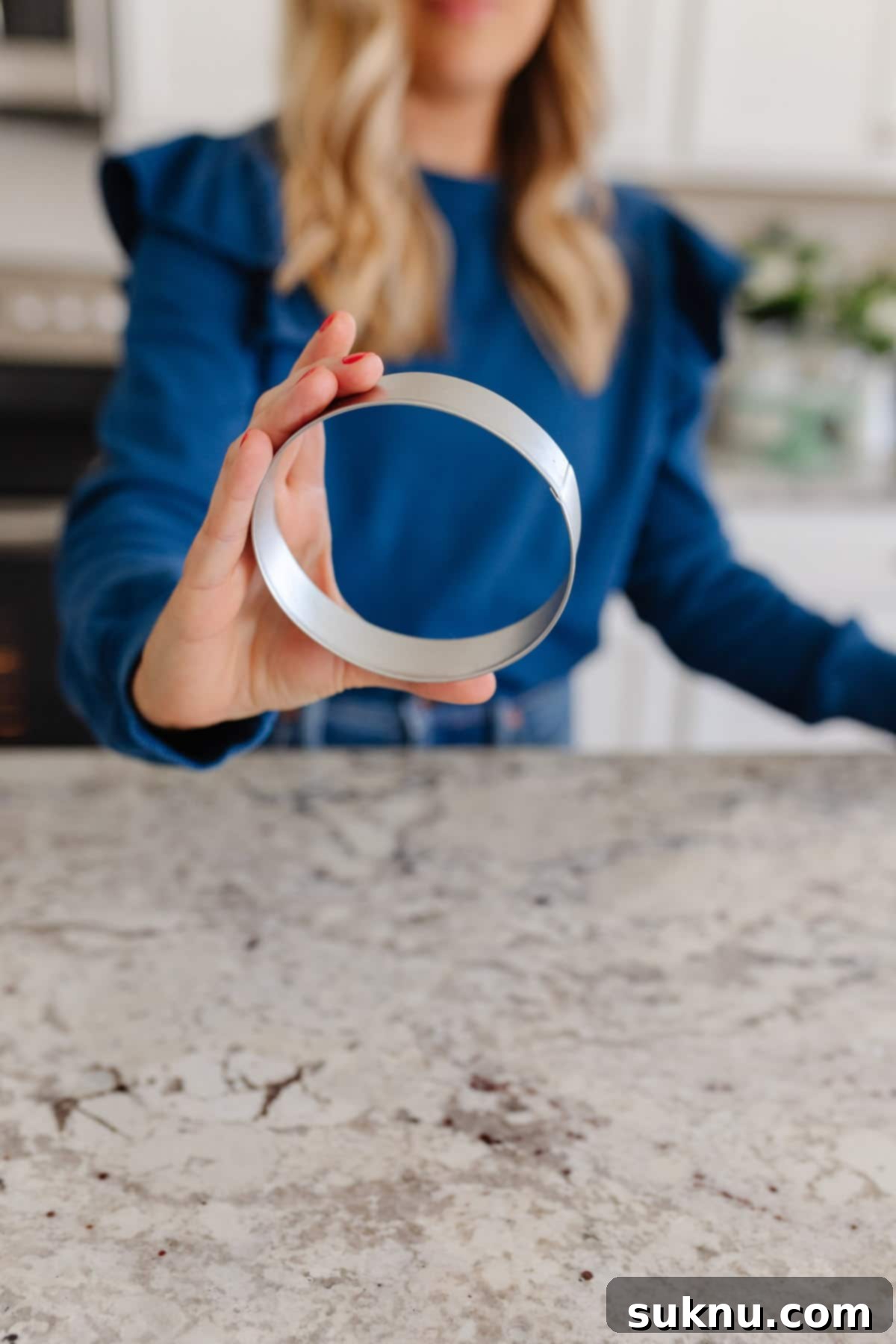
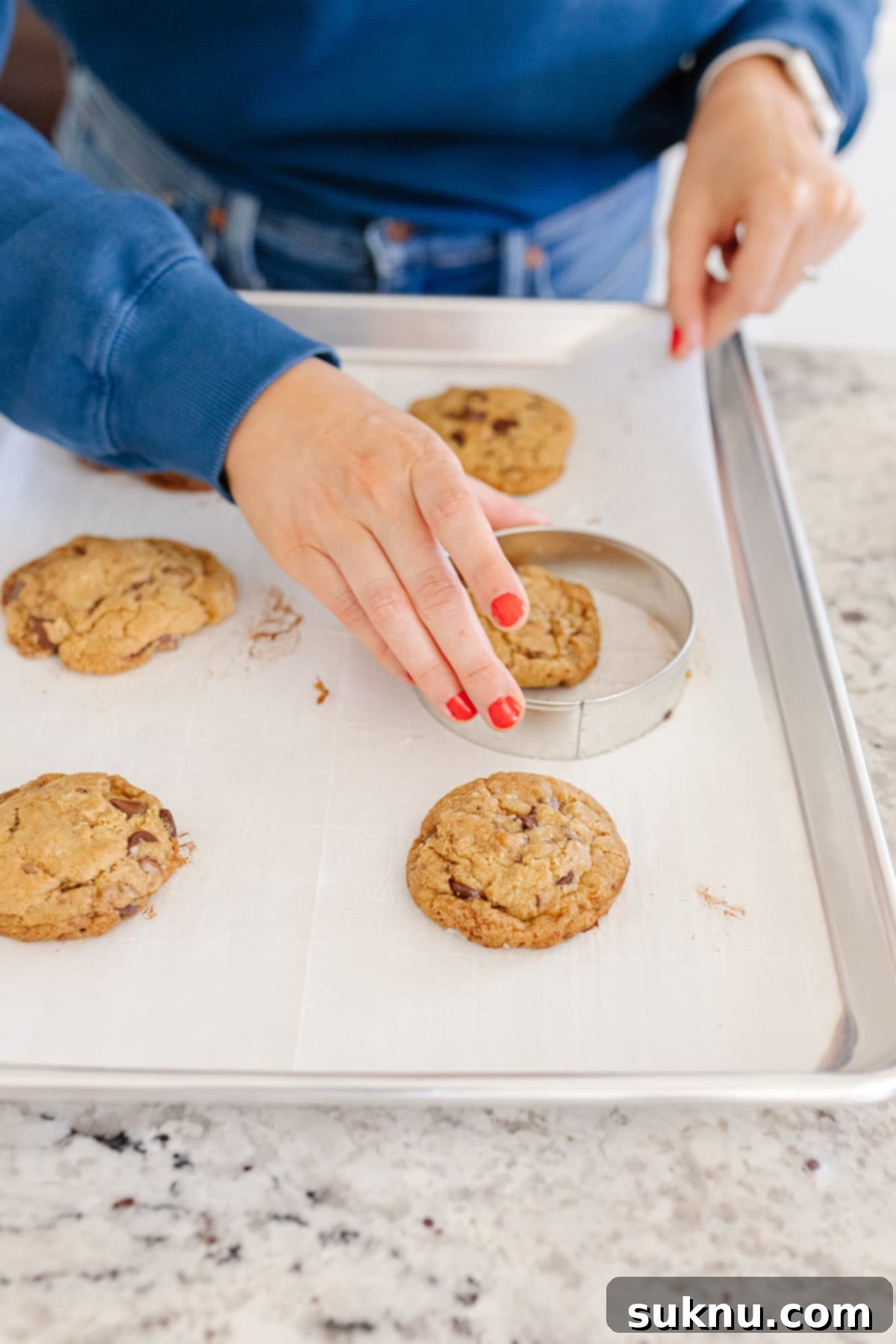
6. A Large Round Cookie Cutter – For Bakery-Perfect Shapes
This might sound like a styling trick from a professional baker, but it’s an incredibly simple and effective technique that I use every single time I bake cookies. You know those moments when your freshly baked cookies come out of the oven a little misshapen, oval, or just not perfectly round? That’s where the cookie cutter trick comes in handy!
While your cookies are still warm and pliable, immediately after removing them from the oven, grab a large round cookie cutter (I recommend a 4-inch or 5-inch size, ensuring it’s larger than your baked cookies). Place the cutter around a warm cookie and gently swirl it in small circular motions. This clever maneuver coaxes the edges of the soft cookie into a perfectly circular shape. This simple step instantly transforms home-baked cookies into bakery-quality treats with impeccable presentation. It’s a small detail that makes a huge visual impact, and it’s a tool I literally use for every batch!
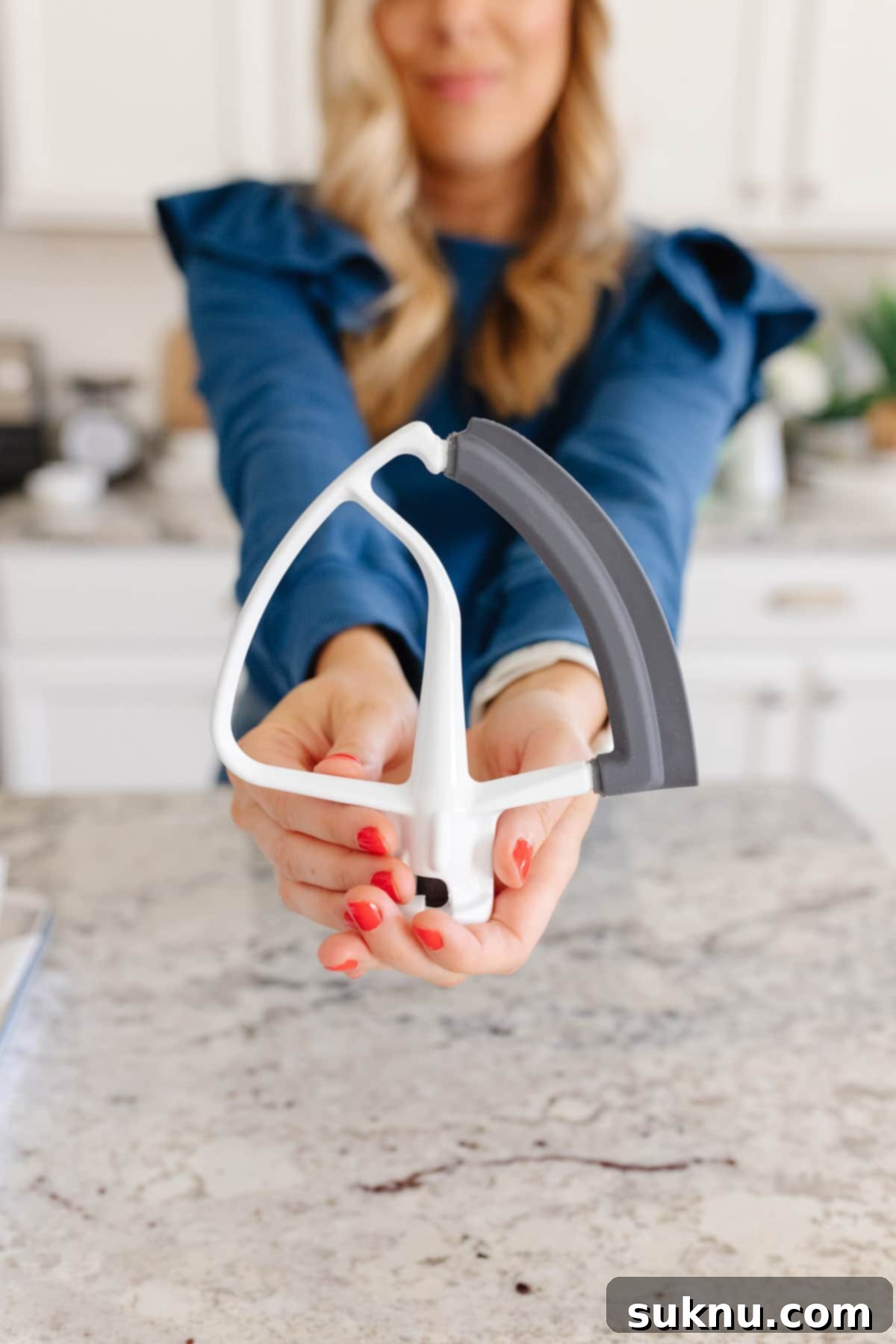
7. A Flexible Edge Paddle Attachment For Your Mixer – Effortless Mixing
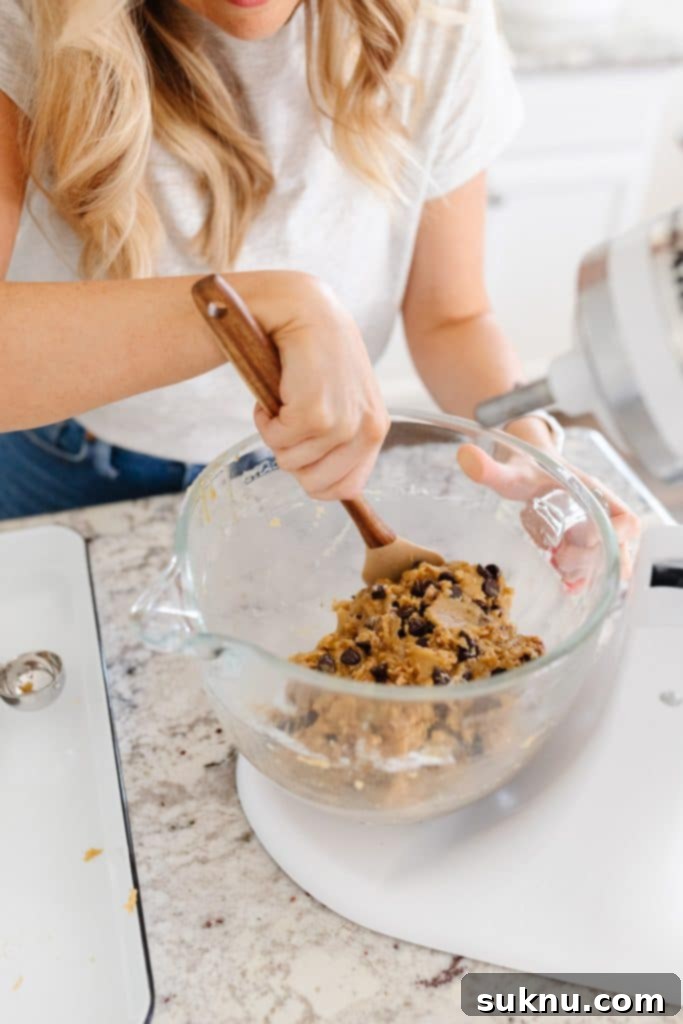
If you own a stand mixer, a flexible edge paddle attachment (often called a scraper paddle) will quickly become your most beloved accessory. This innovative attachment features a silicone edge that continuously scrapes down the sides of your mixing bowl as it spins, virtually eliminating the need to stop and manually scrape the bowl with a spatula.
This means your ingredients are consistently and thoroughly incorporated, preventing unmixed pockets of flour or butter. It’s incredibly efficient and ensures a smooth, homogeneous batter or dough, which is crucial for perfect cookie texture. I use this attachment for approximately 90% of my mixing tasks, from cookie dough and cake batter to brownies and frosting. The only times I switch it out are for tasks requiring aeration, such as whipping egg whites, heavy cream, or meringues, where a whisk attachment is essential.
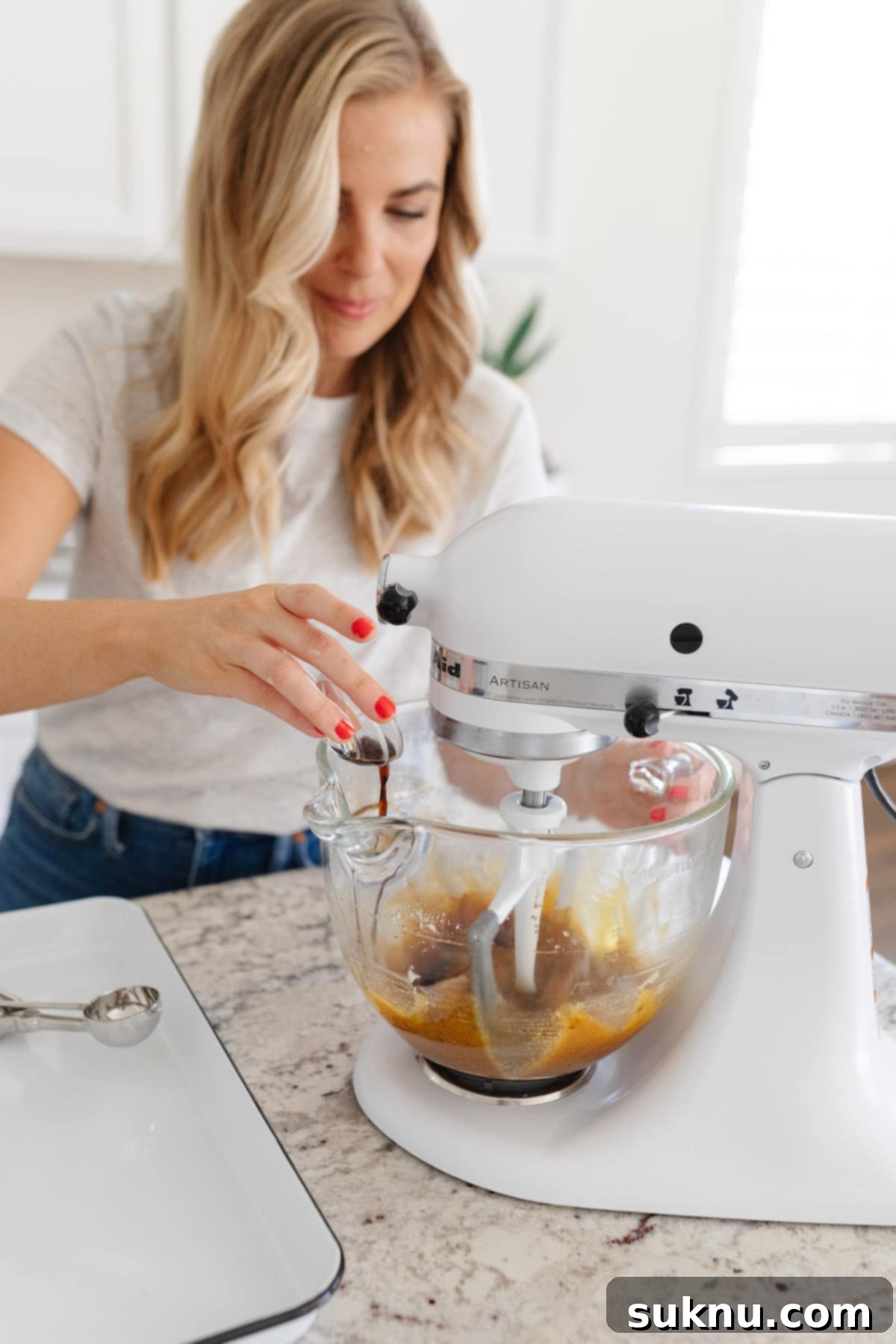
8. A Mixer! – The Workhorse of the Baking Kitchen
For anyone who bakes regularly, a high-quality stand mixer is not just a tool, but a fantastic investment that pays dividends in convenience, efficiency, and superior results. While it’s certainly the most significant investment on this list, its ability to handle demanding tasks from creaming butter and sugar to kneading stiff bread dough makes it an invaluable asset in any baking kitchen.
Stand mixers provide hands-free operation, allowing you to multitask while your ingredients are expertly combined. They are powerful enough to tackle large batches of cookie dough without straining, ensuring consistent texture and preventing overworking. Stand mixers often go on sale around holidays, but don’t overlook refurbished models; a refurbished 5-quart KitchenAid mixer, for example, can offer the same robust performance as a new one at about half the price.
I personally prefer the 5-quart size over the more common 4.5-quart. The slightly larger bowl and more powerful motor mean ingredients are less likely to slosh over the edges, and it handles bigger batches and tougher doughs with ease. If you bake frequently, stretching your budget a little further for the 5-quart model is absolutely worth it for its enhanced capacity and durability.
Did I miss any of your favorites? What baking tools would you add to my list?
Ready To Make Some Cookies? Try One OF These Gluten-Free Favorites:
- Gluten-Free Levain Chocolate Chip Cookies (thick & gorgeous!)
- Crumbl Copycat Gluten-Free Chocolate Cake Cookies
- Gluten-Free Brown Butter Toffee Chocolate Chip Cookies (Pictured In This Post!)
- Levain Chocolate Peanut Butter Chip Cookies (Gluten-Free!)
- Gluten-Free Sprinkle Sugar Cookies
- Fruit Pizza Cookies (With Gluten-Free Lemon Sugar Cookie Base!)
More Baking Tips To Try:
- How To Freeze Cookie Dough
- Types Of Sprinkles & How To Use Them
- How To Separate Eggs (Yolks & Whites)
- How To Measure Flour Correctly
- How To Brown Butter
Photos by Jessie Boyd Photography.