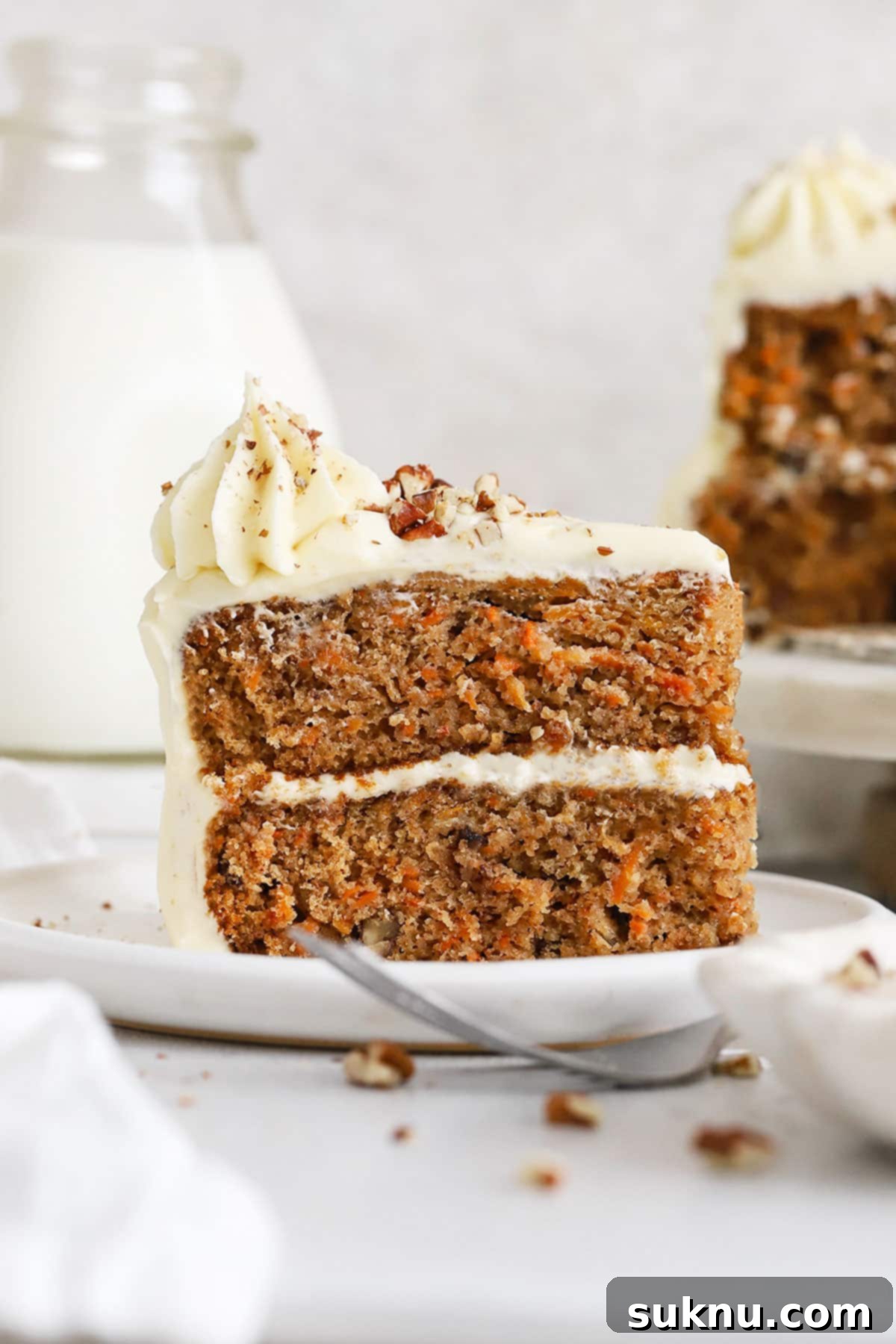
Our incredibly soft and fluffy Gluten-Free Carrot Cake recipe features two beautifully baked layers, crowned with an irresistibly easy cream cheese frosting. This delightful dessert feels special enough for any occasion, from festive holidays to everyday treats.
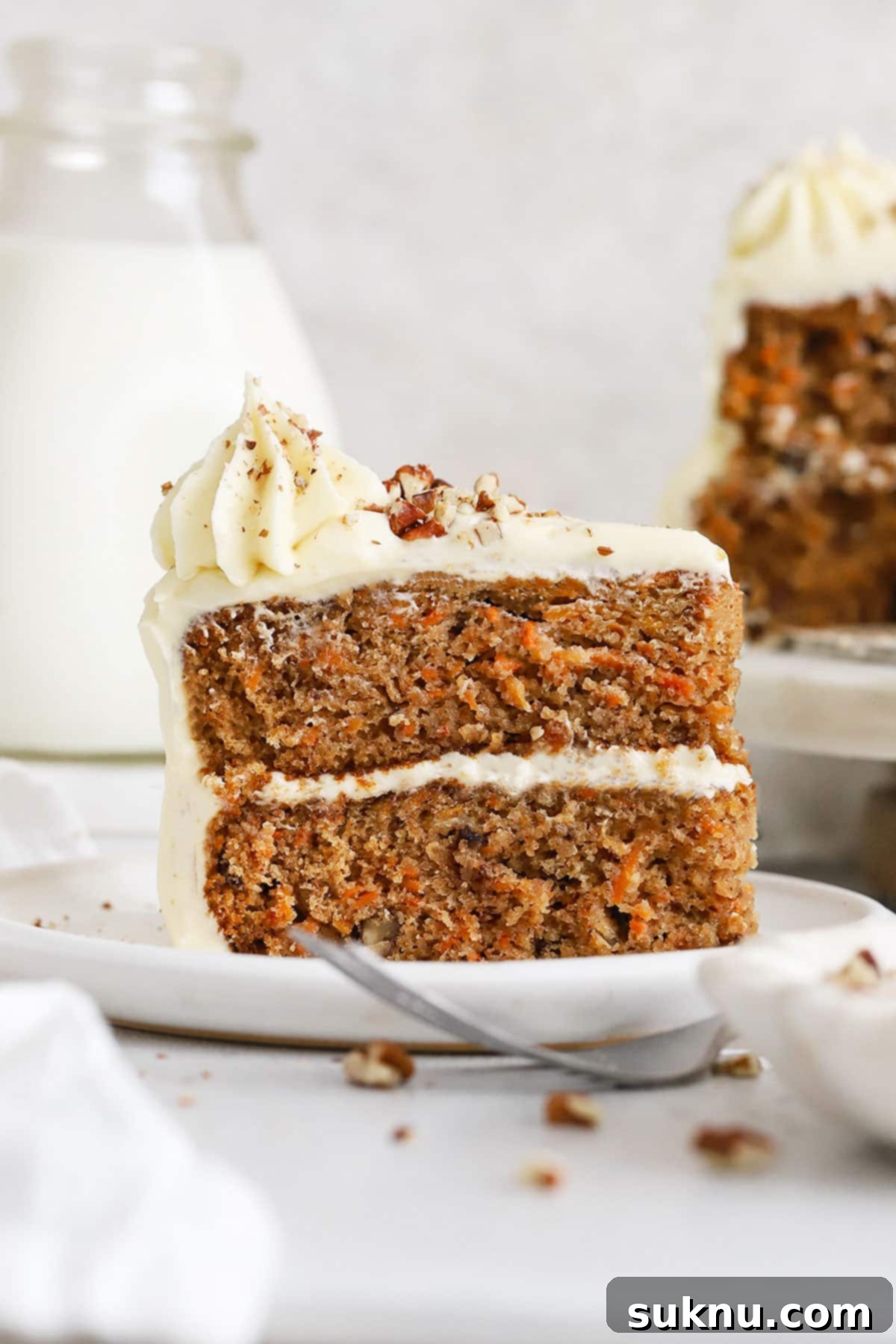
The Ultimate Gluten-Free Carrot Cake Recipe: Moist, Flavorful, and Easy to Make
Is there any dessert that captures the essence of spring and celebration quite like a classic carrot cake? Its warm spices and rich, moist crumb are universally beloved. For those navigating gluten sensitivities, finding a truly exceptional gluten-free version can often feel like a challenge. But fear not! Our perfected gluten-free carrot cake recipe delivers on all fronts, promising a show-stopping dessert that’s every bit as delicious and satisfying as its traditional counterpart.
This recipe has been a labor of love, meticulously developed over a year to ensure it meets the highest standards of taste and texture. After extensive testing and countless adjustments, we are thrilled to share a recipe that confidently stands out. You no longer have to compromise on flavor or moistness when baking gluten-free. This isn’t just a good gluten-free cake; it’s simply a fantastic carrot cake that happens to be gluten-free!
In this guide, you’ll discover how to create a stunning two-layer cake, featuring perfectly balanced warm spices, delightful mix-ins, and just the right amount of freshly grated carrots to provide that signature earthy sweetness. Each tender layer is generously slathered with a luscious, tangy cream cheese frosting, bringing all the elements together in a symphony of flavors. Every single bite is absolutely delicious, making it the perfect choice for a memorable gluten-free Easter dessert, a beautiful spring treat for baby showers, or a celebratory gluten-free birthday cake.
The best part? This easy recipe starts with straightforward, wholesome ingredients you can readily find. We’ll walk you through each step, ensuring your baking experience is enjoyable and yields spectacular results. Get ready to bake the best gluten-free carrot cake you’ve ever tasted!
Essential Ingredients for a Perfect Gluten-Free Carrot Cake
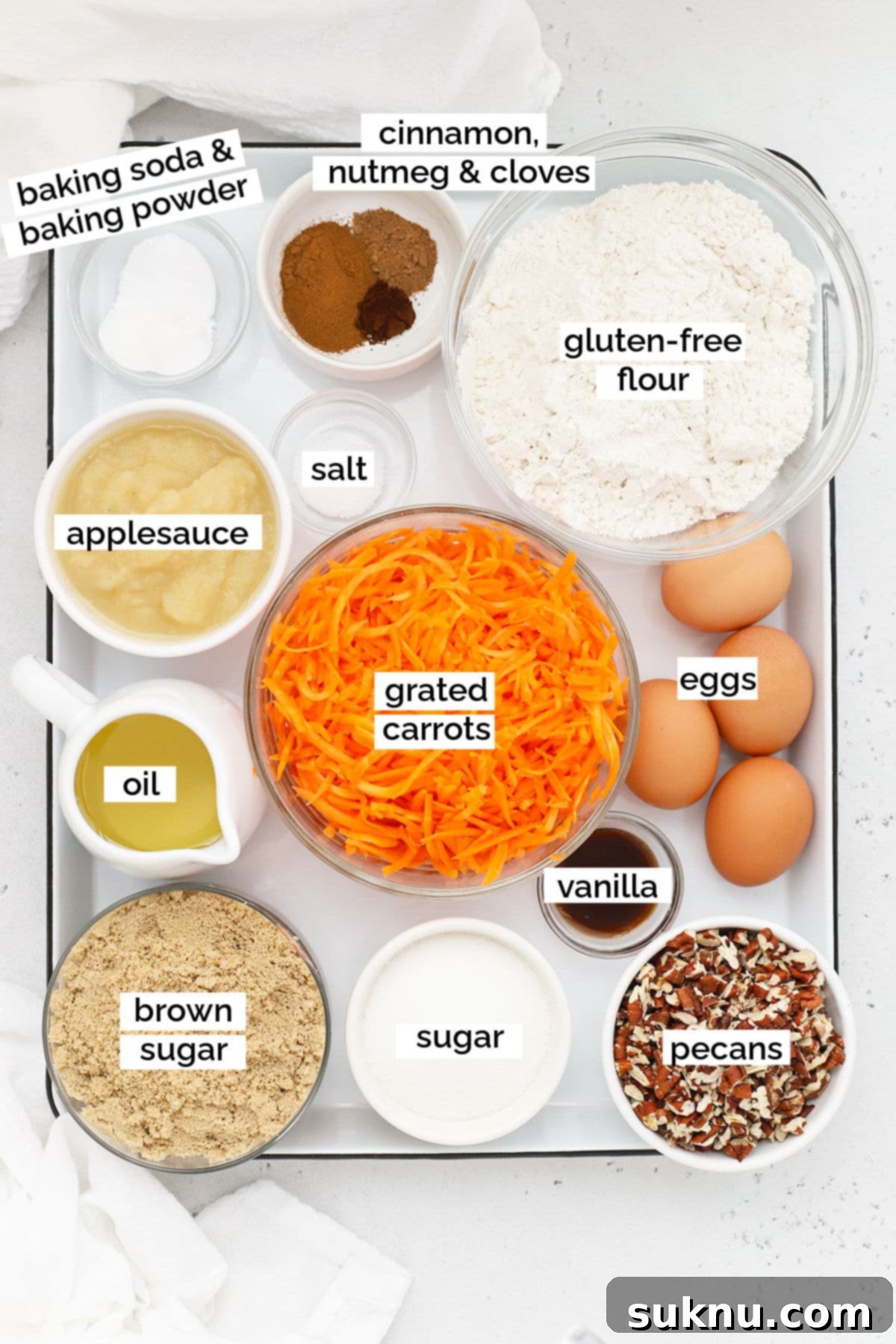
Creating an exceptional gluten-free carrot cake begins with selecting the right ingredients. Here’s a detailed look at what you’ll need and why each component is vital for achieving that perfect moist and fluffy texture, rich flavor, and irresistible aroma.
- Gluten-Free Flour Blend: The Foundation of Your Cake. We cannot stress enough the importance of a high-quality gluten-free flour blend. For this recipe, we highly recommend King Arthur’s Gluten-Free Measure for Measure Flour Blend. It consistently yields fantastic results, providing the ideal structure and tenderness. Crucially, this type of blend already contains xanthan gum, which is essential for gluten-free baking to mimic the elasticity normally provided by gluten. Without it, your cake may not hold together properly. Do NOT substitute with single-ingredient flours like coconut flour or almond flour, as these have vastly different absorption properties and will not work for this recipe. If using a different blend, ensure it explicitly states it contains xanthan gum.
- Baking Powder & Baking Soda: For That Fluffy Rise. These two leavening agents work in harmony to give your carrot cake its signature softness, puff, and beautiful rise. For the best results, always ensure your baking powder and baking soda are fresh. You can easily test their freshness with a simple 30-second trick to guarantee your cake rises perfectly every time.
- Kosher Salt: Balancing Sweetness and Enhancing Flavor. A pinch of salt is a non-negotiable in any sweet recipe! It doesn’t just add salinity; it brightens and balances the sweetness of the sugar and enhances the warm notes of the spices.
- Warm Spices: The Heart of Carrot Cake Flavor. Carrot cake is renowned for its aromatic blend of warm spices. Our recipe features a delightful combination of ground cinnamon, ginger, and nutmeg. This trio creates a cozy, inviting flavor profile that is both comforting and exhilarating. For an extra layer of warmth, you might consider adding a touch of ground cloves or allspice.
- Oil & Applesauce: Moisture Masters. To achieve that coveted velvety soft and incredibly moist texture without the cake feeling greasy, we use a strategic mix of oil and unsweetened applesauce. Choose a neutral-tasting oil like vegetable oil or canola oil. Avoid strong-flavored oils like coconut oil or olive oil, which can overpower the delicate spice profile of the cake. The applesauce not only adds moisture but also contributes a subtle natural sweetness.
- Sugar & Brown Sugar: A Balanced Sweetener Duo. Our recipe cleverly combines granulated sugar for sweetness with brown sugar for added moisture and deeper, more complex caramel notes. The brown sugar contributes significantly to the cake’s tenderness and rich flavor profile, making every bite more indulgent.
- Eggs: Binding and Structure. You’ll need four large eggs for this super moist gluten-free carrot cake. Eggs are crucial for binding the ingredients, providing structure, and contributing to the rich, tender crumb that makes this cake so exceptional. Each one is worth it for the incredible texture!
- Vanilla Extract: Enhancing Aromatic Depth. A generous splash of pure vanilla extract is essential. It doesn’t just add its own delightful aroma; it amplifies and rounds out the notes in the warm spices, creating a truly well-balanced and irresistible flavor experience.
- Freshly Grated Carrots: Key to Texture and Taste. This is a critical point: always use freshly grated carrots! Pre-bagged shredded carrots found in stores are often too thick, dry, and coarse, which can result in a chewy, inconsistent texture in your cake. Grating fresh carrots ensures they soften beautifully during baking, integrating seamlessly into the batter and releasing their natural sweetness and moisture. Use a box grater or your food processor for a quick and easy grating process.
- Toasted Nuts (Optional, but Recommended!). Not everyone loves nuts in their carrot cake, so feel free to omit them if you prefer. However, we highly recommend adding some toasted pecans or walnuts. Toasting takes just a few minutes but completely transforms their flavor, bringing out their inherent nuttiness and adding a delightful crunch. Don’t skip this simple step if you’re including them!
- A Quick Cream Cheese Frosting, To Finish. What’s carrot cake without its classic companion? Our easy cream cheese frosting comes together quickly with just a few essential ingredients: cream cheese, butter, powdered sugar, and vanilla. It’s perfectly tangy, sweet, and smooth, providing the ideal creamy complement to the spiced cake.
Pro Baking Tips for Gluten-Free Success
Achieving baking perfection, especially with gluten-free recipes, often comes down to a few fundamental techniques and careful attention to detail. Here are some invaluable tips to ensure your gluten-free carrot cake turns out flawlessly.
- Mastering Flour Measurement. Precision is paramount in gluten-free baking. Incorrect flour measurement can lead to a dense, dry, or gummy cake. For the most accurate results, we always recommend weighing your flour using a digital kitchen scale. If you don’t have a scale, use the scoop and level method: gently spoon the gluten-free flour blend into your measuring cup until it overflows, then level it off with the back of a knife. Never pack the flour into the cup.
- The Magic of Toasted Nuts. If you choose to include nuts, don’t skip toasting them! Toasting enhances their natural flavor, making them more aromatic and adding a depth that elevates the entire cake. Learn how to toast pecans (or walnuts) in just a few minutes for a truly transformative addition.
- Ensuring Fresh Leavening Agents. Baking powder and baking soda lose their potency over time, which can significantly impact your cake’s rise and texture. It’s a quick and easy step to check if your baking soda and baking powder are still fresh before you begin.
- Choosing the Right Cake Pans. The type of cake pan you use can affect baking time and how evenly your cake cooks. We recommend using light-colored aluminum cake pans for even heat distribution, which helps prevent over-browning on the edges while ensuring the center cooks through.
How To Make a Gluten-Free Carrot Cake, Step By Step
As always, you can find the full recipe, with precise ingredient amounts, detailed instructions, and additional tips in the recipe card below.
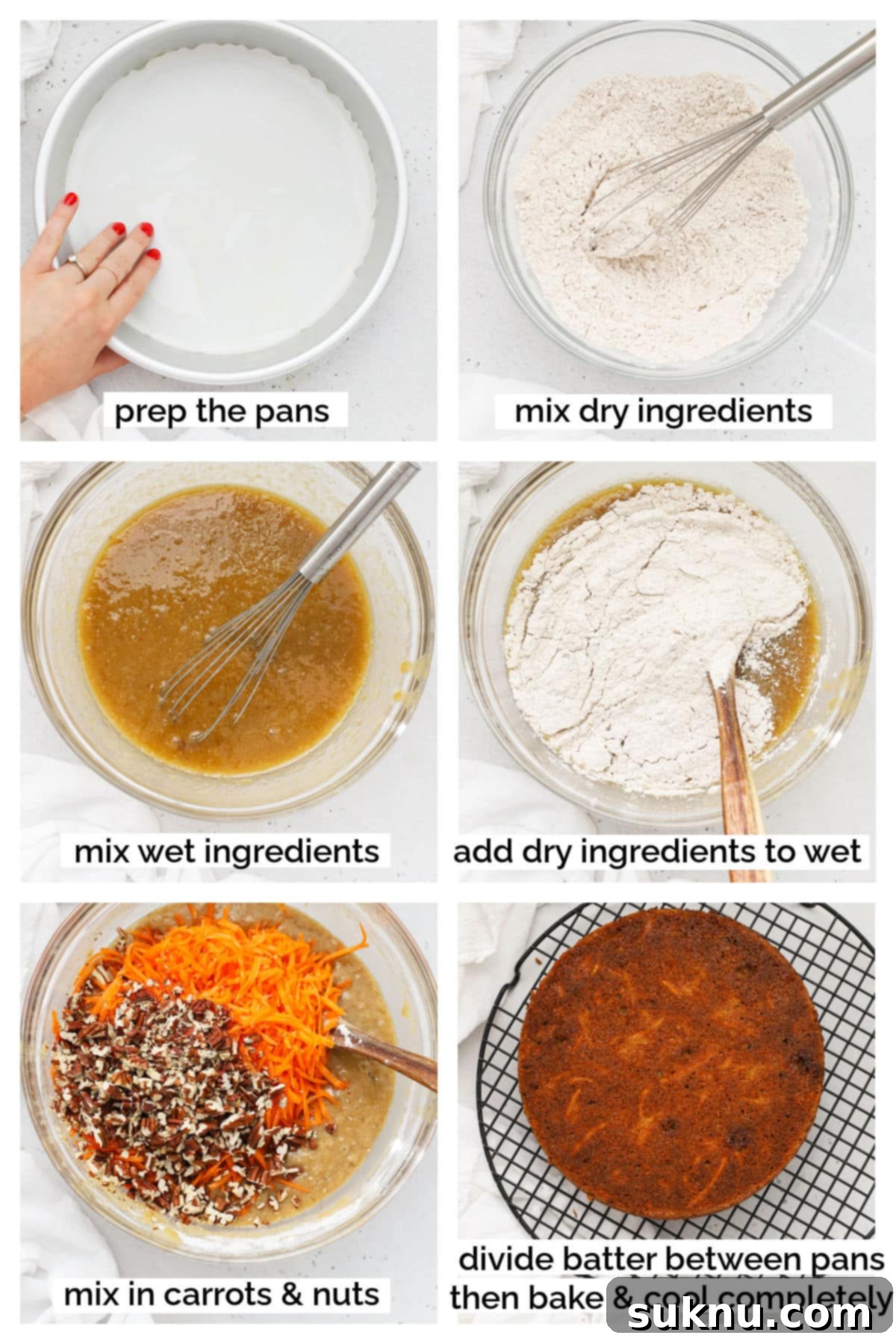
First, Prepare and Bake the Cake Layers
- Preheat Oven & Prep Pans. Begin by preheating your oven to 350 degrees F (175 degrees C). Thoroughly grease two 9-inch round cake pans with butter or cooking spray. For easy removal and to prevent sticking, line the bottoms of the pans with parchment paper rounds.
- Combine Dry Ingredients. In a medium-sized bowl, whisk together the gluten-free flour blend, baking powder, baking soda, ground cinnamon, ground nutmeg, ground cloves, and kosher salt. Whisk vigorously for at least 30 seconds to ensure the leavening agents and spices are evenly distributed throughout the flour. Set this bowl aside.
- Combine Wet Ingredients. In a large mixing bowl (or the bowl of a stand mixer fitted with the paddle attachment), combine the neutral oil, packed brown sugar, granulated sugar, eggs, unsweetened applesauce, and vanilla extract. Beat these ingredients together on medium speed until they are thoroughly blended and smooth, scraping down the sides of the bowl as needed.
- Add Dry Ingredients to Wet Ingredients. Gradually add the whisked dry ingredients to the wet ingredients. Mix on low speed just until the flour mixture is almost fully combined. You should still see a few small floury or dry patches; avoid overmixing at this stage.
- Fold In Carrots & Pecans. Gently fold in the freshly grated carrots and toasted pecans (if using) using a spatula. Mix just until they are evenly distributed throughout the batter. Be careful not to overmix, as this can lead to a tough cake. You want the carrots and nuts to be well integrated without any large clumps.
- Divide Cake Batter. Evenly divide the prepared cake batter between your two greased and parchment-lined 9-inch round cake pans. Use a spatula to gently spread the batter to the edges of the pans.
- Bake. Transfer the pans to the preheated oven and bake at 350 degrees F (175 degrees C) for 30-32 minutes. For even baking, rotate the pans halfway through the baking time. The cakes are done when they are golden brown, and a wooden skewer or toothpick inserted into the center comes out clean. The edges of the cake should just begin to pull away from the sides of the pan, and if you gently press the center of the cake with your finger, it should spring back fairly quickly.
- Cool Completely. Allow the cakes to cool in their pans for at least 10 minutes on a wire cooling rack. After 10 minutes, carefully invert the cakes onto the wire rack, remove the parchment paper, and let them cool COMPLETELY before you even think about frosting them. This step is crucial; if the cakes are still warm, they will melt your beautiful cream cheese frosting. Patience is key here! (Once fully cooled, the cake layers can be wrapped tightly in plastic wrap and chilled overnight in the refrigerator, or frozen for longer storage).
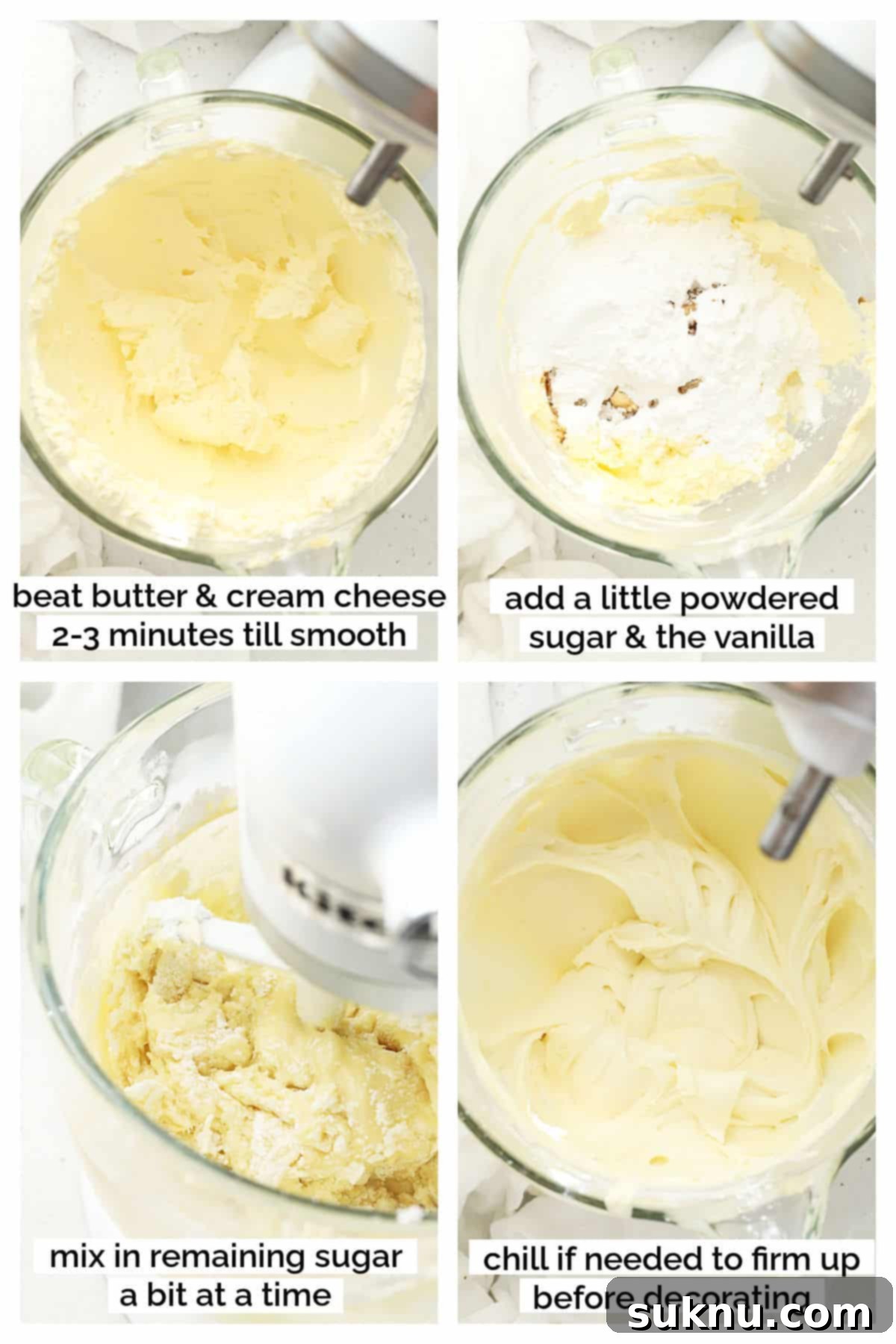
Next, Prepare the Luscious Cream Cheese Frosting
While your cake layers are cooling, you can prepare the irresistible cream cheese frosting. This frosting is the perfect balance of sweet and tangy, and its creamy texture is the ideal complement to the spiced carrot cake.
- Ensure Softened Ingredients. This is perhaps the most important tip for smooth frosting! Before you begin, make absolutely sure that both your unsalted butter and full-fat cream cheese have been softened to room temperature. Cold ingredients will result in a lumpy, chunky frosting, which is far from what we want for a silky finish.
- Combine Butter & Cream Cheese. In a large mixing bowl or the bowl of a stand mixer (my preferred method for its efficiency), combine the softened butter and cream cheese. Beat them together on medium-high speed for 2-3 minutes, or until the mixture is incredibly fluffy, smooth, and perfectly blended. Stop and scrape down the sides and bottom of the bowl frequently to ensure everything is incorporated.
- Gradually Add Powdered Sugar & Vanilla. With the mixer on low speed, gradually add the powdered sugar, about 1/2 cup at a time, allowing each addition to incorporate before adding more. Once all the powdered sugar has been added, scrape down the sides of the bowl again. Add the vanilla extract, then increase the mixer speed to medium and beat for another 1-2 minutes. This ensures all ingredients are well incorporated, resulting in a smooth, airy frosting.
- Check The Texture. The finished frosting should be smooth and soft, yet firm enough to hold its shape when spread or piped. It should not be runny or gooey. If your frosting seems too loose (it doesn’t hold its shape when scooped onto a spatula and rotated), you can chill it in the refrigerator for 5-10 minutes to help it firm up. Adding more powdered sugar can give it more structure, but it will also make the frosting sweeter, which might not be desired.
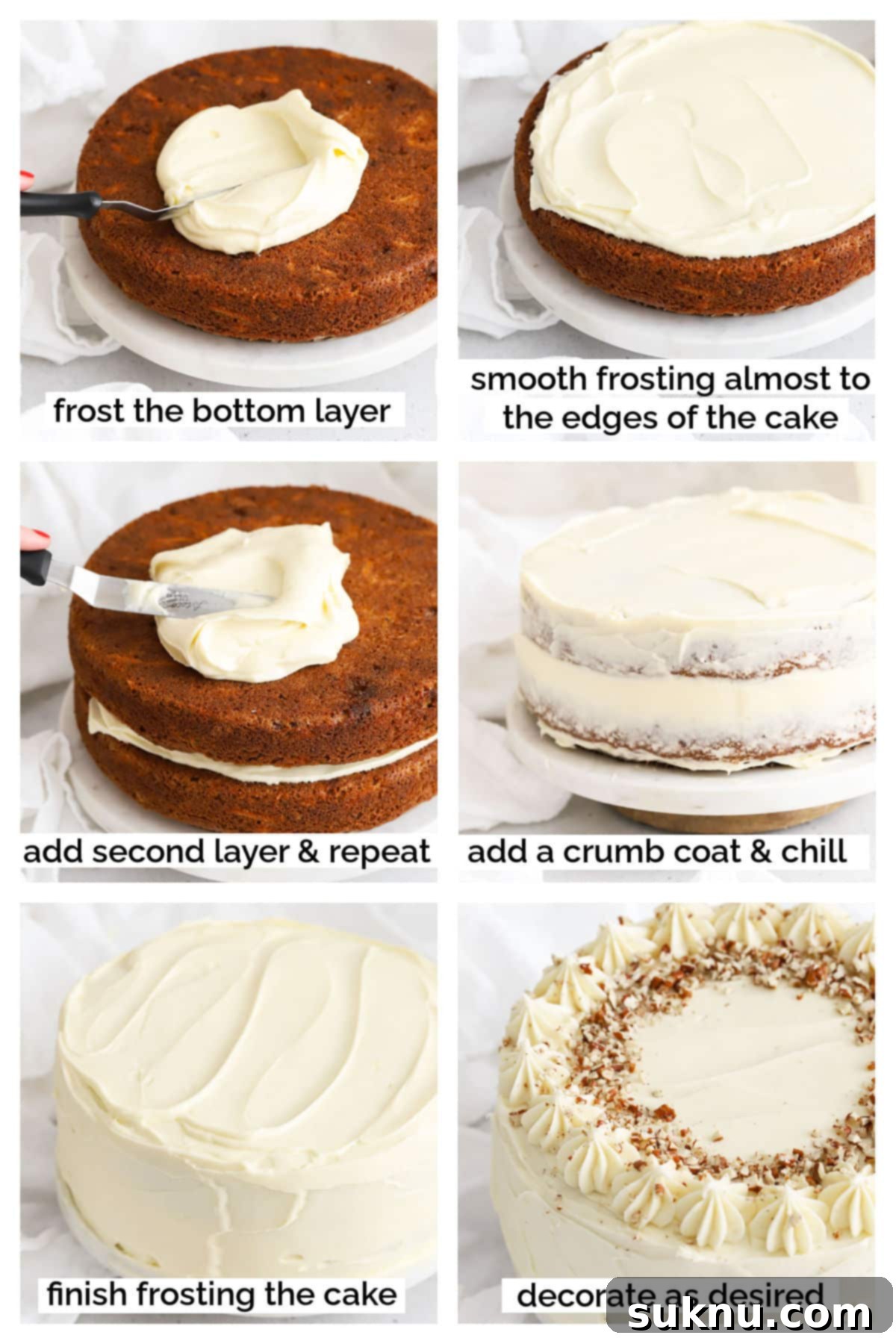
Finally, Assemble & Decorate Your Delicious Carrot Cake
Now for the satisfying part: bringing it all together! Assembling and decorating your gluten-free carrot cake is a rewarding process, and these steps will help you achieve a beautiful, professional-looking finish.
- Build The Bottom Layer. Place one of your completely cooled cake layers onto your cake stand or serving plate. For a stable base, ensure the flat side (the side that was at the bottom of the pan) is facing up. Dollop about 3/4 cup of the cream cheese frosting onto the center of this layer. Using an offset spatula, gently spread the frosting evenly to the edges of the cake.
- Build The Top Layer. Carefully place the second cake layer directly on top of the first, again with its flat side facing up. Repeat the frosting process: add another 3/4 cup (or slightly more) of frosting to the center and spread it smoothly to the edges of this top layer.
- Add A Crumb Coat (Optional, but Recommended). For an extra polished look and to prevent crumbs from mixing into your final frosting layer, apply a crumb coat. Add an additional 3/4 to 1 cup of frosting to the top layer, spreading it to the edges and then thinly down the sides of the cake. Your goal here is to create a very thin, almost translucent layer of frosting that seals in any loose crumbs. You should still be able to see the cake through this layer. Once applied, chill the cake in the refrigerator for about 30 minutes. This allows the crumb coat to firm up. (Remember to pop your remaining frosting back into the fridge during this time so it doesn’t get too warm and soft).
- Finish Frosting & Decorating. After the crumb coat has chilled and firmed, remove the cake and the remaining frosting from the fridge. Use the rest of your frosting to apply a final, thicker, and perfectly smooth coat to the entire outside of the cake. Take your time to achieve a clean finish. If desired, decorate with additional chopped toasted pecans. You can create an elegant “skirt” by pressing them around the bottom edges of the cake or arrange them in a decorative border around the top.
- Chill and Store. Chill the finished cake until you are ready to serve. Due to the cream cheese frosting, it’s essential to store any leftover carrot cake covered in the refrigerator. It will stay fresh and delicious for 3-4 days. Remember that cream cheese frosting doesn’t hold up well at room temperature, so the cake should not be left out of the fridge for more than about 1 hour (less if it’s a warm environment).
More Creative Carrot Cake Decorating Ideas
While a simple frosting and nut garnish is always beautiful, one of the great joys of baking this amazing gluten-free carrot cake is the opportunity to personalize it with fun and creative decorating tricks. Here are some ideas to add variety and flair to your culinary creation:
- Pipe Adorable Carrots! For a charming and festive touch, use gel food coloring to dye a small amount of your cream cheese frosting orange and a tiny bit green. Using a piping bag with a small round tip, you can pipe miniature orange carrots onto the top of the cake, adding tiny green stems for leaves. Wilton offers a great tutorial for piping carrot decorations here, making it simple even for beginners.
- Craft Sturdy Royal Icing Carrots. If you’re looking for a more defined, sturdier decoration that can be made in advance, consider making royal icing carrots. These intricate little decorations add an elegant and professional touch to your cake. You can find excellent instructions for creating these royal icing carrots here.
- Elegant Nut Borders or Toppings. Beyond a simple sprinkle, you can use more chopped, toasted nuts (pecans or walnuts) to create intricate patterns. Press them gently around the base of the cake for a rustic border, create concentric circles on the top, or even form initials or a simple design. The contrast of the crunchy nuts against the smooth frosting adds both visual appeal and texture.
- Textured Sides with a Frosting Comb. Elevate the professional look of your cake by using a frosting comb. This simple tool allows you to create beautiful grooves, ridges, or waves around the sides of your cake, giving it a sophisticated finish that pairs wonderfully with the rich, tangy cream cheese frosting.
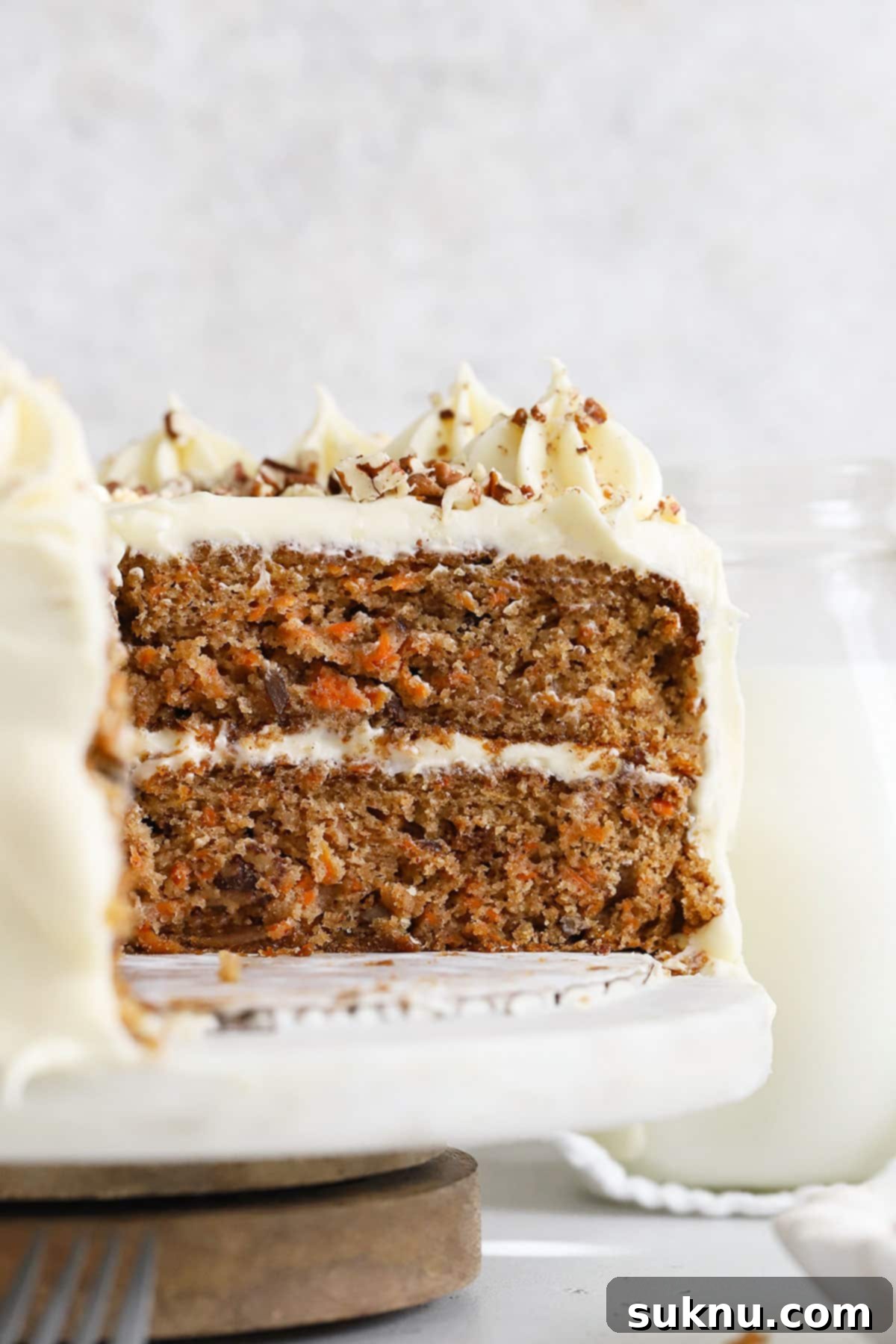
Frequently Asked Questions & Expert Tips for the Best Gluten-Free Carrot Cake
Baking a gluten-free carrot cake can be a straightforward and enjoyable experience, especially when armed with the right knowledge. Here are answers to common questions and additional tips to ensure your cake is nothing short of perfect.
Make-Ahead Baking Tips for Convenience
This delicious gluten-free carrot cake recipe is wonderfully adaptable for make-ahead preparation, allowing you to bake stress-free for special occasions or busy weeks.
- Chill Cake Layers Overnight Before Frosting. If you’re short on time on the day of serving, you can bake the cake layers a day in advance. Once baked, let them cool completely on a wire rack. Then, wrap each individual layer tightly in plastic wrap (or press ‘n’ seal) to prevent them from drying out. Store the wrapped layers in the refrigerator for up to 1 day. When you’re ready to assemble, frosting cold cake layers is actually easier as they are less prone to tearing and crumbling.
- Freeze Cake Layers for Longer Storage. For even longer make-ahead planning, you can freeze the cake layers. After baking and cooling completely, wrap each layer individually and very tightly in multiple layers of plastic wrap, then place them into a freezer-safe bag or airtight container. Cake layers can be frozen for up to 3 weeks. To use, thaw the wrapped layers in the refrigerator overnight. Once thawed, proceed with frosting and assembling the cake as usual.
The Critical Role of Accurate Measurement in GF Baking
In gluten-free baking, precision is not just recommended; it’s often the key to success. Unlike traditional baking where some leeway exists, gluten-free flours behave differently, and their correct measurement is vital for the perfect texture.
Whenever possible, we strongly recommend using metric measurements and an inexpensive digital kitchen scale to weigh your ingredients, particularly the gluten-free flour. This is the most accurate method and will yield the most consistent results, preventing your cake from becoming dense, dry, or crumbly. If you don’t have a scale, please use the scoop and level method for your flour. This involves spooning the flour into the measuring cup until it overflows, then leveling it off with a straight edge. Never scoop directly from the bag, as this compacts the flour and can add up to 25% more than needed.
Try It As A Sheet Cake!
Don’t have round cake pans or prefer a simpler presentation? No problem at all! This versatile gluten-free carrot cake batter can easily be adapted into a delicious sheet cake. Simply pour the entire batter into a greased 9×13-inch metal baking pan and bake for approximately 35-40 minutes, or until a toothpick inserted into the center comes out clean. For guidance on converting recipes to other pan sizes, we highly recommend this comprehensive post about switching cake pan sizes from Sally’s Baking Addiction.
Storage and Shelf Life
Given the cream cheese frosting, this gluten-free carrot cake should always be stored in the refrigerator. Once frosted, cover the cake loosely with plastic wrap or place it in an airtight cake carrier to prevent it from drying out. It will stay fresh and delicious for 3-4 days in the fridge. For the best taste and texture, allow the cake to come to room temperature for about 30 minutes before serving. However, avoid leaving it out for longer than 1 hour, especially in warm environments, as the frosting contains dairy.
Ingredient Substitutions and Important Notes
- Gluten-Free Flour: As mentioned, we specifically used and recommend King Arthur Measure For Measure gluten-free flour. If you opt for another brand, verify that it contains xanthan gum to ensure proper cake structure. Almond flour, coconut flour, or other single-ingredient flours are NOT suitable substitutes for this recipe, as they require entirely different liquid ratios and baking dynamics.
- Salt: Our recipe specifies kosher salt. If you are using fine table salt, which is saltier by volume, start with half the amount listed and adjust to your taste to avoid over-salting.
- Applesauce Alternative: If you don’t have unsweetened applesauce, you can substitute it with an equal amount of well-drained crushed pineapple. Be aware that this substitution will slightly alter the flavor profile and texture, and may result in a slightly less moist cake. Ensure the pineapple is thoroughly drained to prevent excess liquid from affecting the batter consistency.
- Carrots: Reiterate the importance of freshly grated carrots. Pre-shredded carrots from the grocery store are often too dry and thick, which can lead to a coarse, chewy cake rather than the tender crumb desired.
- Pecans/Walnuts: This recipe uses toasted pecans, but toasted walnuts are also an excellent choice. To toast whole pecans: spread them in a single layer on a baking sheet and bake at 350°F (175°C) for 6-8 minutes, or until fragrant and lightly golden. Watch them closely as nuts can burn quickly. If using pre-chopped nuts, toast them for a shorter period, about 2-4 minutes.
- Frosting Amount: The frosting quantities provided are generous, allowing for a beautiful two-layer cake with enough left over for decorative touches or a generous crumb coat. If you prefer a lighter frosting or just enough to cover the cake without extra for elaborate decorating, you can adjust the frosting recipe: use 8 oz (226 grams) cream cheese, 1/2 cup (113 grams) butter, 4 cups (480 grams) powdered sugar, and 1 teaspoon vanilla extract.
Tools We Recommend
While the “Shop the Post” widget was removed, here are some useful tools for your gluten-free baking:
- 9-Inch Round Cake Pans: Essential for perfectly shaped layers.
- Parchment Paper Rounds: Makes cake removal effortless.
- Digital Kitchen Scale: For precise ingredient measurement, especially flour.
- Offset Spatula: Ideal for spreading frosting smoothly.
- Box Grater or Food Processor: For grating fresh carrots quickly.
- Stand Mixer or Hand Mixer: For efficiently blending batter and frosting.
- Wire Cooling Rack: For cooling cakes evenly.
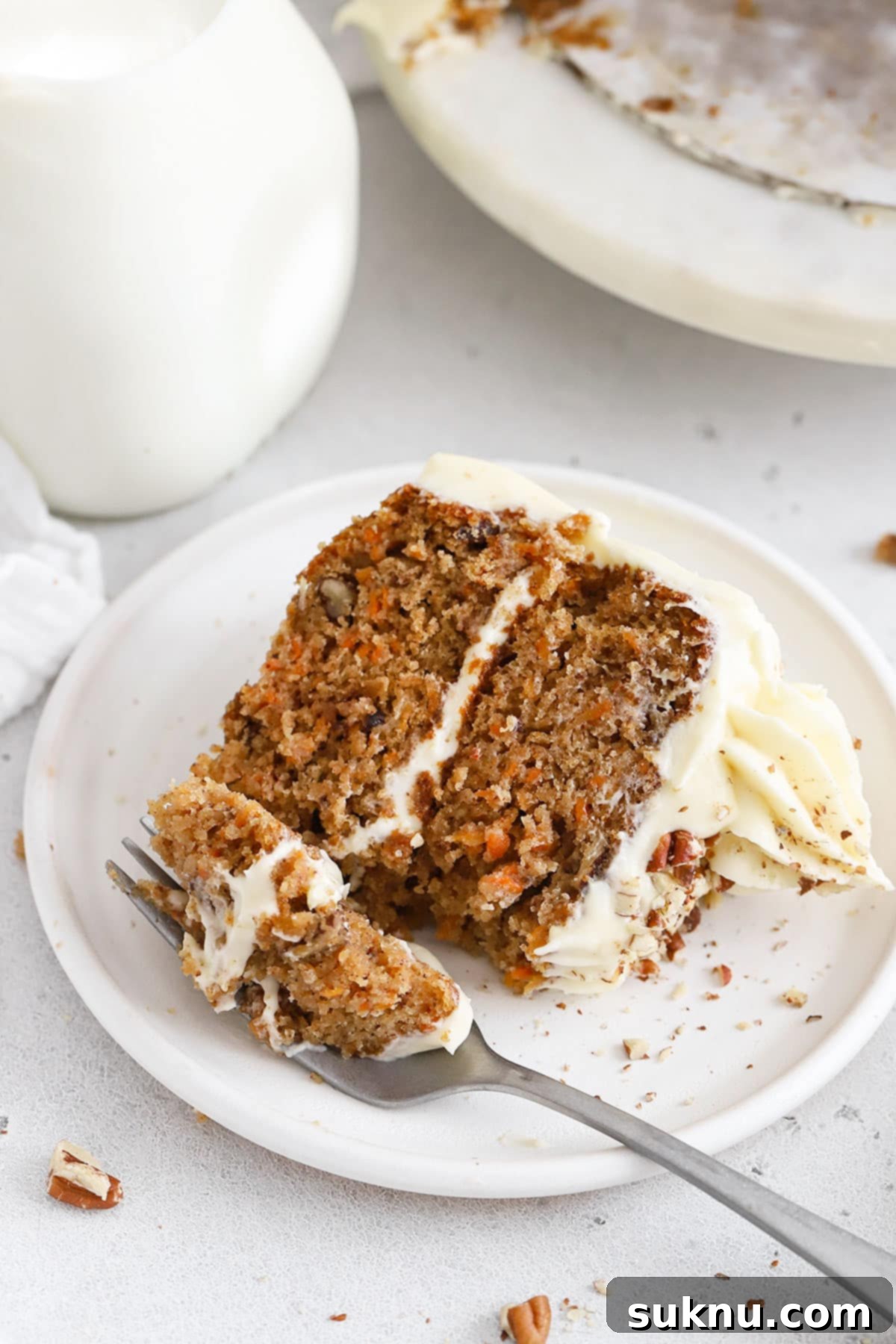
More Delicious Gluten-Free Cake Recipes To Try
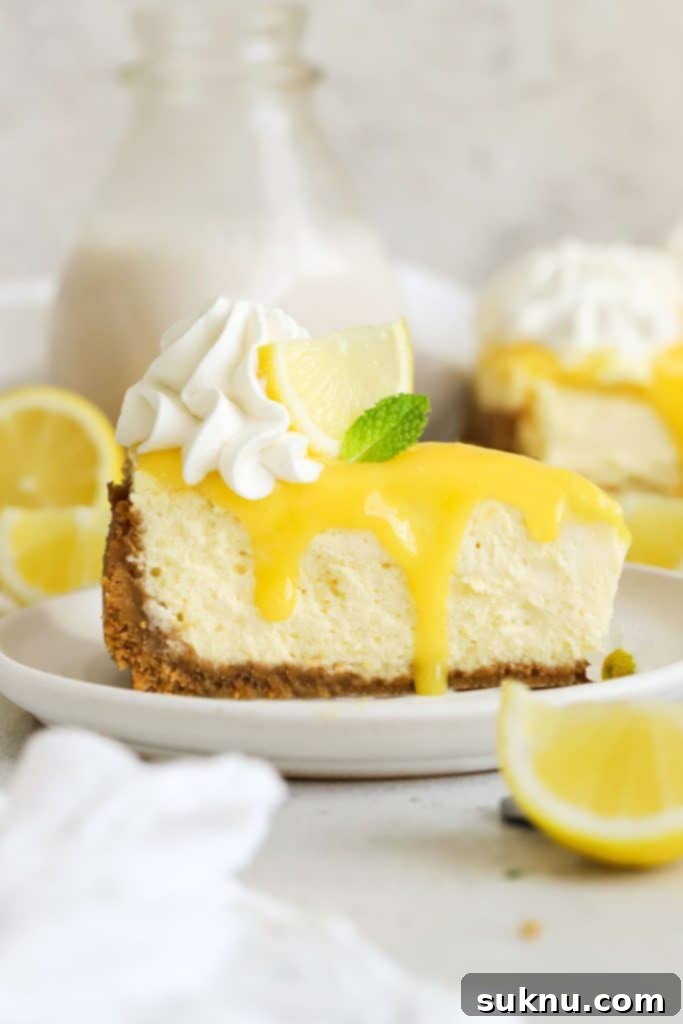
Gluten-Free Lemon Cheesecake
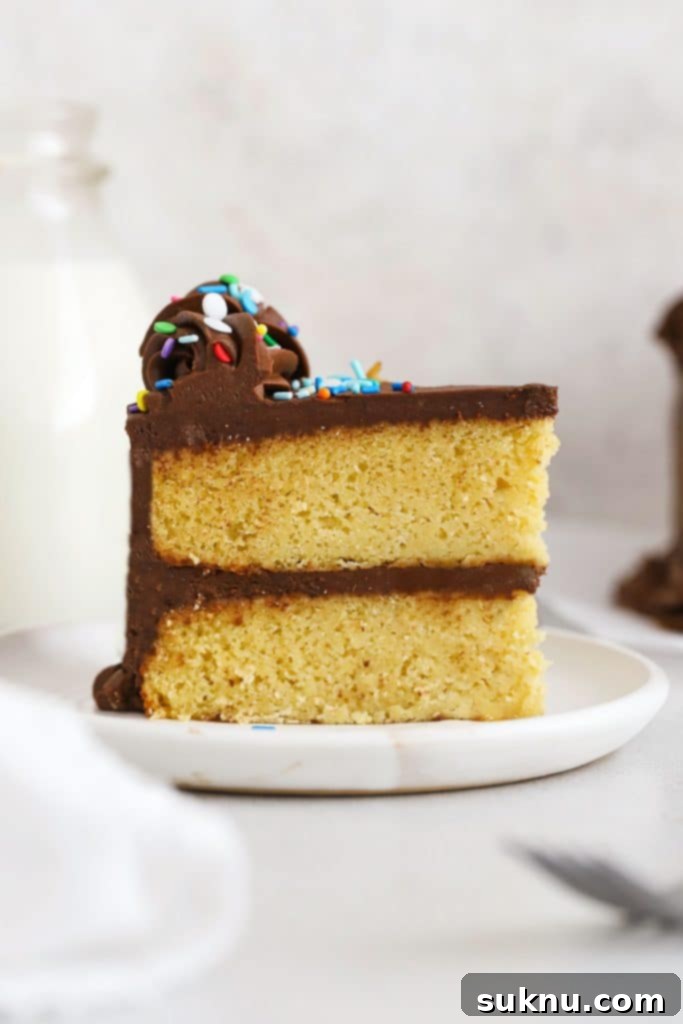
Gluten-Free Yellow Cake With Chocolate Frosting
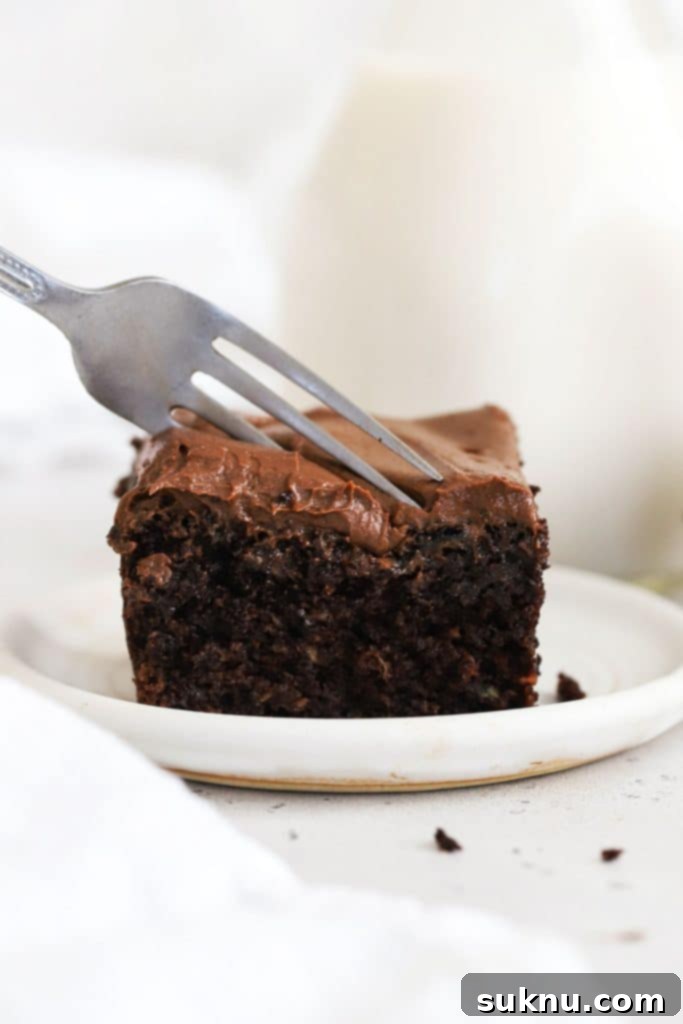
Gluten-Free Chocolate Zucchini Cake
Gluten-Free Carrot Cake Recipe Card
Gluten-Free Carrot Cake
5 from 1 review
- Author: Emily Dixon, Sweets & Thank You
- Total Time: 1 hour 15 minutes
- Yield: 10-12 servings
- Diet: Gluten Free
Description
This two-layer gluten-free carrot cake is perfect for all kinds of special occasions! It has all the warm spices & fluffy texture you love, finished with an easy cream cheese frosting that’s perfect for decorating.
Ingredients
Dry Ingredients:
- 2 1/2 cups gluten-free measure-for-measure flour,* weighed or scooped & leveled (300 grams)
- 2 teaspoons baking powder
- 1 teaspoon baking soda
- 1 1/2 teaspoons ground cinnamon
- 1/2 teaspoon ground nutmeg
- 1/4 teaspoon ground cloves
- 1/2 teaspoon kosher salt*
Wet Ingredients:
- 1 cup vegetable oil or canola oil (240 ml)
- 1 1/2 cups packed brown sugar (300 grams)
- 1/2 cup granulated sugar (100 grams)
- 4 large eggs
- 3/4 cup unsweetened applesauce* (133 grams)
- 1 teaspoon vanilla extract
Mix-Ins:
- 3 cups peeled, grated carrots* (260 grams) – lightly packed
- 1 cup finely chopped toasted pecans* (130 grams)
For Cream Cheese Frosting:
- 1 pound full-fat cream cheese (2 blocks/452 grams), softened to room temperature
- 3/4 cup butter (1 1/2 sticks/170 grams), softened to room temperature
- 5 cups powdered sugar (600 grams)
- 1 1/2 teaspoons vanilla extract or vanilla bean paste
To Decorate (Optional)
- 1 cup chopped toasted pecans (130 grams)
Instructions
First, Bake The Cakes:
- Preheat Oven & Prep Pans. To start, preheat the oven to 350 degrees F (175 C). Grease 2 (9-inch) round cake pans then line with parchment paper.
- Combine Dry Ingredients. In a medium bowl, combine gluten-free flour, baking powder, baking soda, cinnamon, nutmeg, cloves, and salt. Whisk until well blended, then set aside.
- Combine Wet Ingredients. In a large mixing bowl (or the bowl of a stand mixer), combine oil, brown sugar, sugar, eggs, applesauce, and vanilla extract. Mix until evenly blended.
- Add Dry Ingredients to Wet Ingredients and mix until almost fully combined (just a few floury/dry patches left).
- Fold In Carrots & Pecans and mix just until evenly blended throughout the batter. (You don’t want any large clumps of carrots!)
- Divide Batter evenly between your two prepared pans.
- Bake at 350 degrees F (175 C) for 30-32 minutes rotating pans halfway through baking, until the cake is golden brown and a toothpick inserted in the center comes out clean. (The cake should just be starting to pull away from the sides of the pan, and if you gently press the center of the cake with your finger, it should spring back fairly quickly)
- Let Cakes Cool 10 Minutes Then Turn Out onto a wire rack to cool COMPLETELY before frosting. The cakes need to be completely, totally cool or they’ll melt the frosting. Don’t rush this step! (Once completely cooled, the cake layers can be wrapped in plastic wrap and chilled overnight in the fridge.)
When The Cake Is Cool, Make The Frosting:
- Start With Softened Ingredients. Before you start the frosting, it’s important that the butter and cream cheese have both been softened so they’ll blend well. If they’re cold, you’ll end up with chunks in your frosting, which is NOT what we want!
- Combine Butter & Cream Cheese in a large bowl or the bowl of a stand mixer (which I prefer). Beat butter and cream cheese 2-3 minutes or until fluffy, smooth, and well blended. Scrape down the sides of the bowl.
- Add Powdered Sugar 1/2 Cup At A Time, until all of the powdered sugar has been added. Scrape down the sides of the bowl. Add vanilla then mix on medium speed 1-2 minutes to make sure everything is well incorporated and smooth.
- Check The Texture. At this point the frosting should be smooth and soft, but not runny or gooey. If the frosting is very loose (it doesn’t hold it’s shape when you put it on a spatula and rotate the spatula), consider chilling the frosting for 5-10 minutes to help it firm up. (Adding more powdered sugar can give the frosting more structure, but it will also add more sugar, which can get too sweet.)
Frost & Decorate The Cake
- Build The Bottom Layer. Place the bottom cake layer flat side up (the side that was on the bottom in the pan should now be facing up on the cake stand). Add about 3/4 cup frosting on top of the cake layer and use an offset spatula to smooth the frosting to the edges of the bottom layer.
- Build The Top Layer. Repeat this process with the second layer, adding it flat side up on top of the bottom cake layer. Top with another 3/4 cup or so of frosting and spread to the edges of the top cake layer.
- Add A Crumb Coat (Optional). For an extra pretty cake, do a crumb coat. Add another 3/4-1 cup of frosting to the top layer and use an offset spatula to spread the frosting to the edge of the top layer and down sides of the cake. Your goal is to make a very thin layer of frosting to just coat the outer layer of the cake. You’ll be able to see the cake through the crumb coat. Chill the cake in the fridge for about 30 minutes before frosting the rest of the cake. (Pop the frosting back in the fridge during this time so it doesn’t get too warm!)
- Finish Frosting & Decorating. After chilling the crumb coat, remove the cake and frosting from the fridge, and use the remaining frosting to coat the outside of the cake. If desired, decorate with chopped pecans, either adding a bottom “skirt” of pecans around the bottom edges of the cake, or adding them in a border around the top of the cake.
- Chill cake until ready to serve and store leftover carrot cake covered in the refrigerator 3-4 days. Since cream cheese frosting doesn’t do well at room temperature, cake should be out of the fridge no longer than about 1 hour at a time (less if it’s hot!).
Notes
- Gluten-Free Flour. We used King Arthur Measure For Measure gluten-free flour for this cake and highly recommend it. If you use another brand, be sure it contains xanthan gum or the texture will not work properly. Do not use almond flour or coconut flour for this recipe. To avoid packing extra flour into the cake (which can make it dense, dry or gummy) weigh the flour or use the scoop and level method to spoon flour into the measuring cup.
- Salt. If using fine table salt, start with half of the amount and adjust to taste.
- Applesauce. If you prefer, you can use drained crushed pineapple in place of the applesauce. Just keep in mind this will slightly alter the texture, will change the taste, and will yield a slightly less moist cake.
- Carrots. Do NOT use shredded carrots from the grocery store as these tend to be too thick and dry to work properly in the cake. Use a box grater or a food processor to finely grate fresh carrots for the best taste and texture.
- Pecans. You can use pecans or walnuts in this cake. To toast pecans, bake WHOLE PECANS in a single layer on a sheet pan at 350 degrees F (175 C) for 6-8 minutes or until golden brown and fragrant. Watch carefully and do not use if you burn them. (If you bought pre-chopped pecans, you’ll only want to toast them for 2-4 minutes since they’ll cook much faster)
- Frosting. The amount of frosting provided will be enough to cover and decorate the cake. If you want just enough to cover the cake (no extra for decorating), you can use 8 oz (226 grams) cream cheese, 1/2 cup (113 grams) butter, 4 cups (480 grams) powdered sugar, and 1 teaspoon vanilla.
- Prep Time: 45 minutes
- Cook Time: 30 minutes
- Category: Dessert
- Method: Oven
- Cuisine: American