Mastering Whipped Egg Whites: Your Ultimate Guide to Soft Peaks and Stiff Peaks
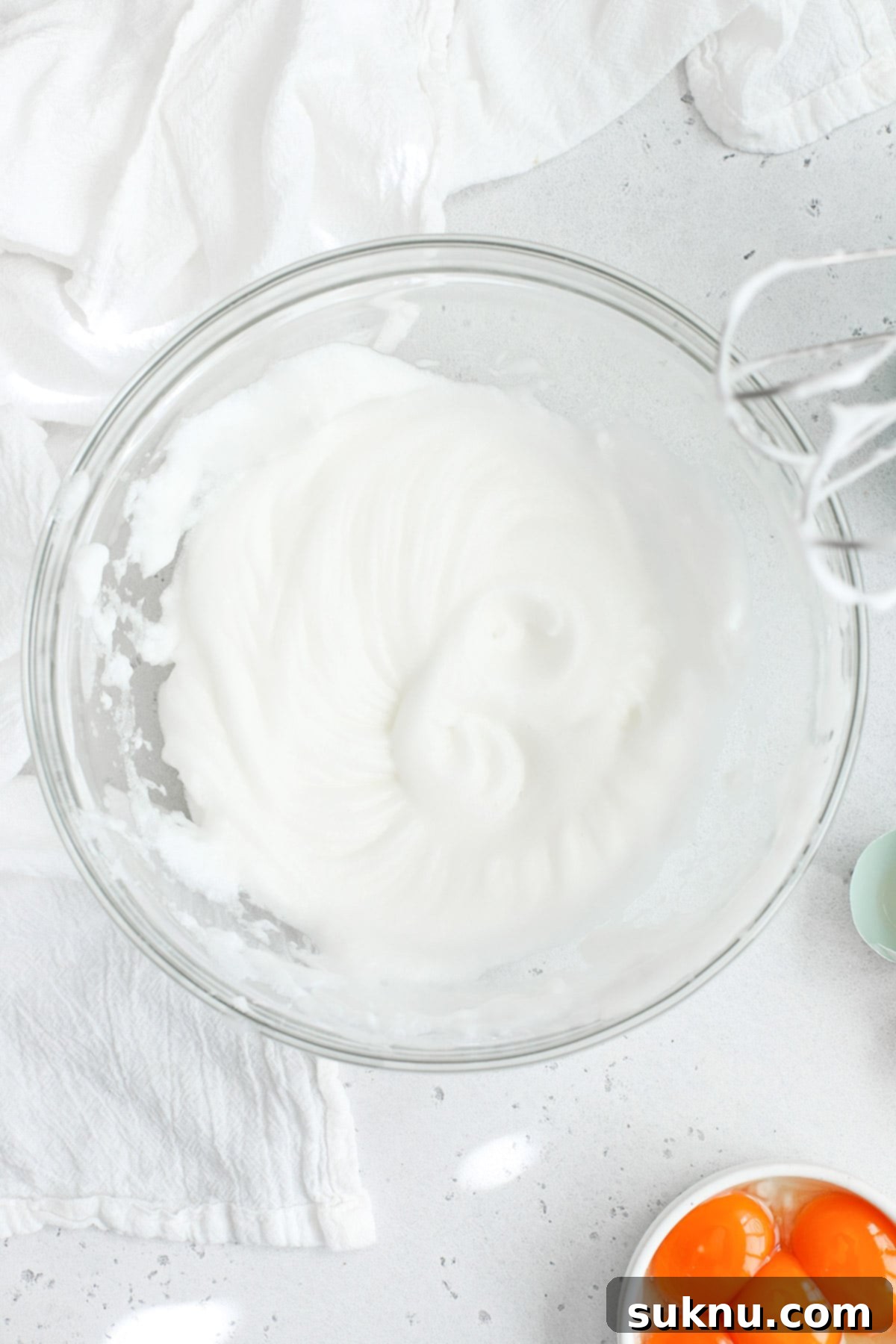
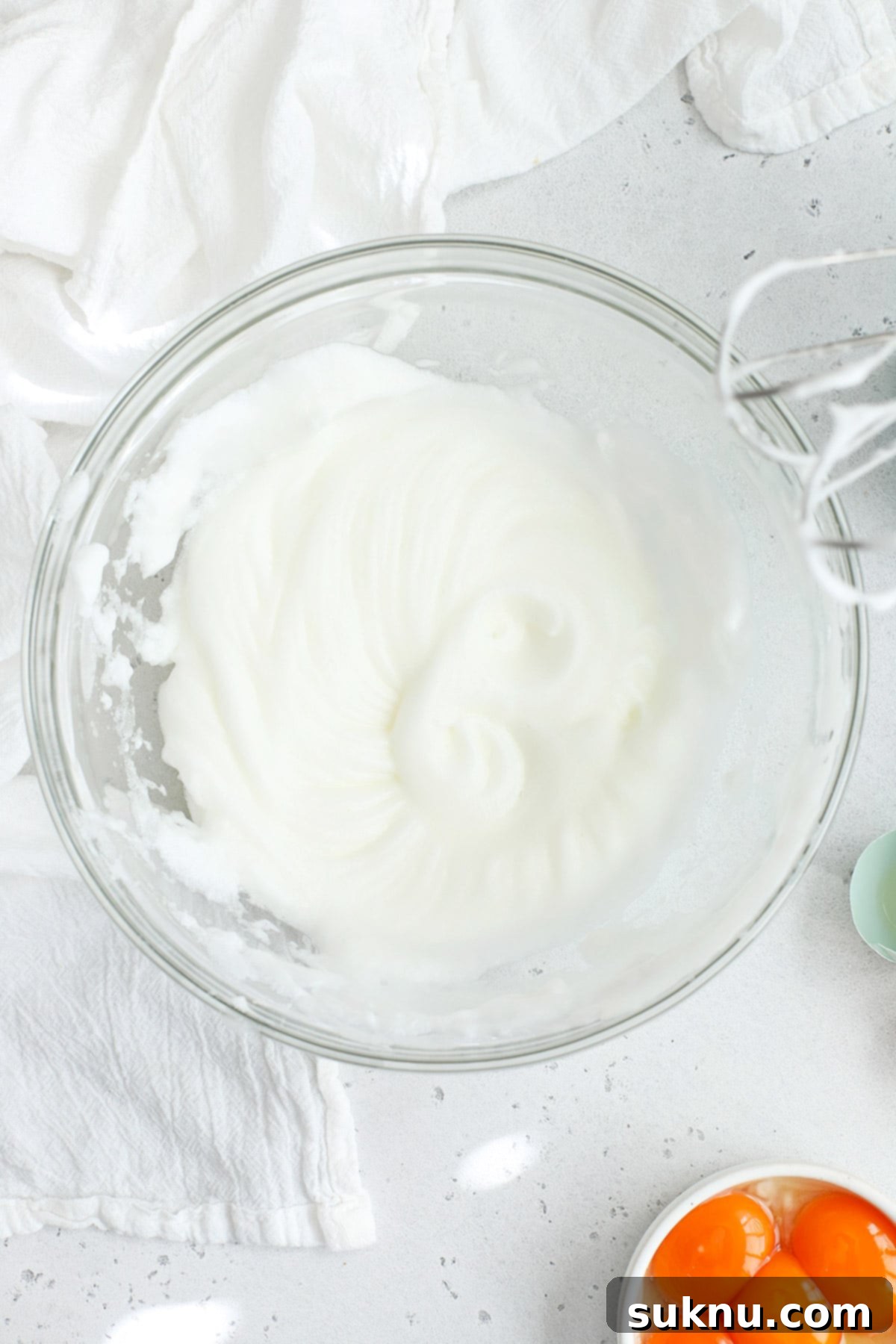
Unlock the secrets to perfectly whipped egg whites with our comprehensive guide! Whether you’re aiming for delicate soft peaks or robust stiff peaks, mastering this fundamental baking technique is crucial for countless beloved recipes. This guide provides all the tips and tricks you need to achieve light, airy, and structurally sound whipped egg whites every single time, transforming your baking from good to extraordinary.
Whipping egg whites might seem straightforward, but its impact on your culinary creations is immense. From fluffy waffles and light cakes to intricate macarons and ethereal meringues, the consistency of your whipped egg whites dictates the success of your bake. Under-whipping leaves you with a flat, dense result, while over-whipping can lead to a dry, crumbly texture. Precision is key, and with our expert advice, you’ll confidently whip egg whites for all your favorite desserts and savory dishes.
This tutorial will cover everything from the basic science behind whipping egg whites to advanced troubleshooting tips. We’ll walk you through the essential equipment, step-by-step instructions for achieving both soft and stiff peaks, and answer common questions to ensure your egg whites reach their full potential. Get ready to elevate your baking skills and achieve remarkable lightness and volume!
Understanding Whipped Egg Whites: The Science of Air and Structure
At their core, egg whites are primarily composed of protein and water. The magic of whipping egg whites lies in the process of incorporating air into this protein-rich liquid. As you beat or whisk egg whites, either with a hand mixer or a stand mixer, the protein strands begin to stretch and unfold. This allows them to entrap air bubbles, creating a foam. This foam structure provides the incredible height, delicate lightness, and unique texture that whipped egg whites contribute to so many dishes.
The goal is to create a stable foam where the air bubbles are evenly distributed and encased by the denatured protein. This transformation from a clear liquid to a voluminous white cloud is not just visually appealing; it’s a fundamental technique that adds structural integrity and an ethereal quality to baked goods and desserts. Understanding this basic science helps demystify the process and highlights why certain conditions (like cleanliness) are so vital.
The Versatile Applications of Whipped Egg Whites in Baking
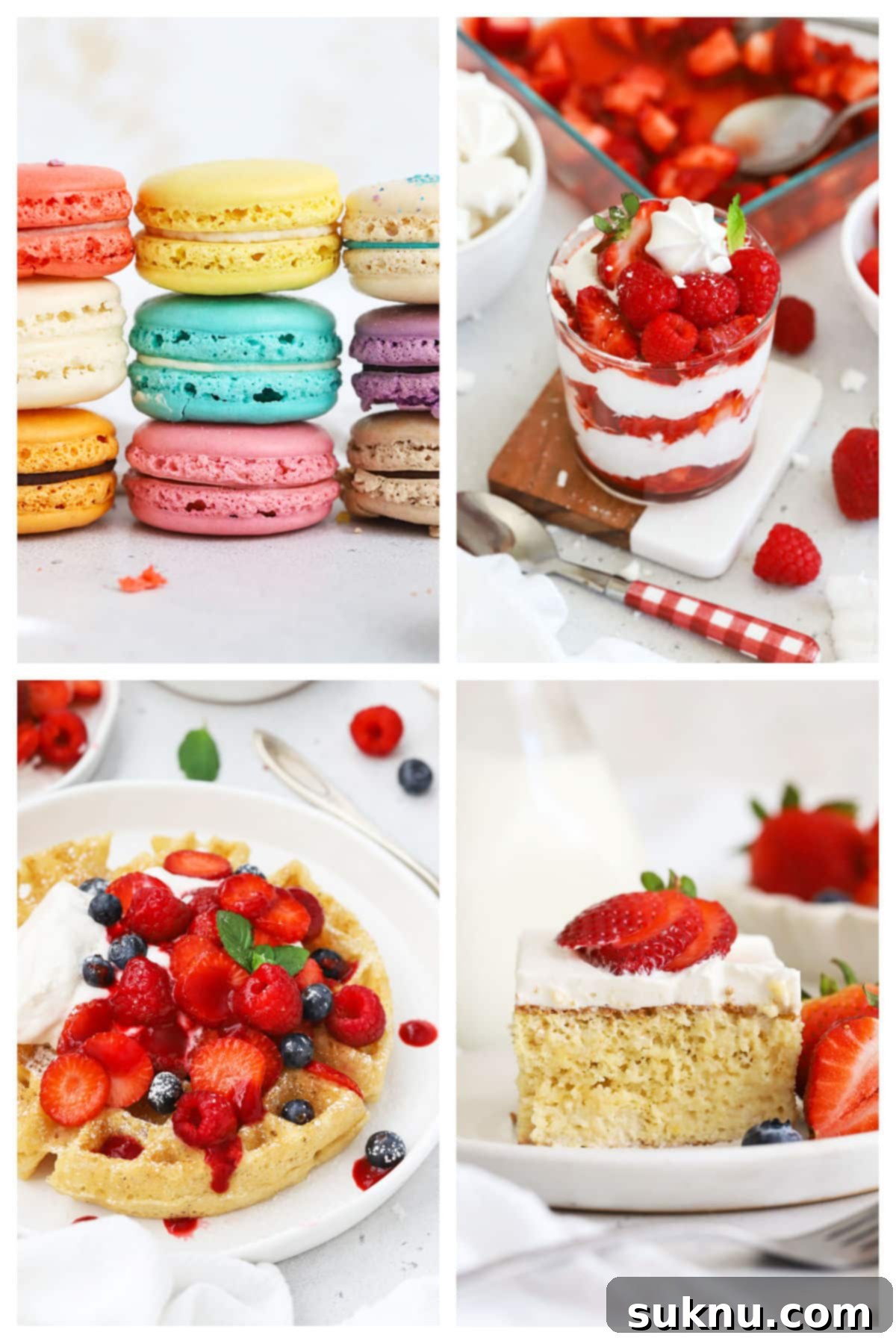
Whipped egg whites are a powerhouse ingredient in the kitchen, renowned for their ability to lighten textures and add volume to a wide array of recipes. Their unique airy quality makes them indispensable for both classic and contemporary dishes. Here are some of the most common and delightful ways to incorporate whipped egg whites into your cooking:
- French Macarons & Coconut Macaroons: The delicate, chewy texture and characteristic “feet” of these beloved cookies are entirely dependent on perfectly whipped egg whites, providing both structure and lightness.
- Soufflés: Whether sweet or savory, soufflés rely on the magnificent lift provided by egg whites, which expand in the oven to create an impressively airy dish that seemingly defies gravity.
- Pavlova: This elegant dessert features a crisp meringue shell with a soft, marshmallow-like interior, a direct result of meticulously whipped egg whites that are baked to perfection.
- Various Cake Recipes: Whipped egg whites are key to the light and airy crumb of cakes like Angel Food Cake, chiffon cakes, sponge cakes, and even Tres Leches Cake, ensuring a tender and moist final product.
- Meringue Cookies & Toppings: From delicate, melt-in-your-mouth meringue cookies to luxurious meringue toppings for pies like Lemon Meringue, whipped egg whites create a stable, sweet, and crisp foundation.
- Frosting Recipes: Many light and fluffy frostings, such as 7-Minute Frosting and Swiss Meringue Buttercream, derive their airy texture and stability from whipped egg whites.
- Enhancing Batters: Gently folding whipped egg whites into pancake, waffle, or cake batters is a fantastic way to introduce extra air, resulting in incredibly light, tender, and fluffy breakfast items or desserts.
Step-by-Step Guide: How To Whip Egg Whites to Stiff Peaks (Or Soft Peaks)
For precise ingredient amounts, detailed instructions, and additional tips, please refer to the recipe card provided below.
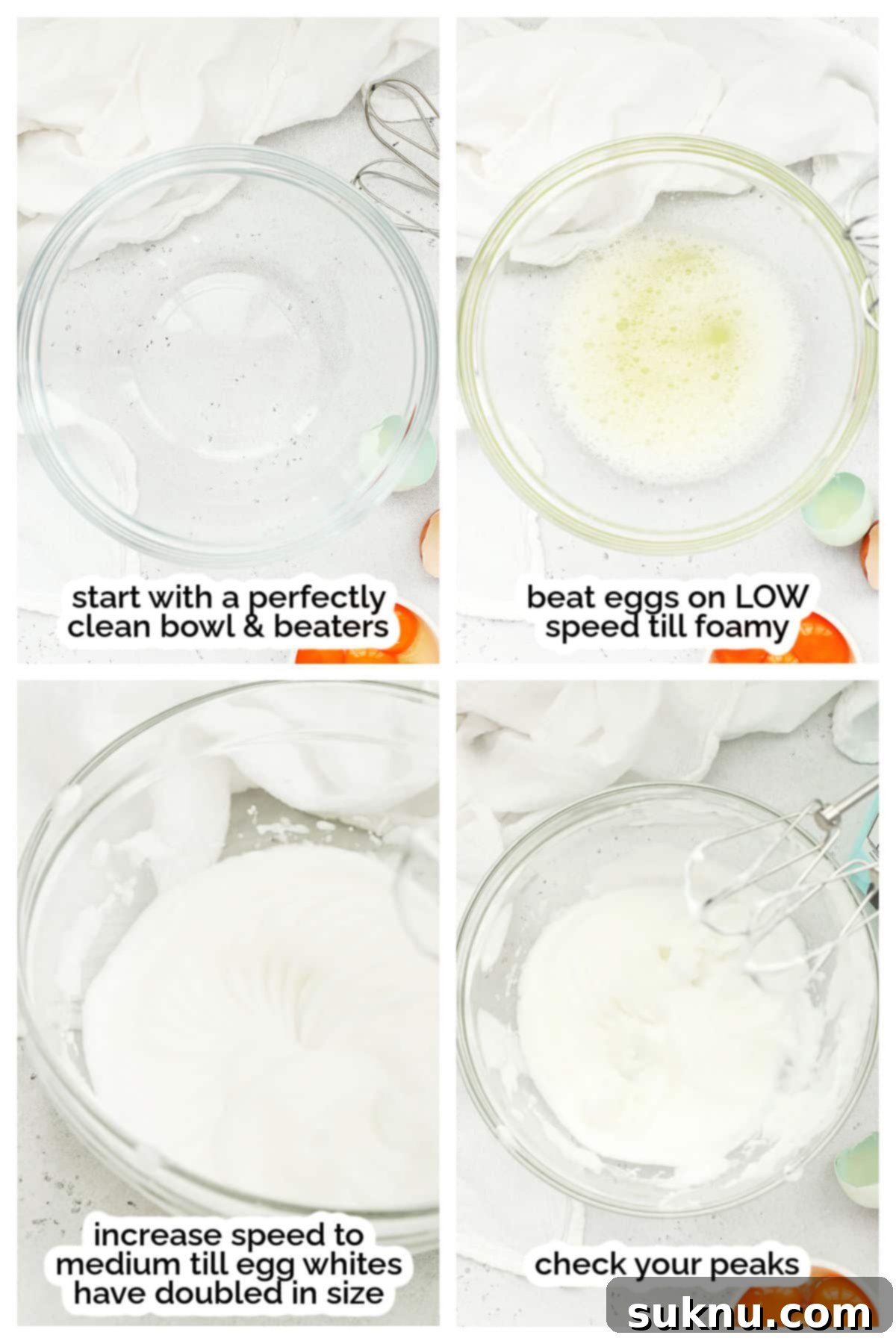
Achieving the perfect consistency for whipped egg whites is a meticulous but rewarding process. Follow these steps to ensure success, whether you need soft peaks for a delicate mousse or stiff peaks for a towering meringue:
- Choose the Right Equipment: Always start with a very clean glass or metal bowl. These materials are non-porous and prevent any residual fats or oils from interfering with the whipping process. Plastic bowls, being porous, can harbor minute fat particles, making it challenging for egg whites to aerate properly. Stainless steel or glass bowls are ideal choices for optimal results. Ensure your whisk attachments or beaters are also impeccably clean.
- Ensure Impeccable Cleanliness: This step cannot be stressed enough. Even the tiniest speck of fat—whether from egg yolk, butter, oil, or previous cooking—will inhibit your egg whites from whipping. Before you begin, thoroughly wash and dry your bowl and beaters. For an extra measure of caution, wipe them down with a clean kitchen cloth or paper towel lightly moistened with white vinegar or lemon juice. This helps to eliminate any lingering invisible grease.
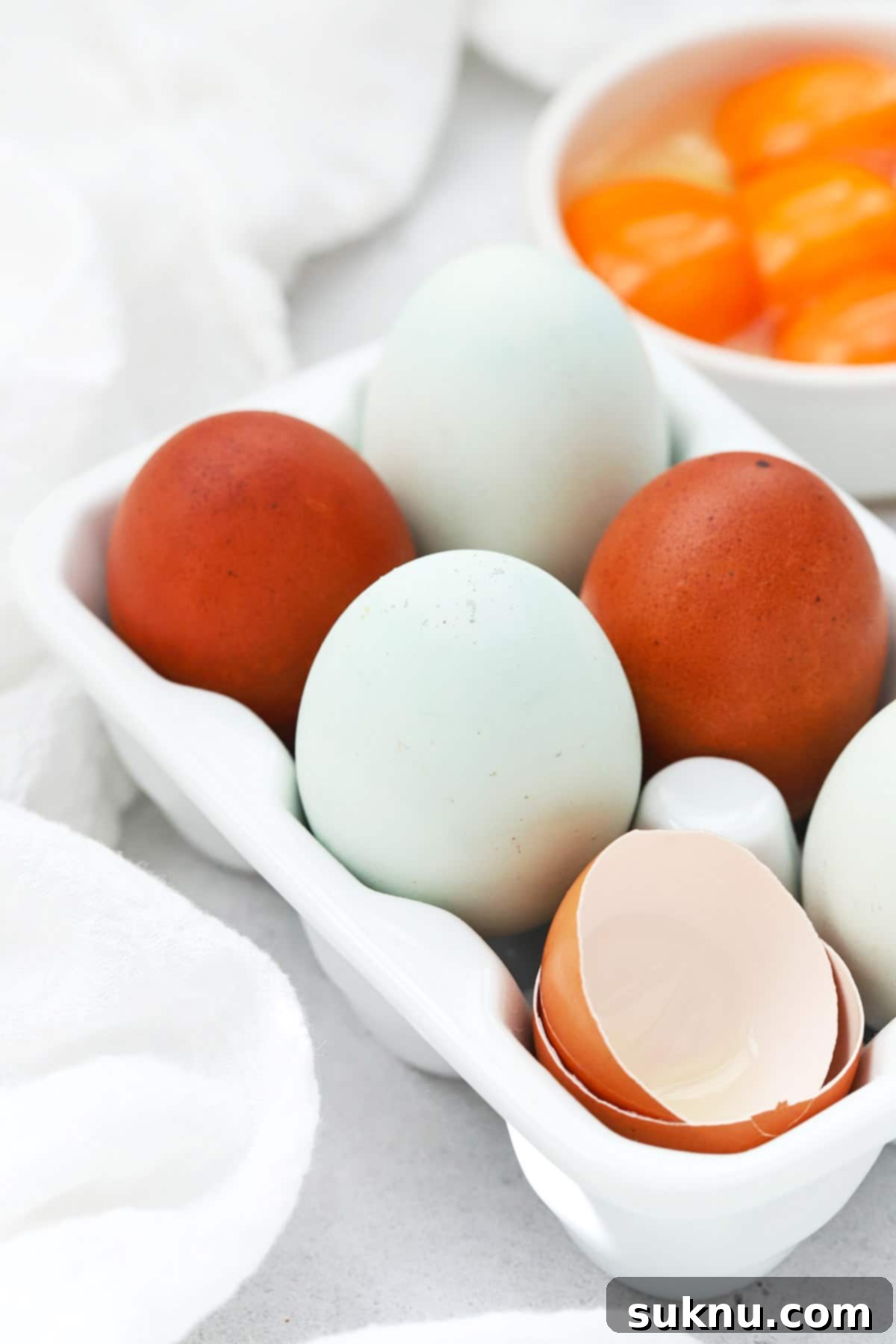
- Carefully Separate Your Eggs: The separation of egg yolks and whites must be done with extreme care. Place the egg whites into your prepared clean bowl, setting the yolks aside for another culinary use. It is absolutely critical that no trace of egg yolk enters the whites. If even a tiny bit of yolk breaks into the whites, the fat content will prevent them from whipping. In such a scenario, it’s best to discard that batch of whites (or use them for scrambled eggs) and start fresh with new eggs.
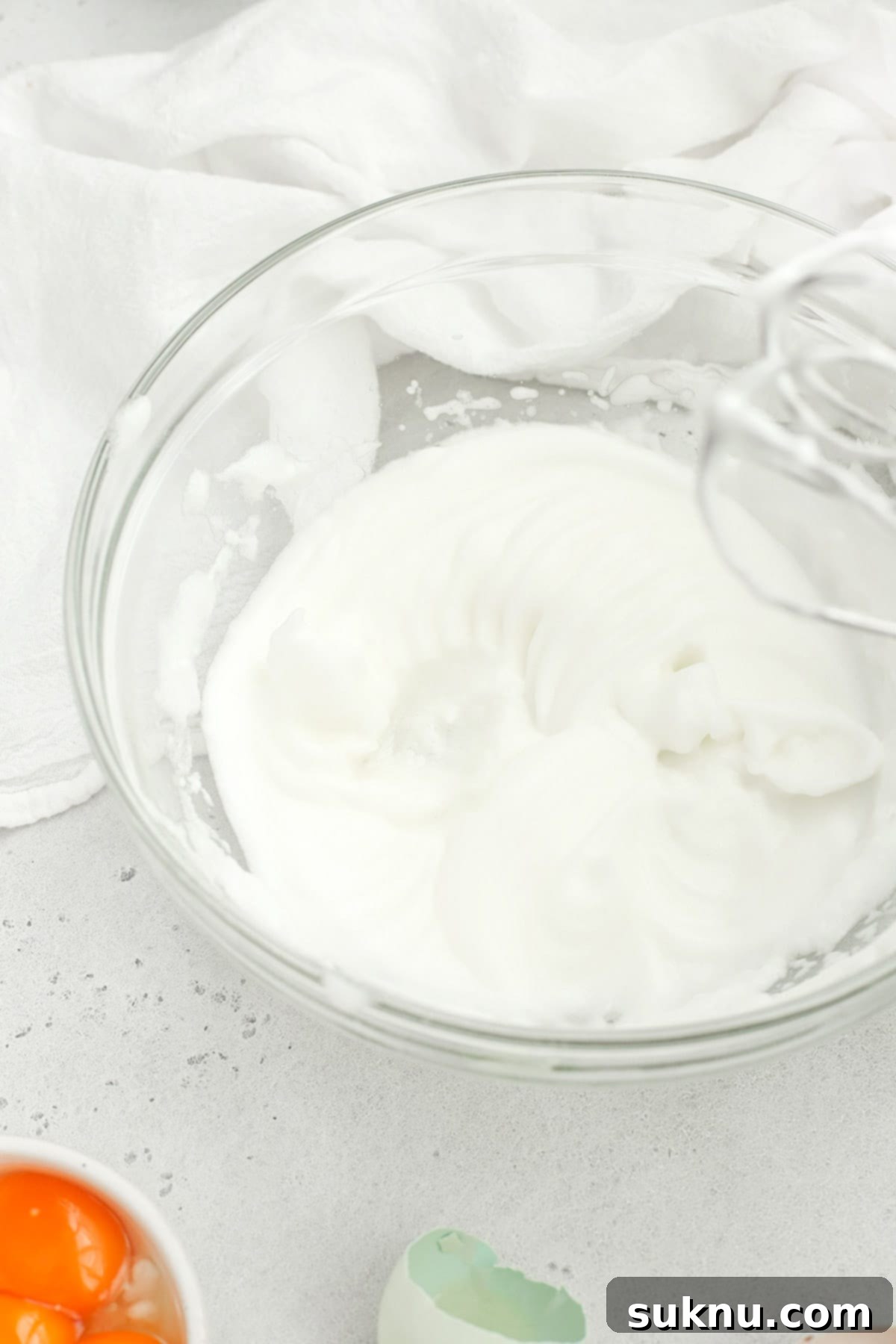
- Begin Whipping on Low Speed: Using your chosen mixer (handheld or stand), start whisking the egg whites on a low speed. This initial phase gently breaks up the protein structure and introduces air gradually. You’ll observe small bubbles forming, and the mixture will still be mostly clear and quite liquid. This stage usually takes about 1-2 minutes.
- Gradually Increase Mixer Speed: Once the egg whites become foamy and bubbly, increase the mixer speed to medium, or medium-high at the most. Continue beating until the egg whites approximately double in volume, transforming into a white, opaque, and frothy mixture. At this point, they will begin to hold some shape but won’t be firm yet.
- Monitor Peak Formation Regularly: The final stage requires vigilant checking. Start testing the consistency of your peaks every minute or so. To check, lift the whisk or beater out of the whipped egg whites.
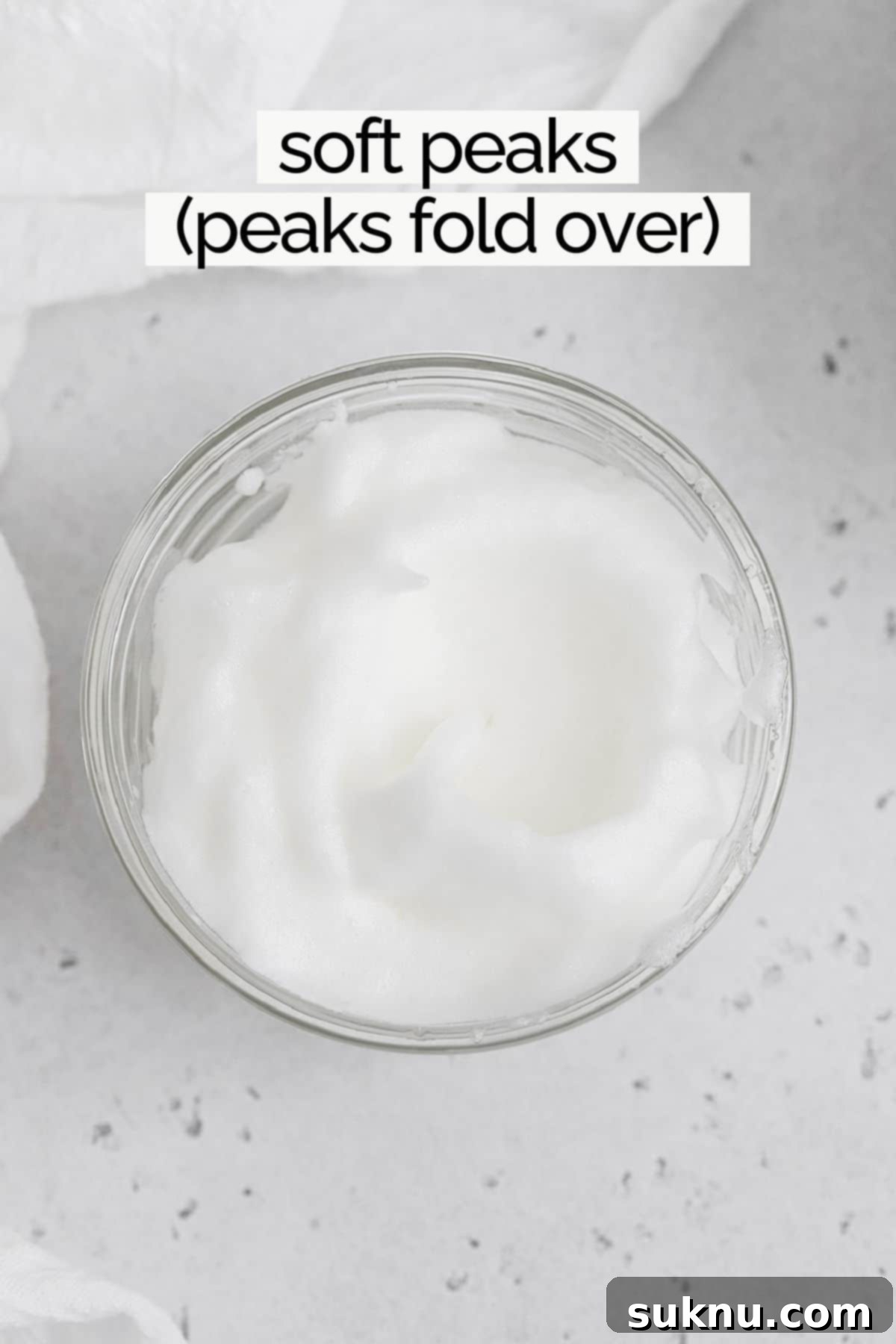
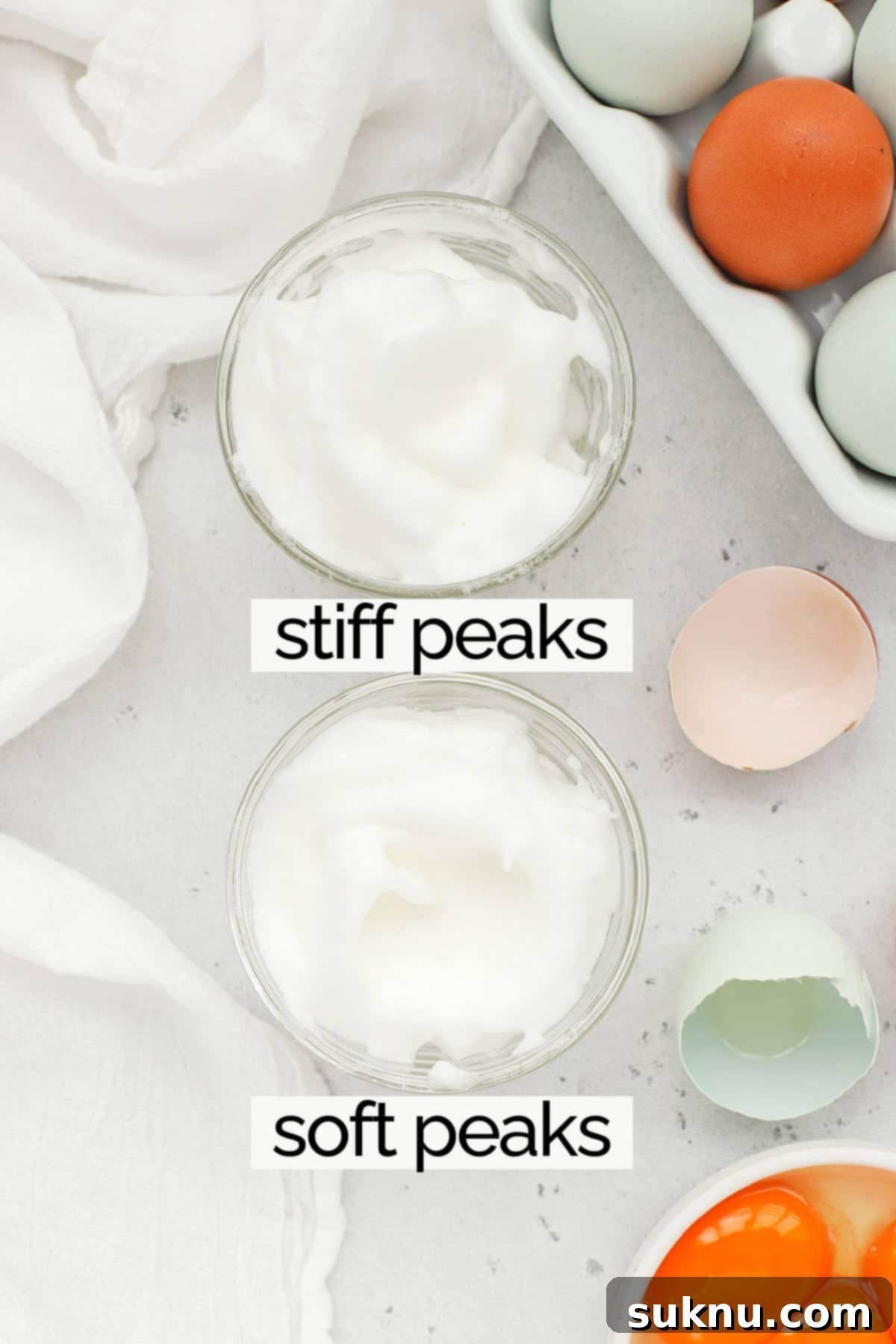
- For SOFT peaks: If the whites form a peak, but the very tip gently droops or curls over (resembling soft-serve ice cream), you have reached the soft peak stage. These are perfect for light mousses and folding into cake batters.
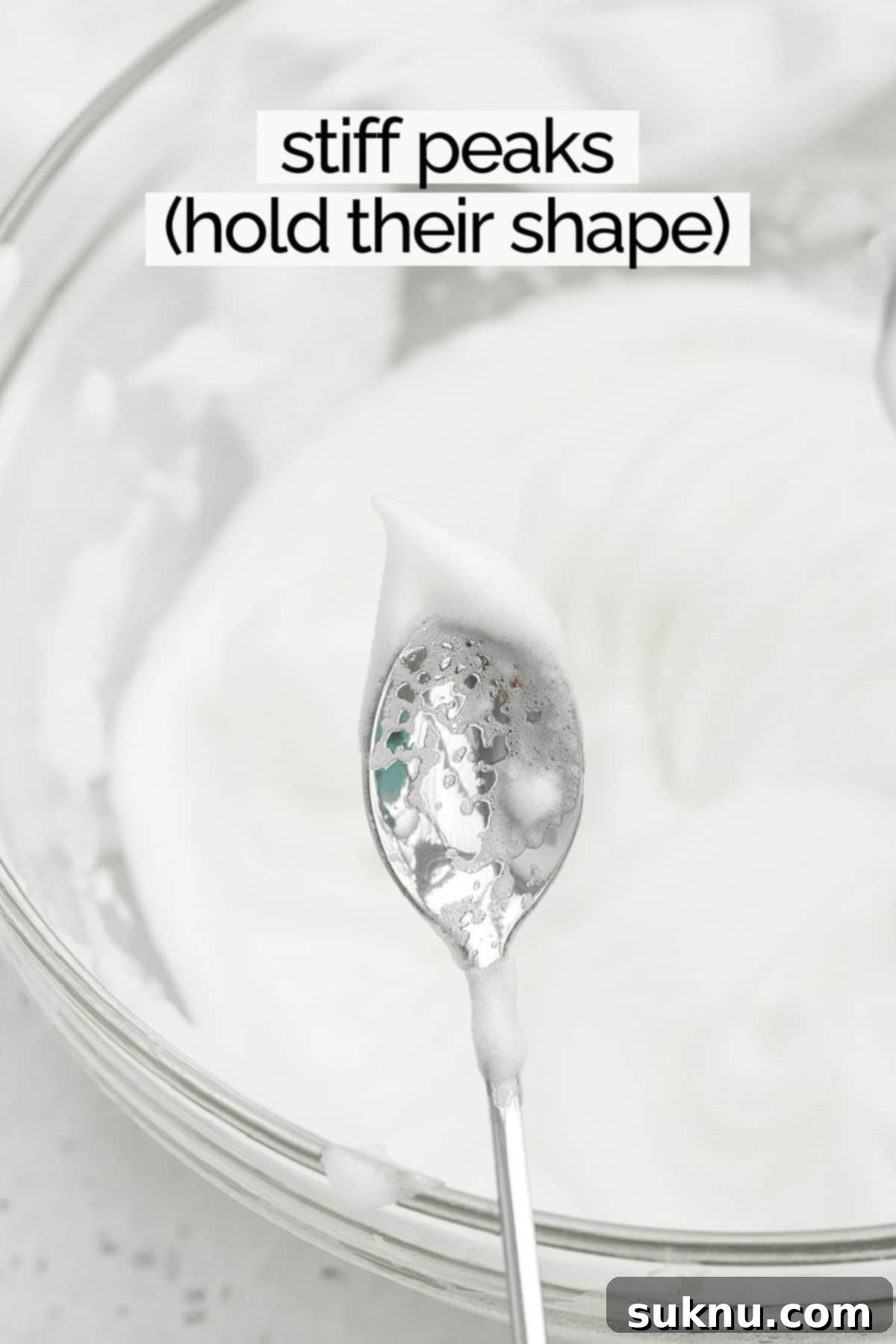
- For STIFF peaks: If the peak holds its shape firmly, standing tall and pointed even when the whisk is rotated or inverted, you’ve achieved the stiff peak stage. These are ideal for meringues, soufflés, and macarons, providing maximum structure and stability.
Do not over-whip past this point, as it can lead to dry, crumbly egg whites.
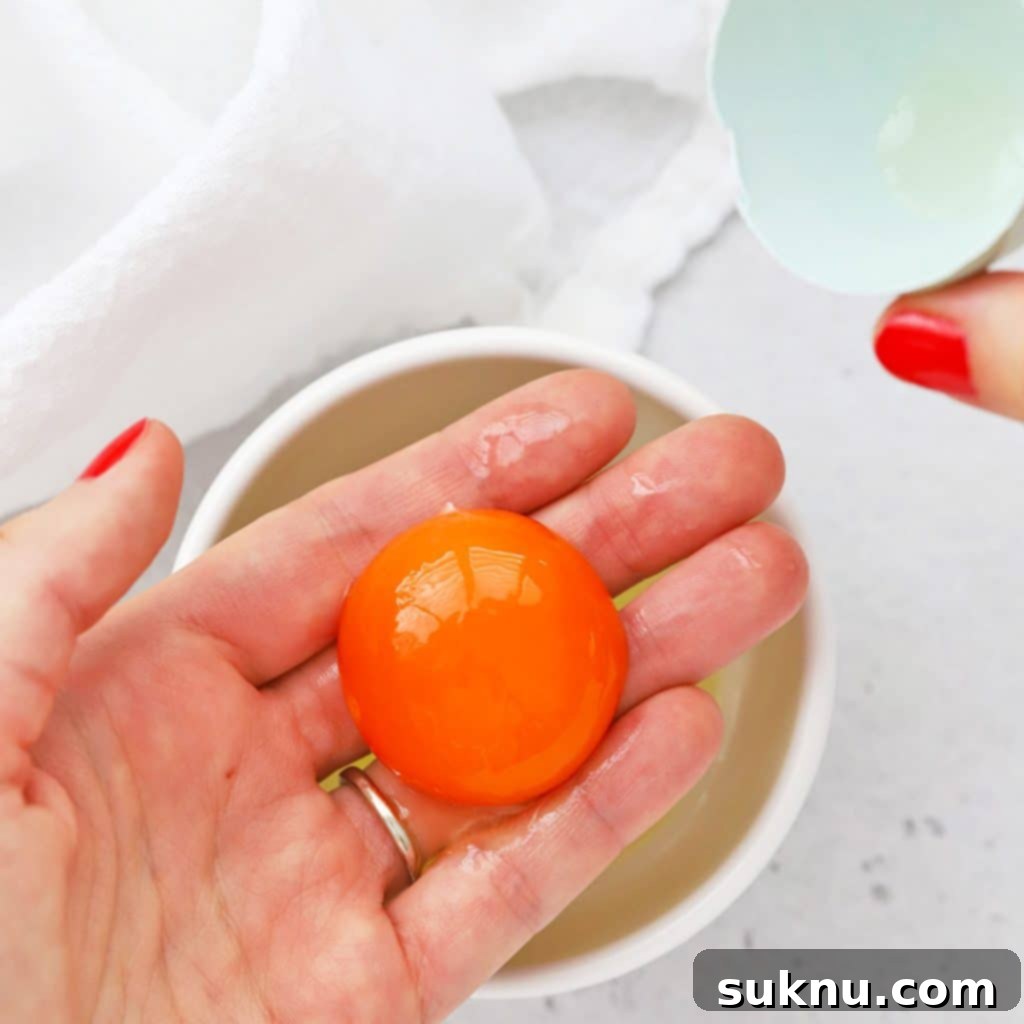
Essential Skill: How To Separate Eggs
A critical step in whipping egg whites successfully is the proper separation of yolks from whites. If you’re new to this technique or simply need a refresher, our dedicated guide covers three effective methods for separating eggs. It provides a detailed, step-by-step walkthrough to ensure you get it right every time, making your egg-white whipping journey much smoother.
Soft Peaks Vs. Stiff Peaks: Knowing the Difference for Perfect Results
Understanding the distinction between soft and stiff peaks is fundamental to achieving the desired texture in your recipes. The difference lies in the firmness and stability of the whipped egg whites. Here’s how to accurately identify each stage:
Soft Peaks: The Gentle Cascade
- When you lift your whisk or beater from the egg whites, the mixture will form a peak. At the soft peak stage, the tip of this peak will gently curl over or “droop,” much like the delicate swirl of soft-serve ice cream. The whites will still appear glossy and somewhat pliable. This consistency is ideal for applications where you want to add lightness without excessive structure, such as folding into mousses, custards, or very tender cake batters. Soft peaks indicate that the proteins have started to stabilize the air, but the structure is still fragile and easily incorporated into other ingredients.
Stiff Peaks: The Unyielding Structure
- The stiff peak stage represents the maximum incorporation of air and protein stabilization. When you remove your whisk or beaters, the egg whites will form a peak that stands tall and holds its pointed shape without any drooping or collapsing. The surface will be smooth, glossy, and uniform. Furthermore, if you gently rotate the whisk or even carefully invert your bowl (though we recommend testing with the whisk first!), the peak will maintain its integrity and shape. This robust structure is essential for recipes like meringues, macarons, and soufflés, where significant lift and a stable, airy framework are required. Stiff peaks provide the necessary strength to support other ingredients and create impressive volume.
Enhancing Stability: How to Get Whipped Egg Whites to Hold Their Shape Better
While proper whipping technique is paramount, certain ingredients can act as stabilizers, helping your whipped egg whites achieve and maintain their desired structure, especially in humid conditions or when preparing delicate desserts. Incorporating these stabilizers at the right moment can make a significant difference in the final outcome of your bake:
- Add a Pinch of Salt: A very small amount of salt can help egg whites maintain their structure. For 2-4 egg whites, a tiny pinch (less than 1/8 teaspoon) added during the foamy stage (after the initial low-speed whipping) is usually sufficient. Salt helps to strengthen the protein network, making the foam more resilient.
- Incorporate Acid (Vinegar or Lemon Juice): Acidic ingredients like white vinegar or fresh lemon juice are excellent stabilizers. They help to denature the egg white proteins more efficiently, allowing them to form a stronger, more stable foam. A general guideline is about 1/8 teaspoon of vinegar or lemon juice per egg white, added once the egg whites are foamy but before they reach soft peaks.
- Utilize Cream of Tartar: Cream of tartar, a tartaric acid salt, functions similarly to liquid acids in stabilizing egg whites. It prevents the proteins from bonding too tightly, resulting in a more elastic and stable foam that is less likely to collapse. Add about 1/8 teaspoon of cream of tartar per egg white when the whites are still foamy.
- Gradually Add Sugar: When making meringues or certain frostings, sugar is crucial not just for sweetness but also for stability. Sugar helps to create a glossy, stable meringue by dissolving into the egg white foam, forming a syrup that reinforces the protein structure. However, timing is everything: add sugar gradually, usually one tablespoon at a time, once the egg whites have reached the soft peak stage. Adding sugar too early can weigh down the egg whites and prevent them from achieving full volume. This slow incorporation allows the sugar to fully dissolve and integrate into the foam, leading to a much more stable and shiny result.
Frequently Asked Questions & Advanced Tips for Whipping Egg Whites
How Long Does It Take To Whip Egg Whites?
The time required to whip egg whites can vary based on several factors, including the number of egg whites, their temperature, the ambient room temperature, and the power of your mixer. However, using a hand mixer, you can generally expect the following timelines:
- For SOFT PEAKS: Typically takes about 4-5 minutes of continuous beating.
- For STIFF PEAKS: Usually requires approximately 8-9 minutes of continuous beating.
These are general guidelines; always rely on visual cues and the peak test to determine the exact stage.
Why Are My Egg Whites Not Whipping?
This is by far the most common problem encountered when whipping egg whites, and almost always stems from a single culprit: fat contamination. Even the slightest trace of fat can prevent egg whites from aerating properly. Common sources of contamination include:
- Egg Yolk: If any part of the yolk breaks and mixes with the whites during separation, its fat content will destabilize the proteins.
- Grease/Oil Residue: Improperly cleaned bowls or beaters can harbor invisible residues from previous cooking, which act as a fat contaminant.
- Moisture: While less common than fat, excessive moisture can also hinder whipping. Ensure your equipment is thoroughly dry.
To avoid this, always start with immaculately clean, grease-free glass or metal bowls and beaters.
Are Cold Egg Whites Or Room Temperature Egg Whites Better For Whipping?
This is a common debate among bakers! While cold eggs are undeniably easier to separate without breaking the yolk, room temperature egg whites generally whip faster and achieve greater volume than cold ones. The proteins in egg whites are more relaxed and flexible when they are closer to room temperature, allowing them to stretch and entrap air more effectively. For best results, separate your eggs when cold, then let the whites sit at room temperature for about 30 minutes before whipping.
Have A Copper Bowl? Use It!
For the ultimate egg white whipping experience, a copper bowl is a secret weapon of many professional bakers. Copper ions react with the proteins in egg whites, forming a more stable and voluminous foam. This natural chemical interaction helps create incredibly strong and shiny peaks, making your whipping process even more successful. If you own one, now’s the time to put it to use!
Can You Overbeat or Overwhip Egg Whites?
Absolutely, yes! While the goal is volume and stiffness, there’s a point of no return. If you continue whipping egg whites past the stiff peak stage, the proteins will begin to break down, expelling the trapped air. This results in a loss of their beautiful glossy sheen, and they will become dry, crumbly, and curdled, resembling cottage cheese. Over-beaten egg whites are much harder to incorporate into batters without deflating. You can sometimes attempt to rescue slightly over-beaten egg whites by gently folding in one fresh, unbeaten egg white and whisking briefly until they regain a smoother, glossier appearance. However, this method doesn’t always work, so it’s best to stop whipping as soon as stiff peaks are achieved.
More Essential Baking Tips To Try
-
How To Separate Eggs (Yolks & Whites)
-
How To Measure Flour Correctly
-
How To Freeze Cookie Dough
-
How To Keep Bundt Cake From Sticking
-
How To Brown Butter
Recipe Card: How To Whip Egg Whites (Stiff Peaks & Soft Peaks)
Did you make this recipe?
Leave a star rating below when you try our tutorial for whipping egg whites! We can’t wait to hear how it goes.
Print
How To Whip Egg Whites (Stiff Peaks & Soft Peaks)
5 Stars
4 Stars
3 Stars
2 Stars
1 Star
5 from
1 review
-
Author:
Sweets And Thank You -
Total Time:
15 minutes -
Yield:
1 batch -
Diet:
Gluten Free
Description
Learn how to whip egg whites into stiff peaks or soft peaks for all your favorite recipes. Don’t miss our tips!
Ingredients
- A very clean glass or metal bowl (plastic is not recommended)
- Hand mixer with beaters attached (or a stand mixer)
- Egg whites, preferably at room temperature for best volume
Instructions
How To Whip Egg Whites:
- Prepare Your Equipment: Thoroughly wash and dry your mixing bowl (preferably glass or metal) and beaters. Even a microscopic trace of fat (egg yolk, oil, butter) will prevent egg whites from whipping. For extra assurance, wipe down your bowl and beaters with a cloth dipped in white vinegar or lemon juice, then dry completely.
- Separate Eggs Carefully: Separate the egg yolks from the whites, ensuring absolutely no yolk gets into the whites. Place the whites into your clean bowl. If any yolk contaminates the whites, you must start over with fresh eggs, as they will not whip properly.
- Begin Whipping on Low Speed: Start whisking the egg whites with your mixer on low speed. Continue until the egg whites begin to foam and small, even bubbles appear. The mixture will still be largely clear at this stage.
- Increase Speed Gradually: Increase the mixer speed to medium (or medium-high, but not the highest setting). Continue beating until the egg whites roughly double in volume and transform from clear to an opaque white, frothy consistency.
- Check for Desired Peaks: Begin checking the consistency of your egg whites every minute or so by lifting the beaters. Refer to the descriptions below to identify soft or stiff peaks, stopping as soon as the desired stage is reached to prevent over-whipping.
Identifying the Stages of Whipped Egg Whites:
- SOFT PEAKS: When you lift a whisk or beater from the egg whites, the tip will form a peak that gently folds or droops over, resembling a soft-serve ice cream curl. The whites will still appear glossy and somewhat pliable.
- STIFF PEAKS: The peak formed when the beaters are removed will stand firm and tall, holding its shape without any drooping, even if the whisk is rotated. The egg whites will be glossy and smooth, providing maximum stability. (You could even carefully invert your bowl, and the whites would hold their shape, though we recommend caution!)
-
Prep Time:
15 -
Category:
Tutorial -
Method:
No-Cook -
Cuisine:
American