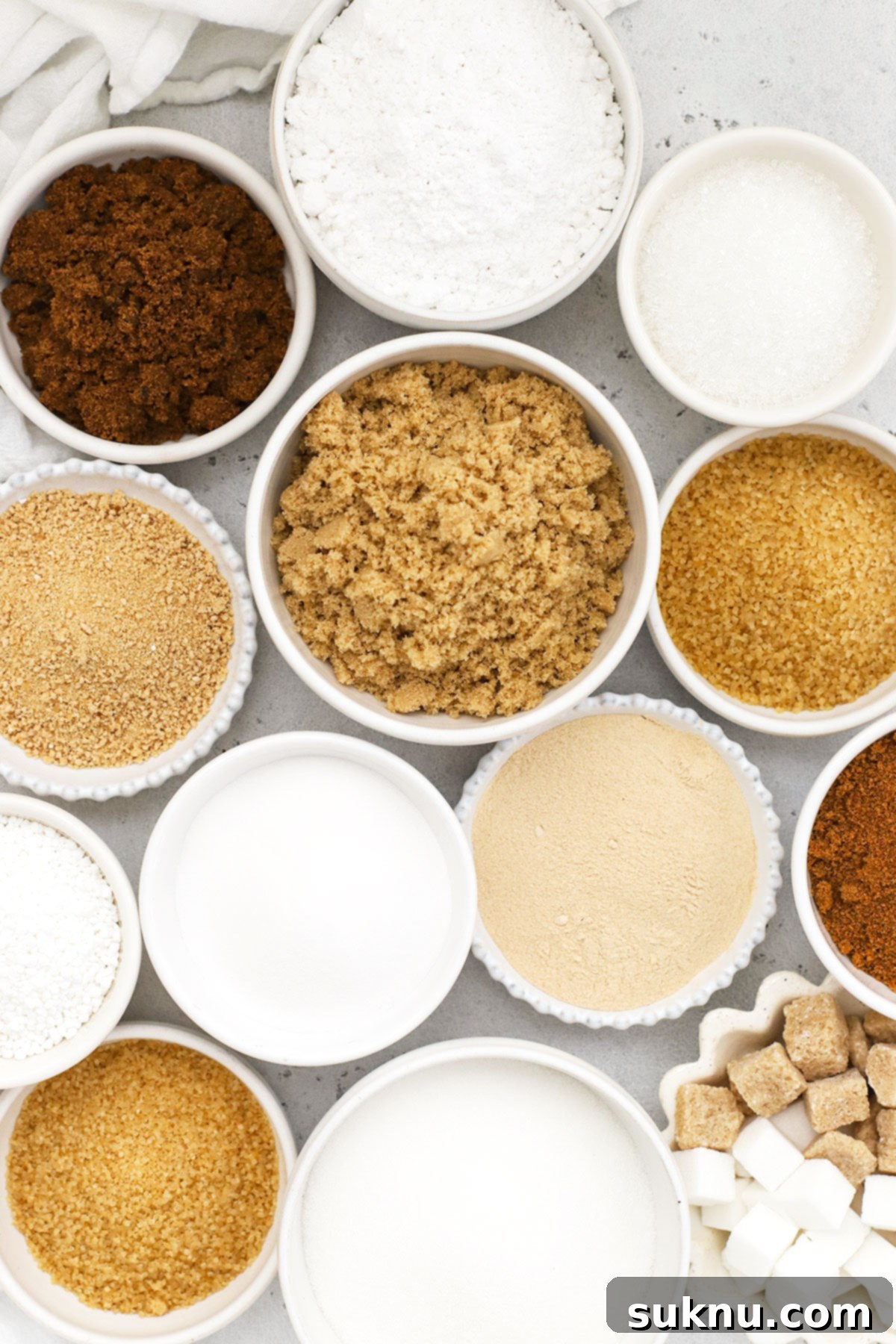
Exploring the Sweet World: 12 Kinds of Sugar and Their Uses in Cooking & Baking
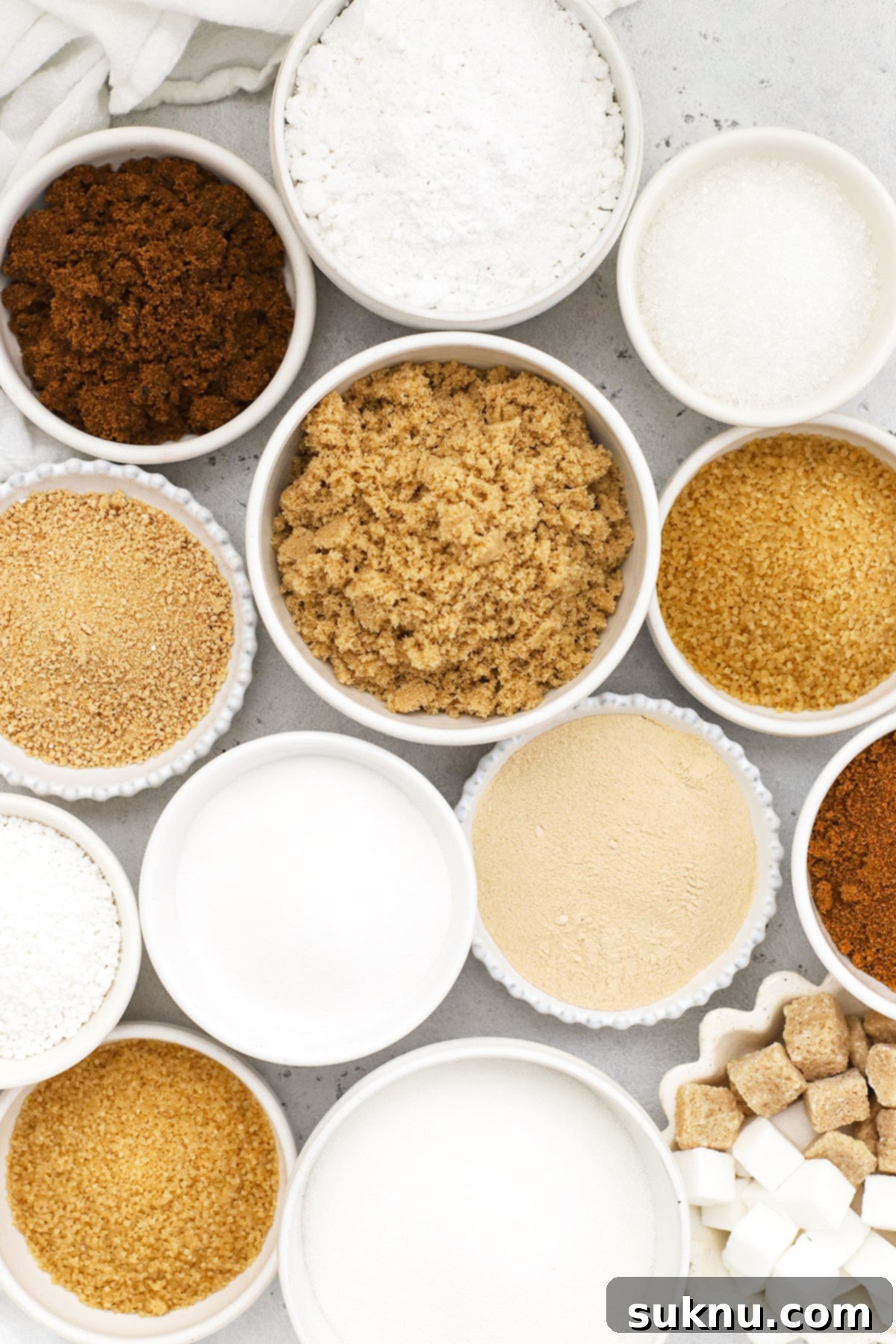
In the vibrant world of cooking and baking, sweeteners play an indispensable role, appearing in almost every delightful creation. From mixing up a batch of chewy cookies to whipping fluffy frostings, garnishing exquisite sweet treats, or adding a touch of sweetness to a refreshing mocktail, sugar is often the star ingredient. While discussions around sugar intake and preferred sweeteners are common, today we’re focusing on the foundational knowledge: understanding the diverse types of sugar and their unique applications.
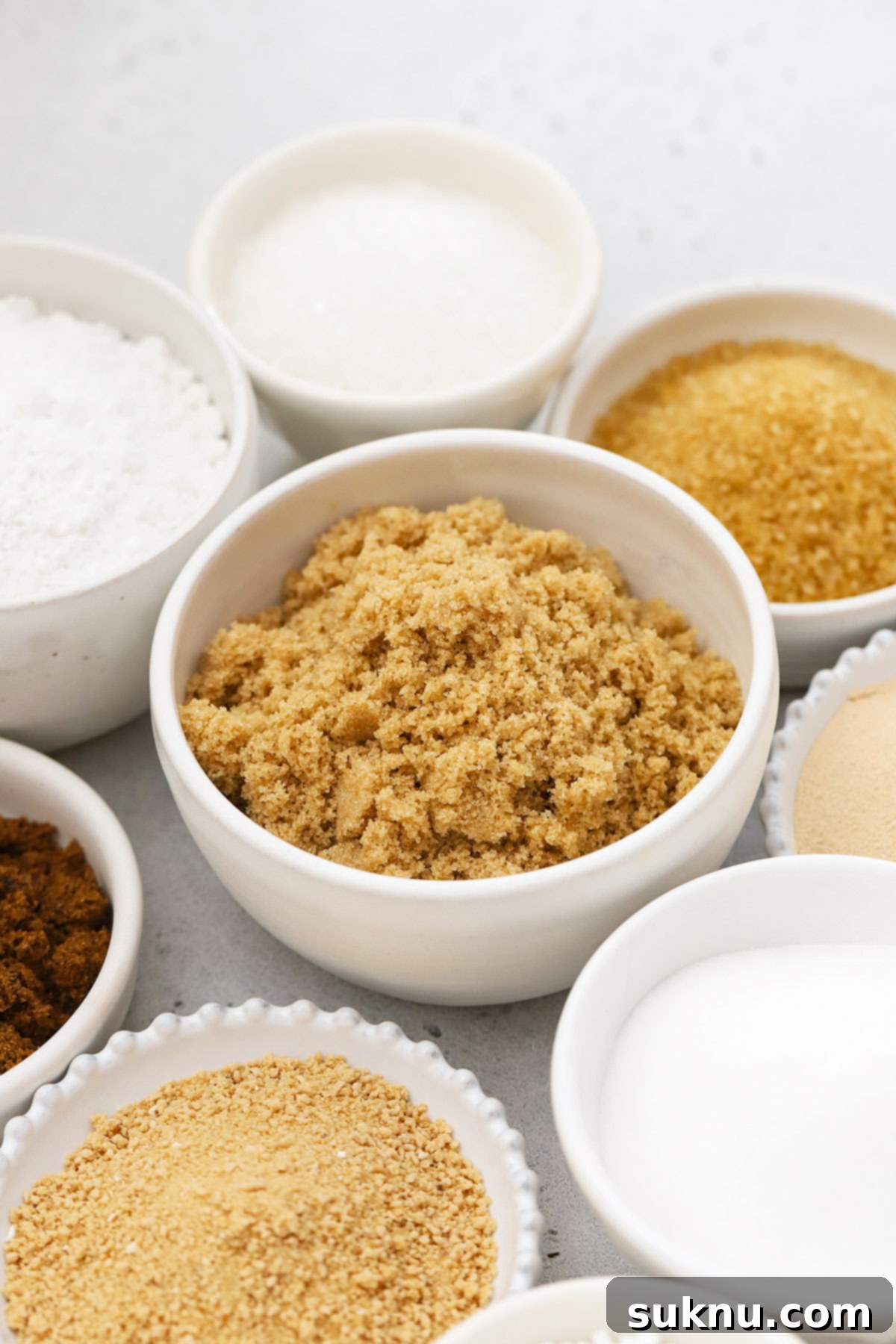
If you’ve ever found yourself pondering the differences between granulated sugar and muscovado, or wondering which sugar is best for a particular recipe, this comprehensive guide is for you! We’ll delve into the various names sugar goes by, explore common swaps and beneficial substitutions, and provide essential tips for accurately measuring, storing, and effectively using sugar in all your culinary adventures. Ready to sweeten your knowledge?
Join us as we uncover the different types of sugar essential for cooking and baking, and learn how to master their use in your kitchen.
Different Types Of Sugar, At A Glance:
- Granulated Sugar
- Brown Sugar
- Powdered Sugar
- Caster Sugar (Superfine Sugar)
- Turbinado Sugar
- Demerara Sugar
- Muscovado Sugar
- Pearl Sugar
- Sparkling Sugar
- Maple Sugar
- Coconut Sugar
- Date Sugar
- Bonus Type: Sugar Cubes!
- FAQ + Tips And Tricks For Working With Sugar
- More Baking Tips To Try
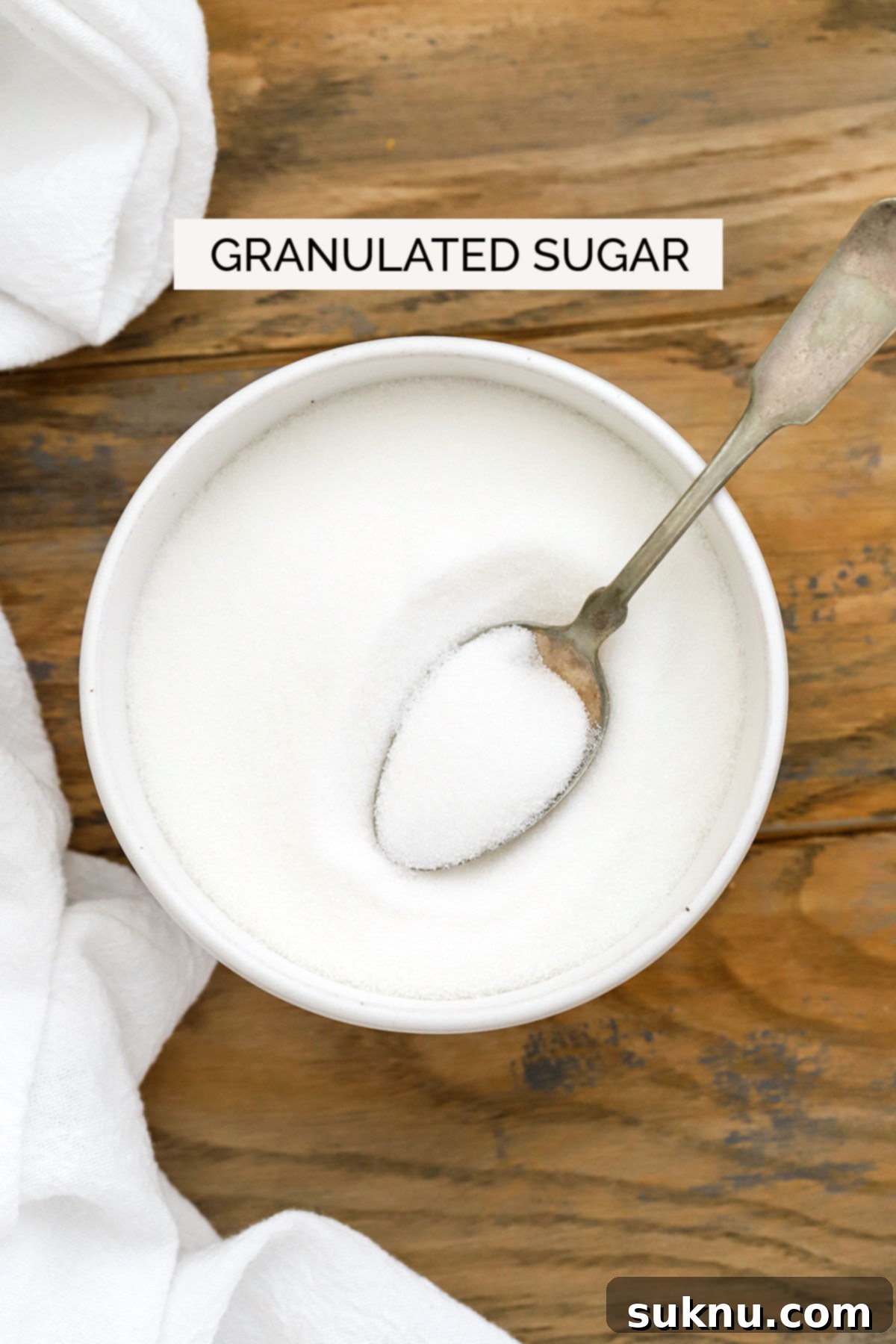
Granulated Sugar
Granulated sugar, commonly known as white sugar or table sugar, is the most ubiquitous form of sugar found in kitchens worldwide. When a recipe or food label simply states “sugar,” it almost invariably refers to granulated sugar.
This refined white sugar is typically produced from either sugar cane or sugar beets, or sometimes a combination of both. The refining process involves removing molasses, which gives granulated sugar its characteristic white, sparkling appearance. In some cases, it may be further bleached to achieve an even purer white hue. You might encounter “cane sugar” or “natural cane sugar” at the grocery store. While also a refined white sugar, it’s exclusively derived from sugarcane and often has a slightly blonder, less stark white color than its more heavily refined counterpart. Both varieties are generally interchangeable in most recipes calling for sugar, white sugar, or granulated sugar.
Granulated sugar is prized for its ability to dissolve effectively, making it perfect for creating simple syrups for cocktails and mocktails, or for seamlessly blending into batters and doughs. Its crystal structure also plays a crucial role in baking, particularly in the creaming method, where it aerates butter to create light, fluffy textures in cakes and cookies. It also contributes to the desirable browning and crispness of many baked goods.
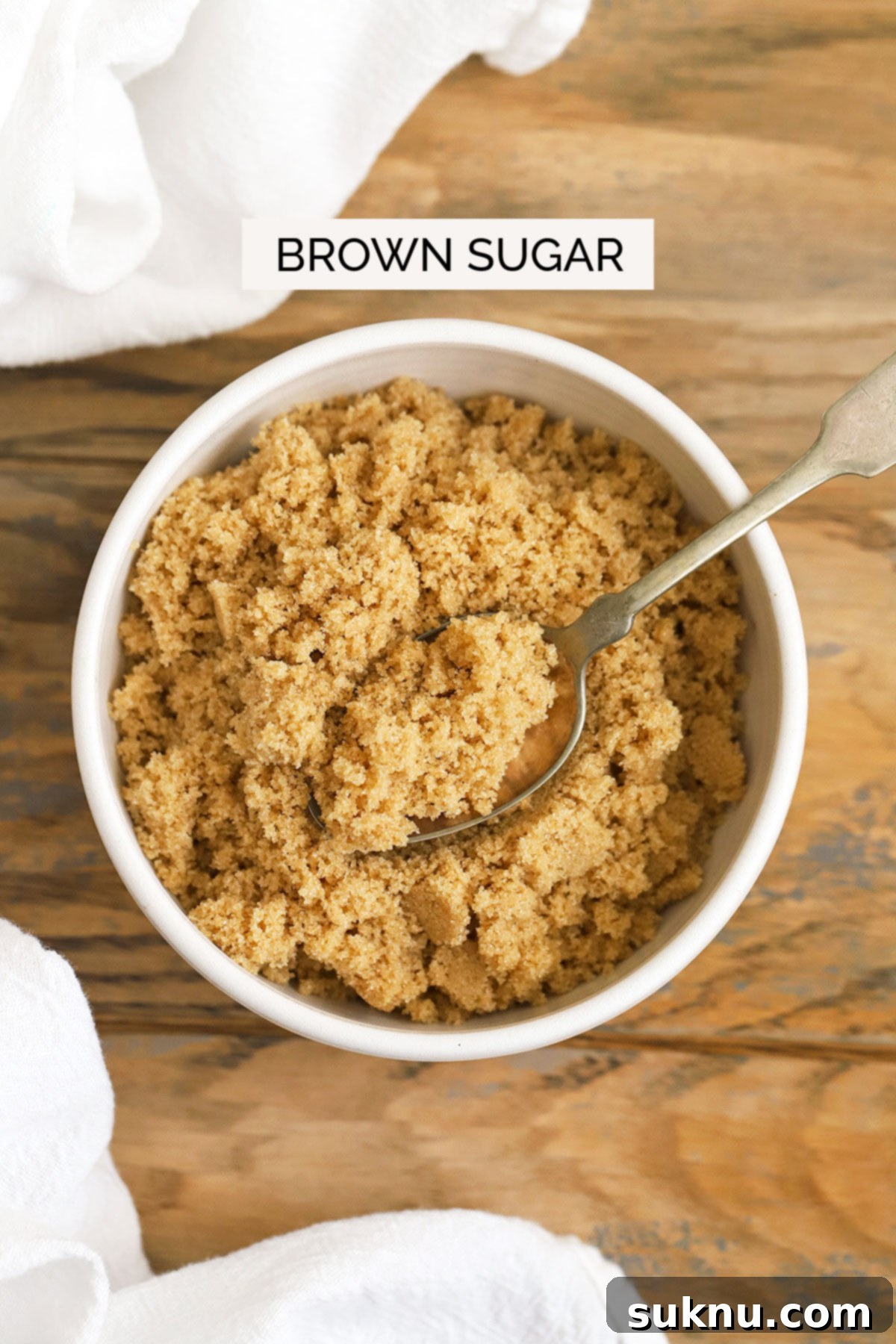
Brown Sugar
Brown sugar is essentially granulated sugar with molasses added back in. This molasses component is responsible for its distinctive color and moist texture. The quantity of molasses determines whether it’s classified as light brown sugar, which contains less molasses, or dark brown sugar, with a higher molasses content and a more robust flavor.
Due to its molasses content, brown sugar is inherently more moist than granulated sugar. This characteristic makes it an excellent choice for imparting extra chewiness and moisture to baked goods like cookies, brownies, and muffins. Beyond texture, brown sugar offers a richer, more complex flavor profile than white sugar, introducing delightful notes of toffee, caramel, and distinct molasses to recipes. It also contributes a beautiful golden-brown hue to your culinary creations.
While the molasses enhances both color and flavor, it also makes brown sugar a bit more temperamental to work with. For accurate measurements, it’s crucial to pack brown sugar firmly into your measuring cup. For even greater precision, weighing it is always recommended. Brown sugar also tends to dry out and harden more quickly than white sugar. If you find your brown sugar has become solid, simple tricks like adding a slice of bread or a few mini marshmallows to its airtight container overnight can help restore its soft, moist texture.
GOOD TO KNOW: In a pinch, you can easily create your own brown sugar substitute at home by combining granulated sugar with a small amount of molasses. This can be a lifesaver when you’re midway through a recipe and realize you’re out of brown sugar!
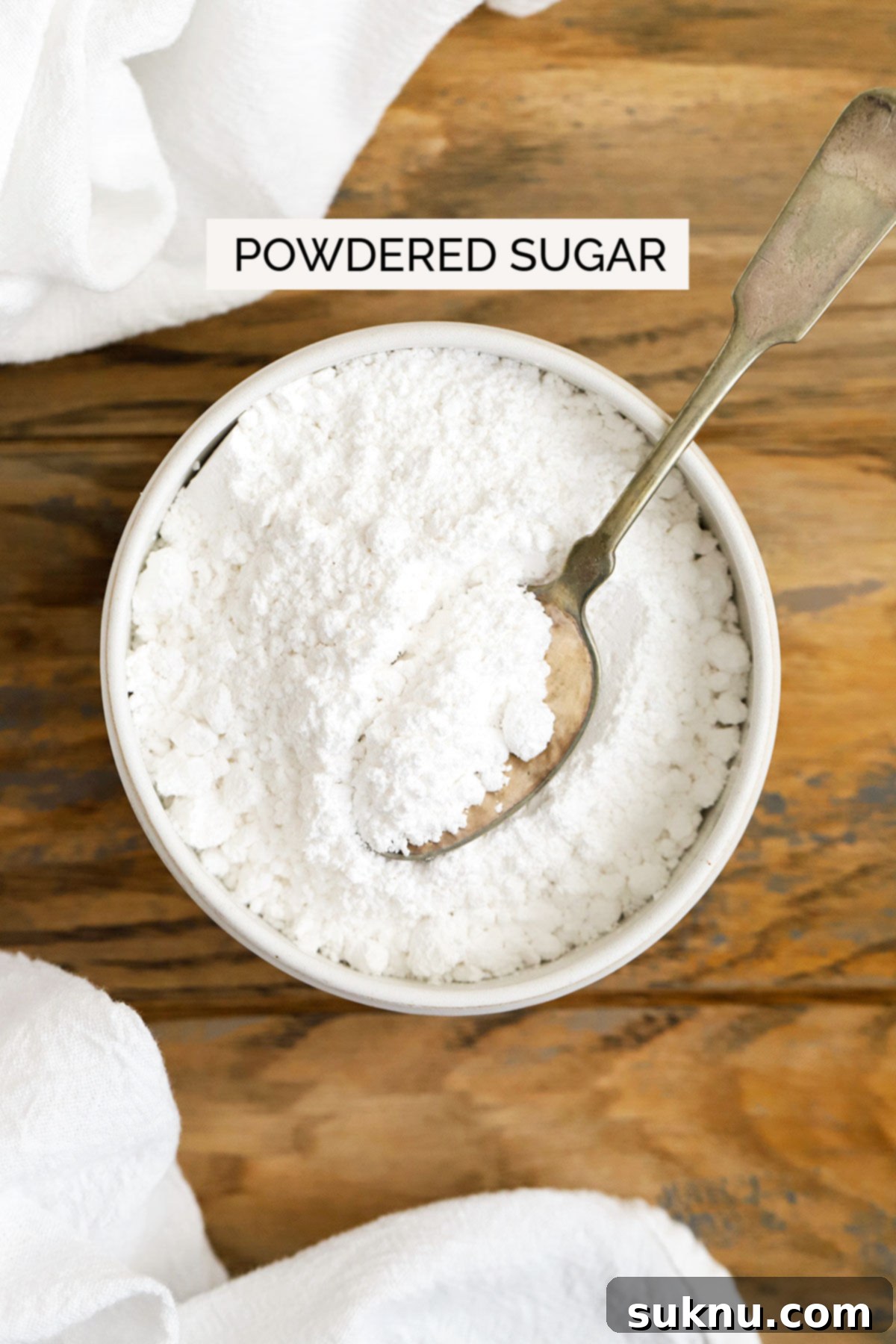
Powdered Sugar
Powdered sugar, also widely recognized as confectioner’s sugar or icing sugar, is distinguished by its incredibly fine, powdery texture. It’s produced by finely grinding granulated sugar, often with the addition of a small amount of cornstarch or arrowroot powder. This anti-caking agent prevents clumping and maintains its light, airy consistency.
The rapid dissolution rate of confectioner’s sugar makes it the preferred choice for a vast array of frostings, glazes, and icings, yielding a smooth, lump-free finish. Its fine particles also contribute to a desirable glossy sheen when incorporated into certain baked goods, such as delicate brownies or fudge. Beyond its structural contributions, powdered sugar shines as a versatile garnish. Lightly dusted, shaken, or delicately misted over cakes, tarts, pancakes, and pastries, it adds an elegant final flourish. It’s also commonly used to coat cookies, donuts, and truffles, providing a subtle sweetness and appealing visual contrast.
GOOD TO KNOW: Should you find yourself without powdered sugar, you can readily make your own at home using a high-speed blender. Simply blend granulated sugar until it reaches a fine, powdery consistency. Be aware that the abrasive action of sugar crystals can sometimes cause minor cosmetic scuffs or scratches inside the blender pitcher, though this typically doesn’t affect the appliance’s functionality.
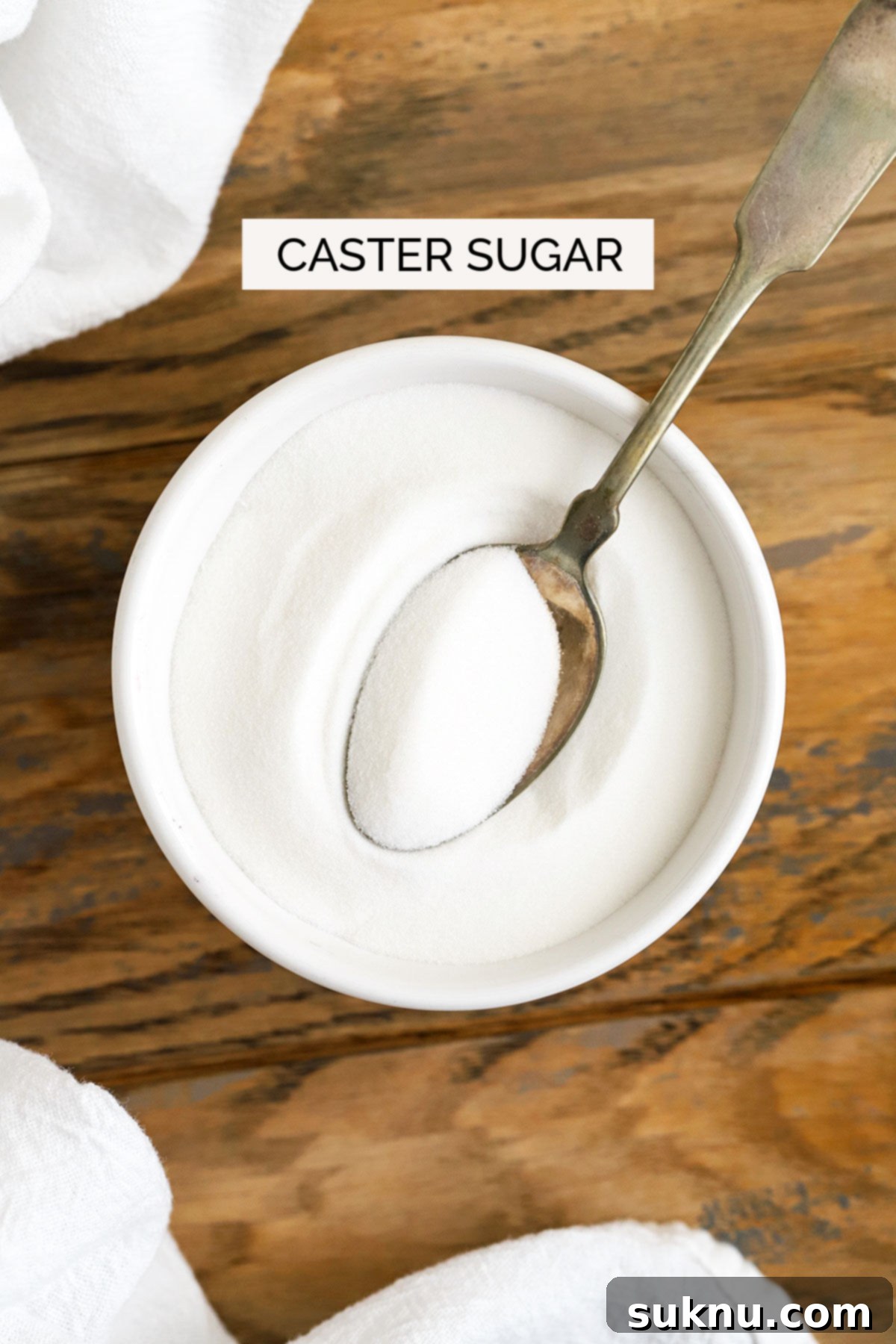
Caster Sugar (Superfine Sugar)
Caster sugar, also known as superfine sugar or baker’s sugar, is characterized by its exceptionally small, fine grains, which are finer than granulated sugar but coarser than powdered sugar. While more prevalent in the U.K. than in the United States, its unique properties make it invaluable for specific culinary applications.
Its delicate texture allows caster sugar to dissolve rapidly and completely, making it ideal for incorporating into cold liquids, delicate meringues, and custards without leaving a gritty texture. It’s also excellent for crafting smooth simple syrups, as its quick dissolution ensures a clear, consistent product. In baking, superfine sugar creates a lighter, more tender crumb in cakes and sponges, as it incorporates more air during creaming and blends more smoothly into batters.
GOOD TO KNOW: If you’re unable to find caster sugar or don’t have it on hand, you can create a suitable substitute by pulsing regular granulated sugar a few times in a blender or food processor. While it won’t be precisely identical to commercially produced superfine sugar, this method will effectively break down the grains enough to work as an acceptable substitute in most recipes.
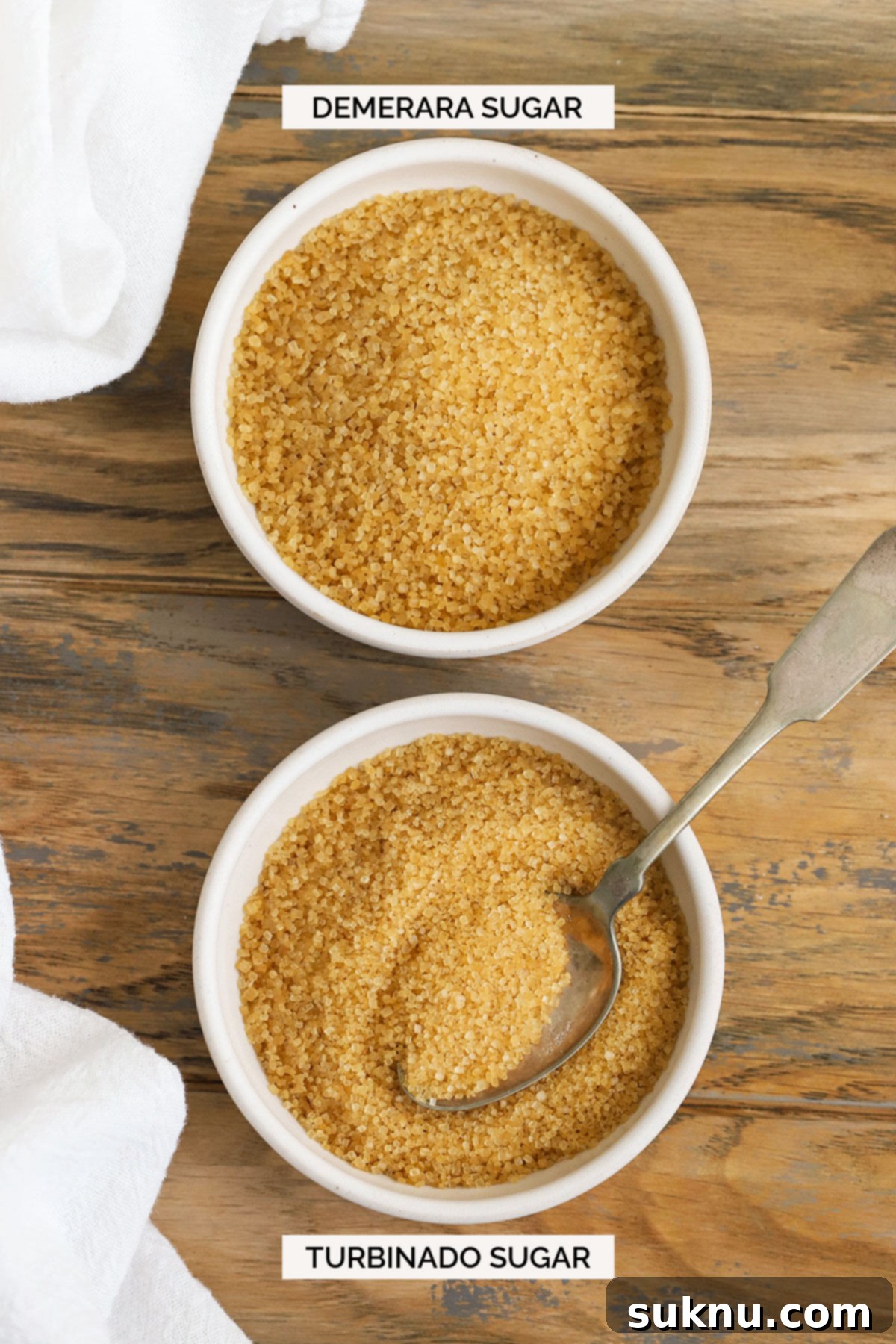
Turbinado Sugar
Often marketed as “raw sugar,” “raw cane sugar,” or “sugar in the raw,” turbinado sugar is a less refined sugar known for its larger, somewhat coarse crystals. It boasts a beautiful soft golden color and a subtle caramel-like flavor, a result of retaining some of its natural molasses.
Turbinado sugar’s distinct texture and appealing appearance make it an excellent choice for decorative purposes. It’s frequently sprinkled over muffins, scones, and other baked goods before baking to create a delightful crunchy topping that also adds a touch of visual appeal. While it can be used in some baking applications, its coarser grains mean it doesn’t dissolve as readily as granulated sugar, making it less suitable for recipes requiring a smooth texture.
GOOD TO KNOW: If a recipe calls for turbinado sugar as a garnish and you don’t have any, demerara sugar is the closest substitute due to its similar coarse texture and flavor profile. Alternatively, sparkling sugar can provide a comparable crunchy, decorative finish, though it lacks the caramel notes.
Demerara Sugar
Demerara sugar, while not as commonly used in American kitchens, is a valuable sugar worth knowing for its unique characteristics. It features slightly larger, more pronounced crystals than turbinado sugar, offering a distinctive crunchy texture. Its flavor profile includes rich toffee notes and a hint of molasses, making it a favorite for enhancing hot beverages like coffee and tea.
Beyond drinks, demerara sugar excels as a finishing sugar, providing an appealing crackly crunch and sparkling visual appeal to cookies, scones, muffins, and fruit tarts. Its robust flavor stands up well to baking, adding depth and a pleasant chewiness when incorporated into the surface of baked goods. It’s also a popular choice for making caramel sauces that benefit from a slightly deeper flavor.
GOOD TO KNOW: Turbinado sugar serves as an excellent substitute for demerara sugar in most scenarios. Its similar coarse grains can deliver that desired crackly crunch and sparkle to baked goods, and it shares a comparable flavor profile, especially for sweetening beverages.
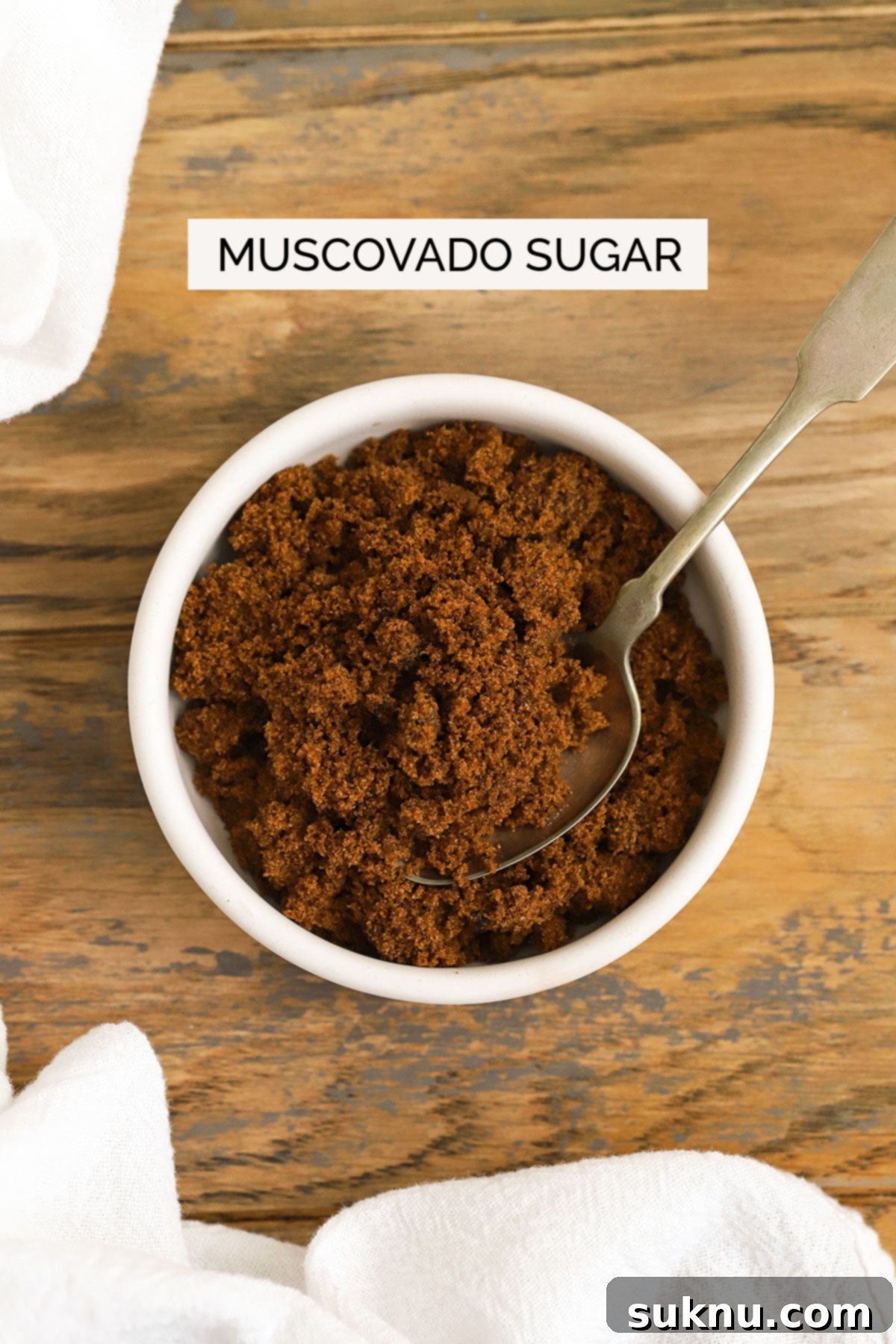
Muscovado Sugar
Muscovado sugar, also known as Barbados sugar or molasses sugar, is an unrefined cane sugar with an exceptionally high molasses content. This gives it a deep, rich color and a moist, sticky texture, often compared to wet sand. It comes in two primary varieties based on molasses intensity: light muscovado sugar, which is lighter in color and less intense, and dark muscovado sugar, which is much darker and boasts a powerful, pungent flavor profile.
Since most of its natural molasses is retained, muscovado sugar offers a more pronounced and complex flavor than even dark brown sugar, featuring notes of rich caramel, burnt toffee, and a distinct liquorice-like undertone. Its bold character makes it ideal for recipes where a strong, assertive sweetness is desired, such as gingerbread, rich fruitcakes, barbecue sauces, or for crafting artisanal rum. Furthermore, thanks to its high molasses content, muscovado sugar contains more trace minerals than more refined sugars.
Due to its intense flavor, muscovado sugar is not a direct 1:1 substitute for brown sugar and should generally only be used when specifically called for in a recipe. The best substitutes for muscovado sugar are typically other unrefined sugars that also retain a significant molasses content, such as panela or sucanat, which offer a similar depth of flavor and moisture.
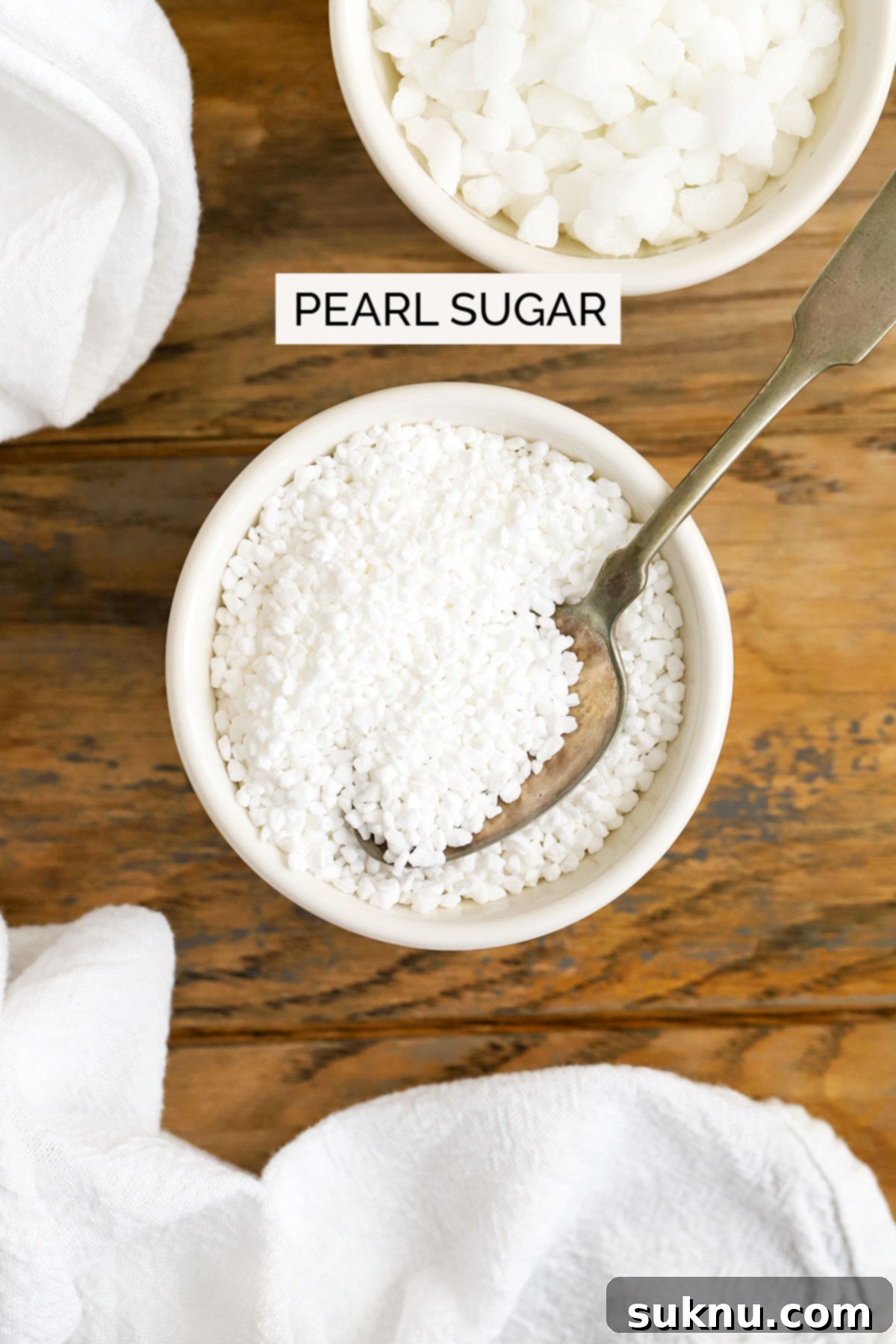
Pearl Sugar
Pearl sugar is a distinctive type of sugar known for its opaque, irregularly shaped, and robust crystals that resist melting during baking. There are two widely recognized varieties: Belgian pearl sugar and Swedish pearl sugar. Belgian pearl sugar is quite large and very crunchy, famously used to create the signature pockets of caramelized sweetness in authentic Belgian Liege waffles. Swedish pearl sugar, while smaller than its Belgian counterpart, is still significantly larger than granulated sugar or standard sprinkles, and is traditionally used to garnish Swedish cinnamon buns and other pastries, providing a beautiful finish and a delicate crunch.
Both types of pearl sugar are primarily used as decorative accents rather than as the main sweetener in a recipe. Their ability to retain their shape and texture even at high temperatures makes them perfect for adding visual appeal and a delightful textural contrast to a variety of baked goods.
GOOD TO KNOW: If you’re struggling to find pearl sugar locally, you can create a homemade version by gently smashing sugar cubes. A meat tenderizer or rolling pin can work wonders to break them down into rustic pearl-like pieces, offering a workable substitute for your baking needs.
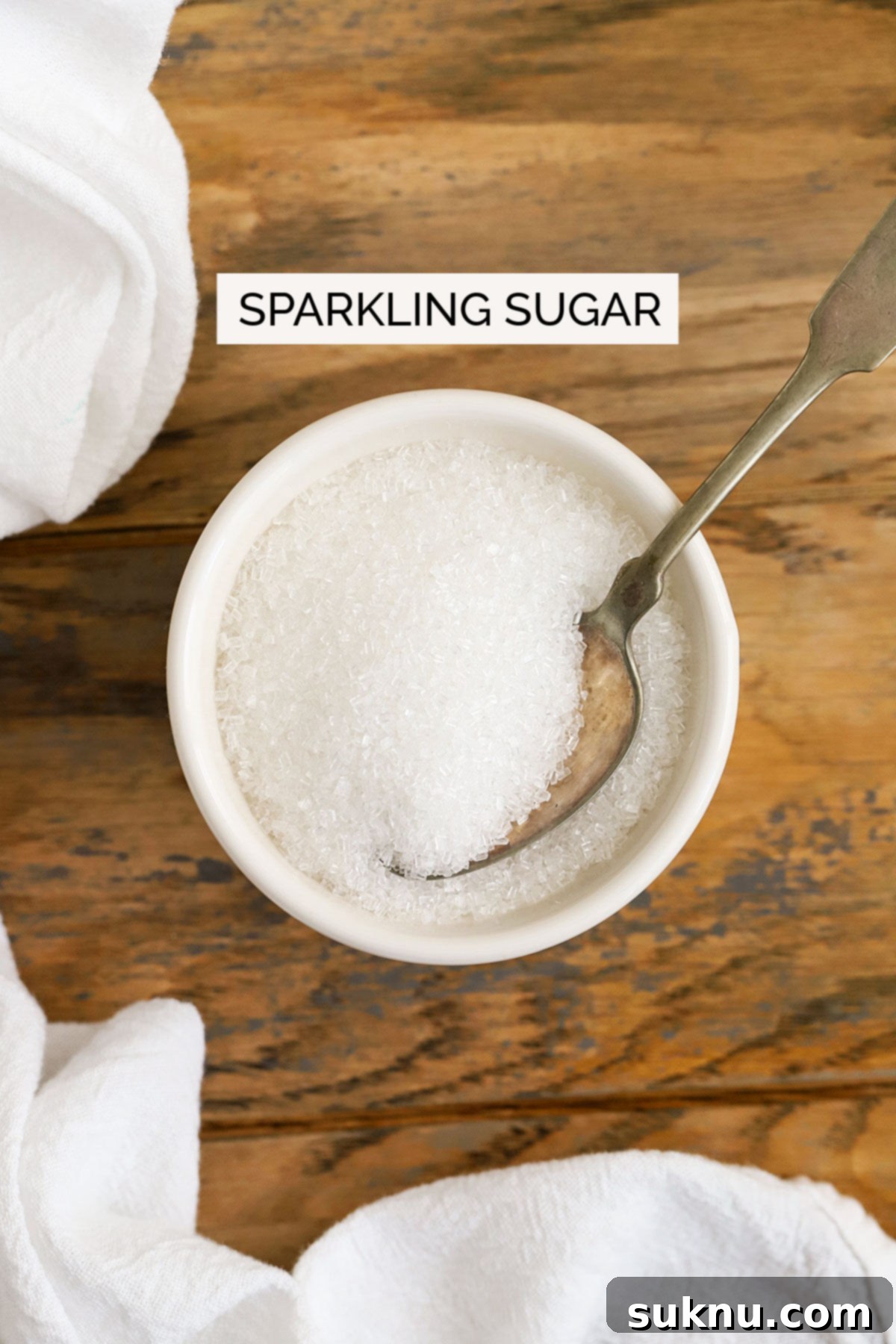
Sparkling Sugar
Sparkling sugar, along with sanding sugar, falls into the category of purely decorative sugars. These varieties are primarily used to enhance the visual appeal of cookies, cakes, and other confections, giving them a professional and festive finish.
Sparkling sugar features a coarse texture and is typically bleached to a bright, luminous white, giving it its characteristic sparkly appearance. While it can be dyed in various colors for specific decorative themes, it’s most often employed for its natural, brilliant shimmer and satisfying crunch. It holds up exceptionally well during baking, maintaining its sparkle and texture, making it perfect for adorning gingerbread houses, holiday cookies, and other celebratory baked goods. For those interested in a deeper dive into decorative toppings, our Sprinkles 101 post offers even more insights!
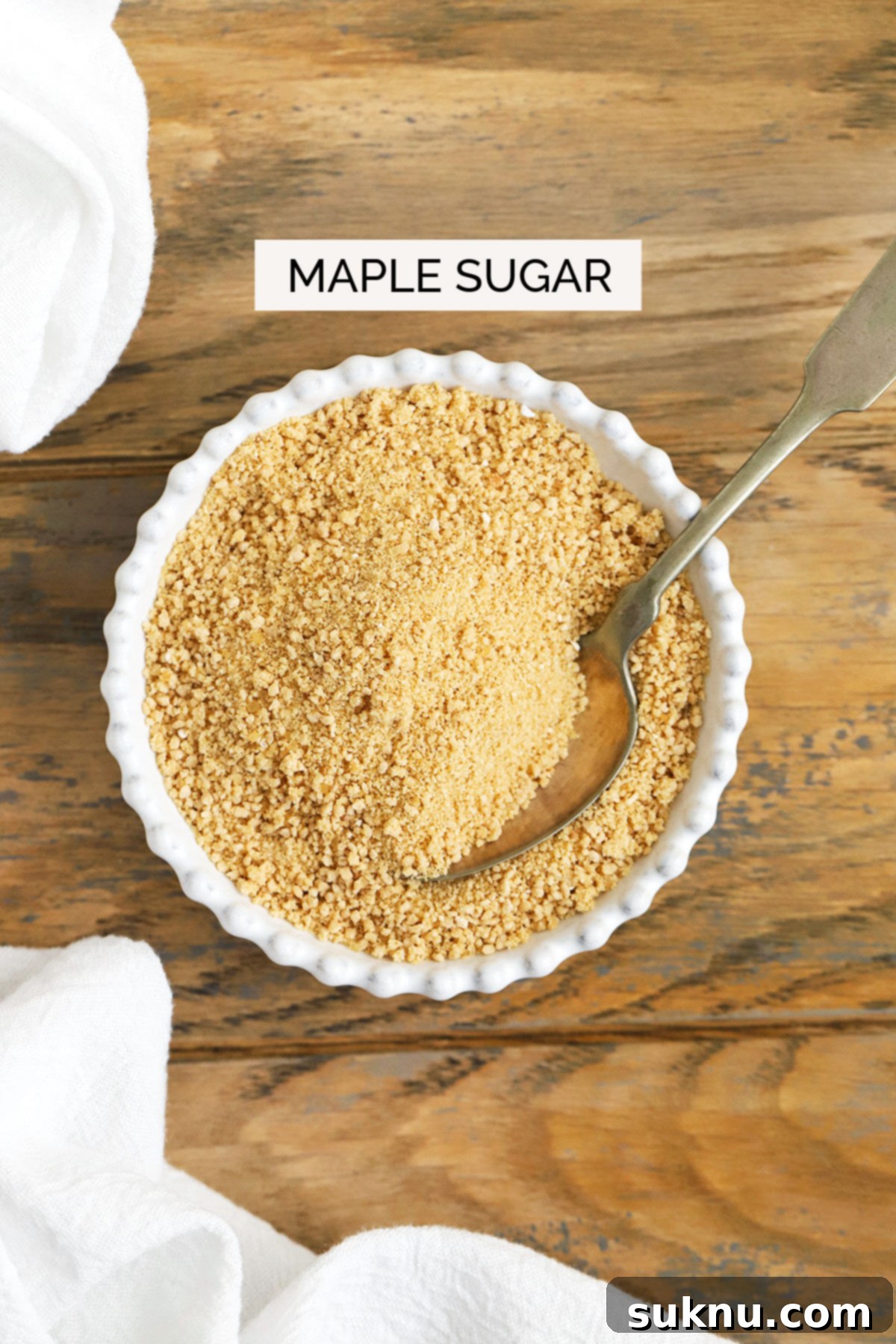
Maple Sugar
As its name implies, maple sugar is derived directly from pure maple syrup. It is essentially crystallized maple syrup, undergoing a process where the water is evaporated, leaving behind granular sugar. This natural sweetener boasts an intense, concentrated maple flavor, offering deep, caramel-like notes that are distinct and highly aromatic. It’s particularly favored by bakers who prefer to avoid more processed sugars and embrace natural alternatives.
Due to its potent flavor and tendency to brown or even burn more quickly than other sugars, maple sugar is generally not a direct 1:1 substitute for most other sugar types. However, it can be a magnificent addition when used strategically as part of a recipe, such as in a rich coffee cake crumb topping, a spiced autumn cake, or even in savory glazes. Unless you possess considerable baking experience with alternative sugars, it’s best to use maple sugar only when specifically called for in a recipe to ensure optimal results and flavor balance.
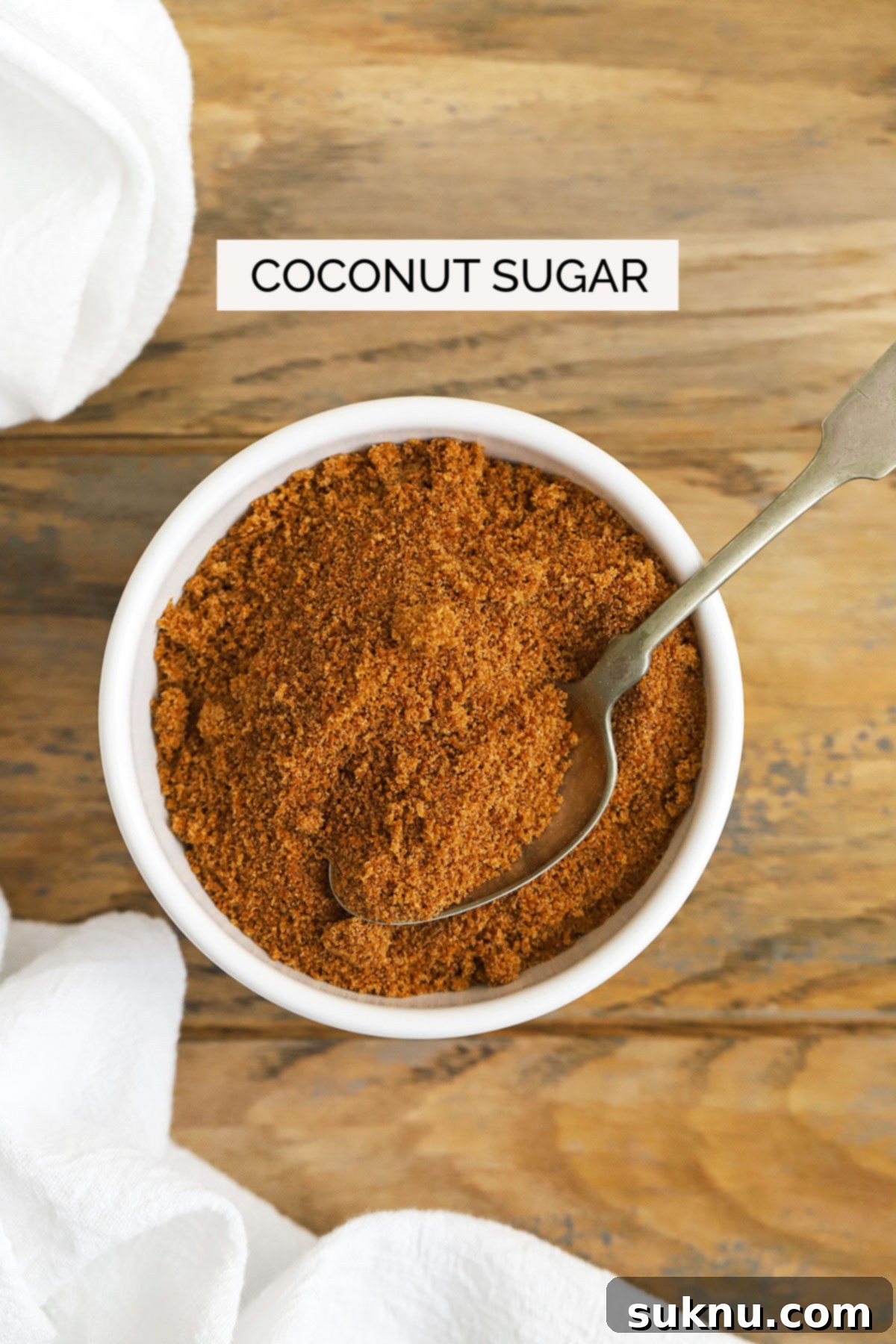
Coconut Sugar
Coconut sugar is a natural sweetener produced from the crystallized nectar of coconut blossoms. It has gained popularity among health-conscious bakers, paleo, and vegan communities as a more natural and less processed alternative to conventional sugars. It is often touted as a “lower glycemic” sugar, meaning it is believed to have a less dramatic impact on blood sugar levels compared to refined white sugar.
While coconut sugar doesn’t carry an overpowering coconut flavor, it possesses a distinct, mild caramel-like taste and a deep brown color, similar to brown sugar. Its granular texture is also akin to brown sugar, but it behaves differently in baking.
GOOD TO KNOW: Coconut sugar does not crisp or brown in the same way as granulated or brown sugar, and it tends to introduce more moisture into recipes. Achieving a glossy sheen on brownies or a crisp golden muffin top can be challenging when using coconut sugar. Moreover, it can significantly alter the color and spread of baked goods. For these reasons, it’s generally best to use coconut sugar only when a recipe specifically calls for it, or to conduct careful experimentation when substituting.
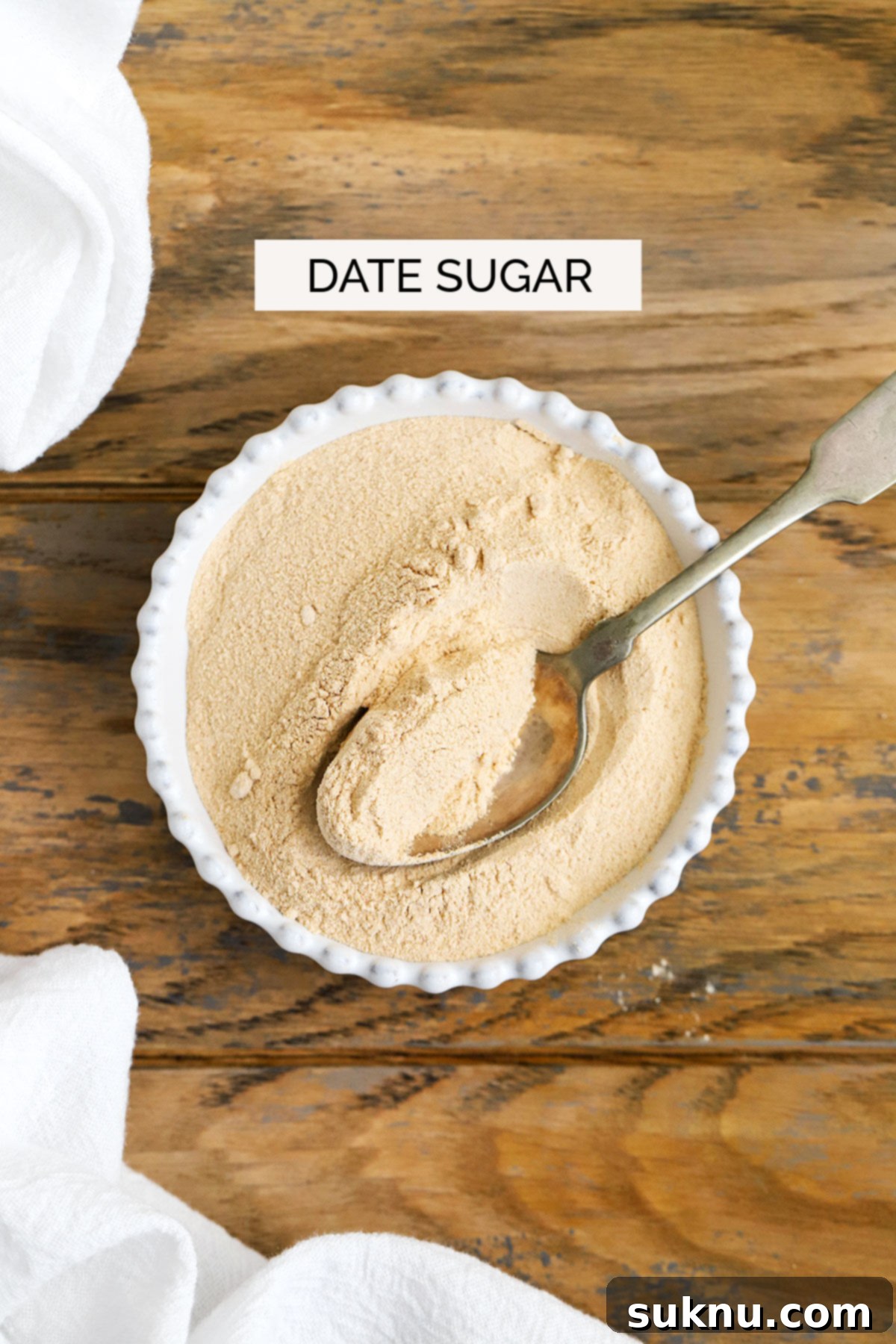
Date Sugar
Date sugar is a unique fruit-based sweetener made from dehydrated and finely powdered dates. As a natural sweetener, it offers a very subtle sweetness and is predominantly used in healthier recipes and desserts, catering to those seeking whole-food alternatives.
One of its notable characteristics is its tendency to harden into a single clump, making it somewhat challenging to work with. Due to its distinct properties and flavor profile, date sugar is not a direct 1:1 substitute for white or brown sugar. For optimal results and to maintain the intended texture and flavor of your creations, it’s best to incorporate date sugar only when a recipe specifically specifies it.
GOOD TO KNOW: Because dates are naturally rich in fiber, date sugar retains this fibrous content. Consequently, it will not melt like other sugars, often imparting a subtly gritty texture to baked goods. This unique characteristic means it’s crucial to use it in recipes where this texture is either desired or won’t negatively impact the outcome.
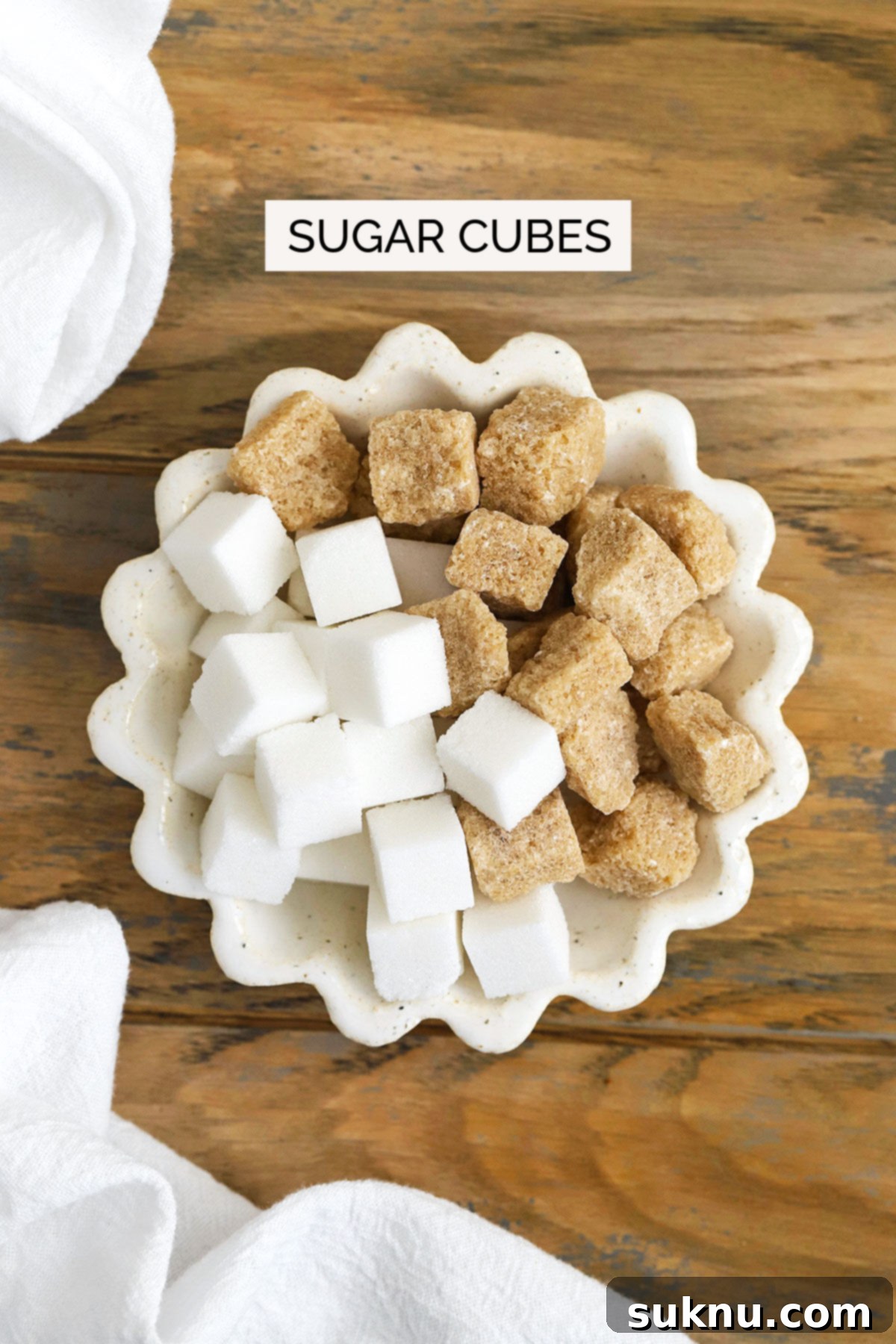
Bonus Type: Sugar Cubes!
Before we conclude our sweet exploration, let’s briefly touch upon a classic and often overlooked form of sugar: sugar cubes! These neat, compact blocks of sweetness can be made from various types of sugar, with cane sugar and demerara sugar being common choices.
Sugar cubes are primarily used for convenience in sweetening hot beverages like tea or coffee, offering a pre-portioned dose of sweetness. They also serve a charming decorative purpose, especially for intricate creations like gingerbread houses or elegant dessert presentations. Some manufacturers use edible “food glue” to bind their cubes, while others rely on a sugar syrup and compression method to form the solid blocks. Demerara sugar cubes often appear less refined and possess a more organic, rustic shape, whereas classic white sugar cubes, typically made from highly refined cane or granulated sugar, boast a uniform, crisp appearance.
FAQ + Tips And Tricks For Working With Sugar
How To Measure Sugar: For the most precise measurement of sugar, always use a kitchen scale. These scales are often inexpensive and provide the most accurate results for all ingredients. If using measuring cups, employ the scoop and level method for granulated sugar. For brown sugar and other moist sugars (those with molasses content), ensure you pack them down firmly into the measuring cup to eliminate air pockets and achieve an accurate measure.
Is Sugar Gluten-Free? Yes, generally speaking, most common types of sugar (granulated, brown, powdered, etc.) are naturally gluten-free.
How To Store Sugar: To preserve the quality and texture of your sugar, it’s crucial to minimize air exposure. Store all types of sugar in an airtight container or a zip-top bag with as much excess air removed as possible. For brown sugars and those with high molasses content, adding a terra cotta sugar keeper to the container can help maintain their moisture and prevent hardening.
How To Soften Hard Sugar: If your brown sugar or other molasses-rich sugars have solidified, a simple trick can bring them back to life. Place a handful of mini marshmallows or a slice of fresh bread into the airtight container with the hardened sugar. Leave it overnight; the sugar will gradually absorb moisture from the marshmallows or bread, softening its texture. Discard the marshmallows or bread once the sugar is soft.
Is Sugar A Wet Ingredient Or A Dry Ingredient? In baking, sugar is considered a wet ingredient. It contains moisture and significantly contributes to the overall moisture content of recipes. This is why reducing the amount of sugar in a recipe can often lead to a harder, drier, and more crumbly final product.
WE ♥
TIPS & TRICKS
More Baking Tips to Help You:
- 8 Essential Cookie Tools We Use All The Time
- Mastering How To Brown Butter Perfectly
- 3 Simple Ways To Separate Egg Yolks & Egg Whites
- How To Get Eggs To Room Temperature FAST
- How To Measure Flour Correctly (The Scoop & Level Method Explained)
- How To Check If Your Baking Soda & Baking Powder Are Fresh
- How To Freeze Cookie Dough (& Bake From Frozen for Fresh Treats Anytime)