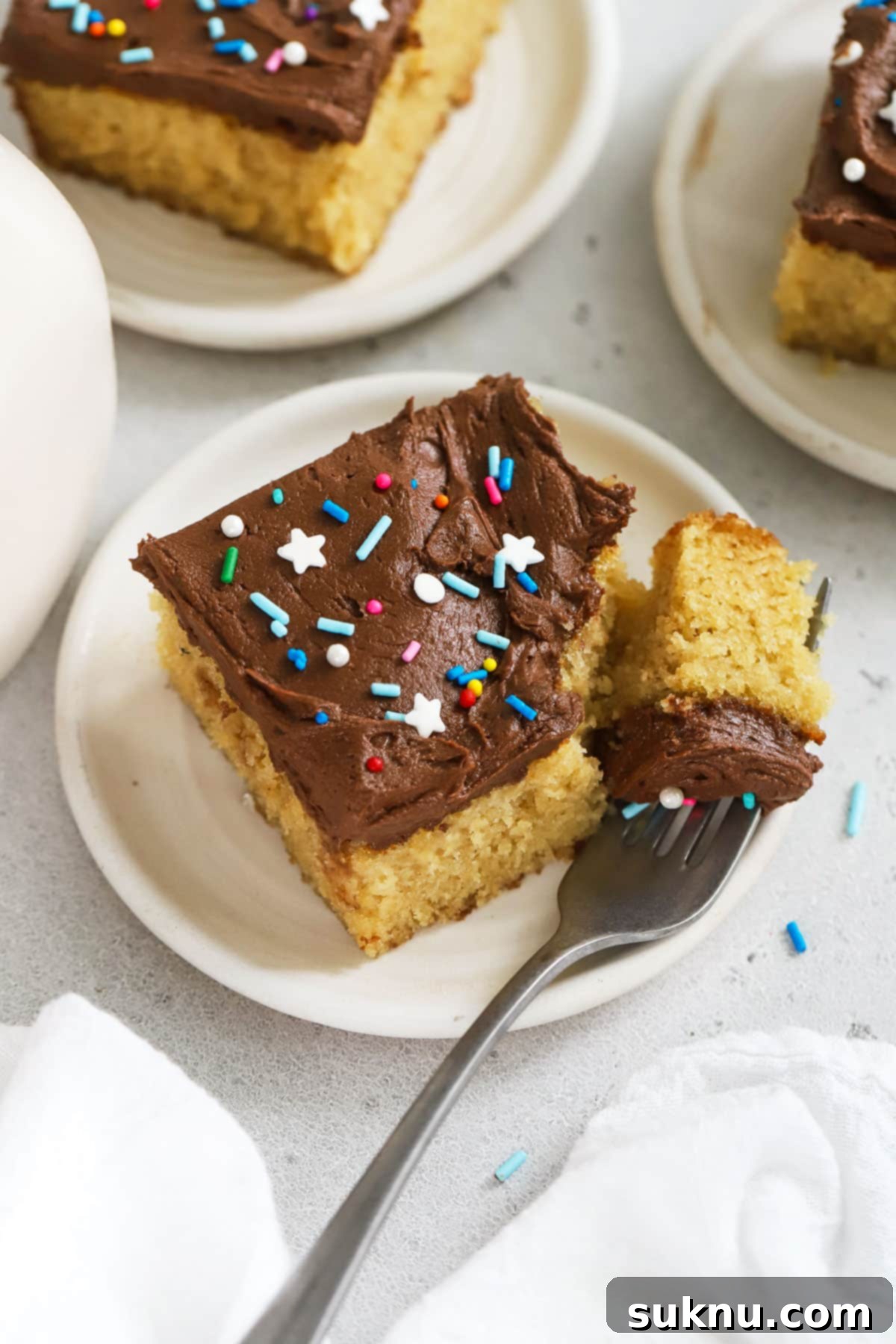
Effortlessly Delicious: The Ultimate Gluten-Free Yellow Sheet Cake with Rich Chocolate Frosting
Unleash your inner baker with our incredibly easy Gluten-Free Yellow Sheet Cake recipe! This delightful vanilla cake offers a perfectly moist and tender texture, crowned with an irresistible chocolate frosting that will steal your heart. Whether it’s a birthday celebration, a family gathering, or simply a craving for something sweet, this sheet cake is your go-to for effortless, gluten-free indulgence that promises to impress every palate.
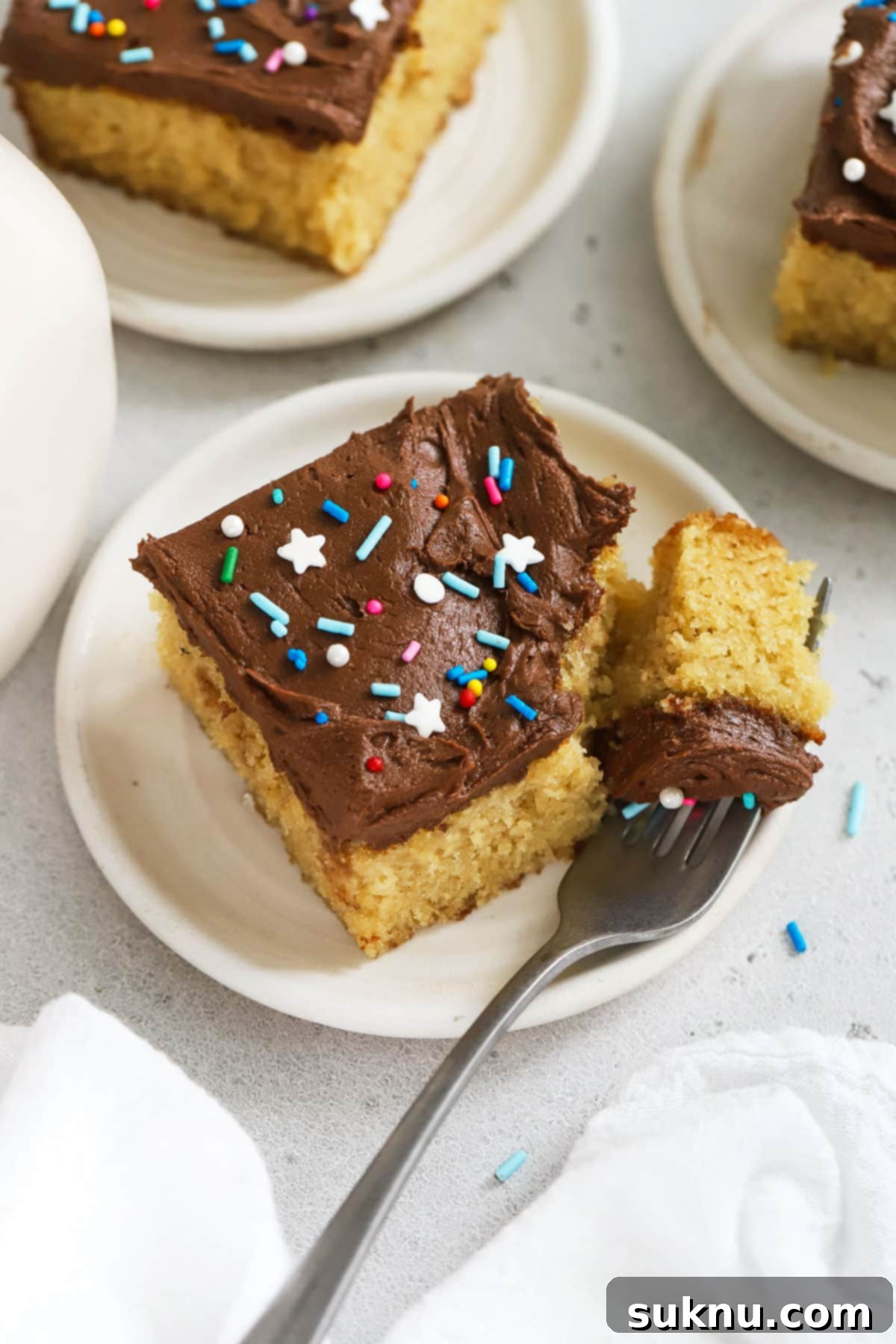

This Fluffy Vanilla Sheet Cake: The Perfect Companion for Any Sweet Occasion
There are few dessert combinations as universally cherished and deeply comforting as a classic yellow vanilla cake generously adorned with rich, velvety chocolate frosting. Our homemade gluten-free yellow sheet cake recipe doesn’t just deliver on this beloved nostalgia; it elevates it. Prepare for a dessert that’s not only spectacularly delicious but also surprisingly simple to create, proving that gluten-free baking can be both accessible and profoundly satisfying.
🍰 Effortless Baking Simplified: Bid farewell to complex instructions and the need for fancy cake decorating prowess. This gluten-free vanilla sheet cake is designed with the home baker in mind, emphasizing ease and straightforward techniques. With basic ingredients and clear steps, even those new to baking will find themselves crafting a show-stopping dessert with confidence and minimal fuss.
🎉 A Symphony of Irresistible Flavors: Each forkful of this cake is an indulgent journey through harmonious flavors and delightful textures. The vanilla cake foundation is a masterpiece of baking – wonderfully buttery, astonishingly light, and infused with a pure, authentic vanilla essence that sings. This delicate base is perfectly complemented by a plush, dreamy chocolate buttercream frosting that adds a layer of luxurious richness, culminating in an unforgettable chocolate-vanilla experience that will have everyone reaching for a second slice.
💡 The Golden Rule for Success: Embrace Room Temperature Ingredients! For a truly stellar outcome, a little foresight goes a long way. It is absolutely crucial to allow your cold ingredients – butter, eggs, milk, and sour cream – to reach proper room temperature before you begin mixing. This essential step ensures that your butter creams beautifully with the sugar, incorporating vital air, and that all ingredients emulsify smoothly into a homogenous batter. Skipping this can result in a lumpy mixture and a denser, less airy cake. Trust us, this small act of patience makes a monumental difference in achieving the desired light, fluffy texture for your cake and a perfectly smooth, creamy consistency for your frosting.
Happy baking, and enjoy every sweet moment! xo, Emily
Gather Your Essential Ingredients for a Divine Gluten-Free Sheet Cake
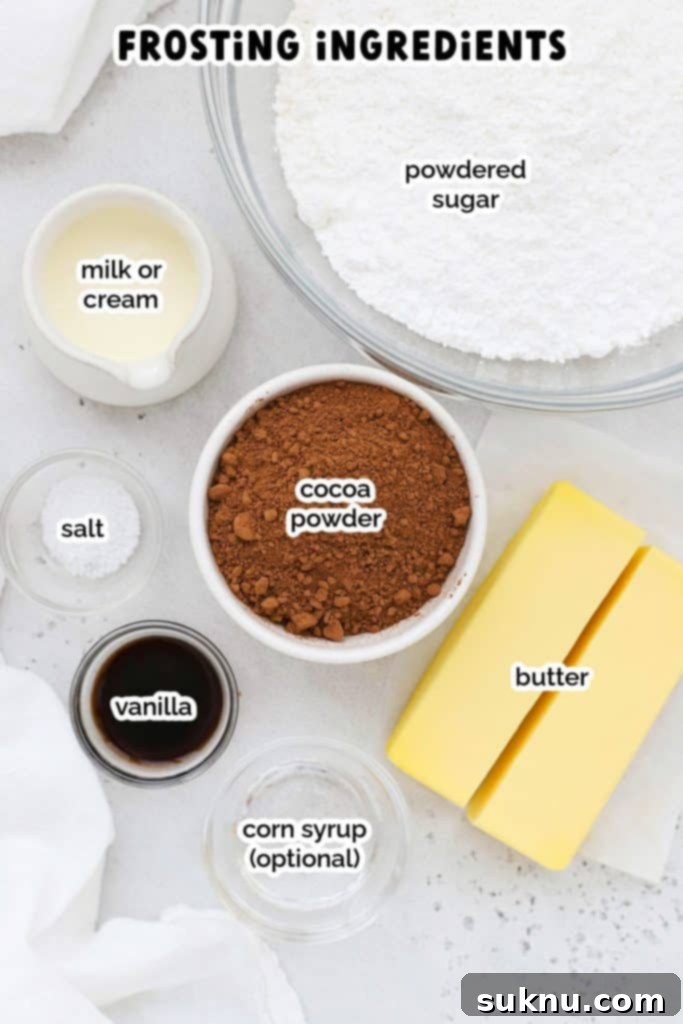
While the thought of baking a homemade cake might seem a little intimidating, this gluten-free yellow sheet cake recipe is refreshingly simple and incredibly rewarding. We’ve carefully selected each ingredient to ensure a moist, fluffy, and utterly delicious cake that truly stands out. Below is a comprehensive look at what you’ll need to create both the tender cake base and the decadent chocolate frosting:
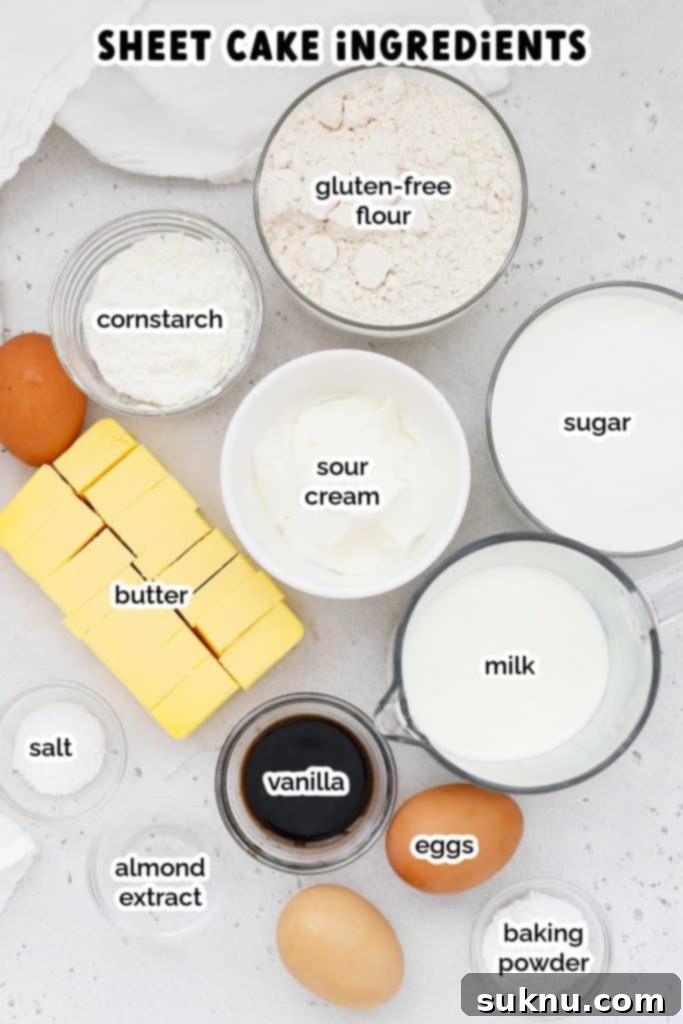
- Gluten-Free Flour Blend: This is the cornerstone of our gluten-free cake, ensuring it’s accessible to everyone. For consistent and outstanding results, we wholeheartedly recommend a high-quality 1:1 gluten-free measure-for-measure flour blend. Our go-to choice is King Arthur Gluten-Free Measure-For-Measure Flour, known for its reliable performance. Precise measurement is paramount: always weigh your flour for accuracy (240 grams for 2 cups) or, if you don’t have a scale, use the scoop and level method to avoid compacting too much flour, which can lead to a dry, dense cake. If you opt for another brand like Bob’s Red Mill or Cup4Cup, verify that it explicitly includes xanthan gum, as this is vital for the cake’s structure and preventing crumbliness.
- Cornstarch: Consider cornstarch our “secret weapon” for achieving that coveted tender, fluffy crumb, reminiscent of traditional cake flour. By substituting a small portion of the gluten-free flour with cornstarch, we lighten the overall texture, ensuring a cake that’s incredibly delicate and melts in your mouth with every bite.
- Baking Powder: This vital leavening agent is indispensable for giving our sheet cake its beautiful, consistent rise and its signature airy, fluffy texture. Always ensure your baking powder is fresh to guarantee optimal activity and the best possible lift for your cake.
- Kosher Salt: A small but exceptionally powerful ingredient, salt is absolutely crucial for balancing the sweetness of the cake and expertly enhancing all the other beautiful flavors. It adds a subtle depth, making each bite more complex, harmonious, and utterly satisfying.
- Softened Unsalted Butter: We employ the classic creaming method for this cake, making properly softened, high-quality unsalted butter absolutely essential. Butter not only imparts an incredibly rich, decadent flavor but also significantly contributes to the cake’s beautifully tender texture. Ensure it’s truly softened to room temperature—meaning it yields easily when lightly pressed—for proper aeration and emulsification.
- Granulated Sugar: Simple white granulated sugar is specifically chosen for this recipe to maintain the vanilla cake’s signature bright yellow hue, preventing any unwanted discoloration. It delivers precisely the right level of sweetness, ensuring the cake is delightfully balanced and never cloyingly saccharine.
- Large Eggs: To streamline the baking process without sacrificing an iota of texture, this recipe cleverly utilizes whole eggs. There’s no need to separate egg whites or embark on the extra step of whipping them. The meticulous balance of our other ingredients guarantees that this cake remains beautifully moist, tender, and fluffy, achieving a perfect crumb with just whole eggs.
- Pure Vanilla Extract: For an intensely flavorful vanilla cake, we generously incorporate a full tablespoon of high-quality pure vanilla extract. Its aromatic depth is crucial. For an extra gourmet touch and charming visible vanilla bean specks throughout your cake, you can easily substitute an equal amount of vanilla bean paste.
- Sour Cream: Here lies the unsung hero of our incredibly moist yellow cake! Sour cream works double duty: its gentle acidity reacts with the baking powder, providing an extra lift, and more importantly, it infuses an unparalleled amount of moisture and richness. This ensures the cake remains incredibly tender, plush, and delightfully resistant to drying out. It’s truly the secret to a superior crumb.
- Whole Milk: To achieve the desired plush, incredibly moist texture for this sheet cake, whole milk is highly recommended. Its higher fat content contributes significantly to the cake’s richness and tender crumb. While lower-fat milk options (like 2% or fat-free) or dairy-free alternatives (such as almond milk) can be used, be aware that they may result in a slightly drier cake due to their reduced fat content.
- Our Rich Chocolate Frosting: No yellow cake experience is truly complete without its perfect counterpart! Our easy chocolate buttercream frosting is expertly designed to complement the delicate vanilla notes of the cake base, creating an unmatched flavor harmony. This frosting is not only incredibly delicious but also straightforward to prepare, requiring just softened butter, powdered sugar for sweetness, unsweetened cocoa powder for deep chocolate flavor, vanilla extract, a hint of salt to balance, and a splash of heavy cream or milk to achieve that ideal creamy, spreadable consistency.
Baking Perfection: Your Step-by-Step Guide to Gluten-Free Yellow Sheet Cake
Embark on your baking adventure with confidence! Below, you’ll find a detailed, step-by-step guide to creating this magnificent gluten-free yellow sheet cake with chocolate frosting. Remember, for precise measurements and a condensed version, you can refer to the full recipe card at the end of this article. Happy baking!
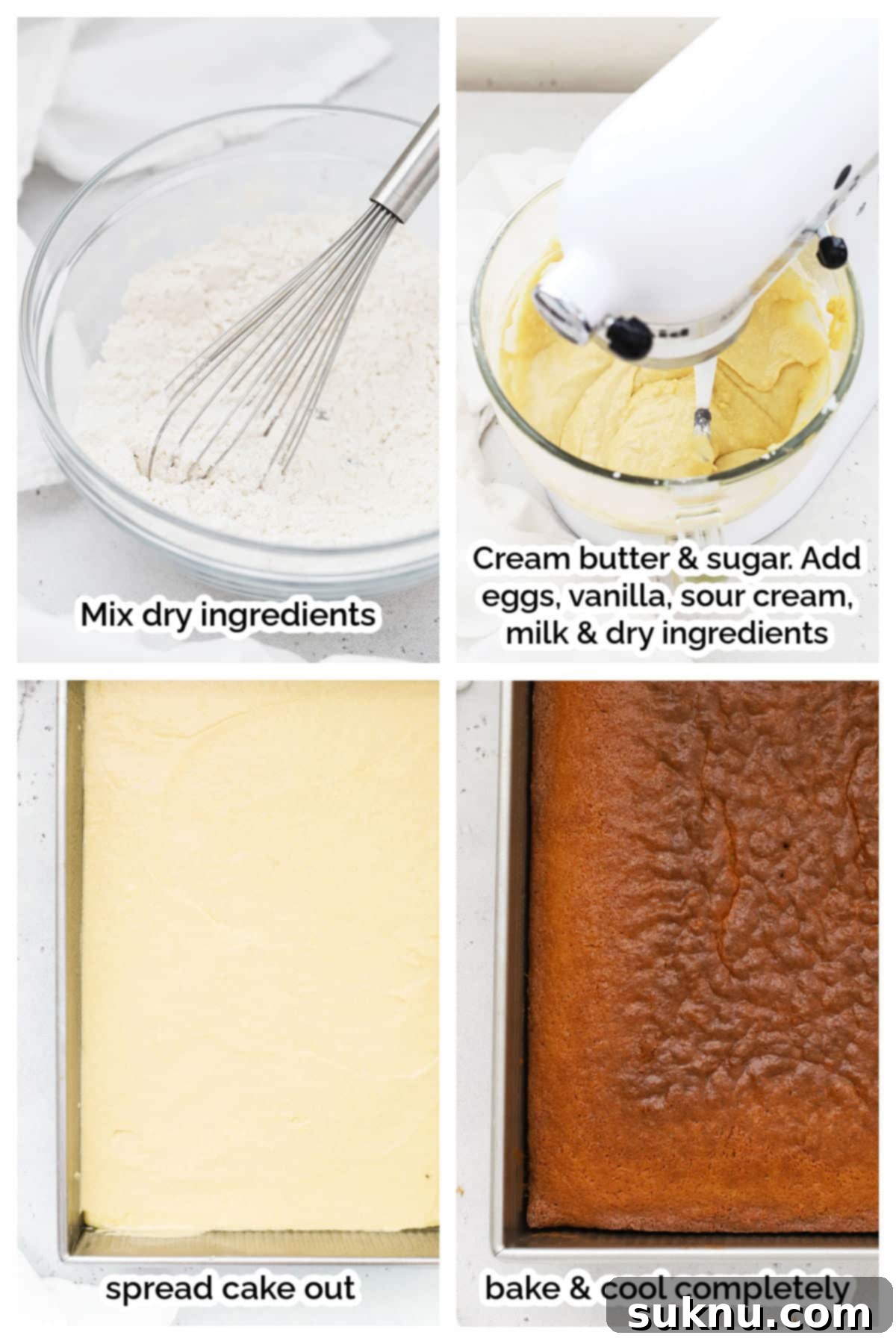
Part 1: Mastering the Gluten-Free Yellow Cake Base
- Prepare Ingredients to Room Temperature: This initial step is absolutely paramount for a truly successful cake! All cold ingredients – including eggs, butter, milk, and sour cream – absolutely MUST be allowed to come to true room temperature. This crucial process typically takes approximately 1 to 1.5 hours. Cold ingredients do not emulsify properly with each other, which can lead to a lumpy, inconsistent batter and ultimately result in a denser, less tender cake. Patiently waiting for them to warm up will ensure your butter creams smoothly with the sugar and integrates beautifully with the other wet ingredients, resulting in a fine, even, and deliciously moist crumb.
- Preheat Your Oven and Prepare the Baking Pan: Begin by preheating your oven to the precise temperature of 350 degrees Fahrenheit (175°C). For this recipe, a standard light-colored metal 9×13 inch baking pan is highly recommended, as metal conducts heat evenly, promoting a consistent bake and a flat cake top. Lightly grease the interior of the pan with butter or a non-stick cooking spray, then dust it evenly with a small amount of gluten-free flour, tapping out any excess. As an alternative, you can line the pan with parchment paper, leaving a slight overhang on the sides to easily lift the cooled cake out later. Set your meticulously prepared pan aside.
- Combine Dry Ingredients Thoroughly: In a medium-sized mixing bowl, accurately measure and combine your gluten-free flour blend (240 grams or 2 cups, carefully measured using a scale or the scoop-and-level method), cornstarch (32 grams or ¼ cup), baking powder (2 ¼ teaspoons), and kosher salt (½ teaspoon). Whisk these dry ingredients together vigorously for about 30 seconds to ensure they are thoroughly combined and evenly distributed throughout. This critical step prevents any pockets of leavening agent or unmixed flour and ensures a uniform rise and texture in your finished cake. Set this bowl aside for later use.
- Cream Butter and Sugar Until Fluffy: In the bowl of a stand mixer fitted with the paddle attachment (or using a large bowl and a high-powered hand mixer), combine the softened room-temperature butter (227 grams or 1 cup) and granulated sugar (350 grams or 1 ¾ cups). Beat these together on medium-high speed for a generous 2-3 minutes. You are looking for a significant transformation: the mixture should become noticeably lighter in color, incredibly fluffy, and visibly increased in volume. This crucial creaming process incorporates a substantial amount of air, which is absolutely vital for creating a light, airy, and tender cake texture.
- Incorporate Eggs and Vanilla Extract Gently: Stop the mixer and use a rubber spatula to meticulously scrape down the sides and bottom of the bowl, ensuring all ingredients are fully incorporated into the mixture. With the mixer set to low speed, gradually add the room-temperature large eggs, one at a time, mixing thoroughly after each addition until each egg is fully incorporated into the batter. After all the eggs have been added, stir in the tablespoon of pure vanilla extract (and the optional ⅛ teaspoon almond extract, if using) until just combined. Be mindful not to overmix once the eggs are in, as this can lead to a tougher cake.
- Mix in Sour Cream Carefully: Scrape down the sides and bottom of the bowl once more, ensuring no hidden pockets of unmixed ingredients remain. On the very lowest speed, gently mix in the room-temperature sour cream (½ cup). Mix just until it is fully incorporated into the batter, being careful not to overmix. The sour cream plays a pivotal role, adding an incredible amount of moisture and a delicate tang that beautifully enhances the cake’s flavor and texture.
- Alternate Dry Ingredients and Milk for Optimal Batter: Now, it’s time to thoughtfully combine the remaining dry and wet components. With your mixer still on low speed, add approximately half of your thoroughly whisked dry ingredients to the butter mixture. Mix briefly, just until streaks of flour start to disappear into the batter. Then, slowly stream in half of the room-temperature whole milk (½ cup) while the mixer continues to run on low speed. Scrape down the bowl again to ensure everything is well combined. Repeat this process with the second half of the dry ingredients, mixing briefly, followed by streaming in the remaining half of the milk slowly until everything is just combined. The absolute key here is to mix *just* until no dry streaks of flour remain to avoid overdeveloping the gluten-free flour, which can lead to a tougher, less tender cake. If necessary, feel free to use a spatula to gently fold in any stubborn dry spots by hand, ensuring a perfectly smooth batter.
- Pour Batter Into Prepared Pan Evenly: Carefully and deliberately pour the silky-smooth cake batter into your meticulously prepared 9×13 inch baking pan. Use an offset spatula or the back of a large spoon to gently spread and even out the surface of the batter. A smooth, level top not only promotes an even rise during baking but also ensures a beautiful, professional-looking final appearance, ready for frosting.
- Bake Cake to Golden Perfection: Carefully place the pan into your preheated oven and bake for approximately 35-40 minutes. It’s important to remember that actual baking times can vary slightly depending on your oven, so keep a watchful eye on your cake. The cake is fully baked when the top appears beautifully golden brown, springs back gently when lightly pressed with a fingertip, and a wooden skewer or cake tester inserted into the very center comes out clean or with just a few moist crumbs attached. Avoid overbaking, as this can dry out the cake.
- Cool Completely Before Frosting for Best Results: Patience is truly a virtue, especially when it comes to frosting a cake! Allow the baked cake to cool in the pan on a wire rack for about 15-20 minutes. This initial cooling period helps the cake firm up and prevents it from falling apart. Then, if desired, you can carefully invert the cake onto the wire rack to cool completely. Alternatively, for less handling and fuss, you can let the cake cool entirely in the pan before frosting. It is absolutely CRUCIAL that the cake is completely cool to the touch – no warmth whatsoever – before you even consider applying the chocolate frosting, otherwise, your beautiful, velvety frosting will inevitably melt and slide right off the cake, creating a messy situation.
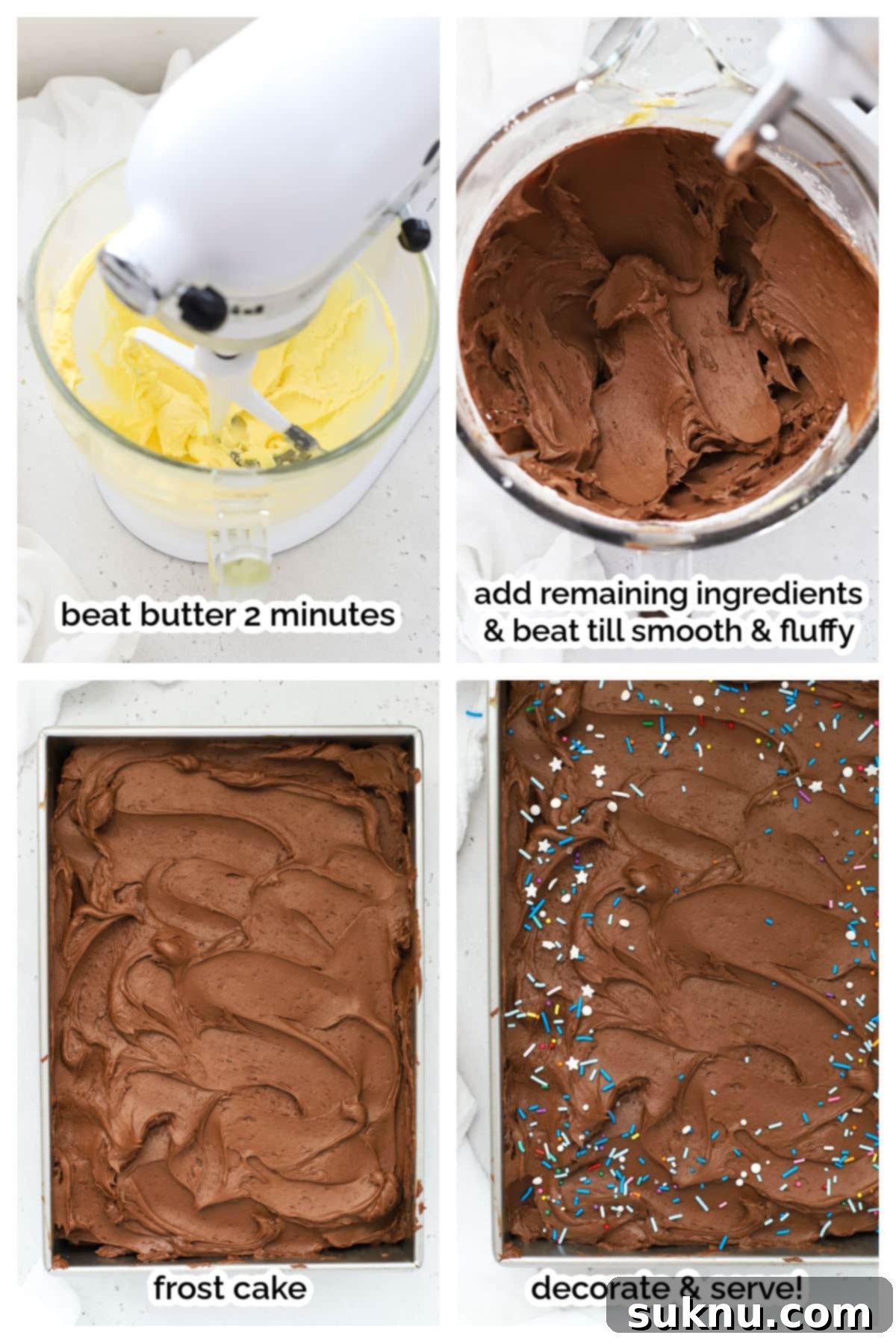
Part 2: Crafting the Silky Chocolate Frosting and Decorating Your Masterpiece
- Beat the Butter Until Light and Fluffy: In a large mixing bowl, add your softened, room-temperature unsalted butter (227 grams or 1 cup). Using a hand mixer on low speed (or a stand mixer fitted with the paddle attachment), beat the butter vigorously for approximately 2 minutes. The objective here is to whip the butter until it becomes visibly lighter in color, wonderfully airy, and incredibly fluffy. This crucial aeration process contributes significantly to a light, smooth, and creamy frosting texture.
- Combine and Mix Remaining Frosting Ingredients: Gradually add the powdered sugar (420 grams or 3 ½ cups), unsweetened cocoa powder (65 grams or ¾ cup), vanilla extract (1 ½ teaspoons), and kosher salt (¼ teaspoon) to the beaten butter. Pour in the heavy cream (⅓ cup). Begin mixing on the lowest speed for about 30 seconds; this prevents a sudden eruption of powdered sugar and cocoa powder from your bowl! Once the dry ingredients are mostly moistened, increase the speed to medium and continue beating for another 1 to 2 minutes, or until the frosting is perfectly smooth, luxuriously creamy, and well-aerated.
- Adjust for Perfect Frosting Texture and Shine: Achieving the ideal frosting consistency is an important step to ensure both spreadability and structural integrity. If your chocolate frosting appears too dry or excessively thick, gradually incorporate additional heavy cream, adding just one teaspoon at a time. Mix thoroughly after each addition until it reaches a spreadable yet firm consistency that holds its shape. Conversely, if your frosting is too thin or overly wet, slowly add more powdered sugar or cocoa powder, one teaspoon at a time, until the desired fudgy and pipeable texture is achieved. The frosting should be easy to spread but still maintain its form beautifully. For an extra professional touch and a wonderfully glossy finish, consider mixing in 1-2 tablespoons of corn syrup at this stage.
- Frost and Decorate Your Cooled Cake: With your yellow sheet cake completely cooled to room temperature and your chocolate frosting perfected to your desired consistency, it’s time for the most enjoyable part – decorating! You have several options: you can use a piping bag fitted with your favorite piping tip to create elegant borders, intricate designs, or charming rosettes. Alternatively, for a simpler yet equally beautiful approach, just use an offset spatula to spread the frosting evenly across the top of the sheet cake. For a delightful, rustic look, I often use the spatula to create subtle, appealing swirls in the frosting. Finish your masterpiece by adding any desired colorful sprinkles, delicate chocolate shavings, or other festive decorations to elevate your cake’s visual appeal and perfectly match your celebration’s theme.
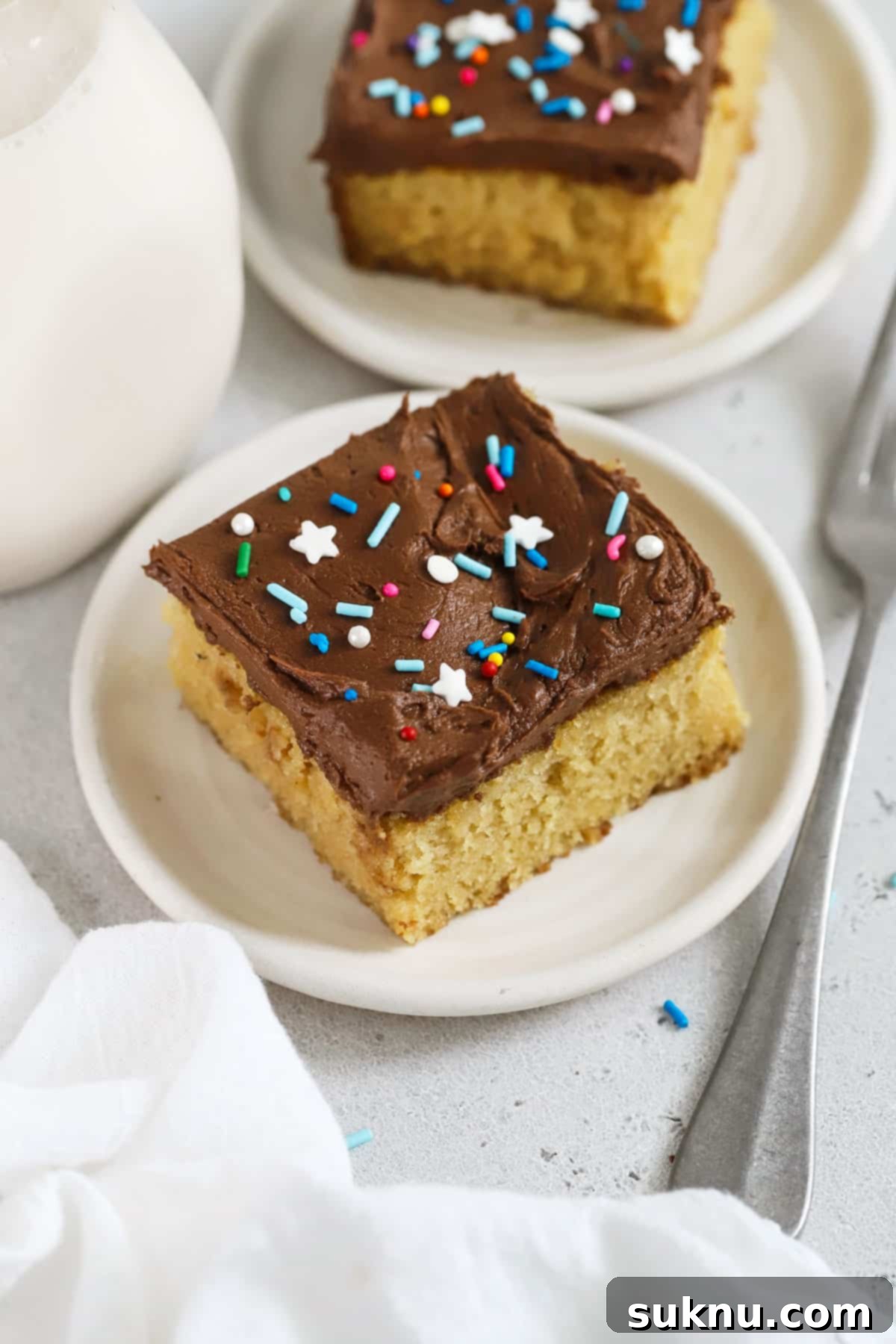
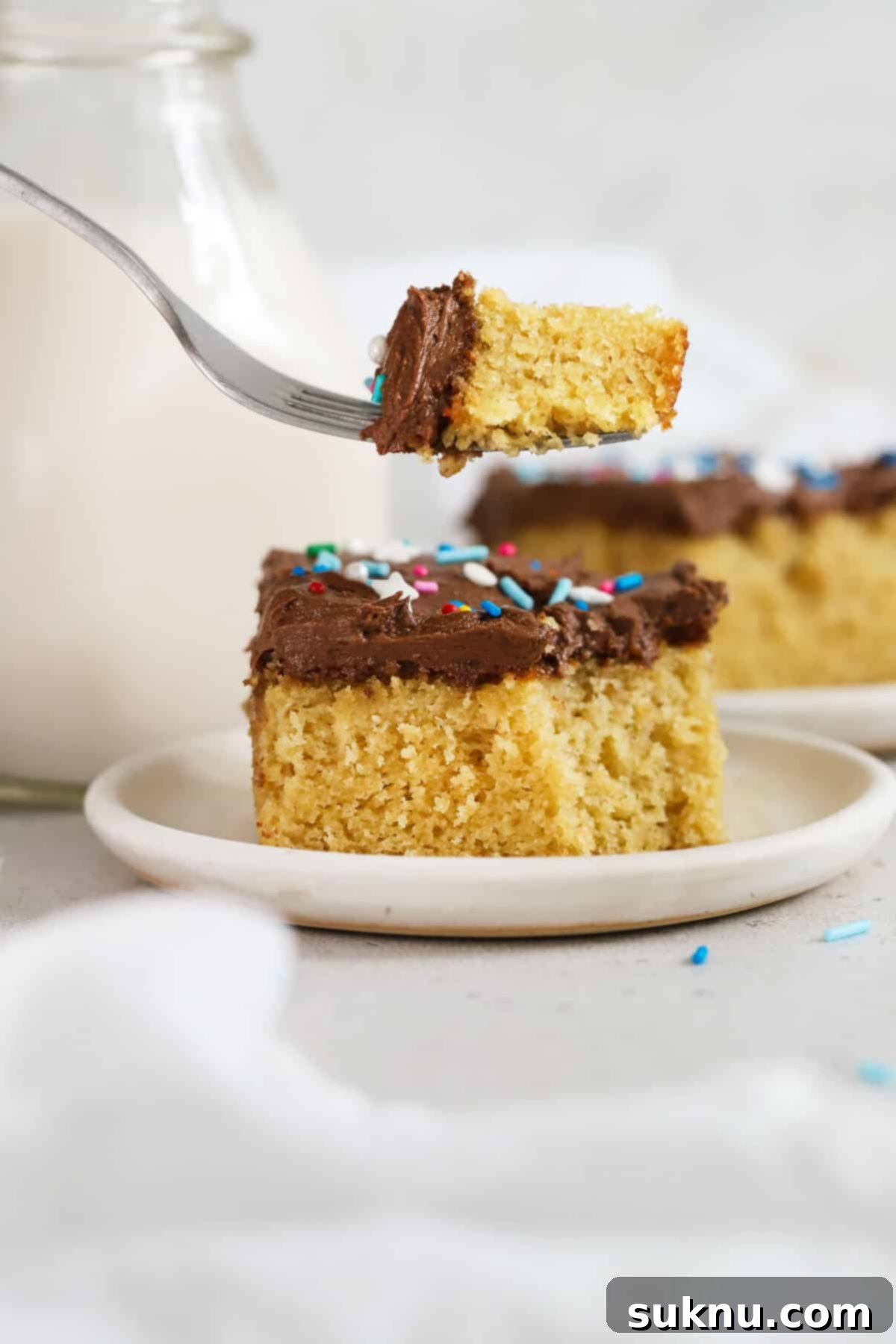
- Serve and Store for Optimal Freshness: Your magnificent gluten-free yellow sheet cake is now complete and ready to be savored! Use a sharp, clean knife to cut it into generous, even slices and serve immediately to hungry guests. If you’re preparing the cake in advance or find yourself with delicious leftovers, ensure it is covered tightly with plastic wrap or stored in an airtight container to maintain its freshness. Refrigerate the cake until you are ready to serve. For the absolute best texture and flavor experience, we highly recommend removing the cake from the refrigerator approximately 30 minutes before serving. This allows both the cake and frosting to soften slightly, bringing them to their optimal, most enjoyable consistency. Leftover cake can be stored, well-covered, in the refrigerator for 2-3 days, or you can freeze individual slices for up to 2 months for a convenient future treat.
Expert Tips & FAQs for Achieving Your Best Gluten-Free Yellow Sheet Cake
Crafting a truly exceptional gluten-free yellow sheet cake is not only achievable but also incredibly straightforward when you’re armed with a few expert tricks and insights. These proven tips will guide you toward consistently achieving a wonderfully moist, fluffy, and utterly delicious result every single time you bake.
Precision is Paramount: Always Weigh Your Flour for Superior Results! This advice is absolutely critical and cannot be overstated, especially when you are baking with gluten-free flours. Gluten-free flour blends can vary significantly in their density, and simply scooping with a standard measuring cup can lead to a surprisingly large amount of excess flour being incorporated into your recipe. This excess flour is the primary culprit behind dry, dense, or crumbly cakes. For the most accurate, consistent, and reliable results, we strongly recommend investing in an inexpensive digital kitchen scale to precisely weigh your flour (aim for 240 grams for 2 cups). If a scale is not available, always adhere to the “scoop and level” method: gently spoon the flour into your measuring cup until it’s overflowing, then use a straight edge (like the back of a knife) to level it off without compacting the flour. This method minimizes excess flour and is key to achieving that perfectly tender, soft crumb.
The Golden Rule: Room Temperature Ingredients Are Non-Negotiable for a Flawless Cake. We cannot emphasize this enough! The unequivocal success of this gluten-free yellow sheet cake recipe is heavily dependent on all your cold ingredients (namely, butter, eggs, sour cream, and milk) being at true, soft room temperature. When butter is properly softened, it creams beautifully with sugar, creating tiny air pockets that are essential for a light and airy cake texture. Cold butter, however, will not cream properly, resulting in a denser cake. Similarly, cold eggs and dairy products can cause the batter to curdle or become lumpy, preventing proper emulsification and leading to an unevenly textured final product. To ensure your ingredients are perfectly prepared, take them out of the refrigerator at least 1 hour, and ideally 1.5 hours, before you intend to begin mixing. This patience will be richly rewarded in your final delicious cake!
Elevate Your Presentation: Simple Decorating Tips for Stunning Results. For frosting a classic sheet cake, a simple offset spatula is often the only tool you need to spread the frosting beautifully and effortlessly. With an offset spatula, you can create elegant, subtle swirls or achieve a perfectly smooth, clean finish that looks professionally done. However, if you’re aspiring for a more polished, festive, or elaborate look, consider experimenting with piping tips. A Wilton 2D or Ateco 849 closed star tip can be effectively used to pipe charming spirals, a classic shell border, or delightful little frosting “poofs” around the edges of your cake. These small, thoughtful decorative touches can make a significant difference in elevating the presentation of your cake, making it perfect for birthdays, holidays, or any special occasion.
The Right Pan Truly Makes All the Difference in Baking Success. The specific type of baking pan you choose will significantly impact how evenly and effectively your cake bakes. For this gluten-free yellow sheet cake, we strongly recommend using a light-colored metal 9×13 inch baking pan. Metal pans, particularly those with lighter finishes, are superior because they conduct heat evenly and gently. This even heat distribution ensures a consistent bake throughout the cake and helps achieve a beautifully flat top, which is ideal for frosting. In contrast, darker metal pans can cause the cake edges to overbake or brown too quickly, potentially leading to a dry crust. Glass or ceramic pans, while beautiful, retain and distribute heat differently; they often require a few extra minutes of baking time and may result in a less even rise or a cake that doesn’t bake as perfectly flat. For the most consistently excellent results, sticking with a light metal pan is your best bet.
Explore More Delicious Gluten-Free Cake Recipes for Every Celebration
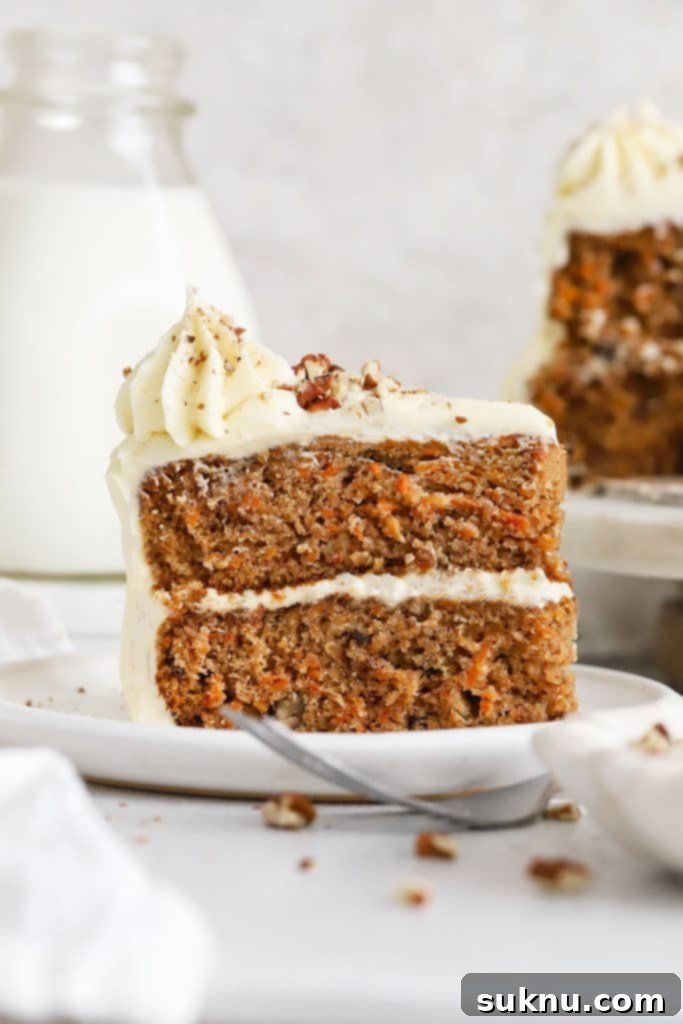
Gluten-Free Carrot Cake
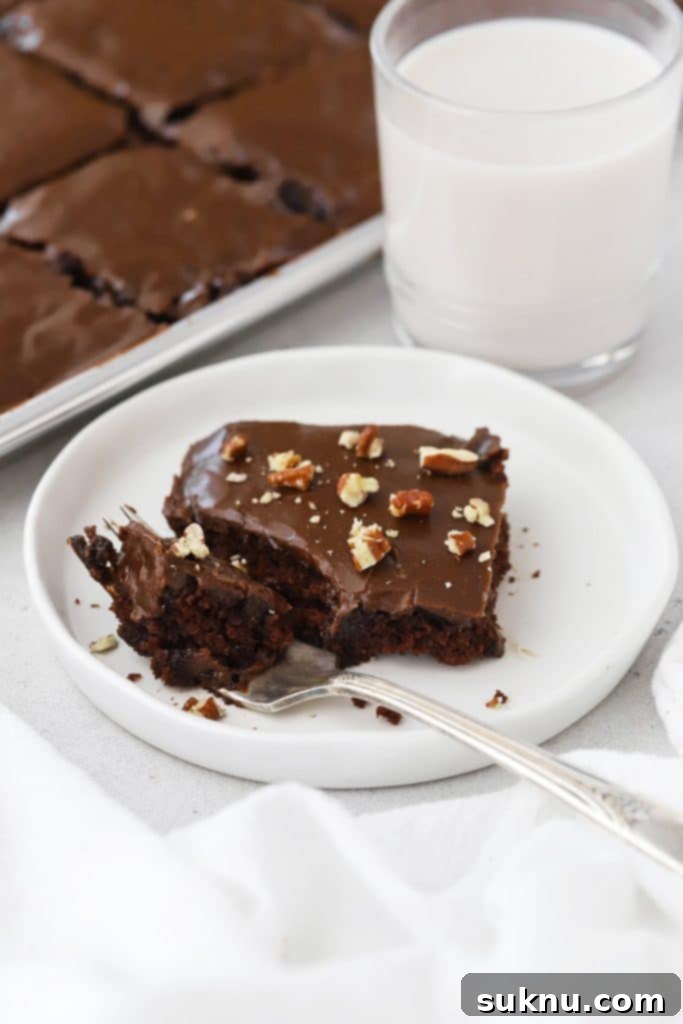
Gluten-Free Texas Chocolate Sheet Cake
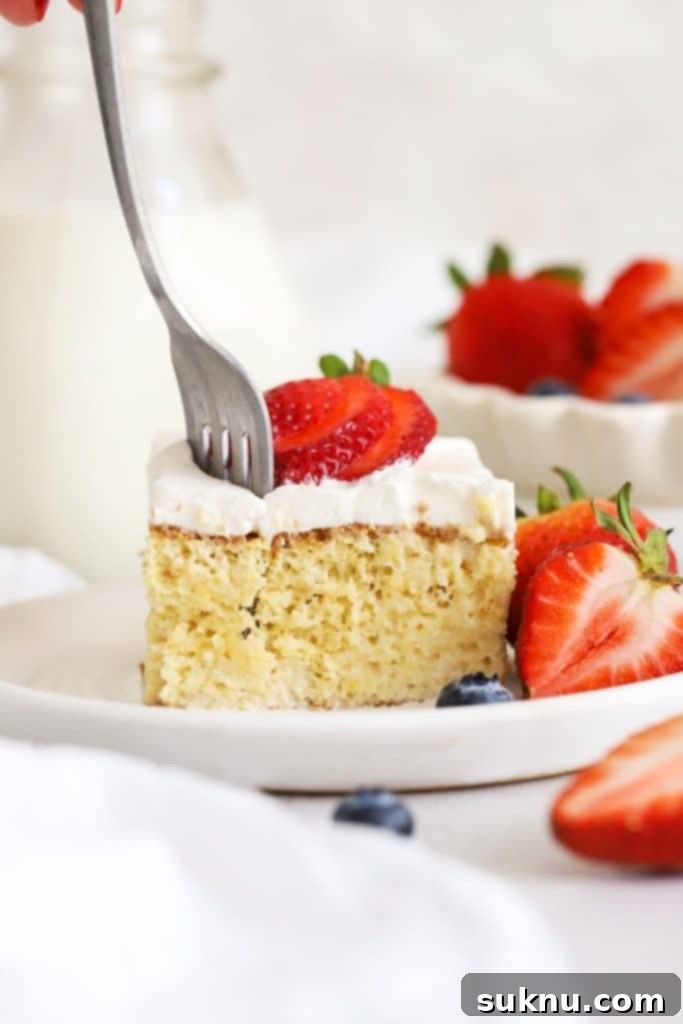
Gluten-Free Tres Leches Cake
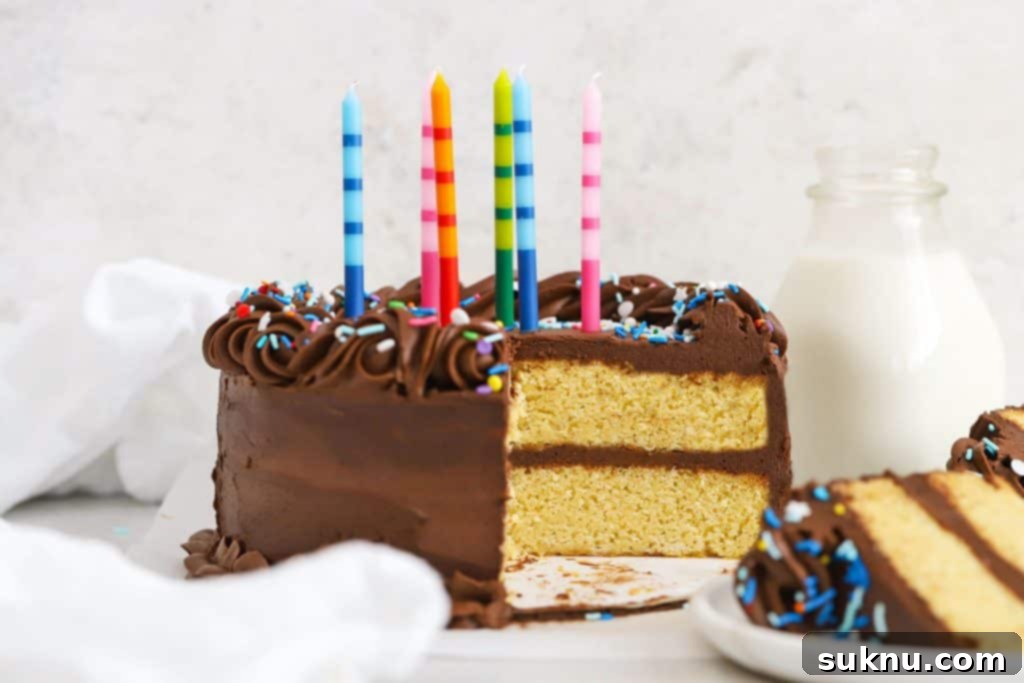
Gluten-Free Yellow Layer Cake
🌟 Did You Make This Recipe?
We’d absolutely love to hear about your baking success! Please take a moment to share your experience and thoughts by leaving a comment and a star rating below when you try our irresistible gluten-free Yellow Sheet Cake recipe. Your valuable feedback is incredibly helpful to other aspiring bakers in our community, and we genuinely can’t wait to hear how wonderfully it turned out for you!
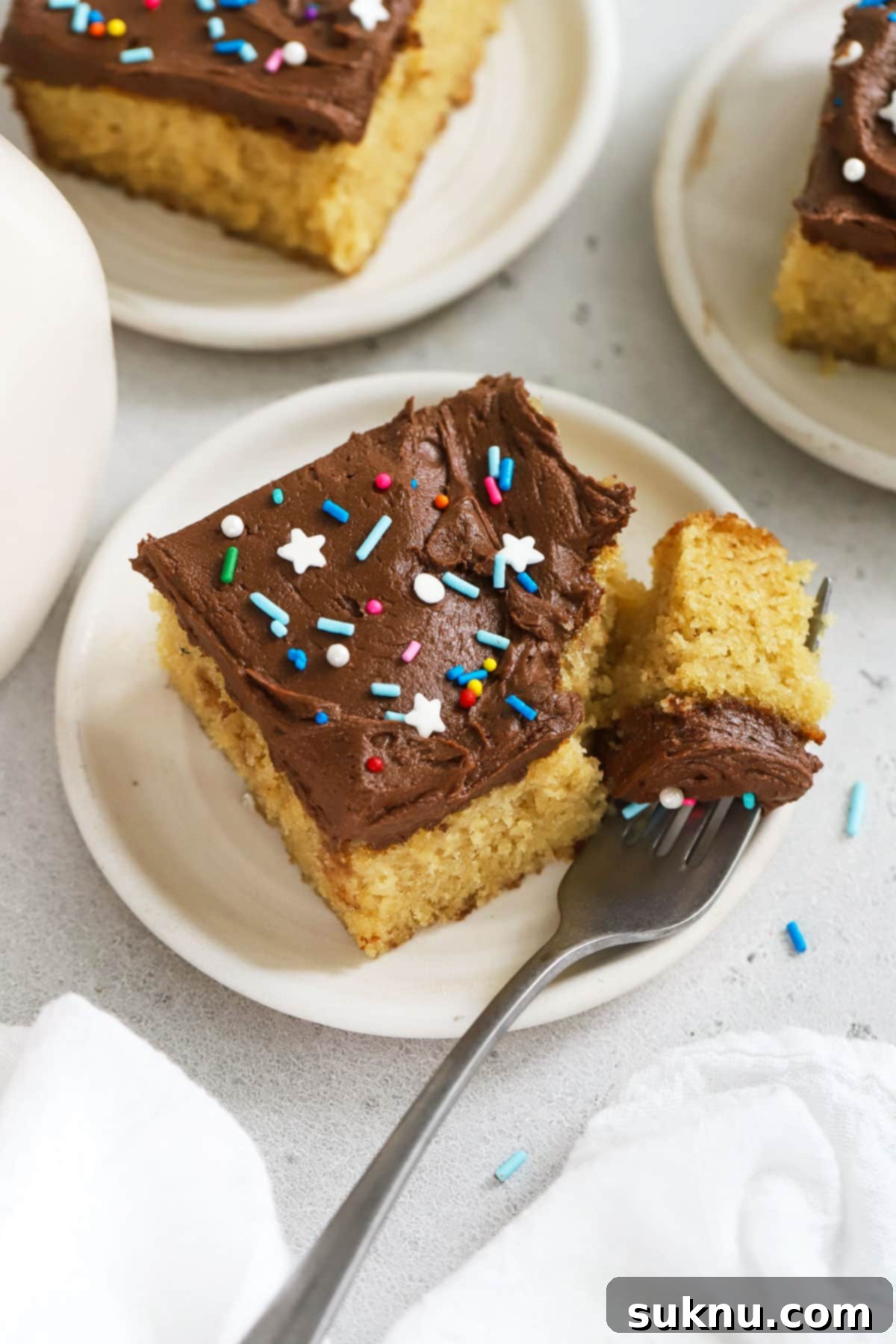
Gluten-Free Yellow Sheet Cake With Chocolate Frosting
This homemade gluten-free vanilla sheet cake is topped with a super plush chocolate buttercream frosting. It’s fluffy, moist, and deliciously nostalgic. The perfect gluten-free birthday cake!
Author: Emily Dixon, Sweets & Thank You
Prep Time: 30 minutes
Cook Time: 30 minutes
Cooling Time: 1 hour
Total Time: 2 hours
Yield: 1 (9×13) Sheet Cake
Pin Recipe
Equipment
- 1 Metal 9×13 Pan
- 1 Offset Spatula
- 1 Stand Mixer or Hand Mixer
Ingredients
For The Yellow Cake:
- 2 cups gluten-free measure-for-measure flour* (240 grams)
- ¼ cup cornstarch (32 grams)
- 2 ¼ teaspoons baking powder
- ½ teaspoon kosher salt
- 1 cup butter, softened to room temperature** (227 grams/2 sticks)
- 1 ¾ cup granulated sugar (350 grams)
- 3 large eggs, room temperature**
- 1 Tablespoon vanilla extract
- ⅛ teaspoon almond extract (optional)
- ½ cup sour cream, room temperature**
- 1 cup whole milk, room temperature**
For The Chocolate Frosting:
- 1 cup butter, softened (227 grams/2 sticks)
- 3 ½ cups powdered sugar (or more, if needed) (420 grams)
- ¾ cup unsweetened cocoa powder (65 grams) – Use natural cocoa not Dutch Processed cocoa
- 1 ½ teaspoons vanilla extract
- ¼ teaspoon kosher salt
- ⅓ cup heavy cream (or more, if needed)
- 1 Tablespoon corn syrup (optional, for glossier frosting)
Instructions
First, Make The Cake:
- Set Out Ingredients In Advance: You MUST set out the cold ingredients (eggs, butter, milk, and sour cream) about 1-1.5 hours in advance to let them come up to room temperature. Otherwise, they will not cream properly and the batter will be chunky instead of smooth.
- Preheat The Oven & Prep Your Pans: Start by preheating the oven to 350 degrees F. Lightly grease a metal 9×13 pan or line with parchment paper and set aside.
- Combine Dry Ingredients: In a medium bowl, combine gluten-free flour blend, cornstarch, baking powder, and salt. Whisk to combine, then set aside.
- Cream Butter & Sugar: In the bowl of a stand mixer, combine softened butter and sugar. Use the paddle attachment and beat together 2-3 minutes on medium-high speed until light and fluffy.
- Add Eggs & Vanilla: Scrape down the edges/bottom of the bowl and gradually add eggs one at a time, then the vanilla, mixing to incorporate well.
- Mix In Sour Cream. Scrape down the sides of the bowl again, and mix in the sour cream on LOW speed.
- Alternate Dry Ingredients & Milk: Add half of the dry ingredients and mix on LOW speed, streaming in half of the milk as you go. Scrape down the edges of the bowl and add the second half of the dry ingredients, streaming in the second half of the milk until just combined. Try not to over-mix here. Feel free to finish combining by hand with a spatula, if needed!
- Pour Batter Into Pan: Pour the cake batter into your prepared pan. Use an offset spatula to even out the surface of the batter.
- Bake Cake Layers: Bake the cake for 35-40 minutes or until the top of the cake springs back when gently pressed, and a cake tester inserted in the center comes out clean with just a few moist crumbs.
- Cool Completely Before Frosting: Let the cake cool 15 minutes in the pan before carefully turning them out onto a wire rack to cool completely OR let cake cool completely in the pan before frosting. Note that the cake must be COMPLETELY cool before frosting or the frosting will melt.
Then, Make The Frosting & Decorate The Cake
- Beat The Butter: Add the softened butter to a large bowl. Beat with a hand mixer on low speed for about 2 minutes, until it’s light and fluffy.
- Mix. Then, add powdered sugar, cocoa powder, salt, and vanilla extract. Add the cream, then mix for 30 seconds on low speed, then about 1 minute on medium speed, or until well combined.
- Adjust. At this point, you’ll want to adjust for texture. If the frosting is too dry or thick, add a little bit of additional cream at a time until it thins out. If the frosting is too thin or too wet, you can add more powdered sugar or cocoa powder a teaspoon at a time, until you reach the right consistency. The frosting should be easy to spread but should still hold its shape. (If you want the frosting to look extra glossy, you can add 1-2 Tablespoons of corn syrup at this point.)
- Frost The Cake: Use a piping bag and your favorite piping tip to pipe frosting onto the cooled cake, or use an offset spatula to spread the frosting out onto the cake. I like to make a subtle swirl design with the spatula. Add any desired sprinkles or other decoration.
- Serve & Store: Use a sharp knife to cut the cake into slices and enjoy right away. Or, cover the cake and refrigerate until you’re ready to serve. I recommend removing the cake from the fridge about 30 minutes before serving for the best texture. Store leftover cake covered in the refrigerator 2-3 days, or freeze leftovers up to 2 months.
Notes
- Gluten-Free Flour: We HIGHLY recommend King Arthur Flour Measure-For-Measure gluten-free flour. If you use another brand, be sure to use one with xanthan gum. Additionally, it’s VERY important to measure your flour carefully. We recommend weighing on an inexpensive kitchen scale, or at least use the scoop and level method, spooning the flour into the measuring cup and leveling it off.
- Room Temperature Ingredients: It’s crucial that all cold ingredients have been brought to room temperature before making this cake, or the batter will turn out lumpy and the finished cake will not look even. Set out butter, eggs, sour cream, and milk 1 hour in advance to bring them to room temperature.
- Frosting Tips: I usually just use an offset spatula to spread the frosting onto a sheet cake, but for pretty presentation, I like to use a Wilton 2D or Ateco 849 closed star tip to pipe a spiral or shell border or to make little poofs of frosting around the border of the cake.
- Your Pan Matters! I recommend baking this cake in a light colored metal pan, since it conducts heat evenly and cooks the cake gently. If you use a glass pan or ceramic pan, you’ll likely need to add a few minutes to the bake time and your cake may not bake as flat as mine.
Recipe Information
- Course: Cake, Dessert
- Cuisine: American
- Diet: Gluten Free
- Keyword: cake, frosting, sheet cake, vanilla cake
Find the complete recipe details here: sweetsandthankyou.com/yellow-sheet-cake/