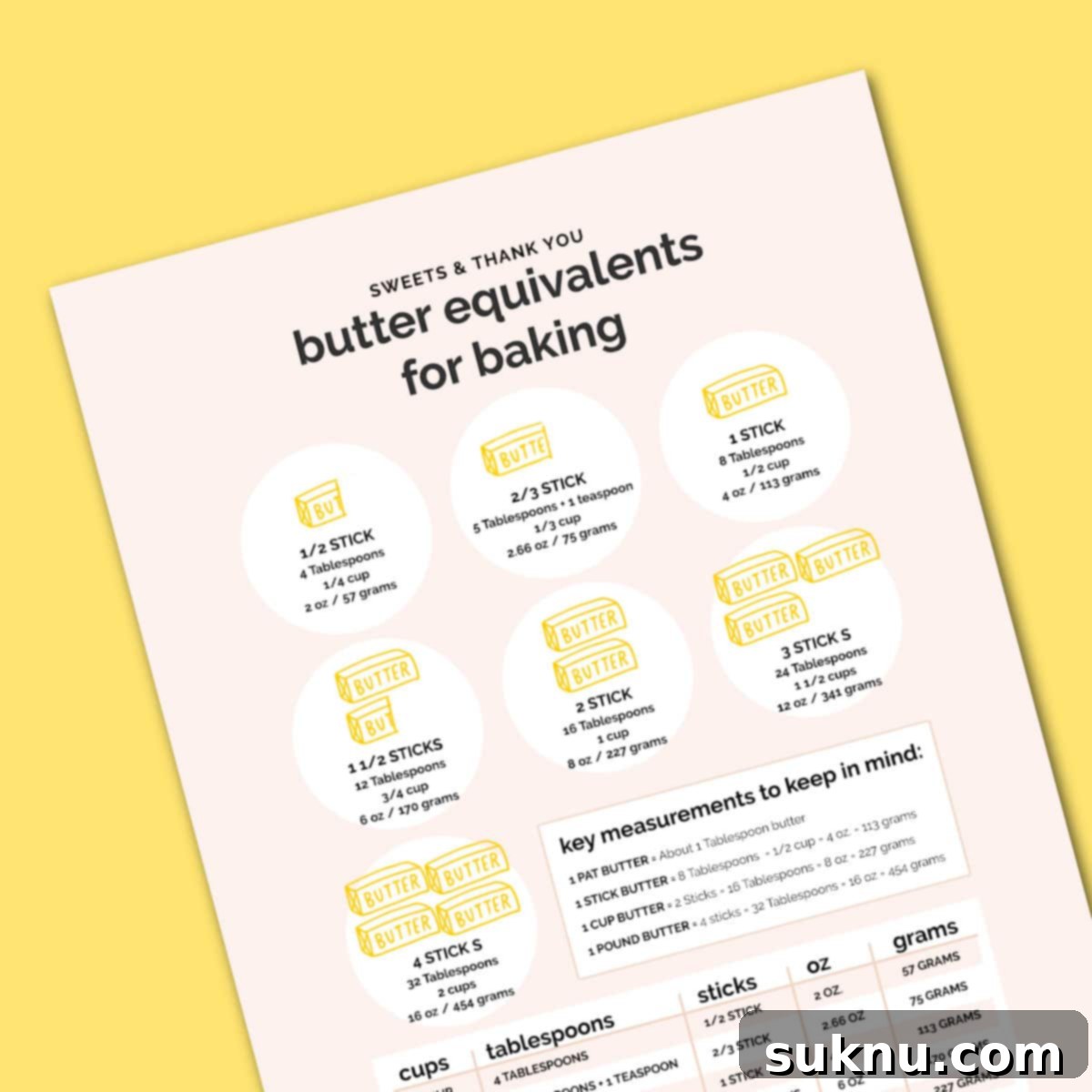
Unlock the secrets to perfectly measured butter every time! From deciphering tablespoons in a stick to converting ounces to grams, this comprehensive guide covers all essential butter measurements for flawless baking and cooking.
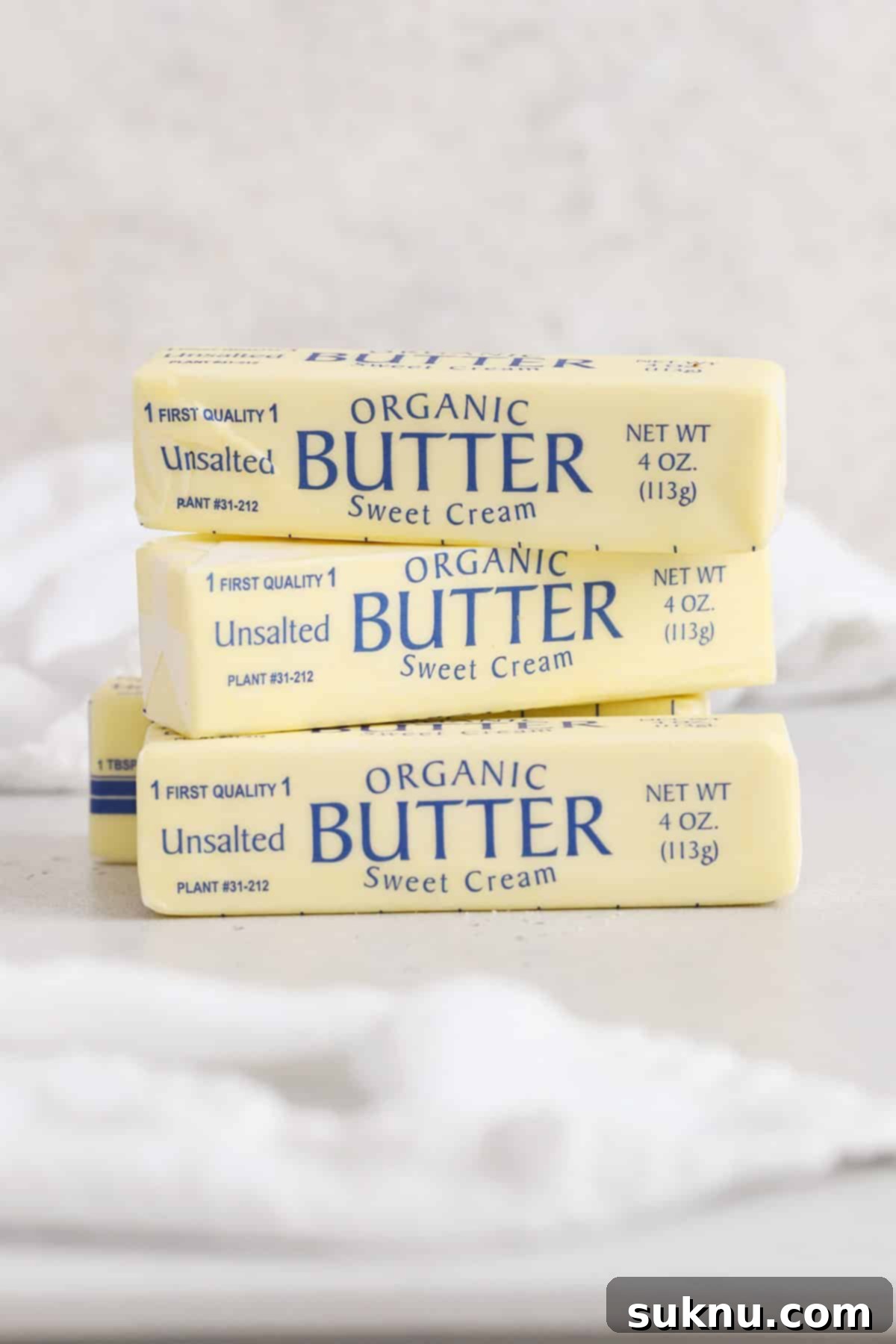
Butter is more than just an ingredient; it’s the heart of countless delicious recipes. Here at Sweets & Thank You, we deeply appreciate the richness, flavor, and texture that butter brings to everything from cookies and decadent brownies to fluffy cakes, luscious caramel sauce, smooth frostings, and savory snack mixes. It’s truly a kitchen staple!
While butter is a versatile workhorse, accurate measurement is paramount for successful baking. A seemingly small error can significantly impact the final texture, flavor, and overall outcome of your dish. Just as learning how to measure flour correctly can be a game-changer, understanding butter measurements is equally vital. It’s also incredibly helpful to know easy tricks to get eggs to room temperature fast to elevate your baking endeavors. That’s why today, we’re diving deep into the world of butter measurement, ensuring your bakes are consistently perfect.
It’s common for even experienced home bakers to get a bit confused. (“Wait, how many sticks in a cup again?” “Is half a cup really one stick?”) To make your life easier, we’ve compiled a comprehensive guide to common butter weights and measurements, including a handy free printable cheat sheet for quick reference. Plus, we’re sharing our best tips and tricks to help you get those measurements right every single time, whether you’re working with sticks, blocks, or specific weights.
Let’s jump in and clarify all your butter measurement questions. Here’s everything you need to know about how to accurately measure butter for any recipe!
Measuring Butter: A Quick Overview
- How Is Butter Measured?
- Understanding a Stick of Butter
- Essential Butter Weights & Equivalents
- Step-by-Step Butter Measurement Guide (Scale & Stick Instructions)
- FAQ & Expert Tips for Measuring Butter
- Your Printable Butter Conversion Cheat Sheet
- More Baking & Cooking Tips
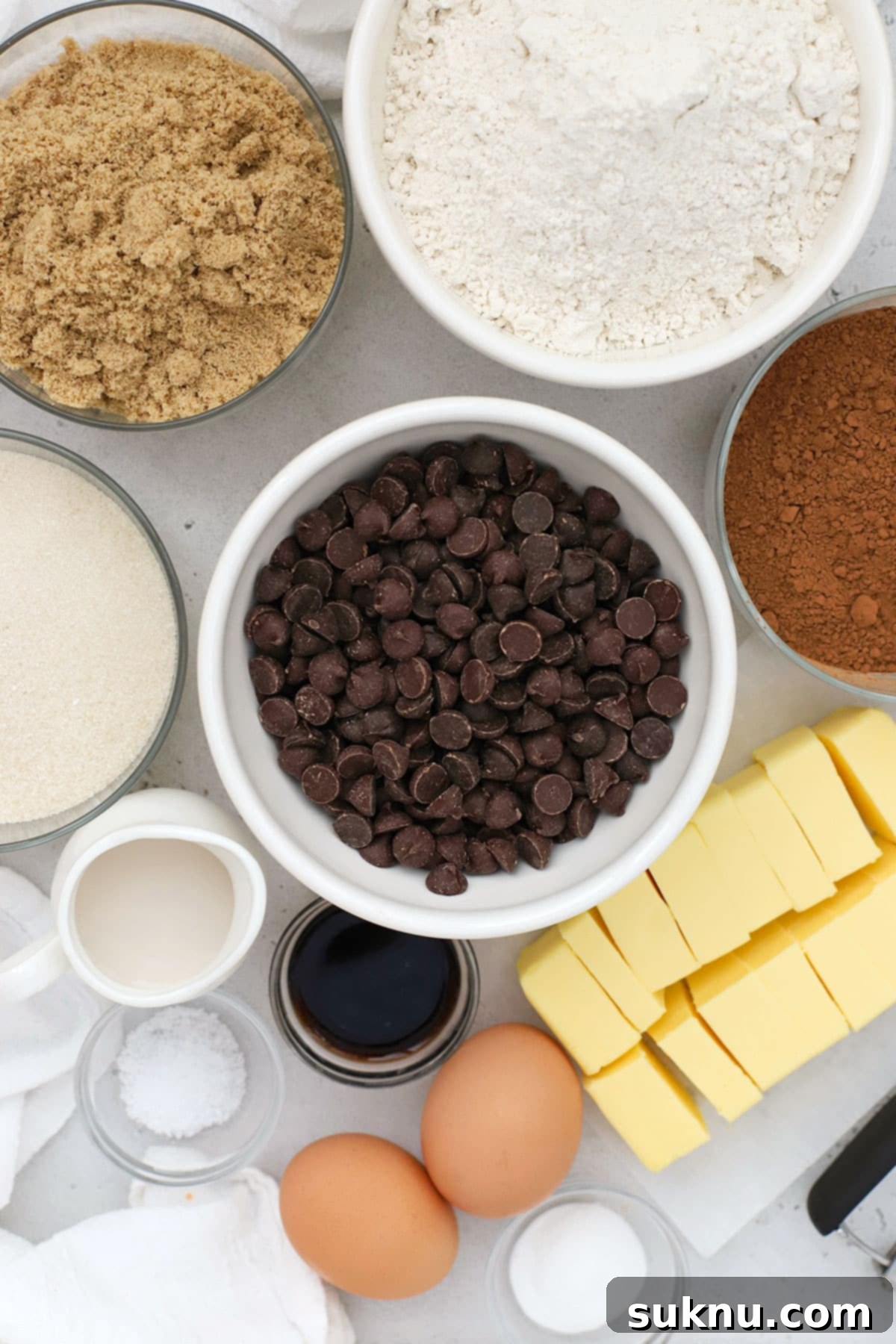
How Is Butter Measured Around The World?
While butter is a global staple, the way it’s measured can vary significantly depending on where you are. Understanding these regional differences is crucial, especially when trying recipes from international cookbooks or websites. Universally, the most precise method to measure butter, particularly for baking where accuracy is key, is by weight. However, everyday baking practices often follow local customs:
- In the United States: Butter is most commonly sold and measured by the “stick” or in cups. A standard US stick of butter conveniently contains markings for tablespoons and fractions of a cup on its wrapper, making it easy to slice off the required amount.
- In Canada: While sticks exist, butter is often measured by volume in cups, similar to other liquid or dry ingredients. Recipes frequently specify butter in milliliters or grams as well, especially in more precise culinary contexts.
- In Europe, Australia, & New Zealand: Butter is almost exclusively measured by weight in grams. It’s typically sold in blocks or larger packages, and recipes will call for a specific gram amount, emphasizing the importance of a kitchen scale for accurate results.
This global variation highlights why having a good understanding of conversions and potentially a kitchen scale is incredibly valuable for any home baker. It ensures that no matter where a recipe originates, you can accurately replicate it in your kitchen.
Understanding a Stick of Butter
For many home cooks and bakers in the United States, the “stick of butter” is a familiar unit of measurement. It’s the standard way butter is packaged and referenced in most American recipes. But how much butter is actually in one of these sticks? Let’s break it down clearly:
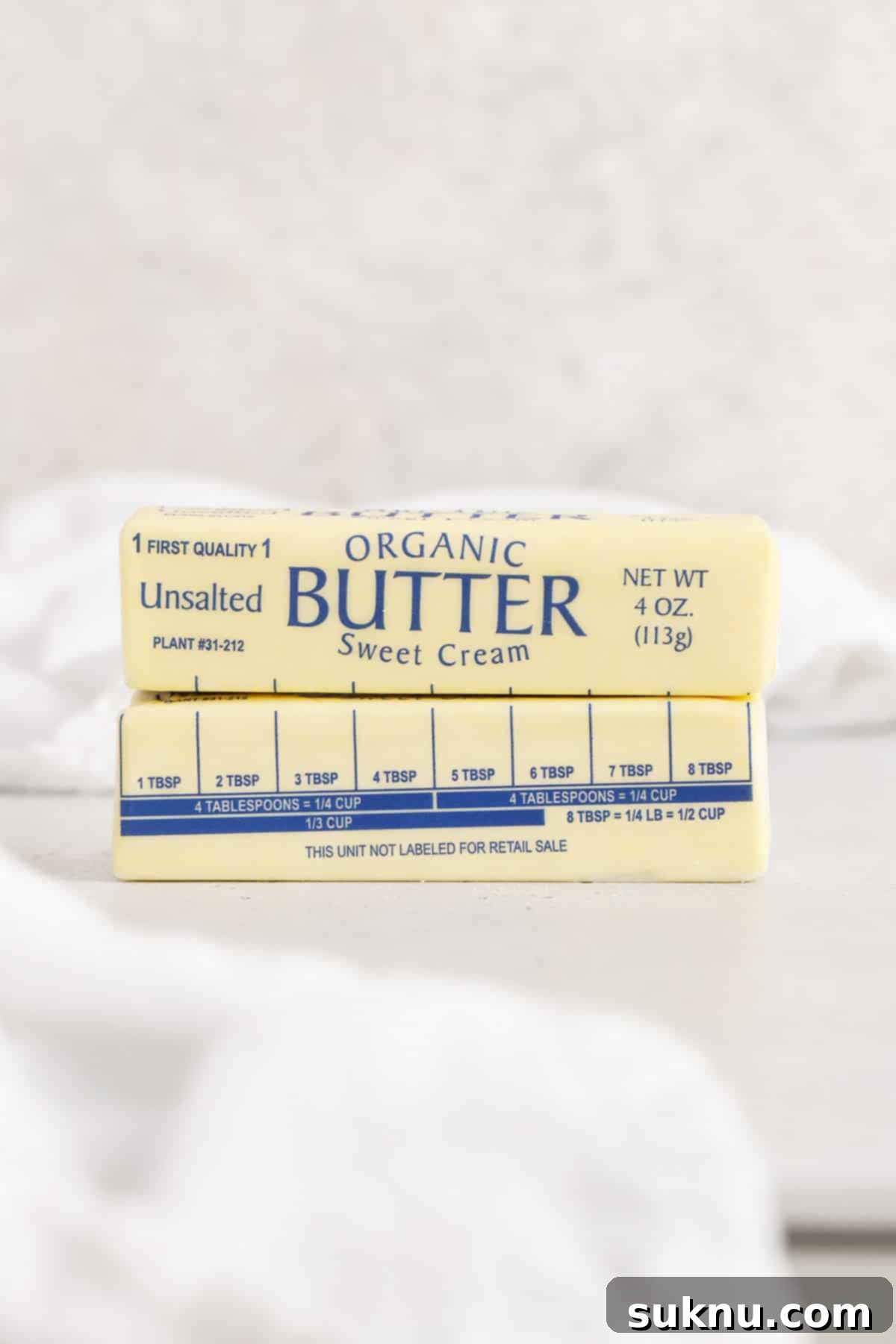
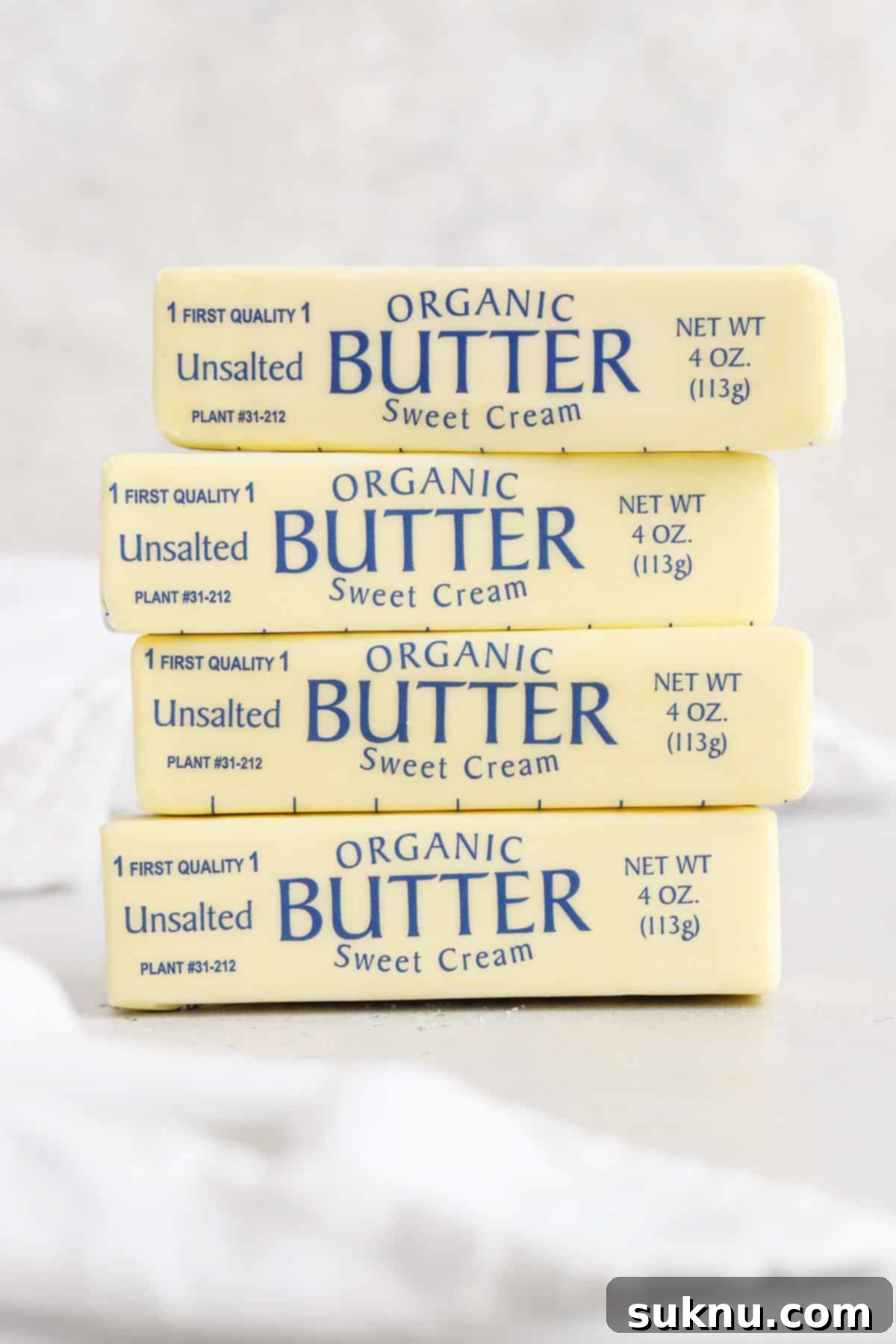
A standard stick of butter is equivalent to 1/2 cup or 8 Tablespoons. It also weighs 4 ounces (oz) or approximately 113 grams (g). Most US butter brands enhance user convenience by printing clear markings on the wrapper, denoting each tablespoon. This simple feature allows you to precisely cut off the amount you need without the guesswork, making it incredibly user-friendly for recipes calling for specific tablespoon or fractional cup measurements.
However, not all butter comes in sticks. European-style butter, known for its higher butterfat content and richer flavor (like Kerrygold), or butter sold in bulk quantities, is often packaged in larger blocks rather than individual sticks. These blocks might be sold as 2 cups of butter (which is equivalent to 4 sticks, 1 pound, or 454 grams) or 1 cup of butter (2 sticks, 8 oz, or 227 grams). When working with blocks, it becomes even more crucial to reference the package labels for total weight or volume. If a recipe specifies “sticks” but you only have a block, you’ll need to rely on a kitchen scale or the conversion chart below to accurately measure the right amount. Always double-check your butter package before you begin to ensure you know exactly what quantity you’re working with.
Essential Butter Measurements & Equivalents
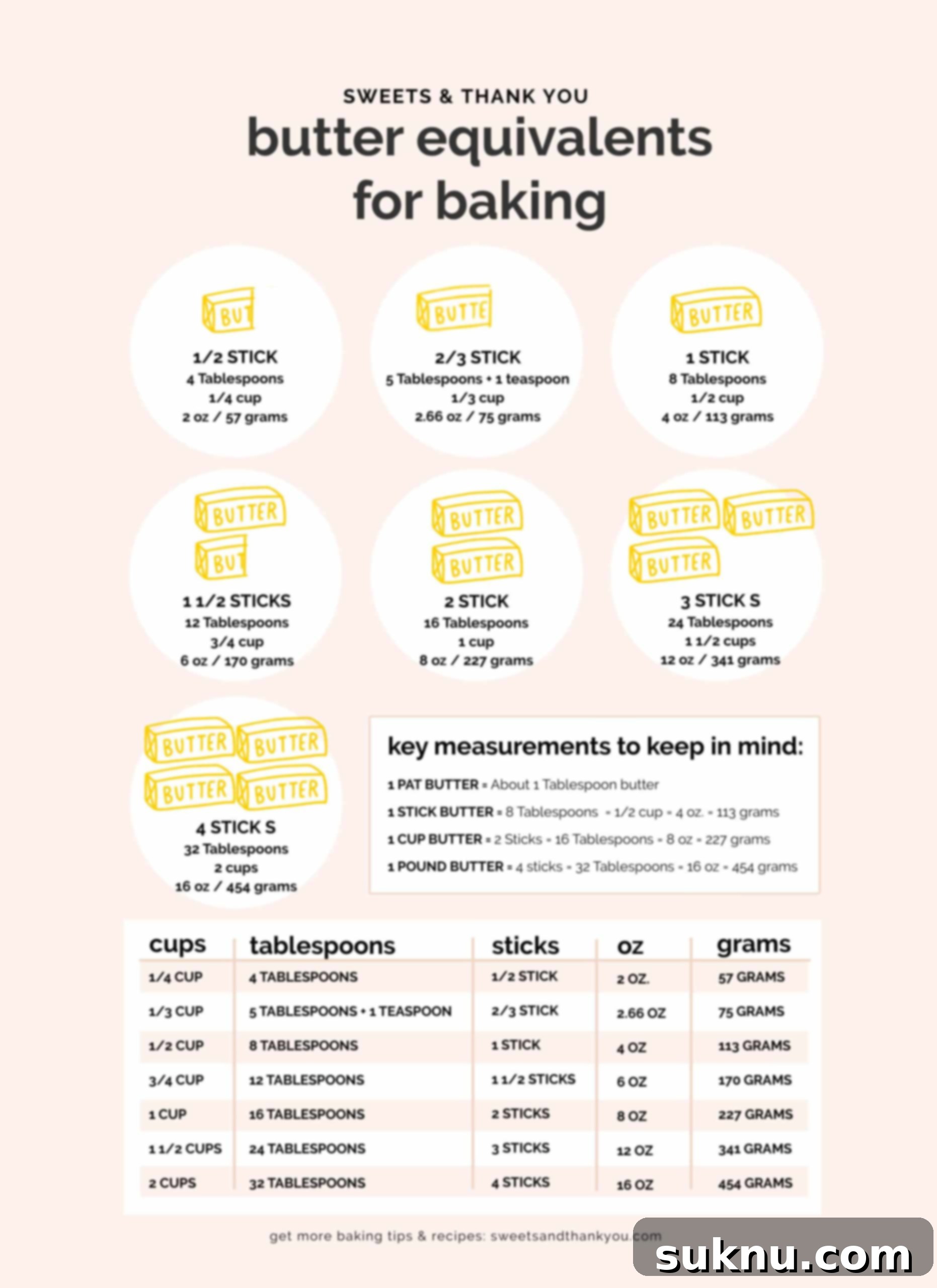
Navigating butter measurements can sometimes feel like solving a puzzle, especially when recipes jump between sticks, tablespoons, cups, ounces, and grams. To make your baking life easier and ensure precision every time, here’s a comprehensive breakdown of common butter measurements and their equivalents. This chart is a baker’s best friend, helping you convert with confidence and avoid costly mistakes.
- 1 Tablespoon Butter = 0.5 oz = 14 grams
- 1/4 cup butter = 4 Tablespoons = 1/2 stick = 2 oz. = 57 grams
- 1/3 cup butter = 5 Tablespoons + 1 teaspoon = 2.66 oz. = 75 grams
- 1/2 cup butter = 8 Tablespoons = 1 stick = 4 oz. (1/4 pound) = 113 grams
- 2/3 cup butter = 10 Tablespoons + 2 teaspoons = 5.33 oz = 151 grams
- 3/4 cup butter = 12 Tablespoons = 1 1/2 sticks = 6 oz. = 170 grams
- 1 cup butter = 16 Tablespoons = 2 sticks = 8 oz. (1/2 pound) = 227 grams
- 1 1/2 cups butter = 24 Tablespoons = 3 sticks = 12 oz (3/4 pound) = 341 grams
- 2 cups butter = 32 Tablespoons = 4 sticks = 16 oz (one pound) = 454 grams
Keep this chart handy in your kitchen to quickly reference conversions, whether you’re scaling a recipe up or down, or simply double-checking a measurement. It’s an indispensable tool for achieving consistent, delicious results.
Save Time With Our Printable!
Never second-guess your butter measurements again! Get our handy butter equivalent cheat sheet sent directly to your inbox. Print it out and keep it on hand for all your baking projects, big or small. It’s an invaluable resource for consistent results!
How To Measure Butter, Step-By-Step
Achieving accurate butter measurements is foundational to baking success. Below, we’ll walk you through the most reliable methods, ensuring your recipes turn out perfectly every time. Remember, precision in baking is what elevates good to great!
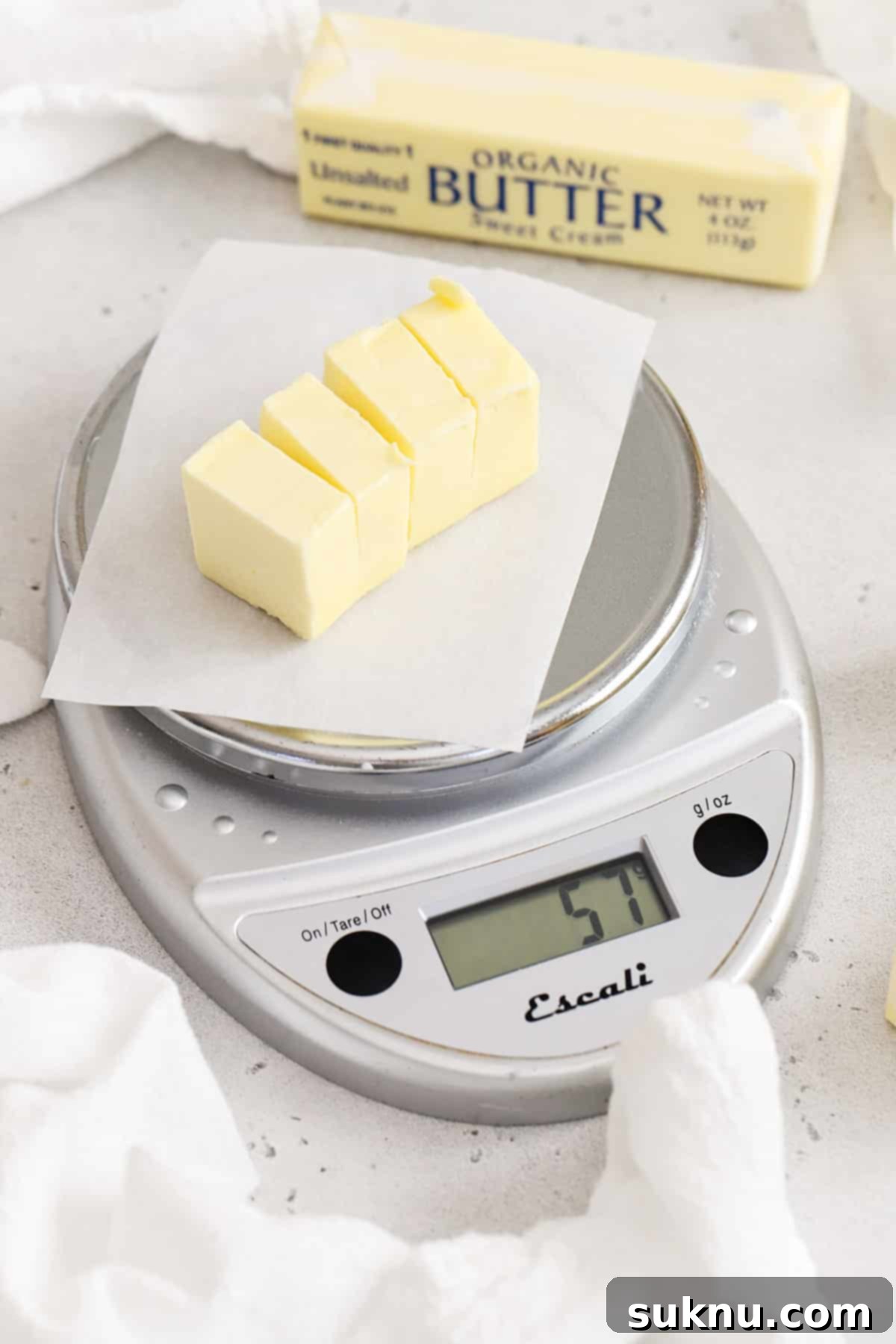
1. Weigh Butter On A Digital Kitchen Scale (Most Accurate)
Measuring butter by weight using a digital kitchen scale is the gold standard for accuracy. This method eliminates the potential for errors that can occur with volume measurements (like differences in how tightly butter is packed). Here’s how to do it:
- Prepare Your Scale: Turn your digital kitchen scale on and ensure it’s set to zero. If you plan to use a bowl, plate, or piece of parchment paper to hold the butter, place it on the scale *before* taring. Then, press the “tare” or “zero” button to reset the scale to zero, effectively subtracting the weight of your container. This saves you from having to clean your scale directly.
- Add the Butter: Carefully place the butter onto the prepared surface on the scale. If working with a large block, you may need to roughly cut a portion off first.
- Adjust for Precision: Add or remove small pieces of butter as needed until the scale displays the exact weight required by your recipe (in ounces or grams). Take your time here to ensure accuracy.
- Use in Recipe: Once the correct weight is achieved, use the butter as directed in your recipe. This method is especially recommended for delicate pastries and complex baked goods where exact ratios are critical.
2. Measure By The Stick (Convenient for US Recipes)
If you’re using butter packaged in sticks, this method is straightforward and widely used in US recipes. It relies on the pre-marked wrappers for convenience.
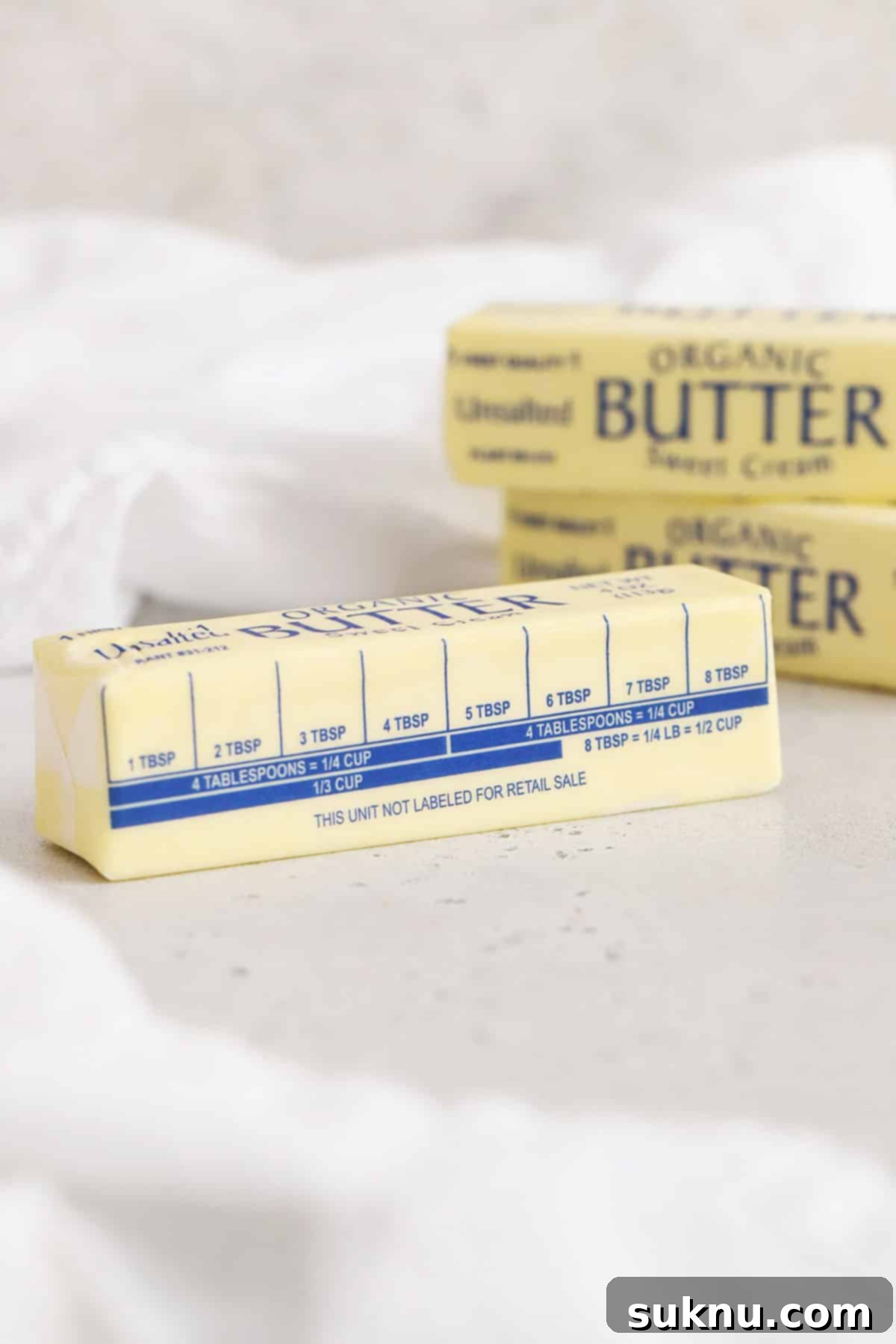
- Locate Markings: Carefully unwrap your stick of butter, paying attention to the tablespoon and fractional cup markings printed on the wrapper. Each line typically represents 1 Tablespoon of butter. Remember that a full stick is 8 Tablespoons or 1/2 cup.
- Slice Precisely: Using a sharp knife, carefully cut the butter along the marking that corresponds to the amount needed for your recipe. For a clean cut, you can lightly score the butter along the line before cutting all the way through.
- Prepare for Recipe: Once cut, your butter is ready to be used as directed. If your recipe calls for softened butter, slice it first, then allow it to come to room temperature.
3. Measuring Butter from a Block (Without Markings)
When you have a large block of butter without convenient stick markings, you’ll need to rely on a kitchen scale for the most accurate results. If a scale isn’t available, you can use the water displacement method for a close approximation for softened butter, but weighing is always preferred.
- Using a Scale: Follow the steps outlined in “Weigh Butter On A Scale.” This is by far the best way to measure from a block.
- Rough Estimation (Last Resort): If a scale is absolutely not an option, and you need a cup measurement, you can try the water displacement method for softened butter. Fill a liquid measuring cup with water to the desired butter volume (e.g., if you need 1/2 cup butter, fill to the 1/2 cup mark). Then, add softened butter to the cup, submerging it until the water level rises to the next full cup mark (e.g., 1 cup mark for 1/2 cup butter). The difference in water levels represents the volume of butter. This method is less precise and only works for softened butter.
FAQ + Expert Tips And Tricks For Measuring Butter
Here are answers to some of the most frequently asked questions about measuring butter, along with invaluable tips to ensure your baking and cooking always hit the mark.
Butter Measurement Quick Facts:
- How Many Sticks Are In 1 Pound Of Butter? There are 4 sticks of butter in 1 pound.
- How Many Cups Are In 1 Pound Of Butter? There are 2 cups of butter in 1 pound.
- How Many Sticks Equals 1 Cup Of Butter? 2 sticks of butter equal 1 cup.
- How Many Cups Are In A Stick Of Butter? 1 stick of butter equals 1/2 cup.
- How Many Tablespoons Are In A Stick Of Butter? 1 stick of butter equals 8 Tablespoons.
Do You Use A Measuring Cup To Measure Butter?
Generally, no, you don’t scoop solid butter into a traditional dry measuring cup like you would with flour or sugar, nor into a liquid measuring cup like milk. Butter is usually measured by weight (ounces or grams on a scale) or by the pre-marked tablespoons/cups on a stick wrapper. Scooping solid butter into a measuring cup can lead to inaccuracies due to air pockets or improper packing. If a recipe calls for a specific volume (e.g., 1/2 cup butter) and you don’t have sticks with markings, it’s best to convert that volume to weight using our chart and use a kitchen scale.
Do You Measure Butter Solid Or Melted?
It is almost always easiest and most accurate to measure butter in its solid, cold state, even if your recipe eventually calls for melted butter. The density of butter changes when it melts, meaning a cup of melted butter does not weigh the same as a cup of solid butter, and its volume can also be slightly different. For best results, measure the butter when it’s cold and solid (either by weight on a scale or by cutting from a stick), and then melt it as directed in your recipe. Always follow the specific instructions in your recipe.
How Much Butter Is In A Pat?
The term “pat of butter” is generally a loose culinary term, but in most home cooking contexts, it typically refers to about 1 Tablespoon of butter. This is the size often individually wrapped at restaurants or commonly sliced from a stick for everyday use. When a recipe uses this term, it’s usually in a context where precision isn’t critically important, such as adding a pat to vegetables or toast.
Why Is Accurate Butter Measurement So Important In Baking?
In baking, butter serves multiple crucial roles: it provides fat for tenderness, moisture, and flavor; it helps create flaky layers in pastries; and it contributes to the leavening in creams and cakes. Too much or too little butter can drastically alter the texture (e.g., greasy vs. dry), spread (e.g., flat cookies vs. cakey ones), and overall structural integrity of your baked goods. Precision ensures the perfect balance of ingredients, leading to consistent and delicious outcomes every time.
What If My Butter Isn’t In A Stick And I Don’t Have A Scale?
If you have a block of butter without markings and no kitchen scale, you’re in a tricky spot for precise baking. For general cooking, you might be able to estimate by remembering that a typical US stick is about 4 ounces or 1/4 of a pound. If your block is a 1-pound block, cutting it into four equal segments would give you roughly 4 sticks (1/2 cup each). This is a visual estimation and not recommended for baking that requires high accuracy. Investing in an inexpensive digital kitchen scale is highly recommended for any serious baker.
Don’t Forget Your Printable Conversion Sheet!
EASILY CONVERT MEASUREMENTS TO STICKS, TABLESPOONS + CUPS + GRAMS + OR OUNCES!
More Essential Baking & Cooking Tips:
Mastering butter measurement is just one step on your journey to becoming a baking pro. Explore these other helpful guides to refine your skills and expand your culinary knowledge:
- How To Brown Butter Perfectly
- 3 Simple Ways To Separate Egg Yolks & Egg Whites
- How To Measure Flour Correctly (Scoop & Level Method for Accuracy)
- How To Check If Your Baking Soda & Baking Powder Are Still Fresh
- How To Freeze Cookie Dough (Plus Tips for Baking From Frozen)
- 8 Essential Cookie Tools We Use All The Time