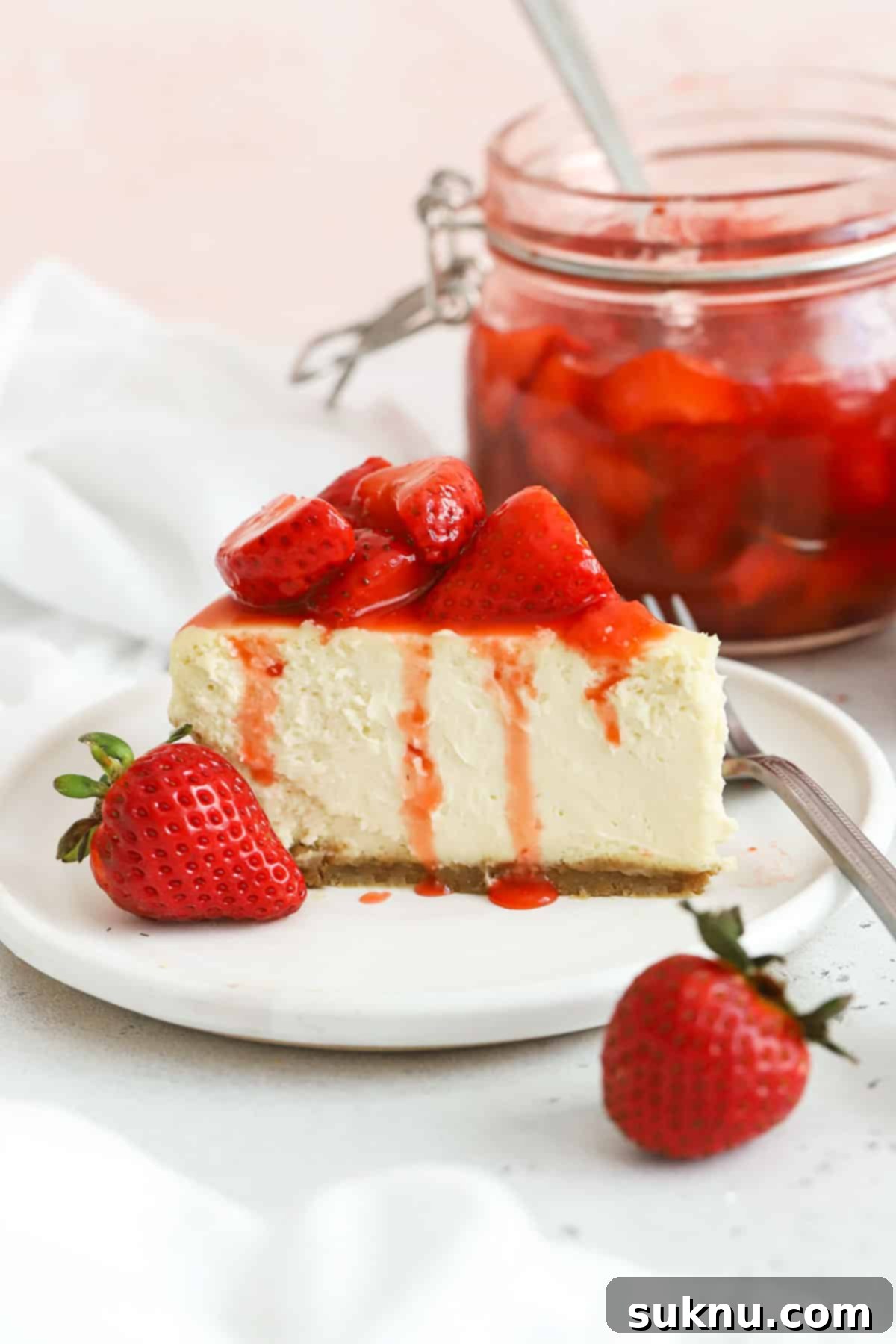
The Ultimate Gluten-Free Strawberry Cheesecake Recipe: A Luscious Masterpiece
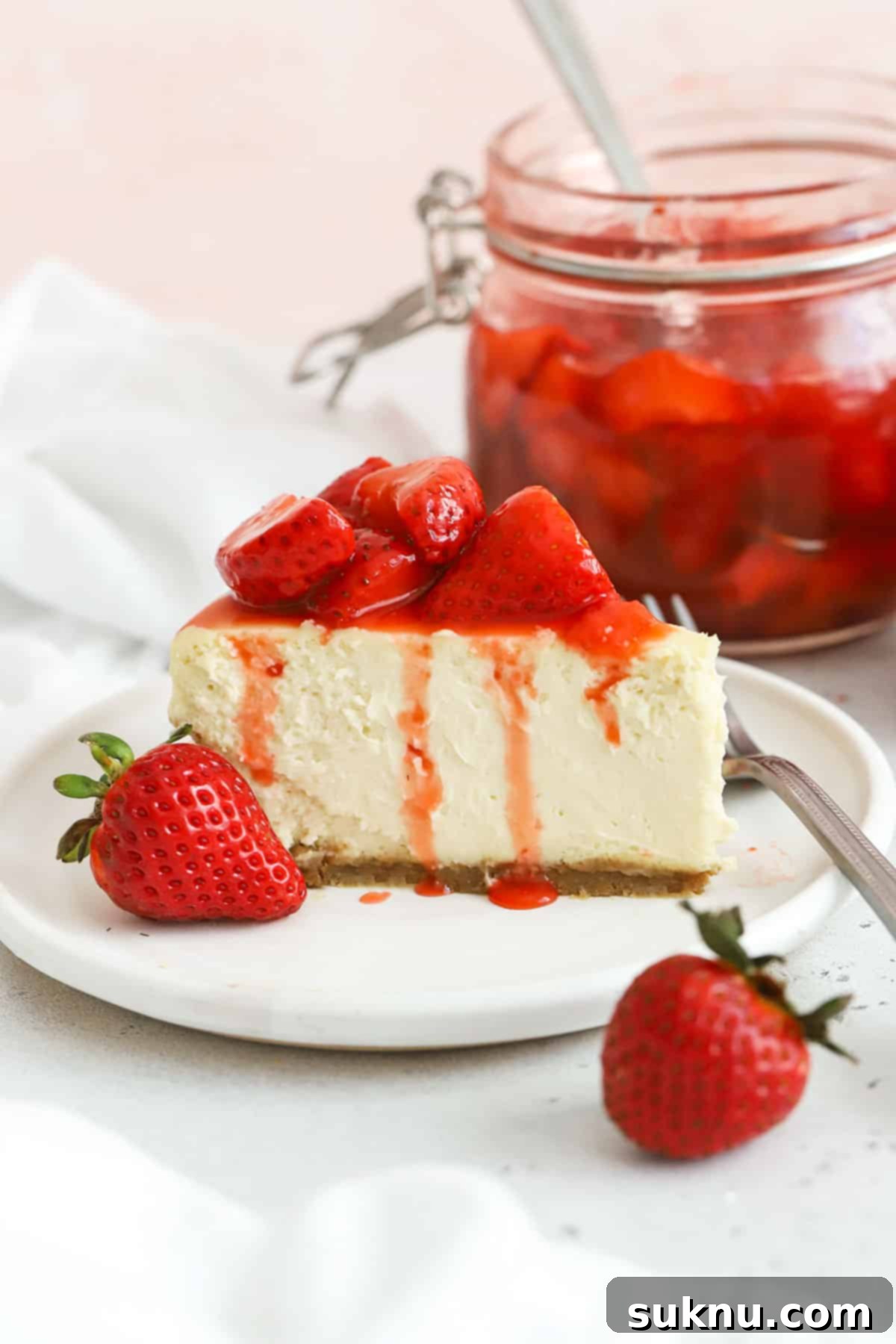
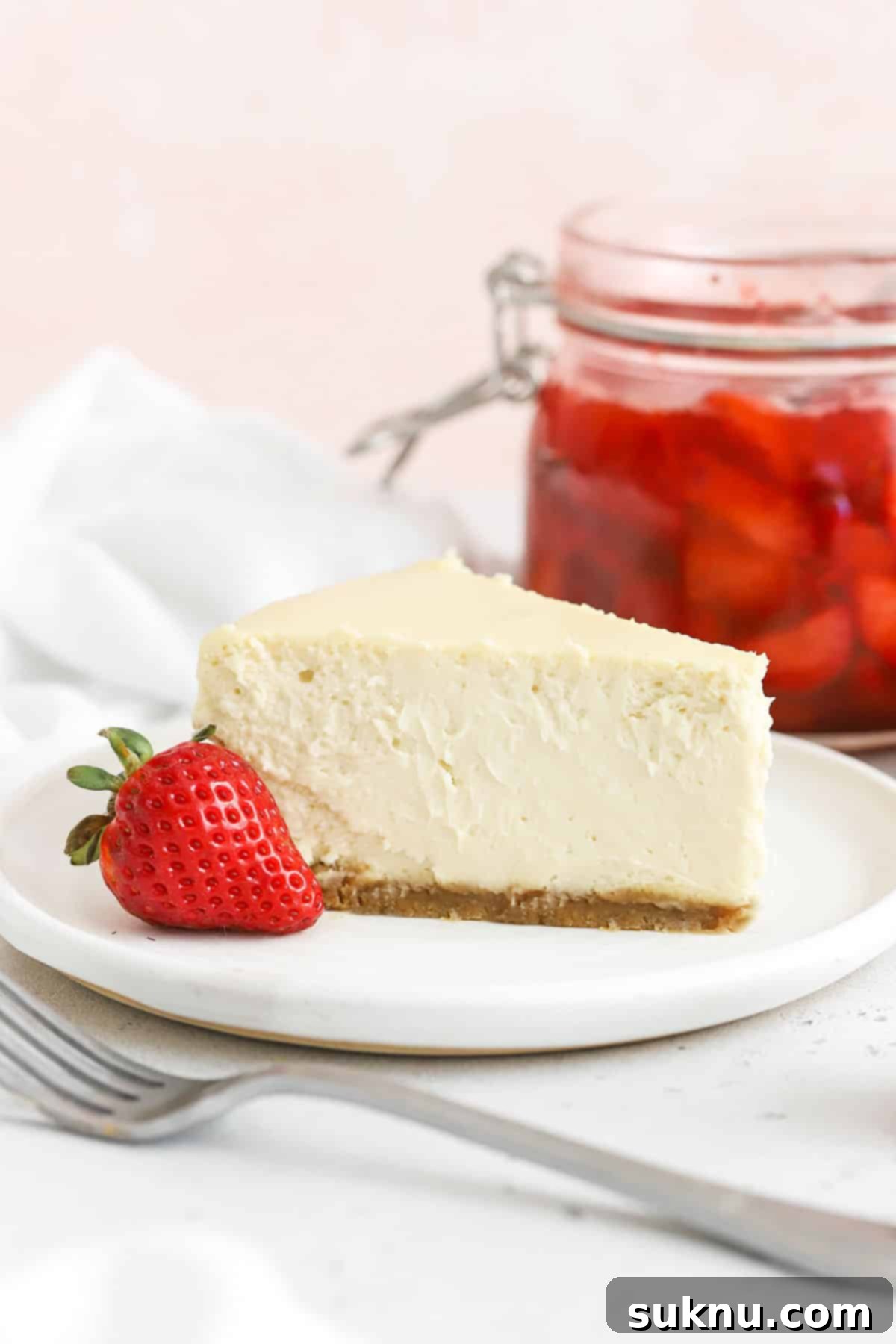
Prepare to be amazed by this sensational Gluten-Free Strawberry Cheesecake recipe – a true showstopper destined to be the star of your next celebration. Imagine a creamy, smooth cheesecake nestled on a crisp gluten-free crust, generously crowned with a vibrant, fresh strawberry topping. It’s not just a dessert; it’s an experience, as delightful to taste as it is beautiful to behold. Whether you’re planning an Easter feast, a Fourth of July barbecue, a birthday celebration, or simply craving an extraordinary gluten-free treat, this easy strawberry cheesecake recipe delivers unparalleled indulgence.
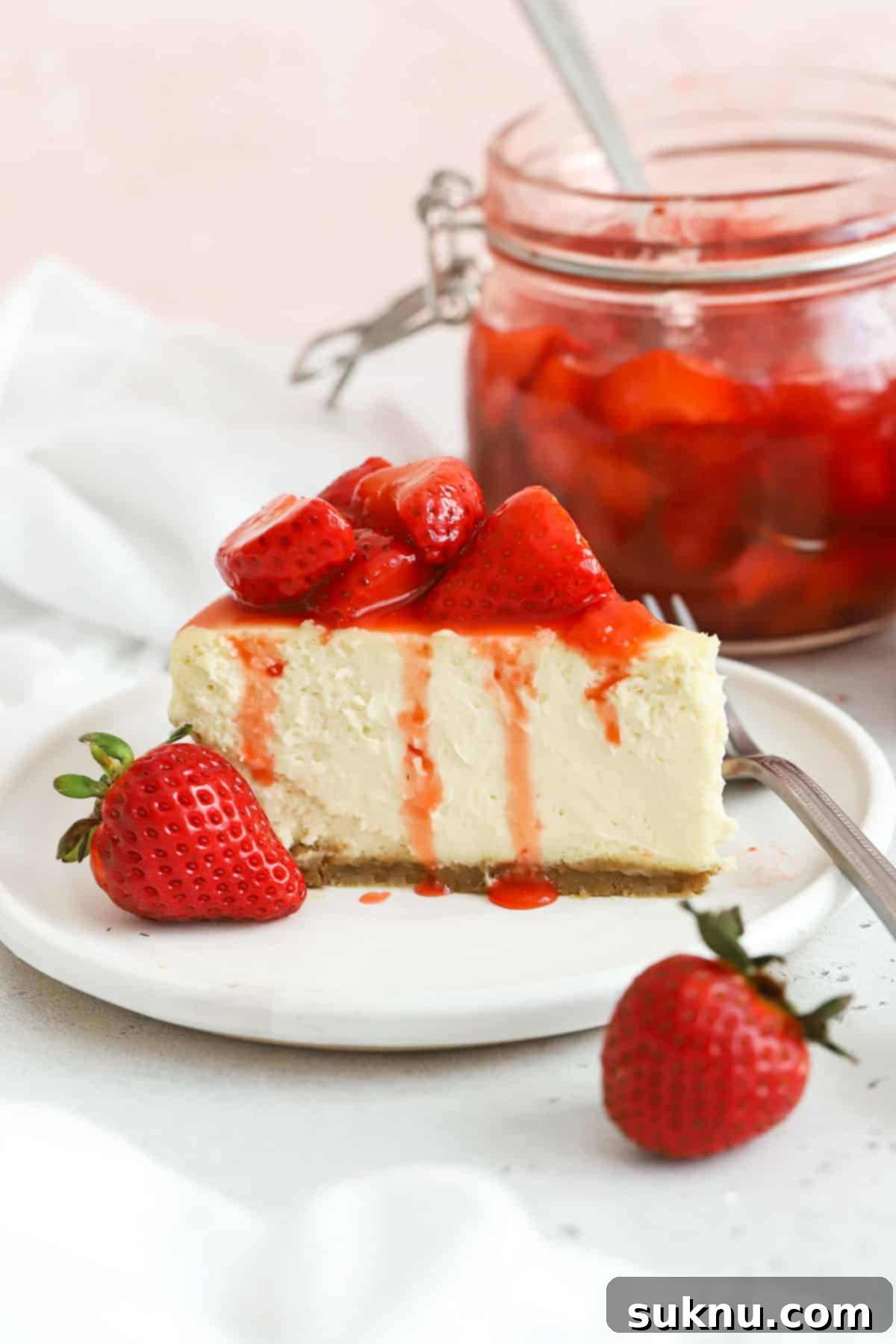
Forget the compromises often associated with gluten-free baking. Our strawberry cheesecake proves that decadent desserts can be both delicious and diet-friendly. We’ve meticulously crafted this recipe to ensure every bite is a symphony of flavors and textures, making it an absolute must-try for any cheesecake enthusiast, gluten-free or not. It’s a dessert that truly has it all, combining classic creamy richness with a burst of fresh berry flavor.
Unveiling the Three Irresistible Layers of Our Gluten-Free Strawberry Cheesecake
What makes this gluten-free strawberry cheesecake so exceptional? It’s a harmonious blend of three distinct, yet perfectly complementary, layers that come together to create a truly unforgettable dessert experience:
- A Golden, Crispy Gluten-Free Graham Cracker Crust: This forms the perfect foundation for our cheesecake. Baked to a golden perfection, it offers a delightful crunch and buttery flavor that beautifully contrasts the creamy filling. Crafted from the finest gluten-free graham crackers, it’s robust enough to support the rich filling without being overly dense, providing a satisfying texture with every forkful.
- A Velvety, Luscious Cheesecake Filling: The heart of our dessert, this rich filling is smooth as silk and melts in your mouth. It boasts the classic cheesecake tang, subtly enhanced with bright hints of pure vanilla extract and a touch of fresh lemon zest. The result is a luxurious, creamy experience that will leave you craving more, a testament to careful preparation and quality ingredients.
- A Vibrant, Fresh Strawberry Topping: The crowning glory! This bright, berry-infused topping adds a burst of fresh fruit flavor and stunning visual appeal. Made with juicy, ripe strawberries, it elevates the entire dessert with its natural sweetness and a delicate tartness, creating a refreshing balance against the creamy cheesecake. It’s the perfect, colorful finish.
Are you ready to create this masterpiece in your own kitchen? Let’s gather our ingredients and embark on this delightful baking adventure together. Here’s a comprehensive look at what you’ll need to make this unforgettable gluten-free cheesecake with strawberry topping…
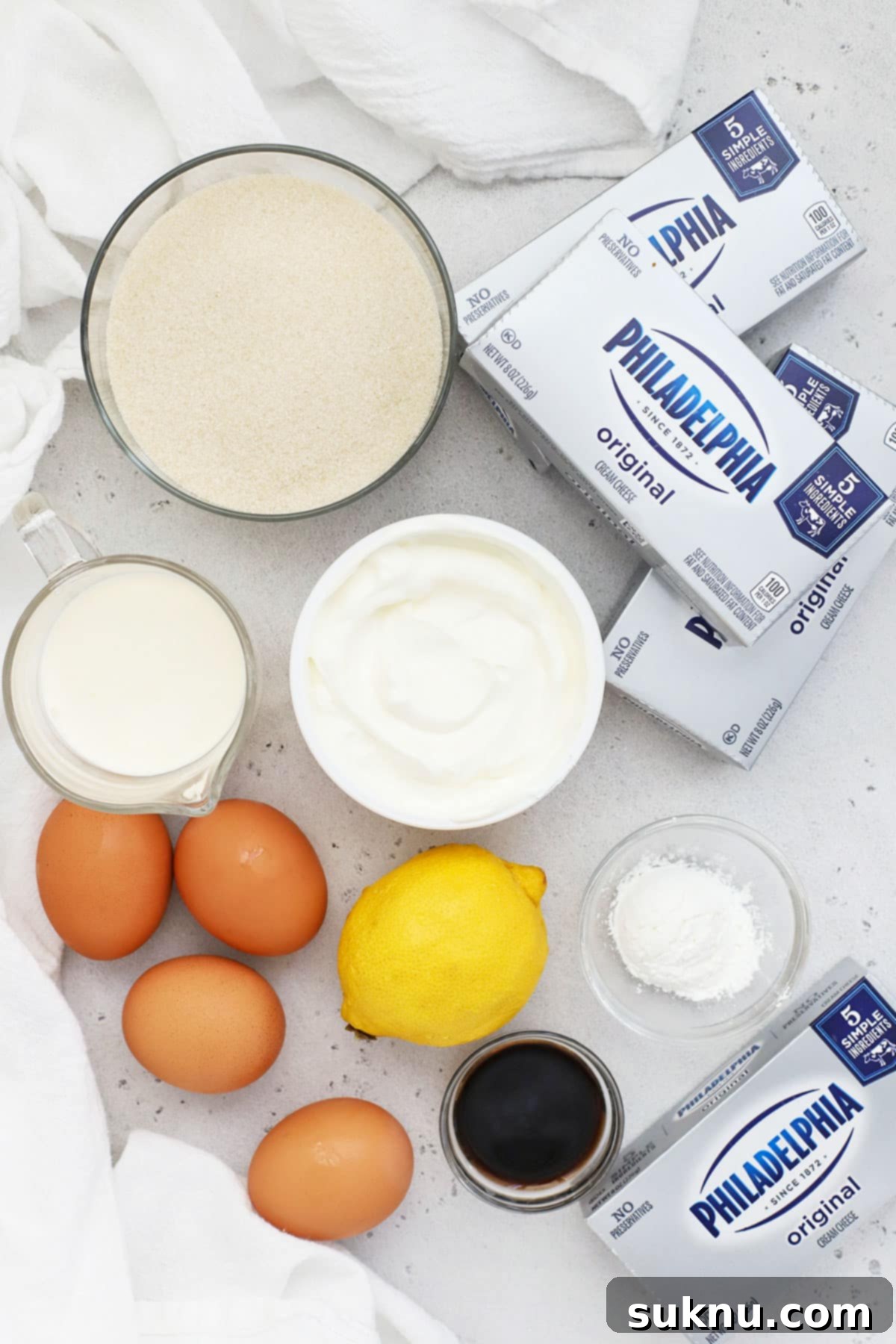
Key Ingredients for the Perfect Gluten-Free Strawberry Cheesecake
Crafting an exceptional gluten-free strawberry cheesecake begins with high-quality ingredients, carefully selected and prepared. Each component plays a vital role in achieving the perfect texture and flavor. Here’s what you’ll need for each part of this delectable dessert, along with some important tips to ensure your success:
- Gluten-Free Graham Crackers: These form the crunchy, buttery base of our cheesecake crust. The quality of your graham crackers directly impacts the crust’s flavor and texture. We frequently use Pamela’s gluten-free graham crackers, renowned for their excellent taste and consistency, but the market now offers many superb gluten-free options. Feel free to explore different brands, or consult our in-depth taste test guide for the best gluten-free graham crackers to find your ideal match.
- Granulated Sugar: You’ll need sugar in three places: to sweeten the crisp crust, to add balanced sweetness to the luscious cheesecake filling, and to enhance the natural flavors of the fresh strawberry topping. It’s carefully portioned to ensure a perfectly sweet, but not overly cloying, final dessert.
- Melted Butter: This is a crucial binding agent for the graham cracker crumbs, ensuring your crust is perfectly set, rich in flavor, and holds its shape beautifully once chilled. Unsalted butter is typically preferred, as it gives you greater control over the overall saltiness of your dish.
- Full-Fat Cream Cheese: For a truly rich, dense, and creamy cheesecake filling, full-fat cream cheese is absolutely non-negotiable. Brands like Philadelphia are highly recommended for their consistent quality, smooth texture, and classic tangy flavor. It’s imperative that your cream cheese is at room temperature before mixing; cold cream cheese will resist blending, resulting in a lumpy filling and potentially affecting the cheesecake’s structure.
- Large Eggs: These eggs are vital for providing the structural integrity and the delightful custard-like texture of the cheesecake. Just like the cream cheese, ensuring your eggs are at room temperature is crucial. Room temperature eggs emulsify much more effectively with the other ingredients, leading to a smoother batter, which in turn helps prevent unsightly cracks in your baked cheesecake and ensures an even, consistent bake. If you’re pressed for time, try this quick trick to bring eggs to room temperature rapidly.
- Sour Cream: A true secret weapon for elevating cheesecake flavor and texture! Room temperature sour cream introduces a delightful tangy note that perfectly balances the sweetness of the filling. More importantly, it contributes significantly to the cheesecake’s incredibly rich, smooth, and velvety consistency, making each bite an indulgence.
- Fresh Lemon Zest: This is one of my favorite subtle flavor enhancers! Zesting a fresh lemon introduces a bright, fragrant citrus aroma that elevates the overall flavor profile of the cheesecake without making it taste like a lemon dessert. It subtly cuts through the richness and makes the fresh strawberry notes pop. Learn how to zest a lemon perfectly in 5 easy ways to maximize its aromatic oils.
- Pure Vanilla Extract: A foundational flavor in almost any sweet dessert, high-quality pure vanilla extract provides a warm, luscious depth of flavor that complements both the cream cheese and strawberries beautifully. Don’t skip this ingredient, as it adds a touch of classic comfort! If you desire an extra touch of gourmet elegance and those beautiful tiny vanilla flecks in your filling, consider using an equal amount of vanilla bean paste instead.
- Cornstarch: This serves a dual purpose in our recipe. A small amount acts as a crucial stabilizer for the cheesecake filling, helping it set perfectly and preventing it from becoming too runny. A bit more cornstarch is then used to thicken the fresh strawberry topping, giving it that ideal spoonable, luscious consistency.
- Heavy Cream: Just a small splash of heavy cream, gently incorporated at the end of mixing the filling, makes the cheesecake unbelievably smooth, moist, and truly luscious. It’s a subtle addition that makes a significant difference to the final, melt-in-your-mouth texture. Ensure it’s also at room temperature.
- Fresh Strawberries: The undisputed star of our vibrant topping! Select ripe, firm, and deeply red strawberries for the best flavor and most appealing color. You’ll combine these juicy berries with granulated sugar, fresh lemon juice, cornstarch, vanilla extract, and a tiny pinch of salt to create a truly irresistible homemade strawberry topping that is bursting with natural goodness.
- A 9-inch Springform Pan: An absolute essential tool for any aspiring cheesecake baker. This specialized pan features sides that detach from the bottom, allowing you to easily release your beautiful strawberry cheesecake without damaging its pristine edges or smooth surface. Without this type of pan, achieving a perfect, presentable slice is nearly impossible! Explore our recommendations for our favorite baking pans for every project.
EXPERT BAKING TIPS & TRICKS
Bake Your Best Gluten-Free Strawberry Cheesecake Yet
Achieving the perfect gluten-free cheesecake is simpler than you might think with these invaluable baking tips. From ingredient preparation to cooling techniques, these resources will guide you to a flawlessly creamy, crack-free, and utterly delicious dessert. Dive into these expert guides to ensure your homemade strawberry cheesecake is a resounding success:
- How To Get Eggs To Room Temperature FAST: This essential guide explains why room temperature eggs are crucial for a smooth, lump-free batter and provides quick methods to achieve them.
- The Best Gluten-Free Graham Crackers (Taste Test!): Discover our top picks for gluten-free graham crackers, helping you choose the perfect foundation for your cheesecake crust.
- How To Make Gluten-Free Graham Cracker Crust: A detailed, step-by-step guide to creating a perfectly firm, flavorful, and easy-to-manage base for any cheesecake.
- How To Zest A Lemon (5 Ways!): Learn various techniques to maximize the bright, fresh citrus notes in your cheesecake filling without adding bitterness.
- Our Favorite Baking Pans For Every Project: Including essential advice on selecting and using the vital springform pan for cheesecake success.
How To Make This Easy Gluten-Free Strawberry Cheesecake, Step-by-Step
For precise ingredient measurements, detailed instructions, and additional tips, please refer to the complete recipe card provided below. This section offers a comprehensive overview of the process to guide you through creating your perfect gluten-free strawberry cheesecake.
Phase 1: Crafting the Perfect Gluten-Free Graham Cracker Crust
A sturdy, flavorful crust is the cornerstone of any great cheesecake. It provides a delightful counterpoint to the creamy filling. Here’s how to create ours:
- Preheat Your Oven & Prepare the Rack: Begin by preheating your oven to 350 degrees F (175°C). Ensure an oven rack is positioned in the lower third of the oven. This placement is ideal for cheesecake, as it allows for more even baking and helps prevent the top from browning too quickly.
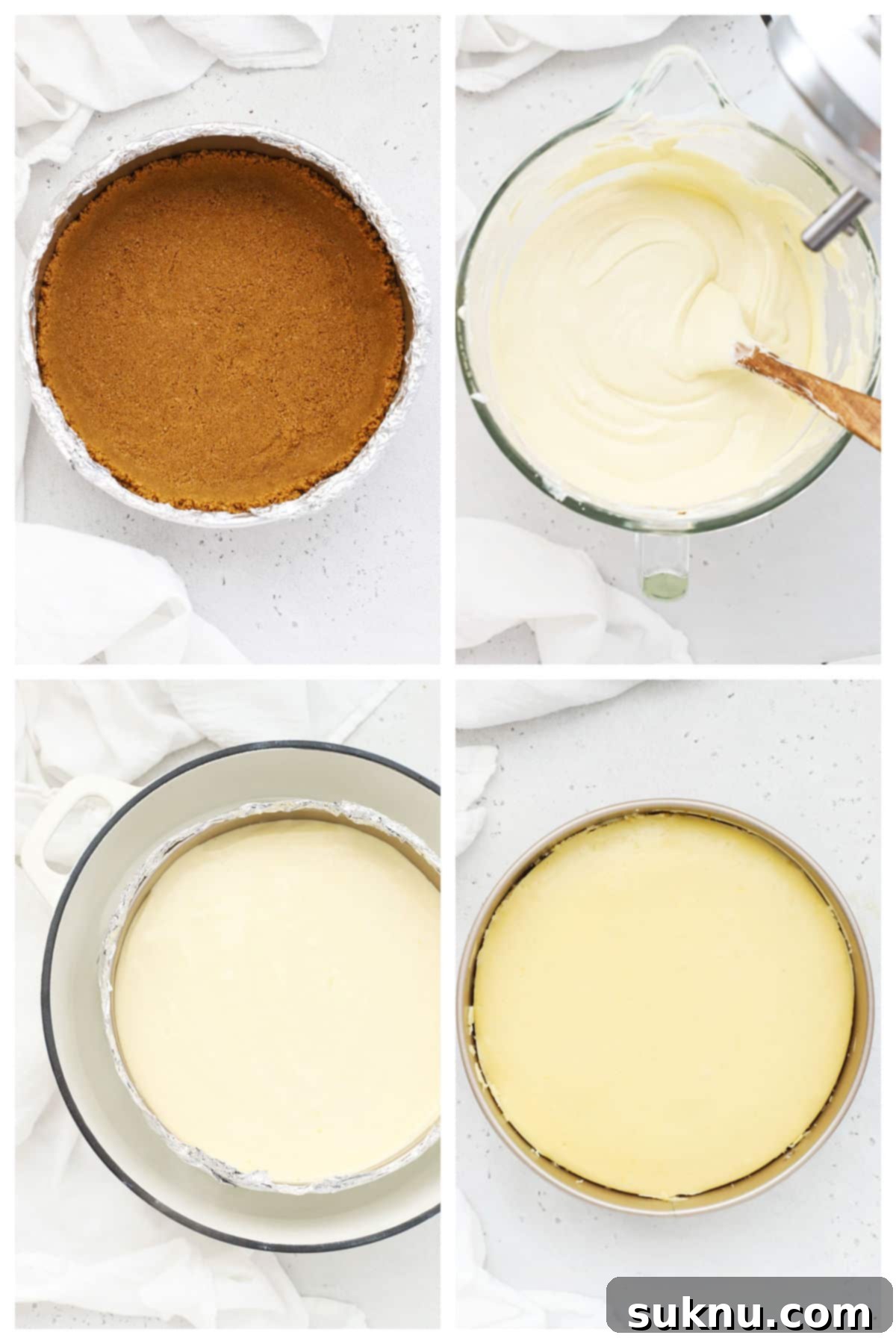
- Prepare Your Springform Pan with Foil: Take out a 9-inch springform pan. This crucial step is to prevent any water from seeping into your crust if you’re using a water bath (which we highly recommend!). Wrap the entire outside of the pan tightly with 2-3 layers of heavy-duty aluminum foil. Make sure the bottom and the seam where the sides meet the bottom are completely sealed and secure.
- Create Fine Graham Cracker Crumbs: In a food processor, add your gluten-free graham crackers and pulse them until they form fine, even crumbs. The goal here is a consistent texture, similar to coarse sand. Avoid large chunks, as they won’t compact properly.
- Combine Crumbs with Sugar and Butter: Add the granulated sugar and melted butter to the graham cracker crumbs in the food processor. Pulse again until the mixture is thoroughly combined and all the crumbs are evenly coated with the buttery goodness. The mixture should resemble wet sand and hold together when pressed between your fingers.
- Form the Crust in the Pan: Pour the crumb mixture into your prepared springform pan. Using the back of a flat-bottomed measuring cup (this is often the easiest and most effective method!) or your fingertips, gently but firmly press the crumbs into an even layer. Work your way across the bottom and slightly up the sides of the pan. The crust should reach about halfway up the pan’s interior.
- Pre-Bake the Crust: Transfer the pan to the preheated oven and bake the crust for 8-10 minutes, or until it just begins to turn golden brown around the edges and becomes fragrant. This pre-baking step is vital as it helps to set the crust, preventing it from becoming soggy once the filling is added. Remove it from the oven and let it cool completely on a wire rack while you prepare the cheesecake filling.
- Adjust Oven Temperature: Once the crust is out and cooling, reduce the oven temperature to 325 degrees F (160°C). This lower, more gentle temperature is ideal for baking the delicate cheesecake filling and preventing cracks.
Phase 2: Preparing the Velvety Gluten-Free Cheesecake Filling
The heart of our dessert, this rich and creamy filling requires attention to detail to achieve that signature smooth texture and prevent any imperfections.
- Final Oven Temperature Check & Ingredient Readiness: Double-check that your oven is now accurately set to 325 degrees F (160°C). Crucially, ensure all your cold ingredients – specifically the cream cheese, eggs, sour cream, and heavy cream – have reached room temperature. This is paramount for a smooth, lump-free batter and significantly helps prevent cracking in the finished cheesecake. Do not rush this step; properly softened ingredients blend seamlessly.
- Start Your Water Bath Water: While you’re mixing the cheesecake filling, begin bringing a separate pot of water to a boil on your stovetop. This boiling water will be used for your hot water bath, a key technique for achieving a perfectly baked and smooth cheesecake.
- Cream Together Cream Cheese and Sugar: To the bowl of a stand mixer fitted with the paddle attachment (or a large mixing bowl with an electric hand mixer), add the softened full-fat cream cheese and granulated sugar. Beat on low speed for 2-3 minutes, periodically stopping to scrape down the sides and bottom of the bowl. Continue this process until the mixture is utterly smooth, light, and completely free of any lumps. This ensures a uniform, rich texture in your final cheesecake.
- Incorporate Eggs Gently: Add the room temperature eggs one at a time, mixing on low speed after each addition. Only mix until each egg is just incorporated into the batter. Overmixing at this stage can introduce too much air into the filling, which is a common cause of cracks in cheesecakes. After adding the eggs, scrape down the sides of the bowl once more. Then, add the room temperature sour cream, cornstarch (which acts as a stabilizer), fresh lemon zest, and pure vanilla extract. Mix on low speed until everything is just combined and the mixture appears smooth.
- Fold in Heavy Cream: With the mixer still on its lowest speed (or very gently by hand using a flexible spatula), carefully mix in the room temperature heavy cream. The goal here is to blend it thoroughly without incorporating any excess air. The filling should now be luxuriously smooth and homogenous, with no visible lumps or streaks.
- Pour into Cooled Crust: Carefully pour the prepared cheesecake filling into your cooled gluten-free graham cracker crust. The filling will nearly reach the top edge of the springform pan. Gently smooth the surface with a spatula to create an even layer, or lightly tap the pan on the counter a few times to help any trapped air bubbles rise and release.
- Assemble Your Hot Water Bath: Refer to our dedicated “Mastering the Hot Water Bath” section below for detailed guidance and troubleshooting. Add about 3/4 inch (approximately 2 cm) of actively boiling water to your chosen water bath pan (a roasting pan or another larger, oven-safe dish). Carefully lower your foil-wrapped springform pan into this hot water bath, ensuring the water level comes up about 1 inch (2.5 cm) on the sides of the cheesecake pan.
- Bake the Cheesecake: Carefully transfer the hot water bath, with the cheesecake nestled inside, to the preheated oven. Bake at 325 degrees F (160°C) for 60-70 minutes. The cheesecake is done when the edges appear set and slightly dry, but the center still wobbles gently like a firm jello when lightly shaken. It’s always better to slightly underbake than overbake for a truly creamy, moist texture.
- Gradual Cooling in the Oven: Once baked, turn off the oven completely. Immediately crack the oven door slightly open (you can use a wooden spoon to keep it ajar, preventing it from closing fully). Allow the cheesecake to cool slowly and gradually in the cooling oven for 1 full hour. This critical step helps prevent drastic temperature changes that can cause the cheesecake to crack as it cools.
- Final Chill for Setting: After the oven cooling period, carefully remove the cheesecake from the oven and the water bath. Transfer it to the refrigerator (it’s best to leave it uncovered initially to prevent condensation from dripping onto the surface). Let the cheesecake chill for at least 4-5 hours, or preferably overnight, to allow it to fully cool, firm up, and set its luxurious texture completely. This extended chilling time is crucial for both flavor development and sliceability.
Phase 3: Crafting the Fresh Strawberry Topping
This vibrant homemade strawberry topping is the perfect accompaniment to your creamy cheesecake, adding a burst of fresh flavor and a beautiful visual contrast.
- Prepare the Fresh Strawberries: Begin by washing and hulling your fresh strawberries. Then, slice or dice them into uniform pieces according to your preference (you can quarter, halve, or dice them, depending on how chunky you like your sauce). Set aside about 1/3 of the total strawberries (approximately 8 oz. or 225 grams) for later; these will be stirred in at the very end to provide fresh texture and bright color to the finished sauce.
- Combine Strawberries and Sugar: Place the remaining 2/3 of the strawberries (about 1 pound or 450 grams) into a medium saucepan. Add the granulated sugar to the saucepan with the strawberries.
- Prepare the Cornstarch Slurry: In a small, separate bowl, combine the fresh lemon juice, cornstarch, vanilla extract, and a tiny pinch of kosher salt. Whisk these ingredients together vigorously until you have a completely smooth slurry with no lumps. This slurry is absolutely essential for thickening the sauce and giving it a glossy finish.
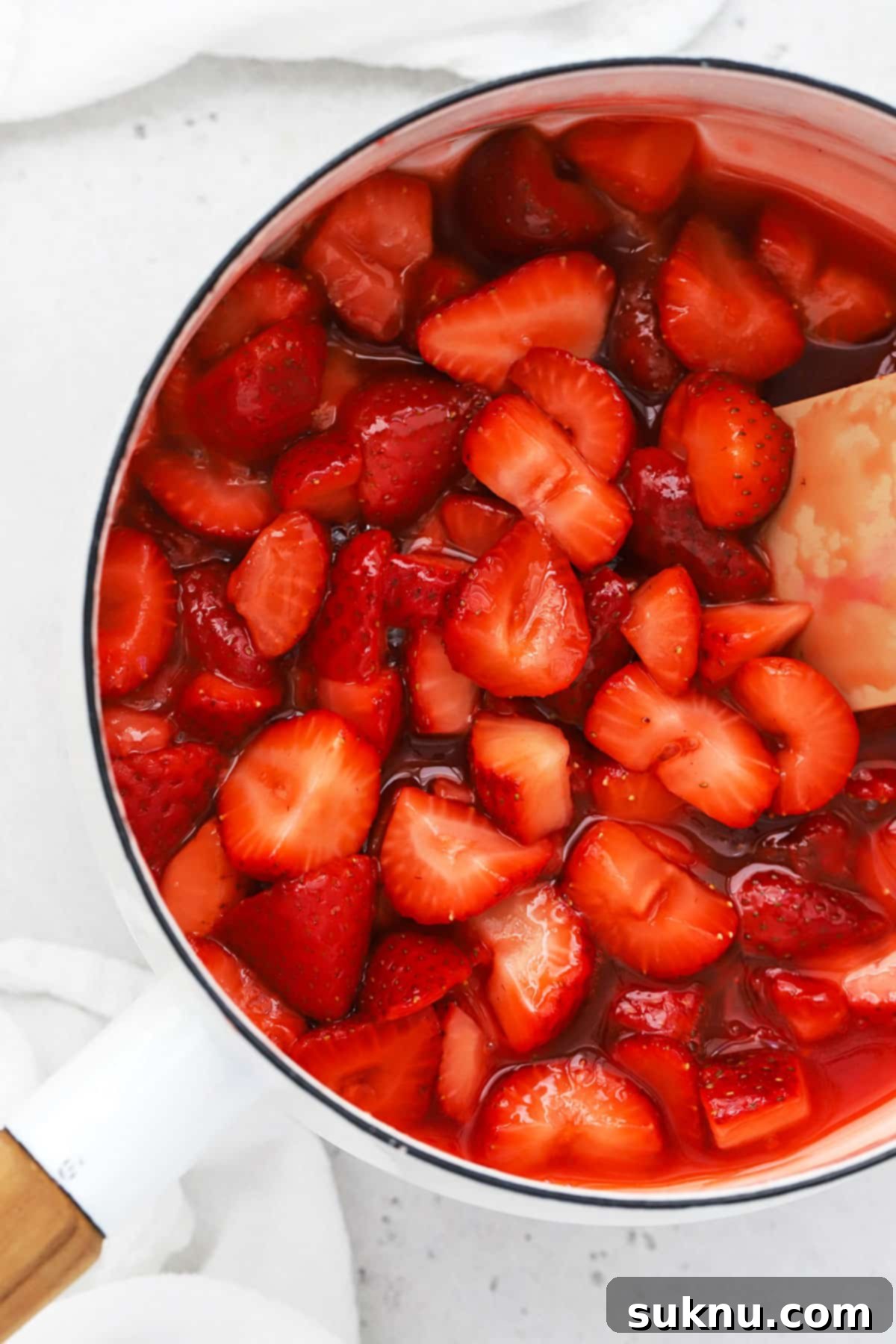
- Bring to a Gentle Boil: Add the prepared cornstarch slurry to the strawberries and sugar mixture in the saucepan. Stir the mixture continuously with a flexible spatula over medium heat. Continue stirring until the mixture begins to boil gently. Consistent stirring will prevent sticking and ensure even cooking.
- Simmer and Thicken the Sauce: Once the mixture is boiling, reduce the heat to low and continue to stir for another 4-5 minutes. During this time, the berries will soften beautifully, and the sauce will gradually thicken to a pourable consistency. Remember that the sauce will continue to thicken significantly as it cools, so avoid over-reducing it on the stovetop. It should be thick enough to coat the back of a spoon.
- Stir in Remaining Fresh Strawberries: Remove the saucepan from the heat. Gently stir in the reserved 1/3 of fresh, uncooked strawberries. This step adds a wonderful contrast in texture and a burst of raw, bright strawberry freshness to the cooked sauce, making each bite more dynamic. Stir until all the berries are well coated.
- Cool and Chill the Topping: Allow the strawberry topping to cool completely to room temperature in the saucepan. Once cool, transfer it to an airtight container or a glass jar. Chill it in the refrigerator for at least 1-2 hours, or until thoroughly cold, before serving. This chilling period allows the flavors to meld and the sauce to reach its optimal thickened consistency.
- Serving and Storage Tips: Your luscious homemade strawberry topping can be stored in an airtight container in the refrigerator for up to 3-4 days. For longer storage, it freezes beautifully! Transfer the cooled topping to an airtight freezer bag or freezer-safe container and freeze for up to 1 month. Thaw it slowly in the refrigerator before using (note that the texture may soften slightly upon thawing, but the flavor will remain excellent). This versatile topping is fantastic not only on your gluten-free cheesecake but also with waffles, pancakes, ice cream, yogurt, pound cake, and even strawberry shortcake!
- For a Perfectly Smooth Sauce: If you prefer a strawberry sauce without any fruit chunks, you have an option. First, puree the initial 2/3 of strawberries in a blender until completely smooth. For an ultra-silky sauce, you can then strain this puree through a fine-mesh sieve to remove any seeds or remaining fibers before you proceed with the rest of the sauce directions. If you find your sauce isn’t thickening enough after cooling, you can always mix an additional teaspoon of cornstarch with 1 teaspoon of cold water to form another slurry and whisk it into the simmering sauce gradually until desired thickness is reached.
Mastering the Hot Water Bath for a Flawless Cheesecake
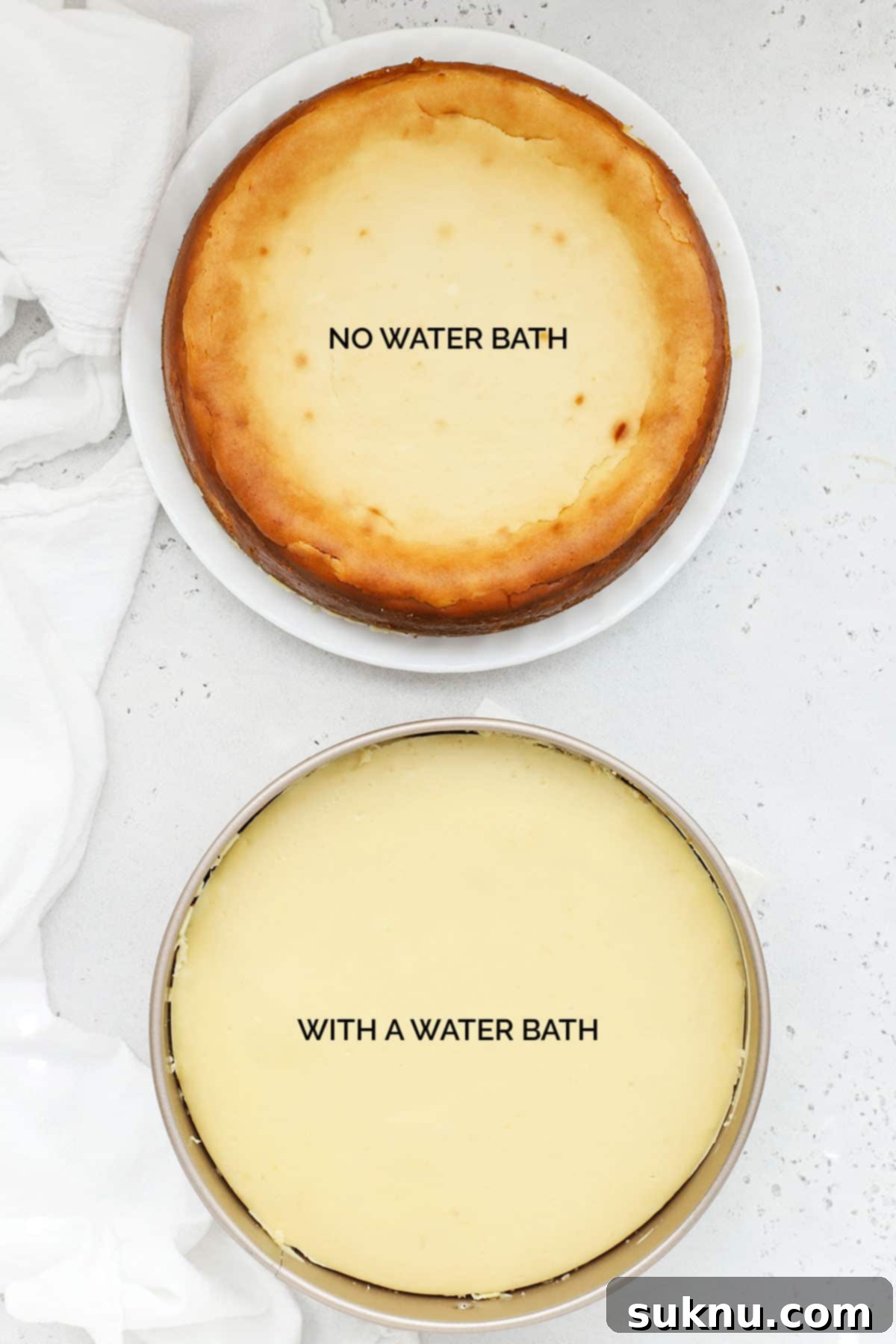
The question often arises: “Do I *have* to use a hot water bath for cheesecake?” While technically you can bake a cheesecake without one, the results will differ significantly. For that coveted uniform, pale white color, perfectly even texture, and crucially, a crack-free surface, a hot water bath (also known as a bain-marie) is highly recommended. It’s an extra step, but its impact on the visual appeal and creamy consistency of your gluten-free strawberry cheesecake is truly remarkable. While it might seem intimidating at first, especially for new bakers, a water bath is far simpler to execute than it appears. Let’s demystify it and ensure your perfect cheesecake success!
A water bath works by creating a moist, gently heated environment around your cheesecake as it bakes. This gentle, even heat prevents the edges from baking faster and drying out before the center is cooked, which is a very common cause of unsightly cracks on the surface of cheesecakes. It also significantly contributes to that signature smooth, custardy, and incredibly creamy texture that sets a truly great cheesecake apart from an average one. Here are some essential tricks and considerations for using a hot water bath effectively and without stress:
- Pre-Check Your Pan Size: This is a crucial step to do BEFORE you even begin crushing graham crackers or mixing the cheesecake filling. You need to ensure you have an oven-safe pan large enough to comfortably hold your 9-inch springform pan. This could be a roasting pan, a braiser, or any other large, deep, heat-proof dish. You’ll want to be able to add about 1 inch (2.5 cm) of boiling hot water around the springform pan. Testing this with an empty springform pan first is much, much easier and less messy than realizing your pan is too small when your cheesecake is already full of batter and ready to bake!
- Securely Wrap Your Springform Pan: This is a critical step to prevent any water from seeping into your delicious crust or filling. Wrap the entire springform pan TIGHTLY and completely with 2-3 layers of heavy-duty aluminum foil. Pay extra meticulous attention to securely covering the bottom and the seam where the sides meet the bottom. You might find you need 4-6 individual sheets of foil for maximum, foolproof protection. The better and more thoroughly you wrap it, the less chance of water infiltration. For an added layer of assurance, some experienced bakers even tuck the foil-wrapped springform pan into an oven-safe bag or a slow cooker liner before placing it in the water bath.
- Efficiently Filling the Water Bath – Easier Methods:
- Using a Kettle: If you have an electric kettle, it’s often the easiest and safest way to add boiling water to the water bath. The precise spout allows for controlled pouring directly into the roasting pan around the cheesecake, minimizing splashes and spills.
- Pre-fill Method: If you don’t have a kettle, or prefer not to manage pouring hot water around a full pan inside the oven, there’s an alternative. You can add about 1 inch (2.5 cm) of boiling water directly into your roasting pan/water bath pan first, while it’s still on the counter. THEN, carefully lower your foil-wrapped springform pan into the pre-filled water bath.
- Filling the Water Bath IN the Oven (for heavy pans): If you anticipate that the combined weight of the roasting pan, boiling water, and full cheesecake pan will be too heavy or awkward for you to carry safely, you can fill the water bath directly in the oven. Place your empty roasting pan/base pan onto the oven rack. Partially pull out the oven rack (always using oven mitts for safety!). Carefully place your cheesecake-filled springform pan into the center of the roasting pan, then slowly and carefully pour in the boiling water. Once filled, carefully scoot the entire rack back into place and close the oven door. This method minimizes lifting and reduces the risk of hot water spills.
What If I Don’t Have a Pan Large Enough for a Traditional Hot Water Bath?
Don’t despair if you don’t have a roasting pan big enough for a traditional water bath! You can still achieve fantastic results for your gluten-free cheesecake using a clever alternative method. Simply take a standard 9×13 inch baking pan, fill it with 1-2 inches (2.5-5 cm) of actively boiling water, and place this pan on the oven rack directly BELOW your cheesecake while it bakes. This ingenious trick still creates a moist baking environment within the oven, which is key to preventing cracking and ensuring a wonderfully creamy texture, as successfully demonstrated in our popular Gluten-Free Pumpkin Cheesecake Recipe. It’s a highly effective and stress-free workaround for achieving a beautiful, no-crack cheesecake even without specialized equipment!
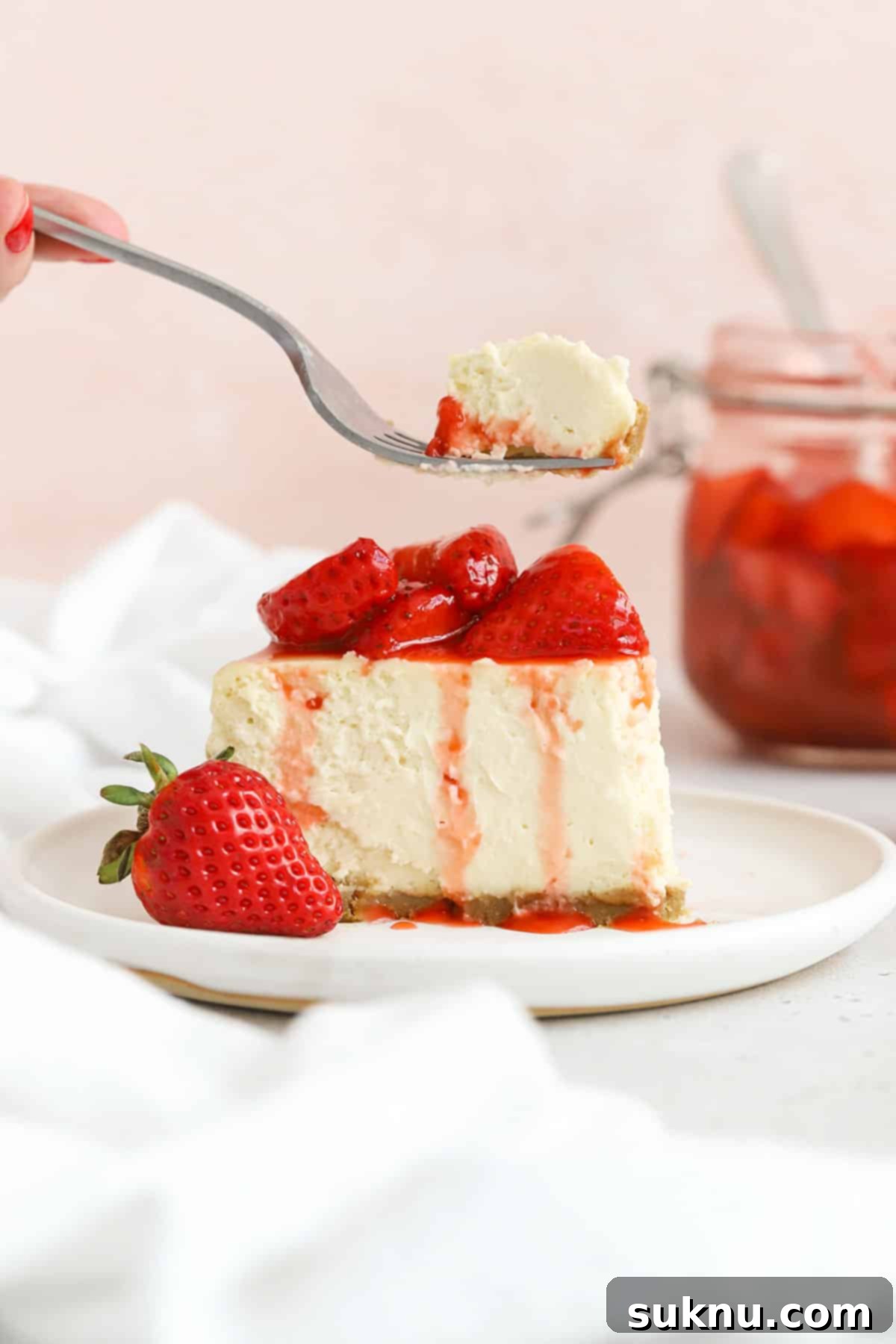
FAQ + Essential Tips for the Best Gluten-Free Strawberry Cheesecake
Here are some frequently asked questions and invaluable tips to ensure your gluten-free strawberry cheesecake turns out perfectly every time, from serving suggestions to optimal storage methods.
Want To Try Another Topping? While our fresh strawberry topping is undeniably sublime, this versatile gluten-free cheesecake recipe serves as an excellent, neutral base for a myriad of other delicious toppings. Don’t hesitate to get creative and customize your dessert! Consider drizzling it generously with a rich Homemade Chocolate Syrup for a classic pairing, a tangy and bright Raspberry Sauce for another berry burst, or a buttery, sweet-and-salty Salted Caramel Sauce for a more decadent twist. For another delightful berry option, a vibrant homemade blueberry topping would also be absolutely fantastic, offering a slightly different flavor profile while maintaining a similar fresh fruit appeal!
The Golden Rule: Always Use Room Temperature Ingredients!
We cannot stress this enough: using room temperature ingredients is arguably the most critical factor for achieving a smooth, creamy cheesecake filling that’s free of lumps and, most importantly, won’t crack during or after baking. The science behind this is simple: when cold cream cheese, eggs, and sour cream are introduced to each other, they don’t emulsify properly. This leads to a lumpy batter that can trap excessive air. This trapped air then expands rapidly during baking, creating bubbles and causing the surface to crack dramatically as the cheesecake cools and contracts. Our primary goal is to minimize air incorporation into the batter, so low-speed mixing combined with properly softened, room-temperature ingredients allows for a perfectly smooth, homogeneous batter that bifies beautifully. Be absolutely sure to set out all cold ingredients at least 30-60 minutes in advance – and seriously, don’t begin mixing until they feel soft and pliable to the touch. Coupled with the gentle, moist baking environment provided by a water bath (or the alternative pan-of-water method described above) and gradual cooling in the oven, you’ll be well on your way to a perfect, no-crack strawberry cheesecake masterpiece.
Can You Freeze Cheesecake? Absolutely!
Cheesecake is a fantastic dessert for making ahead or enjoying over time, as it freezes exceptionally well without compromising its delicious texture. You have the flexibility to freeze the entire cheesecake or individual slices, ensuring you always have a delightful treat on hand for any occasion:
- Freezing a Whole Cheesecake: First, ensure your baked cheesecake has cooled completely to room temperature, and then been thoroughly chilled in the refrigerator for at least 4-5 hours (preferably overnight). Carefully remove the outer rim of the springform pan. For maximum stability, keep the cheesecake on the bottom of the pan and wrap it securely in several layers of plastic wrap. Following this, wrap it tightly in a layer of heavy-duty aluminum foil to prevent any freezer burn. It can be frozen this way for up to 3 months. When you’re ready to serve, thaw the cheesecake slowly and gently in the refrigerator overnight. If you need to retrieve the bottom of the pan, use a sharp, thin knife or a cake lifter to carefully slide the cheesecake onto a piece of parchment paper or a flat serving plate before wrapping.
- Freezing Individual Slices: For convenient single servings, slice the cheesecake into your desired portions. Arrange these individual slices on a baking sheet lined with parchment paper and place them in the freezer until they are completely firm (this crucial step prevents them from sticking together). Once firm, wrap each slice individually in plastic wrap, then place them in an airtight freezer bag or a freezer-safe container. These can be stored for up to 2 months. To enjoy, thaw individual slices overnight in the refrigerator or for about 30 minutes on the counter for a quicker defrost.
- CRITICAL: FREEZE WITHOUT TOPPINGS: Regardless of whether you choose to freeze the cheesecake whole or in slices, it is absolutely essential that you do NOT freeze this gluten-free strawberry cheesecake with the strawberry topping (or any other topping). The moisture content in toppings can crystalize during freezing, affecting their texture and potentially introducing unwanted moisture to the cheesecake upon thawing. Always add your fresh, chilled strawberry topping (or any other preferred topping) just before serving, after the cheesecake has fully thawed and is ready to be enjoyed.
How Long Does Gluten-Free Strawberry Cheesecake Last? Our delicious gluten-free strawberry cheesecake will stay wonderfully fresh and at its best in the refrigerator for 2-3 days. After this period, the graham cracker crust may begin to soften slightly due to moisture absorption from the filling. To extend its optimal freshness and maintain the crispness of the crust for longer, we highly recommend serving the strawberry sauce on the side rather than pouring it over the entire cheesecake. Store the cheesecake loosely covered in the fridge, or as mentioned above, freeze it for enjoying at a later date!
Explore More Delicious Gluten-Free Cheesecake Recipes
If you loved this gluten-free strawberry cheesecake, you’ll be thrilled to discover our other amazing gluten-free cheesecake creations, perfect for any occasion. Each recipe is crafted for maximum flavor and delightful texture, ensuring a wonderful gluten-free dessert experience:
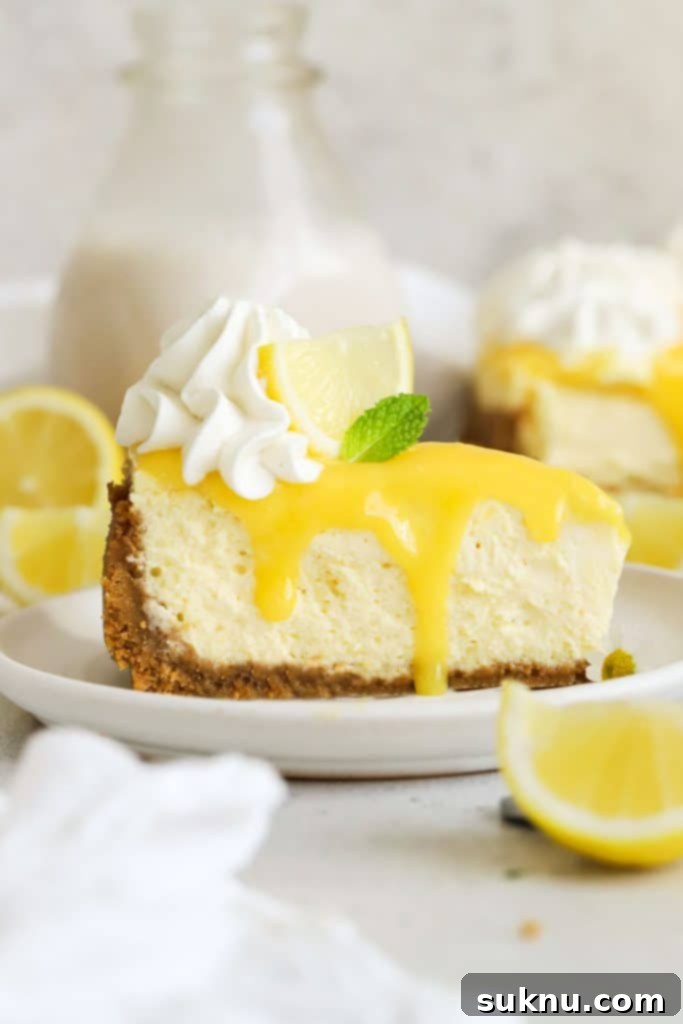
Gluten-Free Lemon Cheesecake
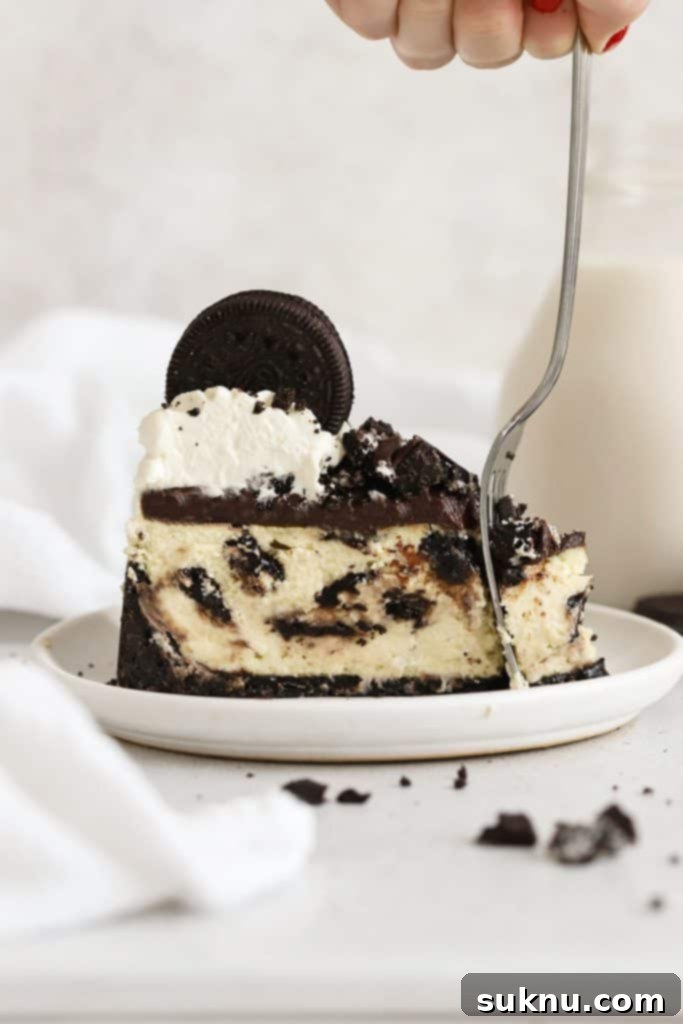
Gluten-Free Oreo Cheesecake
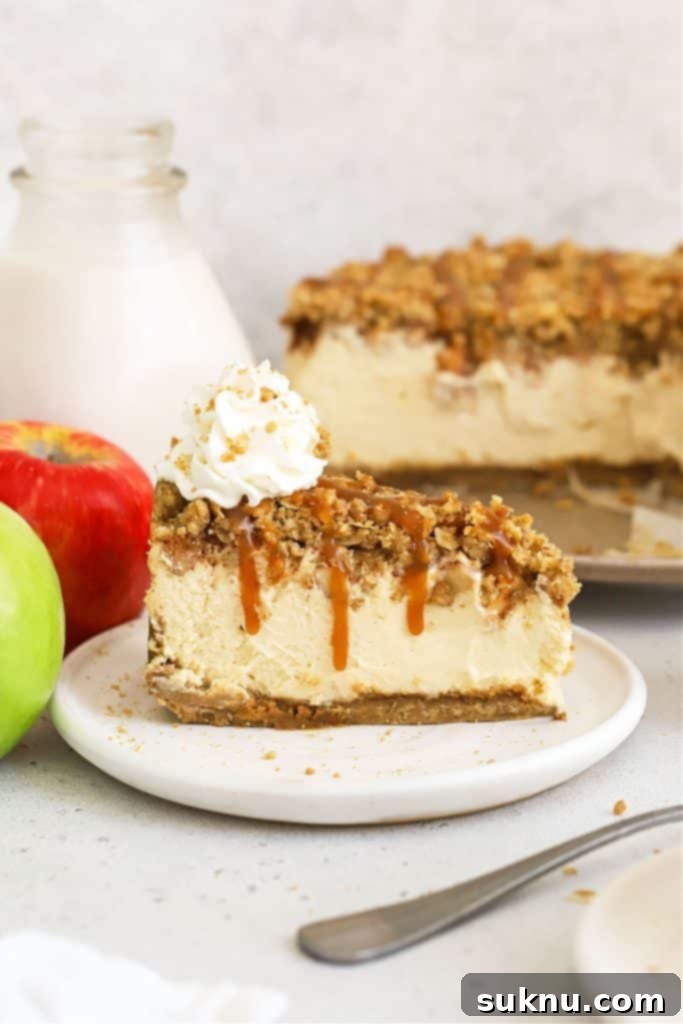
Gluten-Free Caramel Apple Cheesecake
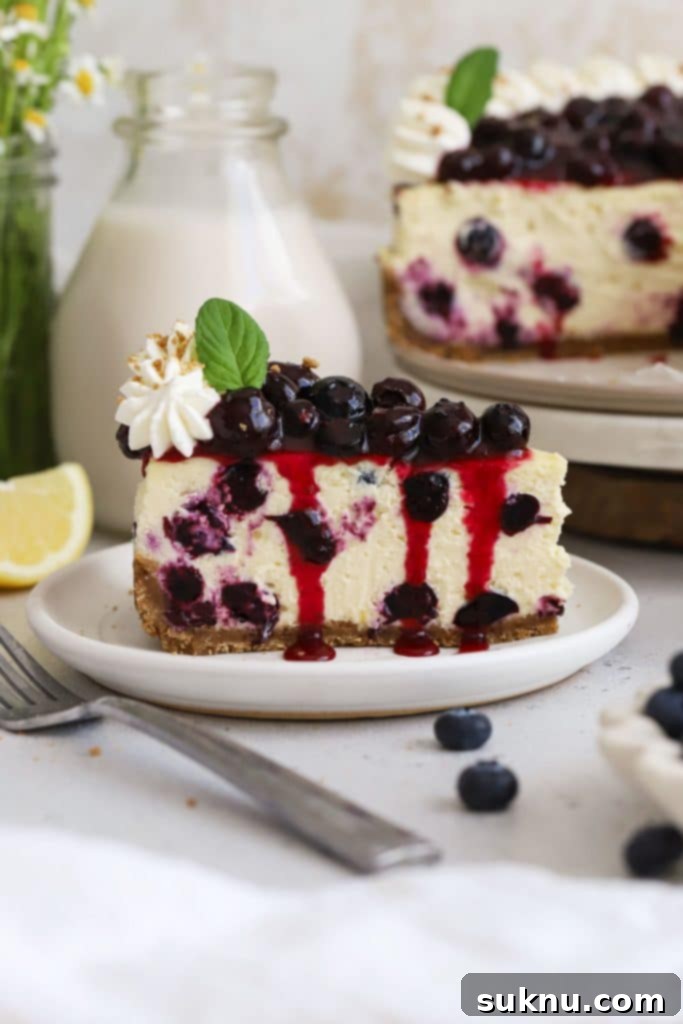
Gluten-Free Blueberry Cheesecake
🌟 Did You Make This Recipe?
We’d love to hear about your experience! If you tried our delicious Gluten-Free Strawberry Cheesecake recipe, please take a moment to leave a star rating below. Your feedback helps us and other bakers, and we can’t wait to hear how your luscious creation turned out!
Tap to Leave a Review