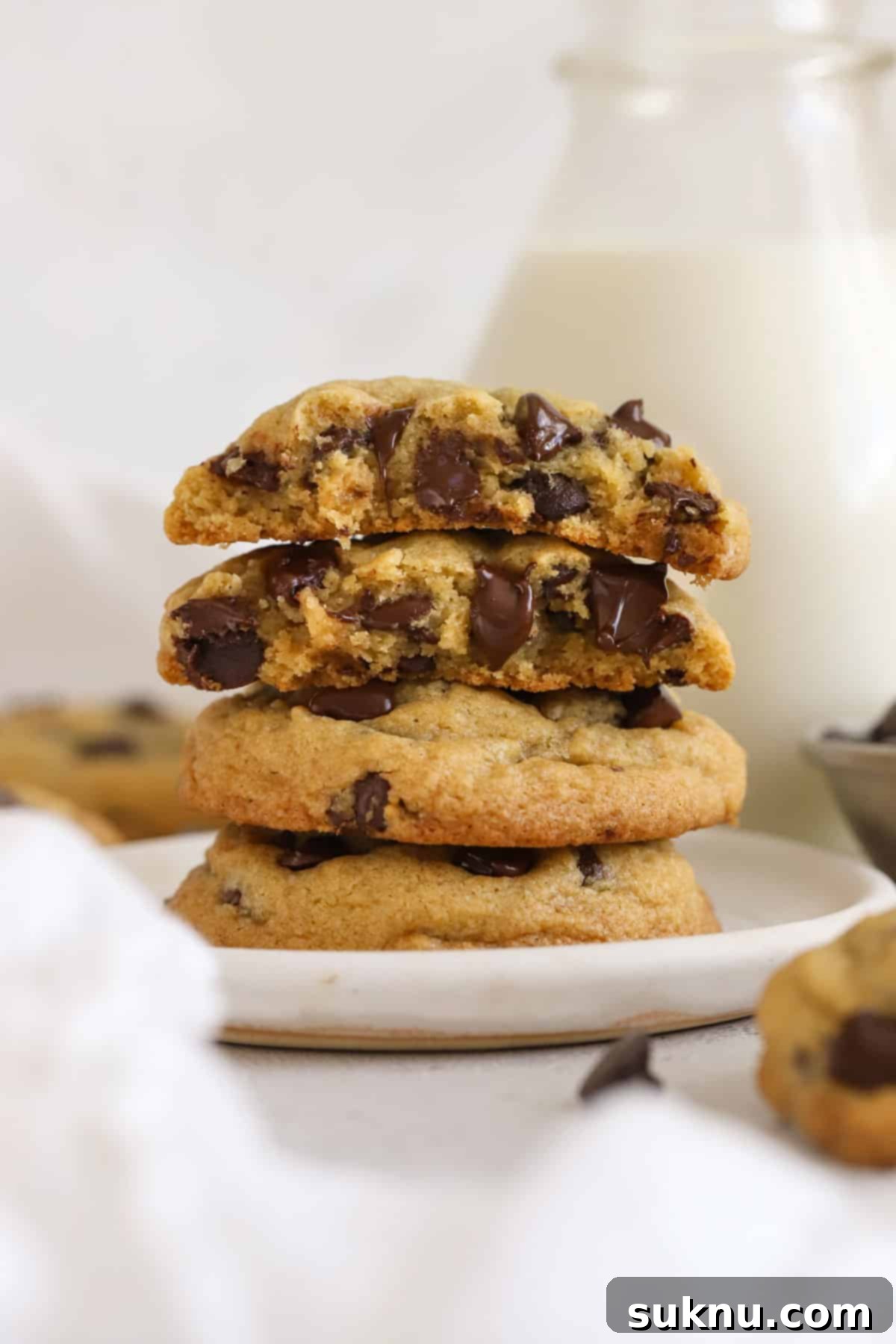
Ultimate Fudgy Gluten-Free Pudding Mix Chocolate Chip Cookies
Prepare to discover your new favorite cookie recipe! These extraordinary gluten-free pudding mix chocolate chip cookies are a true revelation for any dessert enthusiast, especially those navigating a gluten-free diet. Imagine a cookie that boasts delicately crisp, golden edges, giving way to an interior that is unbelievably soft, chewy, and intensely fudgy, all while being generously studded with pools of irresistible, melty chocolate. This isn’t just a cookie; it’s a dream come true, crafted to perfection with a surprising secret ingredient that will elevate your baking to an entirely new level.
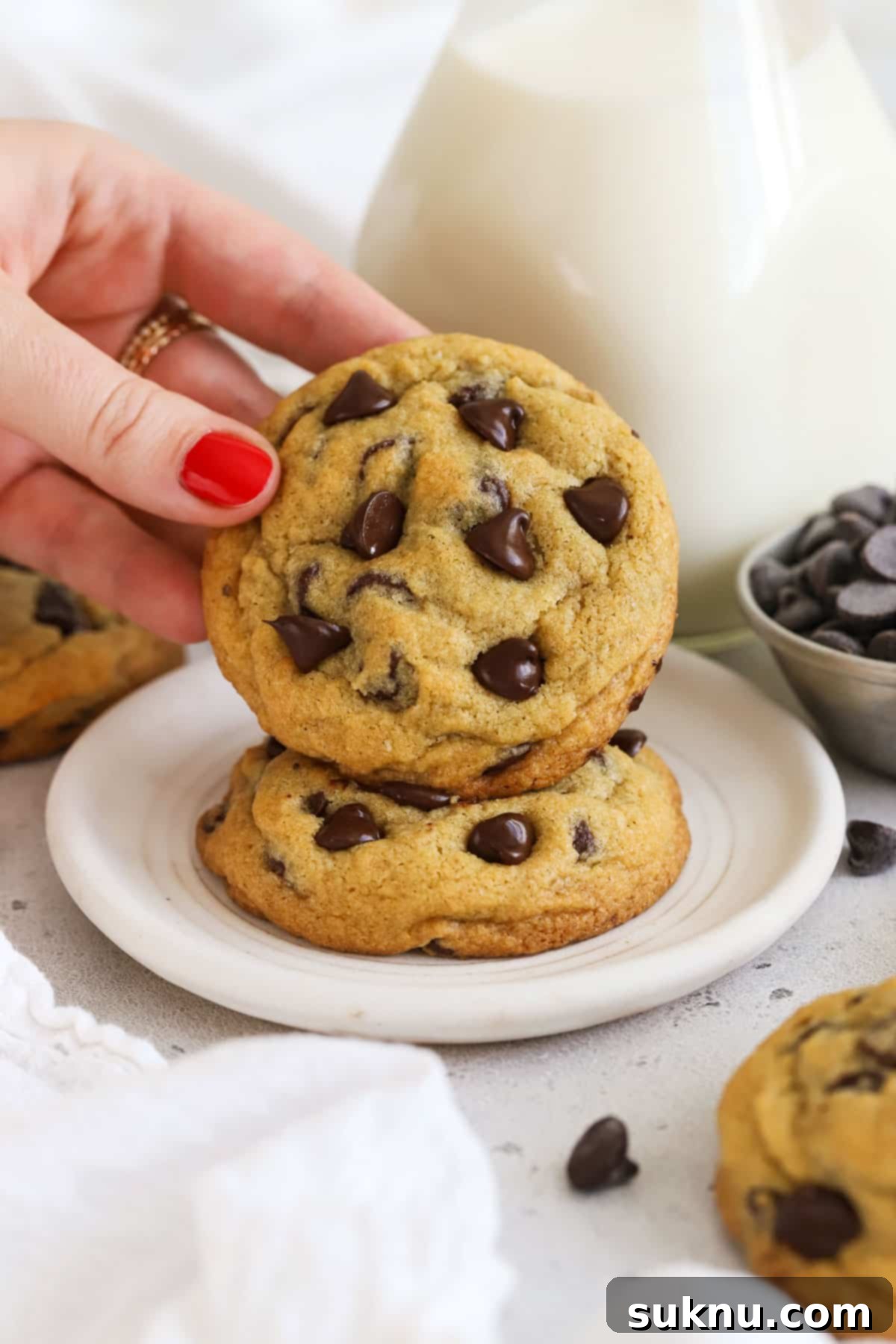
My journey to crafting the perfect gluten-free chocolate chip cookie has been a delightful adventure. From mastering giant bakery-style cookies that rival any upscale patisserie, to perfecting thin and crispy chocolate chip cookies with that satisfying snap, I’ve explored countless methods and ingredients. Yet, it was the addition of instant pudding mix that truly revolutionized my approach, offering a unique textural advantage and flavor boost that’s simply unmatched. If you’ve never considered using pudding mix in your cookie dough, you are in for an absolute treat that will redefine your expectations for homemade gluten-free cookies.
Unlock Cookie Perfection: The Magic of Pudding Mix in Gluten-Free Baking
The secret to these incredibly soft, fudgy, and perfectly textured gluten-free chocolate chip cookies lies within a humble box of instant pudding mix. This ingenious addition does more than just enhance flavor; it fundamentally transforms the cookie’s structure, addressing common challenges associated with gluten-free baking. Here’s a deep dive into the remarkable advantages of incorporating pudding mix into your cookie dough:
1. Elevates Flavor to New Heights
While the textural benefits are significant, the flavor enhancement provided by instant pudding mix is equally impressive. Using a high-quality vanilla instant pudding mix infuses the cookies with an extra layer of rich, authentic vanilla essence. This isn’t merely a subtle background note; it’s a prominent, comforting flavor that complements the chocolate beautifully and makes each bite sing. The additional sweetness and unique dairy notes from the pudding mix contribute to a more complex, well-rounded flavor profile that can make homemade cookies taste as if they came from a gourmet bakery. This heightened vanilla presence ensures that these aren’t just gluten-free cookies, but truly exceptional ones that satisfy any sweet craving.
2. Achieves Unrivaled Fudgy Texture and Perfect Structure
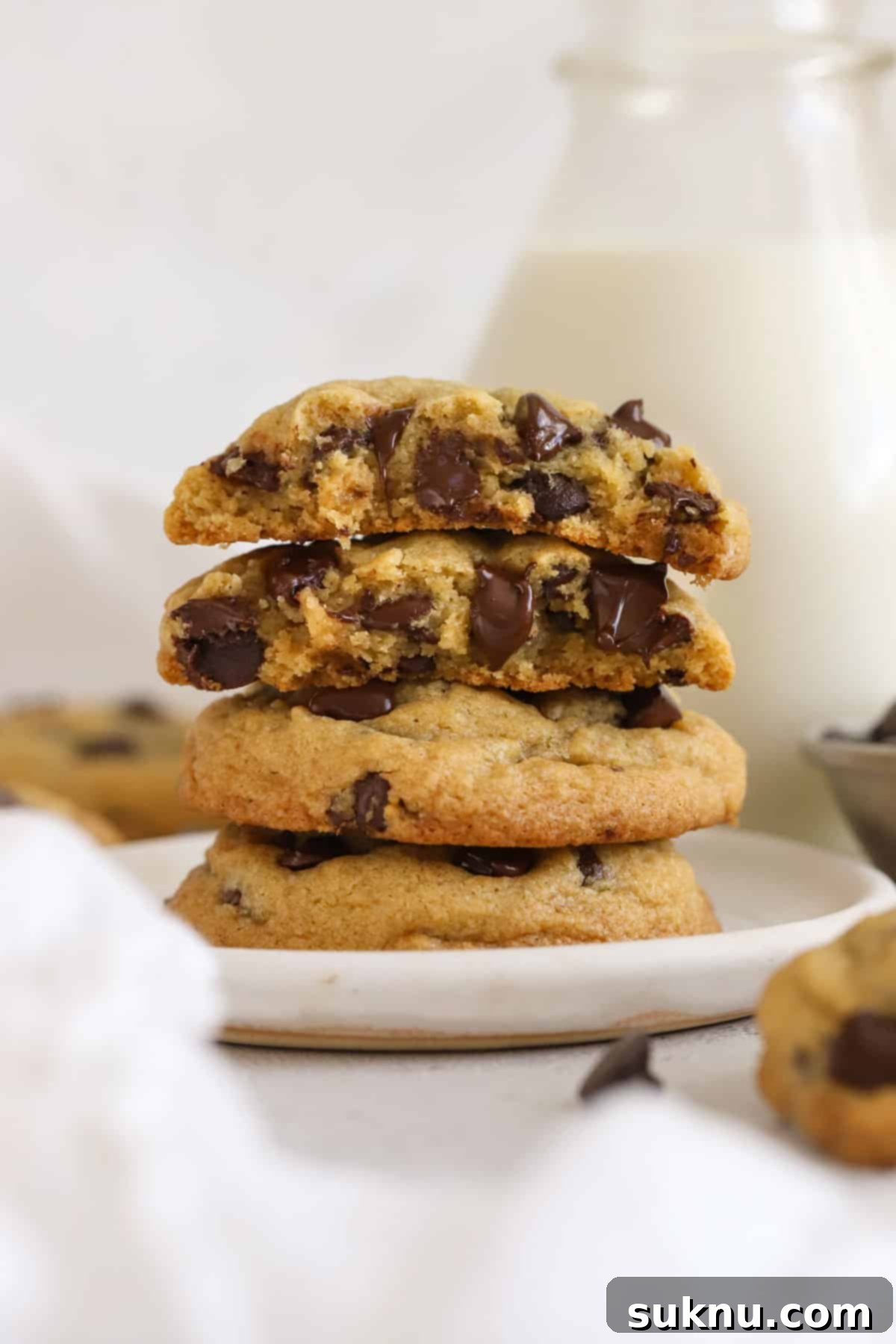
Perhaps the most celebrated benefit of pudding mix in cookie dough is its profound impact on texture. The starches and thickeners within the instant pudding mix are powerful moisture absorbers and binders. They create a dough that is notably thicker and more stable, which translates into cookies that bake up with an ideal combination of textures: a delicate crispness around the edges, a golden-brown hue, and a supremely soft, dense, and wonderfully fudgy interior. This harmonious contrast is often difficult to achieve in gluten-free baking, where crumbly or dry results can be common. The pudding mix ensures these cookies are moist, incredibly chewy, and maintain their tender integrity, preventing them from spreading too thin or becoming cakey.
3. Optimizes Dough Consistency and Reduces Egg Dependence
The binding power of the starches in instant pudding mix means you can often use fewer eggs than typically required in a standard cookie recipe. While it’s not a direct egg substitute, the pudding mix helps to bind the dough more effectively, reducing the need for excessive liquid and egg protein. This leads to a less “cake-like” crumb and a denser, more desirable fudgy texture. Fewer eggs also contribute to a richer, buttery taste, as the focus shifts away from the protein structure of eggs towards the other delectable ingredients. It’s a clever trick that helps to achieve the perfect balance of moisture and structure, making your gluten-free cookie dough exceptionally pliable and easy to work with.
With these incredible benefits in mind, it’s clear why instant pudding mix is a game-changer for gluten-free chocolate chip cookies. It’s an easy and accessible way to achieve professional-level results in your home kitchen. So, grab that box of pudding mix, and let’s embark on this delicious baking journey!
Gather Your Ingredients: What You Need for the Best Gluten-Free Cookies
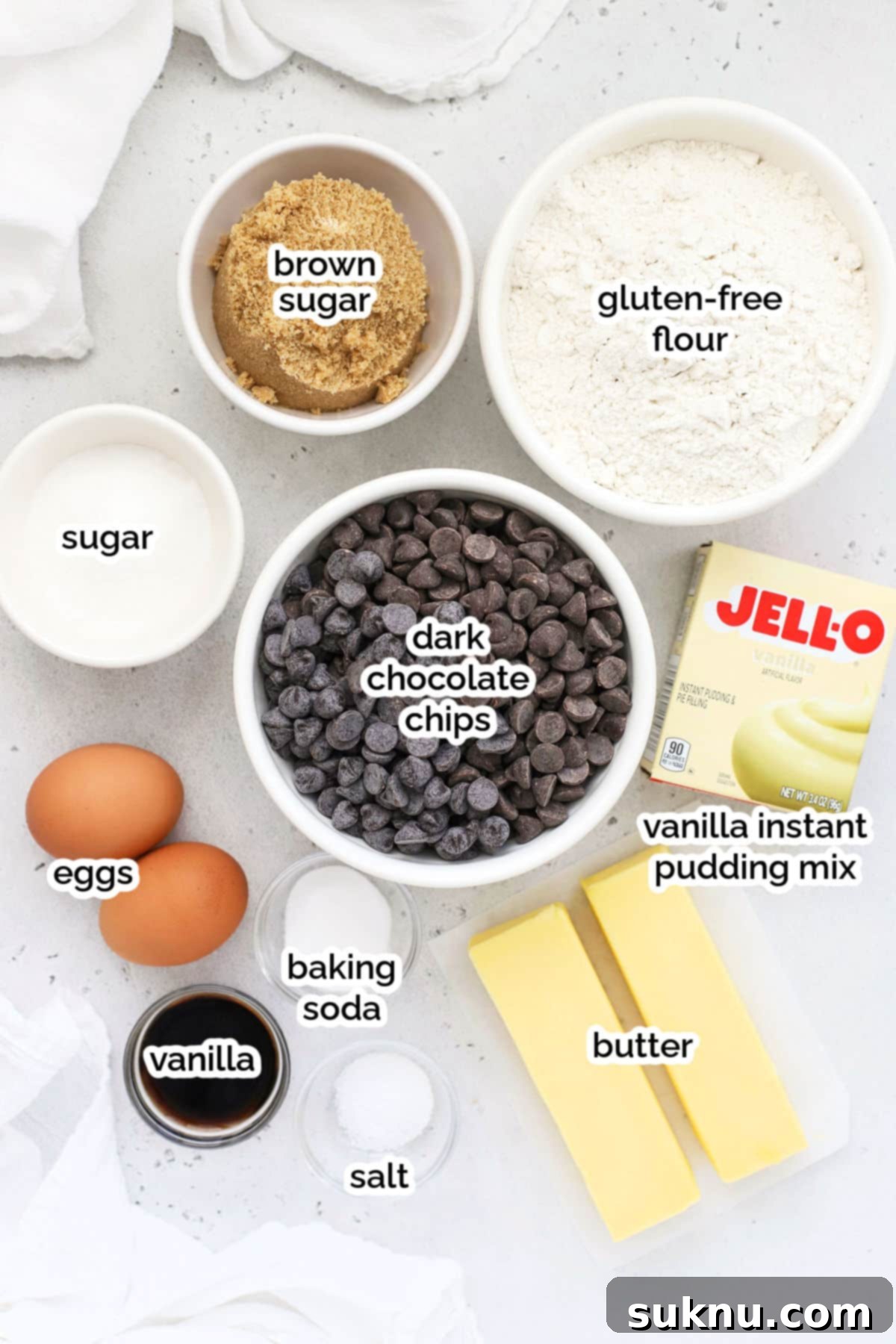
Creating these delightful gluten-free pudding mix chocolate chip cookies starts with a selection of common pantry staples, each playing a vital role in the final texture and flavor. Understanding each ingredient’s purpose will help you achieve consistent, delicious results every time:
- Gluten-Free Flour Blend: The cornerstone of our recipe, a high-quality 1:1 gluten-free all-purpose flour blend is essential. We highly recommend King Arthur Gluten-Free Measure-For-Measure flour for its superb taste and texture, which closely mimics traditional wheat flour. It’s crucial that your chosen blend includes xanthan gum, as this acts as a binder, providing the necessary elasticity and structure that gluten would typically offer. Without it, your cookies might be crumbly. Please avoid single-ingredient alternative flours like coconut flour, almond flour, or oat flour in this recipe, as their distinct properties require different liquid ratios and recipe adjustments.
- Baking Soda: This powerful leavening agent is responsible for the cookies’ beautiful puff and optimal spread. It reacts with acidic ingredients (like brown sugar) during baking, creating air bubbles that give the cookies a soft, chewy lift. Ensure your baking soda is fresh for maximum effectiveness.
- Salt: More than just a seasoning, salt is a flavor enhancer that balances the sweetness and brings out the depth of the chocolate and vanilla. We prefer kosher salt for its clean taste and even distribution, preventing any overwhelmingly salty pockets.
- Unsalted Butter: Softened butter is paramount for proper creaming. Your butter should be pliable enough to leave a slight indent when gently pressed, but not shiny or greasy, which indicates it’s too warm. Overly soft butter can lead to cookies spreading too much, while cold butter will not cream properly, resulting in a dense, uneven crumb. Using unsalted butter allows you to precisely control the overall salt content of the recipe.
- Brown Sugar & Granulated Sugar: This classic duo offers the best of both flavor and texture. Light brown sugar contributes rich molasses notes and moisture, which results in a chewier, more tender cookie. Granulated sugar promotes spread and helps achieve those coveted crisp edges. Together, they create a perfectly balanced sweet profile and a delightful textural contrast.
- Large Eggs: Always use room temperature eggs. Cold eggs can cause the softened butter to seize and curdle, leading to a lumpy batter that’s difficult to emulsify. Room temperature eggs blend more smoothly into the creamed butter and sugar, creating a uniform dough and a finer, softer cookie crumb.
- Vanilla Extract: A generous splash of pure vanilla extract is indispensable. It adds a warm, aromatic foundation that beautifully complements the chocolate and amplifies the vanilla notes from the pudding mix, making the cookies truly irresistible.
- Vanilla Instant Pudding Mix: The star of the show! We consistently achieve excellent results with Jell-O brand instant vanilla pudding mix (a 3.4 oz or 96-gram package). It is absolutely crucial to use DRY instant pudding mix; do not use pre-made pudding or any variety that requires cooking, as their compositions are entirely different and will not work for this recipe.
- Chocolate Chips: A bountiful amount of chocolate chips ensures melty goodness in every bite. We prefer dark chocolate chips or semisweet chocolate chips, as their slightly richer, less sweet profile perfectly balances the sweetness of the cookie dough and vanilla pudding. Milk chocolate chips can be used if you prefer a sweeter cookie, or mix them with dark chips for a balanced approach.
Is Jell-O Brand Pudding Mix Gluten-Free?
For those with gluten sensitivities, it’s important to clarify the gluten-free status of Jell-O instant pudding mix. While not officially certified gluten-free, Jell-O vanilla instant pudding mix is widely regarded as gluten-free by the Celiac community and major food allergy resources. It does not contain any gluten-containing ingredients such as wheat, barley, or malt. Kraft, the parent company of Jell-O, typically labels products clearly for common allergens. However, it is always recommended to check the ingredient label of any flavor you purchase, as not all Jell-O instant pudding mixes are gluten-free. For instance, certain flavors like cheesecake pudding mix contain barley and should be avoided. Stick to vanilla or chocolate for the safest bets and always double-check current labels for any potential changes.
Baking Your Best Batch: Step-by-Step Gluten-Free Pudding Cookie Instructions
Follow these meticulously detailed steps to ensure your gluten-free pudding mix chocolate chip cookies turn out perfectly fudgy, soft, and utterly delicious. Precision in baking leads to perfection, so pay close attention to the order and technique of each step. For optimal accuracy, especially with flour, we always recommend using a kitchen scale. If a scale isn’t available, please refer to our guide on the “Scoop & Level Method” for measuring flour accurately.
- Preheat Oven & Prepare Pans: Begin by preheating your oven to 350°F (175°C). This ensures the oven is at the correct temperature when your dough is ready, promoting even baking. Line two large baking sheets with parchment paper; this prevents sticking and allows for easy cleanup. Set the prepared sheets aside.
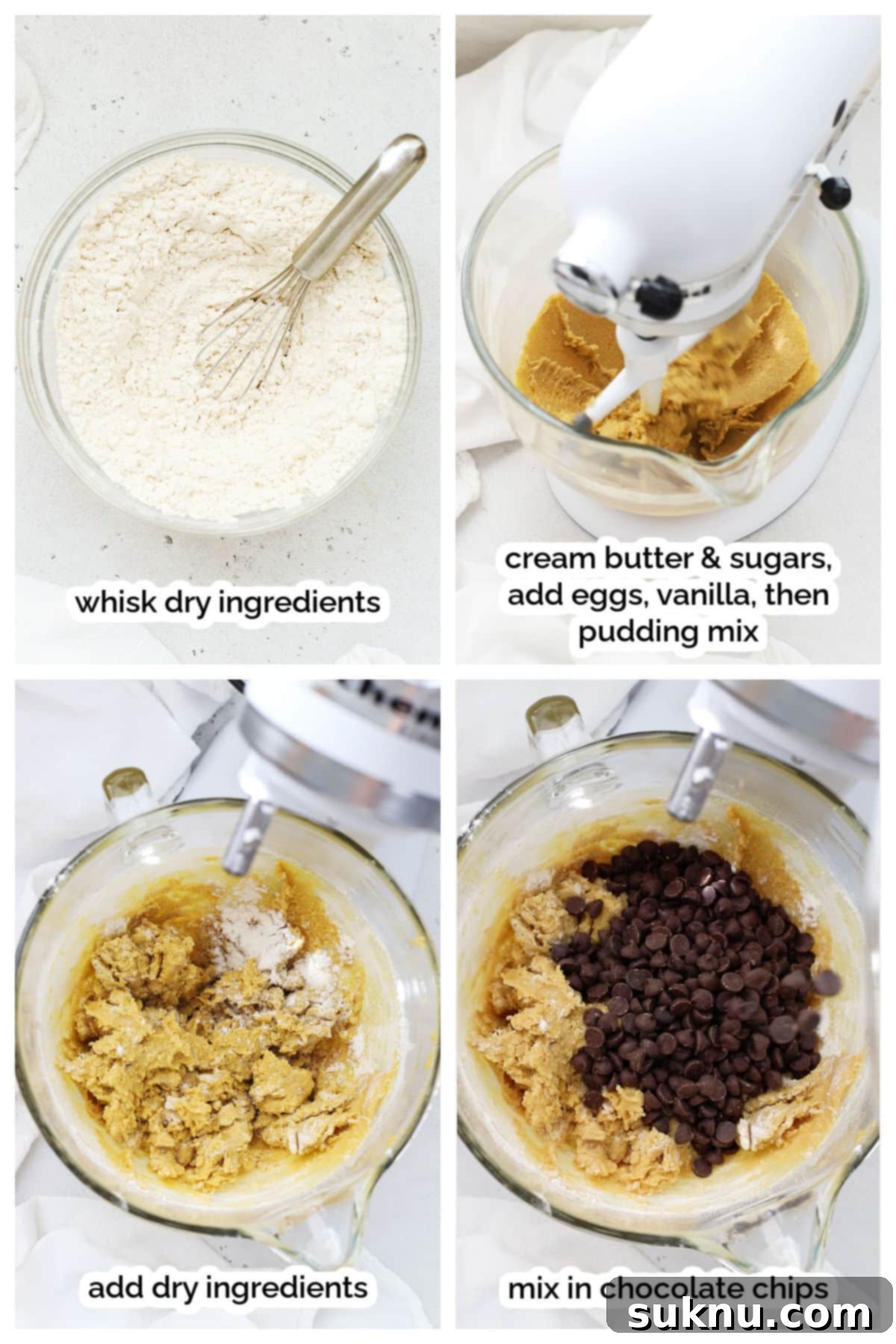
- Combine Dry Ingredients: In a medium mixing bowl, combine your gluten-free flour blend, baking soda, and kosher salt. Whisk these ingredients together thoroughly for about 30 seconds to ensure they are evenly distributed. Proper distribution is vital for uniform leavening and consistent flavor throughout your cookies. Set this bowl aside.
- Cream Butter & Sugars: In the bowl of a stand mixer fitted with the paddle attachment (or using a large mixing bowl with a hand mixer), add the softened unsalted butter, light brown sugar, and granulated sugar. Cream these ingredients together on medium speed for 2-3 minutes. Continue beating until the mixture is light in color, visibly fluffy, and smooth. This step incorporates air into the butter, which is crucial for a light and tender cookie texture.
- Add Eggs One At A Time, Then Vanilla: With the mixer on low speed, add the room temperature eggs, one at a time. Mix until each egg is fully incorporated into the butter mixture before adding the next. After both eggs are mixed in, scrape down the sides and bottom of the bowl with a rubber spatula to ensure all ingredients are well combined. Add the vanilla extract and mix briefly until just incorporated. Avoid overmixing at this stage.
- Incorporate Dry Pudding Mix: Add the dry, instant vanilla pudding mix directly into the wet ingredients in the mixer. Mix on low speed until the pudding mix is completely combined and no dry streaks remain. You’ll notice the dough thickening and gaining a beautiful, smooth consistency almost immediately.
- Gradually Mix In Dry Ingredients: With the mixer still on low speed, add half of the whisked dry ingredients to the cookie batter. Mix until just combined. Then, add the second half of the dry ingredients. Continue mixing until the flour mixture is almost fully incorporated, but still shows a few dry patches. This technique prevents overmixing the gluten-free flour, which can lead to tough cookies.
- Fold in Chocolate Chips: Finally, add 2 1/4 cups of your chosen dark or semisweet chocolate chips to the dough. Mix on low speed, or gently fold them in by hand with a sturdy spatula, until the chocolate chips are evenly distributed throughout the dough and no dry flour patches are visible. Be careful not to overmix the dough once the chocolate chips are added.
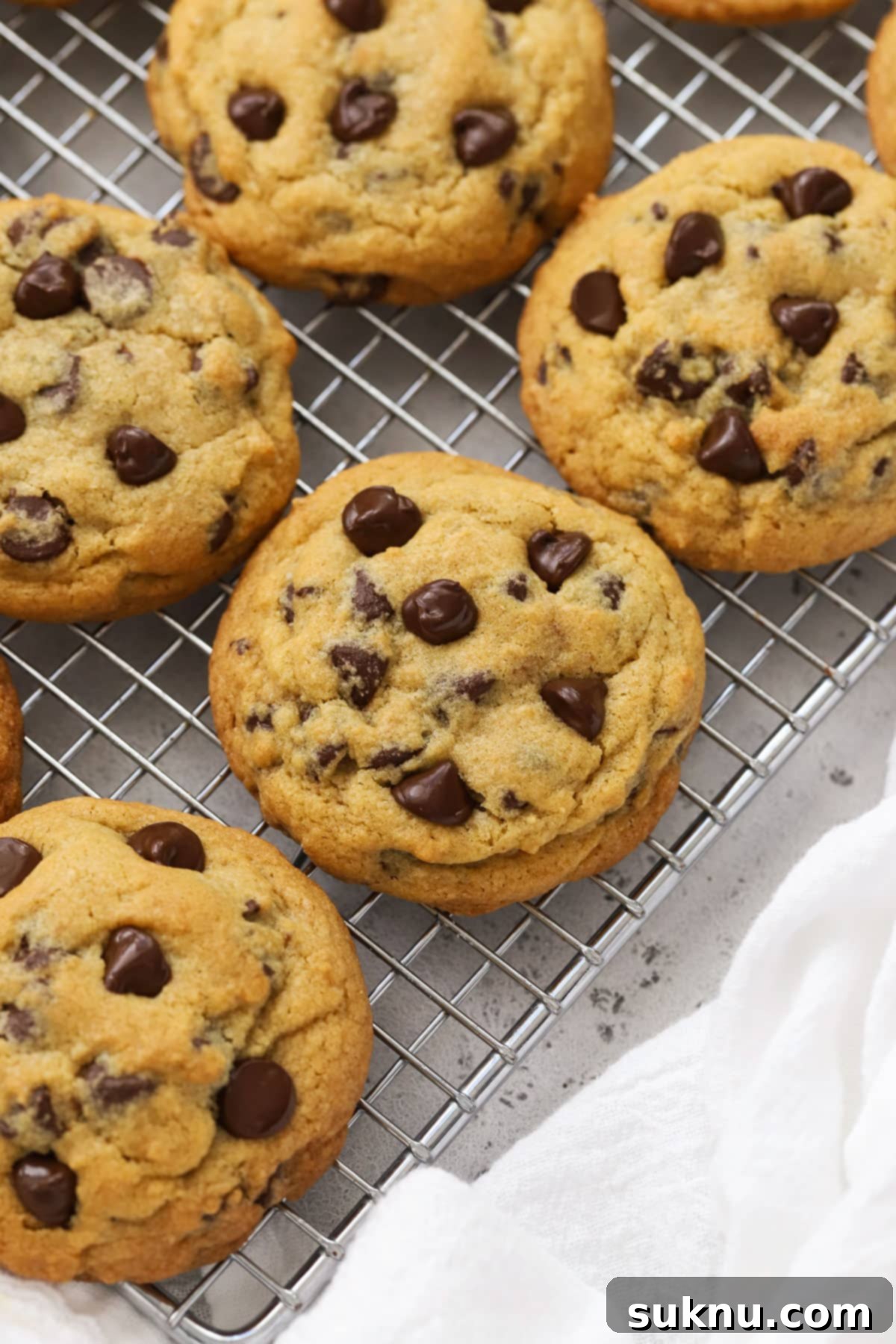
- Scoop & Bake Your Cookies: Using a large cookie scoop (a 3-Tablespoon capacity scoop is ideal), measure out uniform balls of cookie dough. Place about 6 cookie dough balls onto one of your prepared baking sheets, ensuring ample space between each to allow for proper spreading during baking. Bake for 10-12 minutes. The cookies are ready when their edges are set and lightly golden brown, but the centers still appear slightly soft and underdone. For optimal fudginess, I typically remove mine closer to the 12-minute mark.
- Shape & Finish (Optional, for Bakery-Perfect Look): Immediately upon removing the cookies from the oven, if you desire perfectly round, bakery-style cookies, use a large circular cookie cutter (slightly larger than your cookies) or the rim of a glass. Place it over a warm cookie and gently swirl it around the cookie to coax it into a perfect circle. You can also press a few extra chocolate chips onto the tops of the warm cookies for an even more appealing presentation.
- Cool & Repeat Baking: Allow the baked cookies to cool on the hot baking sheet for 1-2 minutes. This brief resting period is crucial for them to set properly without breaking. After this time, carefully transfer them to a wire rack to finish cooling completely. While one batch cools, repeat the baking steps with the remaining cookie dough, always using a cool baking sheet for each subsequent batch. Placing dough on a hot sheet can cause premature spreading and an undesirable texture.
- Serve & Store for Freshness: These gluten-free pudding mix chocolate chip cookies are divine warm, with melty chocolate. Enjoy them fresh from the oven, or allow them to cool entirely for a chewier texture. Store any leftover cookies in an airtight container or a zip-top bag at room temperature for 1-2 days to maintain their softness and freshness. For longer storage, baked cookies can be frozen in a freezer-safe bag for up to 2 months. Thaw them at room temperature or gently warm in the microwave for a just-baked experience.

Expert Cookie Baking Tips for Gluten-Free Success
Baking gluten-free cookies requires attention to detail, but with these expert tips, you’ll achieve perfect results every time. These pointers address common challenges and enhance your overall cookie-making experience:
- Bringing Eggs to Room Temperature FAST: For smooth emulsification, room temperature eggs are non-negotiable. If you forgot to take them out in advance, simply place the eggs (still in their shells) in a bowl of warm (not hot!) water for 5-10 minutes. This quick trick brings them to the ideal temperature for mixing.
- How to Measure Gluten-Free Flour Correctly: This is perhaps the most critical tip for gluten-free baking. Using too much flour is a common culprit for dry, crumbly cookies. The most accurate method is to measure flour by weight using a kitchen scale (270 grams for this recipe). If you don’t have a scale, employ the “Scoop & Level Method”: gently spoon the gluten-free flour blend into your measuring cup until it overflows, then use a straight edge (like the back of a knife) to level off the excess. Never scoop flour directly with the measuring cup, as this compacts it, adding significantly more flour than intended.
- Checking the Freshness of Your Baking Soda: Baking soda loses its potency over time, which can impact your cookies’ rise and texture. To test its freshness, place a teaspoon of baking soda in a small bowl and add a tablespoon of white vinegar or lemon juice. If it immediately fizzes vigorously, it’s fresh and effective. If there’s little to no reaction, it’s time to replace your baking soda.
- Mastering Cookie Dough Freezing: These cookies are fantastic for making ahead. To freeze cookie dough, scoop balls of dough onto a parchment-lined baking sheet and freeze until firm (about 1-2 hours). Once frozen solid, transfer the dough balls to a freezer-safe airtight container or zip-top bag. They can be stored for up to 2-3 months. When you’re ready to bake, simply place the frozen dough balls on a prepared baking sheet and bake for an additional 2-4 minutes beyond the recipe’s specified baking time. No need to thaw!
- Essential Cookie Baking Tools: While not all are strictly necessary, a few tools can dramatically improve your baking experience:
- Stand Mixer or Hand Mixer: Makes creaming butter and sugar effortless and efficient.
- Large Cookie Scoop (3 Tbsp): Ensures uniformly sized cookies, leading to even baking and a professional appearance.
- Parchment Paper: Prevents sticking, promotes even browning, and makes cleanup a breeze.
- Wire Cooling Rack: Allows for air circulation around the cookies, preventing soggy bottoms as they cool and set.
- Kitchen Scale: The most accurate way to measure dry ingredients, especially flour, for consistent results.
Frequently Asked Questions & Creative Tricks for Your Pudding Chocolate Chip Cookies
Beyond the core recipe, these insights and tips will help you customize, troubleshoot, and truly master your gluten-free pudding mix chocolate chip cookies, ensuring every batch is a resounding success.
Customizing Your Creations: Mix-Ins & Flavor Explorations
One of the most enjoyable aspects of baking is the freedom to personalize your treats. These gluten-free pudding cookies are incredibly versatile, offering a perfect canvas for your culinary imagination:
- Expand Your Chocolate Horizons: Beyond classic chocolate chips, consider using chopped dark or milk chocolate bars for irregular, intensely melty pockets. A delightful combination of white chocolate chips and dark chocolate chips adds visual appeal and a harmonious flavor contrast.
- Add a Nutty Crunch: Introduce a textural element and rich flavor by folding in a handful of chopped nuts such as pistachios, macadamia nuts, pecans, or walnuts. Lightly toasting them beforehand will deepen their flavor profile.
- Sprinkle Some Joy: For a fun, festive touch, especially around holidays or birthdays, mix colorful sprinkles directly into the cookie dough.
- The Flaky Salt Finish: A sprinkle of flaky sea salt on top of the warm, just-baked cookies enhances the chocolate flavor and adds a sophisticated, gourmet touch that salt lovers will adore.
- Experiment with Pudding Flavors: While vanilla or French vanilla instant pudding mix creates the perfect classic chocolate chip cookie, don’t hesitate to explore other instant pudding flavors! Butterscotch pudding mix can yield a rich, caramel-like cookie, while chocolate pudding mix will intensify the chocolate flavor for a double-chocolate experience. (Chocolate pudding mix cookies might just be your next baking adventure!)
Crucial Check: Is Your Pudding Mix Truly Gluten-Free?
Reiterating an important point: always ensure the instant pudding mix you select is gluten-free. As previously discussed, Jell-O brand instant vanilla pudding mix is widely considered safe for most individuals following a gluten-free diet in the United States. However, it’s paramount to use DRY instant pudding mix, not pre-made refrigerated pudding or cook-and-serve varieties, as their ingredients and thickening agents differ significantly. Always make it a habit to carefully scrutinize the ingredient list of any brand or flavor of pudding mix, as formulations can change, and some flavors (like cheesecake) explicitly contain gluten-derived ingredients such as barley.
The Art of Accurate Measurement: Especially with Gluten-Free Flour
We cannot overemphasize the importance of precise ingredient measurement in gluten-free baking. Unlike traditional baking, where slight variations might be forgiving, gluten-free flours are less absorbent and have different protein structures. The most reliable method for measuring flour is by weight using a digital kitchen scale. If you don’t own one, conscientiously practice the “Scoop & Level Method” for flour: gently spoon flour into your measuring cup until it’s overflowing, then use the straight edge of a knife or a bench scraper to level it off. Never pack flour into the cup or scoop directly from the bag with the measuring cup, as this can add up to 25% more flour than intended, leading to dry, dense, crumbly cookies that don’t spread correctly.
The Golden Rule of Cooling: Patience for Perfect Texture
The temptation to immediately devour a warm cookie straight from the oven is strong, but for these fudgy pudding cookies, patience is a virtue that pays off handsomely. Cookies continue to bake and set from residual heat on the hot baking sheet even after they’ve been removed from the oven. This “carryover cooking” is essential for the centers to transform from gooey to perfectly fudgy and chewy. If you bite into a cookie too soon, it might seem underbaked. Allow the cookies to cool on the baking sheet for at least 1-2 minutes, then transfer them to a wire rack to cool completely. This process ensures they achieve their ideal soft, chewy, and gloriously fudgy consistency.
Can I Make These Cookies Dairy-Free?
Yes, with a few substitutions! You can replace the butter with a high-quality dairy-free butter alternative (like Miyoko’s Kitchen or Earth Balance sticks) that is specifically formulated for baking. Ensure your chocolate chips are dairy-free (many dark chocolate chips are). Check the instant pudding mix to ensure it doesn’t contain dairy, though most instant varieties are typically dairy-free as dry powders. The texture may vary slightly, but they will still be delicious.
More Irresistible Gluten-Free Chocolate Chip Cookie Recipes to Explore
If you’ve fallen in love with these easy and delicious pudding mix cookies, you’ll be thrilled to discover other fantastic gluten-free chocolate chip cookie recipes that cater to various tastes and textures. Expand your baking repertoire and find your next favorite!
- Thin & Crispy Gluten-Free Chocolate Chip Cookies
- Gluten-Free Sprinkle Chocolate Chip Cookies
- Gluten-Free Nutella-Stuffed Chocolate Chip Cookies
Recipe Card: Gluten-Free Pudding Mix Chocolate Chip Cookies

Gluten-Free Pudding Mix Chocolate Chip Cookies
No reviews yet.
- Author: Emily Dixon, Sweets & Thank You
- Total Time: 1 hour 10 minutes
- Yield: 20-22 cookies
- Diet: Gluten Free
Description
These gluten-free pudding mix chocolate chip cookies are the perfect all-around chocolate chip cookie—delicately crisp and golden brown on the outside, soft and fudgy on the inside, with plenty of melty chocolate chips in every bite. An easy, go-to recipe for the best gluten-free cookies!
Ingredients
Dry Ingredients:
- 2 1/4 cups (270 grams) gluten-free measure-for-measure flour, weighed or scooped and leveled
- 1 teaspoon baking soda
- 1/2 teaspoon kosher salt
Wet Ingredients:
- 1 cup softened unsalted butter (2 sticks/226 grams)
- 3/4 cup light brown sugar (150 grams)
- 1/4 cup granulated sugar (50 grams)
- 2 large eggs, room temperature
- 2 teaspoons vanilla extract
- 1 (3.4 oz./96 grams) package Jell-O instant vanilla pudding mix (dry)
Mix-Ins:
- 2 1/2 cups (15 oz/425 grams) dark chocolate chips or semisweet chocolate chips
Instructions
- Preheat Oven & Prepare Pans: Preheat your oven to 350°F (175°C). Line two large baking sheets with parchment paper and set aside.
- Combine Dry Ingredients: In a medium mixing bowl, whisk together the gluten-free flour blend, baking soda, and salt. Set aside.
- Cream Butter & Sugars: In a stand mixer bowl (with paddle attachment) or large mixing bowl (with a hand mixer), cream softened butter, brown sugar, and granulated sugar for 2-3 minutes until light, fluffy, and smooth.
- Add Eggs & Vanilla: Add eggs one at a time, mixing well after each. Scrape down the bowl sides, then add vanilla extract and mix until combined.
- Incorporate Pudding Mix: Add the dry instant vanilla pudding mix to the wet ingredients and stir until fully combined.
- Gradually Add Dry Ingredients: Mix in half of the dry ingredients until just combined, then add the second half and mix until almost fully incorporated, with a few dry patches remaining.
- Fold in Chocolate Chips: Add 2 1/4 cups chocolate chips and mix until well distributed and no dry patches are left in the dough.
- Scoop & Bake: Use a large cookie scoop (3 Tablespoons) to form dough balls. Place 6 dough balls on a prepared baking sheet. Bake for 10-12 minutes, or until edges are set and centers look slightly underdone. (I pull mine out closer to 12 minutes for maximum fudginess.)
- Shape & Finish (Optional): Immediately after baking, use a circular cookie cutter or glass (larger than the cookie) to gently shape cookies into perfect circles. Press extra chocolate chips onto tops if desired for a bakery-worthy appearance.
- Cool & Repeat: Let cookies cool on the baking sheet for 1-2 minutes, then transfer to a wire rack to cool completely. Ensure to use a cooled baking sheet for subsequent batches to prevent excessive spreading.
- Serve & Store: Enjoy the cookies right away or store in an airtight container or bag at room temperature for 1-2 days. Baked cookies can also be frozen for up to 2 months in a freezer-safe bag.
Notes
- Gluten-Free Flour Recommendation: For optimal taste and texture, we strongly recommend King Arthur Gluten-Free Measure-For-Measure flour. Always ensure your chosen gluten-free blend contains xanthan gum for proper cookie structure. Avoid substituting with single-ingredient flours like coconut, almond, or oat flour, as they will alter the recipe significantly.
- Precise Flour Measurement: Accuracy is crucial for gluten-free baking. Whenever possible, use a kitchen scale to measure your gluten-free flour by weight (270 grams). If a scale is unavailable, diligently use the “Scoop & Level Method” by gently spooning flour into the measuring cup and leveling it off. Never scoop directly from the bag with the measuring cup, as this packs too much flour and can result in dry, dense, and crumbly cookies that don’t spread well.
- The Importance of Cooling: Patience truly pays off with these cookies! Allow them to cool on the baking sheet for at least 1-2 minutes before transferring them to a wire rack. This initial cooling period allows the cookies to finish setting through residual heat, ensuring a perfectly soft, fudgy, and chewy center. Cutting into them too soon may make them seem underbaked.
- Prep Time: 25 minutes
- Cook Time: 45 minutes
- Category: Dessert
- Method: Oven
- Cuisine: American