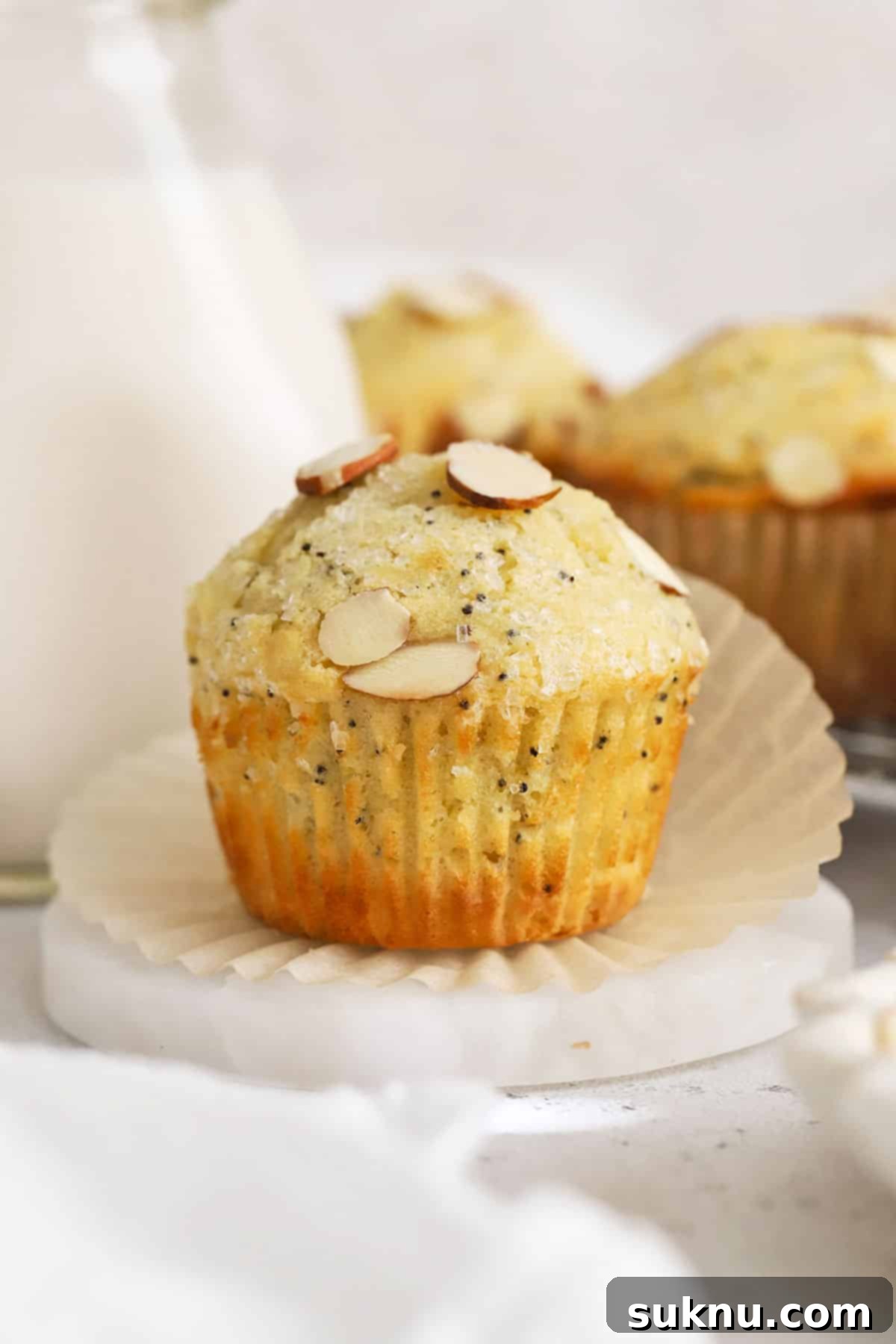
Discover the ultimate recipe for light, fluffy gluten-free almond poppy seed muffins! Crafted from scratch with simple, wholesome ingredients, these bakery-style muffins promise an explosion of flavor and a tender crumb. Perfect for a delightful breakfast, a leisurely brunch, or a satisfying snack any time of day, they are sure to become a cherished favorite in your gluten-free repertoire.
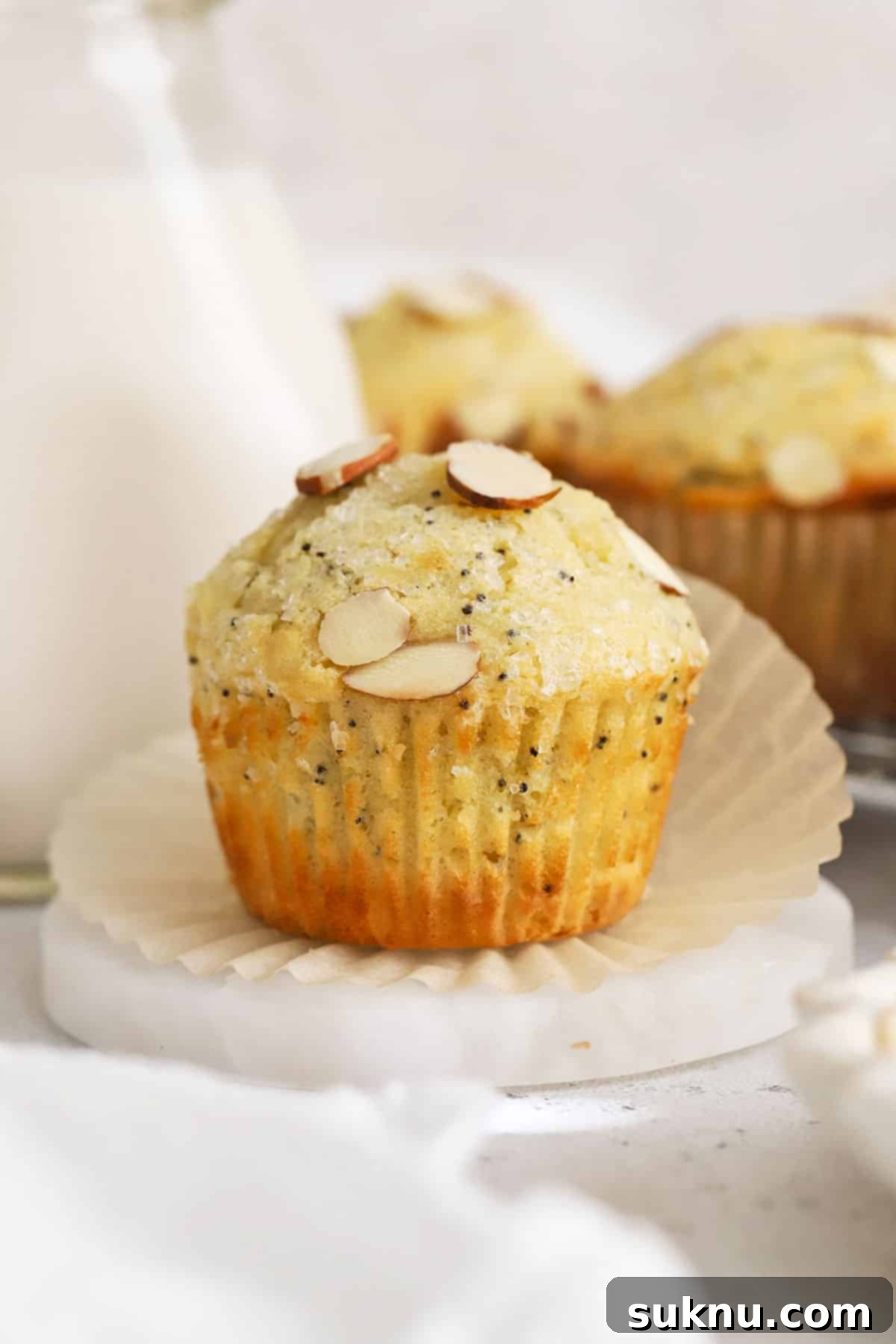
There’s something inherently comforting about a freshly baked muffin, especially one that brings back nostalgic memories. For many, almond poppy seed muffins hold a special place, with their distinct, comforting almond aroma and satisfyingly soft, cake-like texture. Whether it was the towering, bakery-style jumbo muffins from childhood or a simple boxed mix, that unique almond flavor and delightful texture were always a treat.
After much experimentation and a desire to bring this classic to the gluten-free community, we’re thrilled to introduce our new gluten-free almond poppy seed muffin recipe. This recipe isn’t just a gluten-free adaptation; it’s designed to deliver the same sky-high, ultra-fluffy muffins you’d expect from your favorite bakery, all made from scratch.
Building on the successful methods used in our popular Gluten-Free Blueberry Muffins and Gluten-Free Chocolate Chip Muffins, this recipe incorporates a crucial resting period for the batter. This simple step is key to achieving that coveted light and airy texture, ensuring your muffins rise beautifully every single time. You’ll be amazed at how such a small adjustment can yield such significant results!
Beyond its incredible texture and flavor, what makes this recipe truly special is its reliance on simple, straightforward ingredients. You won’t need to hunt for obscure items; everything on the list is easily accessible, transforming everyday pantry staples into an extraordinary breakfast or brunch centerpiece. Let’s gather what you need to get started on your journey to the perfect gluten-free almond poppy seed muffins!
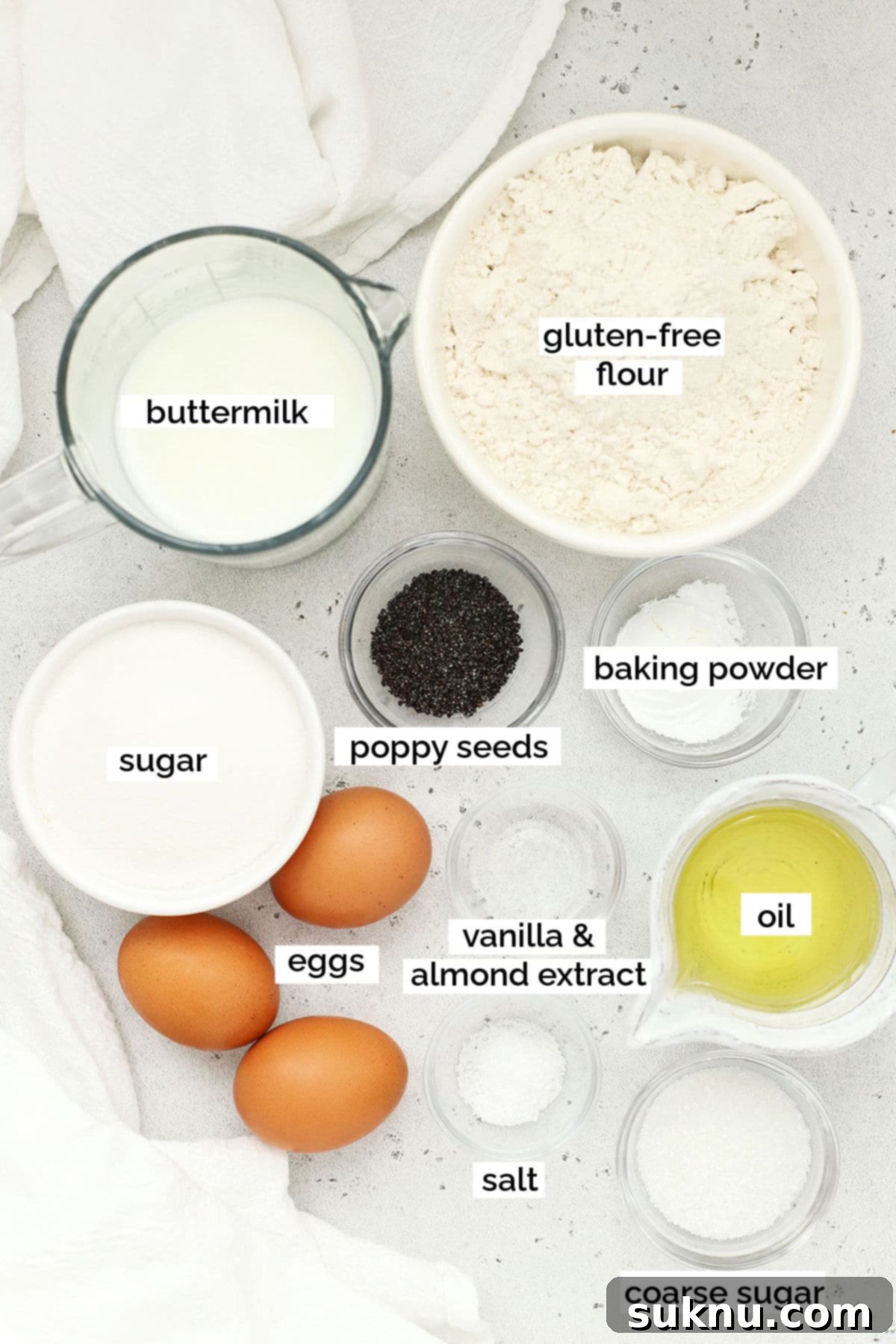
Essential Ingredients for Perfect Gluten-Free Almond Poppy Seed Muffins
Creating extraordinary gluten-free almond poppy seed muffins begins with understanding the role of each ingredient. Here’s a detailed look at what you’ll need to achieve that signature flavor and incredibly fluffy texture:
- Granulated Sugar: This provides the perfect level of sweetness and helps achieve that golden-brown crust. For this specific recipe, regular white granulated sugar is recommended as substitutes like brown sugar, coconut sugar, honey, or maple syrup can alter the moisture balance and final texture of the muffins.
- Neutral-Tasting Oil: A light, neutral oil is crucial for adding moisture without competing with the vibrant almond flavor. Opt for vegetable oil, canola oil, avocado oil, or grape seed oil. Avoid strong-flavored oils like coconut oil or olive oil, as they will distinctly impact the overall taste profile of your muffins.
- Buttermilk: This secret ingredient is a game-changer for moist and tender muffins. The acidity in buttermilk reacts with the baking powder, contributing significantly to the muffins’ light, airy texture and helping them rise beautifully. Its creaminess also adds a rich depth of flavor.
- Large Eggs: You’ll need three large eggs. Eggs act as a binder, providing structure to the muffins while also contributing to their moisture and richness. They help emulsify the batter, leading to a smoother consistency.
- Almond Extract & Vanilla Extract: For that truly authentic and pronounced almond flavor, a combination of pure almond extract and vanilla extract is essential. The vanilla extract rounds out the almond, adding a subtle warmth and complexity that makes these muffins irresistible. Don’t skimp on the almond extract if you want that bakery-quality aroma!
- Gluten-Free All-Purpose Flour Blend: To keep this recipe simple and accessible, we utilize a 1:1 gluten-free flour blend. For best results, we highly recommend King Arthur Measure-For-Measure flour blend. It consistently delivers excellent results. If you opt for another brand, ensure it explicitly states it contains xanthan gum. Xanthan gum is vital in gluten-free baking for providing elasticity and preventing crumbly textures. Please do not substitute with almond flour, coconut flour, or oat flour, as these have different absorption properties and will drastically change the outcome.
- Baking Powder: This powerful leavening agent is responsible for the muffins’ incredible rise and fluffy interior. Ensure your baking powder is fresh for maximum effectiveness.
- Poppy Seeds: The iconic poppy seeds are not just for aesthetics; they provide a subtle, nutty crunch and are fundamental to the classic almond poppy seed muffin experience. Do not substitute with sesame seeds or chia seeds; chia seeds, in particular, absorb a significant amount of moisture and will lead to dry, dense muffins.
- Kosher Salt: A pinch of kosher salt is essential for balancing the sweetness and enhancing all the delicious flavors in the muffins. It brings out the best in the almond and buttermilk notes.
- Optional Toppings: For that irresistible bakery-style finish, consider adding a sprinkle of coarse sugar or sparkling sugar and a few thinly sliced almonds on top before baking. These additions provide a lovely textural contrast and an extra touch of visual appeal, though they are entirely optional and do not affect the muffin’s delicious core flavor.
TOOLS WE RECOMMEND
Some recommended baking tools and accessories for this recipe will appear here.
How to Make Ultra-Fluffy Gluten-Free Almond Poppy Seed Muffins: A Step-by-Step Guide
For precise ingredient measurements, expert tips, and a printable version of this recipe, please refer to the recipe card located at the bottom of this post.
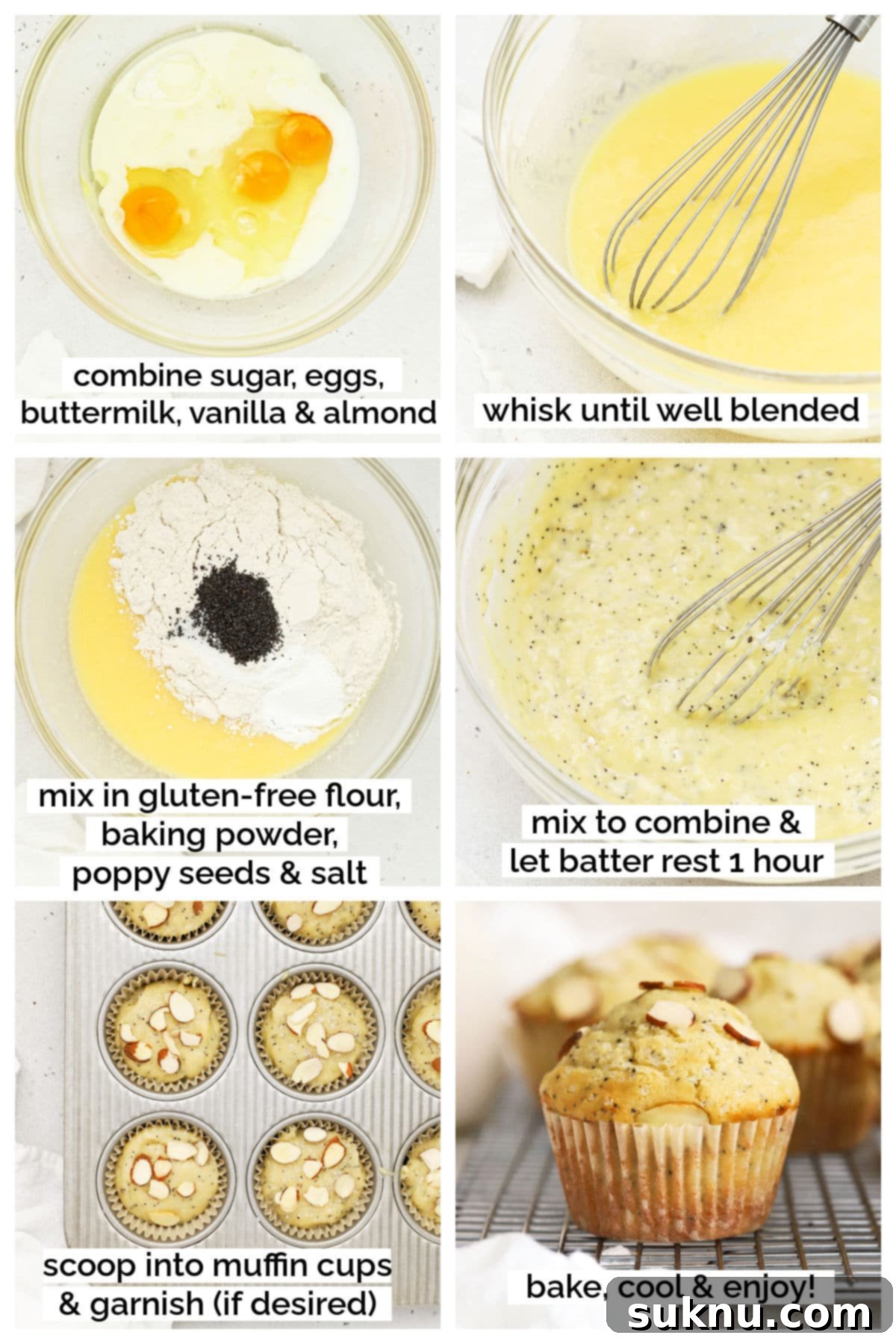
Achieving those perfectly domed, fluffy muffins is simpler than you think with our tried-and-true method. Follow these steps for gluten-free almond poppy seed muffins that taste like they came straight from a gourmet bakery:
- Combine Wet Ingredients: In a generously sized mixing bowl, begin by whisking together the granulated sugar, neutral oil, rich buttermilk, large eggs, aromatic almond extract, and sweet vanilla extract. Whisk thoroughly until the mixture is smooth and well-combined, ensuring all liquid ingredients are fully incorporated.
- Add Dry Ingredients: To the wet mixture, add your sifted gluten-free flour blend, fresh baking powder, crunchy poppy seeds, and a touch of kosher salt. Using a spoon or spatula, gently stir the ingredients until they are *just* combined. Be careful not to overmix; a few streaks of flour are perfectly acceptable and actually desirable for tender muffins. Overmixing can lead to tough muffins, especially in gluten-free baking.
- Let The Batter Rest (1 Hour): This step is non-negotiable for achieving truly fluffy, high-domed muffins. Cover your bowl with plastic wrap and let the batter rest at room temperature for approximately one hour. This resting period allows the gluten-free flour to fully hydrate, absorbing the liquids and softening the starches. It also gives the leavening agents a head start, setting the stage for an impressive rise in the oven. You will notice the batter slightly thickens during this time.
- Preheat Oven & Prep Pan: About 30 minutes into the batter’s resting time, preheat your oven to a robust 425°F (220°C). This initial high temperature is another secret weapon for achieving tall muffin tops. While the oven heats, line a standard 12-cup muffin pan with high-quality parchment paper liners. These liners not only prevent sticking but also help create that signature bakery-style look.
- Scoop & Top Muffin Batter: Once the batter has rested and the oven is preheated, use a large ice cream scoop or a 1/4 cup measuring cup to evenly divide the fluffy batter among the prepared muffin cups. Don’t be shy – fill the liners almost to the very top. This generous filling, combined with the rested batter and high initial heat, is crucial for those impressive domes. If desired, sprinkle the tops with a bit of sparkling sugar for a beautiful crunch and a few sliced almonds for an elegant finish. This is purely for aesthetic appeal.
- Bake with Dual Temperatures: Place the muffin pan into the preheated 425°F (220°C) oven and bake for precisely 5 minutes. After this initial blast of heat, *without opening the oven door*, reduce the oven temperature to 350°F (175°C) and continue baking for an additional 10-12 minutes. The high initial heat creates a quick burst of steam, causing the muffins to rapidly rise, while the lower temperature finishes baking them through gently without over-browning. The muffins are done when their edges are lightly golden brown and a toothpick inserted into the center comes out with only a few moist crumbs, but no wet batter.
- Cool The Muffins: Allow the baked muffins to cool in the muffin tin for 2-3 minutes. This brief cooling period helps them set and makes them easier to remove. After a few minutes, carefully transfer the muffins to a wire cooling rack to cool completely. Cooling on a rack prevents the bottoms from becoming soggy.
- Serve & Store: These gluten-free almond poppy seed muffins are truly best enjoyed warm, straight from the oven! For any delicious leftovers, store them in an airtight container or bag at room temperature for 2-3 days. A quick 10-15 second reheat in the microwave will bring them back to their freshly baked glory. Alternatively, freeze cooled muffins for up to 2 months. Thaw at room temperature or warm briefly in the microwave for a quick treat.
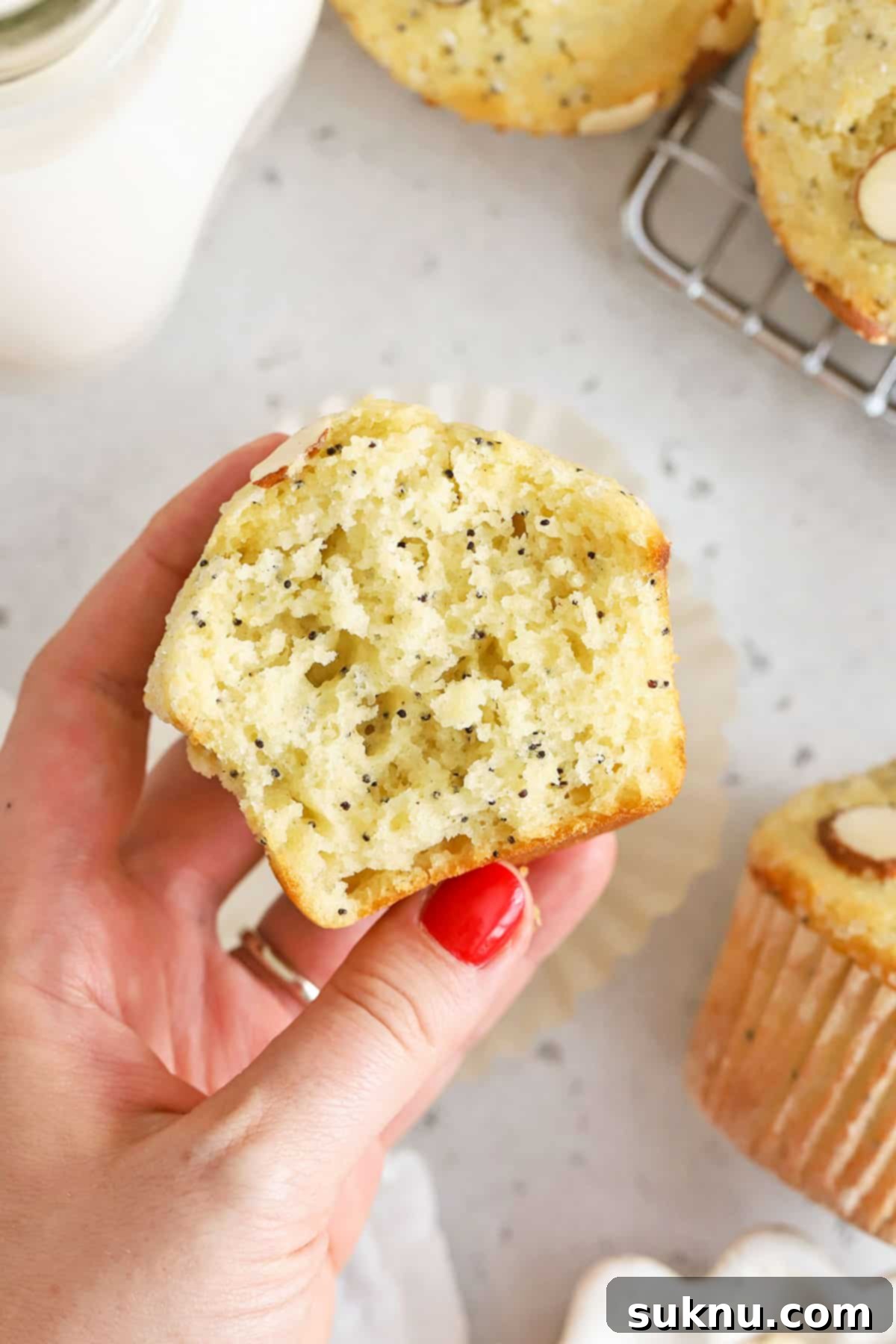
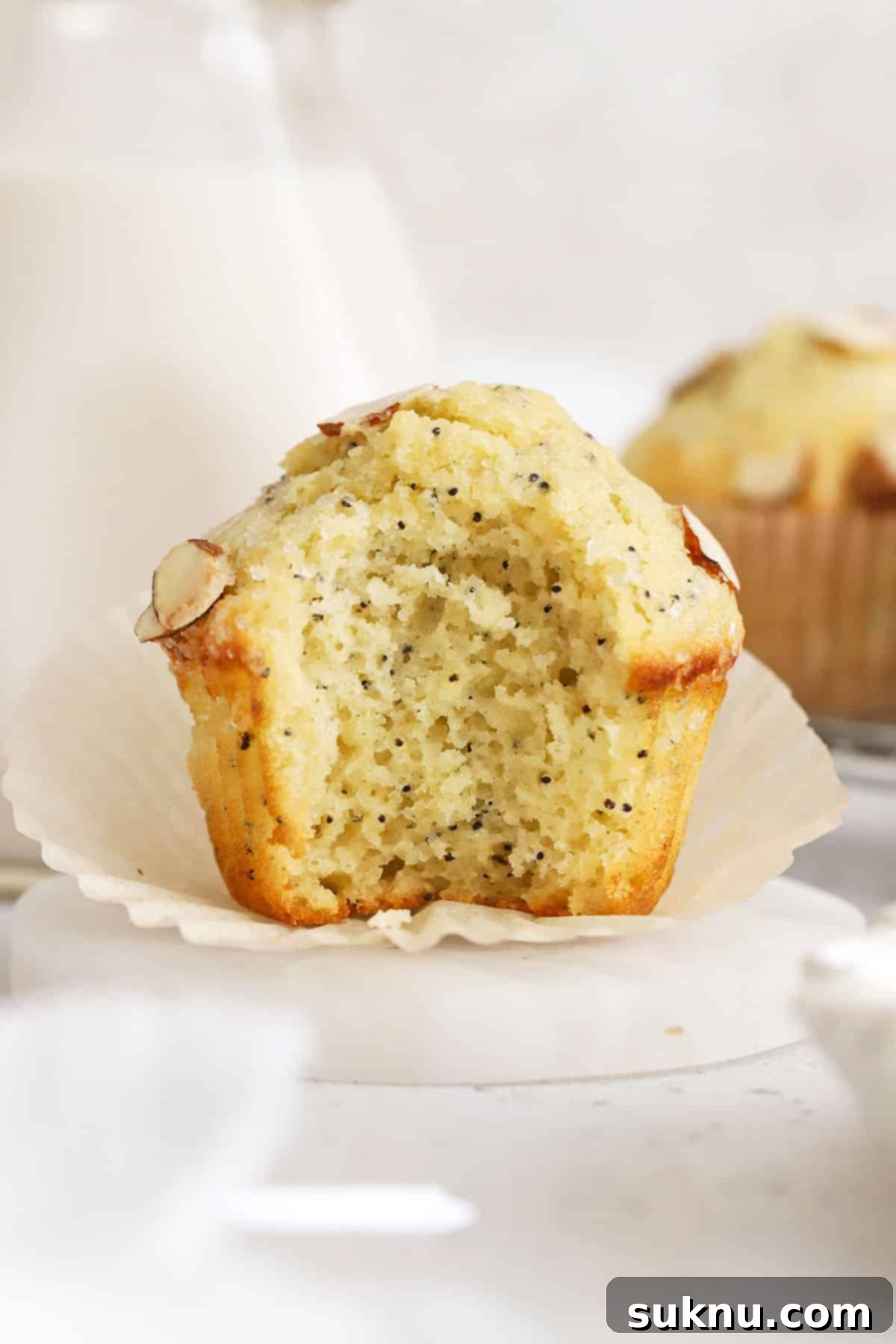
Three Essential Tricks for Achieving the Fluffiest Gluten-Free Muffins
Achieving light and airy muffins, especially in gluten-free baking, can sometimes feel like a challenge. However, with these three simple yet powerful tricks, you’ll consistently bake muffins that are wonderfully fluffy and moist every single time. Say goodbye to dense, dry muffins and hello to bakery-quality perfection!
- Measure Ingredients with Precision & Avoid Substitutions: In gluten-free baking, accuracy is paramount. The most common culprit behind dry or dense muffins is often the improper measurement of flour. Gluten-free flours can be particularly absorbent, and even a slight excess can significantly impact the final texture. For optimal results, we highly recommend measuring your flour by weight using an inexpensive digital kitchen scale. If a scale isn’t available, always use the “scoop and level” method (lightly spoon flour into a measuring cup and then level it off with a straight edge) rather than scooping directly from the bag, which can compact the flour and add too much. Furthermore, resist the urge to substitute key ingredients. Each component in this recipe – from buttermilk to poppy seeds – plays a specific role in achieving the desired texture and flavor. For example, replacing poppy seeds with chia seeds will result in dry muffins as chia seeds absorb excessive moisture. Using regular milk instead of buttermilk will also affect the rise and tenderness. Trust the recipe for the best outcome!
- Embrace the Batter Resting Period: We understand that waiting can be the hardest part of baking, but this step is a true game-changer for gluten-free muffins. Allowing the batter to rest for about an hour before baking will result in muffins that rise significantly higher – often twice as high! During this resting time, the gluten-free flours fully hydrate, absorbing the liquids and softening the starches. This hydration process prevents a gritty texture and promotes a more tender crumb. Additionally, it gives the leavening agents (like baking powder) more time to activate, creating more air bubbles and contributing to that desirable ultra-fluffy texture. Don’t skip this crucial step for truly superior muffins!
- Implement a Dual-Temperature Baking Method: This professional baker’s trick is fantastic for developing those beautiful, tall muffin tops. You’ll start by baking the muffins for a brief period (typically 5 minutes) at a higher temperature, such as 425°F (220°C). This initial burst of intense heat creates a powerful oven spring, causing the batter to rapidly expand and rise. Then, without opening the oven door, reduce the temperature to a moderate 350°F (175°C) for the remainder of the baking time. This lower temperature allows the muffins to cook through evenly and gently, preventing over-browning on the outside while ensuring the inside bakes completely. This dual-temperature approach makes a remarkable difference in the height, texture, and overall appearance of your muffins.
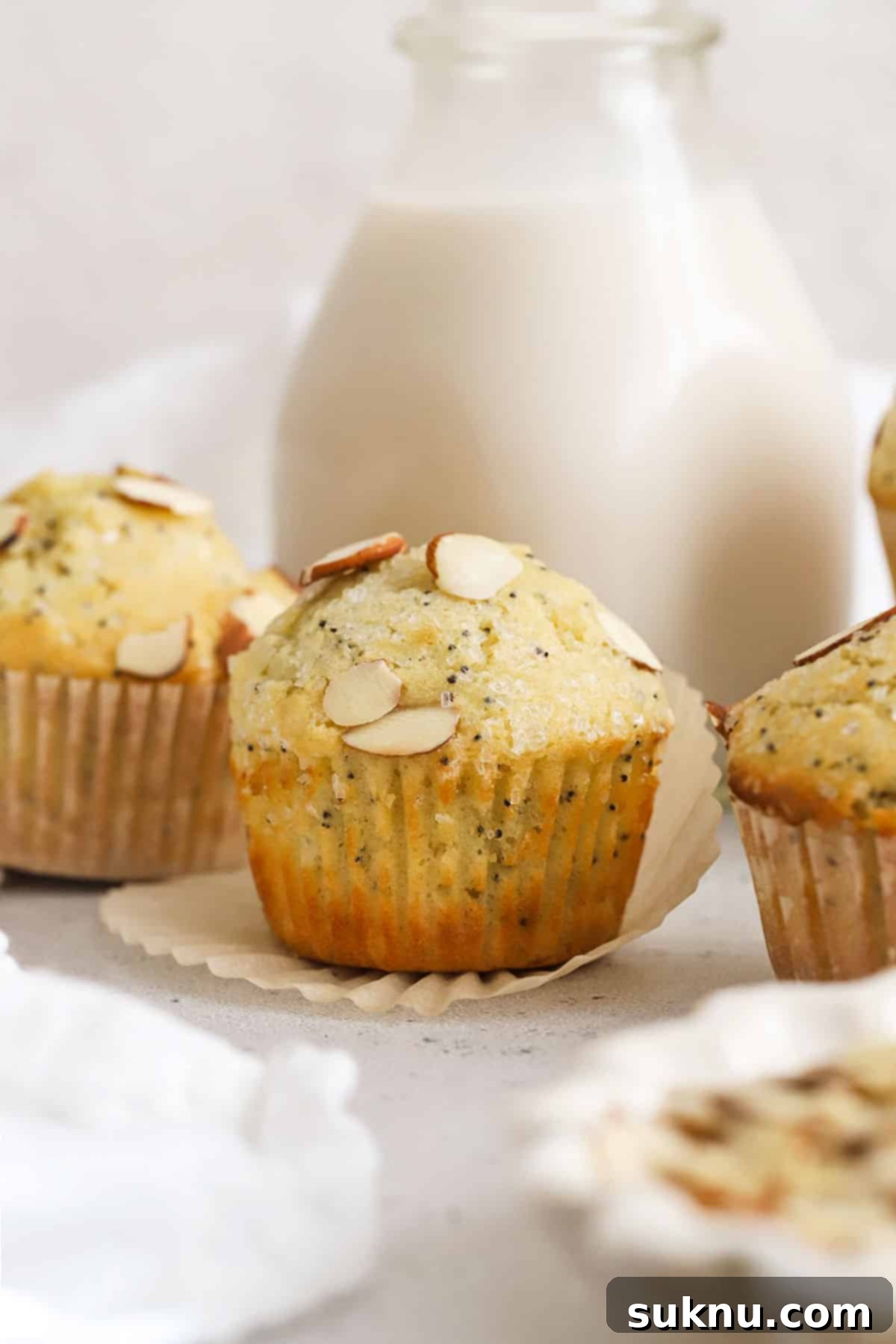
Frequently Asked Questions & Expert Baking Tips for Your Best Muffins
Here are some common questions and additional tips to help you perfect your gluten-free almond poppy seed muffins and make them truly shine:
Can I Make Them with a Delicious Glaze? Absolutely! For a truly special treat, especially for a celebration or holiday brunch, consider adding a simple, sweet glaze to your cooled muffins. To make an almond glaze, whisk together 1 to 1 1/2 cups of powdered sugar with 1-2 tablespoons of milk (dairy or non-dairy works) and a few drops of almond extract for an extra flavor boost. Drizzle generously over the muffins once they have cooled completely.
How Can I Make Mini Muffins? Mini muffins are perfect for parties, kids’ snacks, or when you simply want a smaller bite. To adapt this recipe for mini muffins, prepare your mini muffin pan by lining each cup with mini paper liners or greasing them well. Fill each mini muffin cup about three-quarters full with batter. Bake them at 350°F (175°C) (after the initial 5 minutes at 425°F, just like regular muffins) for approximately 15-18 minutes, or until the edges are lightly golden and a toothpick comes out clean. Keep a close eye on them, as mini muffins bake much faster!
What Can I Substitute for Buttermilk? Buttermilk is a star ingredient here, but if you’re out or need a dairy-free option for gluten-free dairy-free almond poppy seed muffins, there are good alternatives. A popular and effective homemade substitute is to combine 1 cup of regular milk (dairy or non-dairy) with 1 tablespoon of lemon juice or white vinegar. Let it sit for 5-10 minutes until it slightly curdles, then use it as you would buttermilk. For a richer, thicker substitute, especially if you have it on hand, my best suggestion is to use 3/4 cup sour cream or plain Greek yogurt thinned with 1/4 cup milk (dairy or non-dairy) to achieve a pourable consistency. This combination closely mimics the fat content and acidity of real buttermilk.
Troubleshooting: Why are my muffins dry? Dry muffins are often a result of overmixing the batter or adding too much flour. Always measure your gluten-free flour carefully, ideally by weight. Overmixing develops any trace gluten (or the xanthan gum too much), leading to a tougher texture. Ensure you only mix until the ingredients are just combined.
Can I add citrus zest? Absolutely! For an extra bright and fresh flavor, consider adding 1-2 teaspoons of finely grated lemon or orange zest to the wet ingredients. Citrus pairs wonderfully with almond and poppy seeds.
Freezing Tips for Later Enjoyment: To freeze muffins, ensure they are completely cooled first. Place them in a single layer on a baking sheet and freeze for about 30 minutes until firm. Then, transfer the frozen muffins to an airtight freezer-safe bag or container. This prevents them from sticking together. They can be stored for up to 2 months. To enjoy, simply thaw at room temperature for a few hours or warm them in the microwave for 20-30 seconds.
More Gluten-Free Muffin Recipes To Try
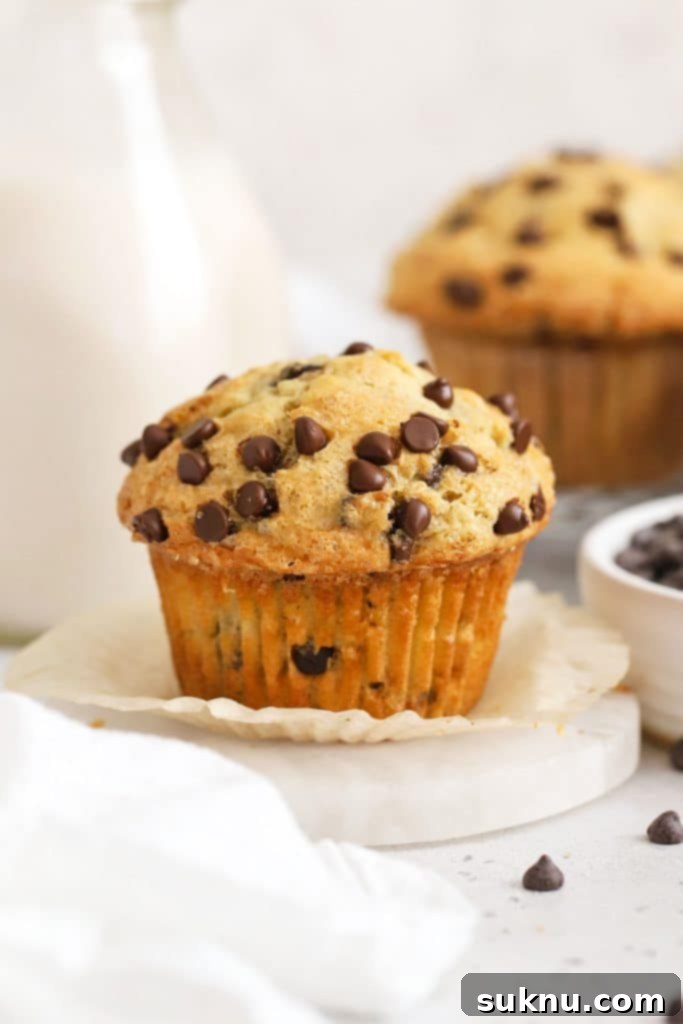
Gluten-Free Chocolate Chip Muffins
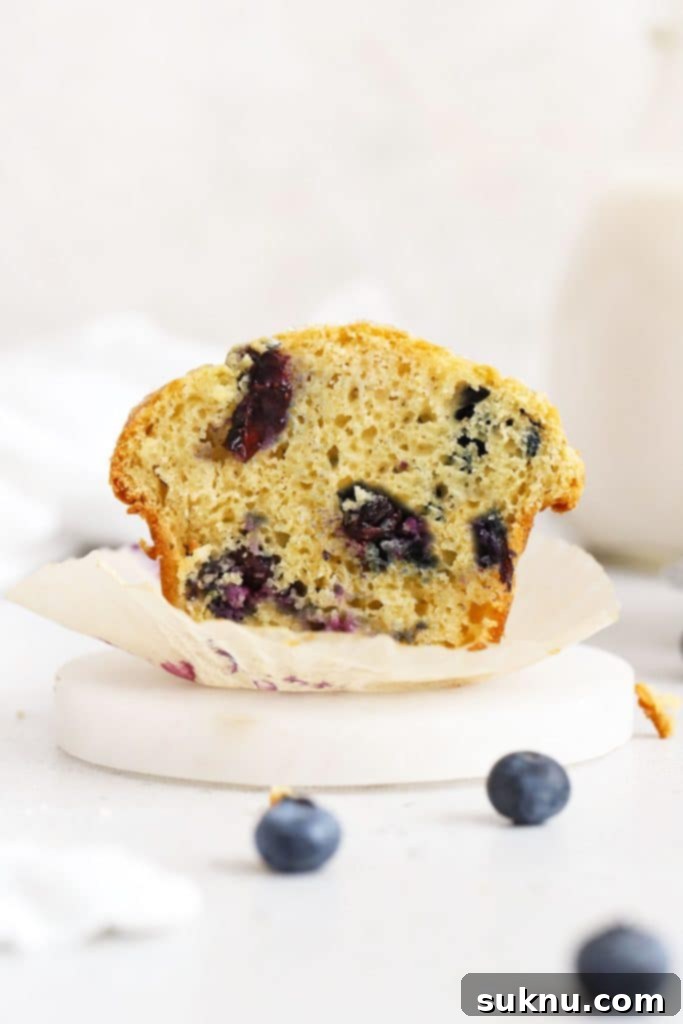
Gluten-Free Blueberry Muffins
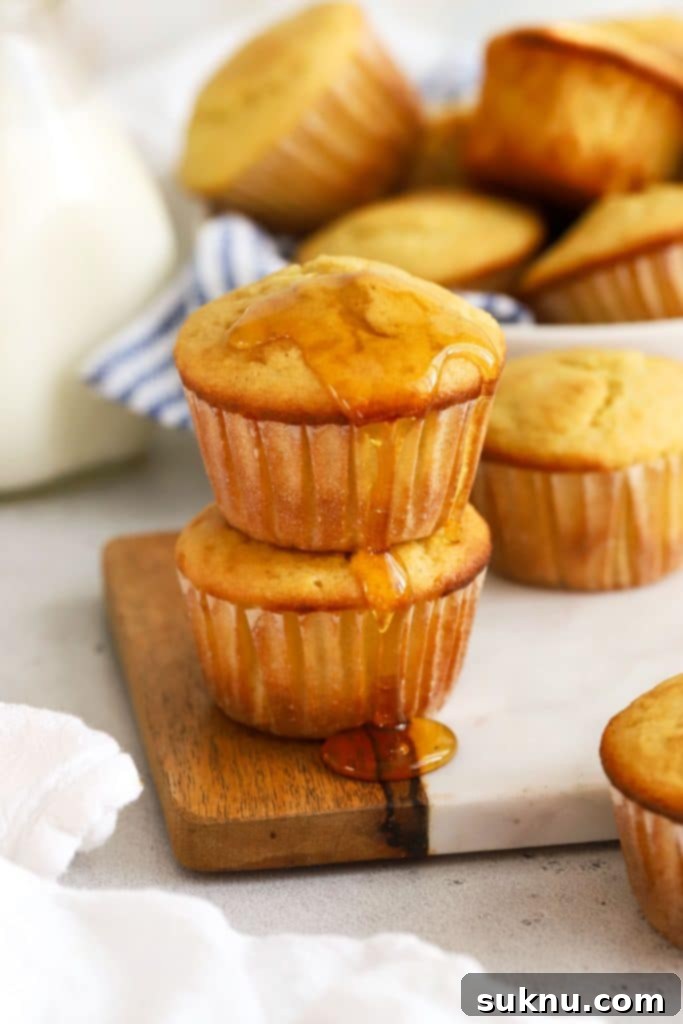
Gluten-Free Corn Muffins
You can find a helpful video tutorial for making these gluten-free almond poppy seed muffins here.
Recipe Card: Gluten-Free Almond Poppy Seed Muffins
Did you make this recipe?
We’d love to hear from you! Leave a star rating below when you try our Gluten-Free Almond Poppy Seed Muffins recipe. Your feedback helps other bakers, and we can’t wait to see your creations! Happy baking!
Print

Gluten-Free Almond Poppy Seed Muffins
5 Stars 4 Stars 3 Stars 2 Stars 1 Star
5 from 3 reviews
- Author: Emily Dixon, Sweets & Thank You
Total Time: 1 hour 33 minutes
Yield: 12 muffins
Diet: Gluten Free
Description
This gluten-free almond poppy seed muffins recipe is made from scratch with simple ingredients for BIG flavor. You’ll love the light, fluffy texture and classic bakery-style taste, making them a perfect gluten-free breakfast or brunch treat!
Ingredients
Wet Ingredients:
- 3/4 cup (150 grams) granulated sugar
- 1/2 cup neutral-tasting vegetable oil (such as canola, avocado, or grape seed oil)
- 1 cup buttermilk (see notes for substitution options)
- 3 large eggs
- 2 1/2 teaspoons pure almond extract, for rich flavor
- 1/2 teaspoon vanilla extract, to complement the almond
Dry Ingredients:
- 2 1/4 cups (270 grams) gluten-free all-purpose flour blend, measured by weight or using the scoop and level method (ensure blend contains xanthan gum)
- 1 Tablespoon baking powder, for optimal rise
- 1 Tablespoon poppy seeds, for classic texture and appearance
- 1/2 teaspoon kosher salt (reduce slightly if using fine table salt)
Optional Toppings:
- 1–2 Tablespoons sparkling sugar, for a glittering crust
- 1/3 cup thinly sliced almonds, for extra crunch and presentation
Instructions
- Combine Wet Ingredients. In a large mixing bowl, combine the granulated sugar, vegetable oil, buttermilk, eggs, almond extract, and vanilla extract. Whisk thoroughly until the mixture is smooth and all ingredients are fully incorporated.
- Add Dry Ingredients. To the wet mixture, add the gluten-free flour blend, baking powder, poppy seeds, and salt. Stir gently with a spatula or spoon until the dry ingredients are just moistened and barely combined. It’s crucial not to overmix the batter; a few small lumps are perfectly fine and will result in a more tender muffin.
- Let The Batter Rest 1 Hour. Cover the bowl with plastic wrap and let the muffin batter rest at room temperature for a full hour. This essential resting period allows the gluten-free flour to properly hydrate, ensuring a softer crumb and preventing dryness. It also helps the leavening agents begin their work, contributing to an impressively high rise during baking.
- Preheat Oven & Prep Pan. During the final 30 minutes of the batter resting period, preheat your oven to 425°F (220°C). Line a standard 12-cup muffin pan with parchment paper liners or grease it thoroughly.
- Scoop & Top Muffin Batter. Using a large ice cream scoop or a 1/4 cup measuring cup, divide the rested batter evenly among the prepared muffin cups. Fill each liner almost to the top to achieve those classic bakery-style domed tops. If desired, sprinkle the tops of the batter with sparkling sugar and a few sliced almonds for an attractive finish. If you have extra batter for a few more muffins, bake them in a second batch.
- Bake 5 Minutes, Then Reduce Heat. Place the muffin pan in the preheated 425°F (220°C) oven and bake for exactly 5 minutes. This initial high heat creates a powerful oven spring. After 5 minutes, *without opening the oven door*, reduce the oven temperature to 350°F (175°C) and continue baking for another 10-12 minutes, or until the muffins are light golden brown around the edges and a toothpick inserted into the center comes out with only a few moist crumbs, but no wet batter. (No need to wait for the oven to fully cool to 350°F; just adjust and continue baking.)
- Cool The Muffins. Allow the muffins to cool in the muffin tin for 2-3 minutes. This brief cooling helps them set and makes them easier to handle. Then, carefully transfer the warm muffins to a wire rack to cool completely.
- Serve & Store. Enjoy these delightful gluten-free almond poppy seed muffins warm, straight from the oven! Store any leftover muffins in an airtight bag or container at room temperature for 2-3 days. A quick warm-up in the microwave for 10-15 seconds will make them taste freshly baked again. For longer storage, freeze cooled muffins for up to 2 months.
Notes
- Gluten-Free Flour: For consistently delicious results, we strongly recommend using King Arthur Gluten-Free Measure-For-Measure Flour for this recipe. If you opt for a different brand, it is crucial to ensure that the blend explicitly contains xanthan gum. Xanthan gum acts as a binder and thickener, which is vital for providing structure and preventing crumbly textures in gluten-free baked goods.
- Accurate Flour Measurement: The precision of your flour measurement significantly impacts the final texture of your muffins. Even an extra few tablespoons of flour can lead to dry, dense muffins. We highly advise weighing your flour using a kitchen scale for the most accurate results. If a scale isn’t available, use the “scoop and level” method: gently spoon the flour into your measuring cup until overflowing, then level it off with the back of a knife or a straight edge. Avoid scooping directly from the flour bag, as this compacts the flour and results in too much being added.
- Buttermilk: Real buttermilk will impart a wonderfully rich, tangy flavor and contribute to a supremely fluffy texture in these muffins due to its acidity reacting with the baking powder. If you don’t have buttermilk on hand, you can create a simple substitute: combine 1 cup of regular milk (dairy or non-dairy) with 1 tablespoon of lemon juice or white vinegar, and let it sit for 5-10 minutes until it slightly curdles. For an even closer approximation in texture and richness, particularly if aiming for gluten-free dairy-free muffins, use 3/4 cup sour cream or plain Greek yogurt thinned with 1/4 cup of milk.
- Oil Selection: We recommend using a neutral-tasting oil for this recipe, such as vegetable oil, canola oil, avocado oil, or grape seed oil. These oils add moisture without introducing competing flavors. Coconut oil or olive oil are generally not recommended for these muffins, as their distinct flavors can overpower the delicate almond and poppy seed notes.
- Avoiding Overmixing: Overmixing gluten-free muffin batter can lead to a tough, gummy texture, even without gluten. Stir only until the ingredients are just combined and no dry streaks of flour remain. A few small lumps in the batter are perfectly normal and preferred for tender muffins.
- Prep Time: 15 minutes
- Rest Time: 1 hour
- Cook Time: 18 minutes
- Category: Breakfast, Brunch, Snack
- Method: Baked, Oven
- Cuisine: American