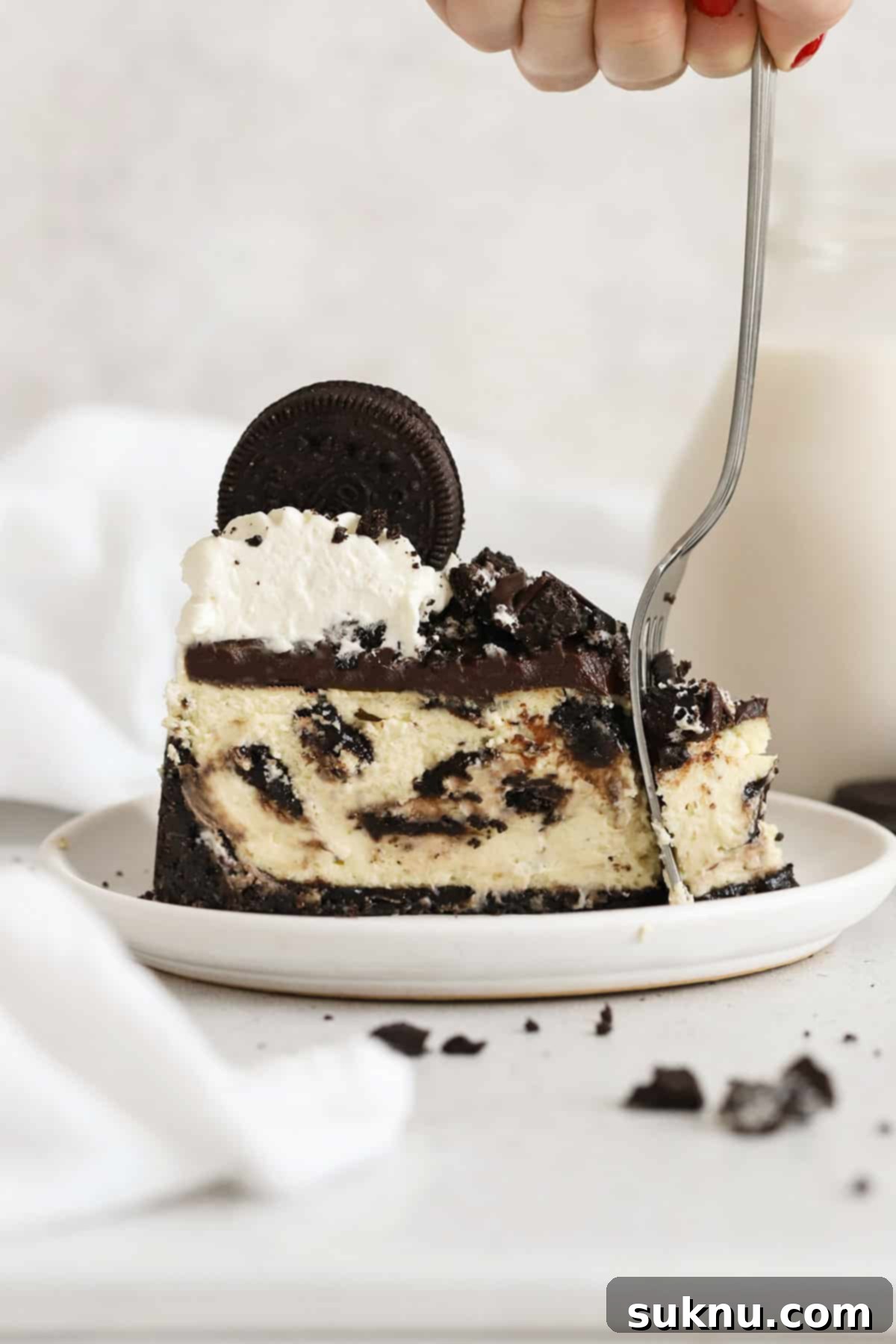
Indulge in the Ultimate Gluten-Free Oreo Cheesecake: A Dream Dessert Recipe
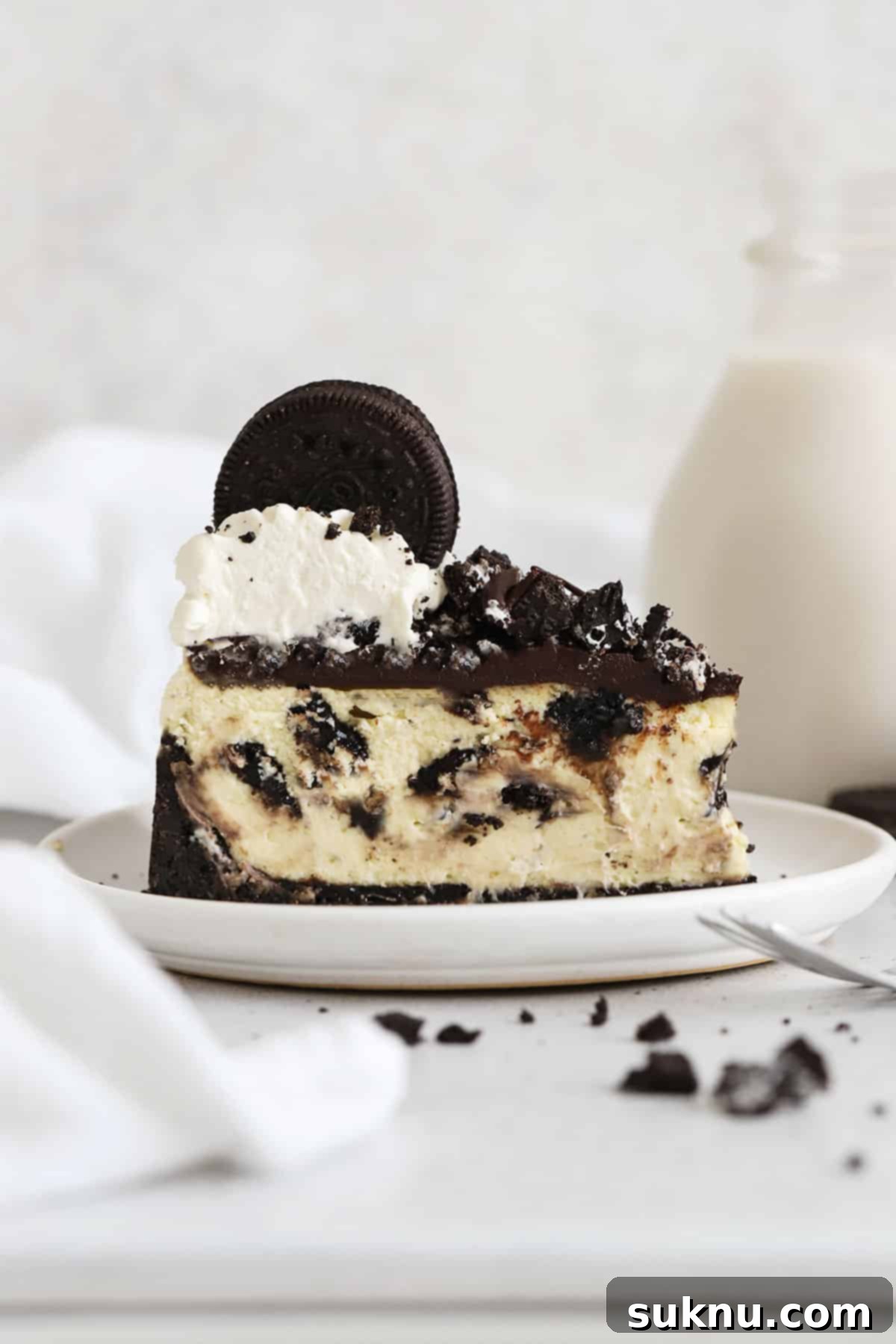
Calling all cookies & cream enthusiasts! Our Gluten-Free Oreo Cheesecake recipe is truly a dream come true, meticulously crafted to deliver an explosion of authentic Oreo cookie flavor in every single layer. From the rich, crumbly crust to the velvety filling, and the decadent toppings, this cheesecake is a show-stopping dessert that proves gluten-free baking can be utterly luxurious.
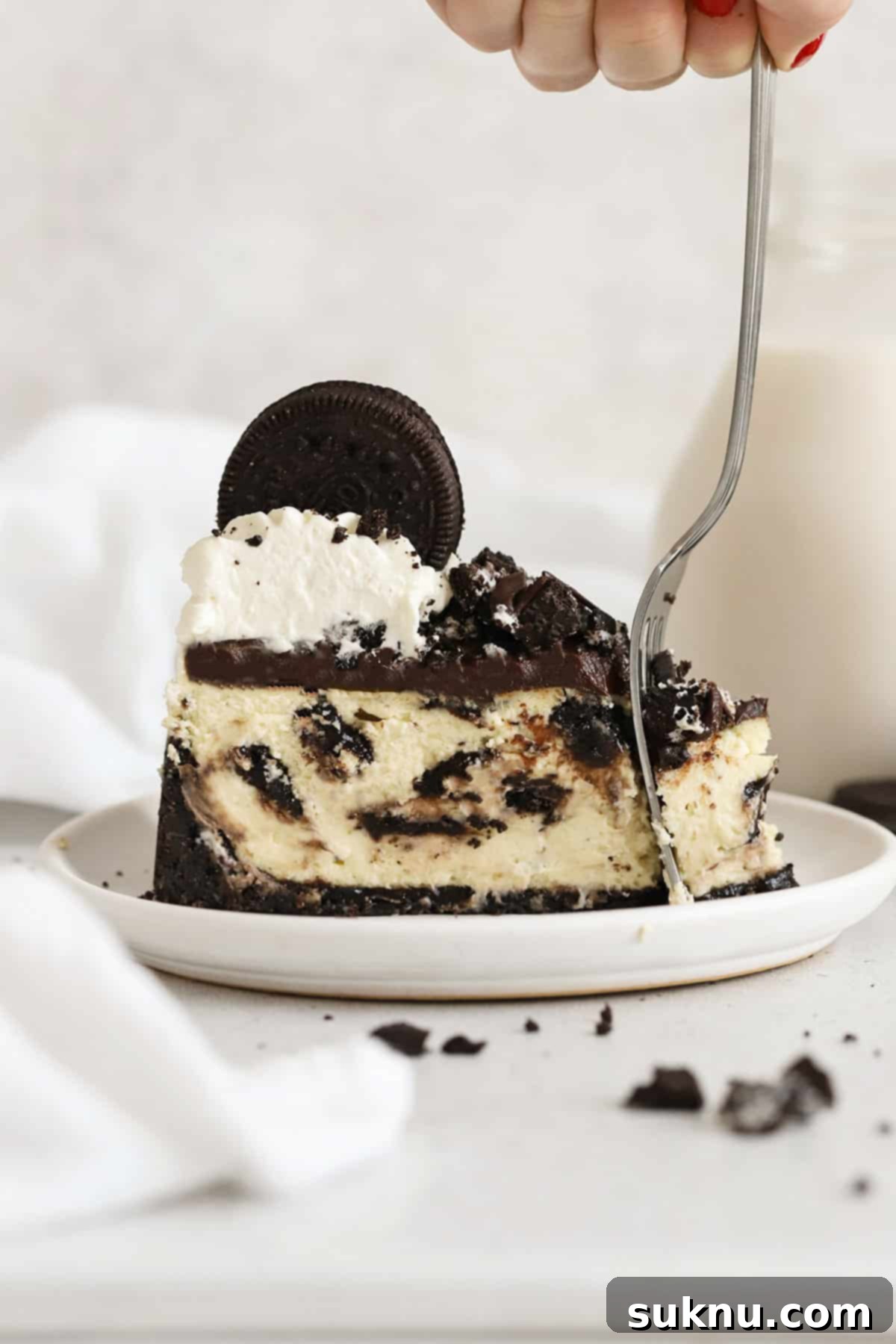
At Sweets & Thank You, recipe development is a labor of love—a perfect blend of puzzle-solving, scientific precision, artistic expression, and a meditative focus. We pour our hearts into creating recipes that not only meet dietary needs but also exceed flavor expectations. And when it comes to this Gluten-Free Oreo Cheesecake, we can confidently say we’ve perfected it!
Just like our beloved Gluten-Free Pumpkin Cheesecake and Gluten-Free Strawberry Cheesecake, this gluten-free Oreo cheesecake recipe offers a delightful interplay of textures and tastes. Imagine a perfectly crispy crust, a lusciously smooth filling infused with chunks of cookies, and irresistibly satisfying toppings.
It’s the ultimate chocolate-vanilla dessert, guaranteed to be the star of any gathering—be it a birthday, holiday celebration, or simply a weekend treat. While crafting a cheesecake requires a little forward planning due to chilling times, the assembly process itself is surprisingly straightforward. The ingredients are simple, yet combine to create something truly extraordinary. Let’s dive into the essential components that make this gluten-free Oreo cheesecake so exceptional.
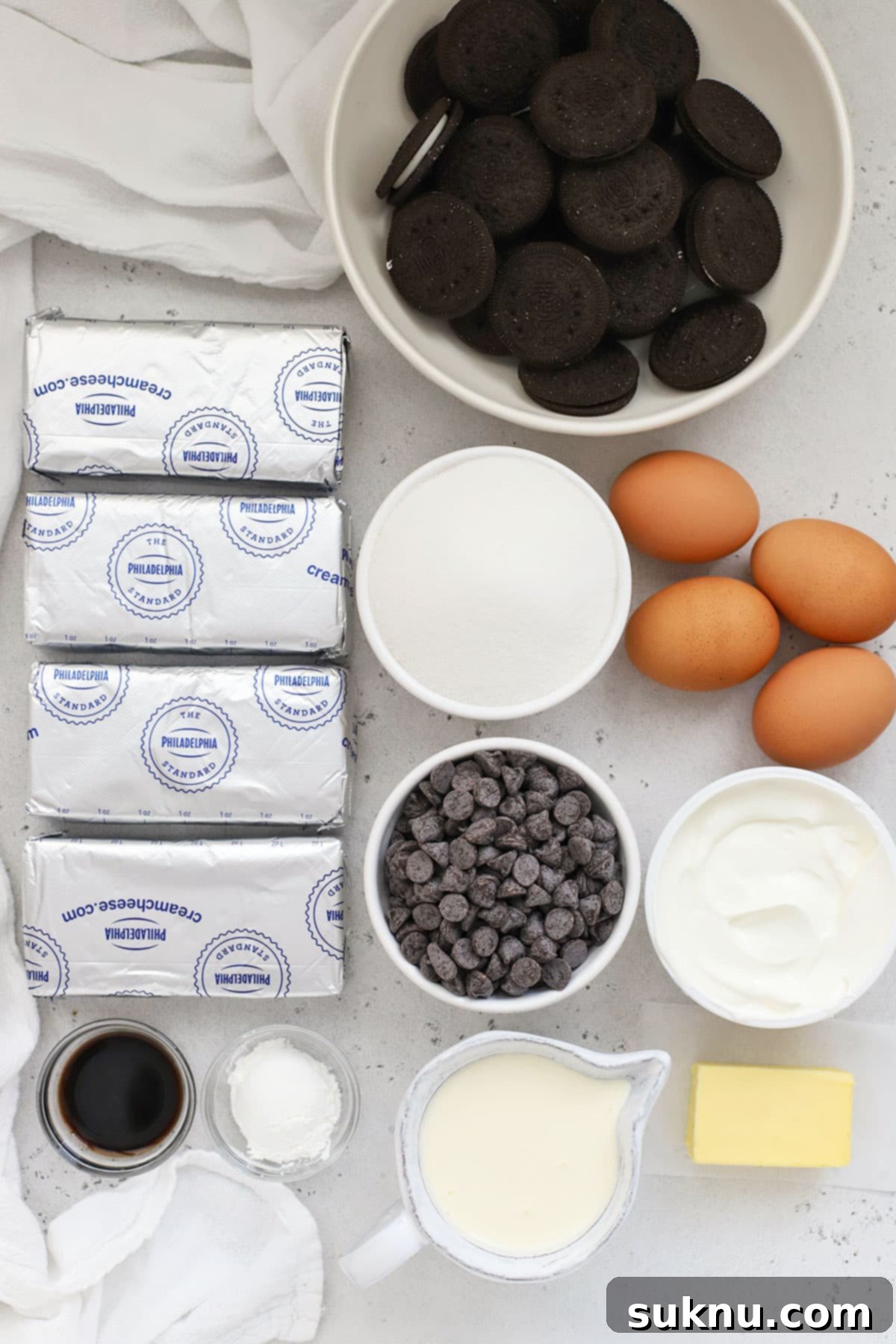
Essential Ingredients for Your Perfect Gluten-Free Oreo Cheesecake
Creating an extraordinary gluten-free Oreo cheesecake starts with a careful selection of high-quality ingredients. Each component plays a vital role in achieving that perfect balance of flavor and texture. Here’s what you’ll need to assemble this magnificent dessert:
- Gluten-Free Oreos: The heart of this cookies & cream dessert! You’ll need gluten-free Oreo cookies for both the rich crust and to be folded into the creamy filling. We recommend having at least two full packages on hand to ensure you have enough for the base, the decadent filling, and for the final decorative flourish. If you can’t find the official Gluten-Free Oreos (in the white package), explore our guide on 8 fantastic brands of gluten-free Oreo-type cookies that work beautifully in this recipe.
- Butter: A touch of melted butter is essential for binding the crushed Oreo crumbs together, forming a sturdy and flavorful crust. Both unsalted and salted butter will work, but if using salted, you might slightly reduce any added salt in the recipe (though typically not needed for cheesecake).
- Full-Fat Cream Cheese: For that signature creamy, tangy cheesecake texture, you’ll need four 8-ounce blocks of full-fat cream cheese. The most crucial tip here is to ensure it’s softened to room temperature. Cold cream cheese will result in a lumpy batter and an inferior texture, no matter how long you mix it. Plan ahead and take it out of the fridge a few hours before baking.
- Sour Cream: Full-fat sour cream is a secret weapon in many great cheesecake recipes. It adds a delightful tanginess and a wonderfully smooth, rich consistency to the filling. Like the cream cheese, bring it to room temperature for optimal blending.
- Granulated Sugar: This sweetens the cheesecake filling without affecting its pristine color. It balances the tanginess of the cream cheese and sour cream, creating a perfectly sweet treat.
- Eggs: Room temperature eggs are paramount for a smooth, uniform cheesecake filling. They incorporate more easily into the batter, preventing overmixing which can introduce too much air and lead to cracks during baking. For tips on achieving the perfect consistency, refer to our guide on getting eggs to room temperature quickly.
- Vanilla Extract: A hint of pure vanilla extract enhances the overall sweetness and provides a warm, inviting aroma that complements the chocolate and cream flavors.
- Quick Chocolate Ganache: To elevate this cheesecake to a show-stopping masterpiece, we top it with a luscious layer of chocolate ganache. This simple yet elegant topping requires only two ingredients: heavy whipping cream and your favorite chocolate (either finely chopped chocolate or good quality chocolate chips).
- Whipped Cream & Oreos, For Topping: The final flourish! We pipe beautiful swirls of homemade whipped cream around the border and generously garnish with more crumbled gluten-free Oreos, making each slice a visual and culinary delight.
Important Ingredient Check: Always Keep It Gluten-Free!
When preparing this delicious dessert for individuals with Celiac disease or gluten intolerance, it is absolutely imperative to use certified gluten-free Oreo cookies. Standard Oreos contain wheat and are NOT gluten-free. Fortunately, many excellent options are available, including Oreo’s own gluten-free version (distinguished by its white packaging). You can also explore our comprehensive list of 7 other fantastic brands of gluten-free chocolate sandwich cookies, all of which will work perfectly for this recipe, ensuring a safe and delectable treat for everyone.
WE ♥
How to Craft Your Gluten-Free Oreo Cheesecake: A Step-by-Step Guide
For precise ingredient measurements, comprehensive instructions, and helpful troubleshooting tips, please refer to the full recipe card located at the bottom of this article.
Baking a magnificent cheesecake might seem daunting, but by following these detailed steps, you’ll achieve a stunning and delicious result. We’ll guide you through each stage, from preparing the crunchy crust to achieving a perfectly baked, creamy filling, and finally, decorating your masterpiece.
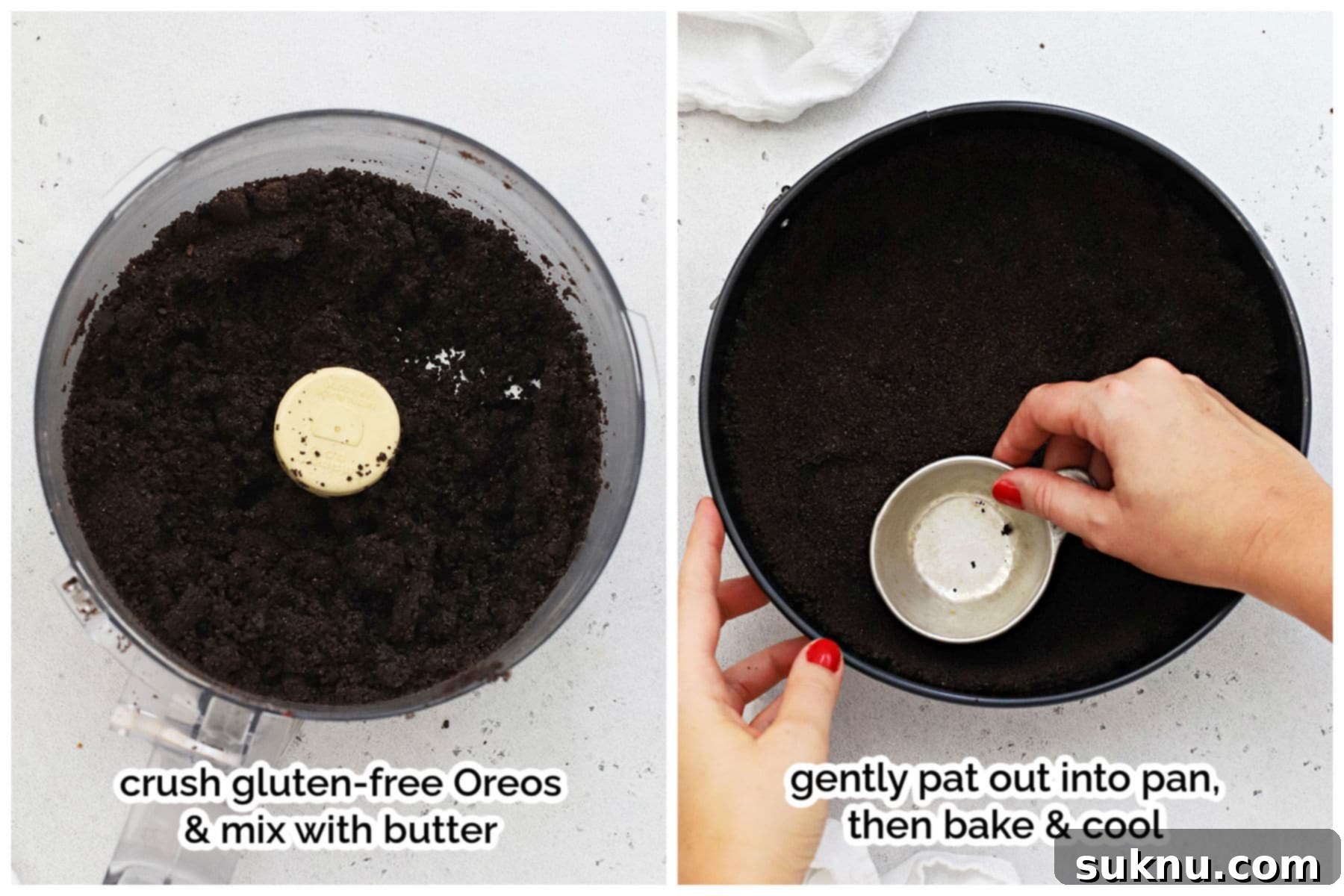
Part 1: Crafting the Perfect Gluten-Free Oreo Crust
The foundation of any great cheesecake is a flavorful and sturdy crust. Our gluten-free Oreo crust is incredibly simple to make and adds an irresistible crunch to every bite.
- Preheat & Prepare Your Pan: Begin by preheating your oven to 325°F (160°C). For easy release and cleanup, line a 9-inch springform pan with parchment paper. Using pre-cut parchment rounds can save you time and ensure a neat fit.
- Crush Your Oreos to Perfection: Place your gluten-free Oreo cookies into a food processor. Pulse them until they form fine, even crumbs, ensuring there are no large lumps remaining. If you don’t have a food processor, a large zip-top bag and a rolling pin work just as well—simply place the cookies in the bag, seal it, and crush them until finely ground.
- Incorporate the Butter: Drizzle the melted butter over the crushed cookie crumbs. Pulse or stir the mixture until all the crumbs are thoroughly coated with butter. This is crucial for creating a crust that holds together beautifully.
- Form the Crust Base and Sides: Carefully pour the butter-infused crumb mixture into your prepared springform pan. Use your fingers or the flat bottom of a measuring cup or drinking glass to firmly press the crumbs into an even layer along the bottom of the pan. Extend the crust about 1 inch up the sides of the pan. Don’t worry if it doesn’t reach the very top; this slight rise is all you need for structural integrity and a delightful crunch.
- Bake & Cool for Optimal Flavor: Place the formed crust in the preheated oven and bake for 10-12 minutes, or until it becomes fragrant and slightly set. Once baked, remove it from the oven and set it aside to cool completely while you prepare the cheesecake filling.
- Prepare for a Hot Water Bath (Highly Recommended!): To prevent cracks and ensure an incredibly creamy texture, a hot water bath is highly recommended. To prepare your pan, wrap the bottom and sides of the springform pan tightly with several layers of heavy-duty aluminum foil. For ultimate waterproofing (which we absolutely recommend!), place the foil-wrapped springform pan into a slow cooker liner bag or an oven/turkey bag. Pull the bag up the sides of the pan, then gather any excess material to one side and knot it tightly to secure the bag. Simultaneously, begin bringing a small pot of water to a boil. Set out a large roasting pan (for a traditional water bath) or a 9×13-inch pan (for a modified hot water bath, see detailed notes in the recipe card) where your cheesecake will bake.
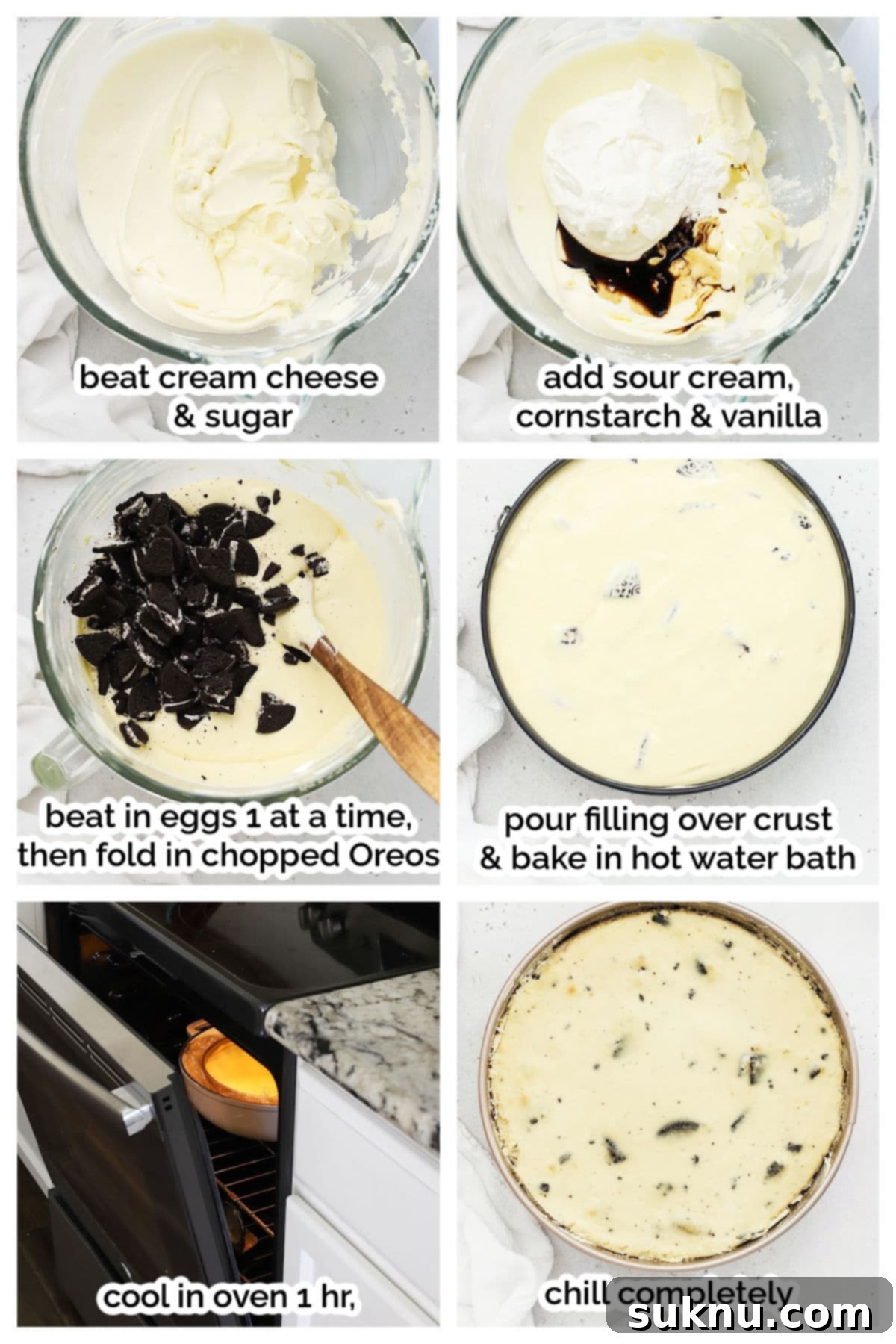
Part 2: Preparing the Velvety Filling & Assembling Your Cheesecake
The heart of our gluten-free Oreo cheesecake lies in its incredibly smooth and flavorful filling. Follow these steps carefully to achieve a consistently creamy texture infused with delightful Oreo chunks.
- CRITICAL FIRST STEP: Room Temperature Ingredients: Before you begin mixing, ensure that your cream cheese, sour cream, and eggs have all reached room temperature. This is a non-negotiable step for a perfectly smooth cheesecake filling! Cold ingredients will not emulsify properly, leading to a lumpy texture and potential cracks during baking. Plan ahead and take them out of the refrigerator at least 1-2 hours in advance.
- Cream Cheese & Sugar Combination: In the bowl of a stand mixer fitted with a paddle attachment, or a large mixing bowl using a handheld electric mixer, combine the softened cream cheese and granulated sugar. Beat on medium-low speed for 2-3 minutes, until the mixture is completely smooth, light, and well blended, with no visible sugar granules. Scrape down the sides of the bowl as needed.
- Integrate Sour Cream, Cornstarch & Vanilla: Add the room temperature sour cream, cornstarch (which acts as a stabilizer), and vanilla extract to the cream cheese mixture. Mix on LOW speed just until they are barely combined. It’s important to mix gently and at a low speed to avoid incorporating excessive air into the batter. Too much air can cause the cheesecake to puff up and then crack as it cools.
- Incorporate Eggs One at a Time: With the mixer still on LOW speed, add the room temperature eggs one at a time. Mix each egg just until it is incorporated into the batter, then stop. Overmixing at this stage can also introduce too much air, which we want to avoid for a smooth, crack-free surface.
- Fold in Chopped Oreos: Gently fold in the 15 chopped gluten-free Oreo cookies. Make sure to add only the larger, more defined pieces, reserving any fine crumbs for decoration at the very end. Adding fine crumbs into the batter can make your beautiful cheesecake filling appear muddy. Stir gently to ensure the cookie pieces are evenly distributed throughout the batter. After mixing, gently tap the bowl against the counter a few times to release any trapped air bubbles.
- Pour Filling Over the Crust: Carefully pour the creamy cheesecake filling over the cooled, pre-baked Oreo crust in the springform pan. Use a spatula to gently smooth out the surface of the filling, ensuring an even layer.
Part 3: Baking & Cooling for Cheesecake Perfection
The baking and cooling process is crucial for achieving the perfect cheesecake texture and preventing cracks. Patience is key here!
- Set Up the Hot Water Bath: If using a traditional water bath, carefully pour 3/4 to 1 inch of boiling water into the bottom of the large roasting pan. Gently lower your prepared and waterproof-wrapped springform pan into the roasting pan. Ensure the water level comes about 1 inch up the sides of the springform pan, but not so high that it could overflow or leak into the cheesecake. (Refer to the notes in the recipe card for modified hot water bath instructions if you don’t have a large roasting pan.)
- Bake to a Gentle Wobble: Carefully transfer the roasting pan (with the cheesecake inside) to the preheated oven. Bake the cheesecake for 60-70 minutes. The cheesecake is ready when the edges are just set, and the center still has a gentle wobble, similar to Jell-o or gelatin. If the center appears too liquid or “sloshy,” bake for an additional 3-5 minutes and check again. Remember, it’s always better to slightly under-bake a cheesecake than to over-bake it, as over-baking can lead to a dry texture and cracking.
- Gradual Oven Cooling: Once the cheesecake is baked, turn OFF the oven heat. Prop the oven door open 2-3 inches and allow the cheesecake to cool slowly inside the oven for 1 full hour. This gradual cooling process is critical for preventing drastic temperature changes that can cause the cheesecake to crack. As an extra preventative measure, you can run a thin knife around the edges of the springform pan before cooling to help release the cheesecake from the sides. After the hour, carefully remove the springform pan from the hot water bath (and its protective bag).
- Essential Refrigeration Chill: Transfer the cheesecake, uncovered, to the refrigerator. Chill it for at least 4-6 hours, or ideally, overnight. This extended chilling time allows the cheesecake to firm up completely and develop its full flavor and rich texture. Resist the urge to decorate before it’s thoroughly chilled!
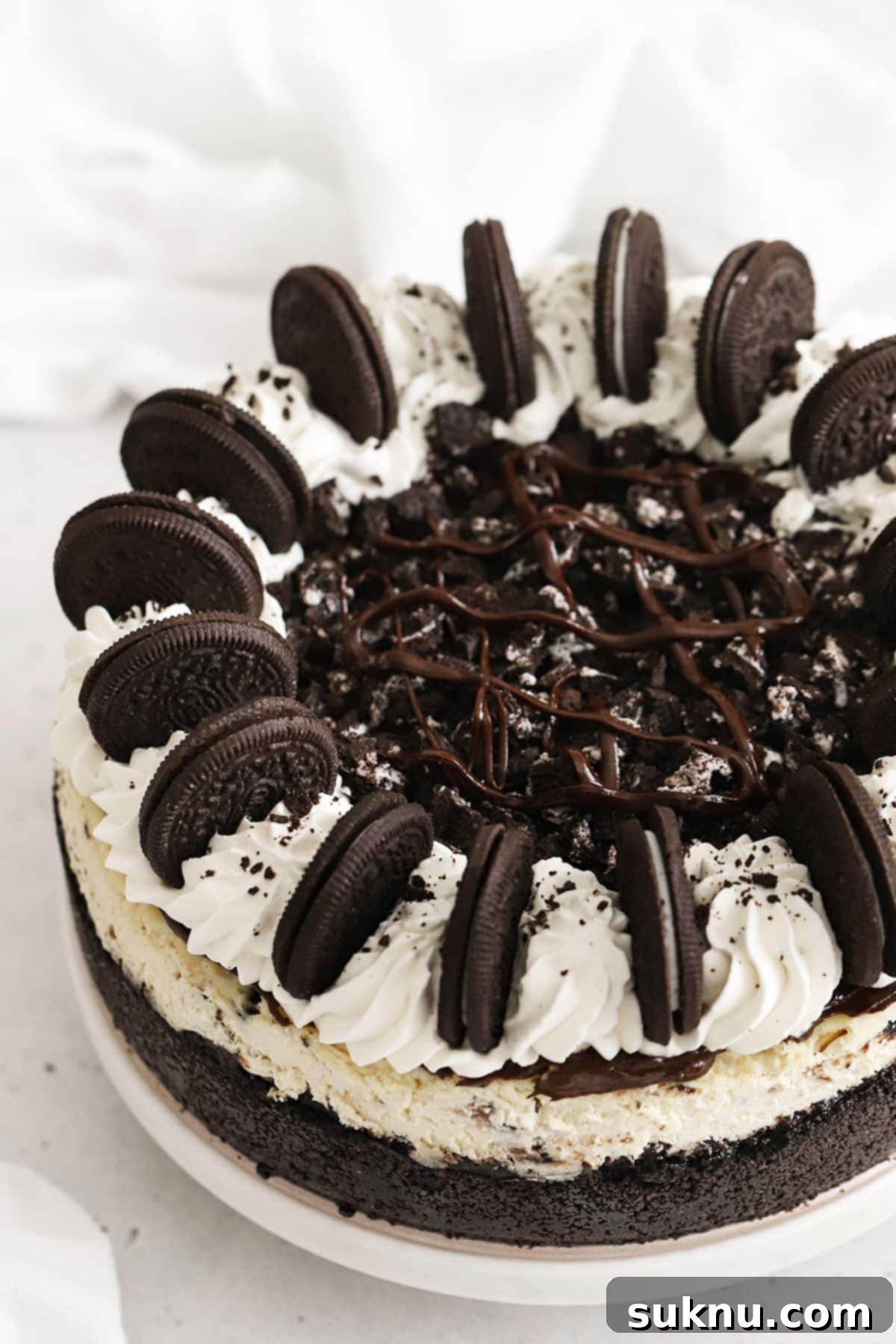
Part 4: Decorating Your Stunning Oreo Cheesecake
Once your gluten-free Oreo cheesecake is perfectly chilled, it’s time for the fun part: decorating! These toppings transform a simple cheesecake into an elegant and irresistible dessert.
- Prepare the Silky Ganache: Place your chopped chocolate or chocolate chips into a heat-proof bowl. In a small saucepan or a microwave-safe bowl, heat the heavy cream until it’s steaming and just barely simmering, but not boiling rapidly. Pour the hot cream over the chocolate. Use a spatula to gently tuck the chocolate under the hot cream, ensuring all chocolate is submerged. Let the mixture sit undisturbed for 4-5 minutes, allowing the residual heat from the cream to melt the chocolate. Then, whisk until the chocolate is fully melted and the ganache is smooth, glossy, and uniform. For an extra-glossy finish and a softer ganache that cuts more easily, you can stir in a teaspoon of corn syrup at this stage.
- Apply Ganache & Add Chopped Oreos: Carefully spread the prepared chocolate ganache over the top of the chilled cheesecake, creating an even layer. If you’d like a decorative drizzle at the end, set aside 1-2 tablespoons of ganache. While the ganache is still wet, sprinkle a circle of chopped gluten-free Oreos in the center of the cheesecake, leaving about a 1-inch border around the edge. If you reserved some ganache, you can drizzle it decoratively over the chopped Oreos.
- Whip Up Stabilized Whipped Cream: For piped decorations that hold their shape beautifully, we’ll make stabilized whipped cream. In a clean glass or metal bowl (preferably chilled) or the bowl of a stand mixer, beat cold heavy cream on medium speed until it starts to thicken and become fluffy. Gradually add the powdered sugar and vanilla extract. Increase the speed to high and continue whipping until stiff peaks form. This means the whipped cream should hold its shape firmly on your whisk or spatula, even when inverted. The powdered sugar helps to stabilize the cream, preventing it from weeping or deflating over time.
- Pipe Elegant Whipped Cream Swirls: Transfer the stabilized whipped cream to a piping bag fitted with your desired piping tip (an Ateco 849 closed star tip was used here for beautiful definition). Pipe small, even swirls of whipped cream around the entire border of the cheesecake, creating a decorative frame.
- Final Oreo Garnish: For a truly stunning presentation, tuck whole gluten-free Oreo cookies upright in between the piped whipped cream swirls. If you have any leftover fine Oreo crumbs from earlier steps, sprinkle them lightly over the whipped cream for an extra touch of cookie flavor and visual appeal.
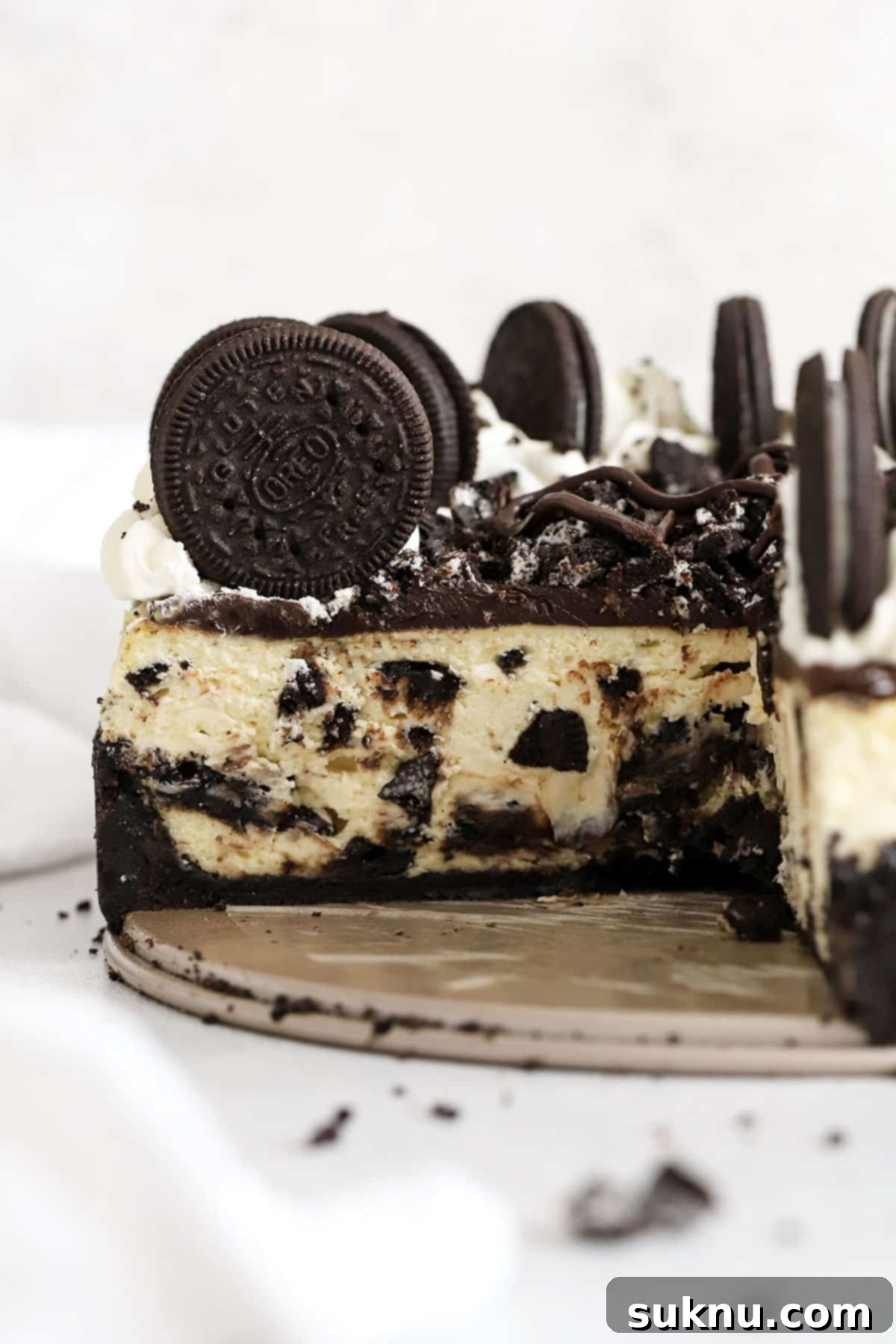
Mastering Your Bake: 3 Essential Tricks for the Best Gluten-Free Oreo Cheesecake
Achieving a truly outstanding gluten-free Oreo cheesecake involves more than just following steps; it’s about understanding a few key principles that guarantee success. These three tricks are the cornerstone of a perfectly creamy, crack-free, and delightful cheesecake experience.
1. Strategic Planning is Your Best Friend
While our gluten-free Oreo cheesecake recipe isn’t overly complicated, it does demand a significant amount of time, primarily for chilling. Think of cheesecake baking as a marathon, not a sprint. To have your cheesecake ready and fully set, you’ll need to allocate a generous 8-10+ hours from start to finish. This includes the time required for your ingredients to reach room temperature (crucial!), approximately an hour of baking time, an hour of gradual cooling in the oven, and a minimum of 4-6 hours (ideally overnight) for chilling in the refrigerator before it’s ready for decoration. We highly recommend baking and cooling your cheesecake the day before you plan to serve it. This allows ample time for it to chill thoroughly, develop its rich flavor, and ensures you can decorate it without feeling rushed, leading to a much more enjoyable and stress-free baking experience.
2. The Magic of Room Temperature Ingredients for the Filling
This is perhaps the most critical step for any cheesecake, and it’s particularly vital for our gluten-free Oreo cheesecake. Ensuring that your cream cheese, sour cream, and eggs are at true room temperature before mixing them for the filling is paramount. This allows all the ingredients to blend together seamlessly and smoothly, creating a homogeneous batter without lumps. More importantly, it helps prevent over-mixing, which is a common culprit for incorporating too much air into the batter. Excessive air bubbles in the filling can expand during baking and then collapse during cooling, resulting in unsightly cracks on the cheesecake’s surface. Setting these ingredients out in advance (at least 1-2 hours) is a small investment that yields significant dividends in terms of texture and appearance.
A word of caution: Never attempt to speed up the softening process by microwaving cream cheese or sour cream. This can alter their delicate structure, making them greasy or watery, and will inevitably compromise the integrity and creamy texture of your finished cheesecake. Instead, for quick softening, try one of our proven tricks for softening cream cheese quickly, such as placing sealed packages in a bowl of warm water.
3. Embrace Stabilized Whipped Cream for Lasting Beauty
For those gorgeous, picture-perfect whipped cream swirls that adorn the top of your cheesecake, employing stabilized whipped cream is a game-changer. Stabilized whipped cream contains an additive that helps it maintain its shape, prevents melting, and stops it from “weeping” (releasing liquid) over time. This makes it much more resilient and ensures your decorations look pristine for longer. In this specific recipe, we achieve stabilization simply by adding a small amount of powdered sugar. The finely ground sugar not only sweetens but also absorbs excess moisture, contributing to the cream’s structure. It works like a charm, ensuring your piping stays sharp and beautiful! While store-bought whipped cream alternatives like Cool Whip can be used in a pinch, nothing quite compares to the fresh, rich taste and superior texture of homemade stabilized whipped cream.
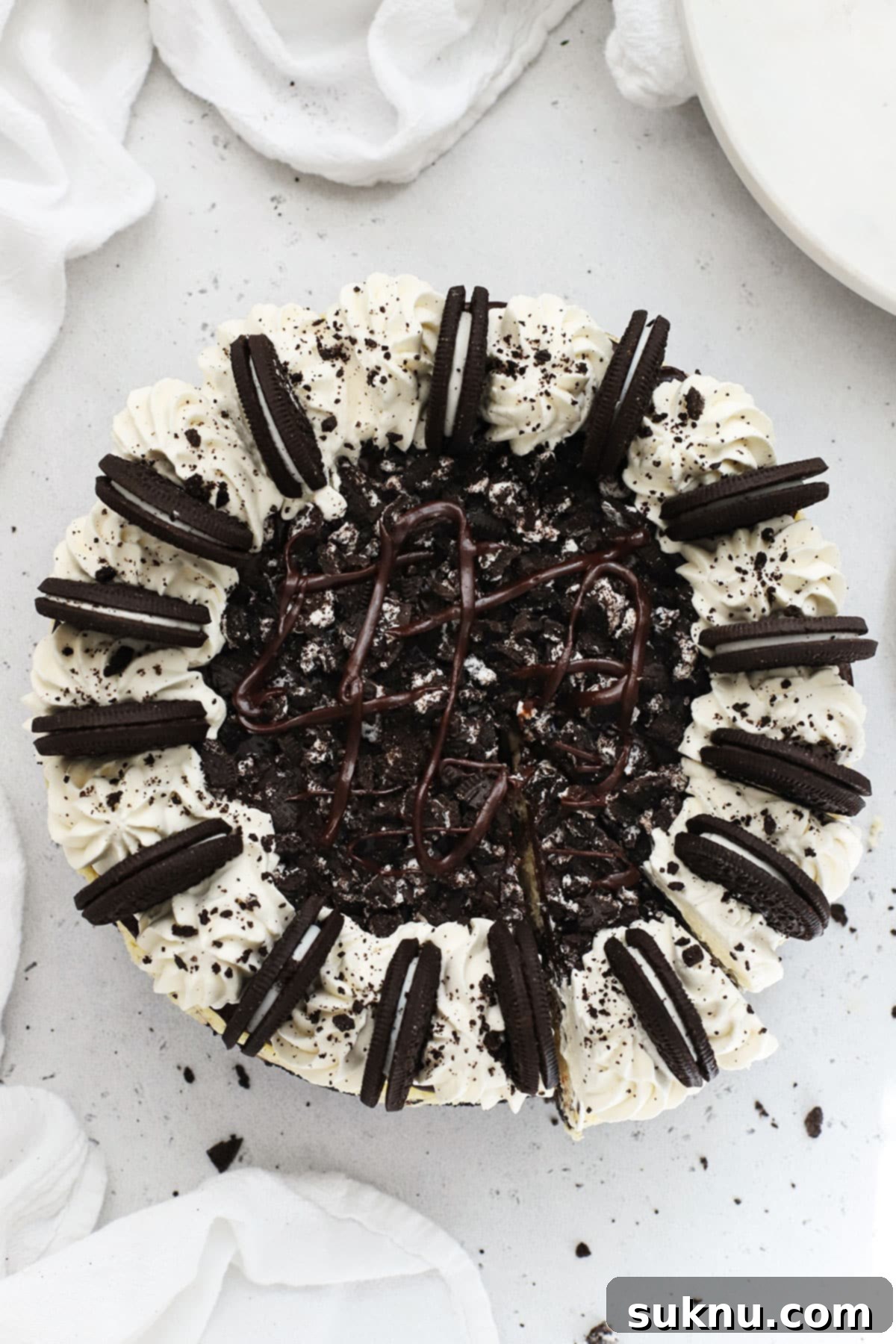
Do I Really Need a Water Bath for Gluten-Free Oreo Cheesecake?
The concept of a hot water bath (bain-marie) often raises questions for home bakers, especially with cheesecake. For most classic cheesecake recipes, a water bath is a time-honored technique used to create a moist, crack-free, and evenly baked dessert. It works by creating a humid, gentle cooking environment that helps the cheesecake bake slowly and uniformly.
For this particular Gluten-Free Oreo Cheesecake, using a hot water bath is not strictly essential, primarily because the delicious chocolate ganache and generous whipped cream toppings will beautifully conceal any minor cracks or surface imperfections. The toppings are designed to be a show-stopper on their own, making cosmetic flaws easily forgivable!
However, we wholeheartedly recommend using a hot water bath for your Oreo cheesecake if you’re aiming for the absolute best possible texture. A water bath contributes significantly to a truly tender, ultra-creamy, and smooth cheesecake. It helps prevent the top from browning excessively and ensures a perfectly even, delicate surface that serves as an impeccable canvas for your toppings. If you’re striving for cheesecake perfection, it’s a step worth taking.
We provide clear instructions for two methods: a traditional hot water bath and a modified version. Choose the one that best suits your equipment and comfort level:
Traditional Water Bath Method: For the Creamiest Texture
This method involves submerging your springform pan directly into a larger pan filled with hot water, ensuring the cheesecake bakes in a consistently moist environment.
- Boil Water: Begin by bringing a small pot of water to a boil on your stovetop while you are preparing your cheesecake batter.
- Wrap Your Pan: Securely wrap the bottom and sides of your 9-inch springform pan with several layers of heavy-duty aluminum foil. This helps to create a barrier against water.
- Waterproof (Highly Recommended): For complete peace of mind and to ensure absolutely no water seeps into your cheesecake, place the foil-wrapped springform pan into either a slow cooker liner bag or a specialized oven bag (sometimes called a turkey bag). Pull the bag up the sides of the springform pan, then gather any excess material to one side and knot it tightly. This creates a waterproof seal around your cheesecake.
- Assemble & Bake: Carefully place your prepared and bagged springform pan into a larger roasting pan. Then, gently pour 3/4 to 1 inch of the boiling water into the bottom of the roasting pan, ensuring the water level comes about 1 inch up the sides of the springform pan. Bake your cheesecake as directed in the recipe card, enjoying the peace of mind that comes with a perfectly moist baking environment.
Modified Hot Water Bath Method: An Easier Alternative
If you don’t have a roasting pan large enough for a traditional water bath, this modified method still leverages the benefits of steam without direct submersion.
- Boil Water: As with the traditional method, bring a small pot of water to a boil while you are preparing the cheesecake.
- Pan Setup: If your oven setup doesn’t accommodate a large roasting pan for a 9-inch springform pan, you can use a 9×13-inch pan. Place this pan on a rack *below* the center rack in your oven.
- Create Steam & Bake: Fill the 9×13-inch pan with boiling water. Then, place your springform pan (which should still be wrapped with foil and ideally in a liner bag for safety, even if not fully submerged) on a regular baking sheet on the center rack directly *above* the 9×13-inch pan. The steam rising from the boiling water below will create a humid environment, helping to prevent cracks and control browning, resulting in a beautifully baked cheesecake. For a visual guide, you can refer to our Pumpkin Cheesecake post where this method is illustrated.
PRO TIP: To achieve a completely waterproof seal around your springform pan, wrapping it in a slow cooker liner bagor oven bag is the absolute best and most foolproof method. This ensures no water infiltrates your crust or filling, guaranteeing a perfect bake.
FAQ: Frequently Asked Questions About Gluten-Free Oreo Cheesecake
Here are some common questions and helpful answers to ensure your gluten-free Oreo cheesecake baking experience is a complete success!
Can I Use Another Size Pan for This Recipe?
Using a smaller pan than the recommended 9-inch springform will likely cause your cheesecake to overflow during baking. If you have a 10-inch pan, you can attempt to use it, but be aware that a thinner cheesecake will cook faster. You will need to adjust the baking time accordingly; start checking for doneness earlier than specified. For detailed guidance on converting recipes for different pan sizes, we highly recommend consulting this helpful post on cake pan sizes.
How Many Packages of Gluten-Free Oreos Will I Need?
To ensure you have an abundance of Oreo goodness for every component—the crunchy crust, the cookie-studded filling, and all the delightful decorations—we strongly recommend purchasing two full packages of gluten-free Oreos. Most gluten-free Oreo-style cookies typically come in packs of around 30 cookies. This quantity will give you plenty for all layers, guaranteeing a truly indulgent gluten-free Oreo cheesecake experience. If you’re using another brand of gluten-free chocolate sandwich cookies, consider their package size.
Do I Need To Remove the Cream Filling from the Oreos for the Crust?
Absolutely not! There’s no need to separate the cream filling from the Oreo cookies when making the crust. The filling will melt and blend seamlessly with the crushed cookie wafers and melted butter, contributing to the rich flavor and helping the crust stick together beautifully. It’s a convenient step that also adds an extra layer of deliciousness.
How Long Does Oreo Cheesecake Stay Fresh?
Your freshly baked gluten-free Oreo cheesecake will be at its absolute best, with optimal flavor and texture, within the first 2-3 days after baking. When stored properly, covered in the refrigerator, it will generally last for 3-5 days. Ensure it’s tightly covered to prevent it from absorbing any refrigerator odors.
Can I Freeze This Cheesecake for Later?
Yes, gluten-free Oreo cheesecake freezes remarkably well! For the best results, we recommend freezing it *before* adding the fresh toppings, especially the whipped cream, as whipped cream can lose its texture when frozen and thawed. Follow all baking and cooling instructions, including the crucial 4-6 hour chill time in the refrigerator. Once fully chilled, place the entire cheesecake on a baking sheet and freeze until firm (this prevents sticking). Then, wrap it securely with several layers of plastic wrap, followed by aluminum foil. Tuck the well-wrapped cheesecake into a large freezer bag to protect it from freezer burn. It can be stored in the freezer for up to 2 months. To serve, thaw the cheesecake overnight in the refrigerator, then decorate as desired. You can also freeze individual slices (again, without whipped cream) for convenient single servings.
Why Did My Cheesecake Crack? (Troubleshooting)
Cracks are a common cheesecake woe, but usually purely cosmetic! The main reasons are:
- Over-mixing the batter: Incorporates too much air, causing the cheesecake to puff up and then crack as it cools.
- Over-baking: Dries out the edges before the center is set, leading to cracking.
- Rapid temperature changes: Cooling too quickly (e.g., taking it directly from a hot oven to a cold counter) can cause it to contract and crack.
Using room temperature ingredients, a water bath, and cooling gradually in the oven (as described in our steps) are your best defenses against cracks.
What’s the Best Way to Slice Cheesecake?
For clean, beautiful slices, let your chilled cheesecake sit at room temperature for about 10-15 minutes before cutting to allow the ganache to soften slightly. Use a long, thin, sharp knife. For the neatest cuts, wipe the knife clean with a damp cloth or run it under hot water and dry it between each slice. This prevents crumbs and ganache from sticking to the knife and marring subsequent slices.
Discover More Gluten-Free Cheesecake Recipes to Try!
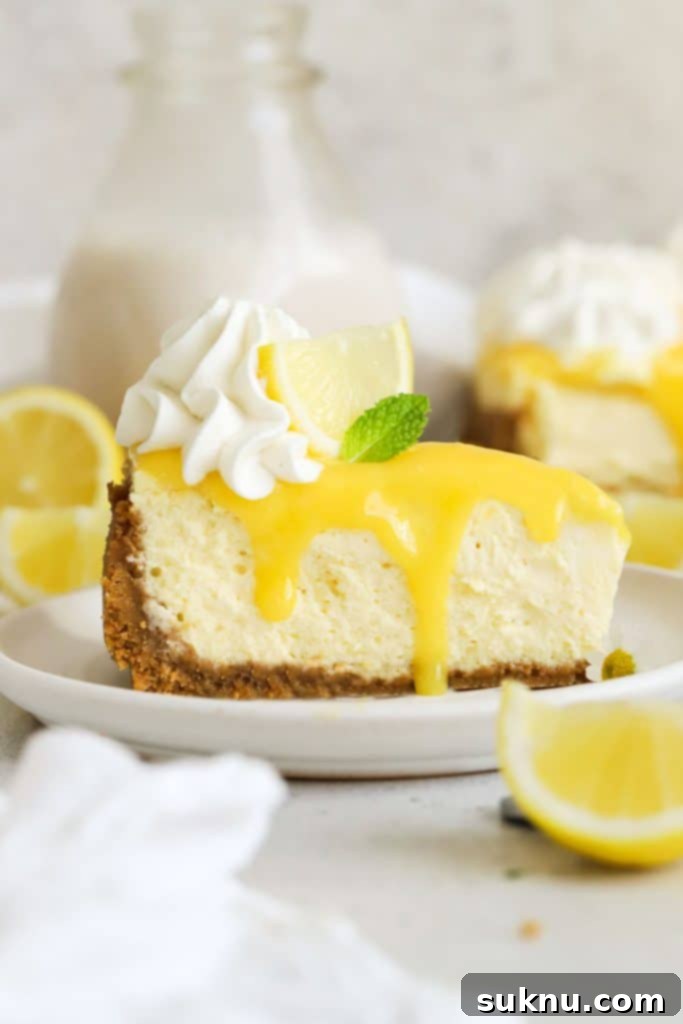
Gluten-Free Lemon Cheesecake
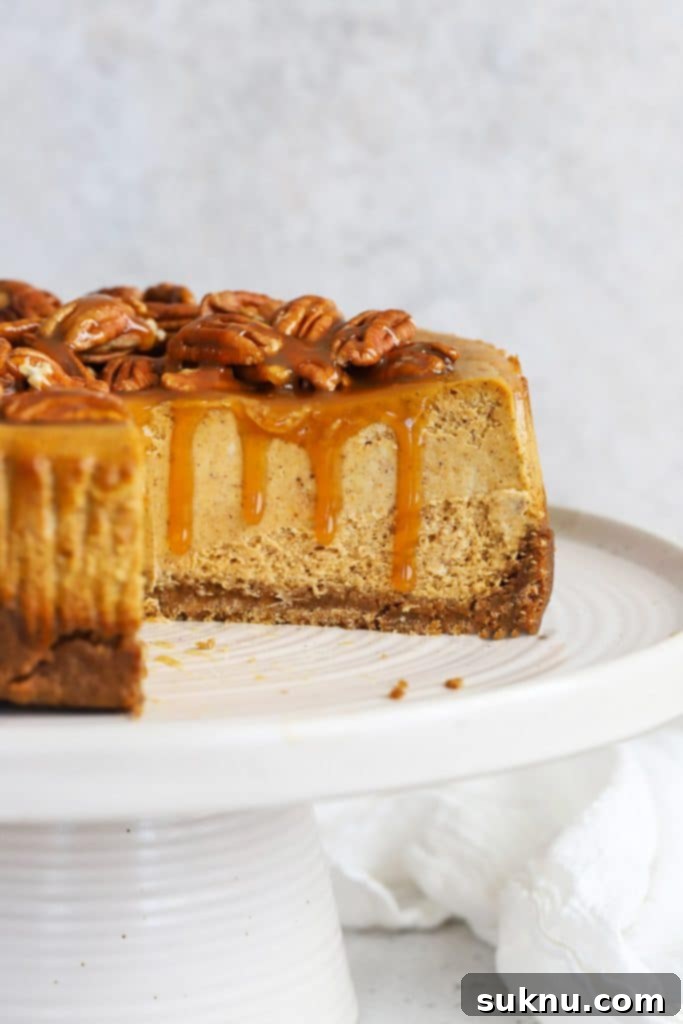
Gluten-Free Pumpkin Cheesecake
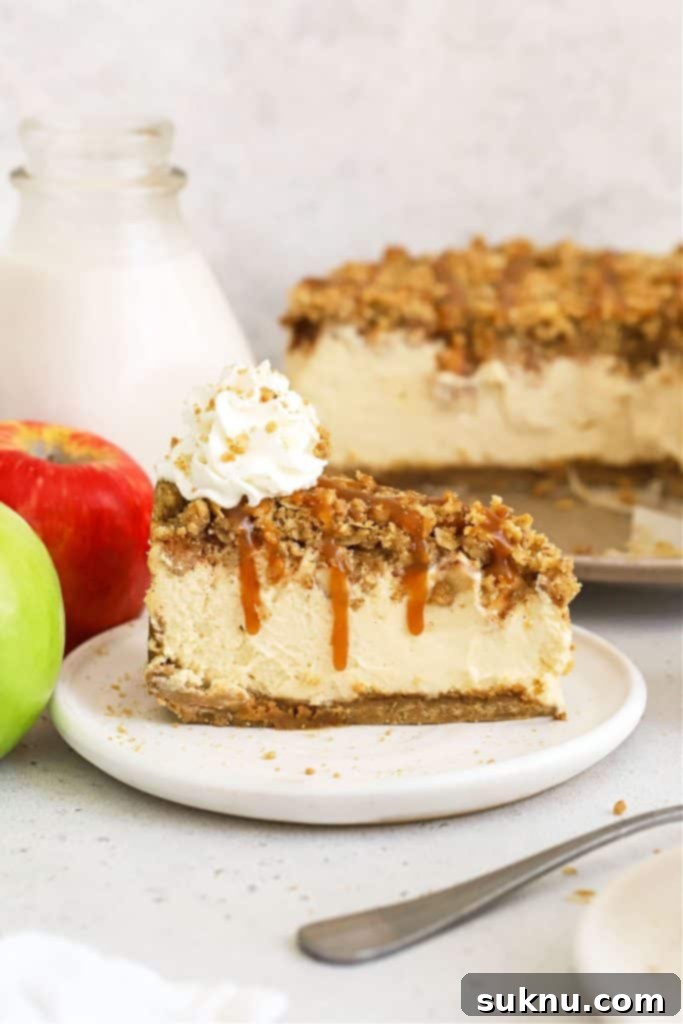
Gluten-Free Caramel Apple Cheesecake
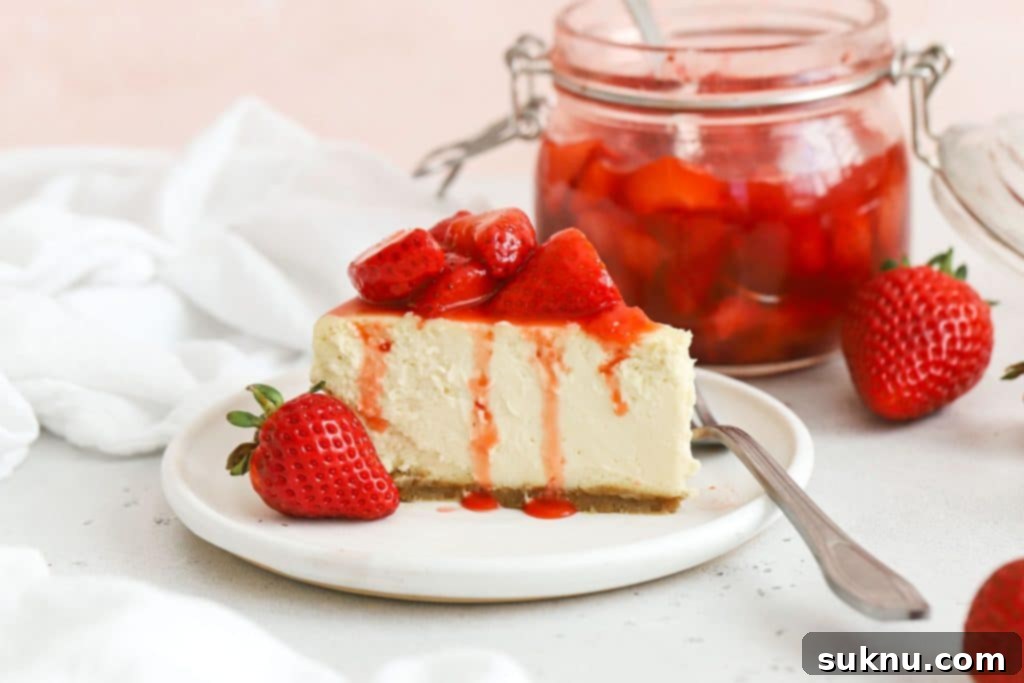
Gluten-Free Strawberry Cheesecake
🌟 Did You Make This Recipe?
We love hearing from our community! Tell us all about your experience by leaving a star rating below when you try our Gluten-Free Oreo Cheesecake recipe. Your feedback helps fellow bakers, and we can’t wait to hear how it goes for you!
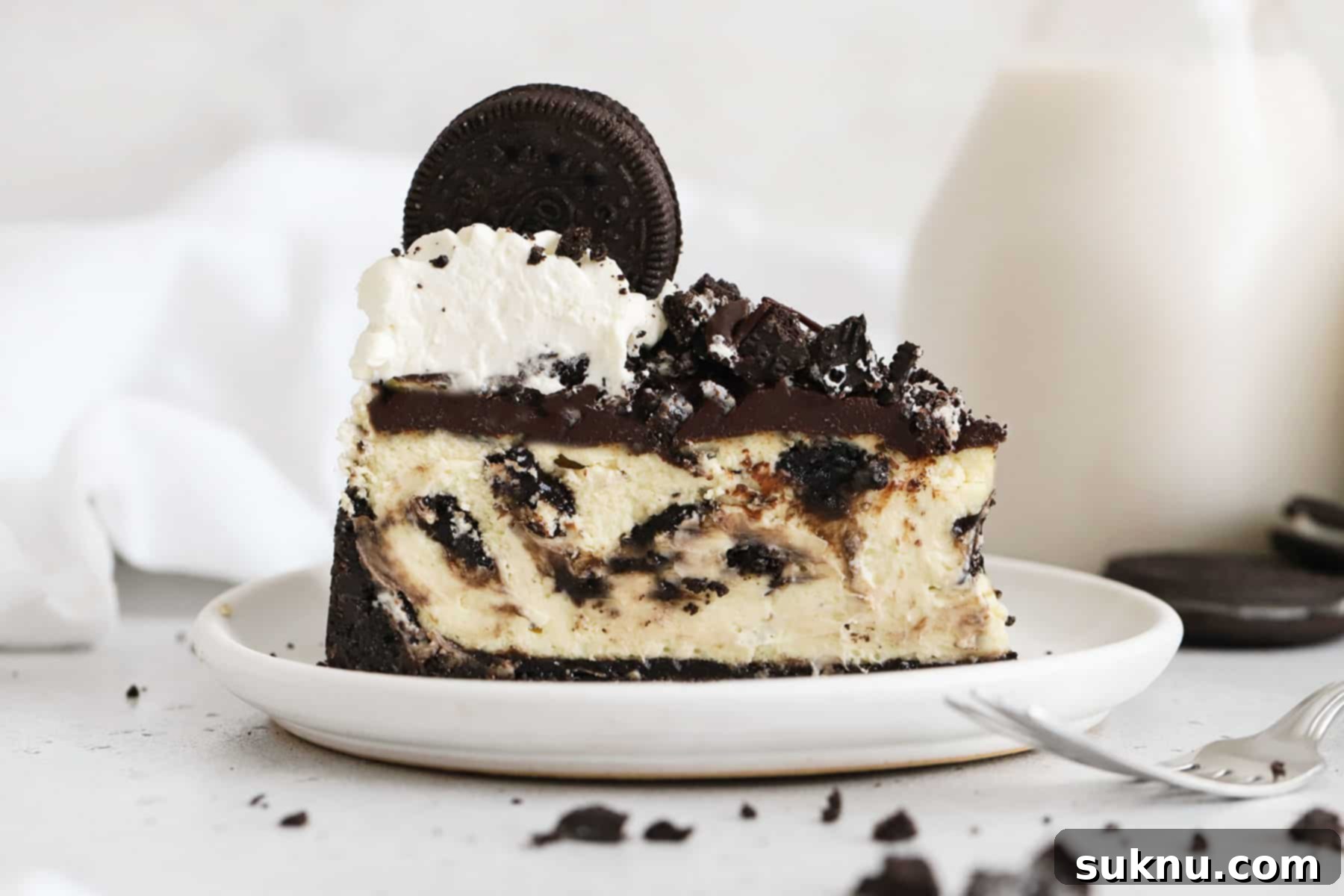
Gluten-Free Oreo Cheesecake
Print
Pin
Rate
Ingredients
Equipment:
- 9-inch Springform Pan
- Foil
- A Slow Cooker Liner Bag or Oven Bag
- Large Pan For Hot Water Bath
- Optional: piping bag + piping tip for whipped cream*
For The Gluten-Free Oreo Crust:
- 24 Gluten-Free Oreo Cookies*
- 4 Tablespoons Butter Melted
For The Oreo Cheesecake Filling:
- 4 8-ounce Blocks Full-Fat Cream Cheese, like Philadelphia (2 pounds total), room temperature*
- 1 cup Granulated Sugar 200 grams
- 8 ounces Sour Cream about 1 cup, room temperature*
- 1 ½ teaspoons Vanilla Extract
- 1 Tablespoon Cornstarch
- 4 Large Eggs room temperature
- 15 Gluten-Free Oreo Cookies cut into quarters (ONLY add larger Oreo pieces to cheesecake. Save any fine crumbs to decorate with at the end.)
For Ganache:
- 6 oz. chopped dark Chocolate or 1 cup semisweet or dark Chocolate Chips
- ½ cup Heavy Cream
Additional Decorations:
- 1 cup Heavy Cream
- 2 Tablespoons Powdered Sugar
- ¼ teaspoon Vanilla Extract
- 6-8 Gluten-Free Oreos chopped
- 12-15 Gluten-Free Oreo cookies whole cookies!
Instructions
For The Gluten-Free Oreo Cheesecake Crust:
- Preheat & Prep. Start by preheating the oven to 325 degrees F. Line a 9-inch springform pan with parchment paper. (I love to use pre-cut parchment rounds)
- Crush Oreos. Add gluten-free Oreo cookies to a food processor. Pulse until you’ve crushed the cookies to fine crumbs with no big lumps. (Don’t have a food processor? You can do this in a large zip-loc bag with a rolling pin.)
- Add Butter. Next, add melted butter to cookie crumbs and pulse or stir to combine, until all crumbs are coated with butter.
- Pat Out Crust. Pour the crust mixture out into your prepared springform pan and use your fingers or the back of a measuring cup or drinking glass to pat the crumbs out into an even layer along the bottom of the pan and up the sides. Note: the crust will not go all the way up the sides of the pan. Just about 1 inch up the sides!
- Bake & Cool. Place the crust in the preheated oven and bake 10-12 minutes or until fragrant. Set the crust to the side to cool while you make the filling.
- Prep Pan For A Hot Water Bath. If Using A Hot Water Bath (Recommended), wrap the bottom and sides of the springform pan with foil. To fully waterproof the pan (*highly recommended*), place the springform pan into a slow cooker liner bag or an oven bag/turkey bag. Pull the bag up the sides of the springform pan, then gather the excess to one side and knot tightly to keep the bag secure to the sides.
For The Oreo Cheesecake Filling:
- BEFORE YOU GET STARTED: Make sure the cream cheese, sour cream, and eggs are all brought to room temperature or the filling will not mix correctly. Do not skip this step!
- Maintain Oven Temperature of 325 degrees F. Make sure you have a rack arranged in the center of the oven.
- Prepare For Water Bath
. Start bringing a small pot of water to a boil while you make the cheesecake. Set out a large roasting pan for a traditional water bath or a 9×13 pan for a modified hot water bath (SEE NOTES)
- Combine Cream Cheese & Sugar in the bowl of a stand mixer fitted with a paddle attachment, or a large mixing bowl with a handheld electric mixer. Beat the softened cream cheese and sugar together on medium-low speed 2-3 minutes, or until smooth and well blended.
- Add Sour Cream, Cornstarch & Vanilla to the cream cheese mixture and mix on LOW speed until just barely combined. (Keep in mind that you don’t want to add any extra air to the cheesecake, so mixing by hand or on low speed at this point is very helpful!)
- Add Eggs One At A Time on LOW Speed, until just barely mixed.
- Add 15 Chopped Oreos, adding JUST the larger pieces and saving any fine crumbs to decorate with at the end. Adding fine crumbs here will make your cheesecake look muddy. Gently stir to distribute the cookies evenly throughout the cheesecake batter. Gently tap the bowl against the counter to help remove any air bubbles.
- Pour Filling Over The Crust and smooth the surface with a spatula.
- Create Hot Water Bath. Carefully pour 3/4 to 1-inch of boiling water into the bottom of the roasting pan. Carefully lower the prepared & wrapped springform pan into the water so the water comes about 1-inch up the sides of the springform pan. (See notes for modified hot water bath instructions)
- Bake. Transfer the pan to the oven and bake cheesecake 60-70 minutes or until the edges are just set and the center gently wobbles (like Jell-o or gelatin). If the center still seems sloshy and liquid, add 3-5 minutes to the bake time and check again. (Err on the side of under-baking rather than over-baking)
- Cool 1-Hour In The Oven. When the cheesecake is finished baking, turn OFF the oven heat and crack the oven door open 2-3 inches. Let the cheesecake cool IN the oven for 1 full hour. (To help prevent cracks, you can run a thin knife around the edges of the springform pan before letting it cool.) Remove the springform pan from the hot water bath and the slow cooker liner/oven bag.
- Chill Cheesecake Uncovered in The Fridge AT LEAST 4-6 Hours (up to overnight) before decorating.
To Decorate Oreo Cheesecake:
- Prepare Ganache. Add chocolate/chocolate chips to a heat-proof bowl. Heat cream in a small saucepan or in a microwave-safe bowl until steaming and almost simmering. Pour hot cream over the chocolate and use a spatula to tuck the chocolate under the hot cream. Let the mixture sit for 4-5 minutes, then whisk until the chocolate is fully melted. You can add corn syrup to the ganache to make it extra glossy and to make it softer (which helps when cutting into the cheesecake).
- Decorate With Ganache & Add Oreos. Spread ganache over the top of the cheesecake into an even layer. (If desired, you can set aside 1-2 Tablespoons or so for drizzling on at the end.) Sprinkle the chopped Oreos in a circle in the center of the cheesecake, stopping about 1-inch before the edge of the cheesecake. Drizzle any leftover ganache over the Oreo cookies.
- Prepare Stabilized Whipped Cream. In a glass or metal bowl or a stand mixer, beat heavy cream on medium speed until it starts to get fluffy. Add powdered sugar and vanilla and whip on high heat until stiff peaks form. (The whipped cream should hold its shape on your spatula even when you rotate it around.)
- Pipe Whipped Cream Swirls. Add whipped cream to a piping bag fitted with a piping tip (I used an Ateco 849 closed star tip) and pipe small swirls of whipped cream around the border.
- Decorate With Oreos. If desired, tuck whole Oreo cookies upright in between the whipped cream swirls. Sprinkle whipped cream with any leftover fine crumbs you have.
Serve & Store:
- Serve. Enjoy right away or store uncovered in the refrigerator until ready to serve. Before cutting, let the cheesecake sit out 10-15 minutes so the ganache can soften slightly. Use a long, thin knife to cut cheesecake into thin slices. Wipe the knife off with a damp cloth between slices for the neatest cuts.
- Store leftover cheesecake covered in the refrigerator 3-4 days.
- Freeze. To make this cheesecake in advance, you can bake and cool it, including the 4-6 hour chill time. For best results, freeze WITHOUT decorating. Freeze uncovered on a baking sheet till firm, then wrap tightly in foil or plastic wrap and then tuck into a freezer bag. Store in the freezer up to 2 months. Thaw in the fridge, then decorate as desired before serving.
Notes
Ingredients + Tips:
- OREOS. Regular Oreos (blue package) are NOT gluten-free. To keep this gluten-free, you must buy the Gluten-Free Oreos (white package). Or, you can choose another brand of gluten-free chocolate sandwich cookies, like Goodie Girl, Glutino, Kinnikinnick, etc. I recommend 2 full packages so you’ll have plenty for the crust, the filling and the decoration! (Gluten-Free Oreos come in packs of 30)
- CREAM CHEESE. We only recommend blocks of full-fat cream cheese for cheesecake. Do not use cream cheese spreads. Our go-to brand is Philadelphia for taste and texture.
- PIPING TIP. To pipe the whipped cream swirls, I used an Ateco 849 closed star tip.
- SOFTEN INGREDIENTS FASTER. Do NOT microwave any of the ingredients to soften them! Instead, fill a bowl with warm (not hot!) water and place eggs, closed container of sour cream and sealed packages of cream cheese in the bowl.
Hot Water Bath Instructions:
- For Traditional Water Bath: Follow instructions above in recipe card.
- For Modified Hot Water Bath: If you don’t have a pan large enough to fit a 9-inch springform pan, you can place a 9×13 pan on a rack below the center rack in the oven. Fill 9×13 pan with boiling water before placing the springform pan on a sheet pan on the center rack in the oven above the 9×13. The steam coming from below will help you prevent cracks and help control browning.
- If You Choose NOT To Use A Hot Water Bath, just keep in mind your cheesecake will brown more than mine and may form cracks as it bakes or cools. This is purely cosmetic, and will be covered up by the ganache and decorations at the end!
Video

Watch the step-by-step video on how to make Gluten-Free Oreo Cheesecake for a visual guide.
Find the recipe:
sweetsandthankyou.com/gluten-free-oreo-cheesecake/