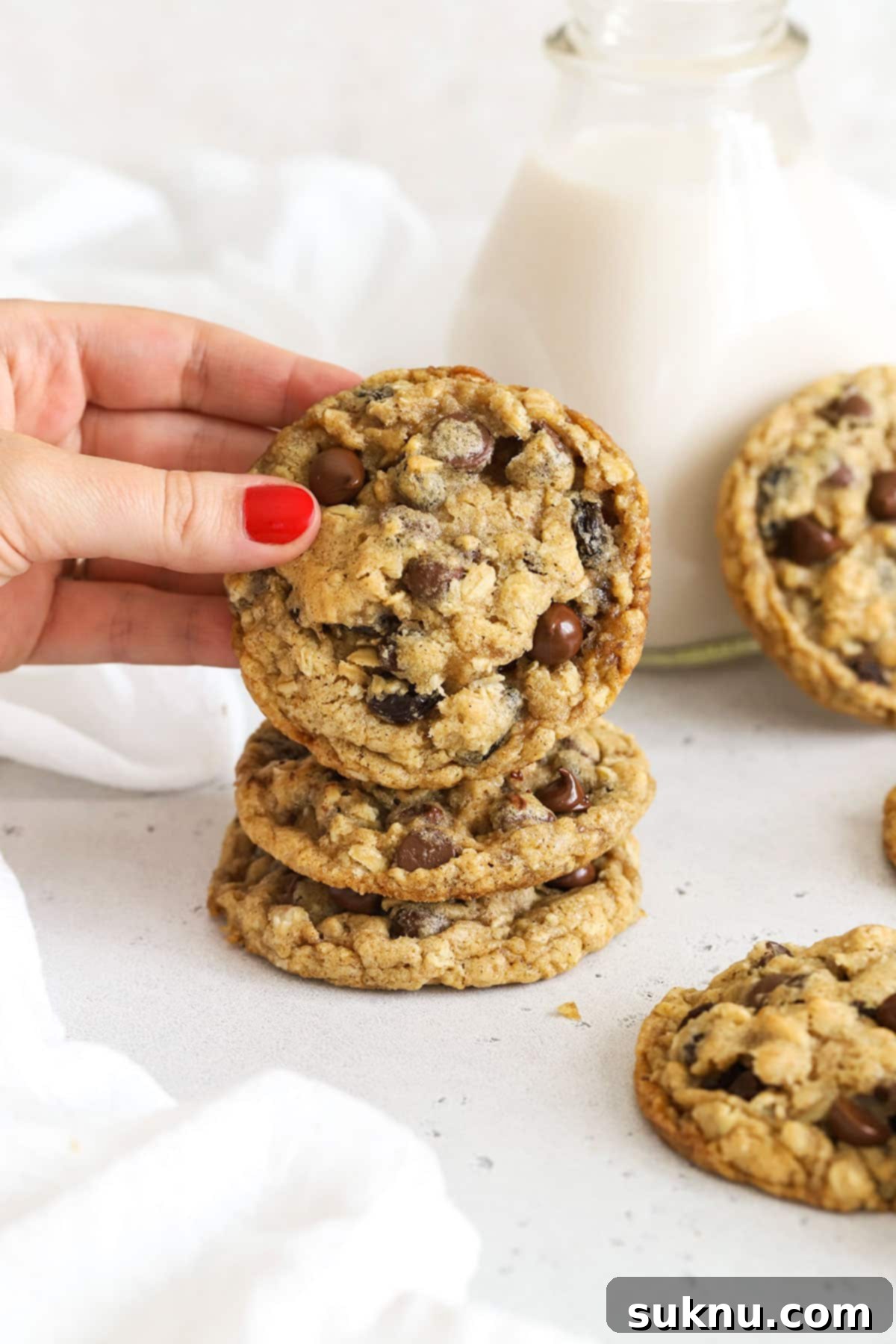
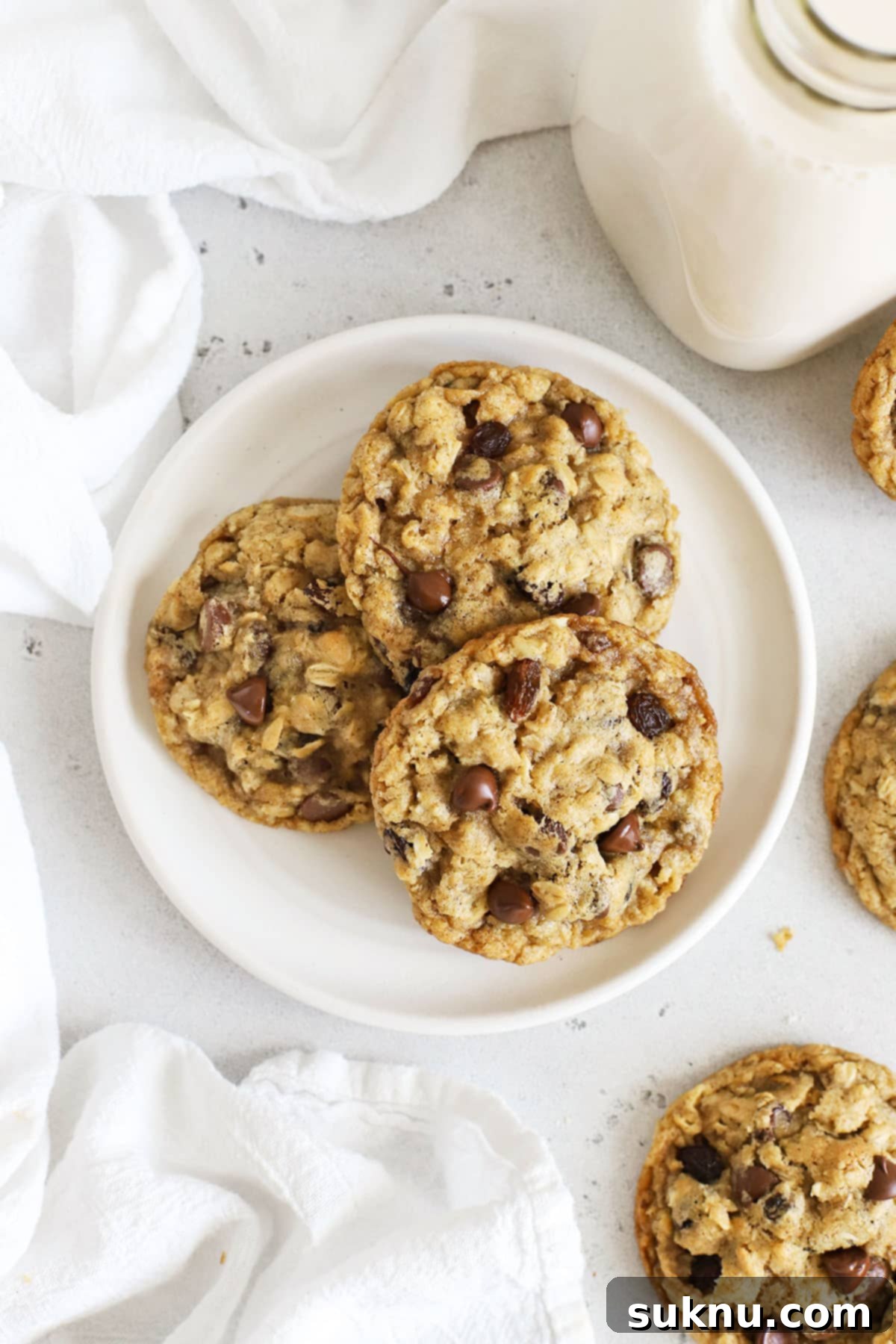
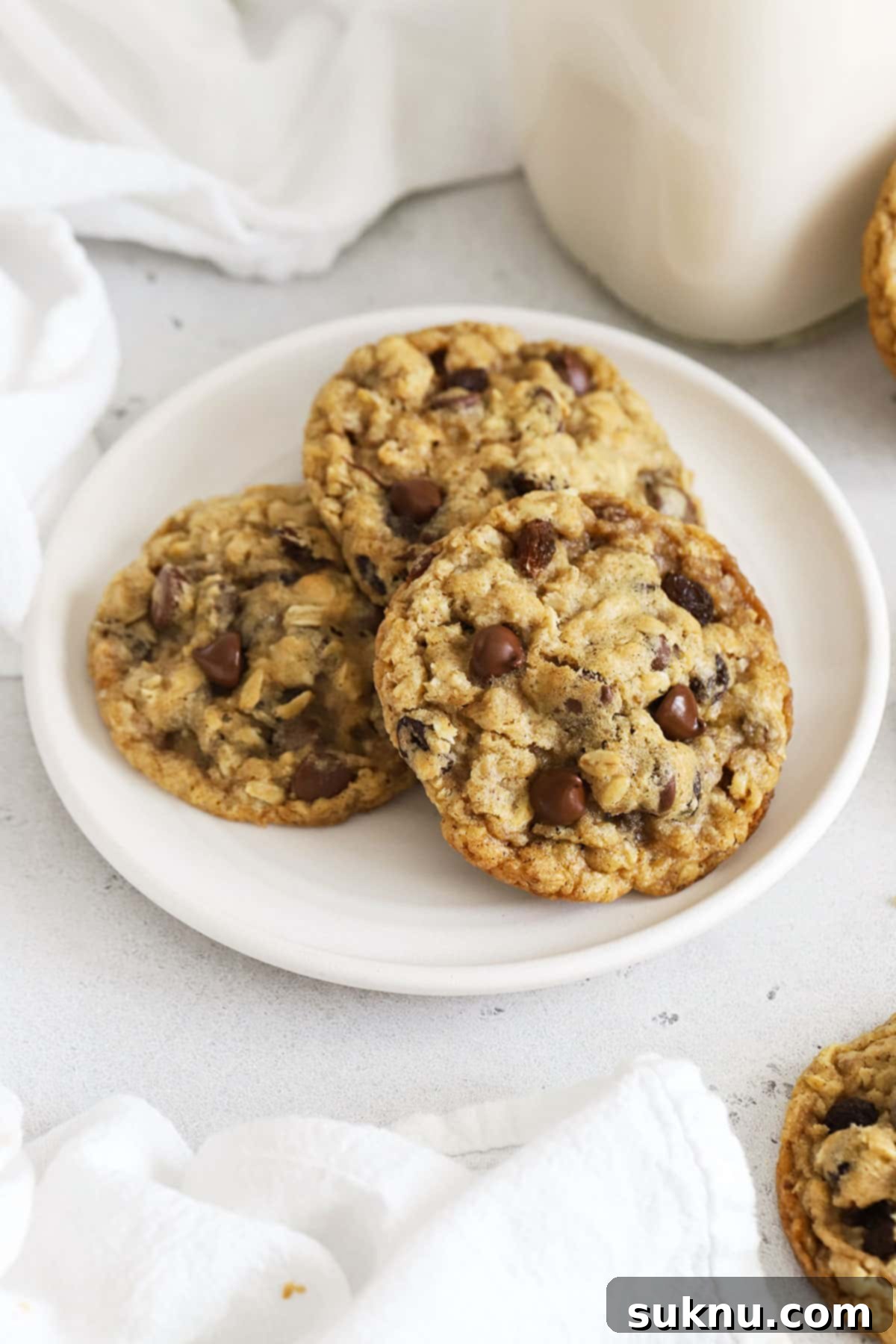
Indulge in the ultimate comfort treat with our recipe for soft, chewy gluten-free oatmeal raisin cookies! This delightful recipe is designed to bring back cherished memories with every bite, perfectly blending hearty oats, plump raisins, warm cinnamon, and an optional touch of chocolate chips for an irresistible classic. Easy to make and utterly delicious, these cookies will quickly become a household favorite.
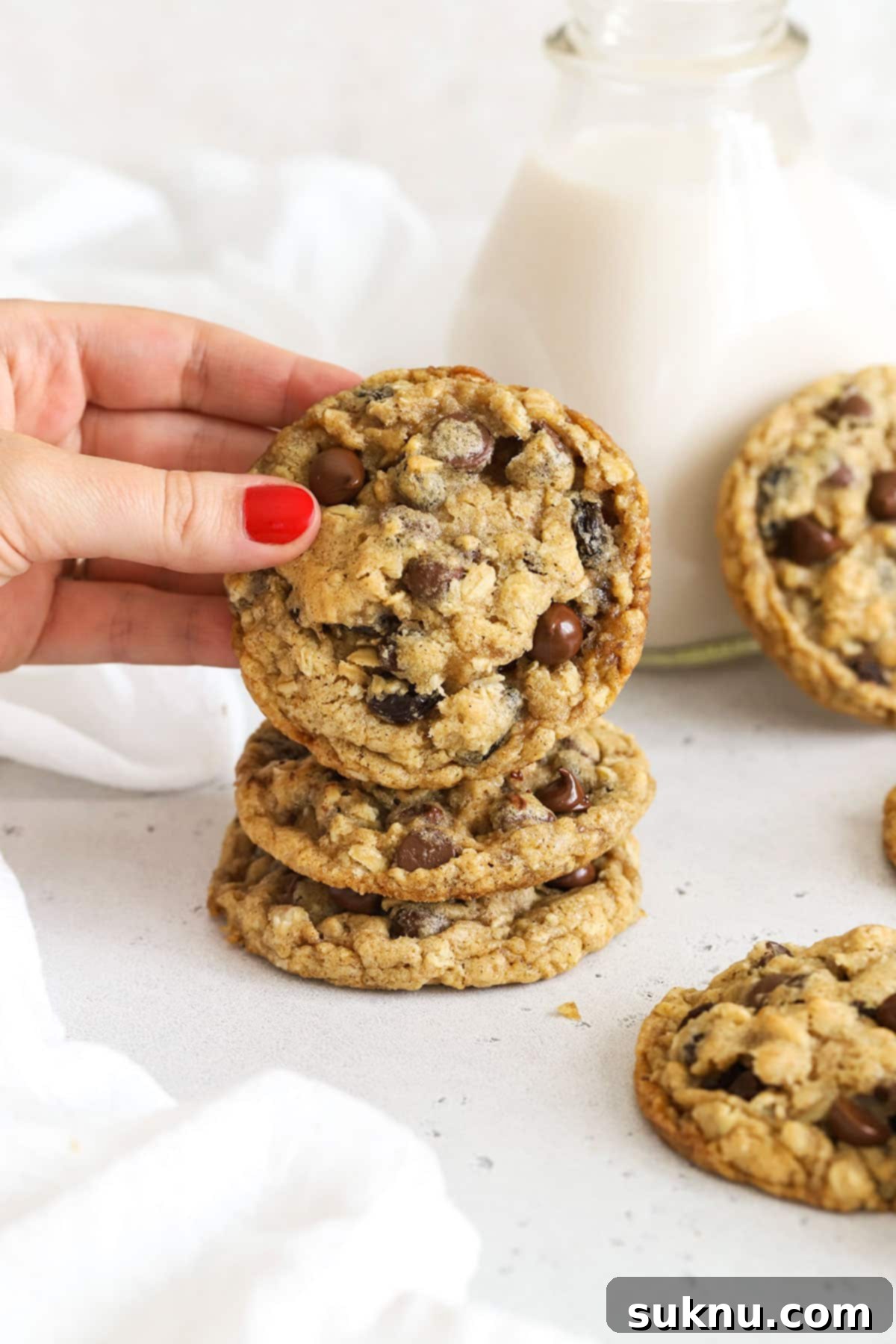
There’s a special kind of joy in transforming beloved classic recipes into gluten-free versions, ensuring everyone can enjoy those nostalgic flavors. We’ve successfully recreated everything from perfectly gluten-free chocolate chip cookies to rich, fudgy brownies and delightful no-bake cookies. Today, we’re excited to share the ultimate secret to crafting the most wonderfully soft and chewy gluten-free oatmeal raisin cookies you’ll ever taste. Prepare to embark on a baking journey that promises pure comfort and satisfaction!
Whether you prefer your oatmeal raisin cookies with a generous helping of chocolate chips (like I do!) or you’re a purist who enjoys them with just plump raisins, this gluten-free cookie recipe delivers all the classic flavor and satisfyingly chewy texture you crave. Our detailed guide ensures that even novice bakers can achieve bakery-quality results right in their own kitchens.
These aren’t just any gluten-free cookies; they are a celebration of taste and texture, meticulously developed to mimic the traditional oatmeal raisin cookie experience without any gluten. The combination of wholesome oats, sweet raisins, and warm spices creates a harmonious blend that’s simply irresistible. Get ready to bake a batch that will disappear as quickly as they emerge from the oven!
Baking Perfect Gluten-Free Oatmeal Raisin Cookies
Crafting the perfect gluten-free oatmeal raisin cookie starts with understanding the role each ingredient plays. Below is a detailed look at what you’ll need and why these components are essential for achieving that ideal soft and chewy texture.
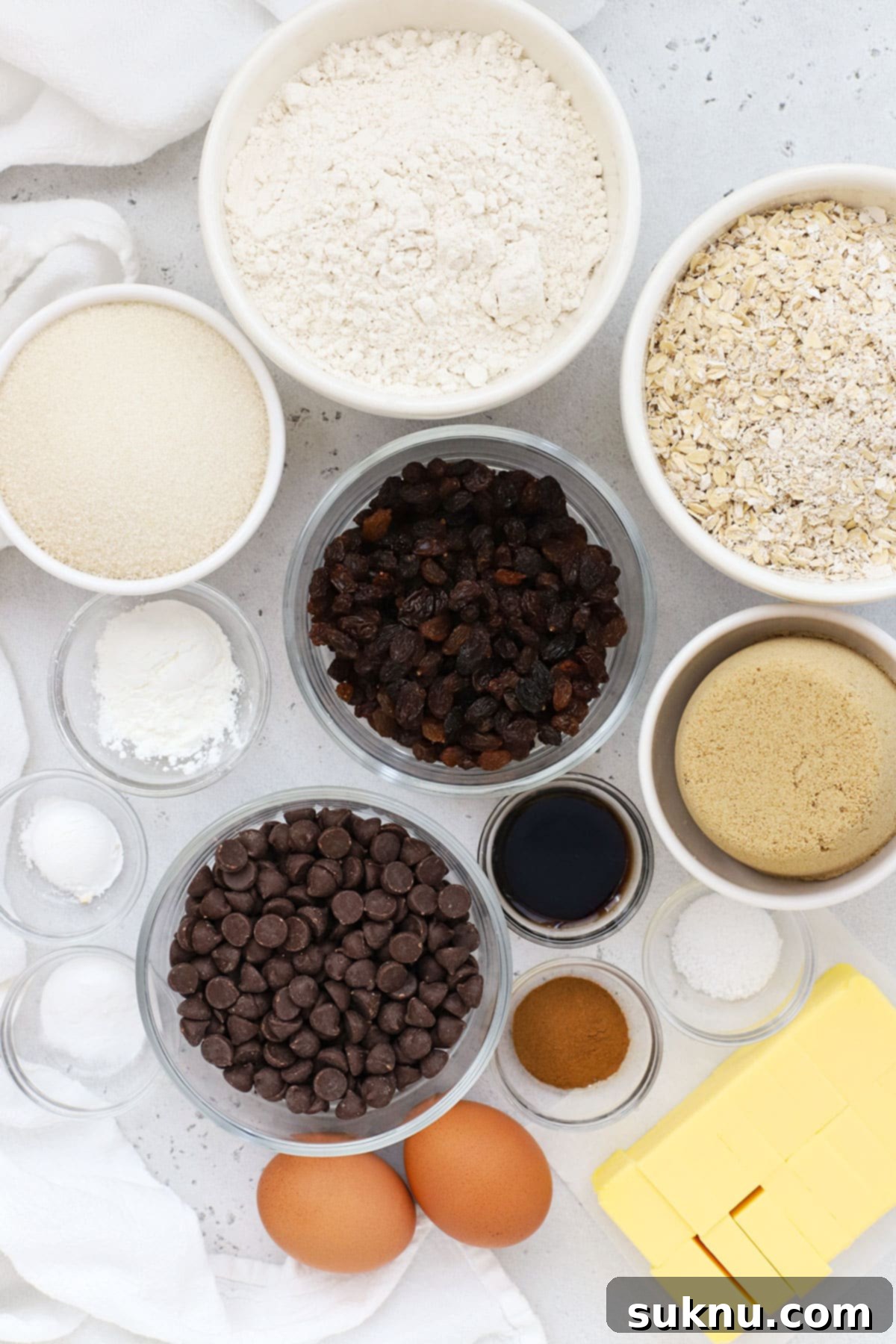
Essential Ingredients for Your Cookies
- Certified Gluten-Free Rolled Oats: This is a crucial distinction for gluten-free baking. To prevent cross-contamination, always opt for oats explicitly labeled “certified gluten-free.” Rolled oats provide that characteristic chewiness and hearty texture that oatmeal cookies are known for. Brands like One Degree, Trader Joe’s, and Bob’s Red Mill are excellent choices, offering reliable quality.
- Gluten-Free Measure-For-Measure Flour Blend: To simplify the baking process, we highly recommend using a 1:1 gluten-free flour blend. These blends are specifically formulated to substitute traditional wheat flour in recipes without requiring additional alterations. Our top pick is King Arthur Flour’s 1:1 Gluten-Free Baking Flour, which consistently yields fantastic results in a variety of baked goods, from cookies to cakes and bars.
- Baking Powder & Baking Soda: These leavening agents work in harmony to give your cookies the perfect lift and spread. Baking soda reacts with the acidic components (like brown sugar), while baking powder provides an additional boost, ensuring a light yet chewy texture.
- Ground Cinnamon & Kosher Salt: Cinnamon is the quintessential spice for oatmeal cookies, its warm, earthy notes pairing beautifully with the sweet raisins. Kosher salt balances the sweetness and enhances all the other flavors, making the cookies taste richer and more complex.
- Softened Unsalted Butter: The state of your butter is paramount. It should be soft enough to leave a slight indent when gently pressed with a finger, but still cool to the touch. If the butter looks shiny or greasy, it’s too soft and could lead to cookies that spread too much. Softened butter creams easily with sugar, incorporating air for a light texture.
- Brown Sugar & Granulated Sugar: This combination is key to achieving the ideal cookie texture. Brown sugar, with its molasses content, contributes moisture, chewiness, and a subtle caramel flavor. Granulated sugar promotes spread and crispness around the edges. We use light brown sugar for a balanced flavor, but feel free to substitute dark brown sugar if you prefer a more robust molasses taste.
- Large Eggs (Room Temperature): Room temperature eggs emulsify much better with the creamed butter and sugar mixture, resulting in a smoother, more cohesive dough. This also helps maintain the consistency of your batter. Remember to take them out of the refrigerator in advance along with your butter.
- Pure Vanilla Extract: A generous amount of good quality vanilla extract is essential for infusing these cookies with a deep, aromatic flavor that complements the oats, cinnamon, and raisins.
- Chocolate Chips (Optional): For those who love a bit of chocolate with their fruit, semi-sweet chocolate chips are a fantastic addition. I typically use a 50/50 mix of semisweet chocolate chips and raisins. If you prefer a pure oatmeal raisin experience, simply swap the chocolate chips for an equal amount of additional raisins.
- Plump Raisins: The quality of your raisins matters. Ideally, they should be soft and pliable, not hard and dry. If your raisins are on the drier side, a quick tip in our FAQ section below can help rehydrate them, ensuring they add juicy bursts of flavor to every bite.
WE ♥
Turn on your JavaScript to view content
How To Make Gluten-Free Oatmeal Raisin Cookies: A Step-by-Step Guide
For precise ingredient measurements, detailed instructions, and helpful tips, please refer to the recipe card below.
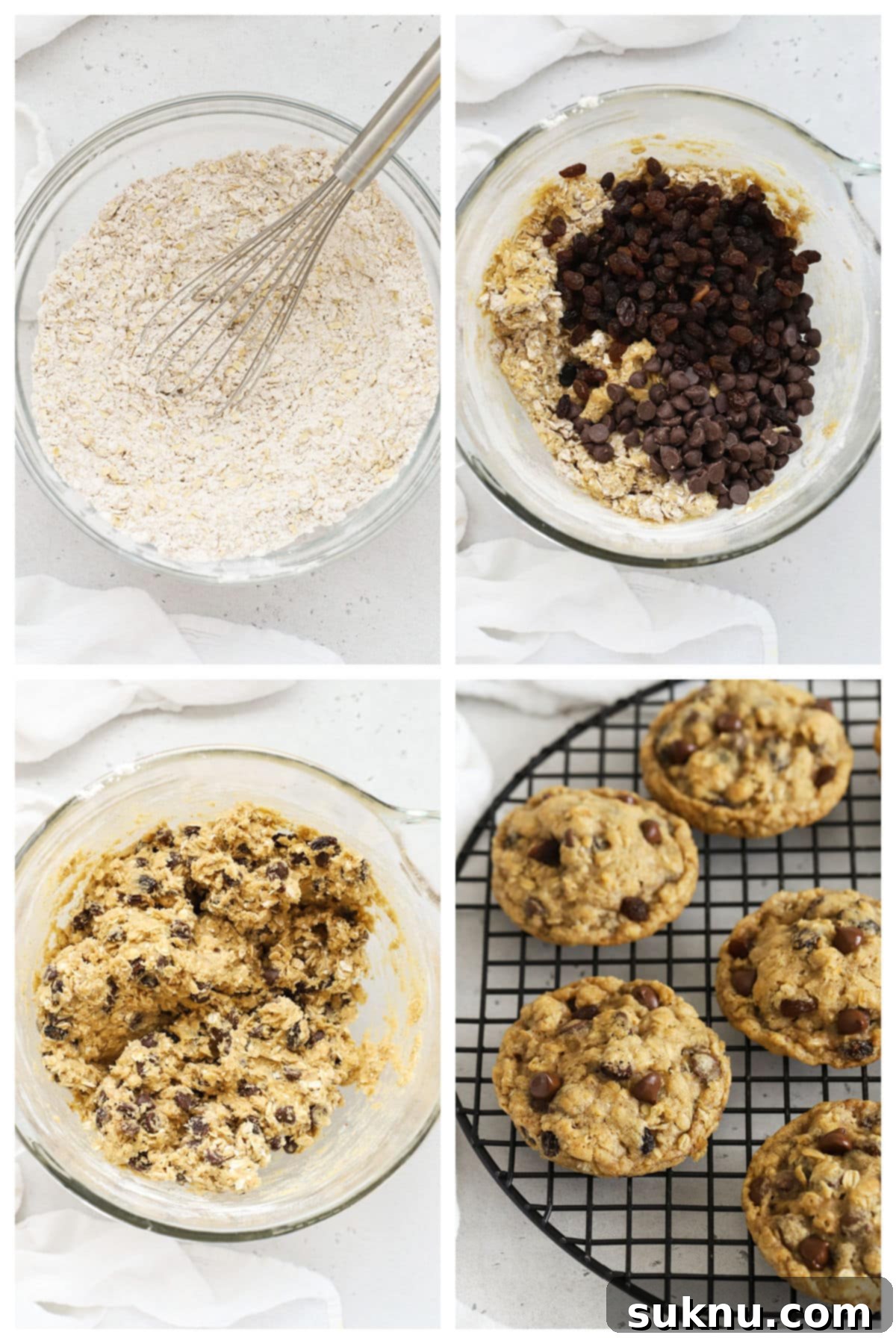
Creating these delectable gluten-free oatmeal raisin cookies is a rewarding process. Follow these steps carefully to ensure the best results:
- Prepare the Oats: Begin by adding your certified gluten-free rolled oats to a food processor. Pulse a few times until the oats are partially broken up. The goal is to achieve a slightly coarse texture, not a fine flour. This step is crucial for the cookies’ signature chewiness, ensuring they don’t become too dense.
- Combine Dry Ingredients: In a medium-sized bowl, whisk together the pulsed oats, gluten-free measure-for-measure flour, cornstarch, baking soda, baking powder, ground cinnamon, and kosher salt. Thoroughly combine these ingredients to ensure even distribution, then set the bowl aside. This blend creates the structural foundation and flavor profile of your cookies.
- Cream Butter and Sugars: In the bowl of a stand mixer fitted with the paddle attachment (or a large mixing bowl with a hand mixer), cream together the softened butter with both brown sugar and granulated sugar. Beat on medium speed for 2-3 minutes, or until the mixture becomes light, fluffy, and noticeably paler in color. This process incorporates air into the butter, which is vital for the cookies’ texture.
- Add Eggs and Vanilla: Introduce the room temperature eggs one at a time, mixing well after each addition until fully incorporated. Once both eggs are blended, stir in the pure vanilla extract. Adding eggs gradually helps maintain the emulsification of the butter and sugar, preventing the mixture from separating.
- Incorporate Dry Ingredients Gradually: Add half of the dry ingredient mixture to the wet ingredients and mix on low speed until just combined. Then, add the remaining dry ingredients, mixing only until a few powdery spots remain. Overmixing at this stage can develop gluten (even in GF flour, if present in trace amounts or if starches become gummy) and lead to tough cookies.
- Stir in the Mix-Ins: Gently fold in the chocolate chips and raisins using a spatula. Continue mixing until they are evenly distributed throughout the dough and no dry flour streaks remain. Be careful not to overmix.
- Chill the Dough (Crucial Step!): Cover the cookie dough tightly and refrigerate for at least 2 hours, and up to 24 hours. This chilling period is indispensable for gluten-free cookies. It allows the flour and oats to fully absorb the liquid, preventing the cookies from spreading excessively during baking. It also deepens the flavors and contributes significantly to a softer, chewier final texture. Skipping this step will result in flatter, less appealing cookies.
- Preheat Oven and Prepare Baking Sheets: When you’re ready to bake, preheat your oven to 350 degrees F (175 degrees C). Line two baking sheets with parchment paper or silicone baking mats. This prevents sticking and ensures even baking.
- Scoop and Shape the Dough: If your dough has been chilled for an extended period and is too firm, let it sit at room temperature for about 10 minutes to soften slightly. Use a large cookie scoop (approximately 3 tablespoons) to measure out uniform balls of dough. Gently roll each portion in the palms of your hands to create smooth, round spheres. Place about 6 cookie dough balls on one prepared baking sheet, leaving ample space between them for spreading. For optimal results, keep the remaining dough refrigerated while you bake in batches.
- Bake and Cool to Perfection: Bake one pan of cookies at a time for 10-12 minutes, or until the edges are lightly golden and the centers appear almost set but still slightly soft. For perfectly round cookies, you can use a large round cookie cutter immediately after baking to gently “coax” the edges into a neat circle. If desired, press a few extra chocolate chips or raisins onto the tops for an appealing finish. Allow the cookies to cool on the baking sheet for 2-3 minutes before carefully transferring them to a wire rack to cool completely. This initial cooling on the hot sheet helps them firm up without breaking. Always alternate baking sheets between batches to avoid placing cold dough on a hot pan, which can affect spread.
- Serve and Store: These delightful cookies are best enjoyed fresh, slightly warm, or at room temperature. Store any leftovers in an airtight container at room temperature for 3-4 days to maintain their softness. For longer storage, freeze the baked cookies for up to 2 months. They thaw beautifully, ready for another moment of gluten-free indulgence.
5 Cookie Tips to Elevate Your Baking
- Mastering Flour Measurement: Learn the “scoop and level” method to accurately measure gluten-free flour. Incorrect flour measurements are a common cause of baking mishaps, leading to dry or crumbly cookies. Precision here ensures optimal texture.
- Checking Leavening Agent Freshness: Baking soda and baking powder lose their potency over time. Discover simple tests to ensure your leavening agents are still active, guaranteeing your cookies rise beautifully.
- Accurate Butter Measurement: Butter is a foundational ingredient, and its measurement is critical. Learn how to accurately measure butter in cups, tablespoons, and grams to ensure the correct fat content for a perfectly chewy cookie.
- Freezing Cookie Dough for Later: Don’t want to bake a whole batch at once? Learn the best techniques for freezing cookie dough, allowing you to enjoy fresh, warm cookies whenever the craving strikes. We also cover how to bake directly from frozen dough.
- Essential Cookie Tools for Every Baker: Equip your kitchen with the right tools to make cookie baking a breeze. From scoops to baking mats, discover the 8 cookie tools we use constantly for consistent, professional-quality results.
FAQ + Expert Tricks for the Best Gluten-Free Oatmeal Raisin Cookies
Achieving truly exceptional gluten-free oatmeal raisin cookies is simple with a few insider tips and tricks. Here are answers to common questions and helpful advice to perfect your baking:
How to Revive Dry Raisins for Juicier Cookies
For the best texture and flavor, it’s ideal to use plump, moist raisins. If your raisins have dried out and become hard, don’t worry! You can easily rehydrate them. Place the raisins in a small bowl and add about 1 tablespoon of hot water. Stir them gently and let them sit for 5-10 minutes. The hot water will plump them up, making them soft and juicy again. Before adding them to your cookie dough, drain off any excess liquid. This simple trick ensures a burst of sweetness and moisture in every bite.
The Importance of Certified Gluten-Free Oats
For individuals with Celiac disease or gluten intolerance, selecting the right oats is absolutely critical. While oats are naturally gluten-free, they are frequently processed in facilities that also handle wheat, barley, and rye. This can lead to cross-contamination, making them unsafe. Always purchase certified gluten-free oats to guarantee they meet strict safety standards. We’ve had great success with brands like Bob’s Red Mill, Trader Joe’s, and One Degree, which are reliable sources for safe, high-quality gluten-free oats.
Can I Use Quick Oats Instead of Rolled Oats?
While you might be tempted to use quick oats for convenience, we strongly recommend sticking with certified gluten-free rolled oats for this recipe. Even though we pulse the rolled oats slightly, their thicker texture is essential for creating that classic, satisfyingly chewy oatmeal cookie. Quick oats are pre-steamed and cut into smaller pieces, which can result in a softer, less substantial cookie with a different mouthfeel. Remember, the goal is to break up the oats a bit, not to pulverize them into oat flour, which would drastically alter the cookie’s texture.
Exciting Flavor Variations: Try Them With Nuts!
If you’re looking to add another layer of flavor and texture, these cookies are incredibly versatile. Consider swapping out the chocolate chips (or even some of the raisins) for chopped nuts. Toasted nuts, such as pecans, walnuts, or almonds, provide a delightful crunch and a rich, nutty depth that complements the cinnamon and oats beautifully. Simply toast your chosen nuts lightly before chopping and adding them to the dough for an enhanced flavor experience. You can also experiment with other dried fruits like cranberries or chopped dried apricots for a different twist!
Achieving the Perfect Soft & Chewy Texture
Beyond the ingredients, several factors contribute to the ultimate soft and chewy texture. The careful measurement of softened butter and the blend of brown and granulated sugars are paramount. Brown sugar provides moisture, while granulated sugar ensures some crispness on the edges without sacrificing the tender interior. Moreover, the crucial chilling period of at least two hours allows the gluten-free flours and oats to fully hydrate, preventing the cookies from spreading too thinly and resulting in a denser, more satisfying chew. Baking just until the edges are golden and the centers are slightly soft will also guarantee they remain moist and tender after cooling.
Why Room Temperature Eggs and Butter are Non-Negotiable
For a consistent and smooth cookie dough, both eggs and butter must be at room temperature. Cold butter won’t cream properly with sugar, leading to a lumpy mixture and less air incorporation, which affects the cookie’s final texture. Cold eggs can cause the butter and sugar mixture to seize, creating a curdled appearance and an uneven dough. Allowing these ingredients to come to room temperature ensures they combine smoothly and evenly, creating a uniform emulsion that is the foundation of a perfectly textured cookie.
More Gluten-Free Oatmeal Cookie Recipes To Try
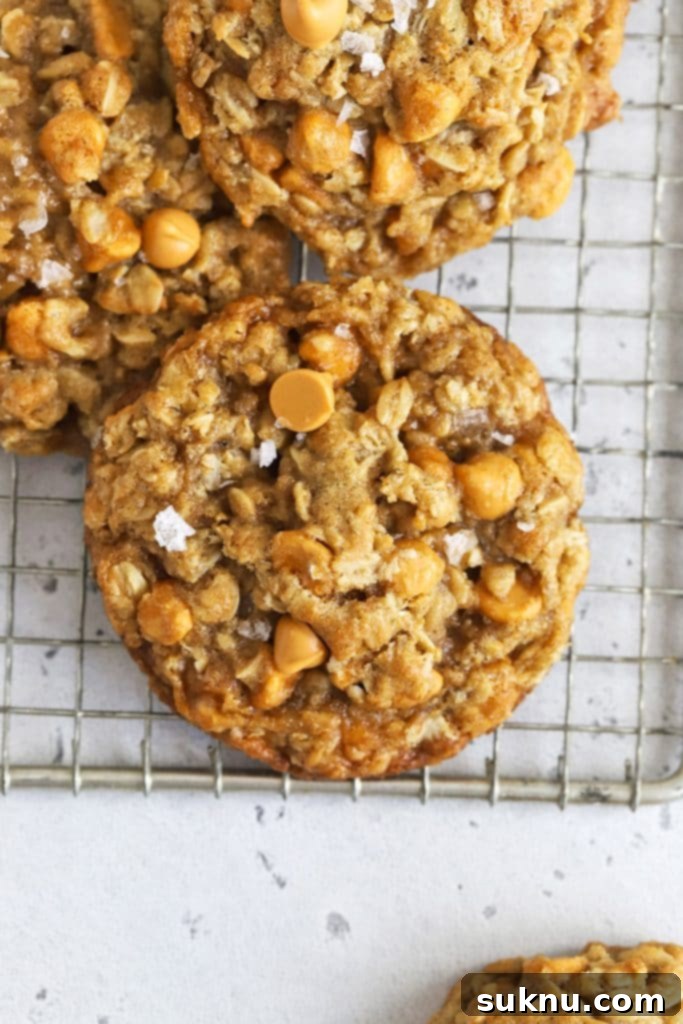
Gluten-Free Oatmeal Scotchies (Butterscotch)
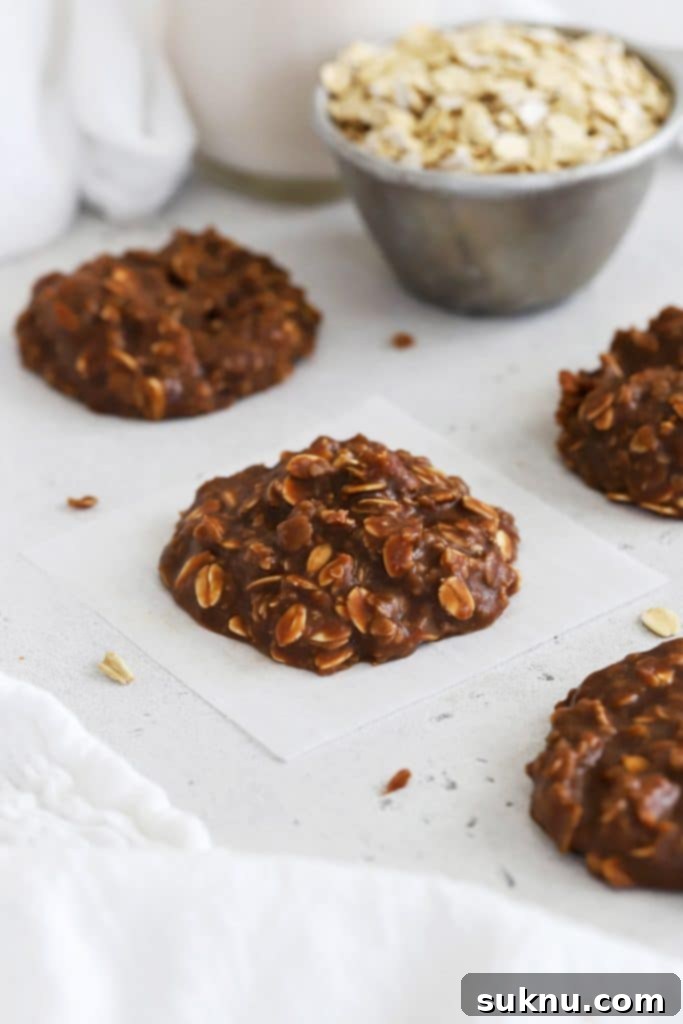
Gluten-Free No-Bake Cookies
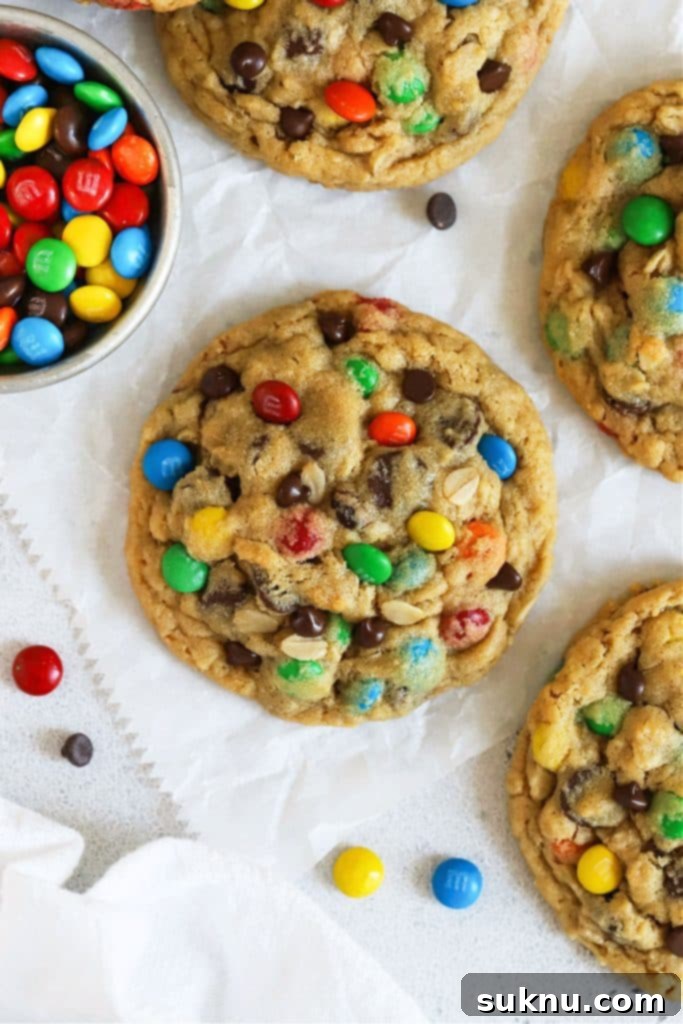
Gluten-Free Monster Cookies
Recipe Card
Did you make this recipe?
Leave a star rating below when you try our chewy Gluten-Free Oatmeal Raisin Cookie recipe! We can’t wait to hear how it goes. Happy baking!
Print

Chewy Gluten-Free Oatmeal Raisin Cookies
5 Stars 4 Stars 3 Stars 2 Stars 1 Star
4.6 from 7 reviews
Author: Emily Dixon, Sweets & Thank You
Total Time: 2 hours 55 minutes
Yield: 24 Cookies
Diet: Gluten Free
Description
This soft, chewy gluten-free oatmeal raisin cookie recipe is the perfect one to satisfy your nostalgic cookie craving! Loaded with oats, raisins, cinnamon, and even some chocolate, it’s easy, delicious, and classic!
Ingredients
Dry Ingredients:
- 2 1/2 cups (225 grams) gluten-free rolled oats
- 2 cups (240 grams) gluten-free measure-for-measure flour, weighed or scooped & leveled
- 1 Tablespoon (8 grams) cornstarch
- 1 teaspoon baking powder
- 1 teaspoon baking soda
- 2 teaspoons ground cinnamon
- 1/2 teaspoon kosher salt
Wet Ingredients:
- 1 cup (2 sticks/16 Tablespoons) butter, softened
- 1 cup (200 grams) light brown sugar (packed)
- 1 cup (200 grams) granulated sugar
- 2 large eggs, room temperature
- 2 teaspoons vanilla extract
Mix-Ins:
- 1 cup (170 grams) semi-sweet chocolate chips
- 1 cup (160 grams) raisins
- Optional: a few extra chocolate chips & raisins to top the cookies at the end
Instructions
- Blend The Oats. Start by adding the oats to a food processor (or blender in a pinch). Pulse just a few times to break up the oats. You don’t want to pulverize them into flour–just break them up a bit.
- Combine Dry Ingredients. Add the oats to a medium bowl, along with gluten-free flour, cornstarch. baking soda, baking powder, cinnamon, and salt. Stir to combine, then set aside.
- Cream Butter & Sugars. In the bowl of a stand mixer (or a large mixing bowl), cream the butter with brown sugar and sugar for 2-3 minutes, or until smooth and fluffy.
- Add Eggs & Vanilla. Add the eggs one at a time, mixing to fully incorporate before adding the next egg, and then the vanilla extract.
- Add Dry Ingredients A Little At A Time. Mix in 1/2 of the dry ingredients, then add the second half, stopping the mixer when a few powdery/dry spots remain.
- Stir In Mix-Ins. Add the chocolate chips and raisins to the dough and stir mix in until they’re well distributed and no dry spots remain in the dough.
- Chill 2 Hours. Cover the cookie dough and chill in the refrigerator for 2 hours, up to 1 day. (This allows the flour and oats to absorb some of the liquid from the dough, which will keep the cookies from spreading too much. If you skip this step, your cookies will spread much more and won’t have quite as soft & chewy a texture.)
- Preheat The Oven & Prep The Pan. When you’re ready to bake, preheat the oven to 350 degrees F. Line two baking sheets with parchment paper.
- Scoop & Shape The Dough. If the dough is too hard to scoop (if you chilled longer than 2 hours), pull the dough out of the fridge 10 minutes or so before scooping to allow it to soften. Use a large cookie scoop to measure 3-Tablespoon balls of dough. Smooth the balls out in the palms of your hands and place 6 cookie dough balls on one prepared baking sheet. (Return the rest of the dough to the fridge in between batches for best results)
- Bake & Cool. Bake one pan of cookies at a time for 10-12 minutes, or until they’re almost set in the centers. You can fill in any open spots with a few more chocolate chips or raisins and use a large round cookie cutter to gently coax the cookies into perfect circles if desired, then allow the cookies to cool 2-3 minutes on the baking sheet before transferring to a wire rack to cool completely. Repeat baking process with remaining dough, alternating baking sheets with each batch so you don’t put cold dough on a hot baking sheet.
- Serve & Store. Enjoy the cookies right away, or store in an airtight container at room temperature 3-4 days or in the freezer up to 2 months.
- Prep Time: 15 minutes
- Chill Time: 2 hours
- Cook Time: 40 minutes
- Category: Dessert
- Method: Oven
- Cuisine: American