Have you ever found yourself scrolling through social media, encountering people’s “hot takes” – those unapologetically unpopular opinions? Perhaps it’s a declaration that coffee is overrated, or a dismissal of a wildly popular TV show, or even a staunch defense of skinny jeans in a world moving to wider cuts. Well, I have a hot take of my own to share with you, especially if you love cookies as much as I do.
Most snickerdoodles simply don’t live up to their potential.
As a passionate baker and an avid fan of the cinnamon-sugar combination, snickerdoodles should, in theory, be my ultimate cookie crush. Yet, historically, they’ve often fallen flat. They smell absolutely divine, and they look perfectly inviting, but that first bite often leaves me feeling a little…underwhelmed. The flavor just isn’t quite *there* for me.
Then, everything changed. The secret ingredient? Brown Butter.
Brown butter has a magical ability to elevate a myriad of baked goods. It transforms ordinary into extraordinary, adding a depth of flavor that’s both rich and nuanced. Think about the incredible difference it makes in brownies, chocolate chip cookies, or even banana bread. I could genuinely rave about the wonders of brown butter for days! But trust me when I say that brown butter snickerdoodles are an absolute game-changer. Once you experience them, you might find yourself never returning to conventional gluten-free snickerdoodle recipes again.
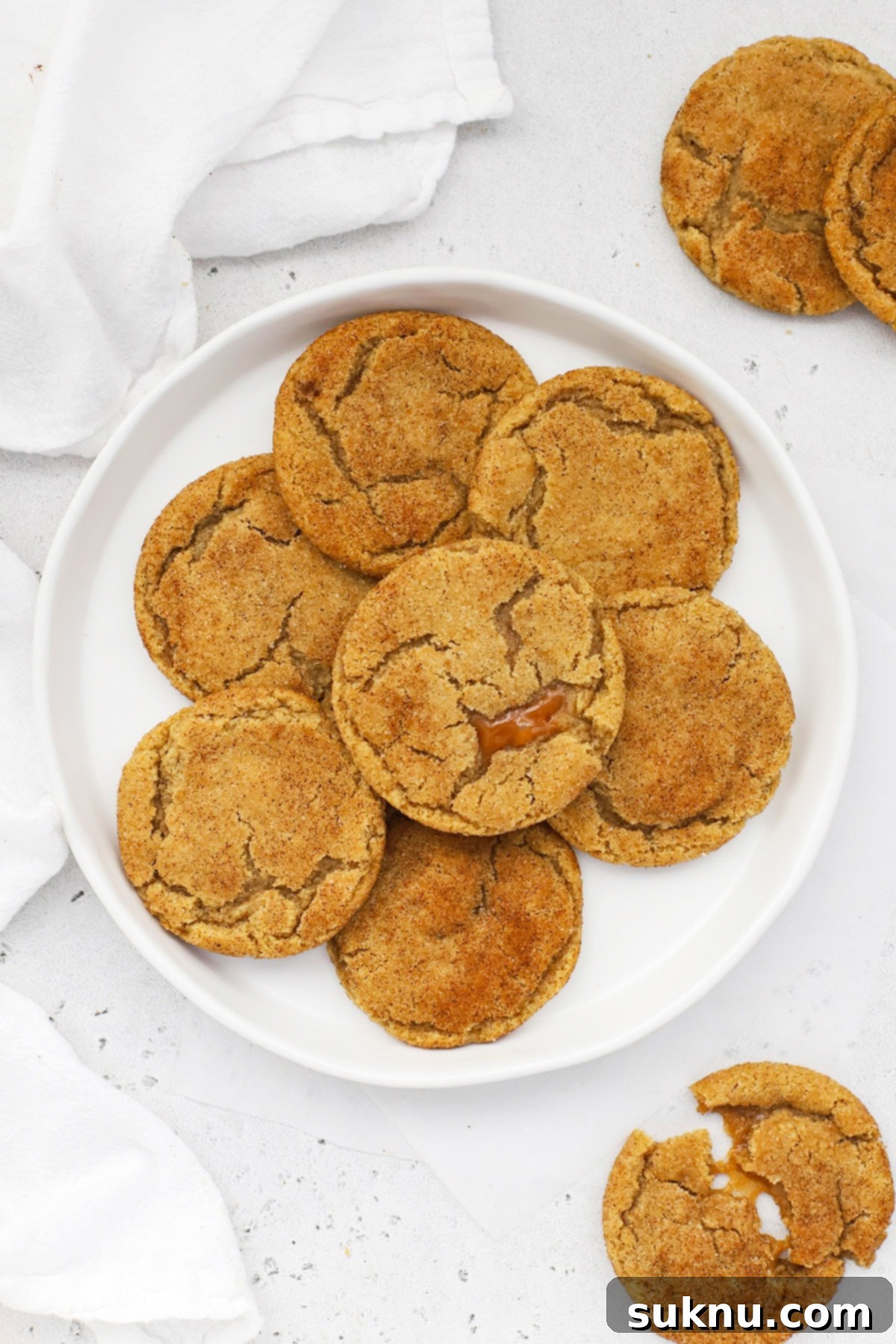
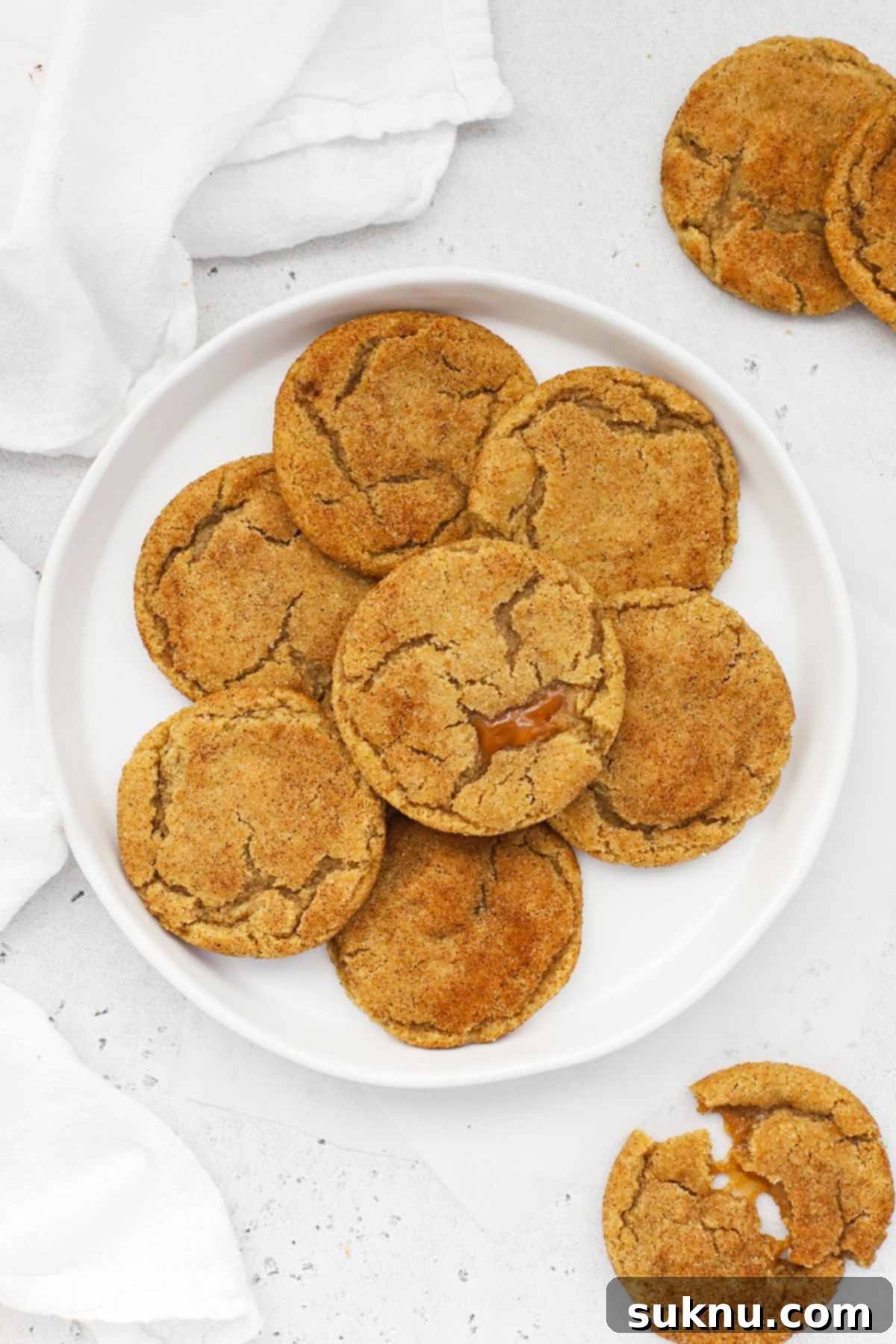
Here’s precisely why these gluten-free brown butter snickerdoodles, especially when stuffed with luscious caramel, are poised to become your new favorite cookie.
Gluten-Free Brown Butter Snickerdoodles At A Glance:
- What Makes These Brown Butter Gluten-Free Snickerdoodles Amazing
- How To Make Gluten-Free Snickerdoodle Cookies, Step-By-Step
- Try Them With Caramel! How To Make Caramel Stuffed Snickerdoodles.
- Tips & Tricks For The Best Gluten-Free Snickerdoodles
- FAQ – Frequently Asked Questions About Brown Butter Gluten-Free Snickerdoodle Cookies
- Our Favorite Tools & Ingredients For Making GF Snickerdoodles
- RECIPE: Brown Butter Gluten-Free Snickerdoodles
What Makes These Brown Butter Gluten-Free Snickerdoodles Amazing
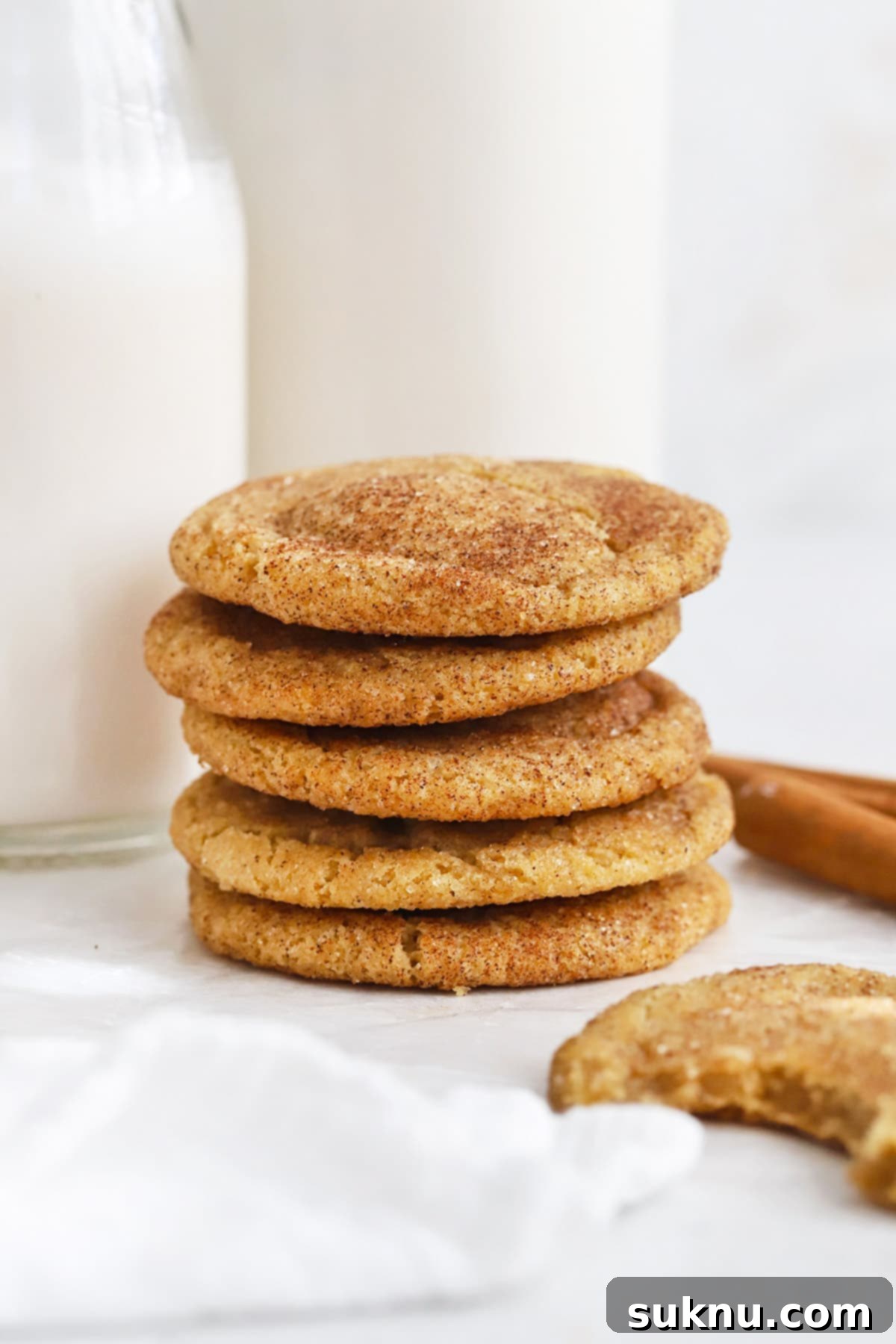
These aren’t just any snickerdoodles; they’re an elevated experience. Each element in this recipe is carefully chosen to enhance the classic cookie and make it truly unforgettable, especially in a gluten-free format.
- The Magic of Brown Butter: The most significant departure from traditional recipes is the use of brown butter. As butter gently cooks, its milk solids toast to a beautiful golden-brown, releasing a wonderfully nutty, caramel-like aroma and flavor. This subtle transformation adds a remarkable depth and richness to the snickerdoodle dough, perfectly complementing the warm cinnamon-sugar coating. It doesn’t overpower the classic flavors but rather amplifies them, creating a more sophisticated and deeply satisfying cookie experience.
- A Higher Ratio of Brown Sugar: To further enhance those lovely caramel and toffee notes introduced by the brown butter, this recipe calls for a greater proportion of brown sugar compared to white granulated sugar. Brown sugar isn’t just about sweetness; its molasses content adds moisture, ensuring the cookies remain incredibly soft and chewy, preventing the dryness that can sometimes plague gluten-free baked goods. This thoughtful balance contributes significantly to both the flavor profile and the delightful texture.
- A Little Extra Cinnamon Punch: A snickerdoodle should sing with the vibrant flavor of cinnamon and sugar. Many recipes fall short, leaving the cookie tasting a bit bland. We crank up the cinnamon in both the dough and the rolling mixture to ensure that every bite delivers that unmistakable, aromatic warmth you expect from a perfect snickerdoodle. It’s a bold, yet balanced, cinnamon experience that truly defines these cookies.
- The Power of an Egg + An Egg Yolk: Crafting gluten-free cookies with the perfect texture can be a challenge. Gluten-free flours tend to absorb more liquid, leading to potentially dry cookies. By using one whole egg plus an additional egg yolk, we strike a delicate balance. The extra yolk adds richness and fat, contributing to a wonderfully tender crumb and preventing dryness, while the whole egg provides enough structure to ensure the cookies hold their shape without excessive spreading. It might seem like a small detail to separate an egg, but this simple trick makes a monumental difference in achieving that ideal soft and chewy texture. For those new to it, learn how to separate eggs here.
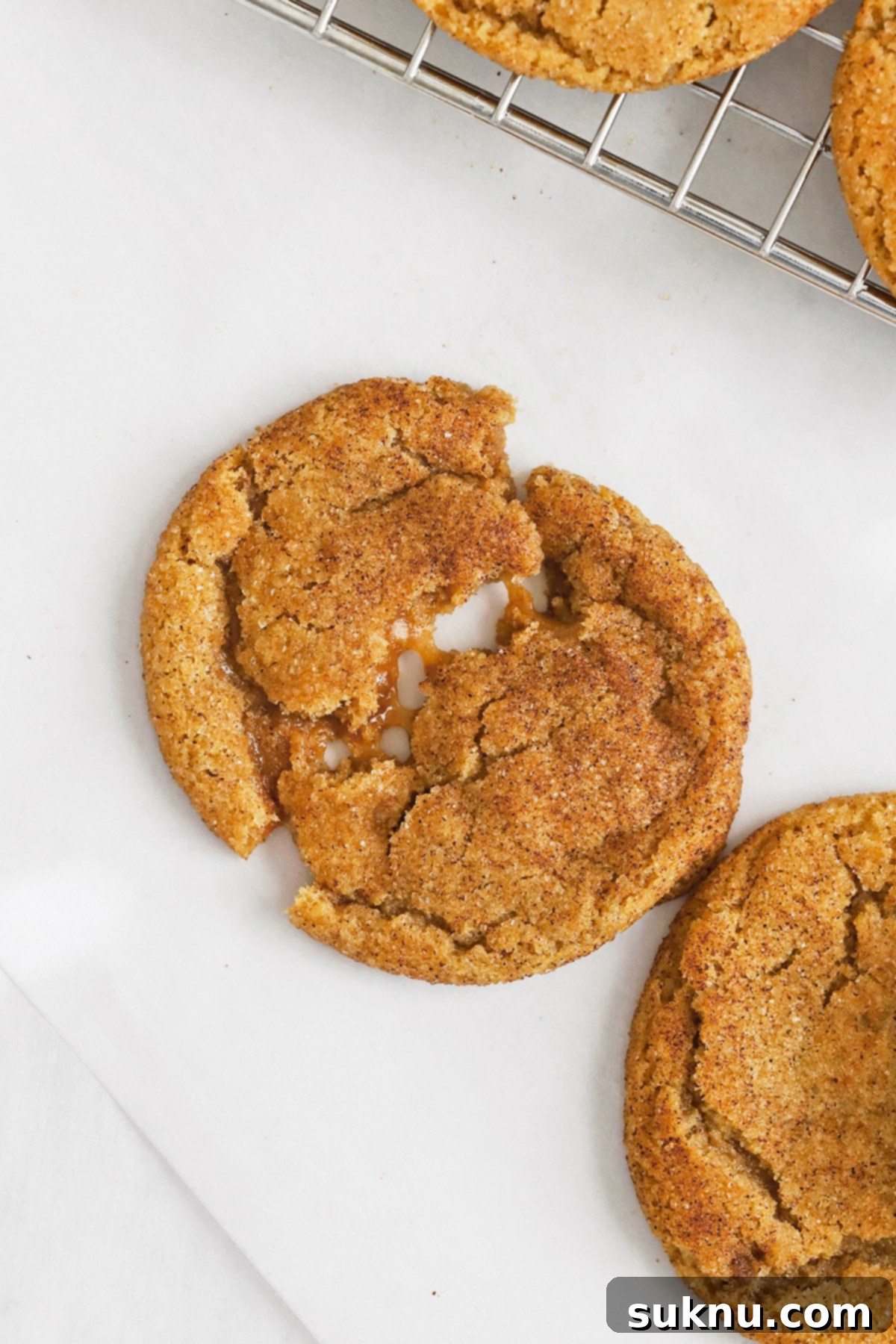
- Optional (But Highly Recommended!) Caramel Stuffing: While these brown butter snickerdoodles are absolutely sublime on their own, for an extra layer of decadence, you can stuff them with gooey caramel! This transforms them into an even more indulgent treat, with a delightful surprise waiting in the center of each tender cookie.
How To Make Gluten-Free Snickerdoodle Cookies, Step-By-Step
Achieving truly exceptional gluten-free snickerdoodles involves not only key ingredient adjustments but also a careful approach to technique. Following these steps precisely will ensure you bake the best possible cookies, every single time.
- First, Brown The Butter: This foundational step is crucial for the unique flavor of these snickerdoodles. Place cubed butter in a light-colored saucepan over medium heat. Stir continuously as it melts, foams, and then the milk solids at the bottom begin to turn a deep golden brown. You’re looking for a rich, amber color and a distinct nutty, caramel-like aroma. Be careful not to burn it! For a more detailed guide, I highly recommend our How To Make Brown Butter post, especially if it’s your first time.
- Cool The Brown Butter: Once browned, immediately transfer the butter (including all the delightful browned bits) to a heat-proof bowl. It is absolutely essential to let the brown butter cool to room temperature, or very close to it, before proceeding. Adding sugar to hot butter will cause the sugar to melt, which can lead to excessively flat, greasy cookies. Use this cooling time to gather and measure your remaining ingredients and prepare your baking sheets.
- Mix The Cooled Butter With Sugars: With the brown butter at the right temperature, combine it with both the brown and granulated sugars in a mixing bowl. Beat them together until the mixture is light, fluffy, and resembles wet sand. This creaming process incorporates air, contributing to the cookies’ final texture.
- Add Egg, Egg Yolk & Vanilla: Incorporate the whole egg first, mixing until fully combined. Then, add the egg yolk and mix again. Finally, stir in the vanilla extract until just incorporated. Adding them one at a time ensures everything is evenly distributed.
- Mix In The Dry Ingredients: In a separate bowl, whisk together the gluten-free flour blend, cream of tartar, baking soda, cinnamon, and salt. Gradually add these dry ingredients to the wet mixture, mixing on low speed until just combined. Be careful not to overmix; stop as soon as no dry streaks of flour remain. Overmixing can lead to tough cookies.
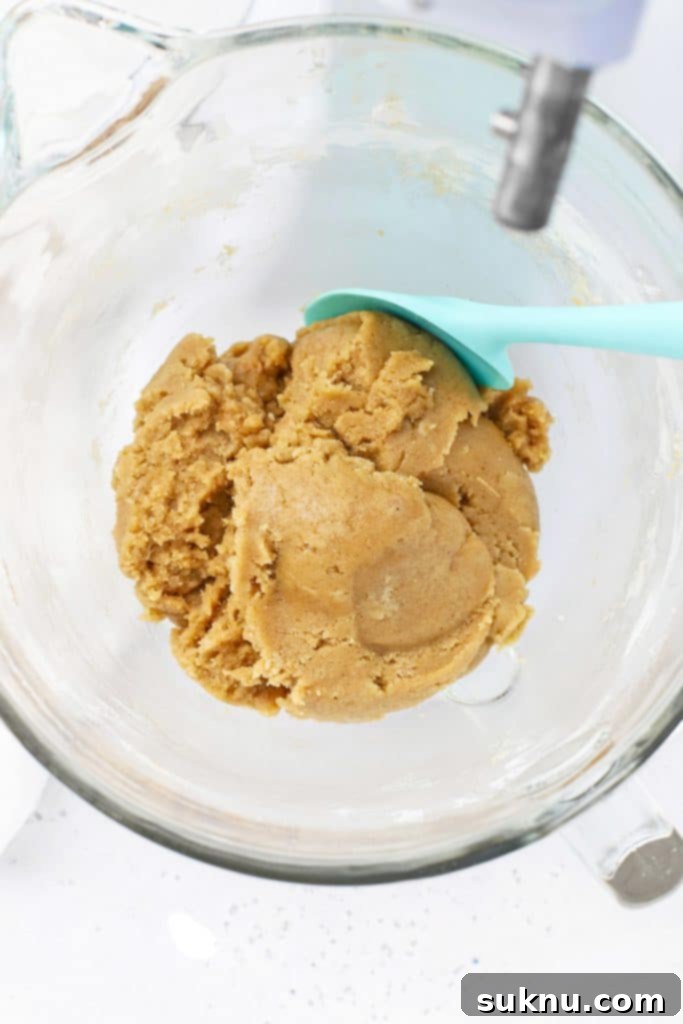
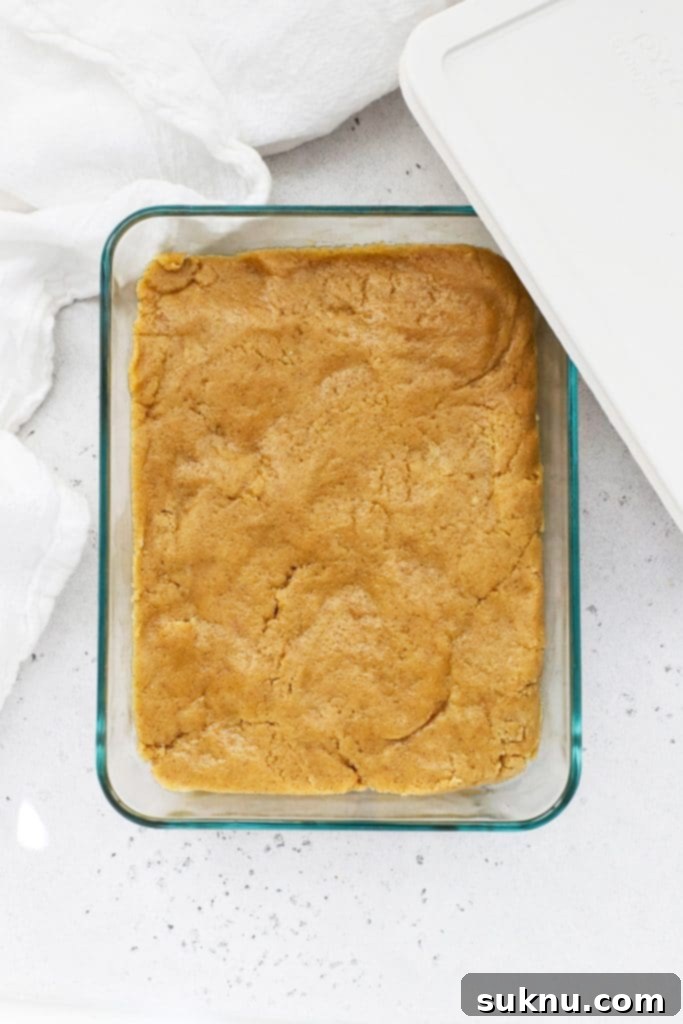
- Chill The Dough: This step is non-negotiable for gluten-free cookies, and especially for snickerdoodles. Transfer the dough to an airtight container, cover it, and refrigerate for a minimum of 2 hours, and up to 24 hours. Chilling allows the gluten-free flour to fully hydrate, preventing a gritty texture and ensuring the cookies hold their shape better during baking, resulting in a perfectly chewy and flavorful cookie.
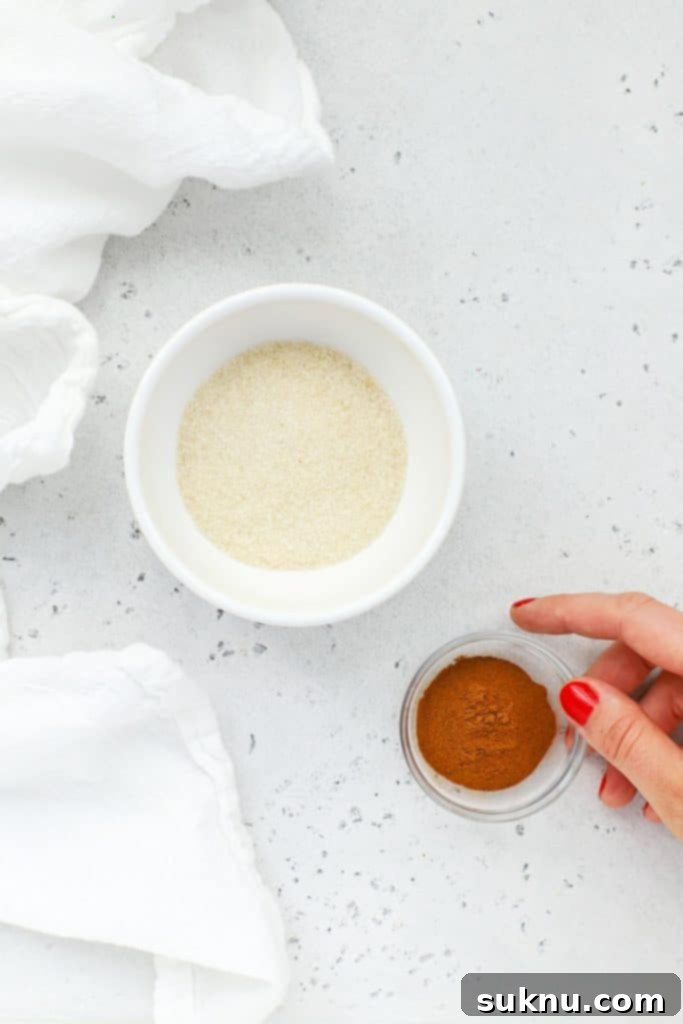
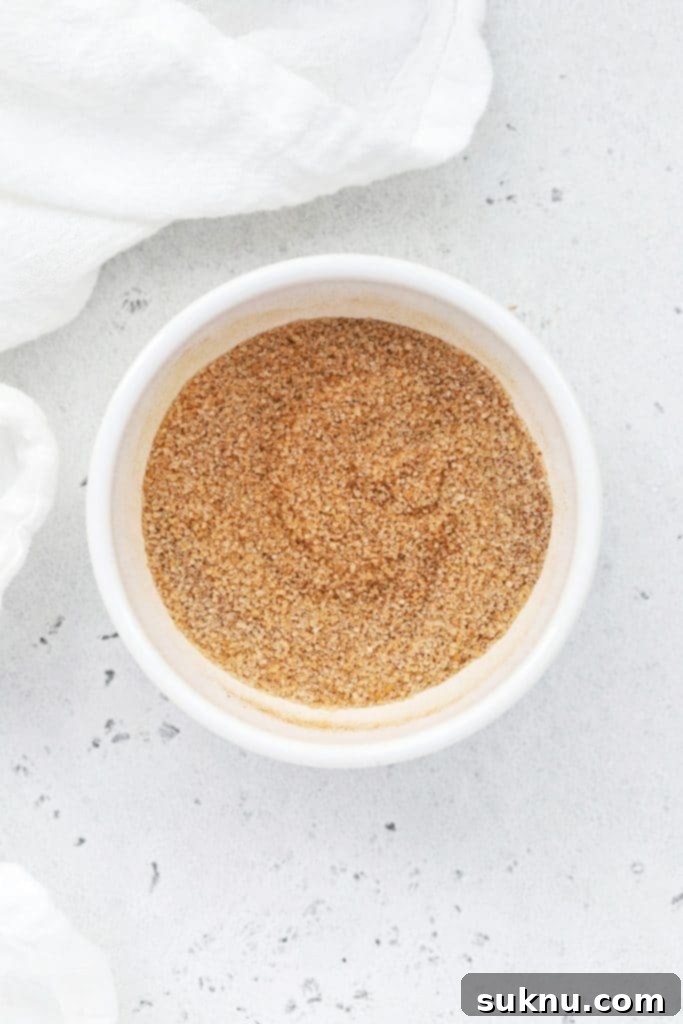
- Prep To Bake: When you’re ready to bake, remove the chilled dough from the refrigerator about 15-20 minutes beforehand to allow it to soften slightly, making it easier to scoop. Preheat your oven to 350°F (175°C) and line two baking sheets with parchment paper. In a shallow, medium bowl, combine 1/4 cup of granulated sugar and 2 teaspoons of cinnamon for the classic snickerdoodle coating.
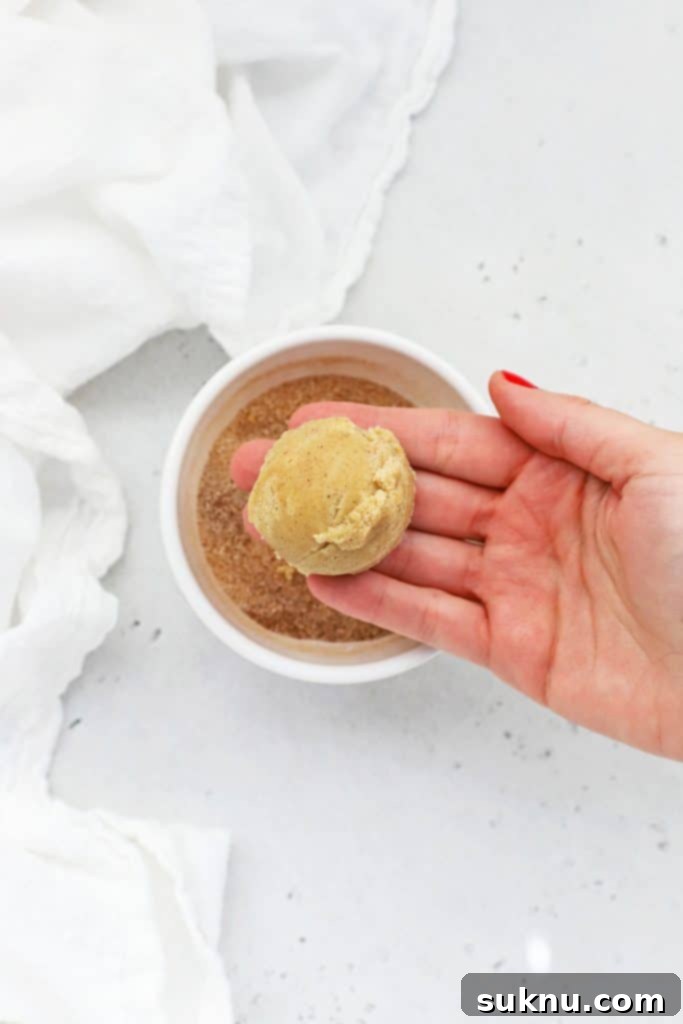
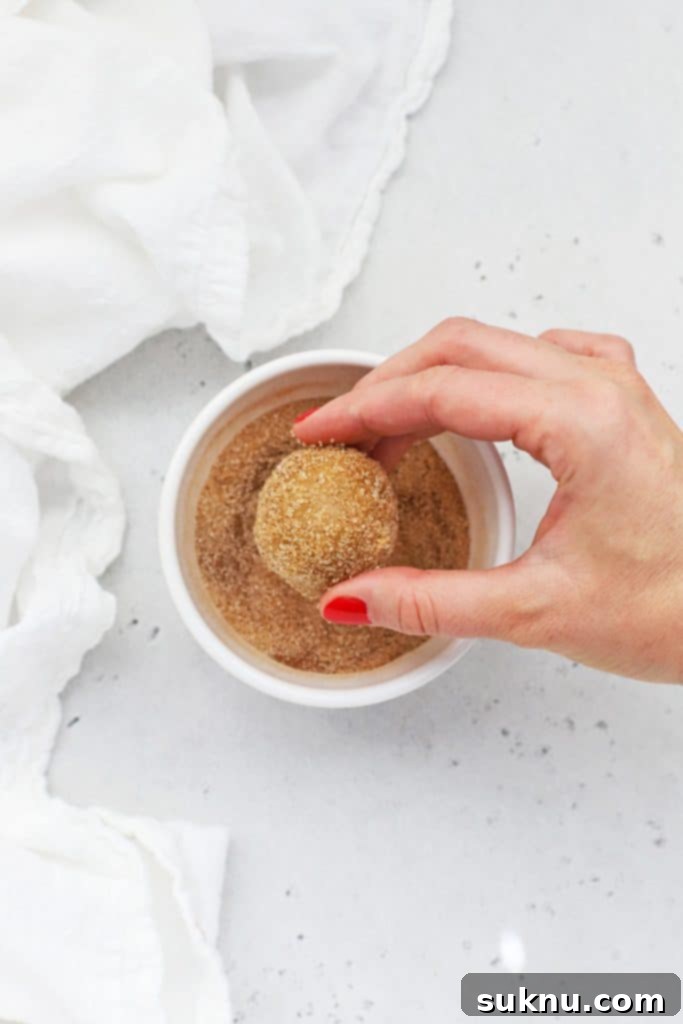
- Scoop & Roll: Using a medium cookie scoop (about 1.5-inch diameter), portion out balls of dough. Gently roll each ball smooth between your palms. Then, roll each dough ball generously in the cinnamon-sugar mixture, ensuring an even coating on all sides. Place 6-8 coated cookie dough balls onto each prepared baking sheet, leaving ample space between them to allow for spreading.
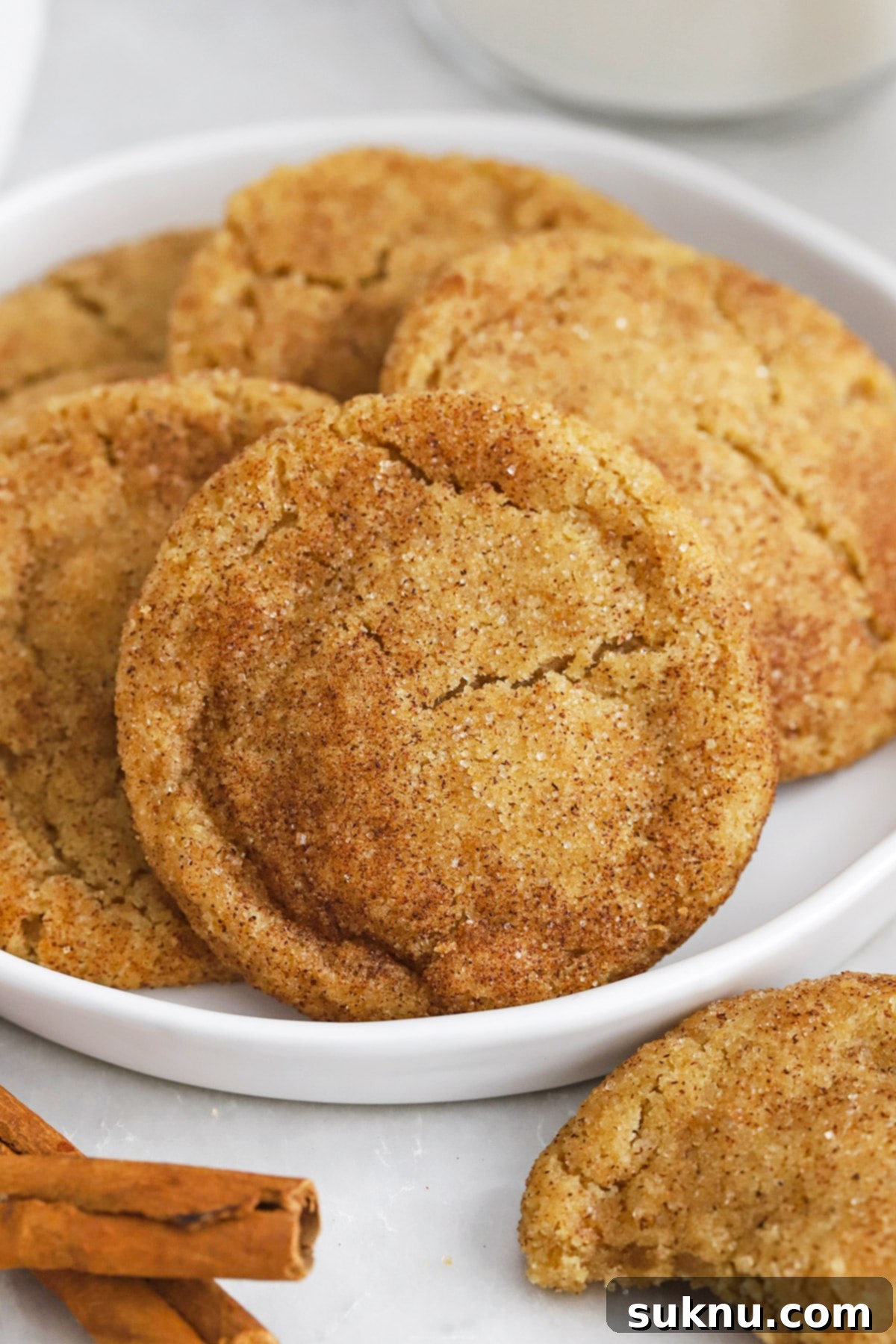
- Bake 9-11 minutes: Bake for 9 to 11 minutes, or until the edges of the cookies are set and lightly golden, but the centers still appear slightly puffed, soft, and *just* underdone. This ensures a wonderfully chewy interior. Overbaking will lead to dry cookies.
- Repeat! Allow the cookies to cool on the baking sheet for about 2 minutes before carefully transferring them to a wire rack to cool completely. This brief cooling period on the hot sheet helps them set without falling apart. Repeat the scooping, rolling, and baking process with the remaining dough, returning any unused dough to the refrigerator between batches to maintain its cool temperature.
Try Them With Caramel! Here’s How To Make Caramel Stuffed Snickerdoodles
While these brown butter snickerdoodles are undeniably delicious on their own, for an extra layer of indulgence and a truly memorable treat, consider stuffing them with soft, gooey caramel! It’s an optional step, but one that takes these cookies completely over the top.
- Prepare Caramels: You’ll need about 16 soft caramels. Cut each caramel in half. It’s crucial to use soft caramels – they should be pliable enough to easily pull apart with your fingers. This ensures they melt perfectly within the cookie without becoming too hard.
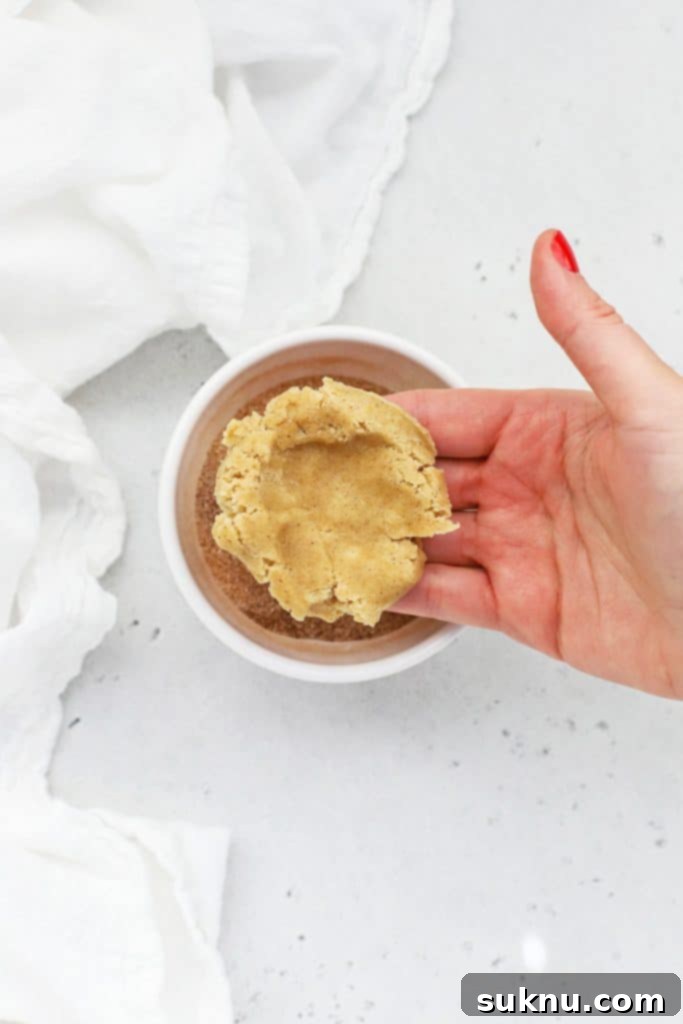
- Flatten Dough Ball: After you’ve scooped a ball of cookie dough, gently roll it smooth between your palms. Then, using your thumb or the palm of your hand, flatten the dough into a disc, starting from the center and working your way outwards.
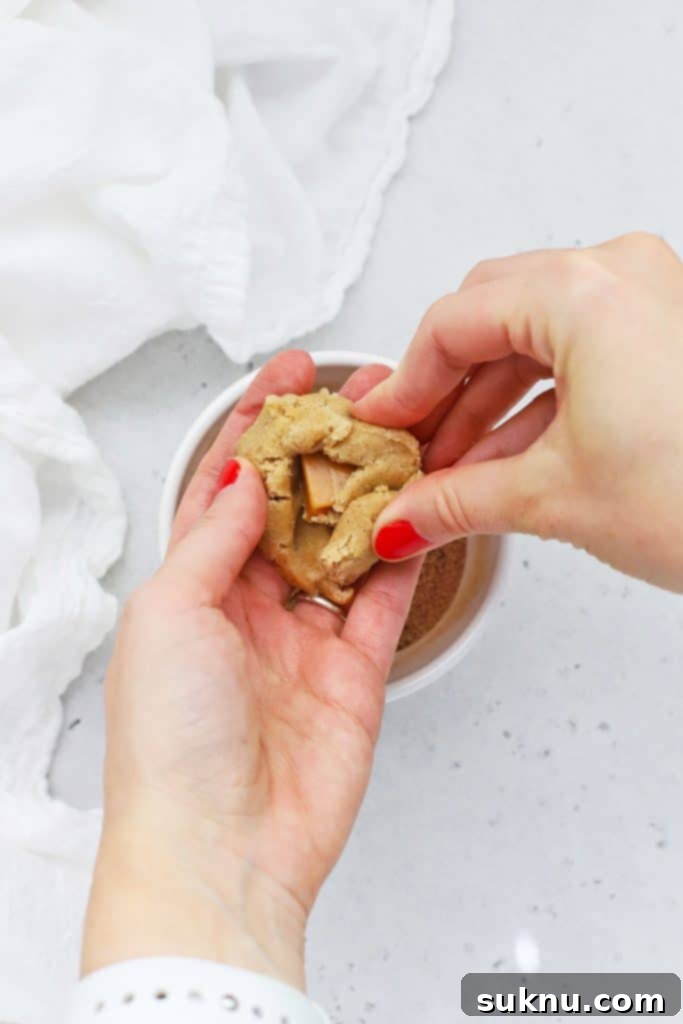
- Place Caramel & Enclose: Place one half of a caramel in the center of the flattened dough disc. Carefully fold the edges of the cookie dough up and over the caramel, pinching and sealing them completely to fully enclose the caramel inside. Ensure there are no gaps or cracks where the caramel could escape during baking.
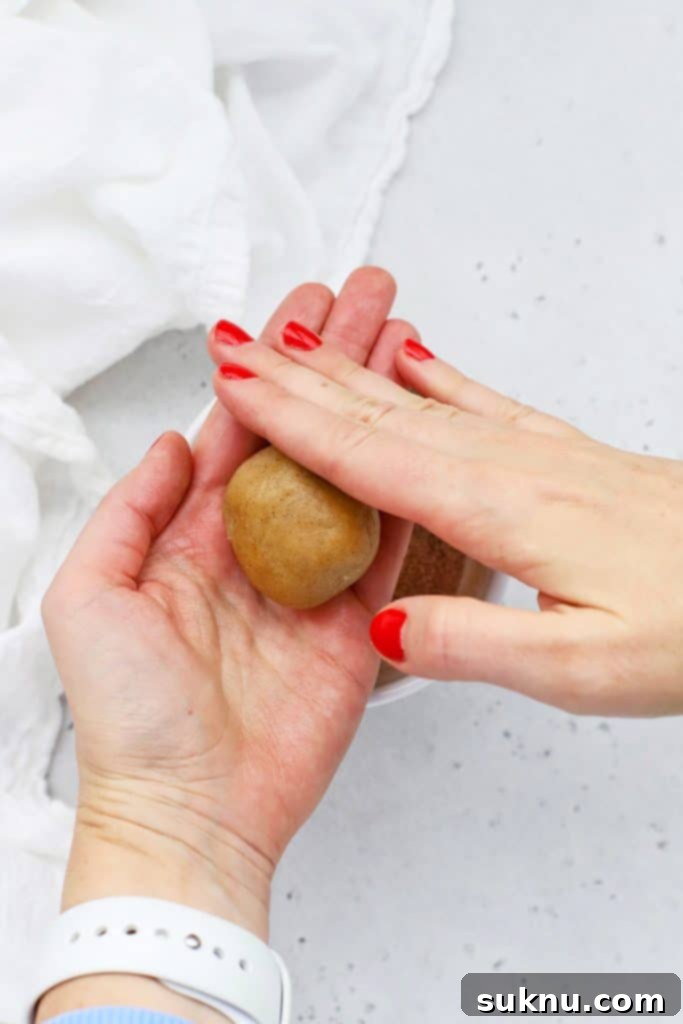
- Reshape Ball: Gently roll the dough ball between your palms once more to ensure it’s perfectly smooth and the caramel is securely sealed within.
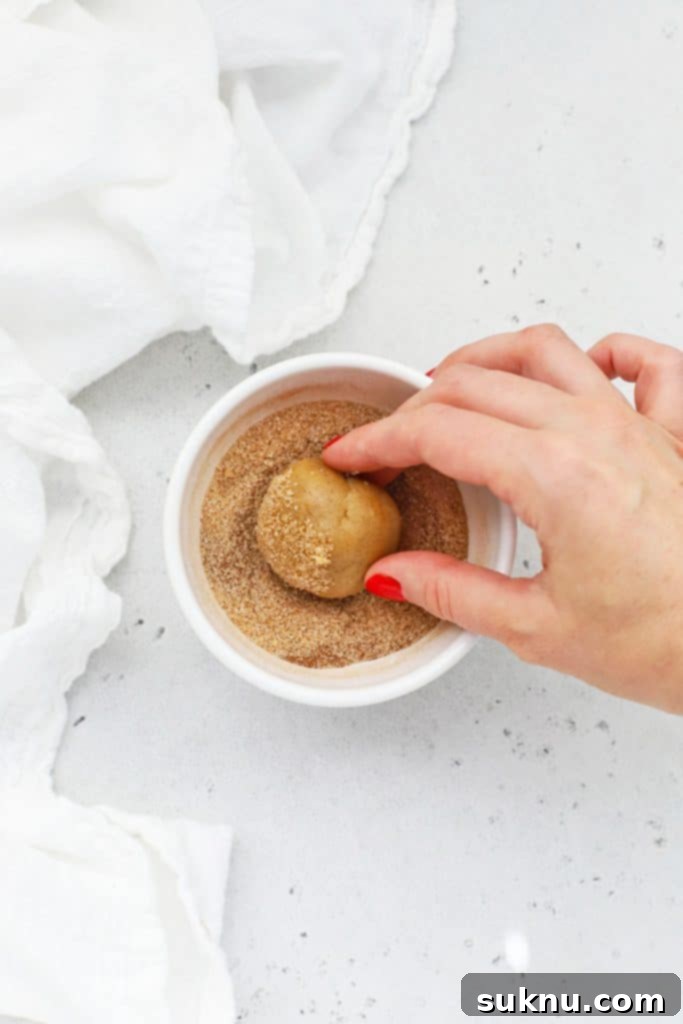
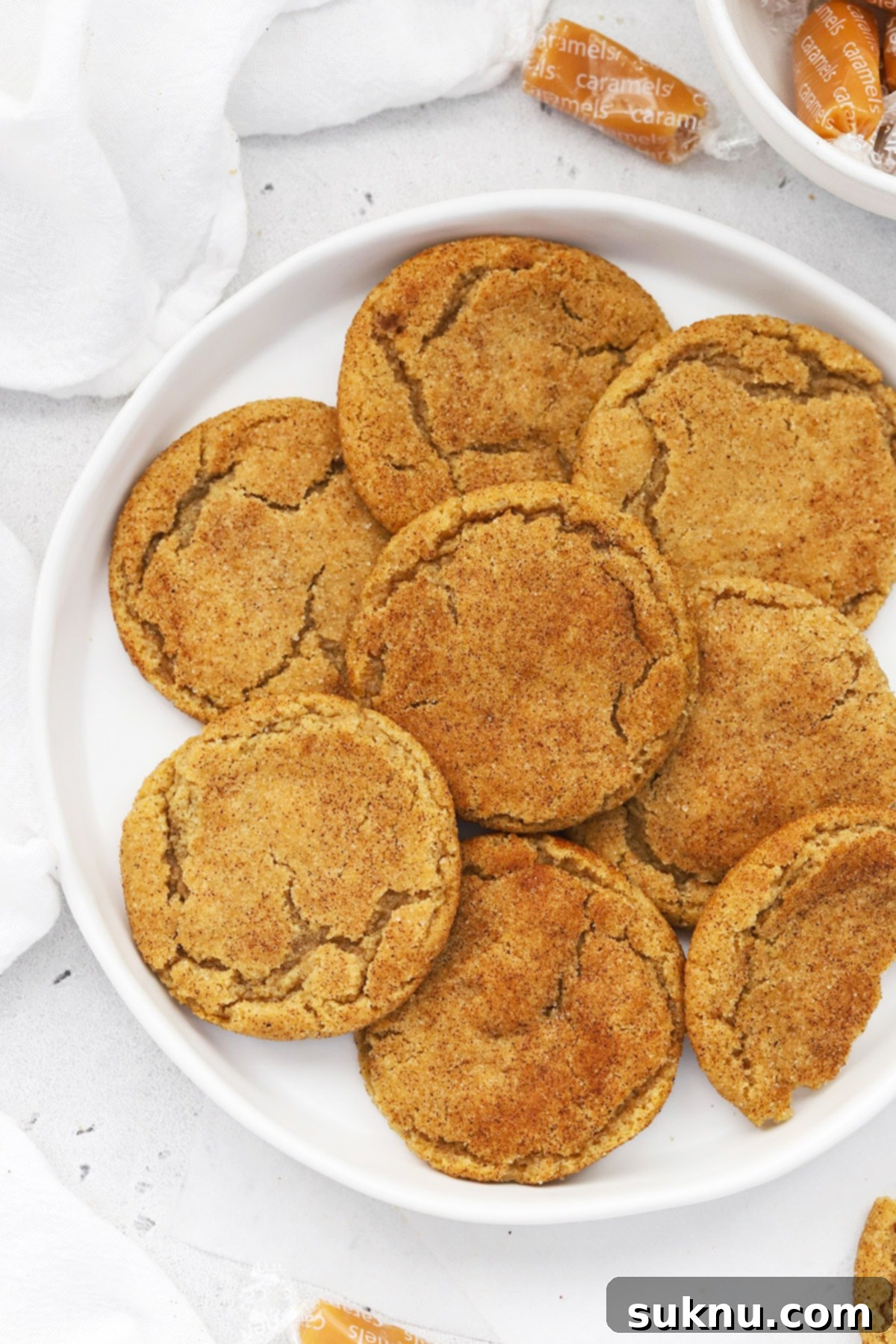
- Roll & Bake: Roll the caramel-stuffed dough ball in the cinnamon-sugar mixture, just as you would with unstuffed snickerdoodles. Then, bake according to the recipe instructions. The result will be a warm, chewy snickerdoodle with a delightful molten caramel center!
PSST! Always use SOFT caramels for caramel-stuffed snickerdoodles. (They should be soft enough to easily pull apart with your fingers.) Also, be sure to read ingredient labels, as not all store-bought caramels are guaranteed to be gluten-free.

Tips For The Best Gluten-Free Snickerdoodles:
To truly master these gluten-free brown butter snickerdoodles and achieve consistent, delectable results, pay close attention to these expert tips. They make a significant difference in the final cookie quality.
SNICKERDOODLE Tips
- Ensure Brown Butter is Cooled Before Adding Sugar: This is a critical step. Since this recipe uses melted brown butter, it’s vital that the butter returns to room temperature (or is at least mostly cooled) before you introduce the sugars. If the butter is too warm, it will melt the granulated sugar, which can drastically alter the cookie’s structure, leading to excessive spreading and a thin, greasy texture. Patience here will be rewarded with perfectly shaped, chewy cookies.
- Do NOT Skip the Dough Chilling Time: I know the wait can be agonizing when you’re craving fresh cookies, but the chilling period is absolutely essential for gluten-free brown butter snickerdoodles. This time in the refrigerator allows the gluten-free flour to fully hydrate and absorb the liquids in the dough, preventing any gritty texture. It also helps the flavors meld and deepen, and crucially, it prevents the cookies from spreading too much during baking, ensuring a thick, chewy, and tender final product. The gorgeous texture and rich flavor are definitely worth the wait!
- Consider Scooping the Dough Before Chilling: For convenience, you have the option to scoop the cookie dough into individual balls *before* chilling. This can make the process quicker when you’re ready to bake, as the chilled dough can be quite firm. Just form your 1.5-inch dough balls and place them on a parchment-lined tray to chill. However, remember this important caveat: Do not roll the scooped dough balls in the cinnamon-sugar mixture until just before baking. The warmth from your hands when rolling will help the cinnamon-sugar adhere beautifully, and rolling too early can cause the sugar to dissolve into the dough.
- Roll Dough in Cinnamon-Sugar Just Before Baking: This tip goes hand-in-hand with the previous one. To achieve that signature sparkly, crackly cinnamon-sugar coating that snickerdoodles are famous for, it’s best to roll the dough balls in the mixture immediately before they go into the oven. This ensures the sugar crystals remain distinct and create that delightful textured crust, preventing them from melting into the dough too early. It also contributes to a prettier, more inviting appearance.
FAQ – Frequently Asked Questions About Brown Butter Gluten-Free Snickerdoodles
Here are answers to some common questions about making perfect brown butter gluten-free snickerdoodles.
Why Do You Need Cream Of Tartar For Snickerdoodles?
Cream of tartar is a unique ingredient in snickerdoodles that serves two important purposes. First, it reacts with the baking soda to create a leavening effect, contributing to the cookie’s characteristic puff and texture. Second, and perhaps more importantly, it imparts the subtle tangy, slightly sour flavor that makes snickerdoodles distinct from a regular sugar cookie. It also helps create that signature chewy texture.
What’s A Good Substitute For Cream Of Tartar In Snickerdoodle Cookies?
I strongly advise against substituting cream of tartar if you want the authentic snickerdoodle experience. Its unique tangy flavor and contribution to chewiness are hard to replicate. However, if you find yourself in a bind and absolutely must substitute, you can use 2 teaspoons of baking powder in place of the 2 teaspoons of cream of tartar AND 1 teaspoon of baking soda called for in this recipe. Be aware that this substitution will result in cookies that are less tangy and may have a slightly different texture, leaning more towards a cinnamon-flavored sugar cookie than a true snickerdoodle.
How Do You Know If Snickerdoodles Are Done?
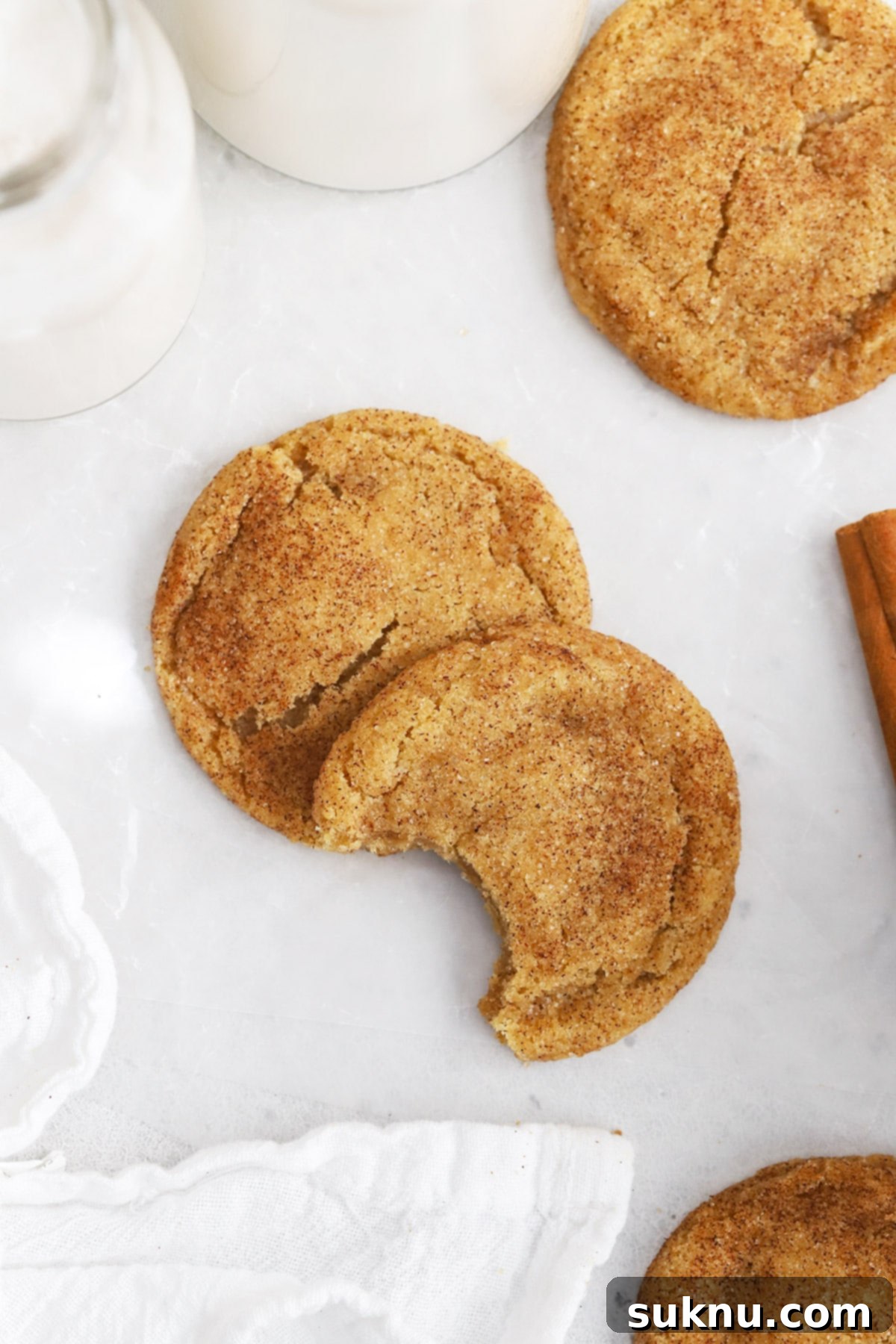
Knowing when to pull snickerdoodles from the oven is key to achieving that perfect soft and chewy texture. Look for these visual cues: the edges of the cookies should appear set, firm, and matte (no longer wet or shiny), often with a slight golden hue. The centers, however, should still look slightly puffed, soft, and perhaps a tiny bit shiny or *just* underdone. They might even have a slight “crackly” appearance. The residual heat from the hot baking sheet will continue to cook the cookies as they cool, allowing them to set completely without becoming dry. Pulling them out at this precise point guarantees a moist, tender, and chewy snickerdoodle.
How To Freeze Snickerdoodles.
Yes, you can absolutely freeze snickerdoodles! This is a fantastic way to prepare ahead or ensure you always have fresh cookies on hand. To freeze the cookie dough, I recommend forming the dough into balls as instructed, but *do not* roll them in cinnamon-sugar yet. Place the dough balls on a parchment-lined baking sheet and freeze until solid, then transfer them to a freezer-safe bag or airtight container. They can be stored for up to 3 months. When ready to bake, remove the desired number of dough balls, let them sit at room temperature for 15-20 minutes, roll in cinnamon-sugar, and bake as usual, adding a minute or two to the bake time if needed. For freezing baked snickerdoodles, allow them to cool completely. Arrange them in a single layer in a freezer-safe container, or stack them with layers of parchment or waxed paper in between to prevent sticking. They will stay fresh in the freezer for up to 2-3 months. Thaw at room temperature before serving.
Our Favorite Tools & Ingredients For Gluten-Free Snickerdoodles:
Having the right tools and ingredients can make your baking experience smoother and lead to even better results. Here are some of our top recommendations for making these delicious gluten-free snickerdoodles:
- The Best Gluten-Free Flour – A high-quality measure-for-measure gluten-free flour blend, like King Arthur’s, is essential for achieving light cakes, fudgy brownies, and beautifully structured cookies. It’s designed to perform much like traditional wheat flour.
- Light-Colored Baking Sheets – These are crucial for even baking. Darker baking sheets can lead to over-browning on the bottom of your cookies. Investing in good quality, light-colored sheets ensures consistent heat distribution and prevents burnt bottoms.
- Pre-Cut Parchment Sheets – Save time and frustration with pre-cut parchment paper. They fit most standard baking sheets perfectly, making cleanup a breeze and ensuring your cookies don’t stick. Incredibly useful for multiple batches, especially during holiday baking.
- Medium Cookie Scoop – A cookie scoop ensures uniform sizing for all your cookies, which is vital for even baking. This prevents some cookies from burning while others are underdone. It also makes portioning dough quick and mess-free.
- Inexpensive Kitchen Scale – For the most precise and consistent baking results, weighing your flour (and other dry ingredients) is far superior to volumetric measuring. It eliminates variability caused by packing density and ensures your dough has the perfect consistency every time.
- Stand Mixer – While not strictly necessary (a hand mixer works too!), a stand mixer makes the creaming of butter and sugar, and the mixing of dough, incredibly easy and efficient. It’s a true workhorse in any baker’s kitchen.
- Paddle Attachment – For cookie dough and cake batter, a paddle attachment is ideal. Look for one with a flexible spatula edge that scrapes down the sides of the bowl as it mixes, reducing the need to constantly pause and scrape manually.
Print Recipe
Gluten-Free Brown Butter Caramel Snickerdoodles
5 Stars from 4 reviews
- Author: Sweets And Thank You
- Total Time: 70 minutes
- Yield: 30-32 Cookies
- Diet: Gluten Free
Description
These gluten-free snickerdoodles are taken to a whole new level with brown butter and optional caramel stuffing.
Ingredients
- 1 cup butter, cut into cubes
- 1 cup packed brown sugar
- 3/4 cup sugar
- 1 egg + 1 egg yolk
- 1 Tbsp. vanilla extract
- 2 1/2 cups (300g.) measure-for-measure gluten-free flour, like King Arthur (scooped & leveled or weighed)
- 2 tsp. cream of tartar
- 1 tsp. baking soda
- 1 tsp. cinnamon
- 1/2 tsp. salt
- 12–14 caramels, cut in half (optional, for stuffing)
Instructions
- First, Brown The Butter. Add the butter to a light-colored saucepan and cook over medium heat, stirring constantly, until the butter foams and the butter underneath the foam has deepened to a honey color and the butter smells sweet and fragrant.
- Cool The Brown Butter to room temperature (or close to it!) before you mix it with the sugar, so that the sugar doesn’t just melt (which will lead to cookies that spread too much!) I usually take this cooling time to measure and prep all my other ingredients and prep my pans.
- Mix The Cooled Butter With Sugars. Once it’s cooled, mix the brown butter and sugars until the mixture looks like wet sand.
- Add Egg, Egg Yolk & Vanilla. You’ll add the egg and yolk 1 at a time, mixing to incorporate after each addition. Then, add the vanilla and mix to incorporate.
- Mix In The Dry Ingredients. Add the cream of tartar, baking soda, cinnamon, salt, and gluten-free flour to the mixer. Mix until just combined (no dry spots left).
- Chill The Dough. Transfer the dough to an airtight container and cover. Chill the dough in the refrigerator at least 2 hours, up to 24 hours. (This will help with the texture and spread of the cookies, so don’t skip it!)
- Prep To Bake When you’re ready to bake, remove the dough from the refrigerator for 15-20 minutes before scooping. Preheat the oven to 350 degrees F. and line 2 baking sheets with parchment. In a medium bowl, combine 1/4 cup sugar and 2 tsp. cinnamon and stir or whisk until well combined.
- Scoop & Roll. Use a medium cookie scoop to measure 1.5″ balls of dough. Roll each ball smooth in your hands, then roll in the cinnamon-sugar to coat. Place 6-8 cookie dough balls on a baking sheet.
- Bake 9-11 minutes, or until the edges are set the centers look *just* underdone. Cool 2 minutes on the baking sheet before transferring to a cooling rack.
- Repeat this process with each batch of cookie dough. (I recommend returning the dough to the refrigerator in between scooping batches)
IF YOU WANT TO STUFF THEM WITH CARAMEL:
- Cut 16 caramels in half. Use SOFT caramels (they should easily pull apart with your fingers)
- After scooping a cookie dough ball, roll it smooth in between your palms, then flatten it out, starting at the center and moving in a circular direction.
- Place the caramel half in the center of the flattened disc and fold the sides up and over to completely enclose the caramel in the cookie dough.
- Roll it between your palms again to smooth out the ball.
- Roll in cinnamon-sugar and bake as usual!
- Prep Time: 30 minutes
- Cook Time: 40 minutes
- Category: Cookies
- Method: Baking
- Cuisine: American