How to Get Eggs to Room Temperature Quickly for Perfect Baking Results
Unlock the secret to flawless baking by mastering the art of bringing eggs to room temperature. This essential guide reveals the fastest method, why egg temperature is crucial, and practical tips for every baker.
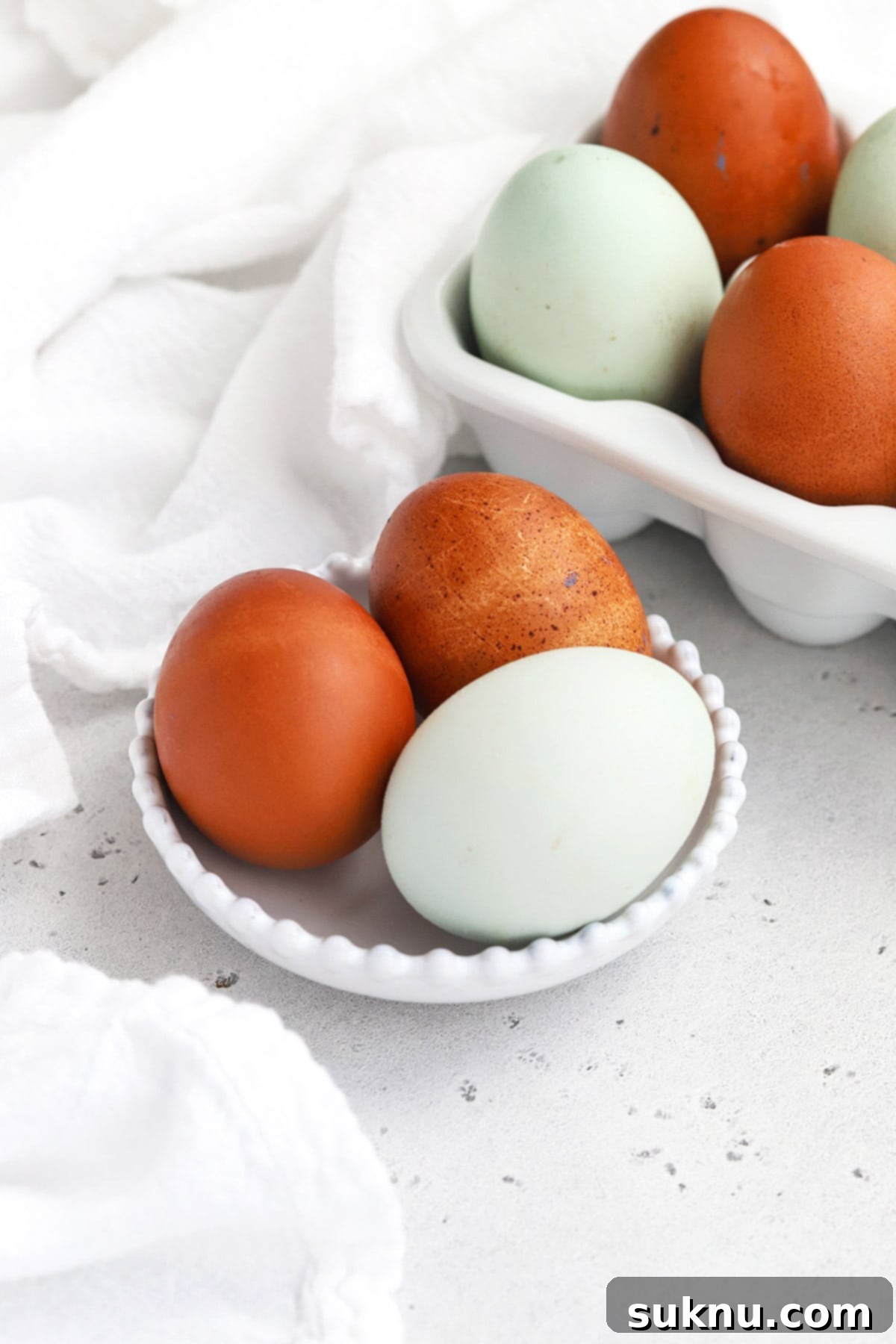
Welcome to another installment of our “Be A Better Baker” series, where we dive into fundamental techniques that elevate your baking from good to extraordinary! Today, we’re focusing on a seemingly small detail that makes a monumental difference: room temperature eggs. You might have seen this instruction in countless recipes and wondered if it’s truly necessary or just a chef’s preference.
The truth? Using room temperature eggs when a recipe calls for them is incredibly important. It’s not a step you can afford to skip if you’re aiming for the best possible texture, rise, and overall quality in your baked goods.
This comprehensive guide will cover everything you need to know about room temperature eggs. We’ll explore what “room temperature” actually means for an egg, delve into the scientific reasons behind its importance, and most importantly, show you the quickest and most effective way to warm eggs up without the long wait. No more tapping your fingers while ingredients slowly adjust!
So, how do you get eggs to room temperature fast? I’ve got a simple 10-minute trick that consistently delivers perfect results, ensuring your baking projects stay on schedule and turn out beautifully every time.
What Exactly Are Room Temperature Eggs?
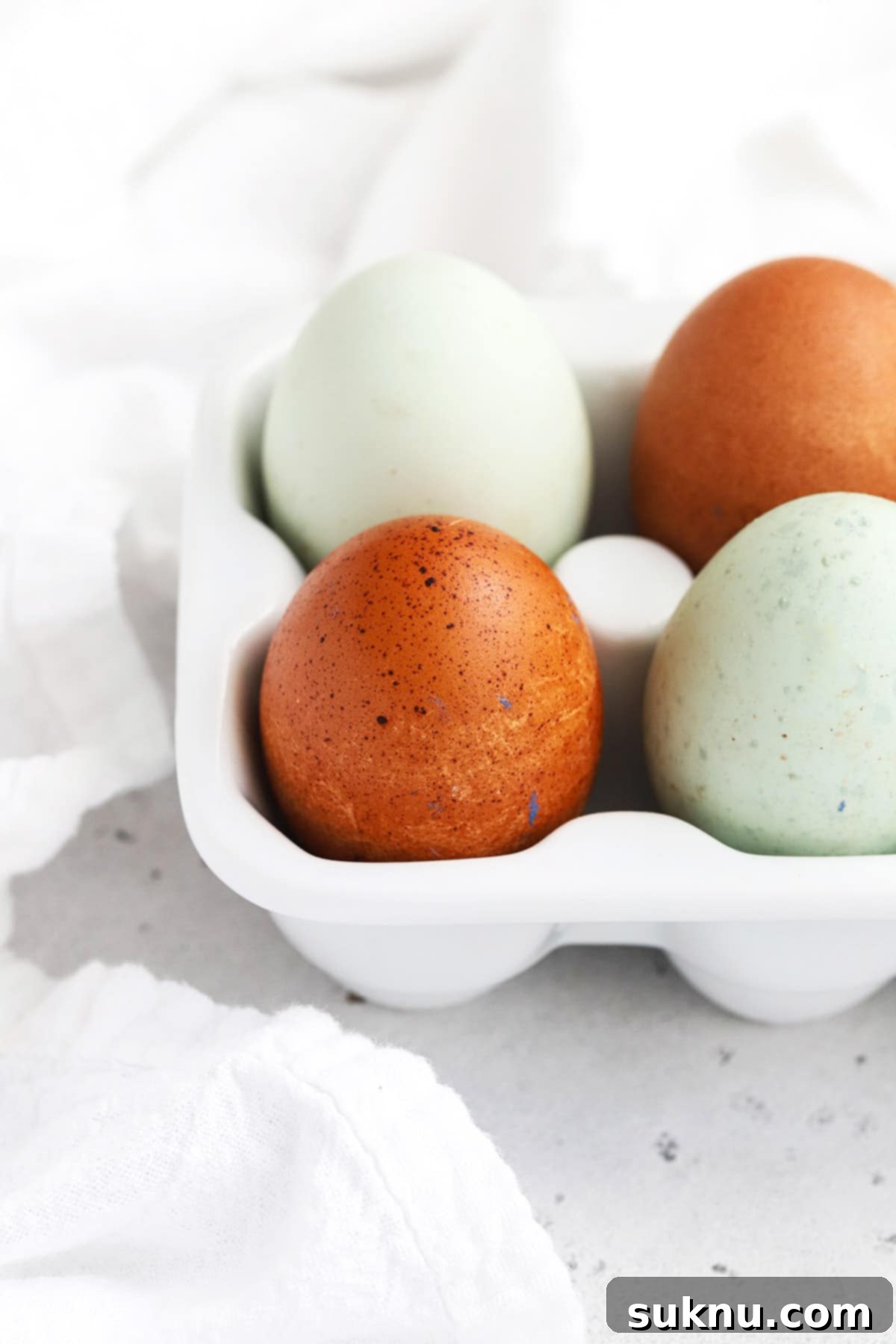
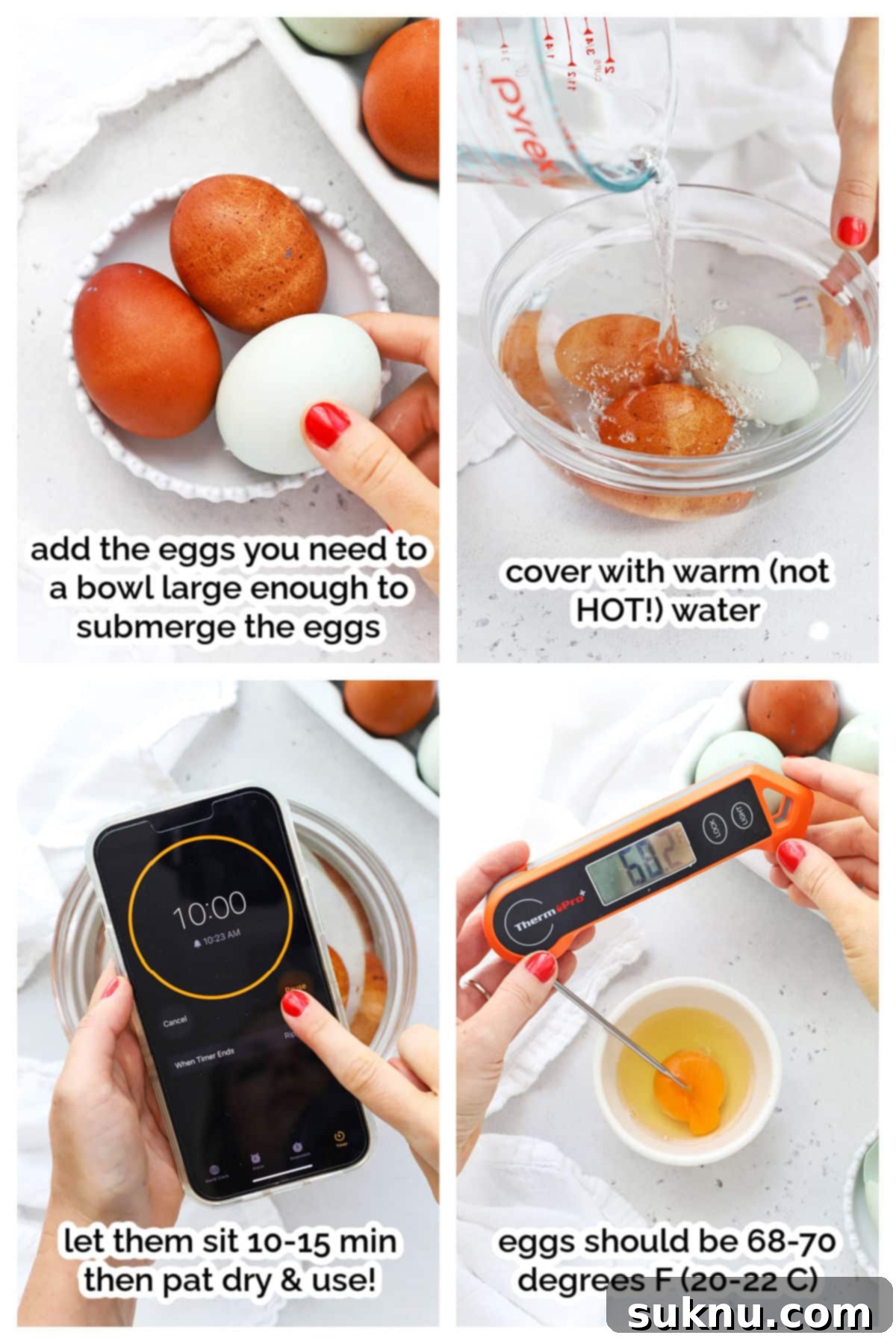
Understanding what constitutes a “room temperature egg” is the first step. Technically, eggs are considered at room temperature when they reach a temperature between 68-70 degrees F (20-21 degrees C). This isn’t just a vague estimation; this precise temperature range is where egg proteins and fats behave optimally for baking.
You can verify this by cracking an egg into a small bowl and using an instant-read thermometer to check its temperature. If you don’t have a thermometer handy, a quick fingertip test works too: cracked room temperature eggs should not feel cold to the touch. They should feel neutral, neither warm nor chilled, effortlessly blending with your other ingredients. Avoiding hot water is crucial here, as it can cause the proteins to begin cooking, altering their structure and making them unusable for certain recipes.

Why Room Temperature Eggs Are a Game-Changer in Baking
Is bringing eggs to room temperature really a non-negotiable step? Why are room temperature eggs so vital for successful baking?
When a baking recipe specifies room temperature eggs, it’s a call to action for a reason. Ignoring this instruction and using cold eggs can significantly compromise the final texture, rise, and overall quality of your baked goods. The temperature of your eggs plays a pivotal role in the molecular interactions within your batter or dough, impacting everything from emulsification to aeration. Here are the main reasons why this simple step is so important:
- Optimal Emulsification and Smooth Batters: Room temperature eggs more readily emulsify with other ingredients, especially fats like butter. When you add cold eggs to softened butter, the butter can firm up and curdle the mixture, resulting in a lumpy, separated batter. This curdling prevents a smooth emulsion, leading to baked goods with an inconsistent texture, dense spots, and a poor rise. Warmer eggs integrate seamlessly, creating a uniform, creamy batter that bakes evenly.
- Superior Volume and Lightness: The proteins in eggs, particularly the whites, are more flexible and elastic at room temperature. This flexibility allows them to stretch and trap air more efficiently when whipped, leading to significantly greater volume and a more stable foam. This is crucial for recipes like meringues, soufflés, and light, airy cakes (such as sponge cakes) that rely on aerated egg whites for their structure and airy texture. Cold egg whites are less elastic and won’t achieve the same fluffy results.
- Consistent Ingredient Blending: All ingredients at a similar temperature mix more harmoniously. When cold eggs are introduced into a creamy mixture of butter and sugar, they can cause the butter to seize and become solid again. This makes it challenging to achieve a well-blended, smooth batter or dough. Room temperature eggs ensure that all components combine smoothly and evenly, contributing to a uniform texture and rise in your finished product.
- Improved Dough Structure and Spread: For cookies and pastries, room temperature eggs contribute to the proper development of gluten and the overall structure of the dough. They help prevent the butter from re-solidifying too quickly, which can hinder proper spread during baking, leading to dense or oddly shaped treats. A well-integrated dough results in cookies that bake up perfectly, with ideal chewiness or crispness.
As you can see, getting your eggs to the correct temperature is far more than a mere suggestion. It’s a critical step that lays the foundation for successful, professional-quality baking, ensuring your creations are consistently light, airy, and delicious.
The Quickest Way to Get Eggs to Room Temperature (The Water Bath Trick)
While the traditional method of leaving eggs out on the counter for 30-60 minutes certainly works, busy bakers need a faster solution. My go-to method for rapidly warming eggs to the ideal temperature is the “water bath trick,” and it’s incredibly effective:
- Prepare a Bowl: Place the desired number of eggs into a small bowl. Choose a bowl that’s deep enough to fully submerge the eggs in water without them floating out.
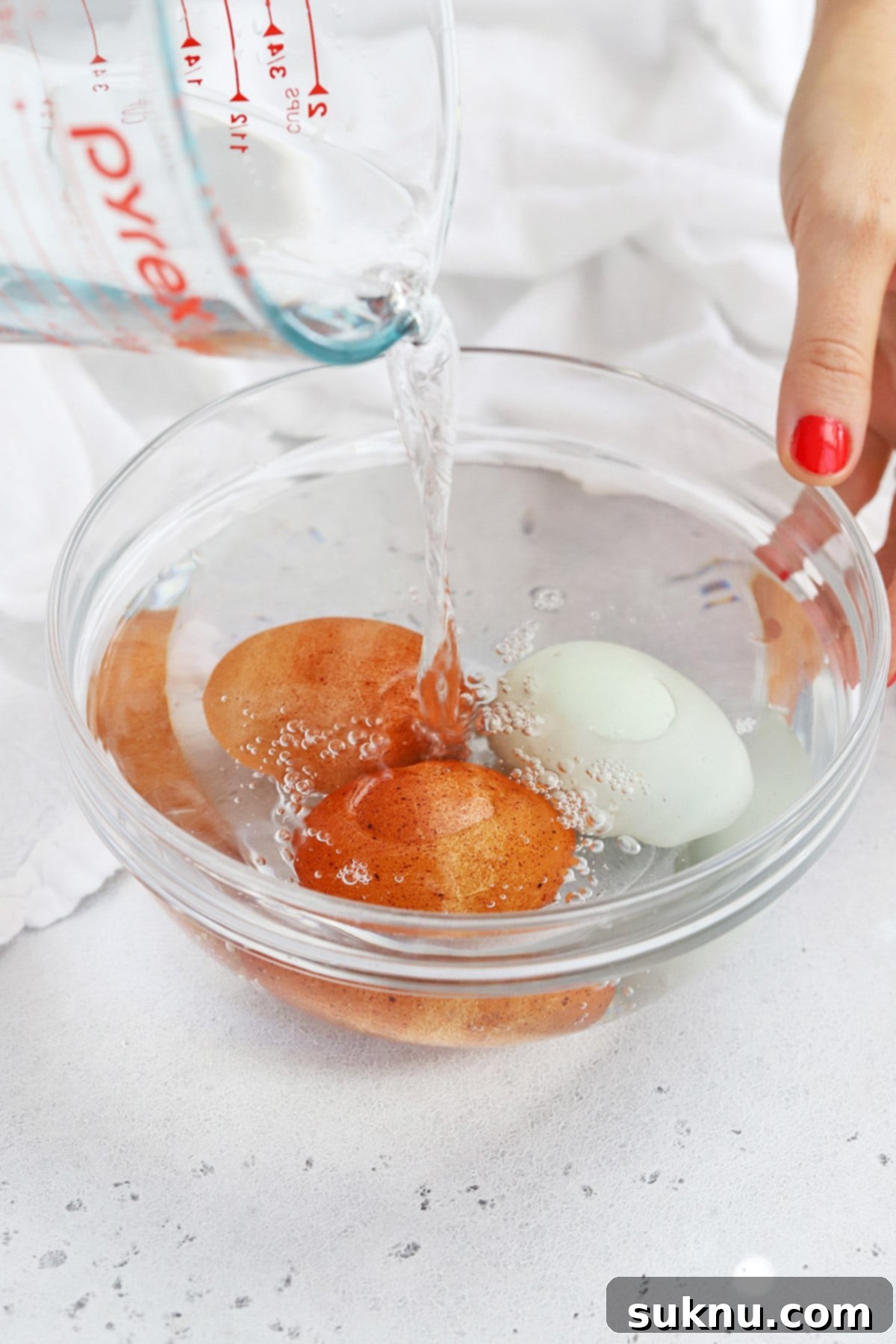
- Add Warm Water (Important!): Fill the bowl with warm tap water. It’s crucial that the water is WARM, not hot. The temperature should feel similar to comfortable bath water – around 105-115°F (40-46°C). Water that’s too hot can begin to cook the eggs, rendering them useless for your recipe. If you have a kitchen thermometer, aim for this range; otherwise, test with your wrist, just as you would for a baby’s bottle.
- Let Them Rest: Allow the eggs to sit in the warm water bath for 10-15 minutes. Even just 5 minutes will make a noticeable difference, but for optimal results and to ensure they reach the target temperature, aim for the full 10-15 minutes. Once warmed, gently remove the eggs, dry them, and proceed with your recipe as directed.
🌟 PRO TIP for Time Management: Make bringing your eggs to room temperature the very first step when you begin preparing your recipe. By the time you’ve gathered, measured, and prepped all your other ingredients, your eggs will be perfectly warmed and ready to incorporate, saving you valuable time and keeping your baking flow seamless!
How to Bring Separated Eggs to Room Temperature
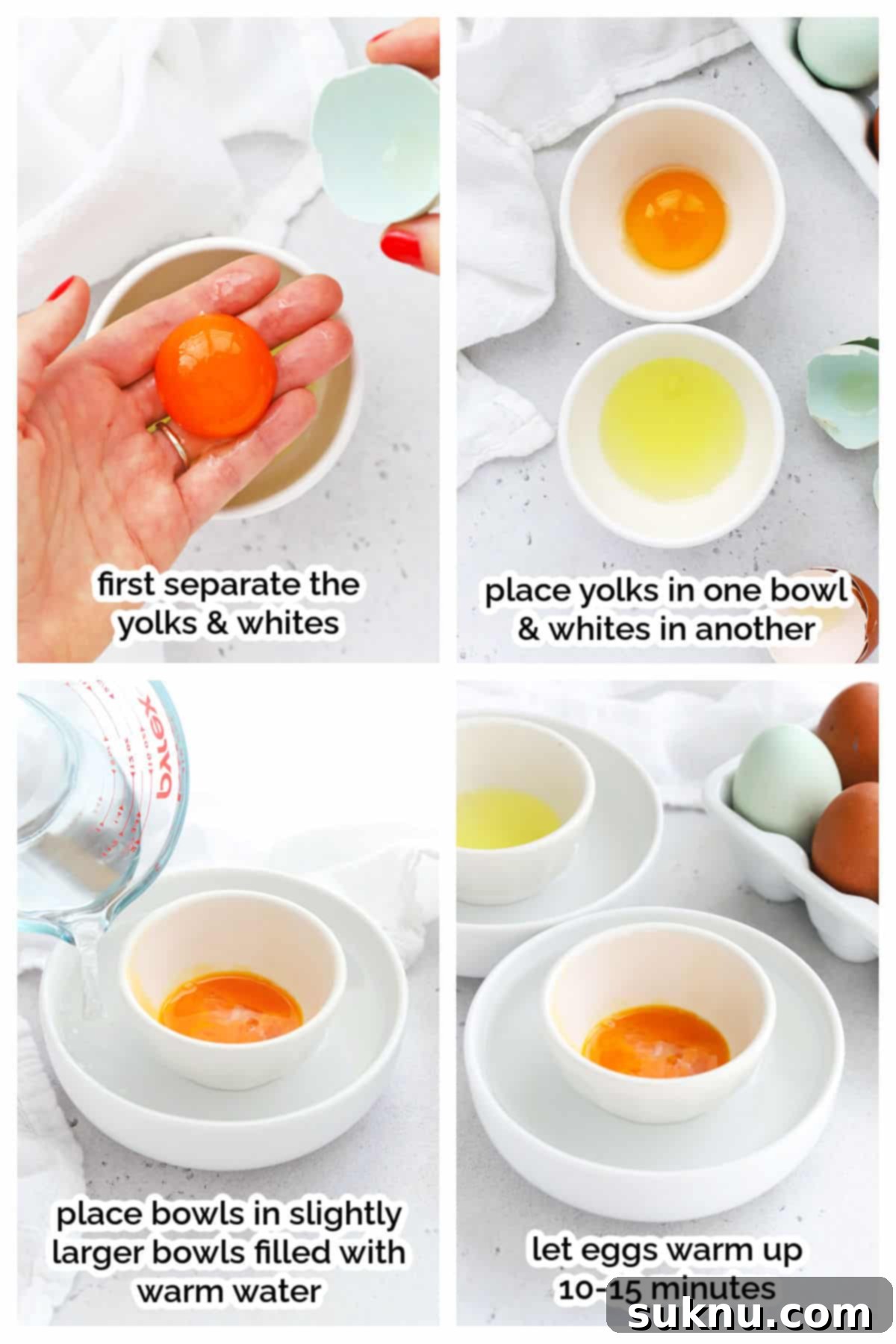
Some recipes, especially those for meringues or soufflés, require separated egg yolks and whites. An important trick here is that eggs are easiest to separate when they are cold. Their yolks are firmer and less likely to break. Therefore, the best approach is to separate cold eggs first, and then bring the yolks and whites to room temperature separately. Here’s how to adapt the water bath method:
- Separate Cold Eggs: Carefully separate your cold eggs into two small, individual bowls – one for the whites and one for the yolks. Ensure no yolk gets into the whites, as even a tiny amount of fat can prevent egg whites from whipping properly.
- Create a Gentle Water Bath: Place these small bowls (containing the separated yolks and whites) into slightly larger bowls or a shallow basin. Fill the larger container with warm tap water, taking extreme care not to allow any water to spill over into the smaller bowls and contaminate the egg yolks or whites.
- Warm and Use: Let the separated egg yolks and whites warm up for 10-15 minutes in their gentle water bath. Once they reach room temperature, they will be perfectly conditioned for your recipe, whether you’re whipping whites to stiff peaks or incorporating yolks into a rich custard.
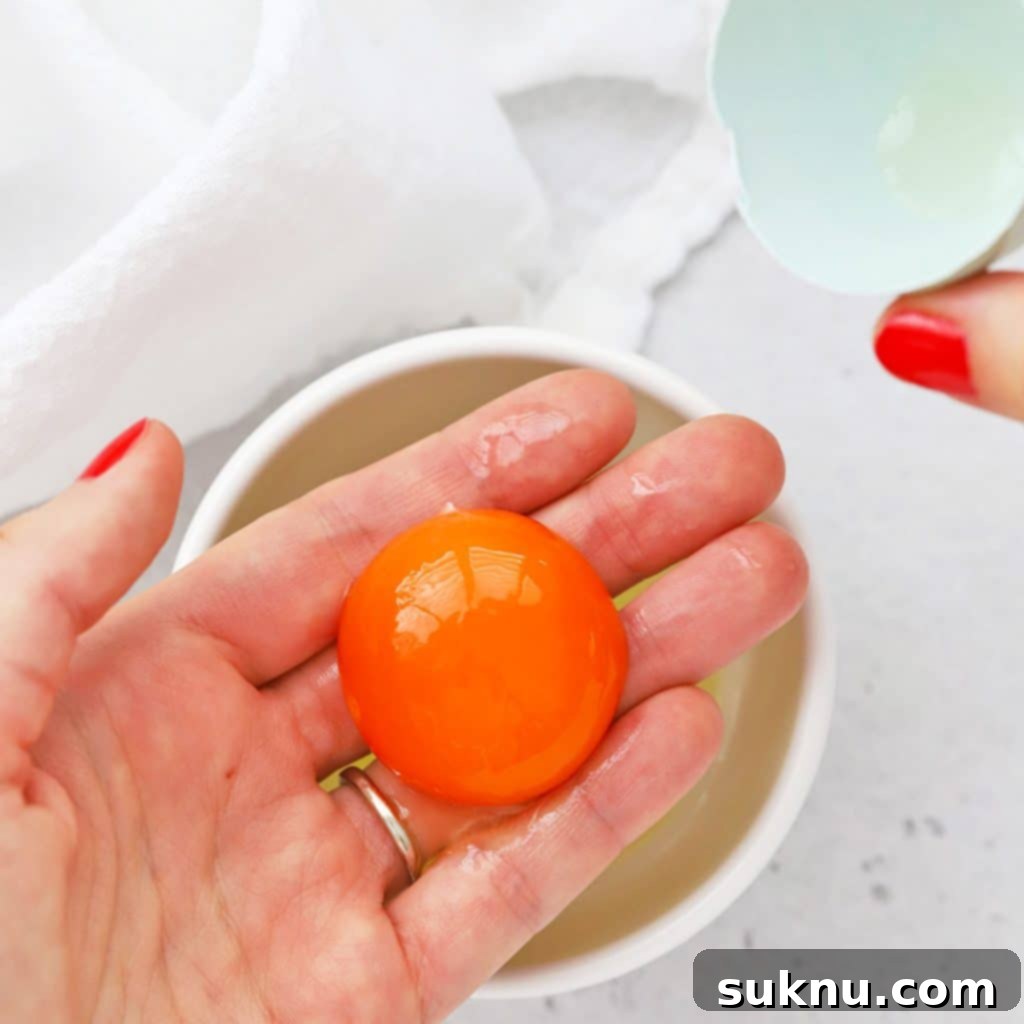
Psst! Here’s How To Separate Eggs
If you’re new to separating eggs or need a refresher, check out this detailed post. It covers three easy methods to perfectly separate egg yolks and whites, ensuring you’re ready for any recipe!
FAQ: Essential Tips and Tricks for Room Temperature Eggs
How Long Does It Take to Get Eggs to Room Temperature?
The time required depends on the method and ambient room temperature. If you’re simply leaving eggs out on the counter, it can take anywhere from 30 minutes to an hour (or even more in a cooler kitchen). However, using the quick water bath trick, eggs typically reach room temperature within 10-15 minutes, making it the most efficient method for immediate baking needs.
How Long Is It Safe for Eggs to Be at Room Temperature?
Food safety is paramount. According to USDA guidelines, raw shell eggs should not be left at room temperature (between 68-70°F / 20-21°C) for longer than 2 hours. If your kitchen temperature is above 70°F, this window shortens to just 1 hour. This is to prevent the rapid growth of bacteria like Salmonella. Always adhere to these guidelines to ensure food safety.
Can You Put Room Temperature Eggs Back In The Fridge?
If the eggs have been at room temperature (68-70°F / 20-21°C) for less than 2 hours, or at a higher temperature (above 70°F) for less than 1 hour, they can safely be returned to the refrigerator. However, if eggs have been left out for longer than these recommended safe periods, it is crucial to discard them to avoid any risk of foodborne illness. When in doubt, it’s always better to be safe than sorry.
When Are Room Temperature Eggs Most Important in Baking?
Room temperature eggs are particularly vital in recipes that rely on the creaming method, where butter and sugar are beaten together until light and fluffy (common for many cookies, cakes, and quick breads). They are also essential when making delicate custards like cheesecakes, and absolutely critical when whipping egg whites into soft or stiff peaks for meringues, macarons, soufflés, waffles, or angel food cake recipes. In these applications, the proper temperature directly influences aeration, stability, and the overall success of the bake.
When Is It Okay To Use Cold Eggs In A Recipe?
While room temperature is often preferred, there are specific instances where cold eggs work perfectly well, or are even recommended:
- One-Bowl Recipes & Boxed Mixes: For simpler recipes where all ingredients are mixed at once, or when using commercial cake or baking mixes, the exact temperature of the eggs often matters less. These recipes are typically formulated to be more forgiving.
- Cooking Eggs Directly: When you are cooking eggs themselves (e.g., for scrambled eggs, poached eggs, baked eggs, or omelets), starting with cold eggs is perfectly fine and often preferred for easier handling.
- Certain Cookie Recipes (No-Chill Dough): In some specific cookie recipes where the dough is not intended to be chilled before baking, using cold eggs can sometimes help prevent the butter from melting too quickly in the oven, which can lead to excessive spreading.
However, the golden rule of baking remains: always follow the recipe instructions. The recipe developer has tested their creation with specific ingredient temperatures in mind. Adhering to these guidelines is your best bet for consistent and delicious results. Happy baking!
More Baking Tricks To Try

How to Freeze Cookie Dough
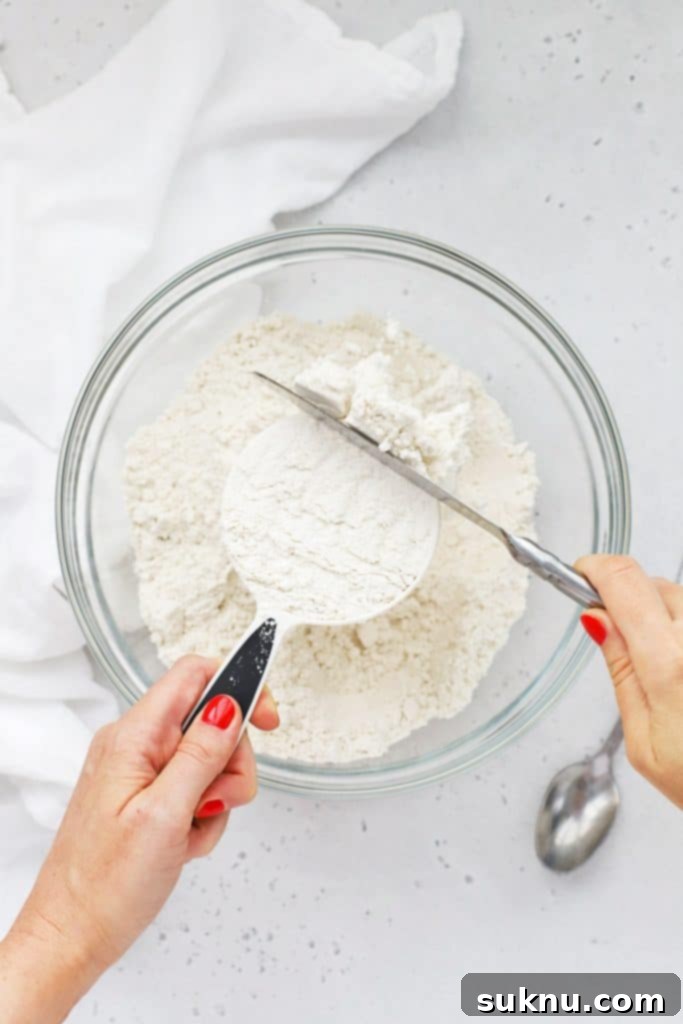
How to Measure Flour Correctly
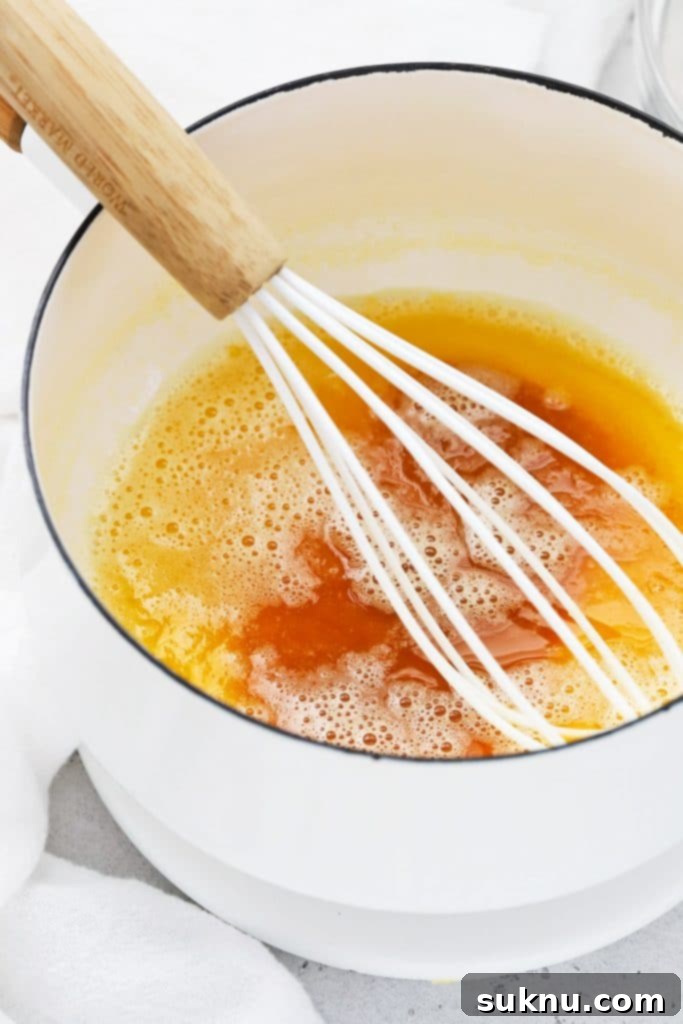
How to Brown Butter

How to Get Eggs To Room Temperature Quickly
No reviews
-
Author:
Sweets & Thank You -
Total Time:
10 minutes -
Yield:
1 batch -
Diet:
Gluten Free
Description
The easiest and quickest way to bring your eggs to room temperature for perfect baking results is this simple water bath trick!
Ingredients
- Eggs (however many your recipe calls for)
- A bowl (or two, if separating) large enough to comfortably hold the eggs and submerge them in water
- Warm tap water (not hot)
Instructions
To Bring Whole Eggs To Room Temperature Quickly:
- Add the eggs to a bowl deep enough to submerge them in water.
- Fill the bowl with warm water. Ensure the water temperature is warm, like bathwater (105-115°F / 40-46°C), not hot, to prevent cooking the eggs.
- Let the eggs sit in the warm water for 10-15 minutes. Then, dry them, crack, and use as directed in your recipe. (A minimum of 10 minutes is recommended for best results!)
To Bring Separated Eggs To Room Temperature Quickly:
- Separate COLD eggs into two small bowls (one for whites, one for yolks). Separating cold eggs is easier.
- Place small bowls in slightly larger bowls and fill with warm water. Be careful not to let the warm water overflow into the bowls containing the egg yolks or whites.
- Let the egg yolks and whites warm up for 10-15 minutes before proceeding with your recipe.
Notes
- Strategic Timing: Always start warming your eggs first. By the time your other ingredients are prepped, your eggs will be perfectly ready.
- Temperature Check: Room temperature eggs are ideally 68-70°F (20-21°C). You can verify this with an instant-read thermometer or by checking if a cracked egg feels neutral (not cold) to the touch.
- Food Safety: Do not leave eggs at room temperature for more than 2 hours (or 1 hour if above 70°F). Discard eggs left out longer than these limits.
-
Prep Time:
10 minutes -
Category:
Tutorial, Baking Tips -
Method:
No Bake -
Cuisine:
American