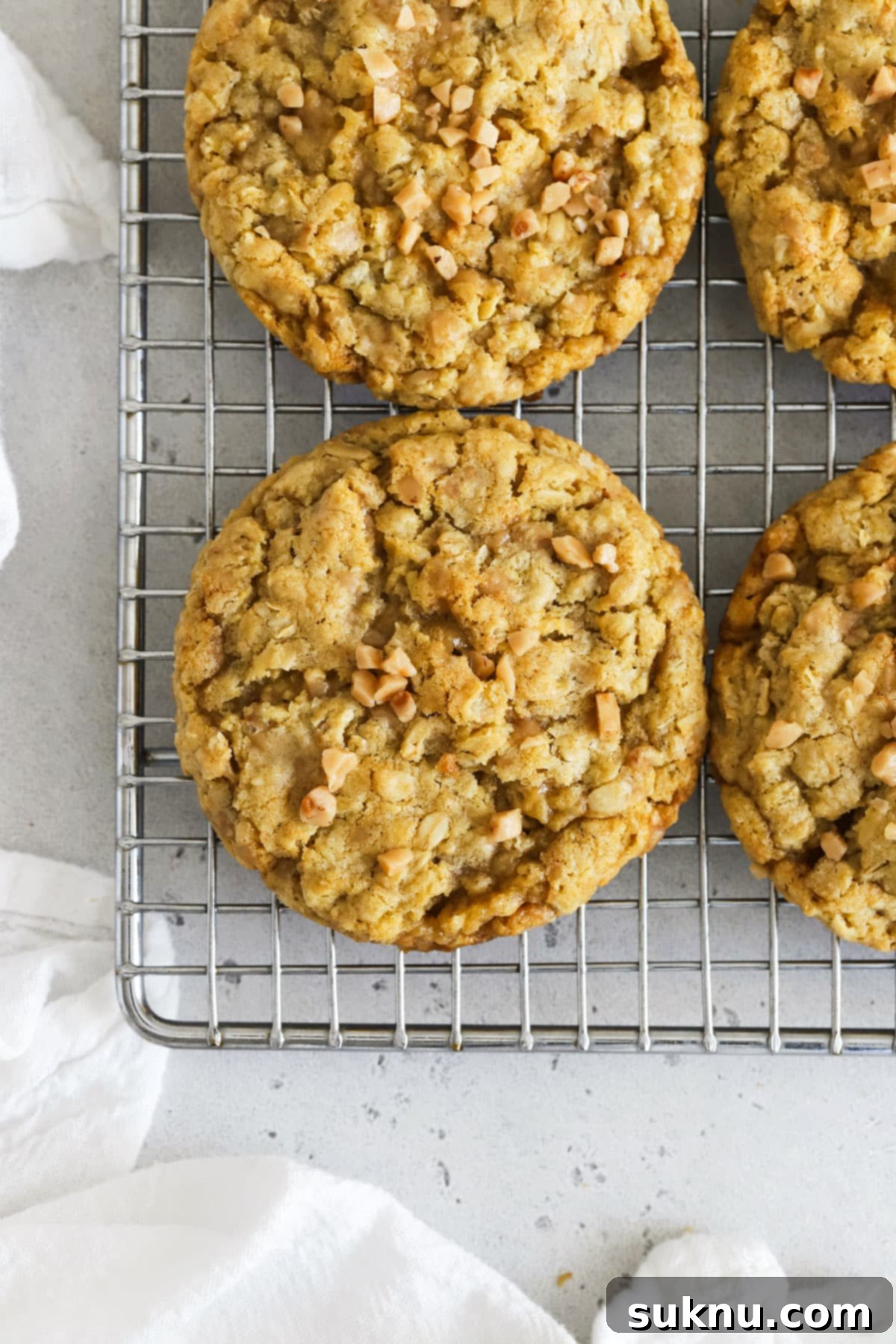
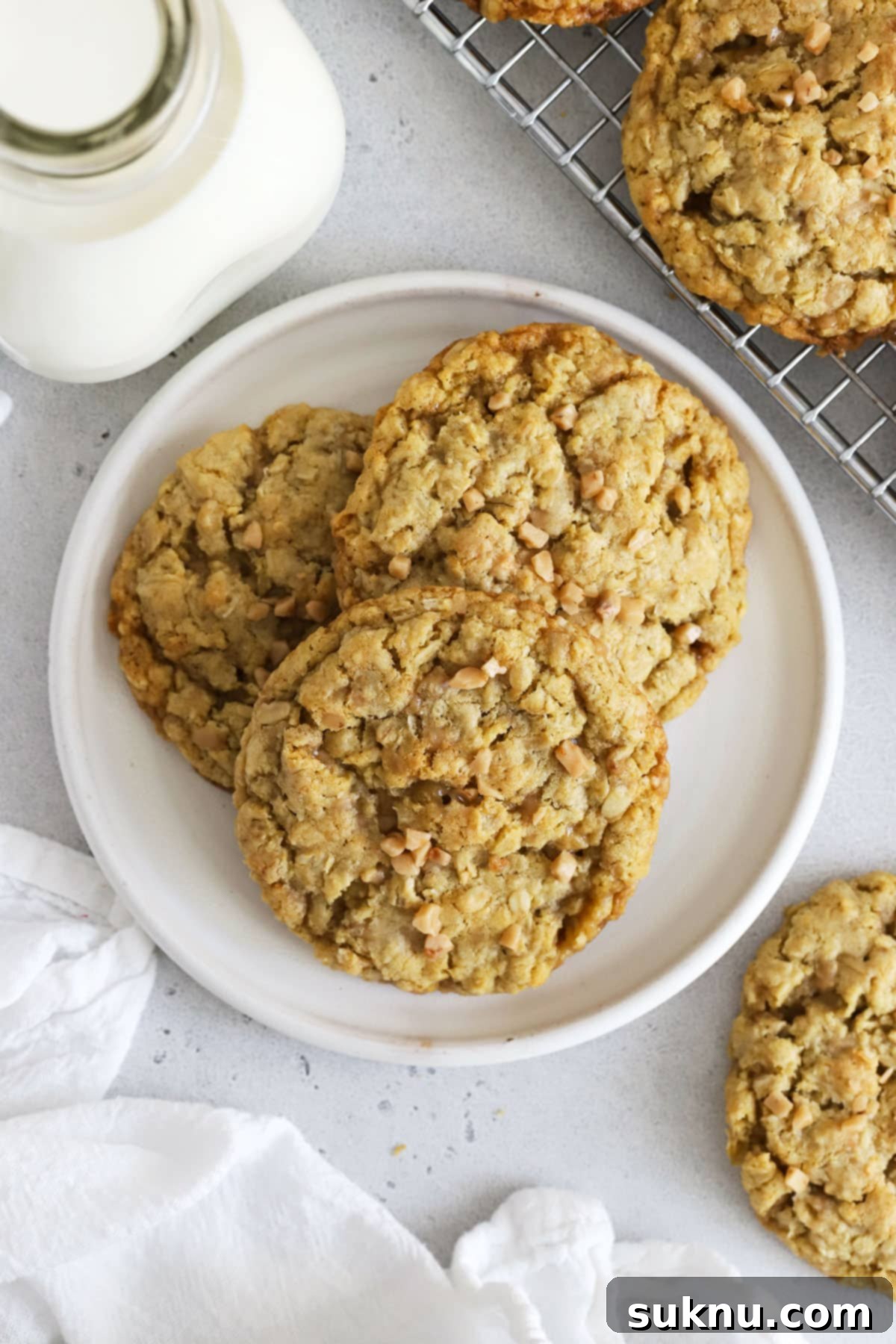
Indulge in the ultimate homemade treat with these irresistible Gluten-Free Oatmeal Toffee Cookies. Combining a perfectly soft and chewy oatmeal cookie base with pockets of crunchy, buttery toffee bits, these bakery-style delights are guaranteed to become a cherished favorite in your recipe collection!
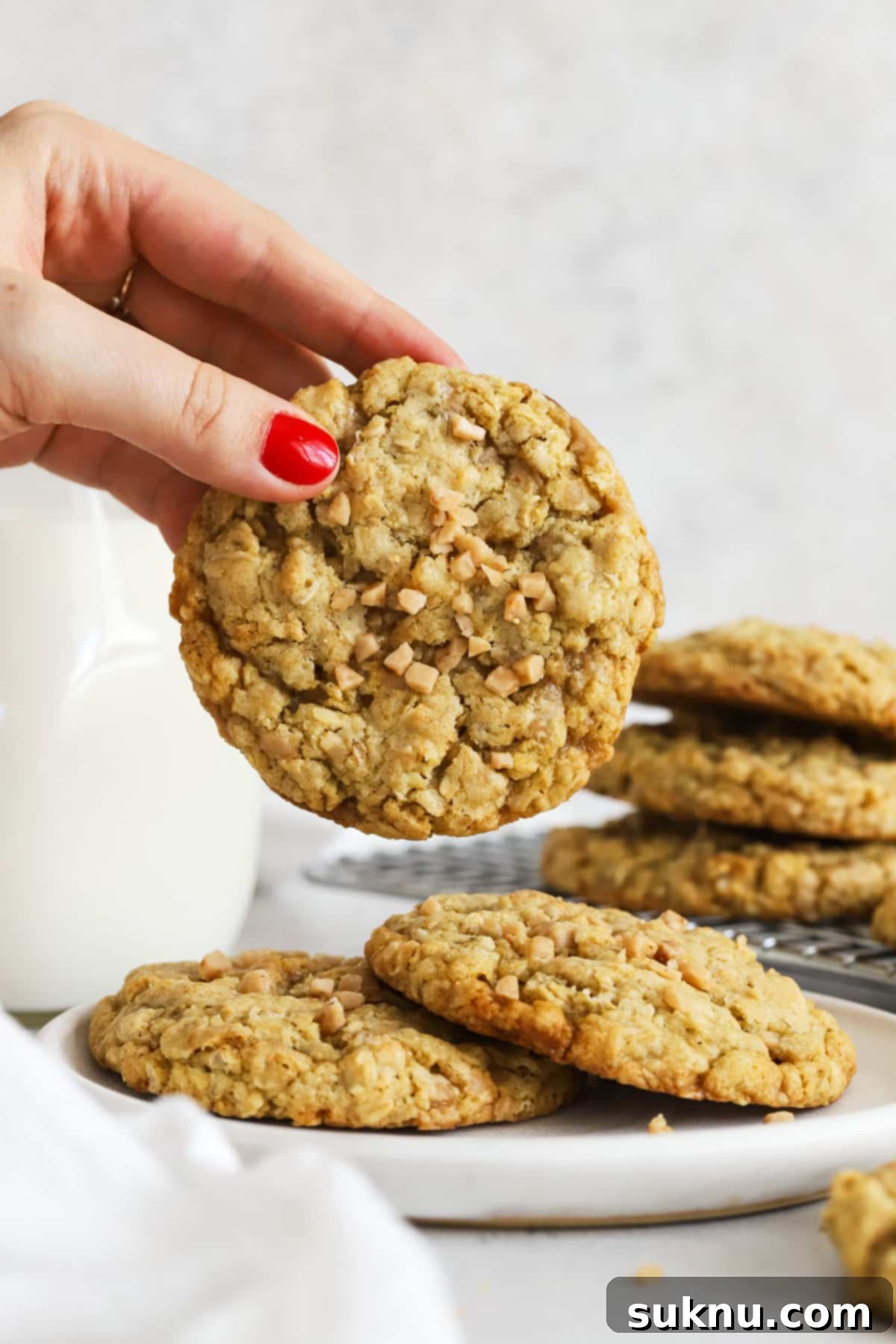
There’s nothing quite like the satisfaction of recreating beloved bakery treats right in your own kitchen. From replicating the famously thick Gluten-Free Levain Chocolate Chip Cookies to perfecting a gluten-free Crumbl copycat recipe, I find immense joy in mastering these delicious challenges. Today, I’m thrilled to share a new bakery-inspired creation that will undoubtedly capture your heart: these incredible Gluten-Free Oatmeal Toffee Cookies. The inspiration struck after I savored a truly unforgettable cookie at a local sandwich shop. Its unique blend of flavors and textures lingered in my mind, compelling me to return for another—and then to embark on the mission of perfecting a homemade, gluten-free version!
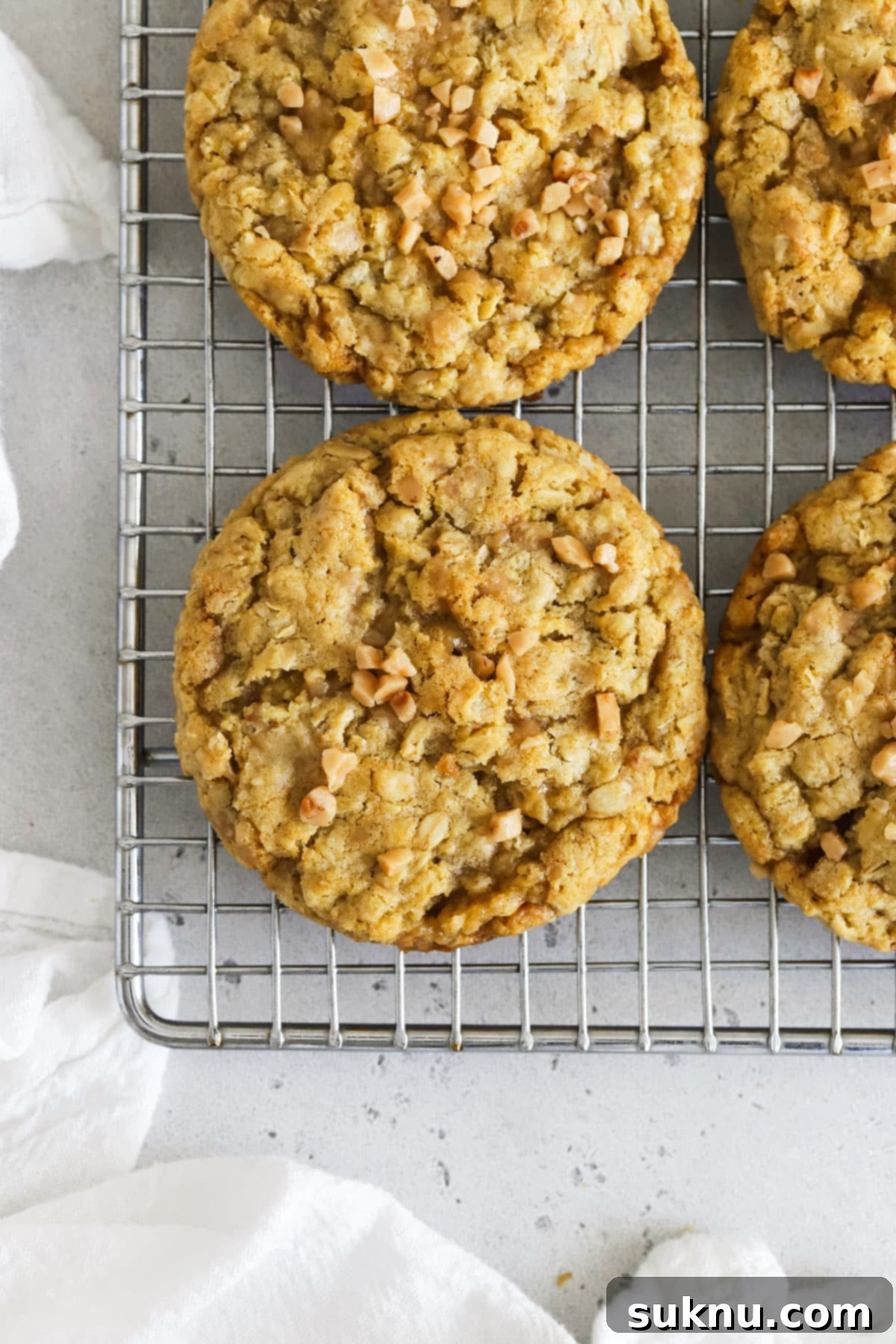
This recipe delivers everything you could wish for in a cookie: a remarkably soft and chewy oatmeal base, elevated by the luxurious, caramelly crunch of toffee bits. Each bite is a symphony of flavors, with delightful notes of rich vanilla, deep brown sugar, and a subtle hint of caramel from the toffee. It’s a sophisticated and fun twist on classic oatmeal cookies, offering an experience that goes beyond the ordinary. The best part? Despite their gourmet taste and bakery-quality appearance, these cookies are surprisingly simple to make, relying on straightforward ingredients and easy-to-follow steps. Let’s dive into creating these delightful treats!
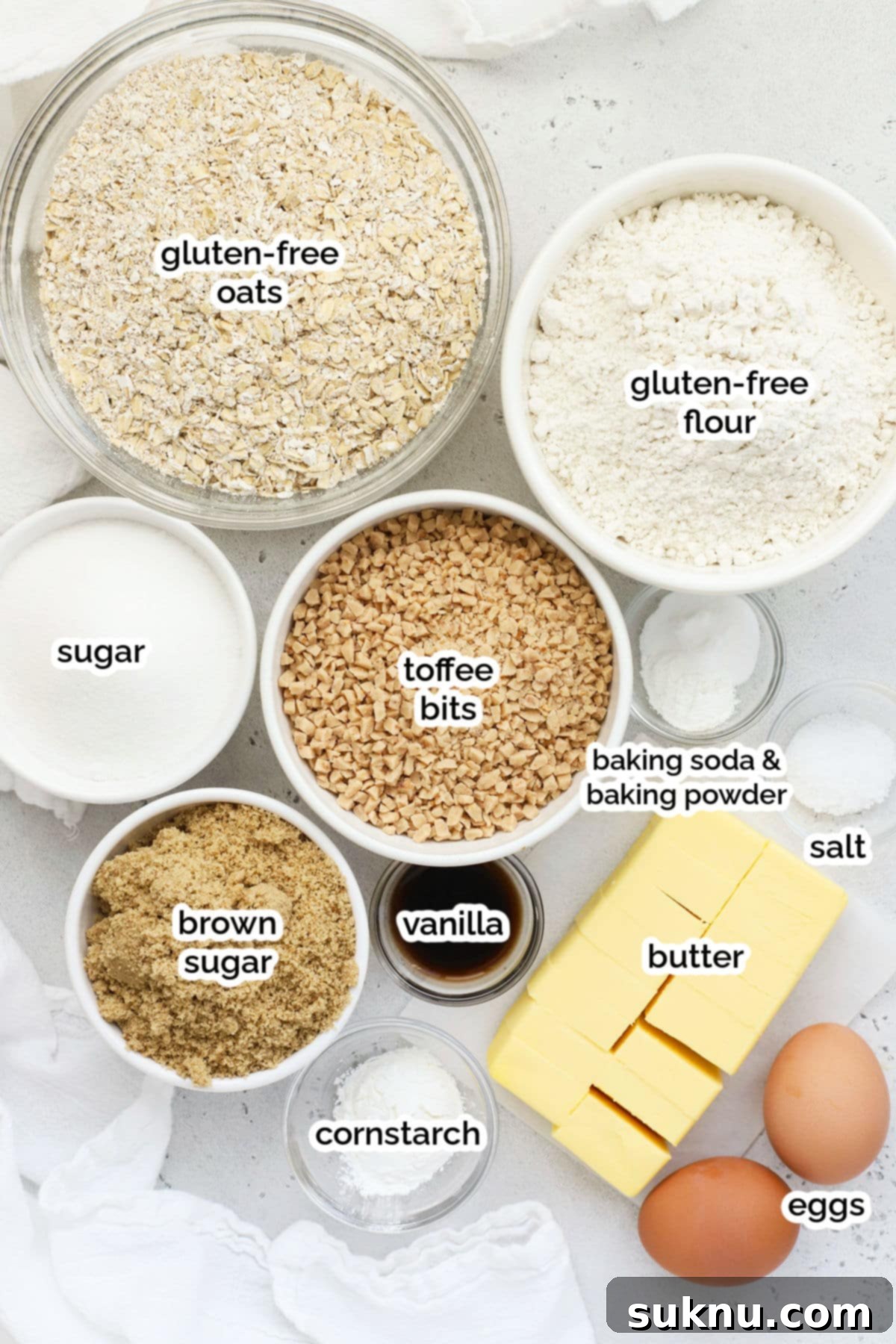
Essential Ingredients for Irresistible Toffee Oatmeal Cookies
If you’ve previously enjoyed our Gluten-Free Oatmeal Chocolate Chip Cookies or Oatmeal Raisin Cookies, you’ll recognize a familiar foundation in this ingredient list. These sensational toffee cookies build upon those beloved recipes, introducing a new dimension of caramelly flavor that truly makes them stand out. Here’s a closer look at the key components:
- Certified Gluten-Free Rolled Oats. The star of our oatmeal cookies! It’s crucial to use certified gluten-free rolled oats, sometimes labeled “old-fashioned oats,” to ensure your cookies are truly safe for those with gluten sensitivities. Rolled oats provide that signature chewy texture without dissolving completely during baking. We highly recommend against using quick oats, as they absorb liquid too rapidly and can result in a crumbly texture, and steel-cut oats, which are far too coarse for a delicate cookie.
- Gluten-Free All-Purpose Flour Blend. For consistent baking results, we rely on a quality gluten-free flour blend. Our top recommendation for all our cookie recipes is King Arthur Measure-For-Measure Gluten-Free Flour. This blend is specifically formulated to behave similarly to traditional wheat flour in many recipes. If you opt for another 1:1 gluten-free flour blend, such as Bob’s Red Mill 1-to-1 Baking Flour, please ensure it contains xanthan gum. Xanthan gum is vital in gluten-free baking as it mimics the elasticity and binding properties that gluten provides, preventing your cookies from being too crumbly. Always remember to measure your flour accurately, ideally by weight for the most precise results.
- Baking Powder & Baking Soda. These leavening agents work in harmony to give our cookies their ideal lift and tender crumb. Baking soda reacts with acidic ingredients (like brown sugar), while baking powder provides an extra boost of rise. This combination ensures a cookie that’s perfectly puffy around the edges and delightfully chewy in the center.
- Salt. A pinch of salt is not just for seasoning; it’s essential for balancing the sweetness from the sugars and enhancing all the other wonderful flavors in the cookie. Don’t skip it – it truly makes a difference in brightening the overall taste!
- Softened Unsalted Butter. The temperature of your butter is paramount for proper creaming. Ideally, your butter should be soft enough that a gentle press with your fingertip leaves a slight indentation, but it should not be greasy or shiny. Butter that’s too cold won’t cream properly with the sugars, leading to a denser cookie, while butter that’s too warm can result in a flat, greasy cookie. For best results, use unsalted butter to control the overall salt content in your recipe.
- Light Brown Sugar & Granulated Sugar. This blend of sugars is a deliberate choice for achieving the perfect flavor and texture. Light brown sugar contributes a deep, molasses-rich flavor and helps create a chewier cookie due to its moisture content. Granulated sugar (white sugar) provides crispness to the edges and ensures a pleasant sweetness. The combination yields a cookie that is both soft and slightly crisp, with complex sweet notes.
- Large Eggs. Eggs act as a binder, adding structure, moisture, and richness to the cookie dough. Using room temperature eggs is crucial here. Cold eggs can cause the butter and sugar mixture to seize up and separate, resulting in a less smooth batter and a potentially uneven cookie texture. Plan ahead, or use one of our quick tricks to bring eggs to room temperature fast!
- Pure Vanilla Extract. A foundational flavor in almost any cookie recipe, vanilla extract adds warmth, depth, and a delightful aromatic quality that complements the oats and toffee beautifully. Opt for pure vanilla extract for the best flavor.
- Toffee Bits. The star of the show after the oats! You’ll need one full (8-ounce) bag of toffee bits to ensure every cookie is generously studded with that irresistible crunch and caramelly flavor. We highly recommend Heath Bits ‘O’ Brickle English Toffee Bits, which are certified gluten-free, making them a safe and delicious choice for this recipe. For an extra special touch, if you’re feeling adventurous, you can even try making homemade toffee bits for an unparalleled freshness and depth of flavor.
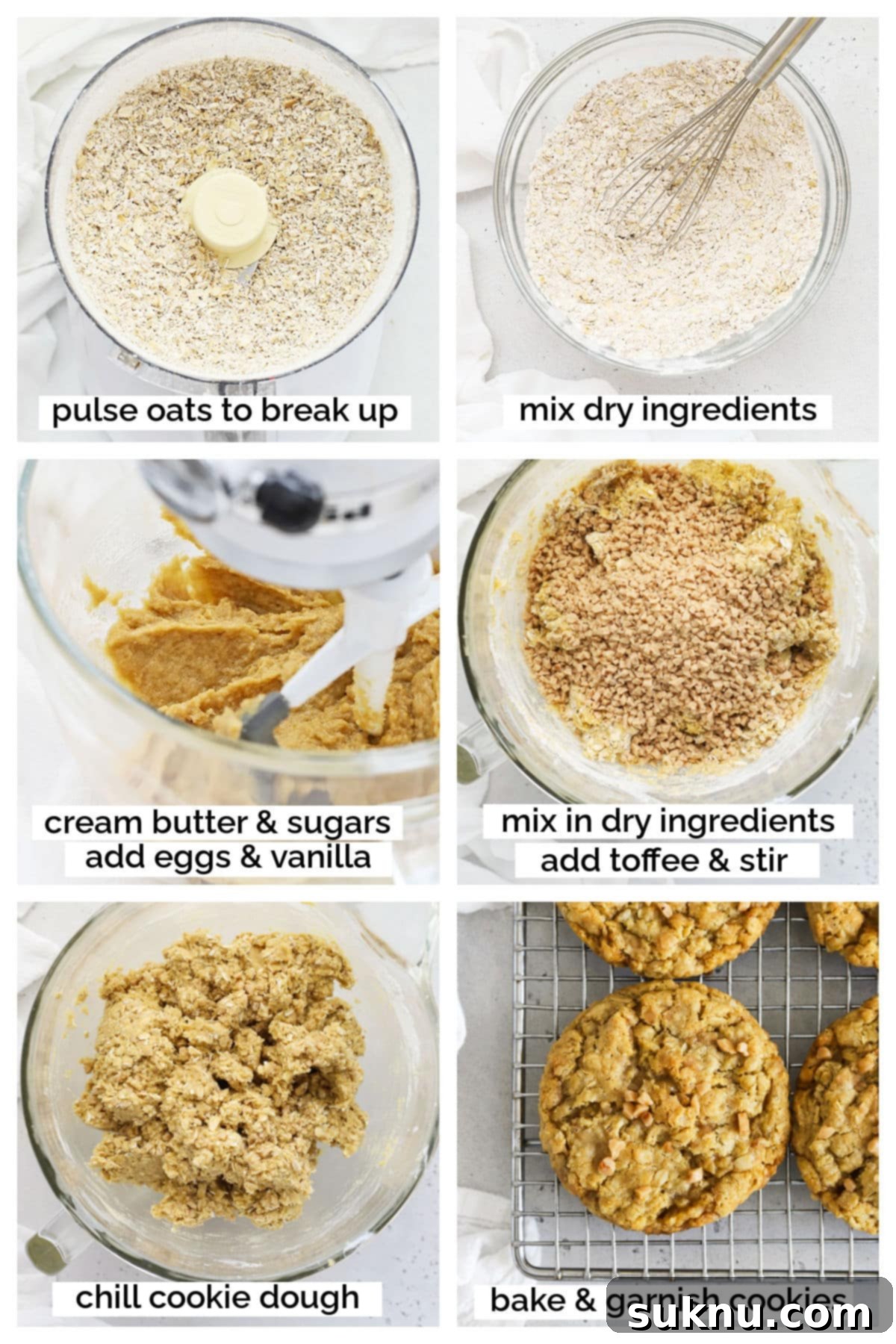
Step-by-Step Guide to Baking Your Best Gluten-Free Toffee Cookies
Crafting these delightful cookies is a straightforward process, designed for success even for novice bakers. Below, you’ll find a detailed step-by-step guide. For exact ingredient quantities, detailed instructions, and additional chef’s notes, please refer to the comprehensive recipe card located at the bottom of this page.
- Prepare the Oats. Begin by placing your certified gluten-free rolled oats into the bowl of a food processor or the jar of a blender. Pulse the oats a few times. The goal here isn’t to pulverize them into a fine flour, but rather to break up some of the whole oats. This creates a more varied and interesting texture in the final cookie, with some substantial oat pieces and some finer oat flecks, contributing to that perfect chew. Be careful not to over-process, as turning them into flour will drastically alter the cookie’s structure and absorbency.
- Combine Dry Ingredients. In a separate medium-sized bowl, whisk together the prepared gluten-free oats, your chosen gluten-free flour blend, cornstarch (which adds a wonderful tenderness to the cookie), baking powder, baking soda, and kosher salt. Ensure these dry ingredients are thoroughly combined and evenly distributed. This step prevents pockets of leavening agents or salt in your cookies, ensuring a consistent rise and flavor throughout. Set this mixture aside.
- Cream Butter & Sugars. In the bowl of a stand mixer fitted with the paddle attachment (or a large bowl with an electric hand mixer), combine the softened unsalted butter, light brown sugar, and granulated sugar. Cream these ingredients together on medium speed for 2-3 minutes. This crucial step incorporates air into the butter and sugar, creating a light, fluffy, and noticeably paler mixture. This aeration is key for a tender, soft cookie texture. Remember to stop and scrape down the sides and bottom of the bowl periodically to ensure everything is evenly incorporated.
- Add Eggs & Vanilla. Next, incorporate the large, room temperature eggs, one at a time. Mix well after each addition until fully combined. Once the eggs are integrated, stir in the pure vanilla extract. Continue mixing until the batter is smooth and homogeneous. Again, scrape down the sides of the bowl to catch any unincorporated ingredients, ensuring a uniform dough.
- Gradually Mix in Dry Ingredients. With the mixer on low speed, gradually add the reserved dry oat and flour mixture to the wet ingredients. Mix until just a few floury patches remain. It’s essential not to overmix at this stage; overmixing can develop the gluten-free flours more than desired and lead to a tougher cookie. Stop mixing as soon as the dry ingredients are mostly incorporated.
- Fold in Toffee Bits (and Reserve Some for Garnish!). Before adding the bulk of the toffee bits, set aside about 2-3 tablespoons. These will be used to press onto the tops of the scooped cookie dough balls before baking, ensuring beautiful, visible toffee pieces on your finished cookies. Add the remaining toffee bits to the cookie dough and mix on low speed until they are evenly distributed throughout the dough.
- Crucial Chilling Step. Cover the cookie dough tightly with plastic wrap and refrigerate for a minimum of 2 hours. This step is absolutely vital and should NOT be skipped. Chilling the dough allows the gluten-free flour to fully hydrate, preventing a gritty texture; helps the oats soften further for maximum chewiness; and crucially, it firms up the butter in the dough, which significantly reduces cookie spread in the oven, ensuring your cookies hold their shape and bake evenly.
- Preheat Oven & Prepare Baking Sheets. Approximately 30 minutes before you plan to bake, preheat your oven to 350°F (175°C). Line two large baking sheets with parchment paper. Parchment paper is excellent for preventing sticking and ensuring even browning. Having two prepared sheets allows you to alternate between batches, preventing you from placing cold dough onto a hot baking sheet, which can negatively impact spread.
- Scoop & Roll Cookie Dough. Using a large cookie scoop (roughly 3-tablespoon capacity), scoop out uniform balls of cookie dough. For the best shape and consistency, gently roll each scoop of dough between your palms to smooth it into a perfect sphere. Place about 6 cookie dough balls onto one of the prepared baking sheets, ensuring adequate space between them for spreading.
- Bake, Enhance, & Cool Cookies. Bake the cookies one batch at a time in the preheated oven for 12-14 minutes. Look for cookies that are slightly golden brown around the edges, with centers that still appear *just* set and slightly soft. They will continue to set as they cool. For that perfect bakery-round shape, immediately after removing them from the oven, gently place a round cookie cutter (slightly larger than your cookies) around each cookie and swirl it to reshape any irregular edges. While still warm, garnish each cookie with a few of the reserved toffee bits and a sprinkle of flaky sea salt, if desired, to elevate both presentation and flavor. Let the cookies cool on the baking sheet for 1-2 minutes before carefully transferring them to a wire rack to cool completely. This initial cooling on the baking sheet helps them firm up enough to prevent breakage.
- Repeat for Remaining Dough. Continue this baking process with the rest of your cookie dough, alternating between your prepared baking sheets. This ensures that each batch bakes evenly and prevents the dough from getting too warm between batches.
- Serve & Store. Enjoy these delicious cookies once they have cooled to your liking. For optimal freshness, store any leftover Gluten-Free Oatmeal Toffee Cookies in an airtight container at room temperature for 2-3 days. Alternatively, they freeze beautifully in a freezer-safe bag for up to 2 months, making them perfect for meal prepping or unexpected cravings.
Expert Tips for Gluten-Free Toffee Cookie Perfection
Achieving bakery-quality gluten-free cookies is easier than you think with these helpful tips and resources:
- How To Measure Flour Correctly: The “scoop and level” method is crucial for gluten-free flours. Incorrect measuring can drastically affect your cookie’s texture. Always spoon your flour into the measuring cup and then level it off with the back of a knife, rather than scooping directly from the bag.
- How To Get Eggs To Room Temperature FAST: Cold eggs can cause your butter and sugar mixture to curdle. Learn quick tricks like placing eggs in warm water for a few minutes to bring them to the ideal temperature.
- How To Check If Your Baking Soda & Baking Powder Are Fresh: Expired leavening agents mean flat cookies. Perform simple tests to ensure your baking soda and baking powder are still active for optimal rise.
- How To Freeze Cookie Dough (& Bake From Frozen): Save time by preparing cookie dough in advance! Learn how to properly freeze dough balls and bake them directly from frozen for fresh cookies anytime.
- 8 Essential Cookie Tools We Use All The Time: Invest in a few key tools, like a good quality cookie scoop and parchment paper, to make your cookie baking experience smoother and more successful.
- Butter Measurements Cheat Sheet: Never be confused by butter measurements again! Keep this handy guide nearby for quick conversions.
- Don’t Overbake: Gluten-free cookies can go from perfectly baked to dry and crumbly very quickly. Remove them from the oven when the edges are golden brown and the centers still look slightly underdone. They will continue to bake on the hot cookie sheet.
- Invest in an Oven Thermometer: Oven temperatures can vary significantly. An inexpensive oven thermometer ensures your oven is truly at the temperature you set, leading to more consistent baking results.
Frequently Asked Questions About Gluten-Free Toffee Oatmeal Cookies
Here are answers to some common questions and essential tricks to help you achieve the best possible gluten-free toffee oatmeal cookies:
Measure Carefully, Especially Flour and Oats. Precision is key in baking, especially with gluten-free ingredients. Metric measurements, typically by weight, will make a significant difference in achieving the correct ratios and are always my preferred method for perfect bakes. If you don’t have a kitchen scale, it’s imperative to use the scoop and level method for both the gluten-free flour and the oats. Instead of using the measuring cup to scoop directly from the bag (which compacts the ingredients and adds too much), spoon the flour or oats into your measuring cup, then level it off with the back of a straight edge or knife. This ensures you’re using the intended amount, preventing dry or overly dense cookies.
Do NOT Skip The Dough Chilling Step! This is perhaps the most critical trick for perfect cookies. Chilling the dough for at least 2 hours serves multiple vital purposes: it allows the gluten-free flour to fully hydrate, preventing a crumbly texture; it gives the oats time to soften, contributing to that desirable chewy consistency; and crucially, it firms up the butter. This firm butter prevents the cookies from spreading excessively in the oven, ensuring they hold their shape beautifully and bake evenly. Skipping this step will almost certainly result in thin, overly spread-out cookies that lack the intended chewy center.
Can I Add Chocolate Chips to My Toffee Oatmeal Cookies? Absolutely! Adding chocolate is a fantastic variation that many people love. To turn these into delectable toffee oatmeal chocolate chip cookies, simply add 1 cup of your favorite chocolate chips to the cookie dough along with the toffee bits in step 6. I personally recommend using semi-sweet chocolate chips or dark chocolate chips as their slight bitterness provides a wonderful contrast to the sweet toffee and caramel notes. However, feel free to use milk chocolate if that’s your preference for a sweeter profile. This addition creates an even richer, more complex cookie experience!
Can I Make These Cookies Dairy-Free? Yes, with a few substitutions! You can replace the butter with a high-quality dairy-free butter stick alternative (ensure it’s one designed for baking, like Miyoko’s Kitchen Cultured Vegan Butter or Earth Balance Vegan Butter Sticks). Always check the label to ensure your chosen toffee bits are also dairy-free, as some contain milk. With these adjustments, you can enjoy a delicious dairy-free version of these cookies!
What is the Best Way to Store Baked Gluten-Free Oatmeal Toffee Cookies? To maintain their optimal freshness and chewiness, store your baked cookies in an airtight container at room temperature for up to 2-3 days. For longer storage, these cookies freeze exceptionally well. Place cooled cookies in a single layer on a baking sheet to flash freeze for about 30 minutes, then transfer them to a freezer-safe bag or container. They can be stored in the freezer for up to 2 months. Thaw at room temperature or warm slightly in the microwave for a fresh-baked taste.
Discover More Delicious Gluten-Free Cookie Recipes
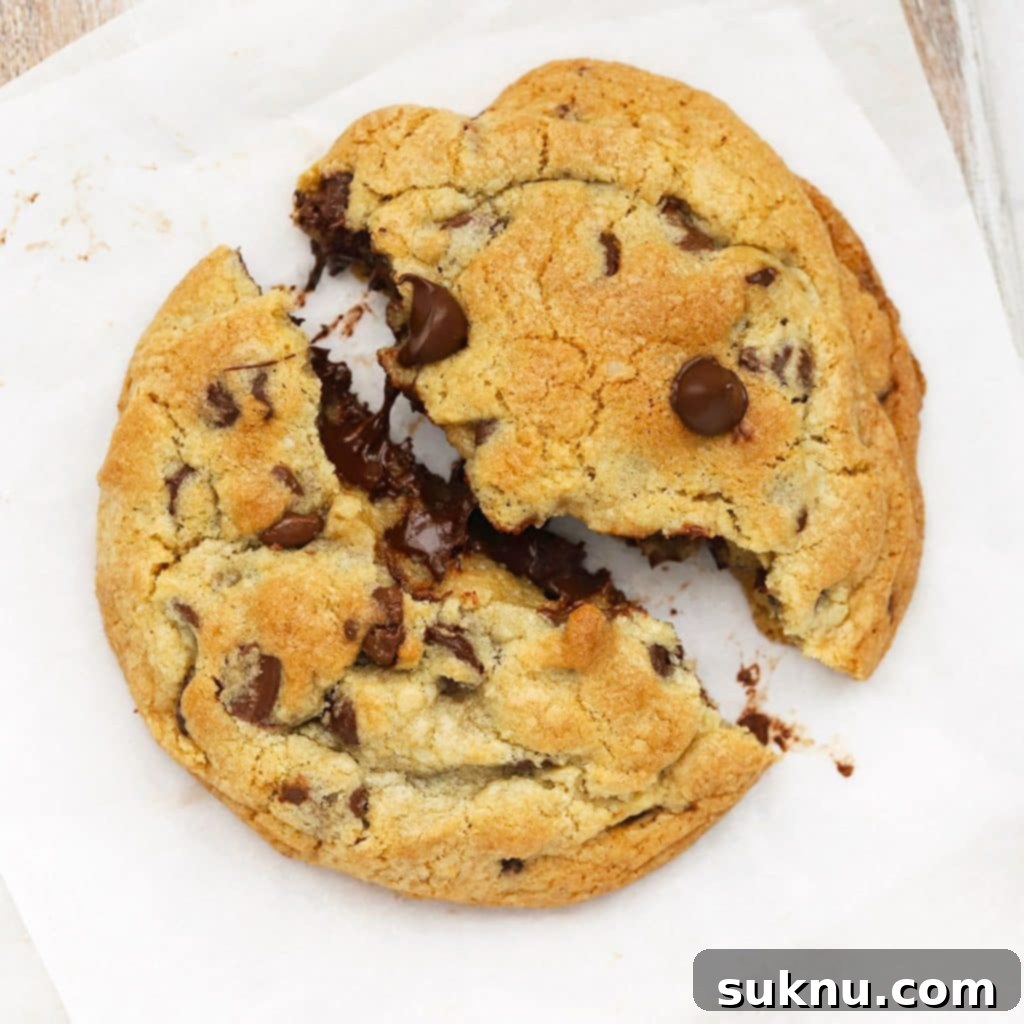
Gluten-Free Levain Chocolate Chip Cookies

Gluten-Free Iced Oatmeal Cookies
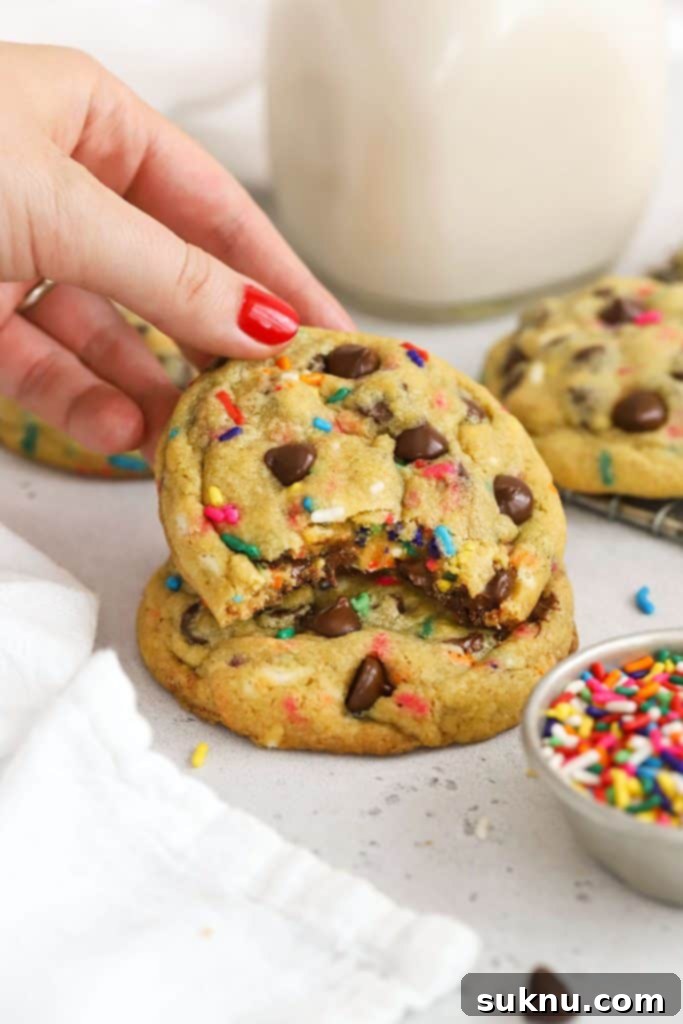
Gluten-Free Sprinkle Chocolate Chip Cookies
Recipe Card
🌟 Did you make this recipe?
Leave a star rating below when you try our Gluten-Free Toffee Oatmeal Cookies recipe! We can’t wait to hear what you think! Sharing it on Instagram? Tag us @sweetsandthankyou so we can see your creations!
Print Recipe

Gluten-Free Oatmeal Toffee Cookies
★
5 Stars
★
4 Stars
★
3 Stars
★
2 Stars
★
1 Star
No reviews
- Author: Emily Dixon, Sweets & Thank You
- Total Time: 3 hours 15 minutes
- Yield: 24-26 Cookies
- Diet: Gluten Free
Description
Chewy oatmeal cookies packed with caramelly toffee bits in every bite! These homemade gluten-free cookies are a delicious and easy spin on a classic, perfect for any occasion.
Ingredients
- 3 cups certified gluten-free rolled oats (270 grams)
- 2 cups gluten-free measure-for-measure flour blend* (240 grams)
- 1 Tablespoon cornstarch (8 grams)
- 1 teaspoon baking soda
- 1 teaspoon baking powder
- 1/2 teaspoon kosher salt
- 1 cup unsalted butter, softened (226 grams/2 sticks)
- 3/4 cup packed light brown sugar (150 grams)
- 3/4 cup granulated sugar (150 grams)
- 2 large eggs, room temperature
- 2 teaspoons pure vanilla extract
- 1 1/2 cups Heath Bits ‘O’ Brickle English Toffee Bits (ensure gluten-free)
Instructions
- Prepare the Oats. Place the certified gluten-free rolled oats in the bowl of a food processor or a blender and pulse a few times to break them up slightly. The goal is a mix of whole and partially broken oats for optimal cookie texture, not oat flour.
- Combine Dry Ingredients. In a medium bowl, whisk together the pulsed gluten-free oats, gluten-free flour blend, cornstarch, baking powder, baking soda, and kosher salt until thoroughly combined. Set aside.
- Cream Butter & Sugars. In the bowl of a stand mixer with the paddle attachment, cream the softened unsalted butter, light brown sugar, and granulated sugar for 2-3 minutes until the mixture is light, fluffy, and pale. Scrape down the bowl edges as needed.
- Add Eggs & Vanilla. Add the large, room temperature eggs one at a time, mixing well after each addition. Then, stir in the pure vanilla extract until fully incorporated. Scrape down the bowl again.
- Mix in Dry Ingredients. Gradually add the prepared dry oat and flour mixture to the wet ingredients in the mixer. Mix on low speed until just a few floury streaks remain. Be careful not to overmix.
- Fold in Toffee Bits. Set aside 2-3 tablespoons of toffee bits for garnishing the baked cookies. Add the remaining toffee bits to the cookie dough and mix until evenly distributed.
- Chill Dough. Cover the cookie dough tightly and refrigerate for a minimum of 2 hours. This critical step hydrates the flour and oats, firms the butter, and prevents excessive spreading during baking.
- Preheat Oven & Prep Sheets. Approximately 30 minutes before baking, preheat your oven to 350°F (175°C). Line two baking sheets with parchment paper.
- Scoop & Roll Dough. Use a 3-tablespoon cookie scoop to portion the dough. Roll each scoop between your palms to form smooth, round balls. Place 6 cookie dough balls on one prepared baking sheet, spaced adequately apart.
- Bake, Finish & Cool. Bake 6 cookies at a time for 12-14 minutes, until the edges are golden brown and the centers are just set. For perfectly round cookies, use a larger cookie cutter to gently reshape them immediately after baking. Garnish with reserved toffee bits and flaky sea salt, if desired. Let cool on the baking sheet for 1-2 minutes, then transfer to a wire rack to cool completely.
- Repeat Process. Continue baking the remaining cookie dough, alternating baking sheets to ensure consistent results.
- Serve & Store. Enjoy the cooled cookies. Store in an airtight container at room temperature for 2-3 days, or freeze in a freezer-safe bag for up to 2 months.
Notes
- Optional Chocolate Addition. For a delightful variation, add 1 cup of chocolate chips (semi-sweet or dark recommended) to the dough along with the toffee bits.
- Oat Selection. Always use certified gluten-free rolled oats (old-fashioned oats) for this recipe. Quick-cooking or steel-cut oats will not yield the same texture.
- Chilling is Key! Do not skip the 2-hour chilling period. It is essential for flavor development, proper dough hydration, and preventing cookies from spreading too much.
- Dairy-Free Option: To make these cookies dairy-free, substitute unsalted butter with a high-quality dairy-free butter stick alternative and ensure your toffee bits are dairy-free.
- Prep Time: 25 minutes
- Chill Time: 2 Hours
- Cook Time: 50 minutes
- Category: Dessert
- Method: Oven
- Cuisine: American