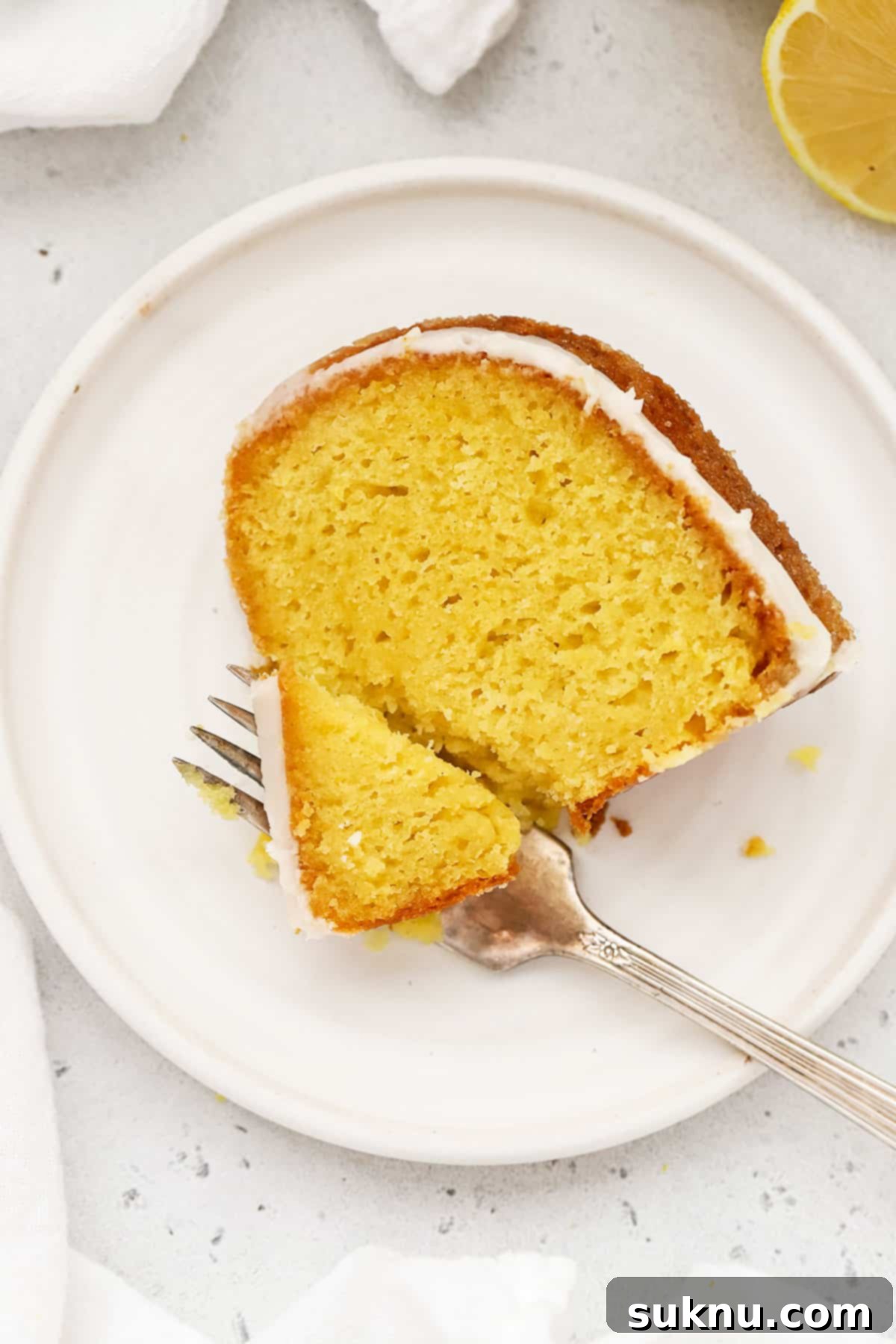
The Best Gluten-Free Lemon Bundt Cake: Soft, Fluffy, and Bursting with Flavor
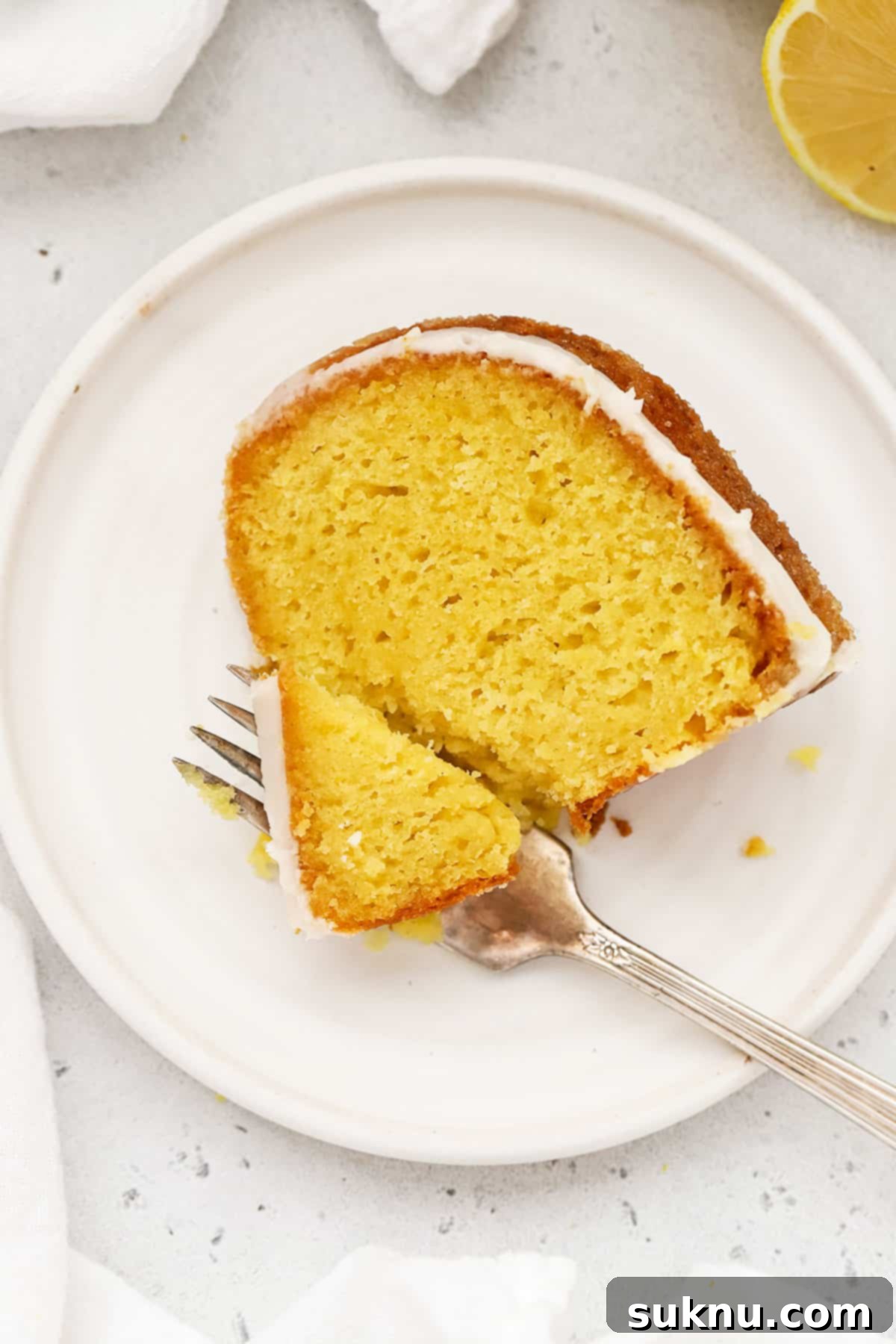
Craving a truly exceptional lemon cake but need it gluten-free? You’ve come to the right place! Many gluten-free cake recipes disappoint, often resulting in dense, dry, or crumbly textures that lack depth of flavor. We understand the struggle, which is why we’ve perfected this incredibly moist, soft, and fluffy gluten-free lemon bundt cake that defies all expectations.
This isn’t just any gluten-free cake; it’s a celebration of vibrant lemon flavor and a tender, melt-in-your-mouth texture that will impress even the most discerning palates. Bursting with the bright tang of fresh lemons, every slice offers a delightful experience. What makes our recipe stand out? We infuse layers of lemon goodness from fresh lemon zest and juice, a delectable lemon simple syrup, and a luscious lemon glaze, ensuring an intense citrus explosion in every bite. It’s a truly glorious bundt cake that remains moist and delicious, even days after baking.
Perfect for any gathering, from an elegant afternoon tea to birthdays, Mother’s Day brunches, Easter celebrations, or graduation parties, this gluten-free lemon bundt cake is as visually stunning as it is delicious. The best part? Despite its impressive appearance and gourmet taste, the ingredient list is straightforward and accessible, relying on common pantry staples rather than obscure specialty items. Get ready to bake a gluten-free lemon bundt cake that everyone will rave about!
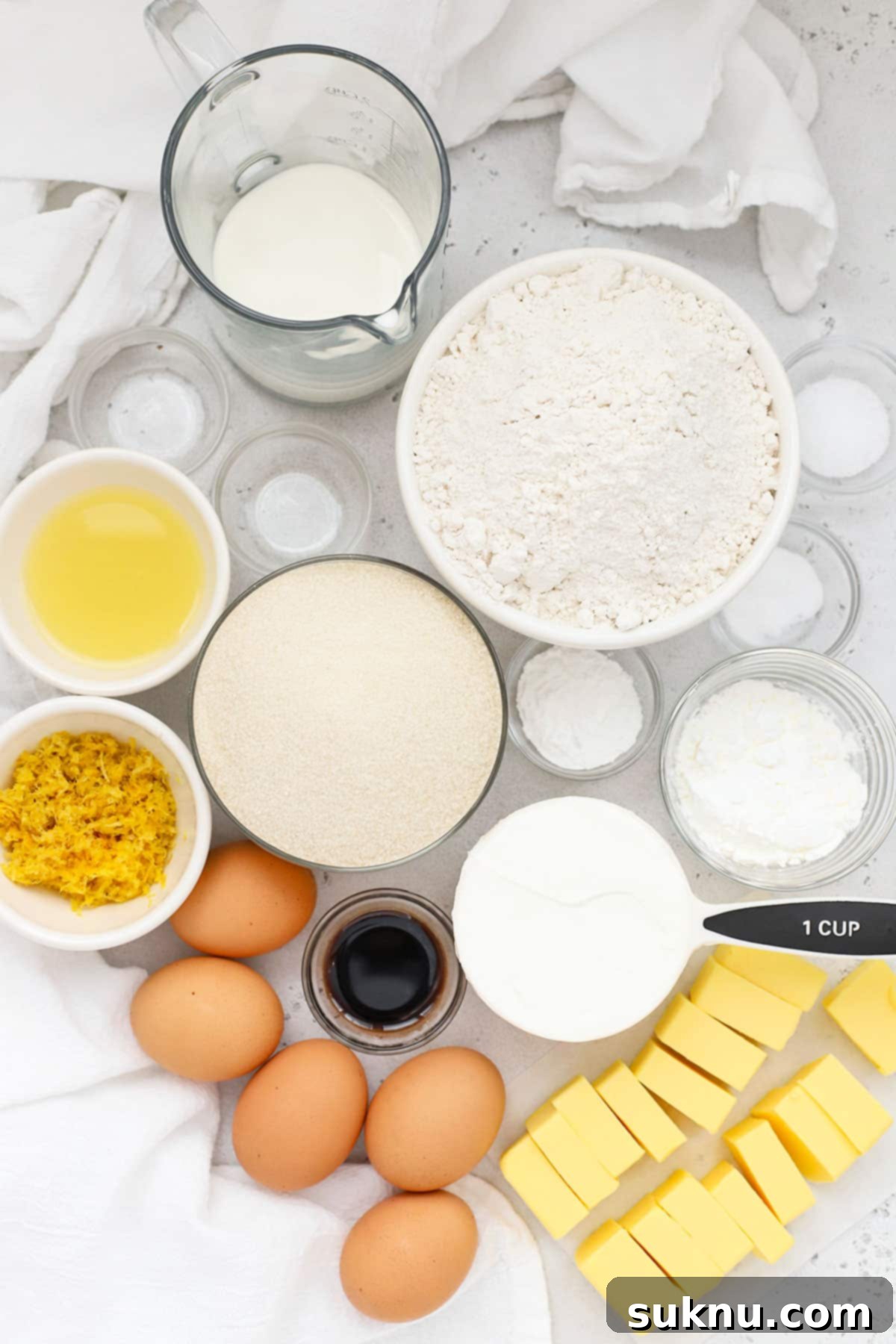
Essential Ingredients for a Perfect Gluten-Free Lemon Bundt Cake
Crafting the perfect gluten-free lemon bundt cake begins with selecting the right ingredients. Each component plays a vital role in achieving that coveted soft, fluffy, and incredibly moist texture, along with the bright, zesty lemon flavor that defines this dessert. Here’s a detailed look at what you’ll need:
Dry Ingredients for a Fluffy Gluten-Free Cake
- Gluten-Free Measure-For-Measure Flour: The foundation of our gluten-free bundt cake. We highly recommend a high-quality blend like King Arthur’s gluten-free flour. It’s crucial that your chosen blend already contains xanthan gum, or your cake might not achieve the desired structure and texture. Xanthan gum acts as a binder, mimicking gluten and preventing a crumbly result.
- Cornstarch: A secret weapon for superior cake texture! A touch of cornstarch lightens the flour blend, creating a finer crumb and a softer, more delicate texture similar to using cake flour. This addition is key to that desirable stretchy spring in your bundt cake.
- Baking Powder & Baking Soda: Our carefully balanced leavening agents. This combination ensures optimal rise and a tender crumb. The baking soda specifically reacts with the natural acidity of the lemon juice and sour cream, contributing to the cake’s airy lift and delicate texture.
- Kosher Salt: Don’t underestimate the power of salt in baking! It doesn’t just make things salty; it enhances and balances all the other sweet and tart flavors, making the lemon notes pop even more.
Wet Ingredients for Ultimate Moisture and Flavor
- Softened Butter: The cornerstone of a rich, tender cake. Ensure your butter is perfectly softened—it should yield easily to a finger press, leaving a slight indent without looking greasy or melted. Properly softened butter creams beautifully with sugar, incorporating air for a light texture.
- Granulated Sugar: Regular white sugar works perfectly here, providing sweetness and contributing to the cake’s structure and browning. When creamed with butter, it helps create those tiny air pockets essential for a fluffy cake.
- Fresh Lemons (Zest & Juice): The heart of our lemon bundt cake! You’ll need plenty of fresh lemon zest and fresh lemon juice. Lemon zest contains essential oils that provide the most potent and aromatic lemon flavor. Never skimp on the zest—it’s where the brightest citrus notes come from! The juice adds tang and acidity, activating the baking soda for a perfect rise.
- Room Temperature Eggs: A non-negotiable for cake success. Using room temperature eggs prevents the butter from seizing when added to the creamed butter and sugar mixture, ensuring a smooth, emulsified batter that bakes evenly into a tender cake.
- A Blend of Extracts (Vanilla, Almond, Lemon Oil/Extract): For a truly rounded and complex flavor profile. Vanilla extract adds warmth and sweetness, almond extract provides a subtle nutty depth, and a touch of lemon oil or lemon extract intensifies the fresh lemon flavor, making the cake taste even more intensely lemony without being overpowering.
- Room Temperature Sour Cream: This ingredient is a game-changer! Its natural tang keeps the cake’s flavor light and refreshing, while its high fat content contributes significantly to an incredibly soft, tender, and moist crumb. Always use full-fat for the best results.
- Room Temperature Milk: Essential for the perfect batter consistency. Like the eggs and sour cream, ensure your milk is at room temperature to prevent the batter from becoming lumpy. For the richest texture, opt for whole milk or a higher fat percentage.
Two Indispensable Layers of Lemon Flavor
- A Simple Lemon Syrup: This step is crucial for locking in moisture and delivering an extra punch of lemon flavor directly into the baked cake. A quick blend of fresh lemon juice and sugar, brushed over the warm cake, creates an unbelievably moist and flavorful result.
- A Quick Lemon Glaze: The crowning glory! A simple yet elegant glaze made from powdered sugar, a touch of milk or lemon juice, and a hint of vanilla adds a beautiful sheen and another layer of sweet, tangy lemon flavor to finish the cake perfectly.
How to Bake the Ultimate Gluten-Free Lemon Bundt Cake: A Step-by-Step Guide
For precise ingredient measurements, detailed instructions, and helpful tips, please refer to the recipe card provided below.
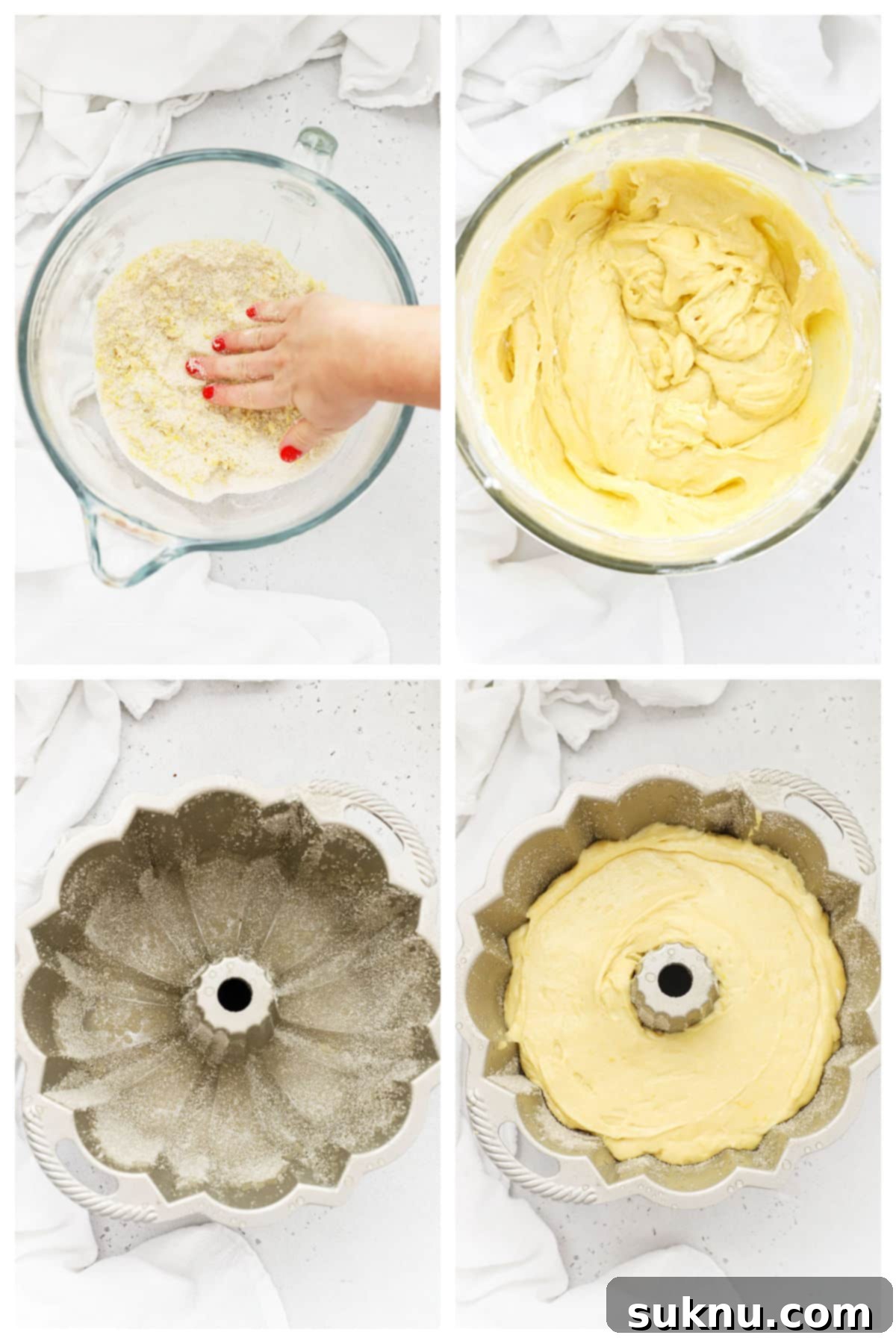
Part 1: Preparing the Gluten-Free Lemon Bundt Cake Batter
Precision and attention to detail are key when baking, especially with gluten-free recipes. Follow these steps for a perfect batter:
- Prepare Your Workspace and Oven: Begin by preheating your oven to 350 degrees F (175 degrees C). Have your bundt pan, preferred oil or spray oil, and 2 tablespoons of sugar ready for greasing the pan later. Avoid prepping the pan too early; it’s best to do it just before pouring in the batter.
- Whisk Dry Ingredients: In a medium-sized bowl, combine your gluten-free measure-for-measure flour blend, cornstarch, baking powder, baking soda, and kosher salt. Whisk these ingredients thoroughly to ensure they are evenly distributed. This step prevents pockets of leavening agents and ensures a consistent rise. Set aside.
- Infuse Sugar with Lemon Zest: This is where the magic begins for intense lemon flavor! Zest your fresh lemons until you have a full ¼ cup. Place this vibrant zest into the bowl of your stand mixer (or a large bowl if using a handheld electric mixer) with the granulated sugar. Use your fingertips to rub the lemon zest into the sugar. This action releases the fragrant essential oils from the zest, permeating the sugar with incredible lemon aroma and flavor. The sugar should become slightly moist and take on a pale yellow hue.
- Combine Lemon Juice and Milk: Measure out ¼ cup of fresh lemon juice and add it to the milk. Whisk gently to combine. Don’t be alarmed if the mixture starts to thicken or curdle slightly; this is a normal reaction between the acidic lemon juice and the milk, and it will contribute to the cake’s tender texture. Set aside.
- Cream Butter and Lemon Sugar: Add the perfectly softened butter to your lemon-infused sugar in the mixer. Cream these together on medium speed for 2-3 minutes, or until the mixture becomes light, fluffy, and noticeably pale. This step incorporates air, crucial for the cake’s light texture.
- Incorporate Eggs Gradually: With the mixer on medium-low speed, add the room temperature eggs one at a time. Beat well after each addition, ensuring it is fully incorporated into the butter mixture before adding the next. This prevents the batter from curdling and keeps it smooth.
- Add Sour Cream and Flavorings: Reduce the mixer speed to low. Add the room temperature sour cream, vanilla extract, almond extract, and lemon oil or lemon extract. Mix until just combined. Be careful not to overmix at this stage.
- Alternate Dry and Wet Ingredients: This technique is vital for cake structure. Add half of the dry ingredients to the mixer. Briefly pulse the mixer a few times to start combining them without creating a flour cloud. Mix until almost fully incorporated, then add half of the milk/lemon juice mixture and mix until just combined. Scrape down the sides of the bowl. Repeat this process with the remaining dry ingredients, mixing until almost incorporated, followed by the rest of the milk mixture. Mix until the batter is just smooth and no streaks of flour remain. Overmixing can develop gluten, leading to a tough cake, so stop as soon as it’s combined.
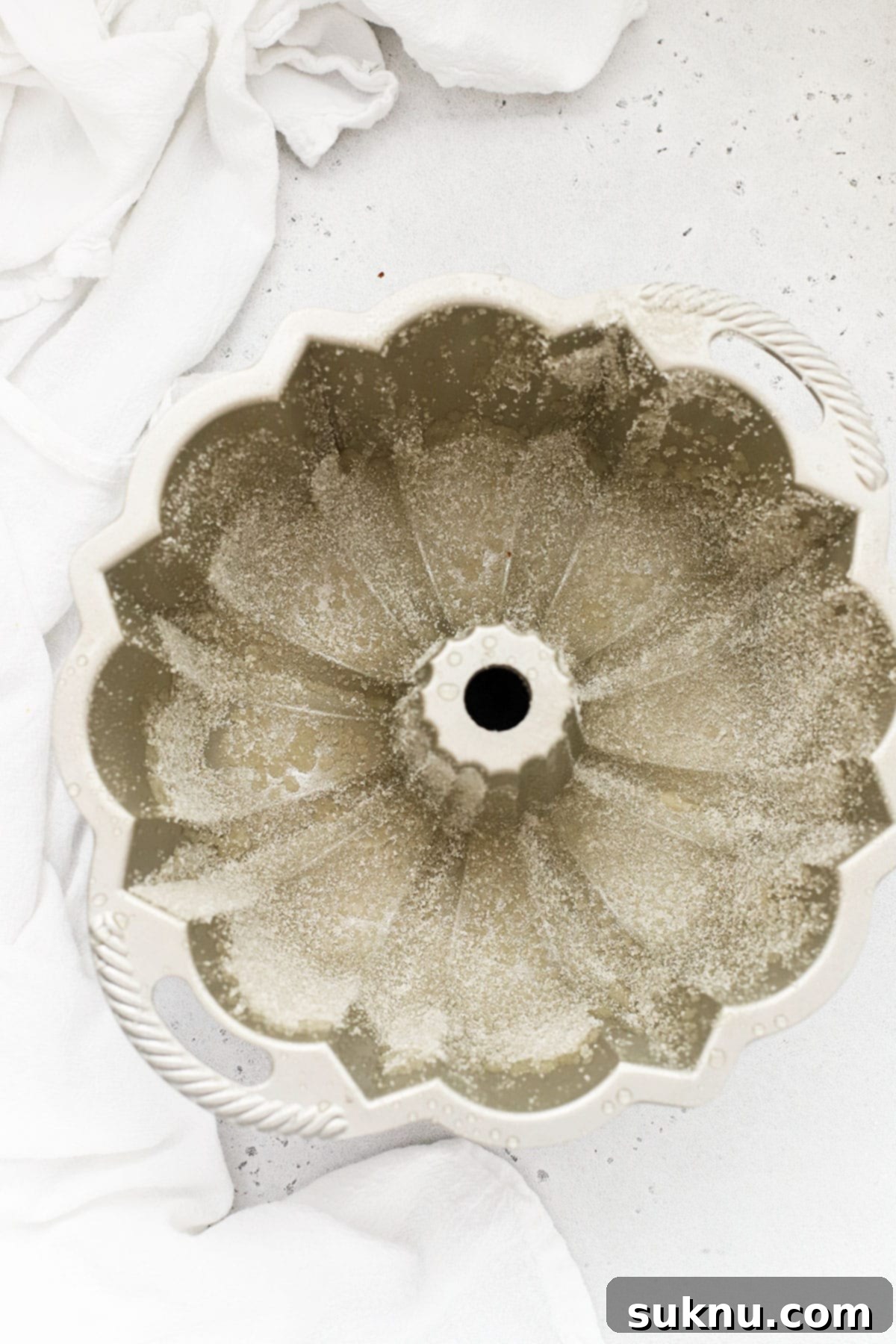
- Properly Prepare Your Bundt Pan: This step is critical for a clean release! Working quickly, thoroughly spray or brush your bundt pan with oil, paying close attention to every curve, dip, indent, and the center tube. Once coated, sprinkle 2-3 tablespoons of granulated sugar into the pan. Rotate and tap the pan to evenly distribute the sugar over the entire oiled surface. Invert the pan and tap out any excess sugar. This sugary coating creates a non-stick layer and a beautiful crust.
- Fill the Pan: Gently pour the prepared cake batter into your greased and sugared bundt pan. Use a spatula to smooth the top into an even layer, ensuring the batter is distributed evenly around the center tube.
- Bake to Perfection: Place the bundt pan in the preheated oven. Bake for approximately 45-55 minutes. Baking times can vary depending on your specific oven, the material and shape of your bundt pan, and even your elevation. The cake is done when the top springs back gently when pressed, and a wooden skewer or toothpick inserted into the thickest part comes out clean with only a few moist crumbs attached. For precision, an instant-read thermometer inserted into the center should register between 200-210 degrees F (93-99 degrees C).
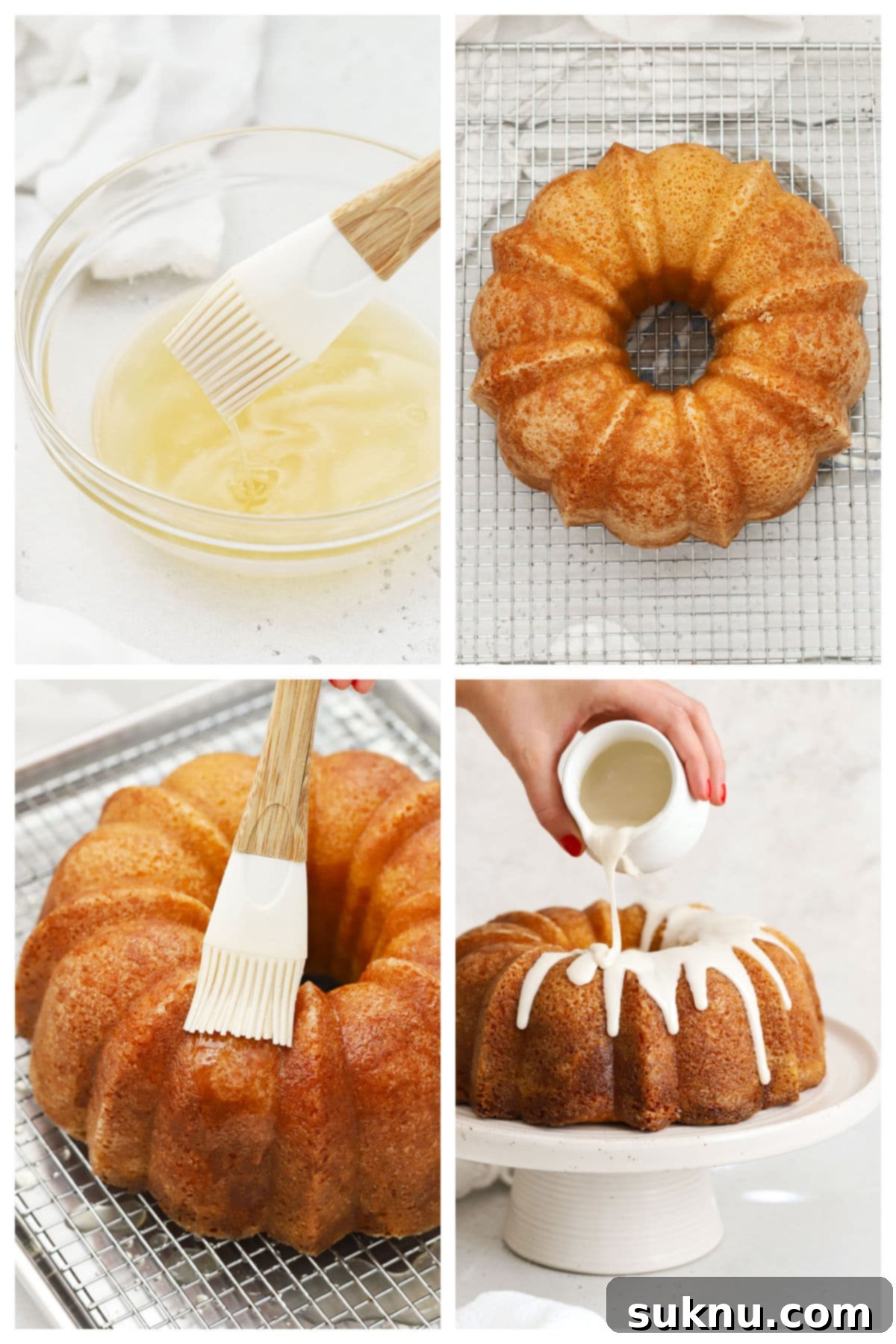
Part 2: Finishing Touches – Lemon Syrup and Glaze
These two layers are what truly elevate this gluten-free lemon bundt cake, adding incredible moisture and an extra burst of citrus:
- Prepare the Lemon Simple Syrup: While your cake is baking, prepare the simple syrup. In a small, microwave-safe bowl, combine ½ cup of sugar and ⅓ cup of fresh lemon juice. Whisk them together until well combined. Microwave in short 20-30 second bursts, stirring thoroughly after each interval, until the sugar is completely dissolved and the syrup is clear. Set aside.
- Cool and Invert the Cake: Once baked, allow the cake to cool in its pan for precisely 10 minutes. This cooling period is crucial; it allows the cake to firm up slightly, making it less prone to breaking when inverted. After 10 minutes, place a wire cooling rack over the top of the bundt pan like a lid. Using oven mitts for protection, carefully and confidently flip the cake and rack upside down. The cake should gently release onto the wire rack.
- Brush with Lemon Syrup: Immediately after inverting the cake onto the cooling rack, while it is still warm, generously brush the entire surface with the prepared lemon simple syrup. Use all of it! It may seem like a lot, but the warm cake will absorb it beautifully, locking in moisture and intensifying the lemon flavor. Ensure you brush it around the sides and into the center ring.
- Cool Completely Before Glazing: This step is non-negotiable for a perfect glaze. Allow the cake to cool down COMPLETELY—it shouldn’t even be slightly warm to the touch. If you glaze a warm cake, the glaze will melt and run off, rather than setting into a beautiful, opaque coating.
- Prepare the Lemon Glaze: Once the cake is fully cool, it’s time for the glaze. In a medium bowl, combine 1½ cups of powdered sugar, 1 tablespoon of milk, 1-2 tablespoons of fresh lemon juice, and ¼ teaspoon of vanilla extract. Whisk vigorously for 1-2 minutes until you achieve a very thick but still pourable consistency. If it’s too thick, add more lemon juice ½ teaspoon at a time until desired consistency is reached.
- Glaze and Serve: Drizzle the thick lemon glaze over the cooled bundt cake. Allow the glaze to set for at least 15-30 minutes before slicing and serving. Enjoy!
How to Tell Your Gluten-Free Bundt Cake is Perfectly Baked (Sensory Clues)
Baking times can vary significantly based on your oven’s calibration, pan material, shape, and even environmental factors like humidity and elevation. Relying on sensory clues is often more reliable than strictly adhering to a timer. Here’s what to look for to ensure your gluten-free lemon bundt cake is perfectly done:
- Color: The cake’s exterior should be a beautiful golden-brown, evenly colored across the top and sides. Pale spots might indicate underbaking, while very dark brown areas could mean it’s overdone.
- Spring: Gently press the top center of the cake with your fingertips. A perfectly baked cake will spring back readily. If your finger leaves an indent, it needs more time. Also, a gentle shake of the pan should not result in a wobbly or “sloshy” center.
- Sides: As the cake bakes, it will naturally begin to pull away slightly from the edges of the bundt pan. This slight shrinkage is a good indicator of doneness, but if it has pulled away significantly, it might be on the verge of being overbaked.
- Toothpick Test: Insert a long wooden skewer, toothpick, or cake tester into the deepest part of the cake (usually the center near the tube). It should come out mostly clean, with only a few moist crumbs clinging to it. If you see wet batter, continue baking.
- Internal Temperature: For the most accurate assessment, use an instant-read thermometer. Insert it into several spots around the center of the bundt cake. A perfectly baked cake will register between 200-210 degrees F (93-99 degrees C).
Mastering Bundt Cakes: Two Essential Tricks for Success
While baking a gluten-free bundt cake isn’t inherently more difficult than other cakes, bundt pans have their own quirks. A few simple tricks can make all the difference in achieving a beautifully shaped, perfectly released cake:
1. Selecting the Ideal Bundt Pan: Size, Shape, and Material
- Size Matters: For this gluten-free lemon bundt cake recipe, you’ll need a 10-12 cup capacity bundt pan. Using a smaller pan will inevitably lead to overflow, creating a mess and an un-risen cake. Always check your pan’s capacity before you start baking.
- Shape for Success: Intricate bundt pan designs, while beautiful, are more prone to sticking. If you’re new to bundt baking or simply prefer reliability, opt for a classic, simpler design. A pan with fewer sharp angles and deep crevices will significantly reduce the risk of your cake getting stuck. Simpler designs still look elegant, especially with a beautiful glaze!
- Material Benefits: When possible, choose an aluminum bundt pan. Light-colored aluminum is an excellent heat conductor, distributing heat more evenly and gently than darker or ceramic pans. This helps prevent over-browning on the exterior while ensuring the interior cooks thoroughly, resulting in a perfectly baked cake from edge to center.
2. The Art of Proper Bundt Pan Preparation
Improperly greasing a bundt cake pan is the most common reason for a cake sticking. It’s a crucial step that can make or break your bundt cake success. We’ve dedicated a comprehensive guide to this topic because it’s that important! We highly recommend reviewing our detailed post on how to grease a bundt pan for all our best tips and tricks, ensuring a flawless release every single time. A well-prepped pan means a stress-free flip!
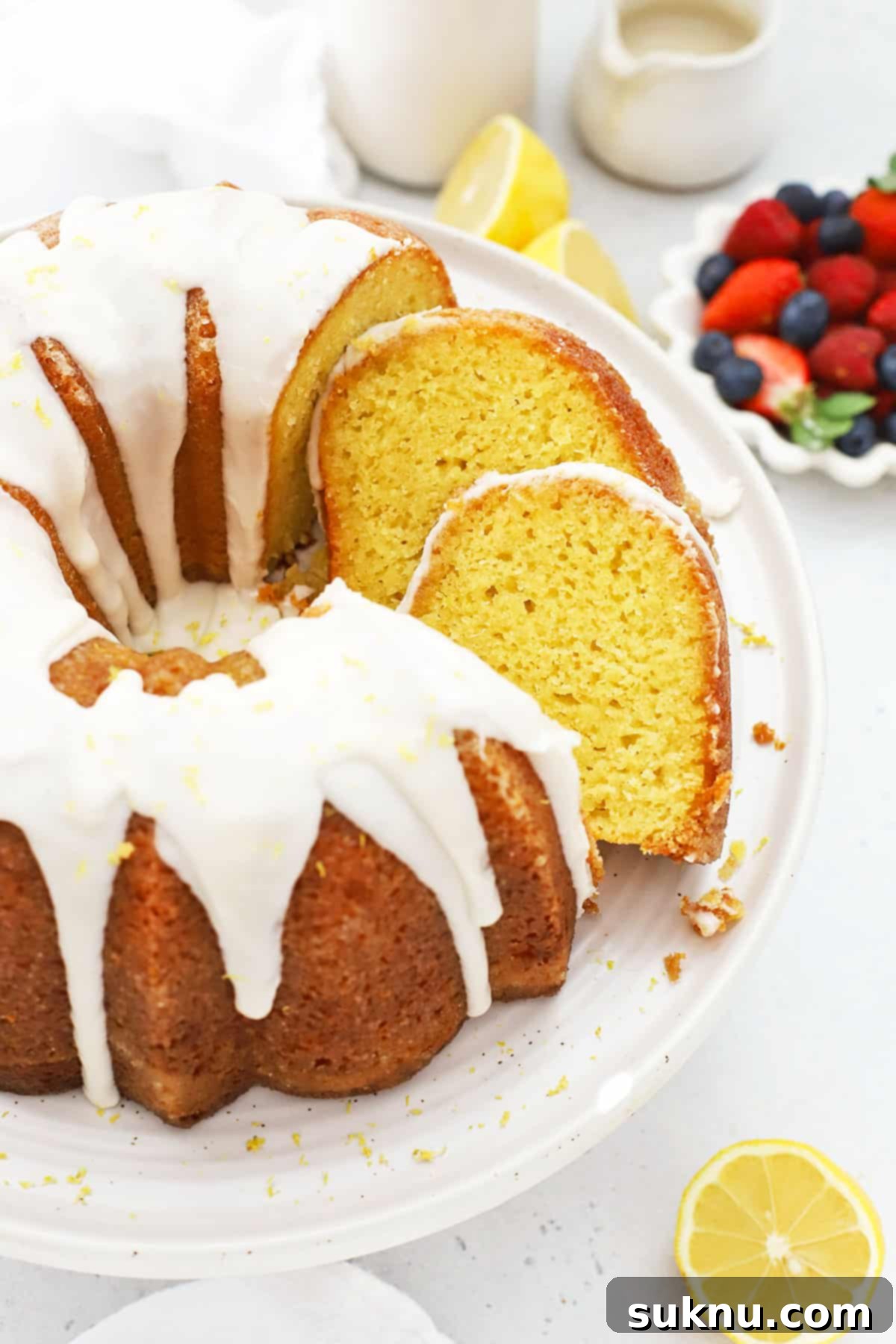
Frequently Asked Questions & Expert Tips for Your Gluten-Free Bundt Cake
Achieving a perfect gluten-free bundt cake is simple when armed with the right knowledge. Here are some common questions and essential tips to ensure your baking success:
The Importance of Room Temperature Ingredients! This isn’t just a suggestion; it’s a fundamental principle of successful baking. Cold ingredients (butter, eggs, sour cream, milk) can cause the butter to seize and separate when creamed with sugar, resulting in a curdled batter. This prevents proper emulsification and air incorporation, leading to a dense cake. To avoid this, set out all your cold ingredients 45-60 minutes before you plan to start baking. If your kitchen is particularly cool, allow up to 90 minutes. A little patience here makes a big difference!
Zest Your Lemons BEFORE Juicing Them. This simple trick will save you frustration! It is significantly easier and safer to zest a firm, whole lemon. Once juiced, lemons become soft and difficult to handle for zesting. We highly recommend investing in a good microplane zester and an efficient lemon squeezer—they are true game-changers in the kitchen!
Mastering Bundt Pan Preparation for a Flawless Release. We cannot stress this enough: proper pan greasing is paramount for any bundt cake, especially gluten-free ones. The golden rule is to grease your bundt pan *just* before you’re ready to pour in the batter. Use a high-quality 100% spray oil (avoid baking sprays that contain flour, as they can sometimes create sticky residue) or melted shortening, ensuring every crevice is coated. Then, lightly dust with granulated sugar, tapping to distribute evenly. This creates a sweet, crisp crust and ensures your cake slides out effortlessly. For an in-depth guide, check out How To Grease A Bundt Pan.
Accurate Flour Measurement is Crucial. The texture of your gluten-free cake hinges heavily on the precise measurement of flour. If possible, use a kitchen scale to weigh your gluten-free flour blend for the most accurate results (360 grams for 3 cups). If you don’t have a scale, always use the scoop and level method: gently spoon flour into your measuring cup until it’s overflowing, then level it off with the back of a knife. Never pack the flour into the cup, as this can lead to a dry, dense cake.
Creative Topping Variations. While our lemon glaze is absolutely delightful, feel free to customize your bundt cake’s topping! If you’re not a fan of glazes, simply skip it (but don’t forget to brush with the lemon simple syrup for moisture!). Instead, serve individual slices with a generous dollop of freshly whipped cream and a colorful medley of fresh berries. Blueberries, strawberries, and raspberries add a beautiful visual appeal and a burst of complementary fruity flavor.
Storage Tips for Lasting Freshness. This gluten-free lemon bundt cake maintains its incredible moisture for days! Store the cooled and glazed cake covered at room temperature for 2-3 days. For longer storage, individual slices can be wrapped tightly in plastic wrap, then placed in an airtight container or freezer bag. Freeze for up to 1 month. Thaw at room temperature or gently warm for a fresh-baked taste.

More Delicious Gluten-Free Cake Recipes to Explore
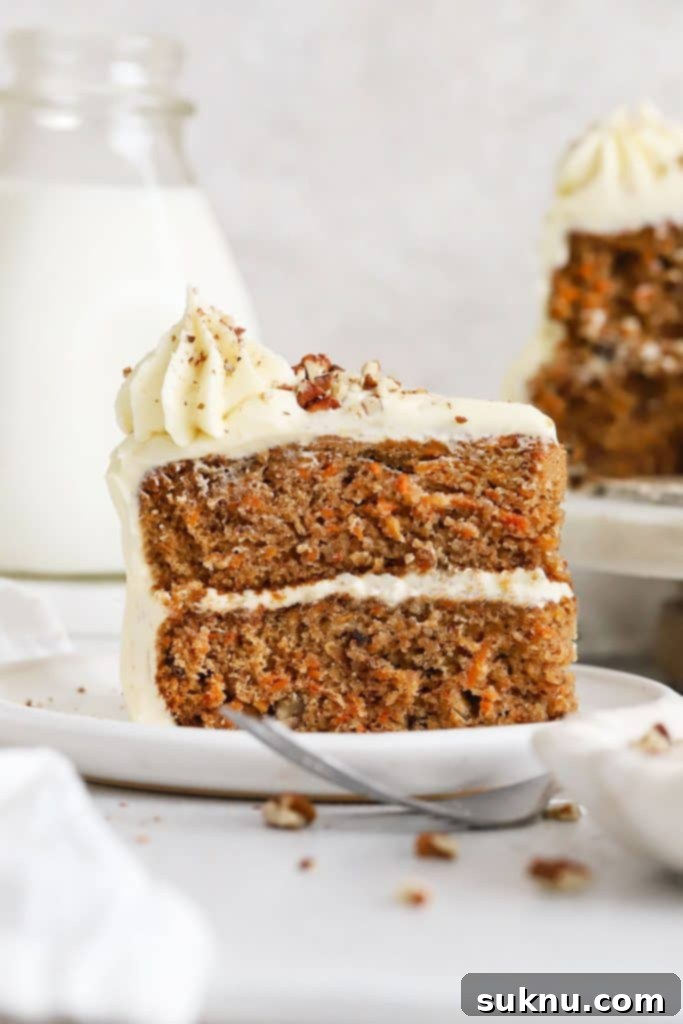
Ultra Moist Gluten-Free Carrot Cake
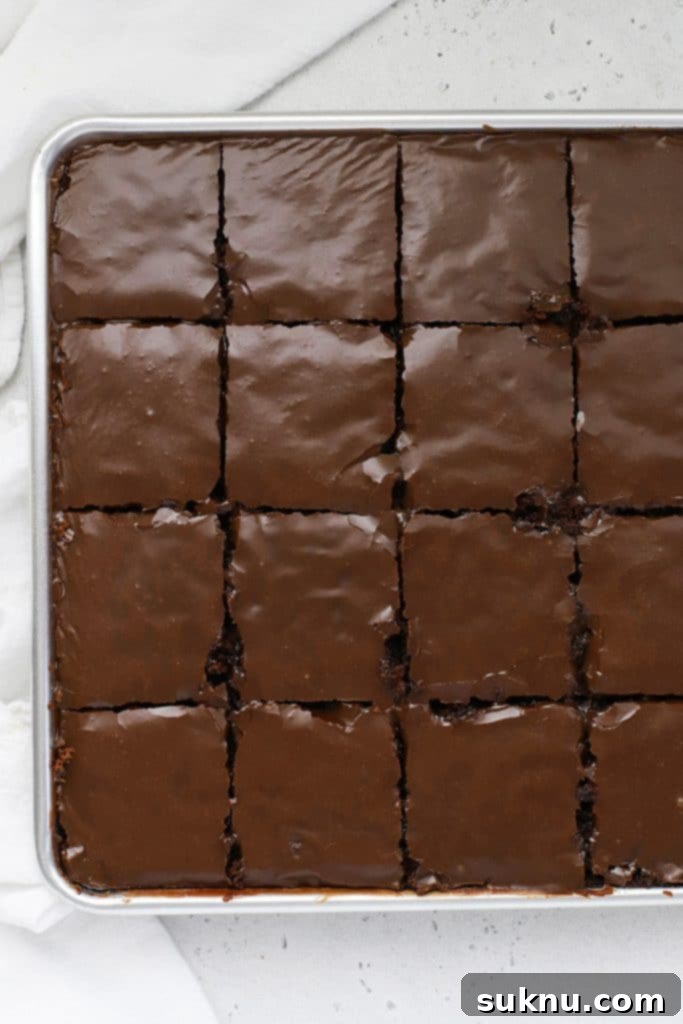
Gluten-Free Texas Chocolate Sheet Cake
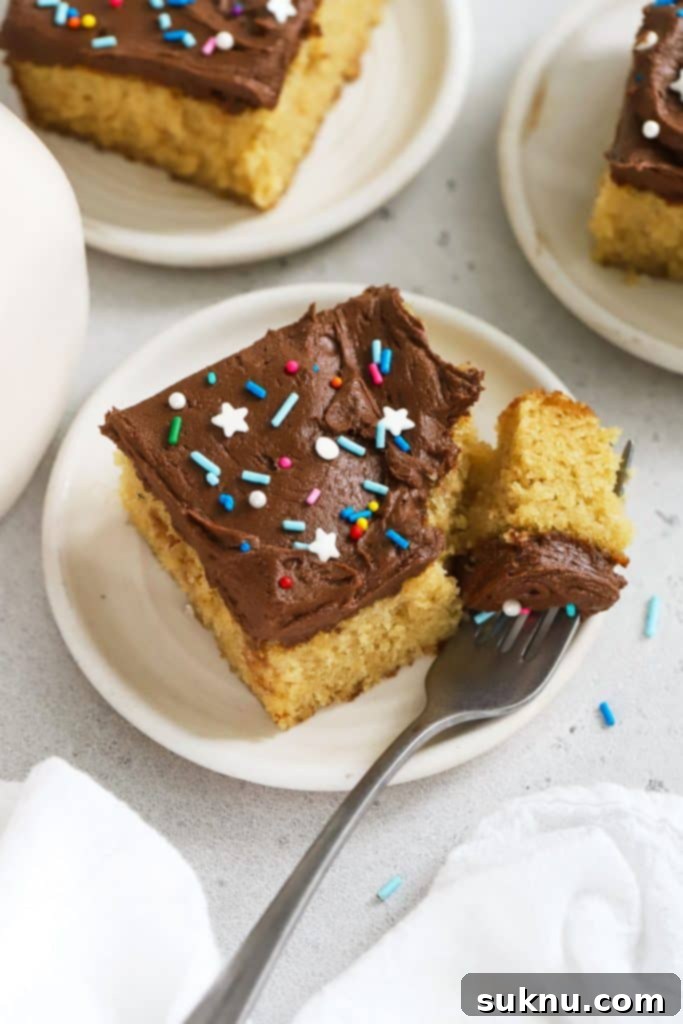
Gluten-Free Yellow Sheet Cake
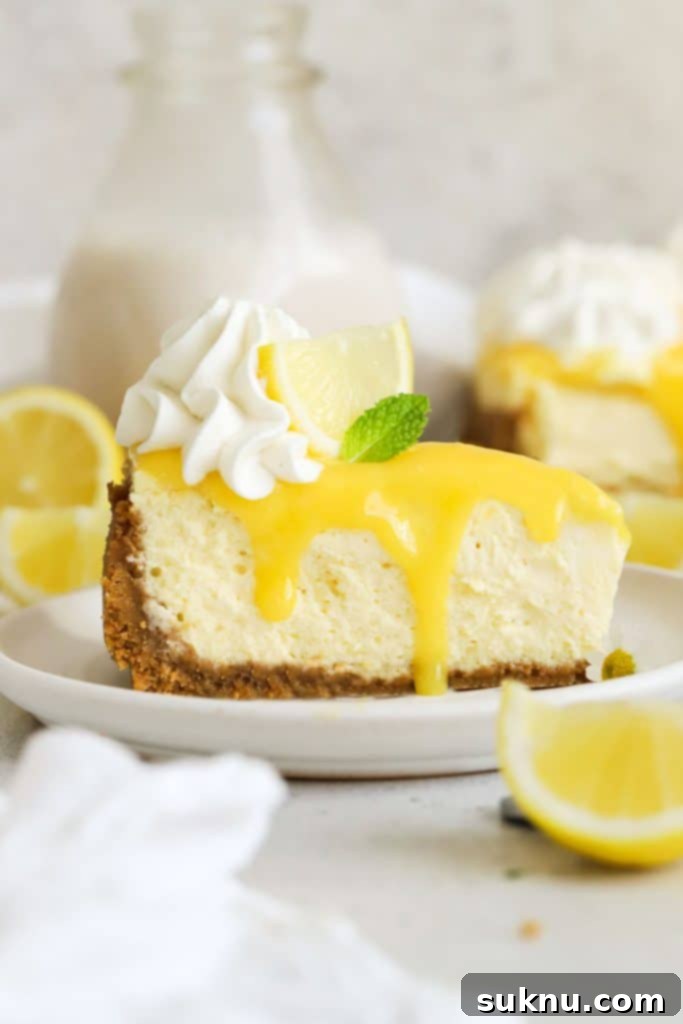
Gluten-Free Lemon Cheesecake
🌟 Did You Make This Recipe?
Tell me all about it! Leave a star rating below when you try our Gluten-Free Lemon Bundt Cake recipe. I can’t wait to hear how it goes!
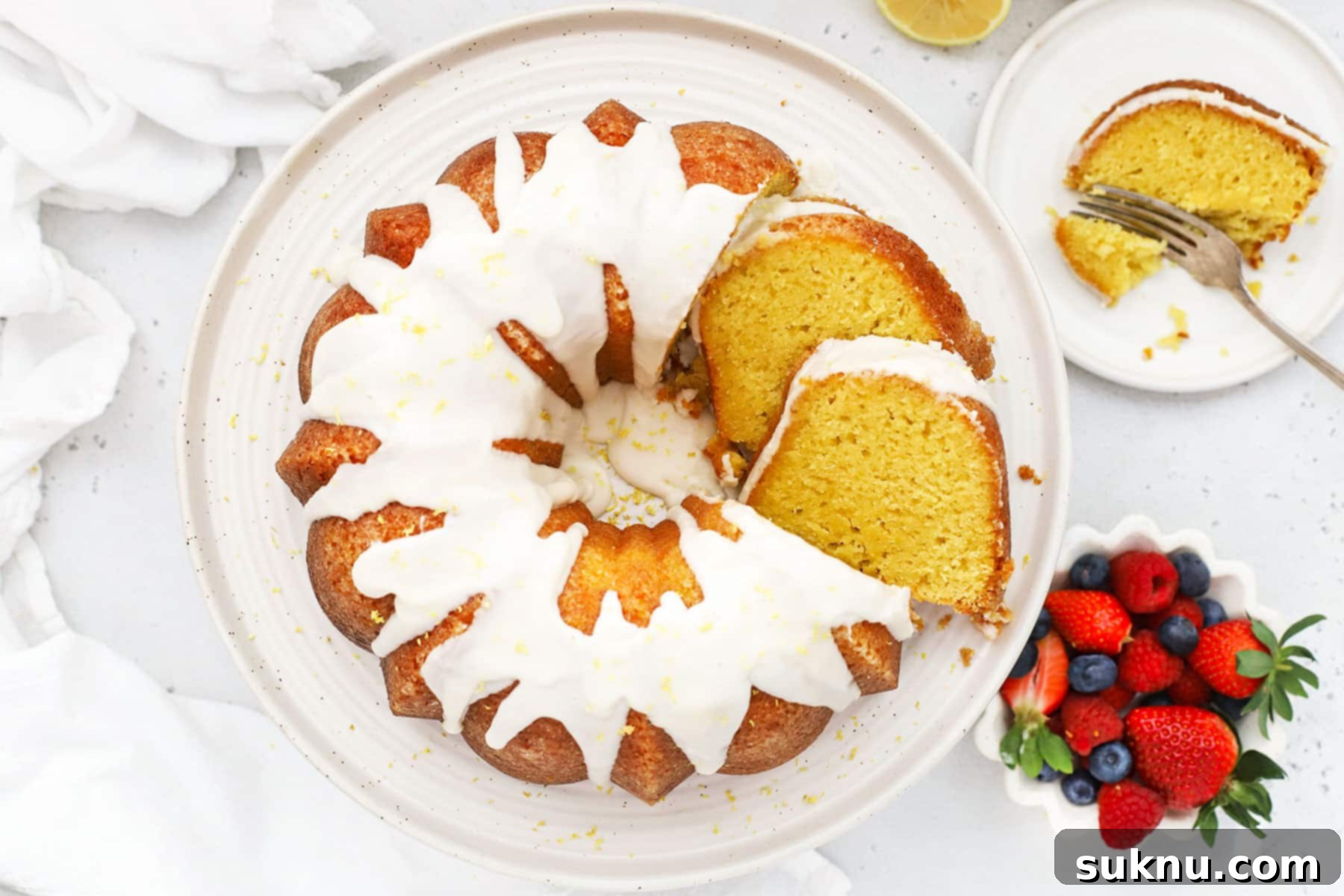
Gluten-Free Lemon Bundt Cake
Ingredients
For The Lemon Cake:
- 3 cups gluten-free measure-for-measure flour, weighed or scooped & leveled (360 grams)
- ¼ cup cornstarch (32 grams)
- 2 ¼ teaspoons baking powder
- ½ teaspoon baking soda
- ¾ teaspoon kosher salt
- 1 cup butter softened (2 sticks, 8 oz.)
- 2 ½ cups sugar (500 grams)
- ¼ cup fresh lemon zest
- 5 large eggs room temperature
- 1 teaspoon vanilla extract
- ½ teaspoon almond extract
- ¼ teaspoon lemon oil or 1/2 teaspoon lemon extract
- 1 cup sour cream
- ½ cup milk
- ¼ cup fresh lemon juice
To Grease The Bundt Pan:
- 100% spray oil only ingredient is oil or oil + a pastry brush (NOT baking spray)
- 2-3 Tablespoons sugar
For The Lemon Simple Syrup
- ⅓ cup fresh lemon juice
- ½ cup sugar
For The Lemon Glaze:
- 1 ½ cups powdered sugar (180 grams)
- 1 Tablespoon milk
- 1-2 Tablespoons fresh lemon juice
- ¼ teaspoon vanilla extract
Instructions
Start By Making The Cake:
- Preheat The Oven to 350 degrees F. Set aside your bundt pan, oil/spray oil, and 2 Tablespoons sugar for greasing the pan later. (Don’t prep the pan now, just have everything ready)
- Combine The Dry Ingredients. In a medium bowl, combine gluten-free flour blend, cornstarch, baking powder, baking soda, and salt. Whisk to combine and set the dry ingredients aside.
- Rub Lemon Zest Into The Sugar. Zest the lemons (measuring a full 1/4 cup!), and place the zest in the bowl of a stand mixer with the sugar. Use your fingertips to rub the zest into the sugar. It should smell fragrant and the sugar should be moist and slightly yellow from the zest.
- Squeeze Lemon Juice Into The Milk. Then, squeeze 1/4 cup lemon juice and add it to the milk. Whisk to combine and set aside. (This mixture will start to thicken and curdle a bit–this is normal!)
- Cream Butter & Sugar. Add the softened butter to the mixer with the lemon sugar and cream 2-3 minutes on medium speed until light and fluffy.
- Add Eggs, One At A Time to the mixer, beating to incorporate each egg before adding the next one.
- Mix In The Sour Cream & Flavorings. Add sour cream, vanilla extract, almond extract, and lemon oil/lemon extract to the mixer. Mix until combined.
- Alternate Dry Ingredients & Milk. Then, add half of the dry ingredients. Quickly pulse the mixer to combine a bit (this helps avoid the dry ingredients poofing out!), then mix until almost fully incorporated. Add half of the milk/lemon juice mixture and mix to combine. Scrape down the edges and repeat, adding the second half of the dry ingredients, mixing until almost incorporated, then pouring in the second half of the milk mixture and mixing till just combined.
- Prep Your Pan. Working quickly, spray or brush the bundt pan well with oil, making sure to get all of the curves, dips, and indents, and the center tube. Sprinkle 2 Tablespoons of sugar into the pan evenly then tap the sides of the pan to distribute the sugar. Tap out any excess sugar by turning the pan upside down to let excess sugar fall out.
- Pour The Batter Into The Prepared Pan and smooth into an even layer.
- Bake The Cake for 45-55 minutes (the exact time will be different based on your pan materials, shape, and size). The top should spring back when gently pressed, and a toothpick inserted in the center of the cake should come out clean with just a few moist crumbs. If you have an instant-read thermometer, the center of the cake should be between 200-210 degrees.
Mix Up The Lemon Syrup & Brush The Cake:
- While The Cake Bakes, Mix Your Lemon Syrup. In a small microwave-safe bowl, combine 1/2 cup sugar and 1/3 cup lemon juice. Whisk to combine, then microwave in 20-30 second increments, stirring in between each interval, until the sugar is fully dissolved.
- Let The Cake Cool 10 Minutes before turning out onto a wire rack to finish cooling. (I put the cooling rack on top of the cake in the pan like a lid, then use oven mitts to flip the cake and rack upside down so that the rack is now on the bottom and the cake can fall out onto the rack.
- Brush With Lemon Syrup. Right after you turn the cake out of the pan, brush the cake with lemon syrup, doing your best to evenly brush it around the sides cake and into the center. (It’ll seem like way too much, but it soaks in and locks moisture into that cake–use it all!)
Cool The Cake COMPLETELY, Then Make The Glaze:
- Once the cake is completely, totally cool (not even a little warm!), you can mix up your glaze.
- Combine powdered sugar, 2 Tablespoons milk, 1 Tablespoon lemon juice, and 1/2 teaspoon of vanilla.
- Whisk to combine until it becomes a very thick glaze. (Mix for 1-2 minutes before adding any additional liquid, then only add 1/2 teaspoon at a time, until you reach a very thick but pourable consistency.)
- Pour the glaze over the cooled cake and let it set before slicing with a knife.
- Store. This cake will keep covered at room temperature 2-3 days, or you can wrap slices in plastic wrap and place them in an airtight container or freezer bag in the freezer up to 1 month.
Notes
- COLOR. The cake should be golden brown, and even in color.
- SPRING. It should spring back when gently pressed with your fingers and shouldn’t look sloshy or wobbly when gently shaken.
- SIDES. The cake should be starting to pull away from the sides. (If it’s fully pulled away from the sides, it’s likely over-done)
- TOOTHPICK TEST. If you insert a toothpick, skewer, or cake tester, it should come away mostly clean with just a few moist crumbs. (No gooey batter allowed!)
- TEMPERATURE. If you take the temperature of the center of your cake, an instant read thermometer should read 200-210 degrees F in the center of the cake. (I usually test 3-4 spots around the center of the bundt to make sure it’s evenly baked)
Video
Find the recipe:
sweetsandthankyou.com/gluten-free-lemon-bundt-cake/