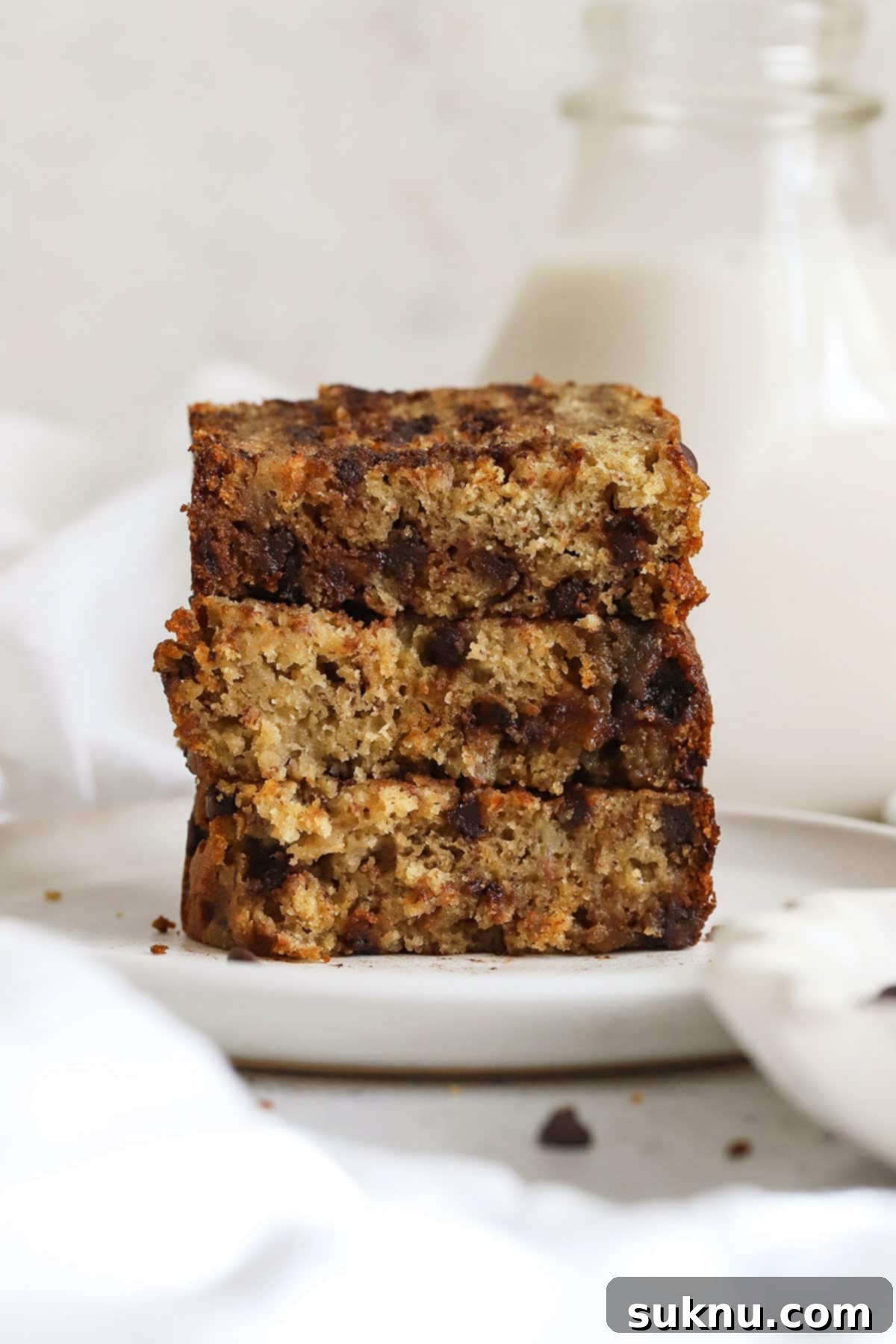
Irresistibly Moist Gluten-Free Chocolate Chip Banana Bread: Your New Go-To Recipe
Discover the ultimate one-bowl gluten-free chocolate chip banana bread that promises an incredibly soft, moist texture and rich flavor in every bite. This easy recipe is perfect for using up ripe bananas and will quickly become a family favorite!
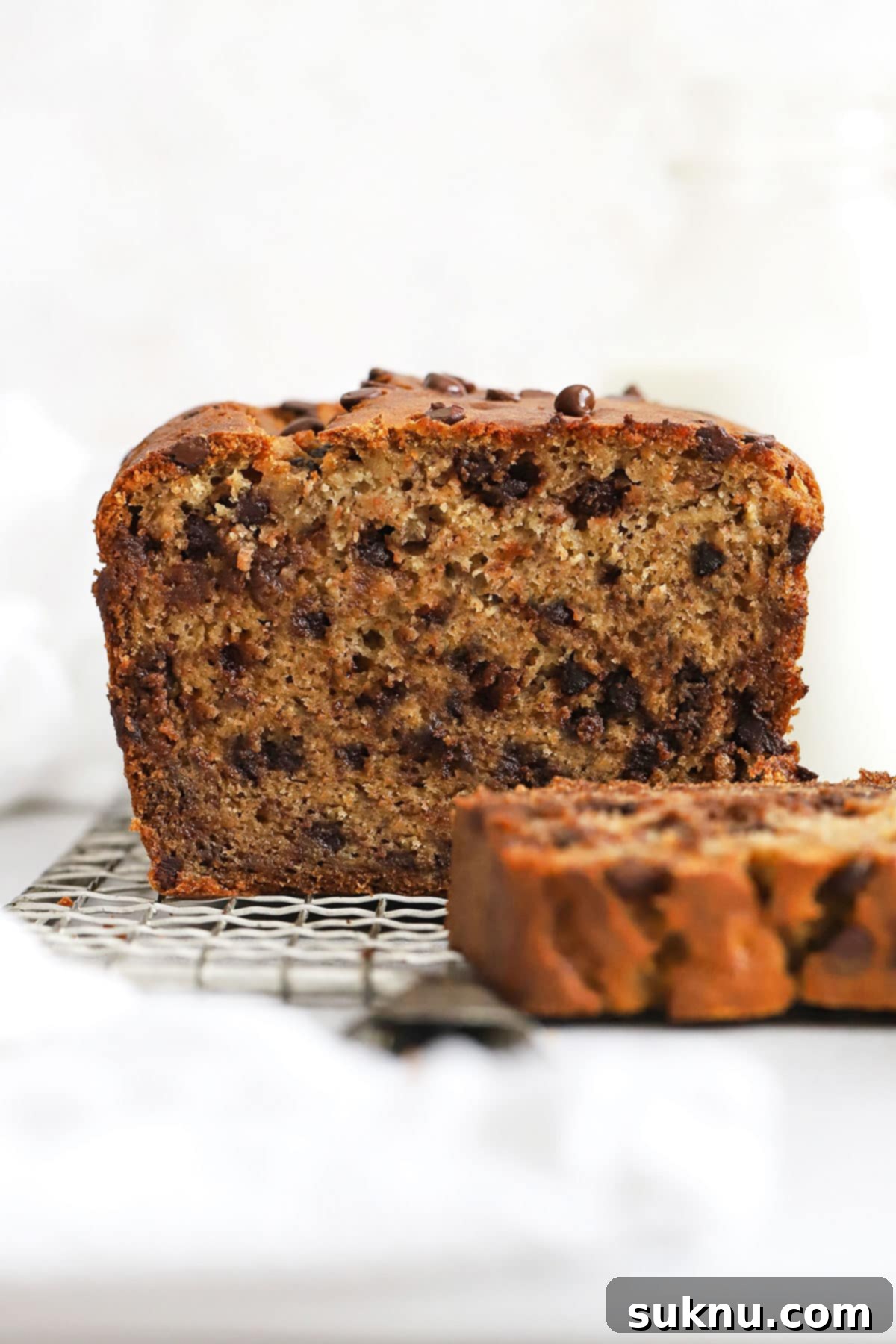
Do you ever find yourself with a few overripe bananas staring at you from the kitchen counter, practically begging to be transformed into something delicious? If so, this gluten-free chocolate chip banana bread recipe is your perfect solution! Forget complicated baking processes; this recipe is designed for simplicity without compromising on taste or texture. It’s a delightful way to repurpose those spotty bananas into a treat that’s both comforting and satisfying.
This recipe captures the timeless appeal of classic chocolate chip banana bread but with a crucial gluten-free twist. We’ve meticulously crafted it to ensure an ultra-moist, tender crumb that’s hard to believe is gluten-free. Every slice is loaded with a harmonious blend of sweet banana and rich chocolate, creating a flavor profile that’s simply irresistible. Whether you’re adhering to a gluten-free diet or just looking for an amazing banana bread, we are confident this will become your best gluten-free banana bread recipe!
Beyond its incredible taste, one of the best features of this banana bread is its sheer ease of preparation. It’s a truly forgiving and flexible recipe, making it an ideal baking project for aspiring bakers, busy parents with little helpers, or anyone who appreciates a minimal-fuss approach to baking. The magic happens in just one bowl, cutting down on cleanup and making the entire experience enjoyable from start to finish. Ready to bake? Let’s gather your ingredients and dive into the simple steps to create this delectable treat!
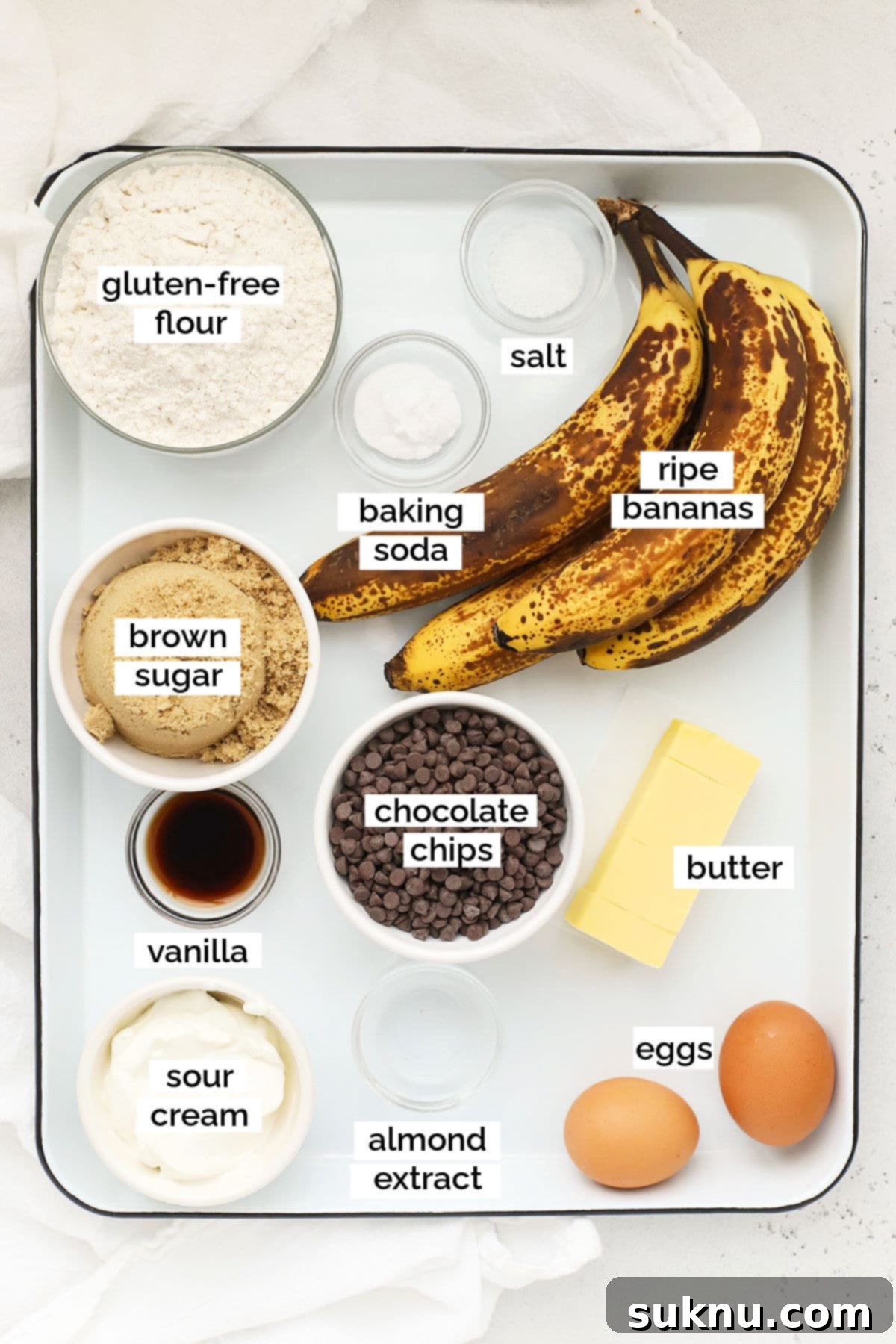
Essential Ingredients for the Best Gluten-Free Banana Bread
Creating the perfect gluten-free chocolate chip banana bread starts with a few key ingredients. Each component plays a vital role in achieving that signature moist, soft texture and incredible flavor. Here’s a closer look at what you’ll need and why:
- Ripe Bananas: The Sweet Foundation. The secret to truly delicious banana bread lies in the ripeness of your bananas. Don’t be afraid of those brown spots! The more ripe they are (think yellow with abundant brown speckles), the sweeter and softer they become, easily mashing into a smooth puree that adds natural sweetness and moisture to your bread. While fully brown bananas work, I personally prefer very spotty ones for the ideal balance of flavor and texture.
- Brown Sugar: For Depth and Moisture. Light brown sugar is a must here. Its molasses content not only imparts a wonderful caramel-like flavor but also significantly contributes to the bread’s incredible moisture. Unlike white sugar, brown sugar helps keep the banana bread tender and soft for longer. If you’re feeling adventurous, a mix of half white and half brown sugar, or even dark brown sugar, can be used to slightly adjust the sweetness and richness.
- Melted Butter: Effortless Integration. No need to wait for butter to soften! Using melted butter simplifies the mixing process, allowing it to seamlessly incorporate into the batter with minimal effort. This contributes to the bread’s rich flavor and delicate texture.
- Sour Cream or Greek Yogurt: The Moisture Secret Weapon. This ingredient might seem unconventional, but a dollop of sour cream or plain Greek yogurt makes a world of difference. It adds a subtle tang that brightens the overall flavor and, most importantly, infuses the banana bread with unparalleled moisture. If you don’t have any on hand, you can substitute with two additional tablespoons of melted butter, though the bread may be slightly less moist.
- Vanilla Extract: The Flavor Enhancer. A classic and indispensable ingredient in almost any baked good! Vanilla extract harmonizes beautifully with the banana and chocolate, elevating the overall taste experience.
- Almond Extract or Ground Cinnamon: A Flavorful Twist. While cinnamon is the traditional spice for banana bread, I highly recommend trying a touch of almond extract. It introduces a unique, subtle layer of flavor that complements the banana and chocolate exceptionally well, offering a more sophisticated profile. If you prefer the classic warmth, feel free to stick with ground cinnamon. Both options yield delicious results!
- Gluten-Free Flour Blend: The Right Foundation. For ease and reliability, a 1:1 gluten-free measure-for-measure flour blend is your best friend. I consistently achieve excellent results with King Arthur Measure-For-Measure Gluten-Free Flour. When selecting a blend, ensure it contains xanthan gum, which is essential for providing structure and elasticity in gluten-free baking. Proper measurement is crucial—always use a kitchen scale for precision, or the “scoop and level” method to avoid over-packing your flour, which can lead to a dry loaf. For more details, see our guide on how to measure flour correctly.
- Baking Soda: For Perfect Rise and Softness. This leavening agent reacts with the acidic bananas and brown sugar to give the bread its beautiful rise and airy, soft crumb. Ensure your baking soda is fresh for optimal results.
- Salt: Balances and Enhances Flavors. A small amount of salt is vital for balancing the sweetness and intensifying the flavors of all the other ingredients. Don’t skip it!
- Mini Chocolate Chips: Chocolate in Every Bite. Inspired by our Bakery-Style Gluten-Free Chocolate Chip Muffins, mini chocolate chips are a game-changer for banana bread. Their smaller size ensures that chocolate is evenly distributed throughout the loaf, guaranteeing a delightful burst of chocolate in every single bite.
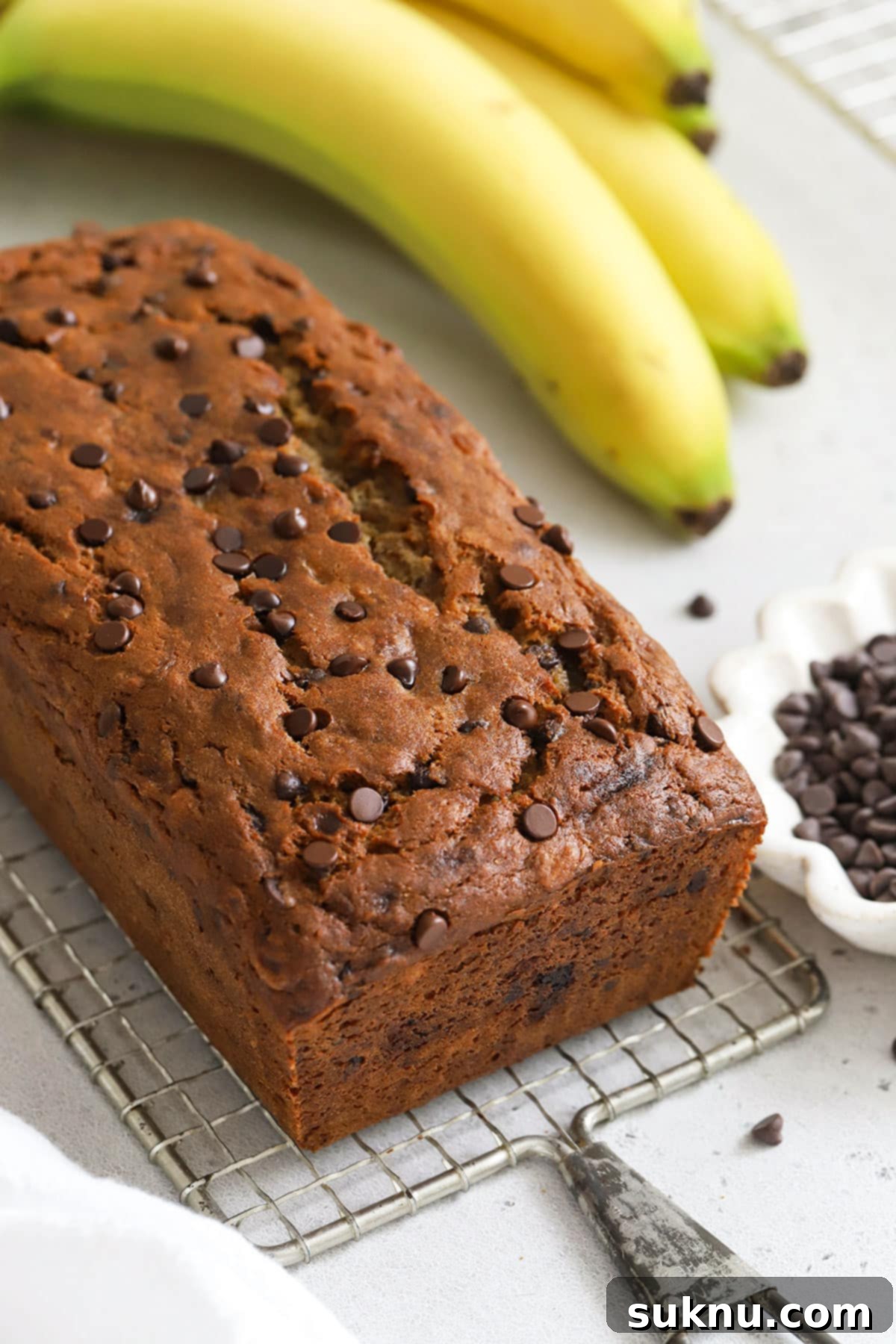
Essential Baking Tips for Gluten-Free Banana Bread Success
Achieving a perfectly moist and fluffy gluten-free chocolate chip banana bread is easier than you think, especially with a few expert tips in your arsenal. Beyond simply mixing ingredients, understanding the nuances of baking can elevate your results from good to truly exceptional. Here are some invaluable baking tips to guide you:
- Mastering Flour Measurement: The single most common baking mistake is incorrectly measuring flour. Too much flour can lead to a dry, dense loaf. Always use the Scoop & Level Method, or even better, invest in an inexpensive kitchen scale. Weighing your flour ensures precise measurement every time, guaranteeing the perfect wet-to-dry ingredient ratio for optimum texture.
- Check Your Leavening Agents: Baking soda is crucial for the rise and softness of your banana bread. Old or inactive leavening agents can result in a flat, dense loaf. Learn how to check if your baking soda and baking powder are fresh with a quick and simple test.
- Knowing When It’s Done: Undercooked banana bread can be gooey in the middle, while overcooked bread can be dry. The visual cues (golden brown top) and toothpick test (a few moist crumbs, not wet batter) are good starting points, but for ultimate accuracy, an instant-read thermometer should register 200-205°F (93-96°C) in the center. Discover more detailed insights on how to tell when banana bread is done.
- Choosing the Right Baking Pan: The material and color of your loaf pan can significantly impact baking time and crust development. Light-colored metal pans typically conduct heat more evenly and gently, leading to a consistent bake. Darker pans can sometimes result in over-browning. For a comprehensive guide to bakeware, check out our favorite baking pans for every project.
- Measuring Butter Accurately: While melted butter is easy to incorporate, accurate measurement is still important. Whether you’re working with sticks, tablespoons, or grams, understanding precise measurements ensures consistency. For a complete guide, refer to how to measure butter (sticks, tablespoons & more!).
- Don’t Overmix the Batter: Once you add the dry ingredients to the wet, mix only until just combined. A few lumps are perfectly fine! Overmixing can develop any gluten (even in gluten-free flours with xanthan gum) and lead to a tough, rubbery texture.
- The Importance of Cooling: Patience is key! Allowing the banana bread to cool sufficiently in the pan and then on a wire rack ensures it sets properly. Slicing a hot loaf can cause it to crumble or compress, affecting its texture.
How To Make This Gluten-Free Chocolate Chip Banana Bread, Step By Step
Follow these simple steps to create a deliciously moist gluten-free chocolate chip banana bread that will impress everyone. The full recipe with precise ingredient amounts, detailed instructions, and additional tips can be found in the recipe card below.
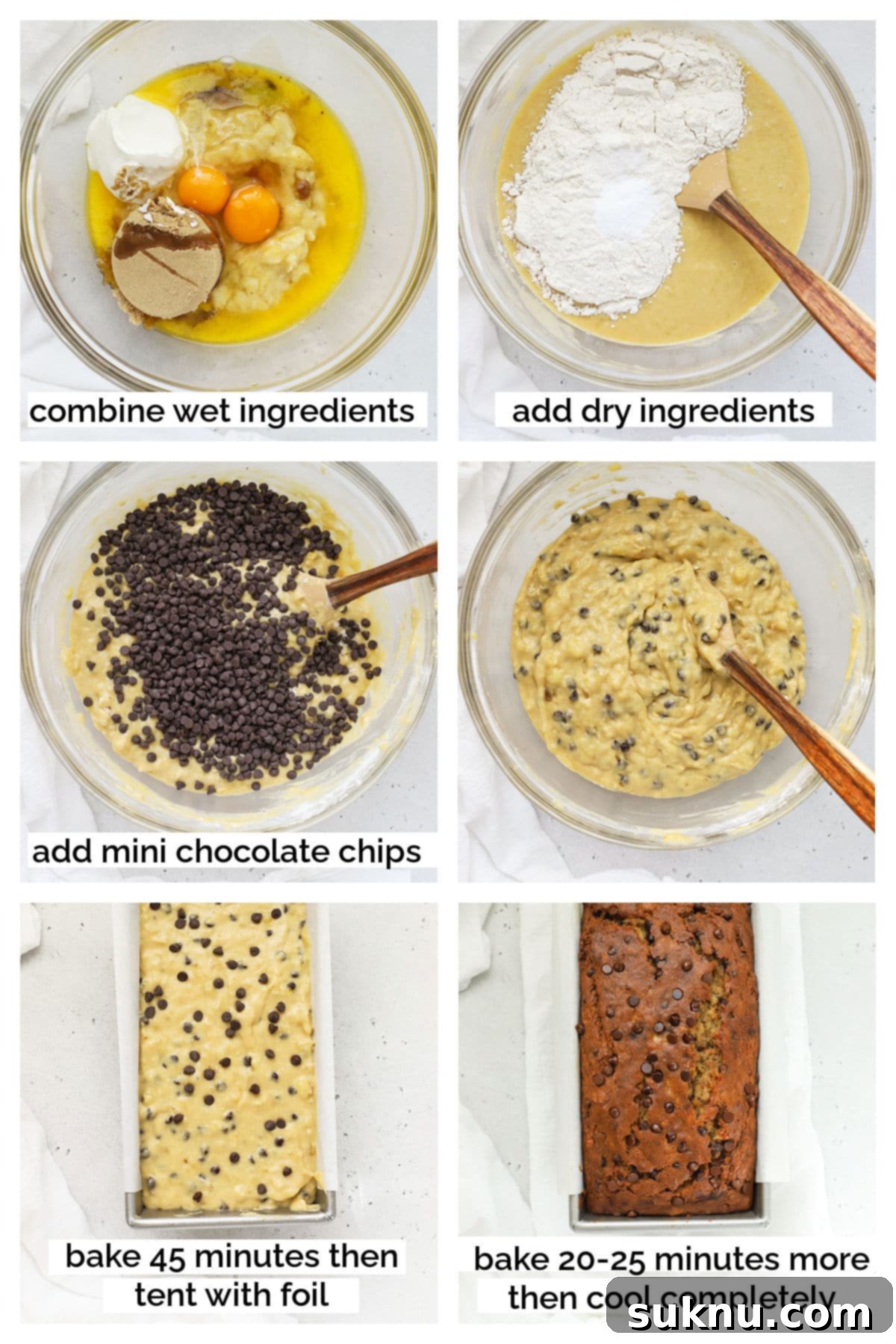
- Prepare Your Oven and Pan: Preheat your oven to 350°F (175°C). Line a metal 8.5 x 4.5 inch loaf pan with parchment paper, leaving an overhang on the long sides to create “handles” for easy removal later. This step prevents sticking and ensures a clean release.
- Mash the Bananas: If you haven’t already, thoroughly mash your ripe bananas in a large bowl using a fork. For an ultra-smooth bread, you can briefly pulse them in a food processor. Accuracy is key here; measure the mashed bananas to ensure you have the correct amount, typically around 1 ½ cups.
- Combine Wet Ingredients: Into the bowl with the mashed bananas, add the melted butter, brown sugar, sour cream (or Greek yogurt), room temperature eggs, vanilla extract, and almond extract (or ground cinnamon if using). Stir everything together with a whisk or spatula until all ingredients are well combined and the mixture is cohesive.
- Incorporate Dry Ingredients: Sift or whisk together your gluten-free measure-for-measure flour blend, baking soda, and kosher salt in a separate bowl. Then, add these dry ingredients to the wet mixture. Stir gently until just combined. It’s perfectly fine if a few small dry patches remain; overmixing will lead to a tougher bread.
- Fold In Chocolate Chips: Gently sprinkle the mini chocolate chips over the batter. Using a spatula, carefully fold them into the mixture until they are evenly distributed throughout. This ensures you get chocolate in every single bite!
- Fill the Loaf Pan: Pour the prepared batter into your parchment-lined loaf pan. Use your spatula to gently smooth the top of the batter, ensuring an even layer for consistent baking.
- Initial Bake: Place the loaf pan in the preheated oven and bake for 45 minutes at 350°F (175°C).
- Cover and Continue Baking: After 45 minutes, loosely tent the top of the loaf with aluminum foil. This prevents the top from over-browning while the interior continues to cook. Bake for another 20-25 minutes, or until the top is golden brown, a wooden skewer or toothpick inserted into the center comes out with only a few moist crumbs (no wet batter), and an instant-read thermometer registers at least 200°F (93°C).
- Cool and Slice: Let the banana bread cool in the pan for about 5-10 minutes. Then, using the parchment paper handles, carefully lift the loaf out of the pan and transfer it to a wire rack to cool completely. Slicing warm banana bread can cause it to crumble, so patience is key for neat slices. Once cooled, slice and enjoy!
- Storing Leftovers: Store any leftover gluten-free chocolate chip banana bread in an airtight container or a sealed bag at room temperature for 1-2 days, or in the refrigerator for 3-4 days. For longer storage, slices or the whole loaf can be frozen for up to 2 months. To enjoy, simply warm individual slices in the microwave for 15-30 seconds or in a toaster oven for a delightful warm treat.
Delicious Variations & Toppings to Elevate Your Banana Bread
While this moist gluten-free banana bread recipe is utterly perfect as written, there are plenty of ways to customize it and make it your own. Whether you’re craving extra texture, a different flavor profile, or a delightful topping, these variations are sure to inspire your next bake:
- Introduce Nuts for a Satisfying Crunch: For those who love a bit of texture, adding half a cup of chopped walnuts or pecans along with the chocolate chips can be a fantastic addition. The nuts toast slightly during baking, releasing their natural oils and adding a delightful crunch and nutty flavor that complements the sweetness of the bananas and chocolate.
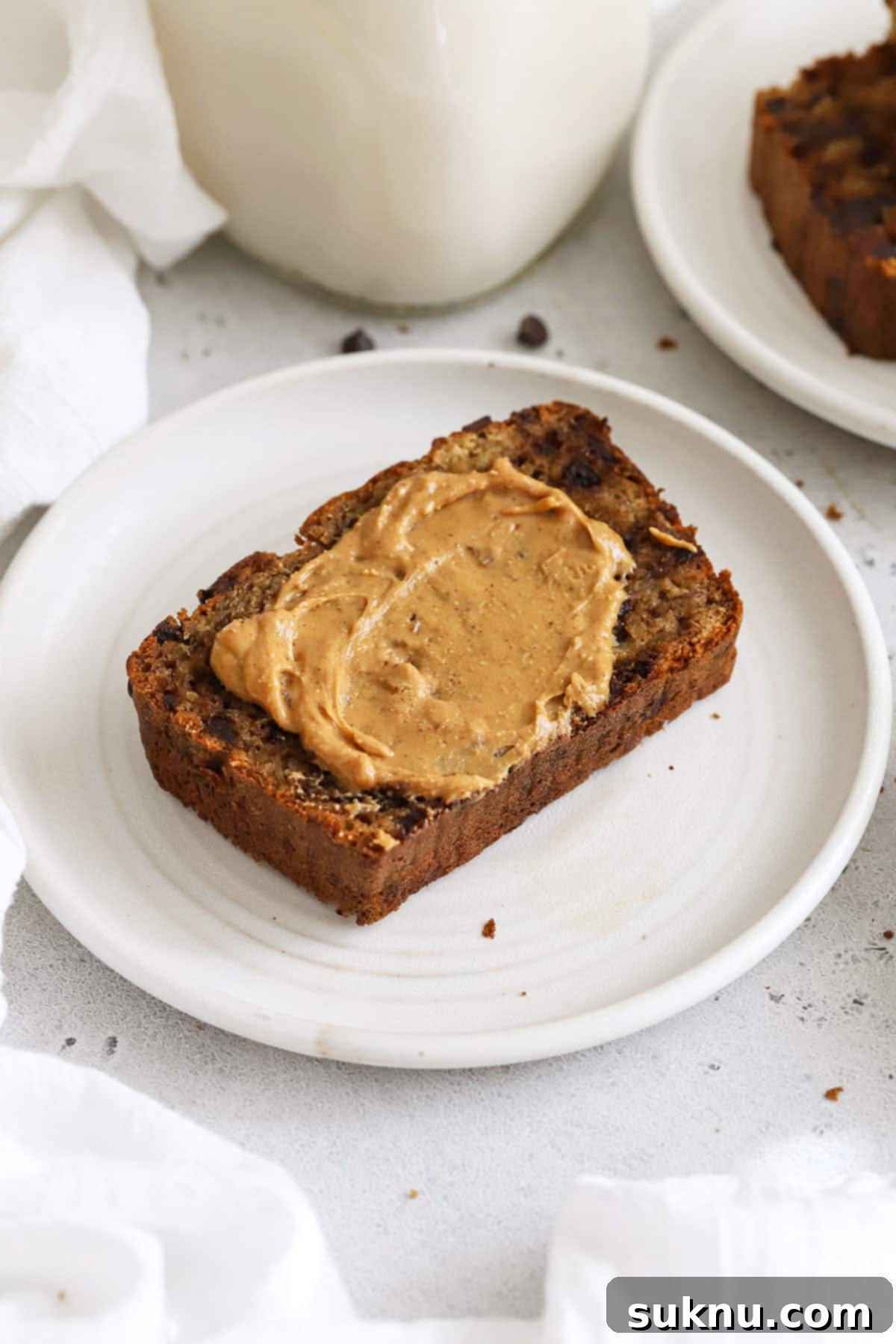
- Experiment with Spreads for an Extra Treat: A warm slice of banana bread is already a joy, but it becomes an even more indulgent experience with a luscious spread. Consider topping your slice with creamy peanut butter, rich almond butter, decadent Nutella, or your favorite seed butter for an extra layer of flavor and protein.
- Swap to Chocolate Chunks for a Rustic Appeal: If you prefer larger pockets of melting chocolate, trade the mini chocolate chips for an equal amount of chocolate chunks. This variation provides a more rustic appearance and a more intense chocolate experience with bigger, gooey pools of melted chocolate throughout the loaf.
- Add a Hint of Spice: Beyond cinnamon, consider other warm spices. A pinch of nutmeg, cardamom, or even a dash of allspice can add complexity and warmth to your banana bread.
- Include Dried Fruits: For a different kind of sweetness and chewiness, fold in half a cup of dried cranberries, chopped dates, or golden raisins with the chocolate chips.
- Create a Streusel Topping: For an extra special touch, whip up a quick streusel topping (butter, flour, brown sugar, and a pinch of cinnamon) and sprinkle it over the batter before baking. This adds a sweet, crumbly crust.
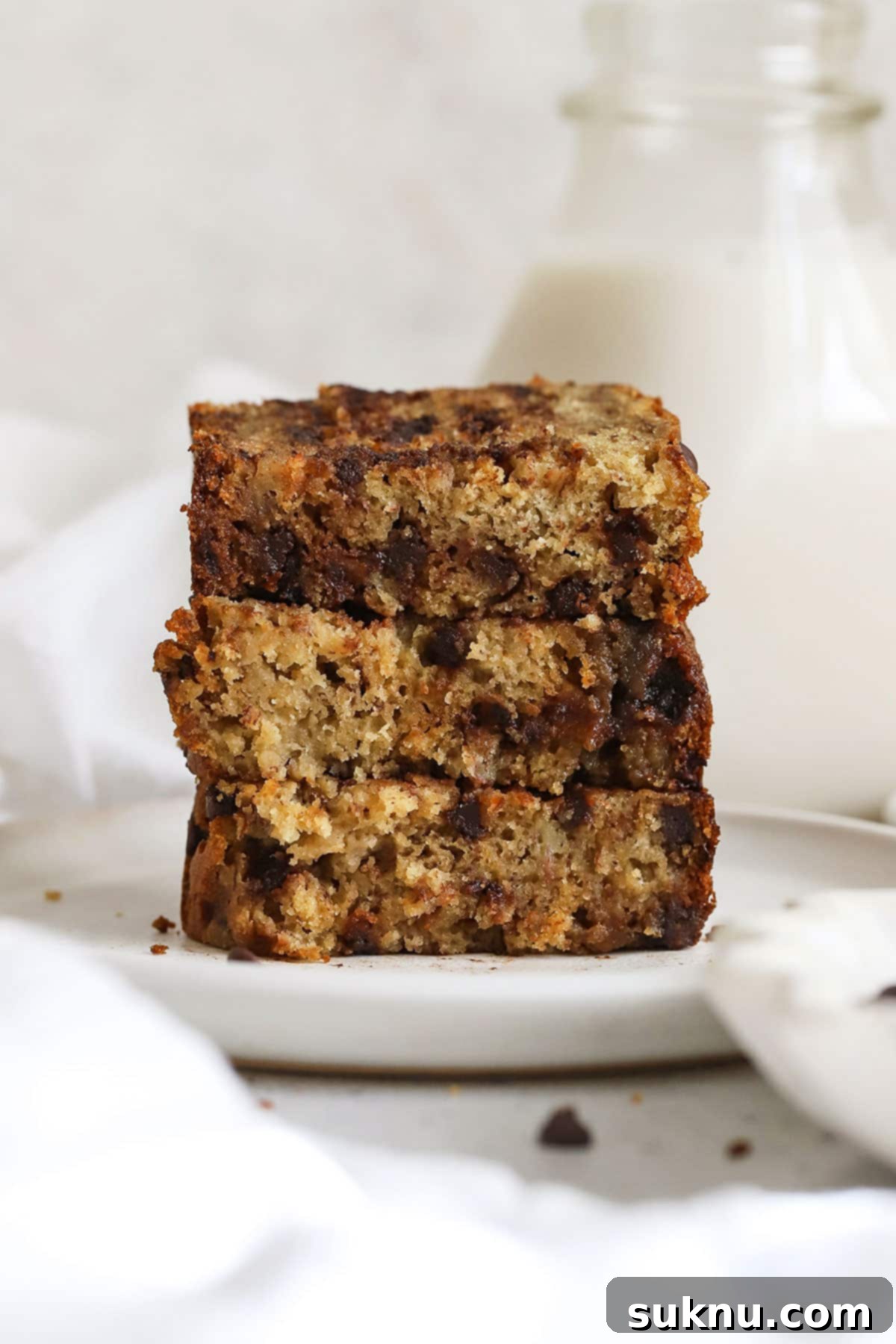
FAQ + Expert Tips and Tricks for the Best Gluten-Free Chocolate Chip Banana Bread
Precision in Measurement: The Key to Perfect Texture
In baking, especially gluten-free baking, precision is paramount. The ratio of wet to dry ingredients dictates the final texture of your banana bread. Slight variations can lead to results ranging from dry and crumbly to gummy or dense.
- Flour: For the most consistent results, always measure your gluten-free flour by weight using an inexpensive kitchen scale. If you don’t have a scale, use the “Scoop & Level Method”: fluff the flour in its container, then gently spoon it into your measuring cup until overflowing, and level off the top with a straight edge (like the back of a knife). Never scoop flour directly with your measuring cup, as this compacts it, adding significantly more flour than intended.
- Bananas: Just as important as flour measurement is the measurement of your mashed bananas. While a few extra tablespoons of banana won’t ruin your bread, consistently measuring the mashed bananas (e.g., 1.5 cups) rather than going by the number of bananas will yield more reliable and consistent results every single time. Banana size varies greatly, so measuring by volume after mashing is the most accurate approach.
Smart Swaps & Substitutions for Dietary Needs
This recipe is quite adaptable, allowing for certain dietary adjustments. Here are some common substitutions and important notes:
- Dairy-Free Adaptation: To make this banana bread completely dairy-free, you can easily swap the regular butter for a high-quality vegan butter. For the sour cream, use an equal amount of dairy-free yogurt (plain and unsweetened) or, if you don’t have that, simply add an additional 4 tablespoons of vegan butter. You could also use 8 tablespoons of melted coconut oil in place of both the butter and sour cream, but be aware that this will impart a subtle coconut flavor to your loaf. Finally, ensure you use dairy-free chocolate chips to complete your dairy-free banana bread.
- Egg Substitutes for Banana Bread: If you need an egg-free option, you have a couple of choices. You can create two “flax eggs” by combining 2 tablespoons of ground flax meal with 6 tablespoons of water and letting it sit for a few minutes until thickened. Alternatively, you can use an additional 1/2 cup of mashed banana to replace the eggs. While the texture might not be *identical* to the egg-inclusive version, both methods will result in a delicious, viable loaf.
- Flour Substitutions (Important!): It’s crucial to understand that this recipe is specifically developed for a 1:1 gluten-free measure-for-measure flour blend that contains xanthan gum. I strongly advise against substituting with single-grain gluten-free flours like coconut flour, oat flour, or almond flour. These flours behave very differently in terms of liquid absorption and structure, and using them will drastically alter the texture and potentially ruin the banana bread. For instance, coconut flour absorbs a tremendous amount of liquid, while almond flour adds its own fat and requires different hydration levels. Sticking to the recommended blend ensures the best results.
- Overripe Bananas (Fast Track): If your bananas aren’t quite ripe enough but you’re craving banana bread now, you can speed up the ripening process. Place them on a baking sheet and bake at 300°F (150°C) for 15-30 minutes, or until the peels are black and the bananas are soft. Let them cool before mashing.
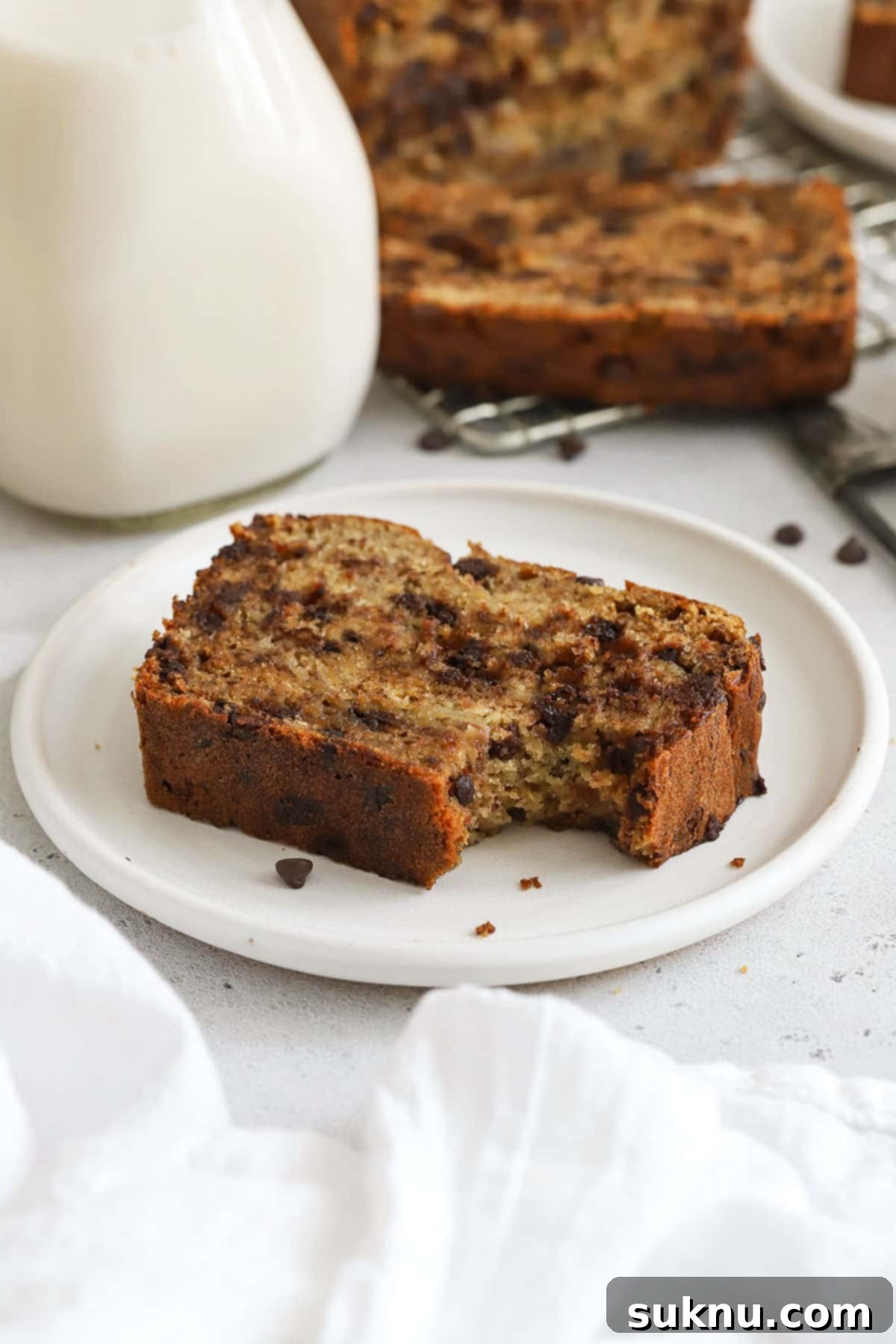
More Gluten-Free Recipes For Banana Lovers
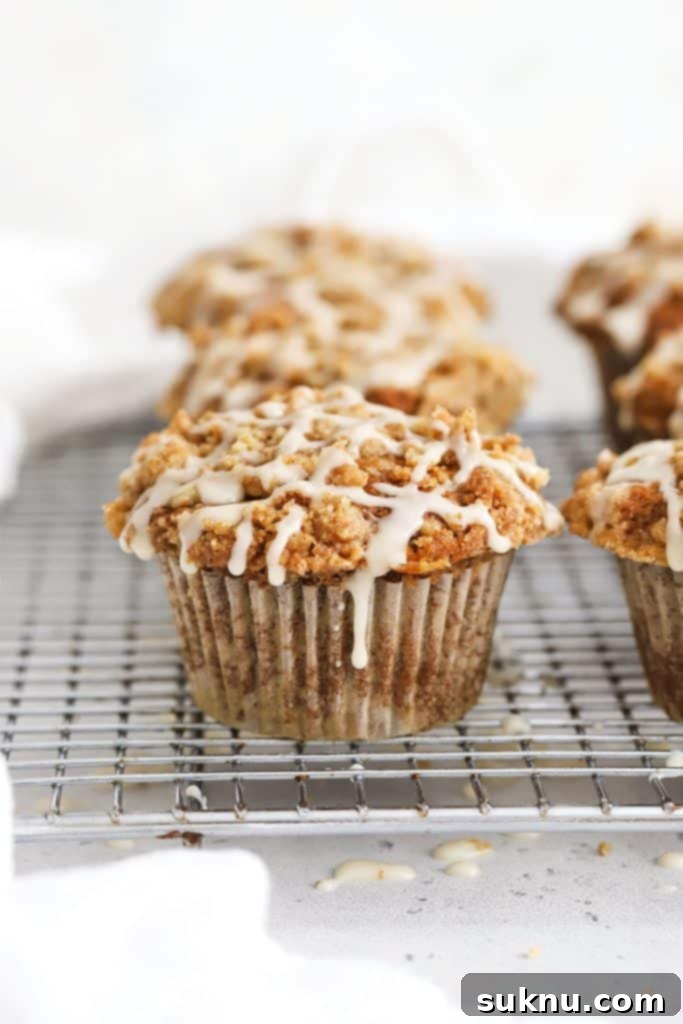
Gluten-Free Banana Crumb Muffins
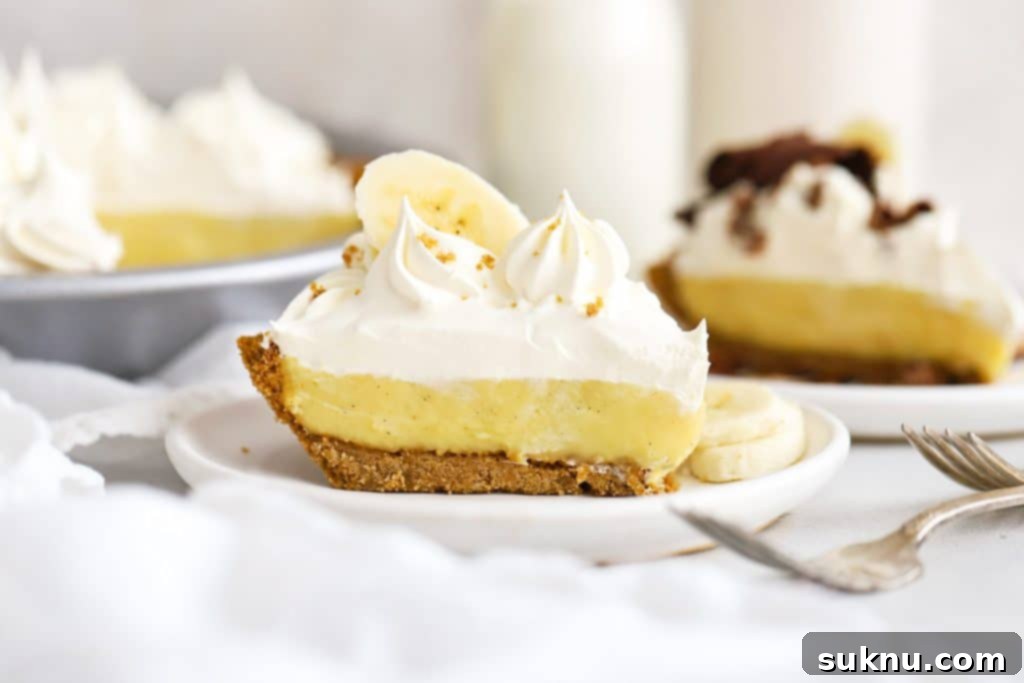
Gluten-Free Banana Cream Pie
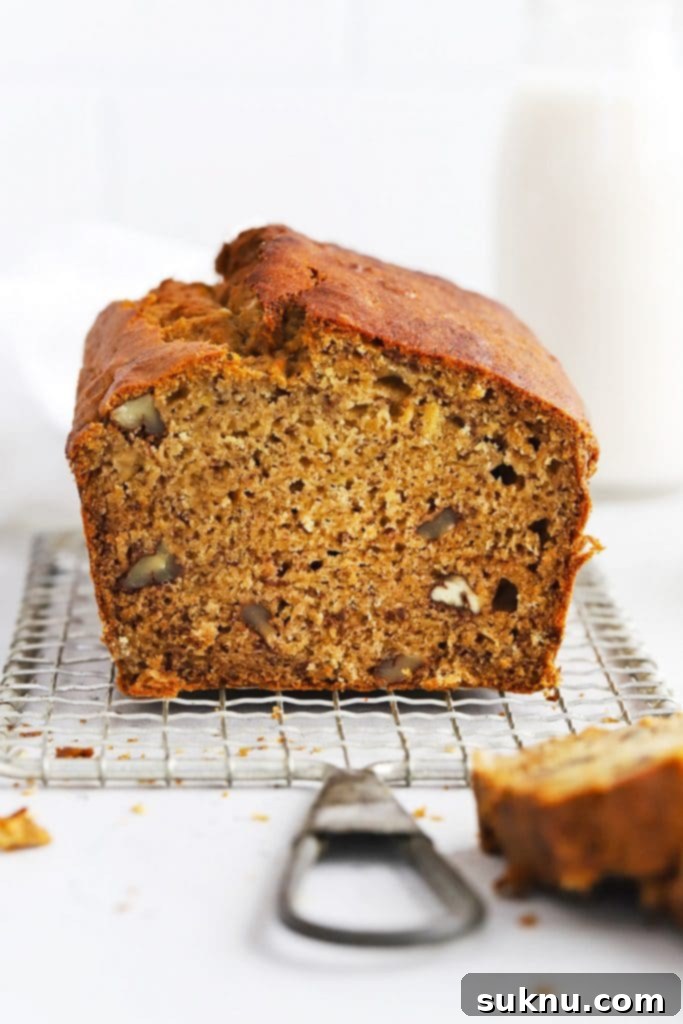
Gluten-Free Brown Butter Banana Bread
🌟 Did you make this recipe?
Leave a star rating below when you try our Gluten-Free Chocolate Chip Banana Bread recipe! We can’t wait to hear how it goes!
Recipe Card: Gluten-Free Chocolate Chip Banana Bread
Gluten-Free Chocolate Chip Banana Bread
★
★
★
★
☆
4 from 1 review
- Author: Emily Dixon, Sweets & Thank You
- Total Time: 1 hour 20 minutes
- Yield: 1 loaf
- Diet: Gluten Free
Description
This one-bowl banana bread recipe is ultra moist & delicious thanks to a few simple ingredients. We love the soft, fluffy texture and chocolate in every bite!
Ingredients
- 1 1/2 cups mashed ripe bananas (about 3–4 bananas)
- 3/4 cup light brown sugar (150 grams)
- 6 Tablespoons butter, melted (85 grams)
- 1/2 cup sour cream (113 grams)
- 2 large eggs, room temperature
- 1 1/2 teaspoons vanilla extract
- 1/2 teaspoon almond extract (or 1 teaspoon ground cinnamon)
- 1 3/4 cups (210 grams) gluten-free measure-for-measure flour*
- 1 teaspoon baking soda
- 1/4 teaspoon kosher salt
- 3/4 cup mini chocolate chips (128 grams/4.5 oz.)
Instructions
- Preheat Oven to 350 Degrees and line a metal 8.5 x 4.5 inch loaf pan with parchment paper.
- Mash Bananas. If you haven’t already, mash the ripe bananas with a fork (or puree in a food processor for a super-smooth texture). Measure the mashed bananas for accuracy.
- Combine Wet Ingredients. In a large bowl, combine mashed bananas, brown sugar, melted butter, sour cream, eggs, vanilla, and almond extract (or ground cinnamon). Stir until well combined and cohesive.
- Add Dry Ingredients. Next, add gluten-free flour, baking soda, and salt and stir until almost fully combined, with just a few dry patches left.
- Fold In Chocolate Chips. Sprinkle on the chocolate chips and gently fold them in with a spatula until evenly distributed.
- Pour Batter Into Prepared Pan and smooth the top a little so it’s even.
- Bake 45 Minutes at 350 degrees.
- Tent Loosely With Aluminum Foil & Bake Another 20-25 Minutes, or until the top is golden brown, a toothpick inserted in center of the bread comes out with just a few moist crumbs (no wet batter), and the interior reaches 200 degrees F. (Adding the foil prevents the bread from getting too brown)
- Cool & Slice. Let the banana bread cool about 5-10 minutes in the pan before lifting it out of the pan using the parchment paper handles and placing it on a wire rack to finish cooling completely. Slice and enjoy.
- Store leftover banana bread in a bag or airtight container 1-2 days at room temperature, 3-4 days in the refrigerator, or 2 months in the freezer. I like to warm slices up in the microwave for 15-30 seconds, or you can use a toaster oven!
Notes
- Loaf Pan. A light-colored aluminum loaf pan will bake the most evenly and gently, preventing over-browning of the crust while ensuring the interior cooks thoroughly. If you use a glass or ceramic pan, your bake time will vary (and usually take longer) due to different heat conductivity.
- Is It Done? The most accurate way to tell if your banana bread is completely cooked through is to insert an instant-read thermometer into the center of the loaf. It should reach at least 200°F (93°C) to be considered fully done. (If it’s very close, like 198-199°F, you can still pull it out of the oven, as the residual heat from the pan will help it continue cooking for a few minutes.)
- Flour. We highly recommend King Arthur Measure-For-Measure Gluten-Free Flour for its consistent results. However, if you use another brand, make absolutely sure it contains xanthan gum for proper structure. Always measure flour carefully—either with a kitchen scale for precision or by using the scoop & level method—to avoid adding too much, which can lead to a dry loaf.
- Bananas. For the best flavor and moisture, we recommend using spotty, overripe bananas (yellow with many brown spots). To ensure consistent results every time, measure the mashed bananas by volume (e.g., 1.5 cups) rather than simply counting the number of bananas, as their sizes vary.
- Sour Cream. If you don’t have sour cream on hand, an equal amount of plain Greek yogurt makes a fantastic substitute, contributing similar moisture and a slight tang. If neither is available, you can add 2 additional tablespoons of melted butter, but note that your banana bread might not be *quite* as moist as the original recipe.
- Butter. This recipe works well with both salted and unsalted butter. I typically use salted butter, but feel free to use unsalted if that’s what you have; the overall salt balance of the recipe is forgiving.
- Freezing Tips: Banana bread freezes beautifully! If you’re freezing a whole loaf to thaw later, ensure it’s cooled completely. Then, wrap it tightly in plastic wrap or reusable food wrap, followed by a layer of aluminum foil, and store it in a freezer-safe bag in the freezer. This double-wrapping method helps maintain freshness and prevents freezer burn for up to 2 months. If you prefer to freeze individual slices for grab-and-go convenience, first lay the slices out on a baking sheet lined with parchment paper and freeze for 30-40 minutes, or until they are firm and no longer tacky. This prevents them from sticking together. Once partially frozen, transfer the slices to a freezer-safe bag and store in the freezer.
- Prep Time: 15 minutes
- Cook Time: 65 minutes
- Category: Bread
- Method: Oven
- Cuisine: American