Mastering Flour Measurement: The Scoop & Level Method for Perfect Baked Goods Every Time
Baking is often described as a science, and like any scientific endeavor, precision is paramount. One of the most frequently overlooked yet critical aspects of baking is correctly measuring your ingredients, especially flour. This seemingly simple step can dramatically alter the outcome of your culinary creations, transforming a potentially delightful treat into a dense, dry, or gummy disappointment. Whether you’re a seasoned baker or just starting, understanding how to measure flour accurately is a fundamental skill that will elevate your results. Over years of baking, particularly with challenging gluten-free recipes, I’ve discovered that incorrect flour measurement is a leading cause of unsatisfactory textures—from tough loaves to crumbly cookies.
The issue often stems from overfilling measuring cups. When flour is simply scooped directly from its container with the measuring cup itself, it tends to compact, leading to an unintentional excess of flour in your recipe. This additional flour throws off the delicate balance of ingredients, resulting in baked goods that are tough, overly dense, or unpleasantly gummy. For bakers, especially those working with gluten-free flour blends which can be more sensitive to changes in hydration, this can be a frequent and frustrating problem.
Today, we’re going to dive deep into a foundational baking technique that promises to revolutionize your results: the Scoop and Level Method for Measuring Flour. This technique is incredibly simple to learn, yet profoundly impactful. By adopting this accurate measurement approach, you’ll ensure your recipes turn out perfectly textured and delicious every single time. Get ready to unlock the secret to light, fluffy cakes, tender cookies, and perfectly risen breads!
What Is The Scoop And Level Method?
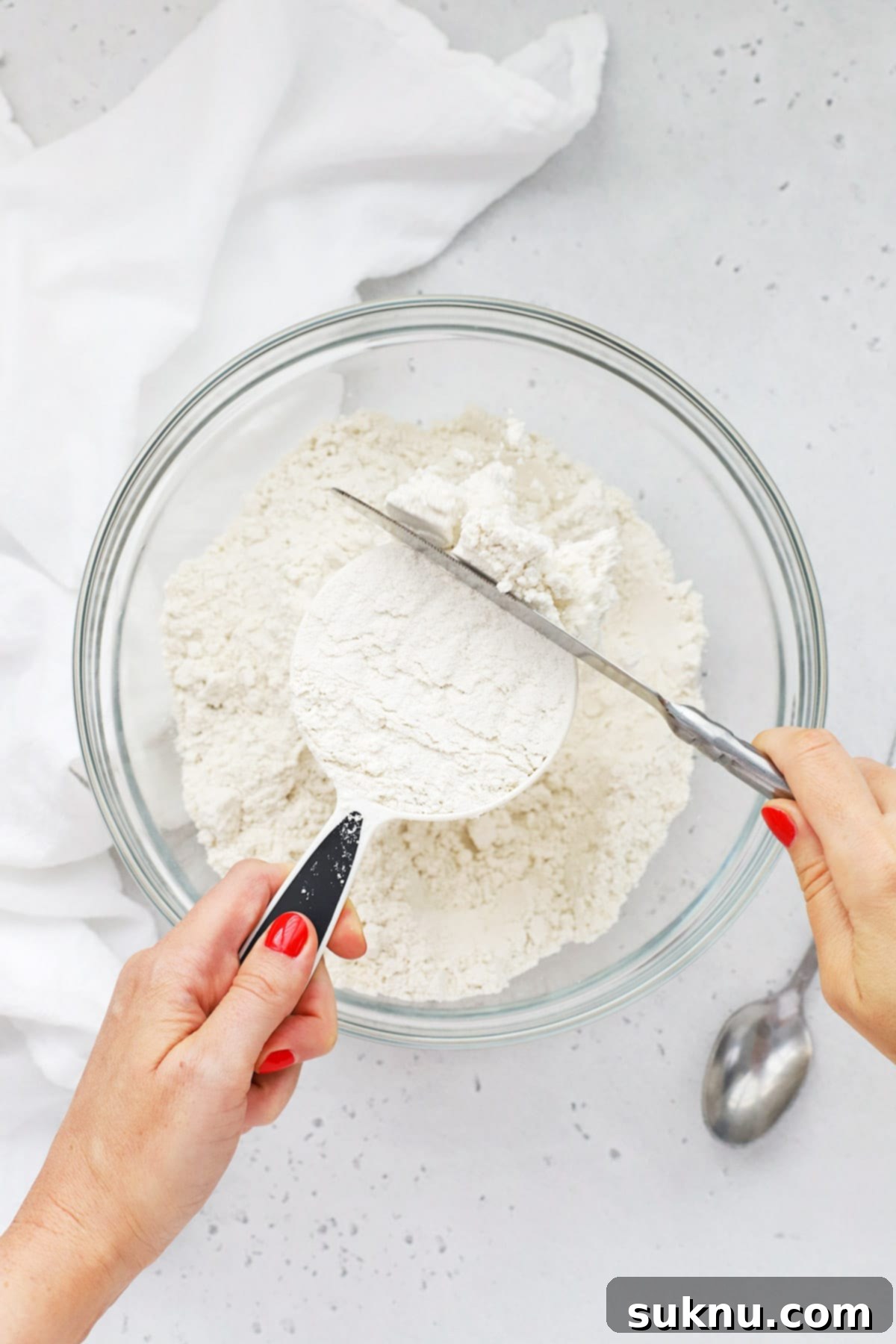
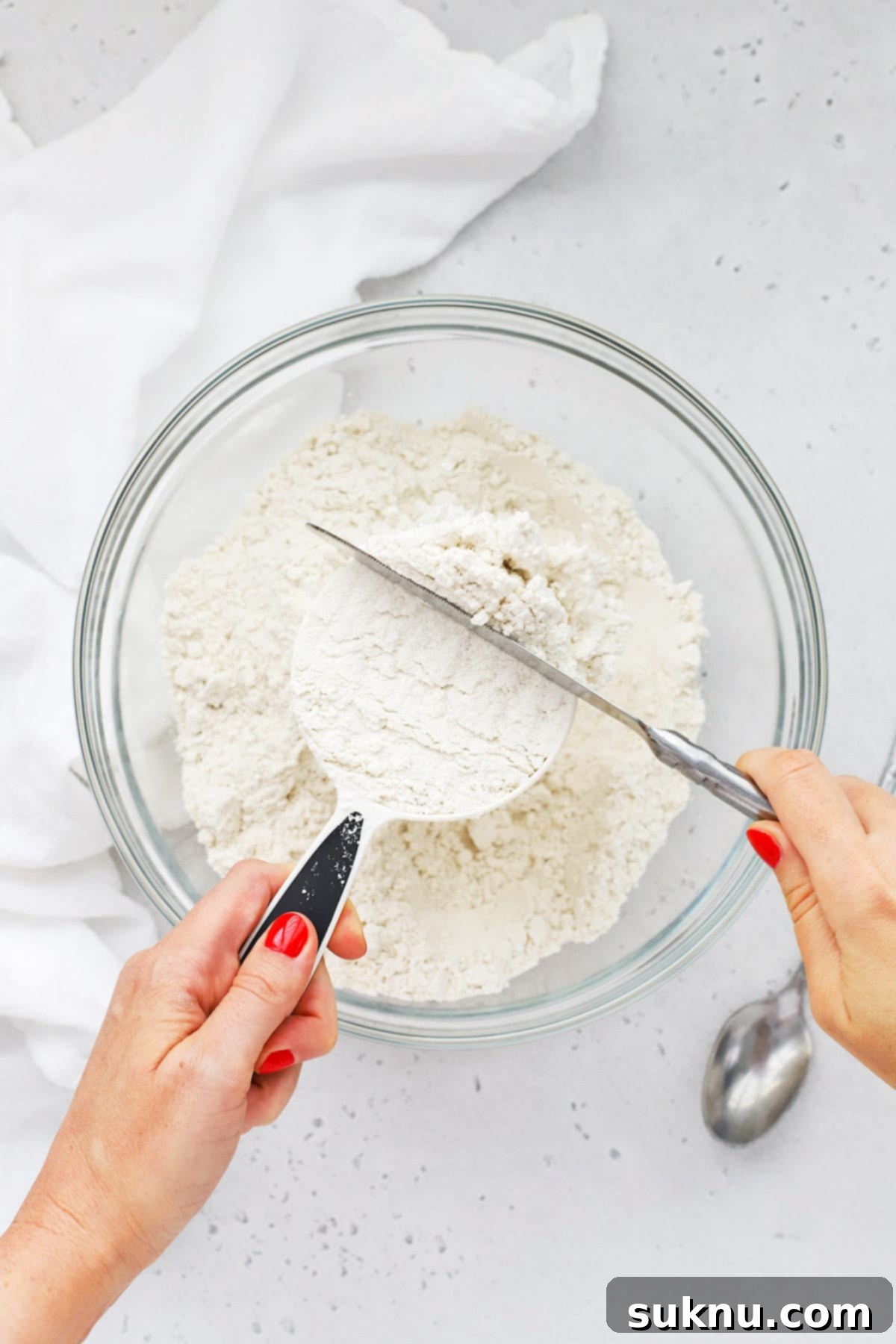
The scoop and level method is widely recognized as the most reliable and accurate way to measure flour using volume-based measuring cups. This technique is designed to ensure you get a consistent amount of flour every time, preventing the common issue of unintentionally compacting the flour. The principle is straightforward: instead of using the measuring cup itself as a shovel, you use a separate tool—like a spoon—to gently transfer the flour into the cup. Once the cup is mounded with flour, you then use a straight edge, such as the back of a knife or a flat spatula, to sweep away any excess, leaving a perfectly level and accurate measure. This process minimizes compaction and ensures you’re adding the precise quantity of flour specified in your recipe, leading to consistently excellent baking results.
Here’s How To Use The Scoop-and-Level Method, Step-by-Step:
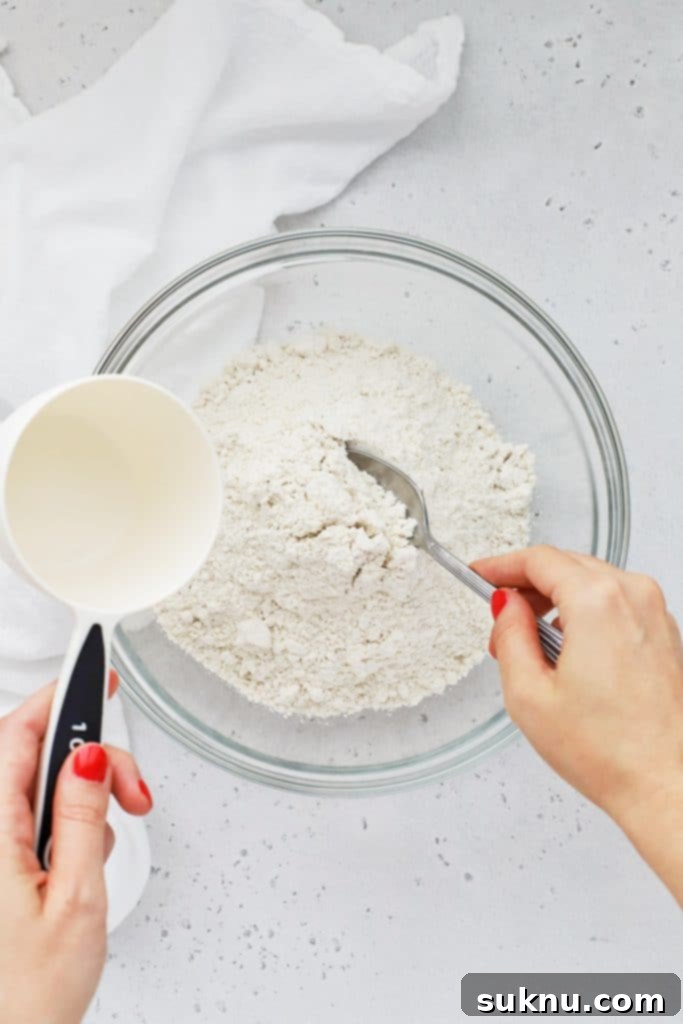
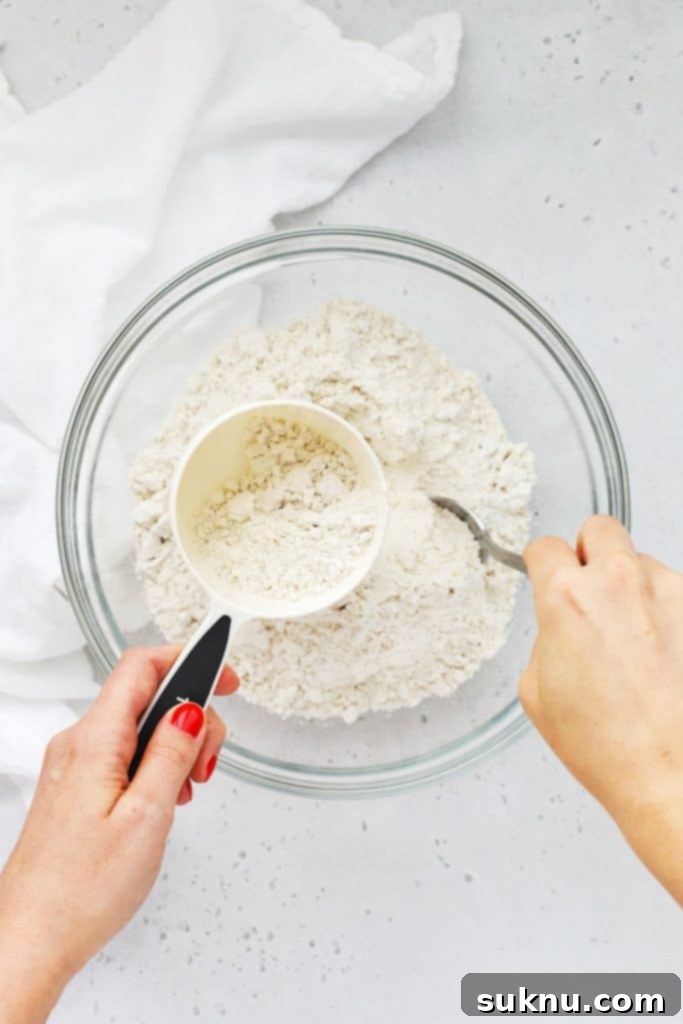
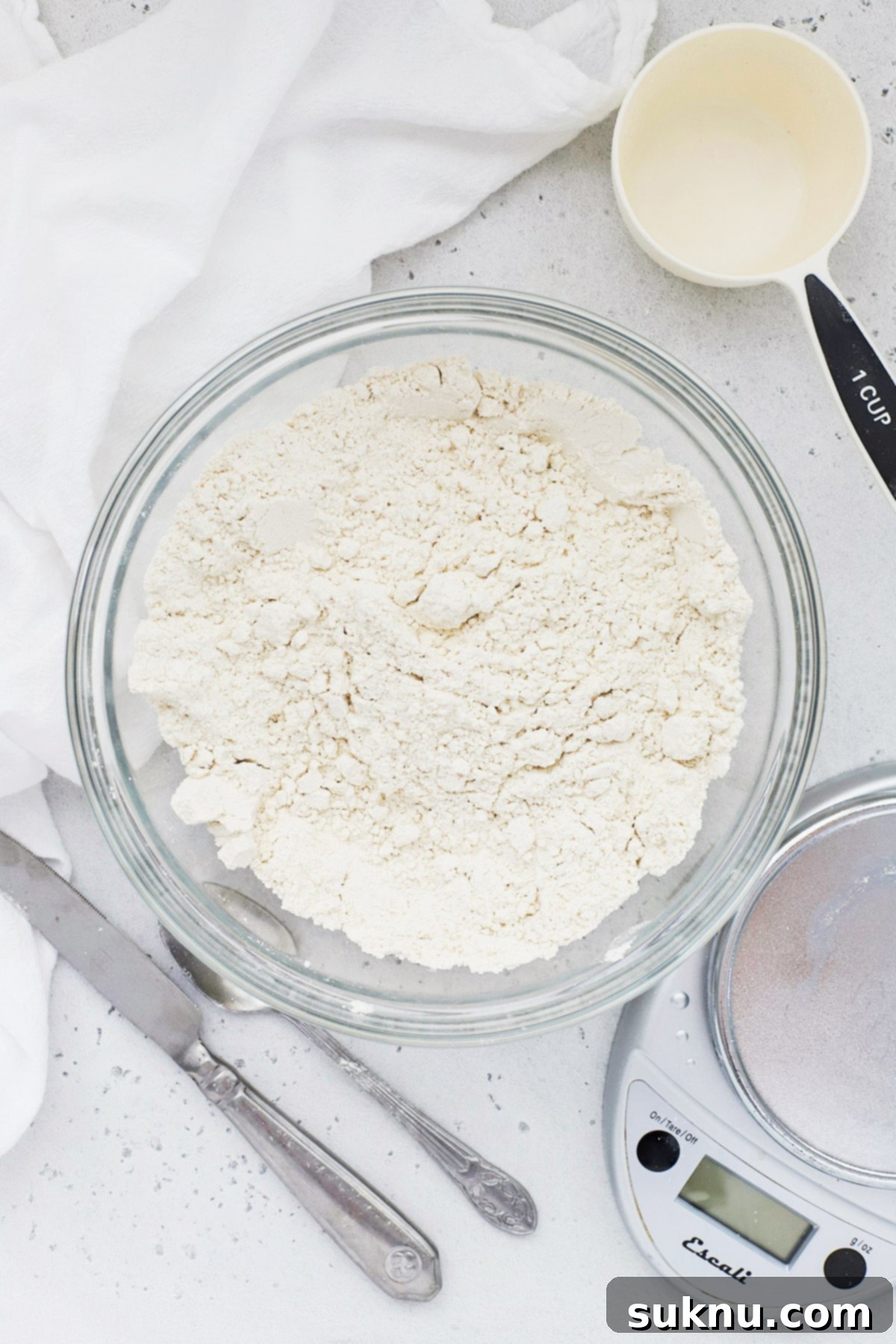
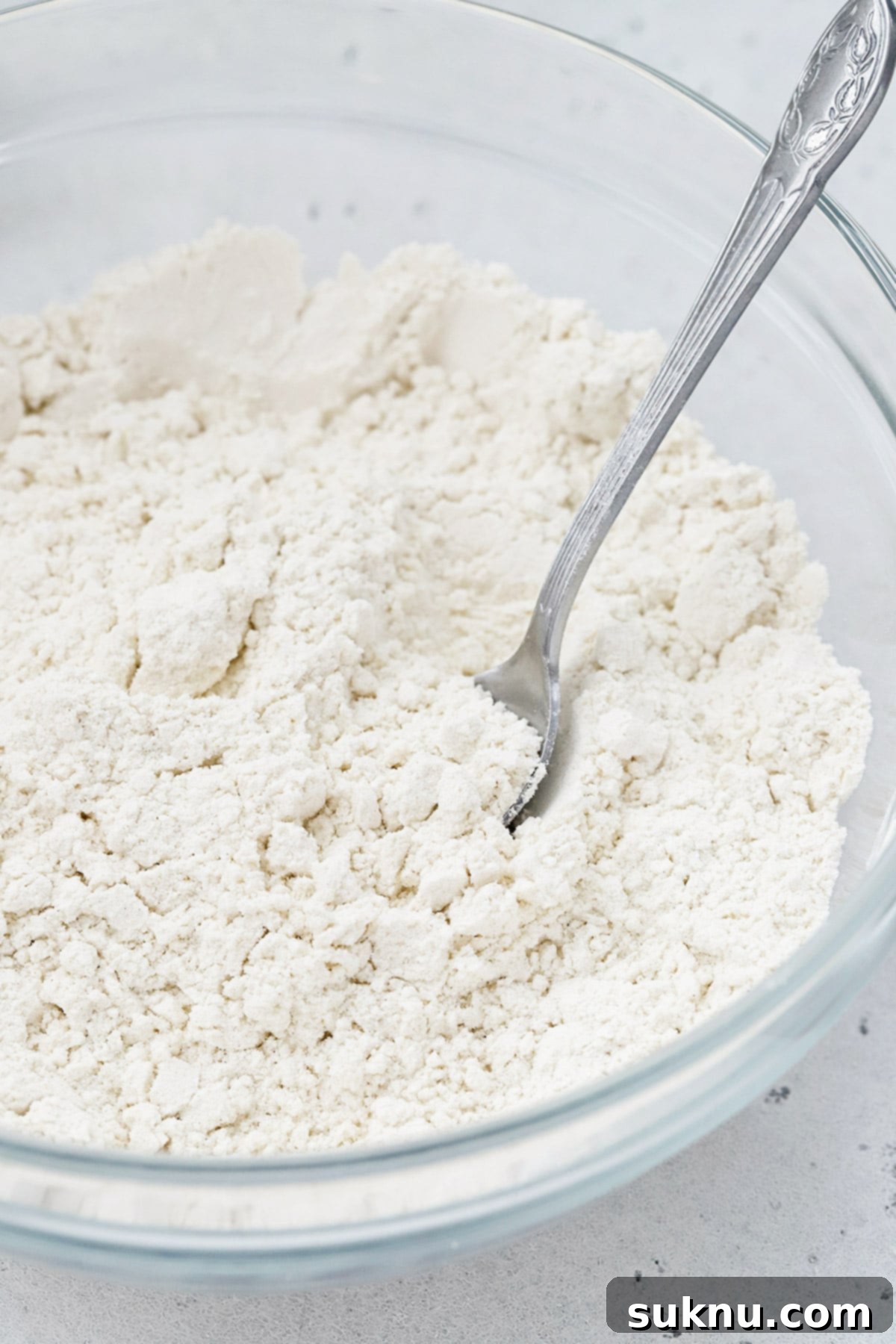
- First, aerate and loosen the flour within its canister or storage container. Use a whisk, fork, or even a spoon to gently fluff it up. This crucial initial step helps to break up any clumps and prevents the flour from settling and becoming packed too tightly, which would lead to an inaccurate measurement even before scooping begins.
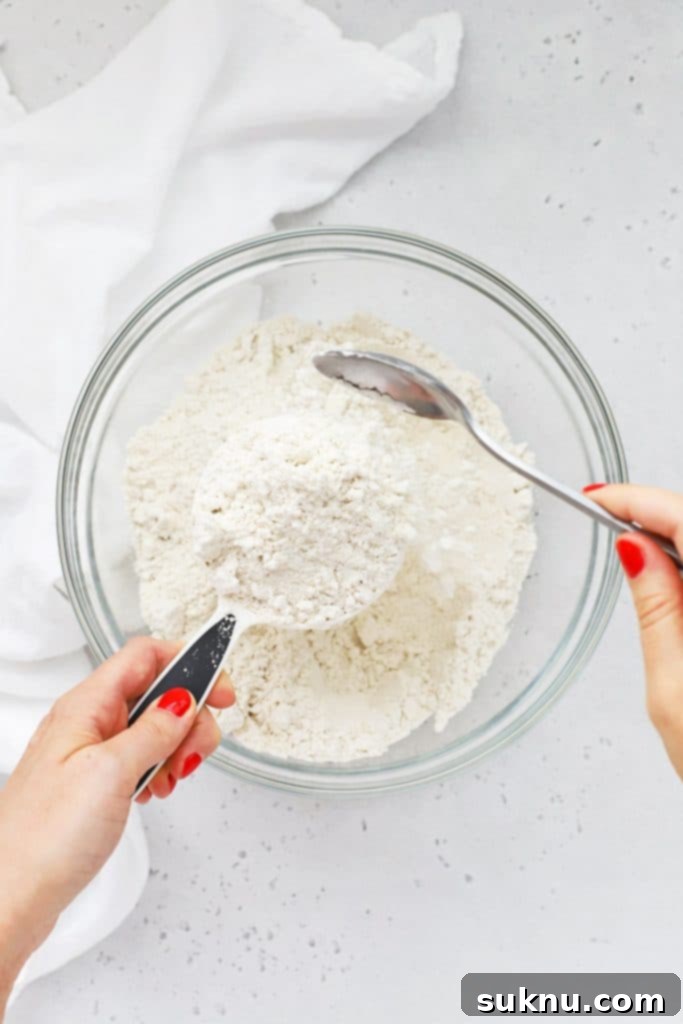
- Next, use a separate spoon to gently scoop the flour into your measuring cup. Do not use the measuring cup itself to dig into the flour. As you add the flour, avoid pressing or packing it down into the cup. The goal is for the flour to remain as light and airy as possible when it fills the cup, mimicking its natural, uncompacted state. Continue adding spoonfuls until the flour is mounded slightly above the rim of the measuring cup.
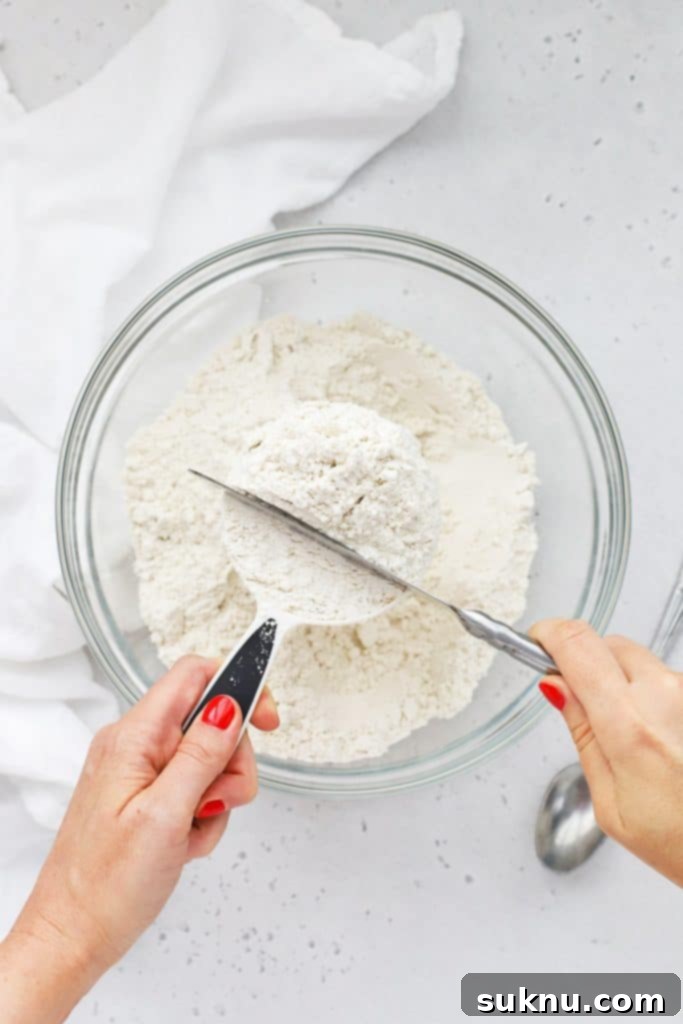
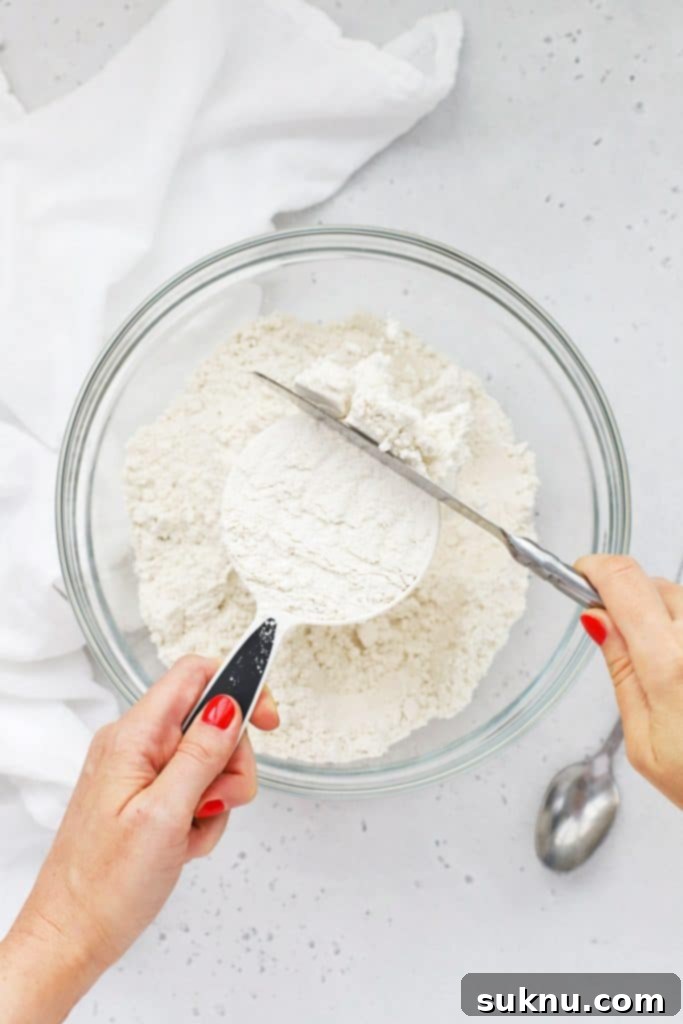
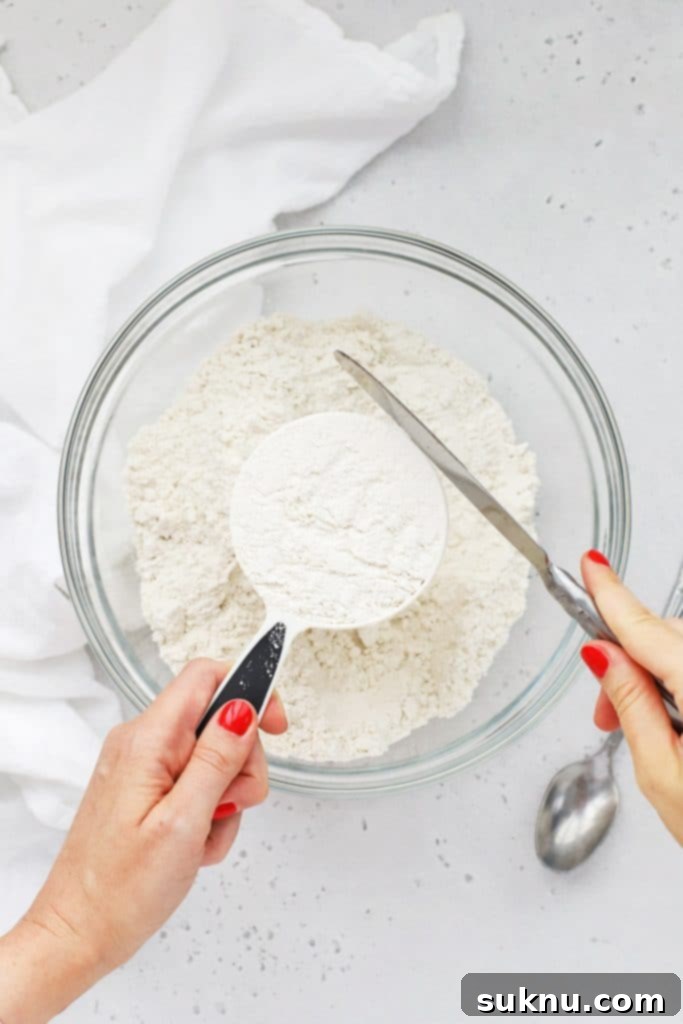
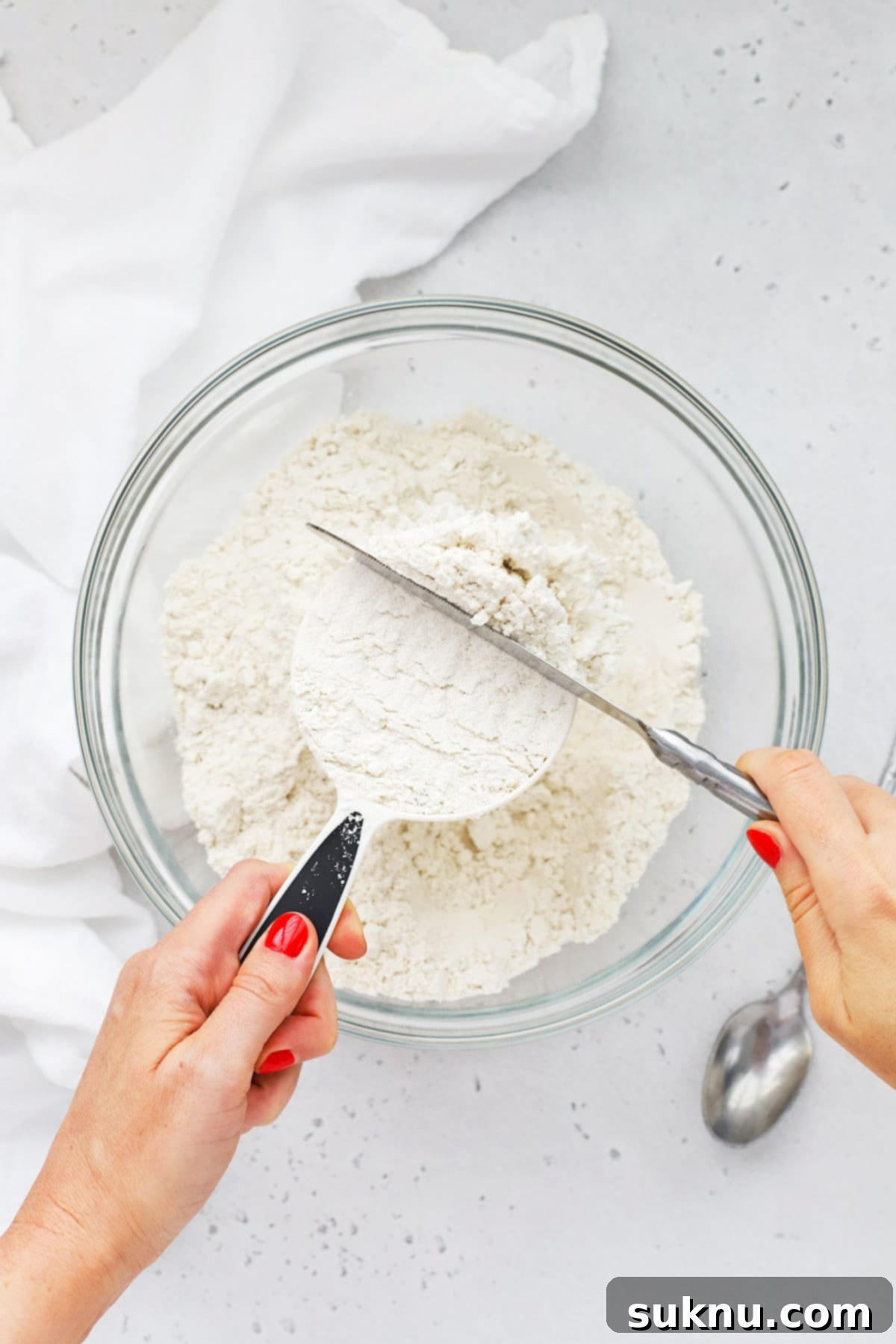
- Then, take a straight edge, such as the back of a butter knife or a flat spatula, and carefully level the surface of your measuring cup. Hold the straight edge across the top of the cup and sweep away the excess flour, allowing it to fall back into your flour container or a separate bowl. This ensures that the flour is perfectly flush with the rim of the cup, giving you an exact measurement. Make sure this excess flour doesn’t fall into your mixing bowl, as that would defeat the purpose of precise measurement.
- Optional but Highly Recommended: Double-check your flour measurements using a kitchen scale for ultimate accuracy. While the scoop and level method significantly improves accuracy over direct scooping, measuring by weight (grams or ounces) is universally considered the most precise method in baking. Many professional recipes and baking experts advocate for using a digital kitchen scale whenever possible. If your recipe provides gram measurements, following them precisely will consistently yield the best and most consistent results, eliminating any slight variations that can still occur with volume measurements.
Why Can’t I Use A Measuring Cup To Scoop The Flour? The Science of Density and Compaction
Many home bakers, myself included for many years before discovering the nuances of gluten-free baking, grow up simply digging their measuring cup directly into the flour bag. While this might seem convenient and didn’t always lead to noticeable disasters with traditional all-purpose flour, it’s a practice that introduces significant inaccuracy. The reason lies in the physics of flour density and compaction.
When you scoop directly with the measuring cup, you inevitably compress the flour into the cup. Different flours have different densities, and even the same flour can have varying densities depending on humidity, how long it’s been sitting, and how it was stored. For instance, a finely milled all-purpose flour will compact differently than a coarser whole wheat flour or a light, starchy gluten-free blend. This compaction means you’re adding more flour by weight than the recipe intends for that specific volume. The difference might seem negligible for a single cup, but when a recipe calls for multiple cups, these small discrepancies quickly add up, throwing off the delicate balance of ingredients and often leading to tough, dry, or dense results.
Let’s Prove It! Here’s What Gluten-Free Flour Weighs Using Different Scooping Methods:
To truly understand the impact of proper flour measurement, let’s conduct a simple experiment. We’ll compare the weight of one cup of gluten-free flour using different common measurement methods. For this demonstration, I’m using King Arthur Flour Gluten-Free Measure-For-Measure Flour, a popular and reliable blend, and a standard kitchen scale for precise weight readings. This visual comparison will clearly illustrate why the scoop and level method is superior and why measuring by weight is the ultimate standard for accuracy.
MEASURING FLOUR WITH THE SCOOP & LEVEL METHOD (CORRECT)
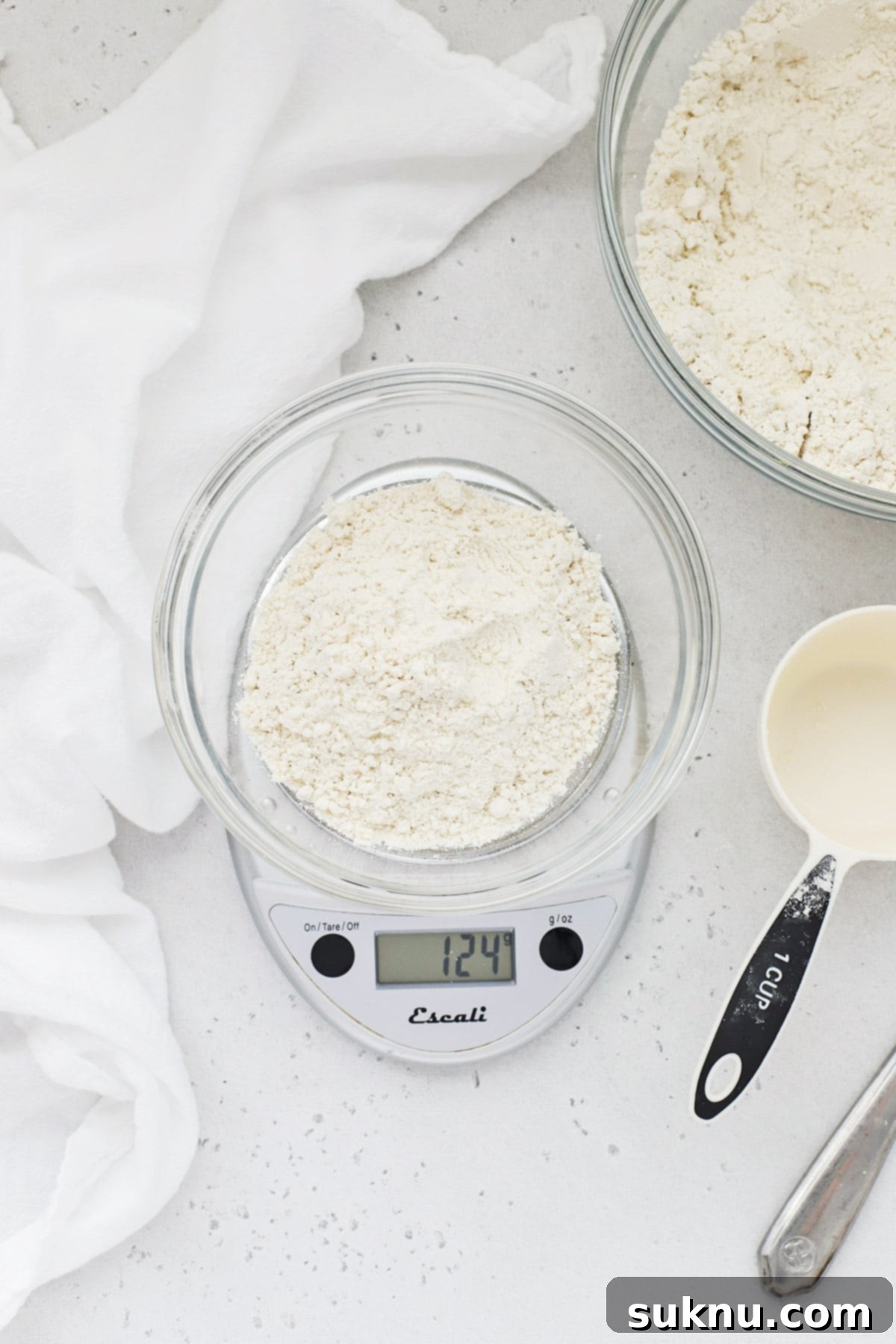
When we meticulously follow the Scoop and Level Method – first aerating the flour, then gently spooning it into the measuring cup, and finally leveling it with a straight edge – one cup of our King Arthur Gluten-Free Measure-For-Measure Flour consistently measures around 124 grams. This weight aligns perfectly with the manufacturer’s recommendations and standard baking conversions for this specific flour blend. It’s important to note that the exact weight for one cup of flour can vary slightly depending on the type of flour (e.g., all-purpose, whole wheat, almond flour will all have different weights per cup) and even environmental factors like humidity. Always refer to your recipe’s specific gram measurements if provided, as these are the most accurate. If only volume measurements are given, the scoop and level method is your best bet for getting as close as possible to the intended weight.
IMPORTANT NOTE: While the scoop and level method is a significant improvement in accuracy for volume measurement, slight variations of a few grams over or under can still occur due to subtle differences in how ‘lightly’ the flour is spooned or how precisely it’s leveled. This inherent variability is precisely why relying on a kitchen scale for gram measurements is the gold standard for achieving truly consistent and professional-level baking results. It eliminates all guesswork and ensures precise ingredient ratios every single time.
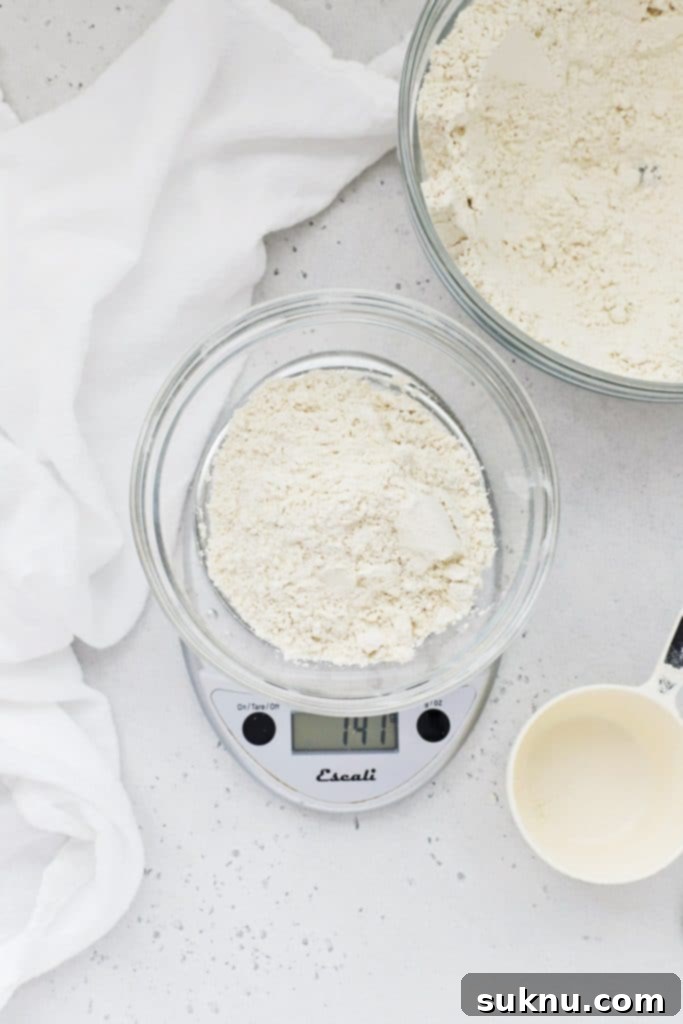
MEASURING THE FLOUR BY SCOOPING WITH THE MEASURING CUP (INCORRECT)
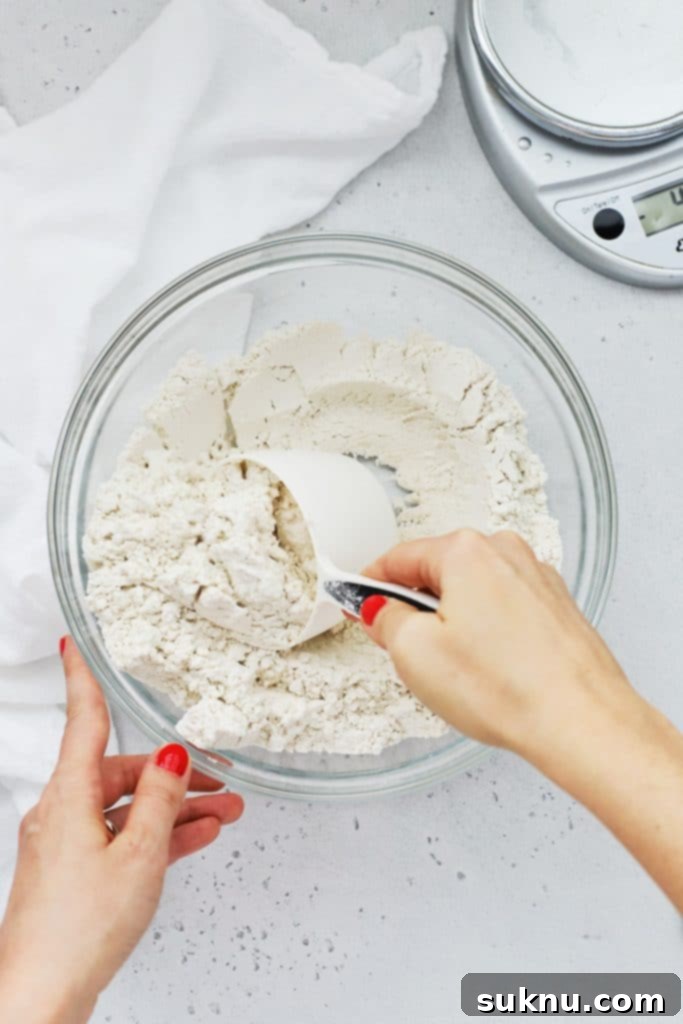
Now, let’s observe the impact of the common, yet incorrect, method: directly scooping the flour with the measuring cup. Even after an attempt to level off the top, the results are startling. My test shows a measurement of a whopping 141 grams for what should be approximately 124 grams. This represents a significant difference of about 17 grams, or roughly 2 to 2 1/2 tablespoons of extra flour per cup! Imagine a recipe that calls for just 2 1/2 cups of flour. Using this incorrect method, you could inadvertently add more than 1/3 cup of extra flour to your mixture. Such a substantial excess can profoundly impact the final product:
- Cakes and Muffins: Will turn out dense, dry, and potentially crumbly, lacking the desired tenderness and rise.
- Cookies: Instead of spreading into perfect discs, they might remain thick, cakey, and dry, failing to achieve that satisfying chewiness or crispness.
- Breads: Can become tough, stiff, and heavy, with a dense crumb rather than an airy, open texture.
This stark difference highlights why the seemingly small act of how you scoop flour can have such a major bearing on the texture and success of your baked goods. It’s a simple change that yields immense benefits.
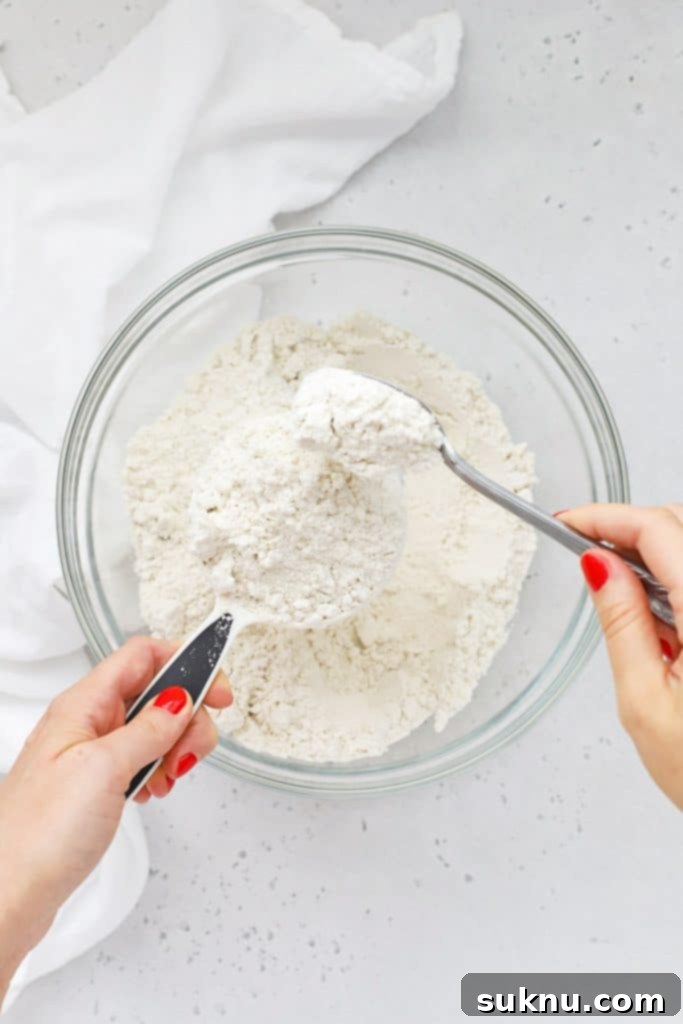
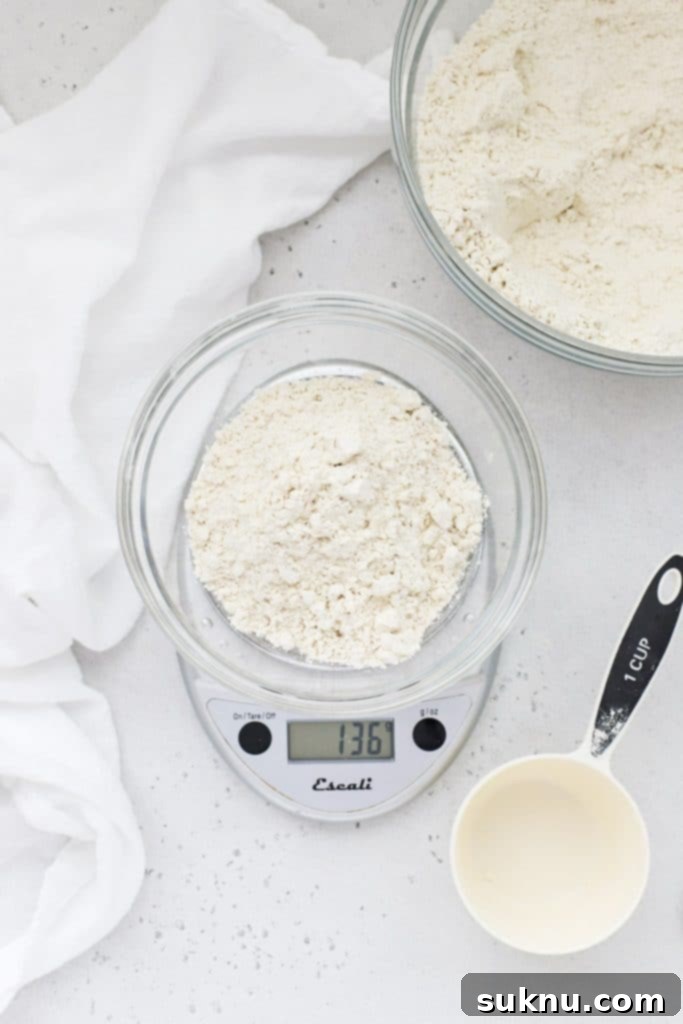
MEASURING THE FLOUR BY SCOOPING WITHOUT LEVELING THE SURFACE (INCORRECT)
Finally, let’s consider another common mistake: scooping the flour into the measuring cup (even if done gently with a spoon) but neglecting to level off the surface. The results here can be even more variable, depending on just how much the flour is mounded above the rim. Even in the accompanying photo, where the flour appears relatively close to level, the weight registered a significant 136 grams. This is still 12 grams over the correct 124 grams, translating to an extra tablespoon and a half of flour per cup.
While this method is slightly better than directly scooping with the cup (which tends to compact the flour more), it still introduces an unacceptable level of inaccuracy. The “heaping” cup measurement is inconsistent and relies too much on guesswork. Without a precise level surface, you simply cannot guarantee that you’re adding the correct amount of flour, which inevitably leads to inconsistent baking outcomes. The subtle difference between a perfectly leveled cup and a slightly mounded one can be the deciding factor between a beautifully moist cake and a disappointingly dry one.
What Did We Learn? Use The Scoop & Level Method to Measure Flour!
The evidence is clear, isn’t it? Understanding the impact of improper flour measurement is a game-changer for any baker. After seeing the significant weight differences produced by various methods, the importance of the scoop and level technique becomes undeniable. By consistently employing the scoop and level method to measure your flour—and ideally, by cross-referencing with a reliable kitchen scale for gram measurements whenever your recipe permits—you are adopting the most accurate approach to adding this foundational ingredient to your recipes. This simple yet powerful trick is much more than just a minor adjustment; it’s a critical step toward unlocking baking perfection.
Embrace this technique, and you’ll be well on your way to achieving consistently superior results: envision fluffy, perfectly moist gluten-free cakes, gorgeously fudgy and chewy brownies, perfectly spread cookies with delightful textures, and beautifully structured breads. Mastering flour measurement is a fundamental skill that empowers you to create delicious, reliable baked goods every single time. Happy baking!
Elevate Your Baking Skills: More Tips & Resources:
- How to Brown Butter: A Flavor-Enhancing Technique
- Comprehensive Ingredient Weight Chart For Common Baking Ingredients
- Mastering Conversions: How to Adapt Cake Recipes into Cupcakes
Print

How To Measure Flour Correctly (Scoop & Level Method)
5 Stars 4 Stars 3 Stars 2 Stars 1 Star
5 from 1 review
Author: Sweets And Thank You
Description
Learn the essential scoop & level method for accurately measuring flour, a simple trick that will significantly improve your baked goods every time!
Ingredients
- Flour (Any type: all-purpose, gluten-free blend, whole wheat, etc.)
- Spoon (for scooping)
- Standard Dry Measuring Cup
- Straight Edge (e.g., back of a butter knife or small spatula)
- Optional: Digital Kitchen Scale (for ultimate precision)
Instructions
- First, loosen the flour up in your canister or storage container with a whisk or fork, if you can. (This aeration helps prevent the flour from getting clumped together or getting packed too tightly, ensuring a lighter, more accurate measurement.)
- Next, use a spoon to scoop the flour into your measuring cup. Be gentle and do not pack the flour down into the cup with your spoon. You want the flour to remain nice and light, allowing it to naturally fill the cup without compression. Fill until the flour is mounded above the rim.
- Then, use the back of a knife or a flat spatula to level the surface of your measuring cup. Simply sweep the straight edge across the top, letting the excess flour fall back into the flour canister or bag. (It’s important that this excess doesn’t fall into your mixing bowl, as precision is key!)
- Optional but Recommended: Double-check your flour measurements using a kitchen scale for ultimate accuracy. For the most consistent baking results, especially with complex recipes or gluten-free blends, always follow flour measurements provided in grams rather than by the cup.
- Category: Baking Tips, Kitchen Hacks