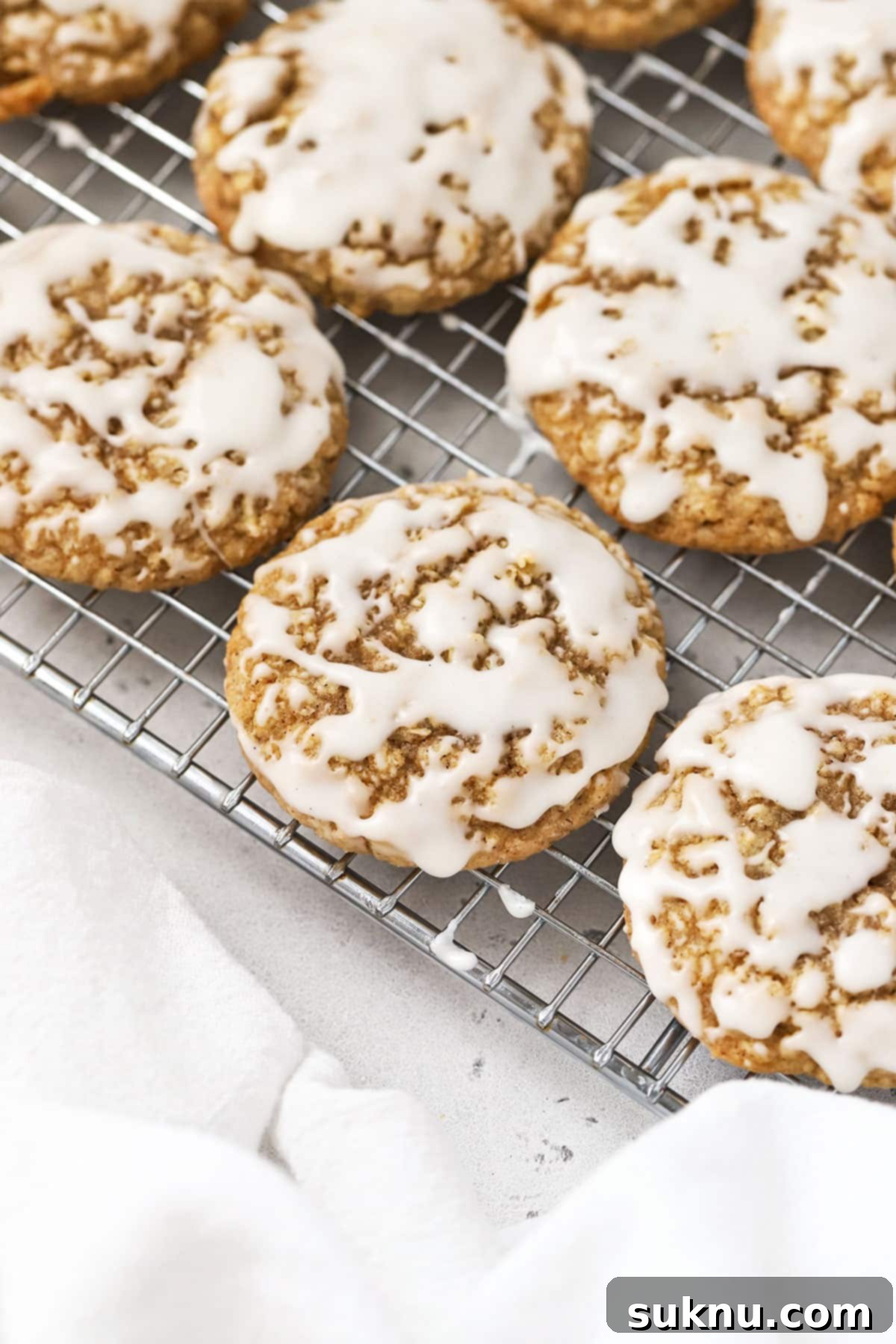
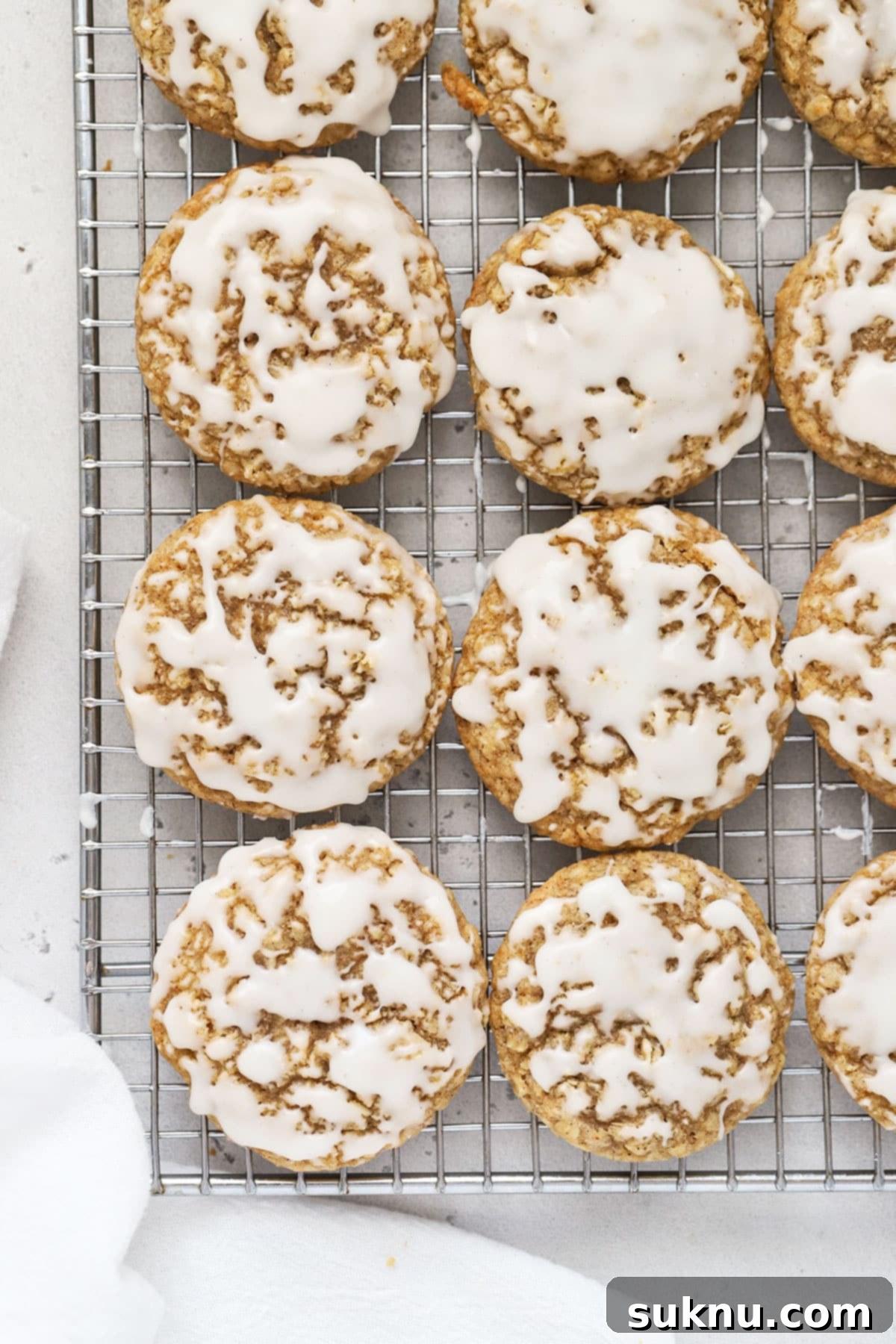
Indulge in the ultimate nostalgic treat with these gluten-free iced oatmeal cookies, crafted with the rich, nutty notes of brown butter, a comforting blend of warm spices, and a delicate, sweet vanilla glaze. These aren’t just cookies; they’re pure cookie perfection, reimagined for everyone to enjoy!
There’s something truly magical about baking, especially when it evokes cherished childhood memories. Lately, I’ve found immense joy in recreating those beloved classics, transforming them into delicious gluten-free versions that capture all the warmth and flavor of my favorite treats. From creamy Chocolate Pudding and satisfying Peanut Butter Bars to a light and airy fluffy birthday cake, the kitchen has become my sanctuary for nostalgic indulgence.
Baking is more than just a culinary process; it’s a creative outlet that offers comfort and a sense of accomplishment. The meticulous act of measuring, mixing, and watching simple ingredients transform into something edible and delightful, ready to be shared with friends, family, or neighbors, is profoundly satisfying. It’s a gift, not just of food, but of warmth and connection.
This feeling is especially true when I bake these Gluten-Free Iced Brown Butter Oatmeal Cookies. Imagine soft, chewy oatmeal cookies, each bite infused with the deep, caramel-like richness of brown butter and the cozy embrace of warm spices, all crowned with a delicately sweet vanilla glaze. This recipe is my elevated, homemade interpretation of those classic, old-fashioned iced oatmeal cookies you might remember from grocery store shelves. They truly shine as the weather cools, making them an absolutely perfect addition to your gluten-free holiday cookie repertoire or a comforting treat on any crisp day.
What makes these cookies so special isn’t just their incredible taste and texture, but also their straightforward preparation. This is a remarkably easy, one-bowl recipe, minimizing cleanup and maximizing joy. As they bake, they fill your entire home with an enchanting aroma, a prelude to the delightful nostalgic flavors awaiting you in every single bite. They are the epitome of comfort and joy.
Even better, these delectable treats are crafted from incredibly simple ingredients and common pantry staples. You likely have most of what you need already! Let’s dive into the essential components that come together to create these irresistible gluten-free iced oatmeal cookies…
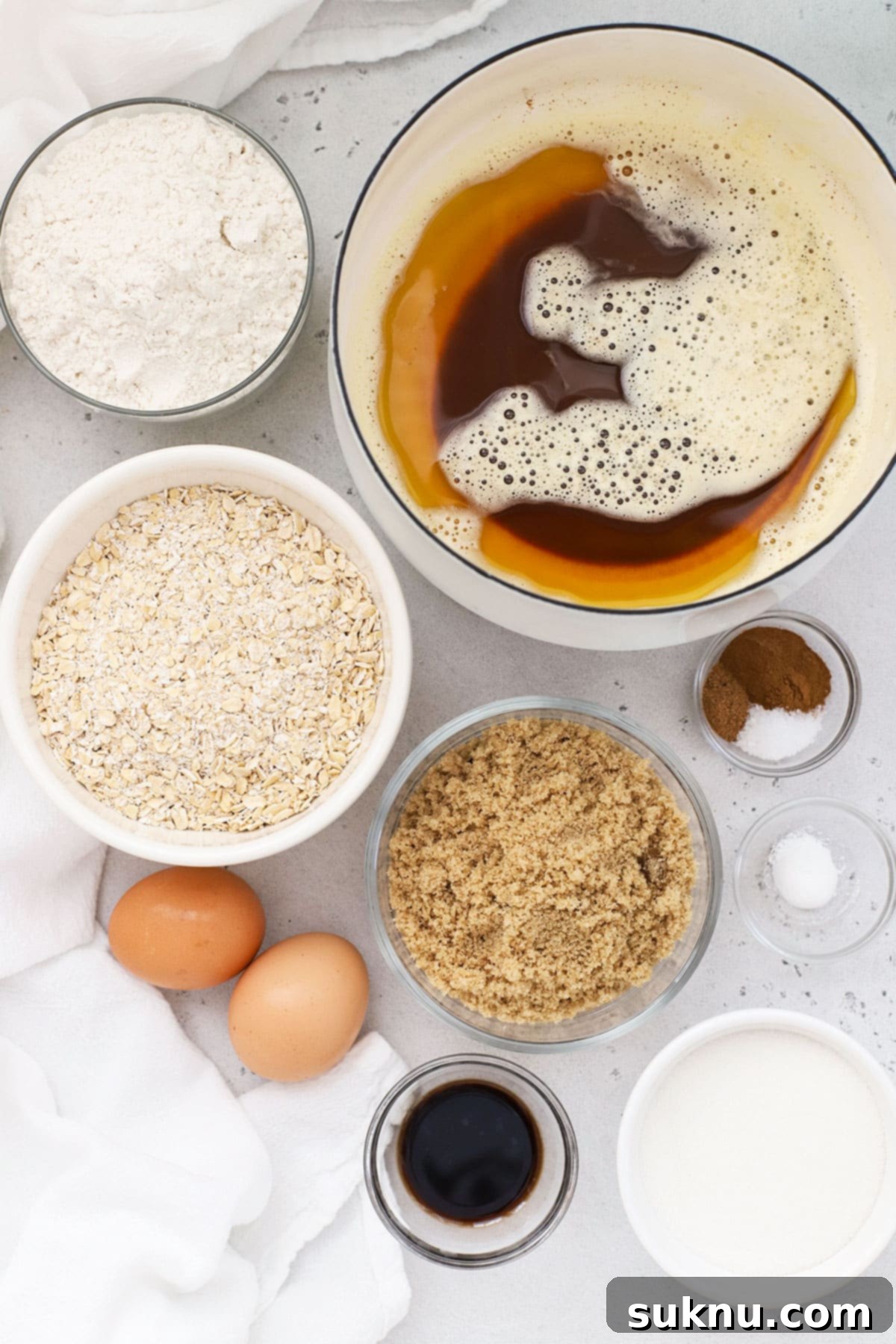
Simple Ingredients for Irresistible Gluten-Free Iced Oatmeal Cookies
Crafting these exceptional gluten-free iced oatmeal cookies requires a few key ingredients, each playing a vital role in achieving their perfect flavor and texture. Here’s a closer look at what you’ll need:
- Butter. The star of the show, butter, is transformed through browning. This process involves gently cooking unsalted butter until its milk solids caramelize and toast, developing an incredible nutty, rich aroma and a deep, complex caramel flavor. This “brown butter” infusion elevates the entire cookie, lending a sophisticated depth that simple melted butter can’t match. It’s an essential step that significantly enhances the overall taste profile. For a detailed guide on this technique, see our post on How to Brown Butter.
- Brown Sugar & Granulated Sugar. This classic combination of two types of sugar is crucial for balanced sweetness and ideal cookie texture. Brown sugar, with its molasses content, contributes moisture and a delightful chewiness, preventing the cookies from becoming dry or crumbly. Granulated sugar, on the other hand, aids in spreading and gives the cookies a subtly crispy edge and a beautiful golden-brown finish. While light brown sugar is preferred for a milder caramel note, you can opt for dark brown sugar if you desire a more pronounced molasses flavor.
- Eggs & Vanilla Extract. Just two large room temperature eggs act as a binder, adding structure and richness to the cookie dough, while also helping achieve a tender crumb. Room temperature eggs emulsify more easily with the other ingredients, leading to a smoother, more uniform dough. A generous amount of pure vanilla extract provides a foundational warmth and enhances all the other flavors, complementing the brown butter and spices beautifully. For an even richer aroma, consider vanilla bean paste.
- Gluten-Free Rolled Oats (Old-Fashioned Oats). Key for that signature oatmeal cookie texture, these oats must be certified gluten-free to ensure they are safe for those with celiac disease or gluten sensitivities. Unlike our Gluten-Free Oatmeal Raisin Cookies and Gluten-Free Oatmeal Chocolate Chip Cookies, for these iced oatmeal cookies, we’ll pulse the oats lightly in a food processor or blender. This creates a mix of finely ground and partially broken oats, preventing a gritty texture while still providing that beloved chewy bite – a true game-changer for homemade oatmeal cookies.
- Gluten-Free Measure-for-Measure Flour Blend. To keep things simple and ensure reliable results, this recipe calls for a 1:1 gluten-free flour blend that includes xanthan gum. Xanthan gum is vital in gluten-free baking as it mimics the elasticity and structure that gluten provides, preventing your cookies from being crumbly. My personal favorite and recommendation is King Arthur’s Gluten-Free Measure for Measure Flour. If you opt for another brand, such as Bob’s Red Mill 1-to-1 Baking Flour, always ensure it contains xanthan gum and remember to measure your flour correctly using the scoop and level method for best results.
- Baking Soda. This leavening agent is crucial for achieving the perfect rise and spread. It reacts with the acidic components in the brown sugar (molasses) to create carbon dioxide, resulting in a tender, slightly puffed cookie with a delightful chew. Ensure your baking soda is fresh for optimal activation.
- Warm Spices (Cinnamon & Nutmeg). A generous blend of ground cinnamon and fresh nutmeg creates the quintessential warm, inviting aroma and flavor that defines classic oatmeal cookies. These spices perfectly complement the caramel notes of the brown butter, adding layers of cozy complexity to every bite. Feel free to adjust the ratios to your preference, or even add a pinch of ground cloves or ginger for extra spice.
- Kosher Salt. A touch of salt is indispensable in baking. It doesn’t just add salinity; it brightens and balances the sweetness of the sugars and enhances the depth of the brown butter and spices, making all the flavors pop.
- Simple Vanilla Glaze. The final flourish! This easy-to-make glaze is prepared with powdered sugar, a splash of cream or milk, and a hint of vanilla extract or vanilla bean paste. It dries to a slightly firm, sweet coating that provides a lovely contrast to the chewy cookie, creating that signature iced oatmeal cookie look and taste. The consistency is key – thick enough to cling, yet thin enough for a smooth dip.
Achieving Perfection: The Art of Browning Butter
Browning the butter is undeniably the most pivotal step in this recipe, acting as a flavor cornerstone for these gluten-free iced oatmeal cookies. It’s a process that transforms ordinary butter into a rich, nutty, and deeply aromatic ingredient that infuses the entire dough with complex caramel undertones. The secret lies in carefully toasting the milk solids within the butter until they turn golden brown, releasing an incredible depth of flavor.
To get it just right, you’ll need a light-colored saucepan, which allows you to clearly monitor the color changes. As the butter melts and then simmers, it will progress through various stages: bubbling, foaming, and finally, the milk solids will settle at the bottom and begin to brown. The goal is to achieve a deep amber color and a fragrant, nutty aroma, reminiscent of toasted hazelnuts. Be patient, stir frequently, and don’t walk away! The difference it makes to the final cookies is truly remarkable. For an even more comprehensive understanding, complete with step-by-step photos and a video tutorial, be sure to explore our in-depth guide: How To Brown Butter. Mastering this technique will not only elevate these cookies but countless other baking endeavors as well!
How To Make Gluten-Free Brown Butter Oatmeal Cookies: A Step-by-Step Guide
For precise ingredient measurements, detailed instructions, and helpful tips, please refer to the full recipe card located below.
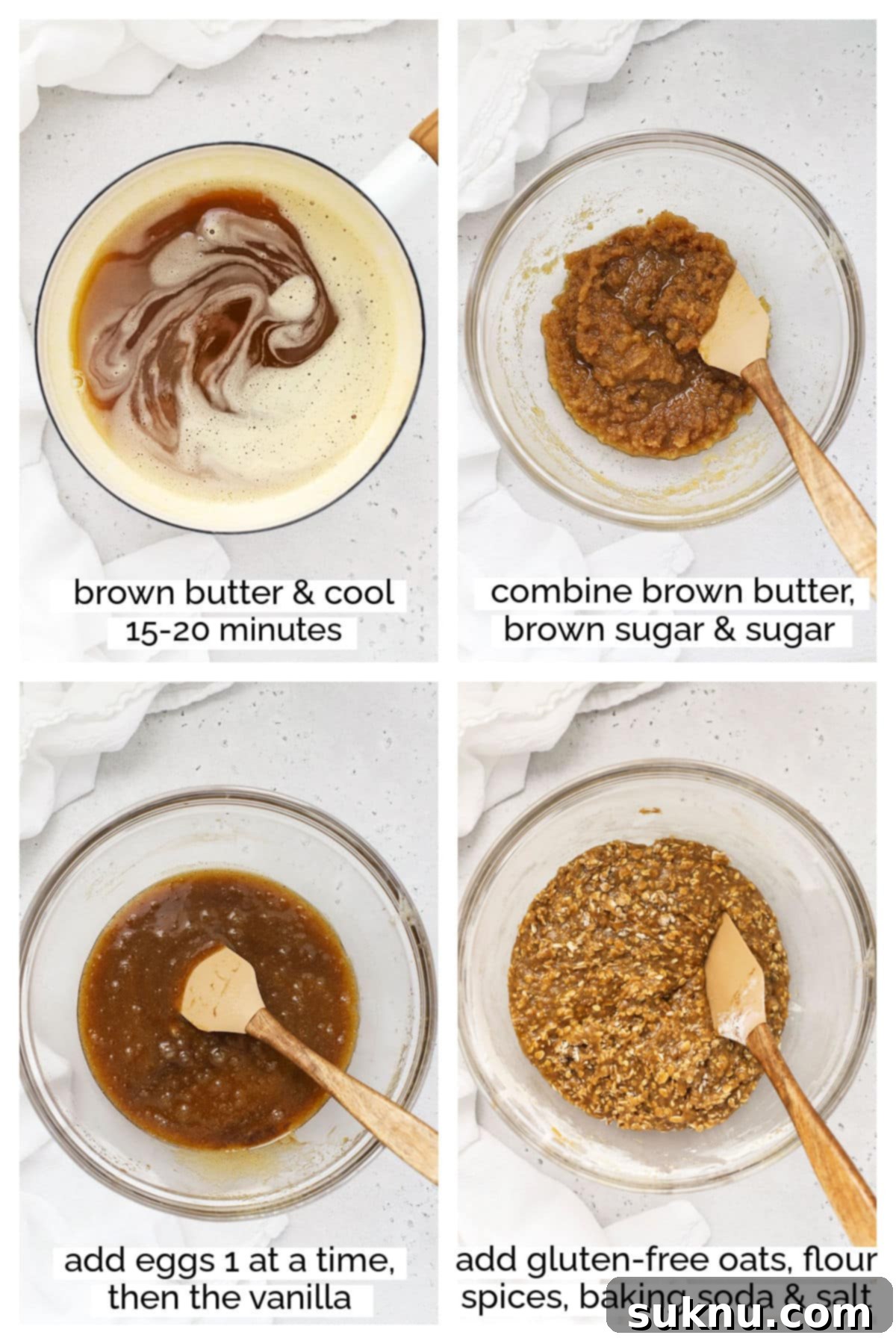
- Begin by Browning the Butter. In a light-colored saucepan (which helps you see the browning process more clearly), melt the butter over medium heat. Whisk or stir almost continuously to prevent scorching. The butter will first melt, then begin to bubble vigorously. Continue cooking, listening for the distinctive popping and bubbling sounds, as the butter transitions from yellow to a beautiful golden brown. After about 6-8 minutes, you’ll notice foam forming on the surface, and the milk solids at the bottom will start to toast, emitting a rich, nutty, and distinctly caramel-like aroma. Once the butter achieves a deep golden hue and smells wonderfully fragrant, immediately remove the pan from the heat. Transfer the browned butter, including all the delightful brown specks, into a heatproof bowl (such as the bowl of your stand mixer or a large mixing bowl). Allow it to cool for approximately 15-20 minutes; it should still be warm but not scorching hot before you add the sugars.
- Prepare the Oats. Place your certified gluten-free rolled oats into a food processor or blender. Pulse the oats about 10-12 times. The goal is a varied texture: you want some oats to be finely ground into a powdery consistency, some to be broken into smaller pieces, and a good portion to remain largely whole. Avoid grinding them into a fine oat flour, as this will alter the cookie’s texture significantly. Similarly, leaving them all whole will result in a less cohesive and chewier cookie. Once pulsed, set the oats aside.
- Combine Brown Butter and Sugars. Add both the light brown sugar and granulated sugar to the slightly cooled brown butter. Stir thoroughly with a spoon or mix on medium speed if using a stand mixer until the ingredients are well combined. At this stage, the mixture will have a texture similar to wet sand, signaling it’s ready for the next additions.
- Incorporate Eggs and Vanilla. Add the room temperature eggs one at a time, mixing well after each addition until fully incorporated into the dough. This ensures proper emulsification and a smooth, consistent texture. Next, stir in the vanilla extract (or vanilla bean paste) until it’s evenly distributed, infusing the dough with its sweet aroma.
- Add the Dry Ingredients. Finally, add the prepared pulsed oats, gluten-free measure-for-measure flour, ground cinnamon, ground nutmeg, kosher salt, and baking soda to the wet ingredients. Mix on low speed or stir by hand until the dry ingredients are just combined. Be careful not to overmix the dough, as this can lead to tougher cookies. Stop as soon as no streaks of flour are visible.
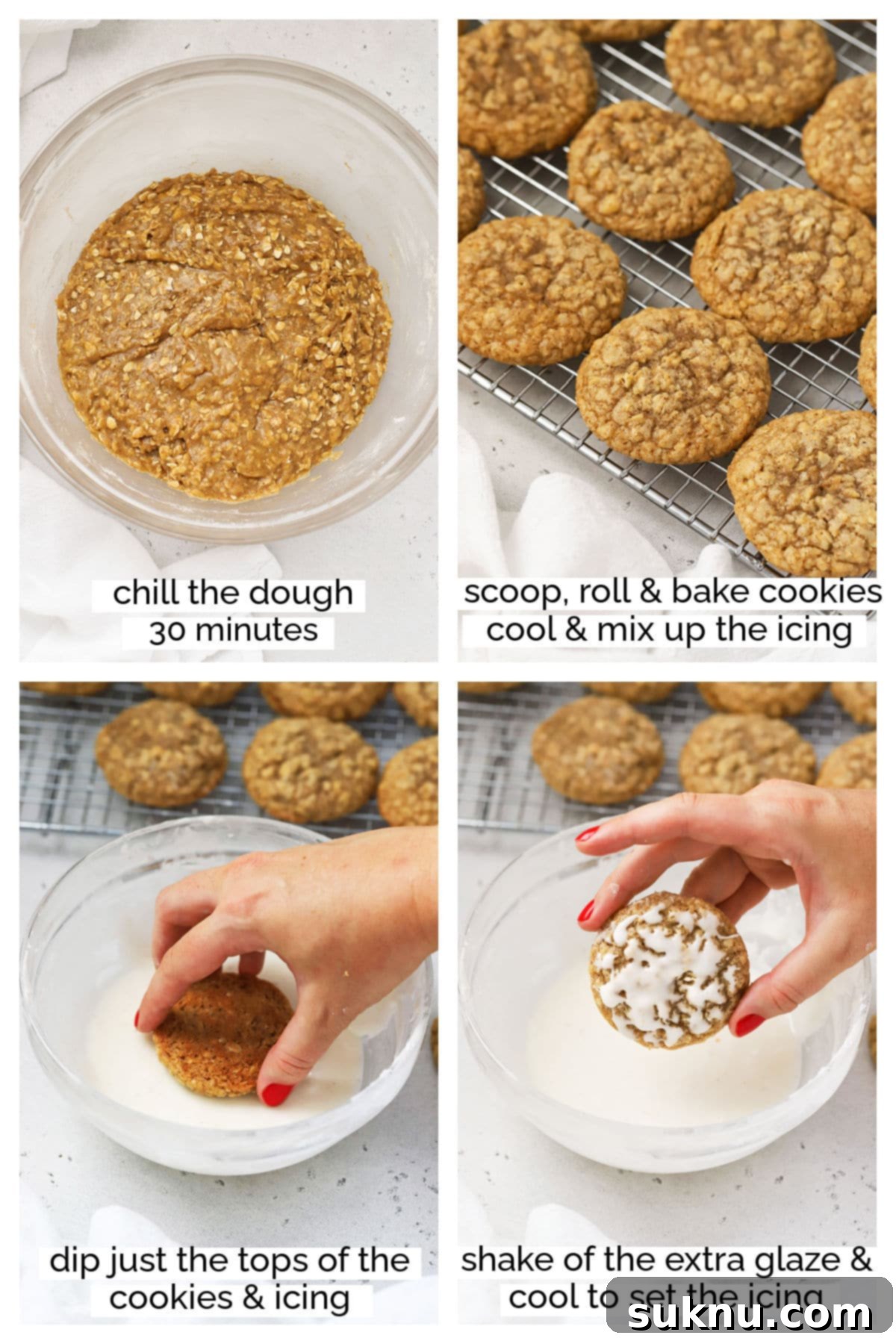
- Chill the Cookie Dough. Cover the cookie dough and refrigerate it for at least 30 minutes. This chilling period is crucial: it allows the gluten-free flour to fully hydrate and absorb the liquids, resulting in a more tender cookie. It also helps solidify the butter, which prevents the cookies from spreading too much during baking, ensuring they hold their shape beautifully.
- Preheat Oven and Prepare Baking Sheets. While the dough is chilling, preheat your oven to 350°F (175°C). Line two baking sheets with parchment paper. Using two sheets allows you to alternate them, preventing you from placing cold cookie dough onto a hot baking sheet, which can lead to uneven baking.
- Scoop and Roll the Dough. Using a medium cookie scoop (approximately 2 tablespoons), portion out even balls of dough. For a neater finish, gently roll each dough ball between your palms to smooth any rough edges. Place 6-8 cookie dough balls onto one of your prepared baking sheets, ensuring adequate space between them for spreading. Return any remaining dough to the refrigerator while you bake the first batch.
- Bake and Cool the Cookies. Bake one cookie sheet at a time for 8-10 minutes. The cookies are ready when their edges are set and lightly golden, but the centers still look slightly soft. Remember, cookies continue to cook for a minute or two after being removed from the oven, so avoid over-baking to maintain a delightfully chewy texture. Let the cookies rest on the baking sheet for 1-2 minutes before carefully transferring them to a wire cooling rack to cool completely. Repeat this process with the remaining dough, alternating baking sheets for consistent results.
- Prepare the Vanilla Glaze. Once the cookies have cooled entirely (this is important, as icing warm cookies will result in a runny mess), it’s time to make the glaze. In a small bowl, whisk together the powdered sugar, milk or cream, and vanilla extract (or vanilla bean paste). Continue whisking or stirring with a fork until the glaze is completely smooth, thick, and free of any lumps. You want a relatively thick consistency; it should be thin enough to dip but thick enough to cling to the cookie and appear mostly opaque. If it’s too thick, add a tiny bit more milk (1/2 teaspoon at a time); if too thin, add more powdered sugar.
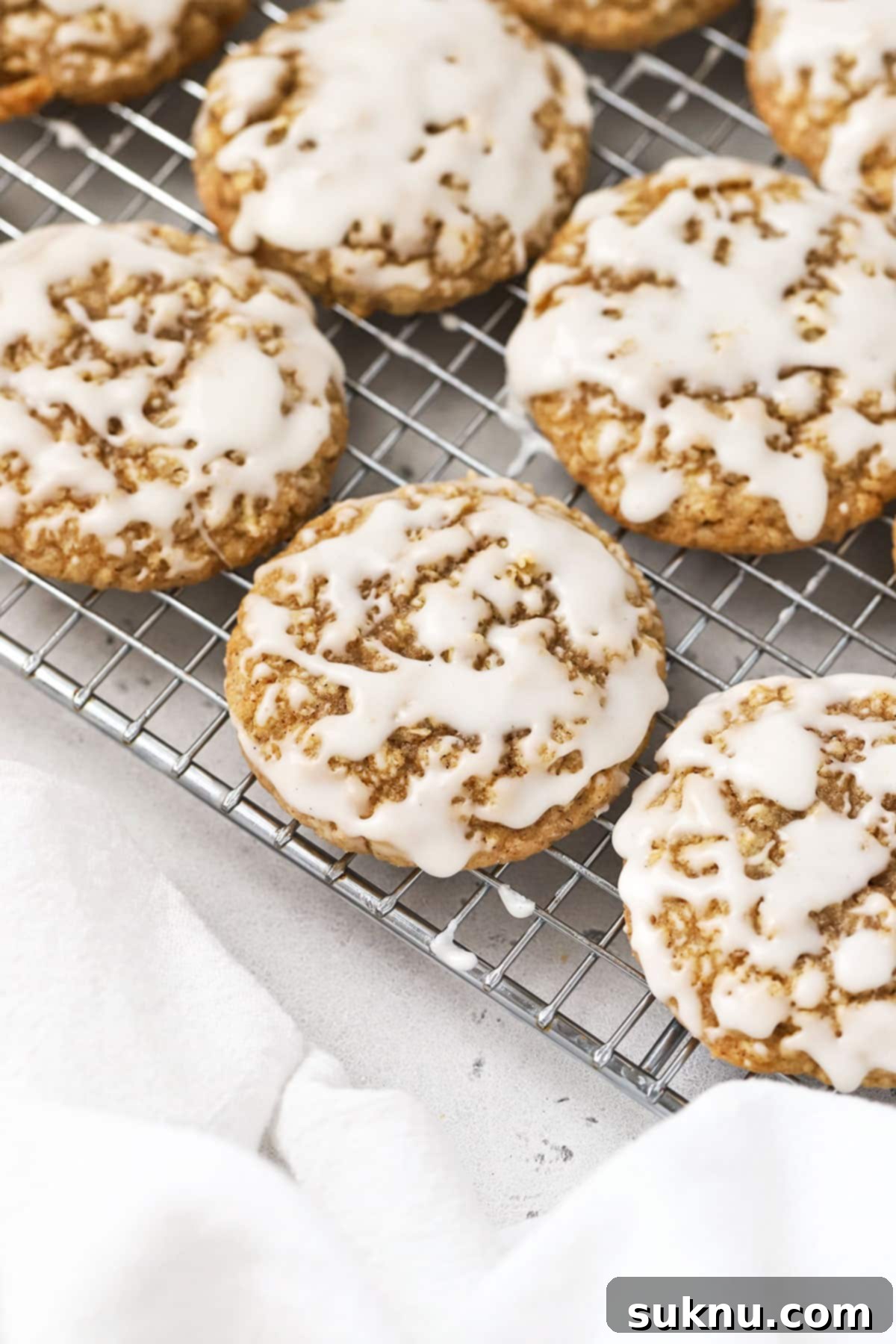
- Dip the Cooled Cookies. Working with one cookie at a time, hold it face-down and carefully dip the top surface into the thick vanilla glaze. Ensure the top ridges of the cookie make contact with the glaze. Gently lift the cookie and shake off any excess icing. Place the glazed cookie, icing-side up, back onto the wire cooling rack. Ideally, the glaze should coat the top surface and slightly crackle as it sets, revealing glimpses of the delicious cookie beneath. Continue this process until all the cookies are beautifully glazed.
- Set, Serve, and Store. Allow the glaze to set completely, which may take anywhere from 30 minutes to an hour, depending on your kitchen’s humidity. Once set, your gluten-free iced oatmeal cookies are ready to be enjoyed! Store any leftover iced cookies in an airtight container at room temperature for 3-4 days to maintain their freshness. For longer storage, they can be frozen for up to 2 months.
EXPERT TIPS & TRICKS
Unlock Your Best Cookie Baking:
- Mastering the Art of Brown Butter
- Quick Guide: Bringing Eggs to Room Temperature
- Precision Baking: How to Measure Flour Correctly (Scoop & Level Method)
- Freshness Check: Ensuring Your Baking Soda & Baking Powder Are Potent
- Smart Baking: How to Freeze Cookie Dough (and Bake from Frozen)
- Essential Kitchen Companions: 8 Cookie Tools We Can’t Live Without

FAQ & Essential Tips for the Best Gluten-Free Iced Oatmeal Cookies
Achieving perfect gluten-free iced oatmeal cookies is easier than you think with these expert tips and answers to common questions:
Why You Can’t Skip the Chill Time! While it’s tempting to rush these delicious cookies into the oven, the 30-minute chilling period for the dough is a non-negotiable step for optimal results. This crucial rest period serves several important purposes: Firstly, it allows the gluten-free flour blend ample time to fully absorb the liquids in the dough. This hydration process results in a softer, more cohesive dough and a wonderfully tender cookie texture. Secondly, chilling helps to firm up the butter. When the butter is cold, it melts more slowly in the oven, which significantly controls the cookie’s spread, preventing them from becoming thin and crispy instead of chewy and thick. Skipping this step often leads to cookies that spread too much and lack that desirable chewy consistency.
The Importance of Certified Gluten-Free Oats! If you are baking these cookies for individuals with celiac disease or a serious gluten intolerance, it is absolutely essential to use certified gluten-free rolled oats. While oats are naturally gluten-free, they are very frequently processed in facilities that also handle wheat, barley, and rye. This cross-contamination can introduce gluten, making them unsafe. Look for oats clearly labeled “certified gluten-free” to ensure they meet strict purity standards. We highly recommend brands like One Degree Organic Foods, Trader Joe’s, Bob’s Red Mill (specifically their Gluten-Free Rolled Oats), and Thrive Market. Always double-check that you are purchasing “old-fashioned” or “rolled oats,” not quick-cooking or steel-cut oats.
Can I Use Quick Oats or Steel-Cut Oats Instead? I strongly advise against using quick oats or steel-cut oats for this recipe, as they will significantly alter the final texture and taste of your cookies. Quick oats, also known as instant or quick-cooking oats, are pre-steamed and rolled thinner, meaning they absorb liquid much faster. If used here, they can make the cookies turn out dry, crumbly, and less chewy. Steel-cut oats, on the other hand, are whole oat groats chopped into smaller pieces. They are much denser and require a longer cooking time to soften. They will not soften adequately during the cookie baking process and will remain unpleasantly hard and crunchy in the finished cookies. Stick to certified gluten-free rolled (old-fashioned) oats for the best results.
Unleash Your Creativity with the Glaze! The simple vanilla glaze offers a wonderful opportunity for customization and artistic expression. Instead of the classic dipped, “crackle” iced oatmeal cookie look, you can experiment with various glazing techniques. Try drizzling the glaze over the cooled cookies in a zig-zag pattern for a more intricate presentation. If you prefer a more fully coated cookie without the characteristic cracks, simply increase the glaze recipe by 1.5 times. This extra volume will allow you to achieve a smoother, more opaque coating. You can also play with flavors, adding a touch of almond extract for a different twist, or even a tiny drop of food coloring for a festive touch during holidays.
Troubleshooting Common Cookie Issues:
- **Flat Cookies?** This is often due to warm butter, overmixing, or not chilling the dough long enough. Ensure your browned butter has cooled sufficiently, mix just until combined, and always give the dough its full chill time.
- **Dry or Crumbly Cookies?** Over-baking is a common culprit. Pull cookies from the oven when edges are set but centers are still slightly soft. Incorrectly measured flour (too much) or using the wrong type of oats can also cause dryness.
- **Not Chewy Enough?** The key to chewiness lies in the brown sugar (for moisture), correctly pulsed oats, and not over-baking. The chill time also contributes to a better texture.
Optimal Storage for Freshness: Once glazed and set, store your gluten-free iced oatmeal cookies in an airtight container. At room temperature, they will remain delicious for 3-4 days. For longer enjoyment, these cookies freeze exceptionally well. Arrange cooled, glazed cookies in a single layer on a baking sheet to freeze solid, then transfer them to a freezer-safe bag or container, separated by parchment paper, for up to 2 months. Thaw at room temperature when ready to enjoy.
More Gluten-Free Cookie Recipes To Fall In Love With
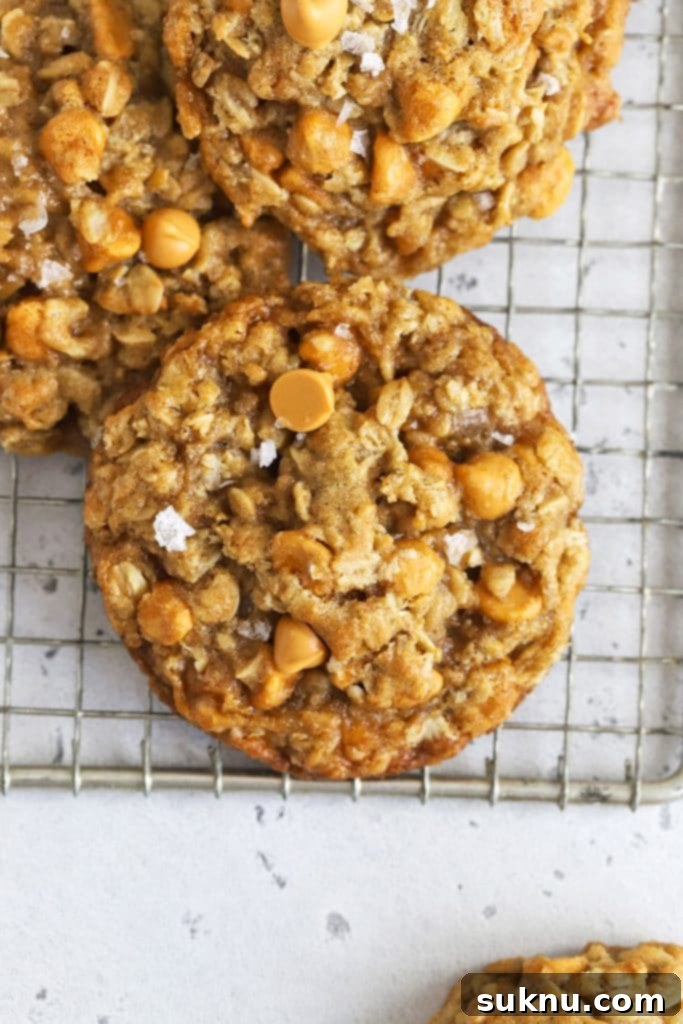
Gluten-Free Oatmeal Scotchies (Butterscotch!)
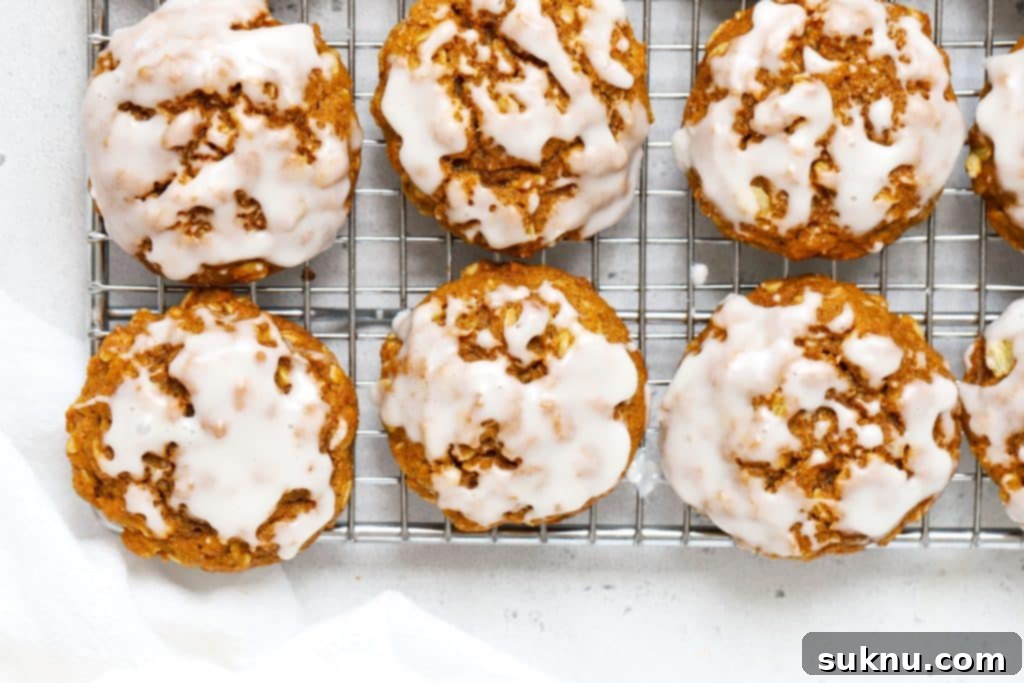
Gluten-Free Pumpkin Oatmeal Cookies
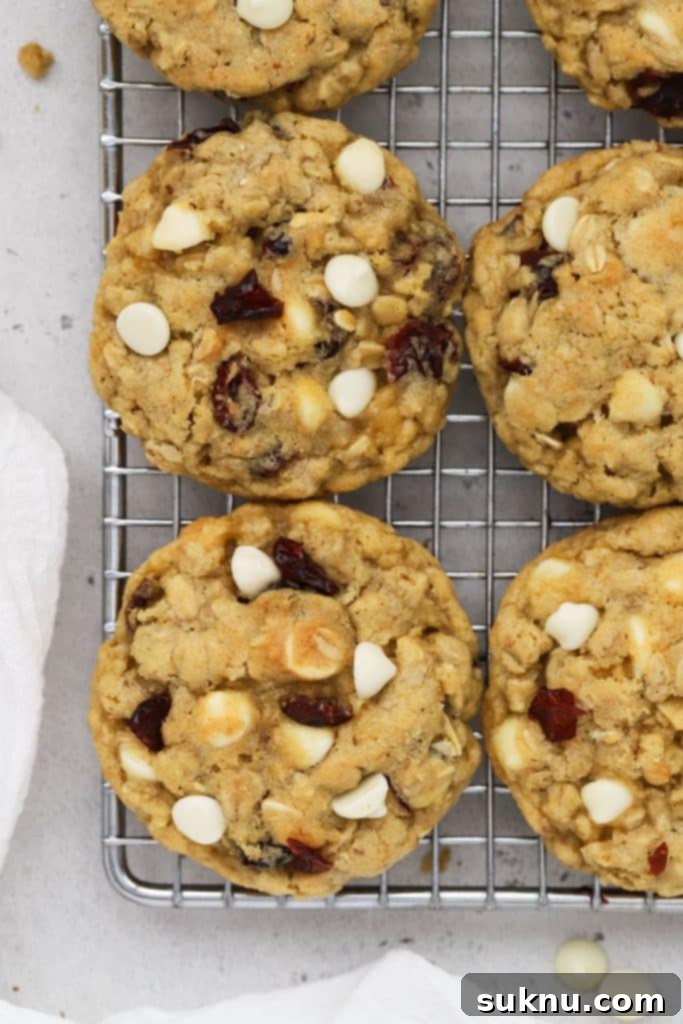
Gluten-Free Cranberry White Chocolate Oatmeal Cookies
Recipe Card
Print

Gluten-Free Iced Oatmeal Cookies
5 Stars
4 Stars
3 Stars
2 Stars
1 Star
5 from 1 review
-
Author:
Emily Dixon, Sweets & Thank You -
Total Time:
25 minutes -
Diet:
Gluten Free
Description
Made with the rich depth of brown butter, cozy warm spices, and a simple yet sweet vanilla glaze, these iced oatmeal cookies are a testament to spice cookie perfection in a gluten-free form!
Ingredients
For The Brown Butter Oatmeal Cookies:
- 1 cup butter (16 Tablespoons/2 sticks), unsalted
- 1 cup light brown sugar (200 grams), packed
- 1/2 cup granulated sugar (100 grams)
- 2 large eggs, at room temperature
- 2 teaspoons pure vanilla extract (or vanilla bean paste)
- 2 cups certified gluten-free rolled oats (180 grams), old-fashioned
- 2 cups gluten-free measure-for-measure flour blend* (240 grams) with xanthan gum
- 1 1/2 teaspoons ground cinnamon
- 1/2 teaspoon ground nutmeg
- 1/2 teaspoon kosher salt
- 1/2 teaspoon baking soda
For The Sweet Vanilla Glaze:
- 1 1/2 cups powdered sugar (180 grams), sifted
- 1/4 teaspoon pure vanilla extract or vanilla bean paste
- 1–2 Tablespoons heavy cream or milk, as needed
Instructions
First, Brown The Butter. In a light-colored saucepan, melt 1 cup of unsalted butter over medium heat. Whisk or stir almost constantly as the butter melts and begins to bubble. Continue cooking for 6-8 minutes, allowing the butter to caramelize and brown. You’ll hear popping and bubbling sounds. The butter will start to foam, and the milk solids at the bottom will turn a deep golden brown, releasing a rich, nutty, and sweet caramel aroma. Immediately remove the pan from the heat and transfer the browned butter, including all the delicious browned specks, into a heatproof bowl (like your stand mixer bowl). Let it cool for about 15-20 minutes, or until it’s warm but not hot to the touch.
Pulse The Oats. Place 2 cups of certified gluten-free rolled oats into a food processor or blender. Pulse 10-12 times until you have a mixture of finely ground powdery bits, broken oat pieces, and some whole oats. Do NOT grind them into a fine flour, and avoid leaving them all whole; aim for a varied texture for the best chewiness.
Combine Butter & Sugars. Add 1 cup of light brown sugar (packed) and 1/2 cup of granulated sugar to the slightly cooled brown butter. Stir thoroughly with a spoon or mix on medium speed until well combined. The mixture will resemble wet sand.
Mix In Eggs & Vanilla One At A Time. Add one large room temperature egg to the dough and mix until fully incorporated. Then, add the second large egg and mix until fully combined. Finally, add 2 teaspoons of vanilla extract (or vanilla bean paste) and mix until evenly distributed.
Add Dry Ingredients. To the bowl, add the pulsed oats, 2 cups of gluten-free measure-for-measure flour, 1 1/2 teaspoons of ground cinnamon, 1/2 teaspoon of ground nutmeg, 1/2 teaspoon of kosher salt, and 1/2 teaspoon of baking soda. Stir on low speed or by hand until the dry ingredients are just combined and no streaks of flour remain. Be careful not to overmix.
Chill For 30 Minutes. Cover the cookie dough and place it in the refrigerator to chill for at least 30 minutes. This step is essential for hydrating the flour and preventing the cookies from spreading too much during baking.
Preheat The Oven & Prep The Pan. While the dough chills, preheat your oven to 350°F (175°C). Line two large baking sheets with parchment paper and set them aside. Using two sheets allows you to alternate them, ensuring cold dough goes onto a cool pan for even baking.
Scoop & Roll The Dough. Use a medium cookie scoop (about 2 tablespoons) to portion out even balls of dough. Gently roll each dough ball between your palms to smooth them slightly, then place 6-8 cookie dough balls onto a prepared baking sheet, leaving ample space between each. Return the remaining dough to the refrigerator while the first batch bakes.
Bake & Cool. Bake one cookie sheet at a time for 8-10 minutes, or until the edges are set and lightly golden, and the centers appear just done (they may still look slightly soft). Avoid over-baking to ensure chewy cookies. Let the cookies rest on the baking sheet for 1-2 minutes before carefully transferring them to a wire cooling rack to cool completely. Repeat this process with the remaining dough, alternating baking sheets.
Mix Up The Glaze. Once the cookies are completely cool, prepare the vanilla glaze. In a small bowl, combine 1 1/2 cups of sifted powdered sugar, 1/4 teaspoon of vanilla extract (or vanilla bean paste), and 1-2 tablespoons of heavy cream or milk. Whisk or stir with a fork until the glaze is smooth, thick, and lump-free. It should be thick enough to cling to the cookies but still dippable; add milk 1/2 teaspoon at a time if too thick, or more powdered sugar if too thin.
Dip The Cookies. Working with one cooled cookie at a time, hold it face-down and gently dip the top surface into the glaze, just enough so the top ridges touch the icing. Lift, shake off any excess glaze, then place the cookie glaze-side up on a wire rack to set. For the classic look, you want the glaze to cover the cookie top with small, visible cracks in between as it sets. Repeat for all cookies.
Set, Serve & Store. Allow the glaze to set completely, which can take 30-60 minutes depending on humidity. Once the icing is firm, enjoy your delicious cookies! Store any leftover iced cookies in an airtight container at room temperature for 3-4 days, or freeze them for up to 2 months for longer preservation.
-
Prep Time:
25 minutes -
Category:
Dessert, Cookies -
Method:
Oven Baking -
Cuisine:
American, Comfort Food
WE LOVE BAKING WITH THESE!