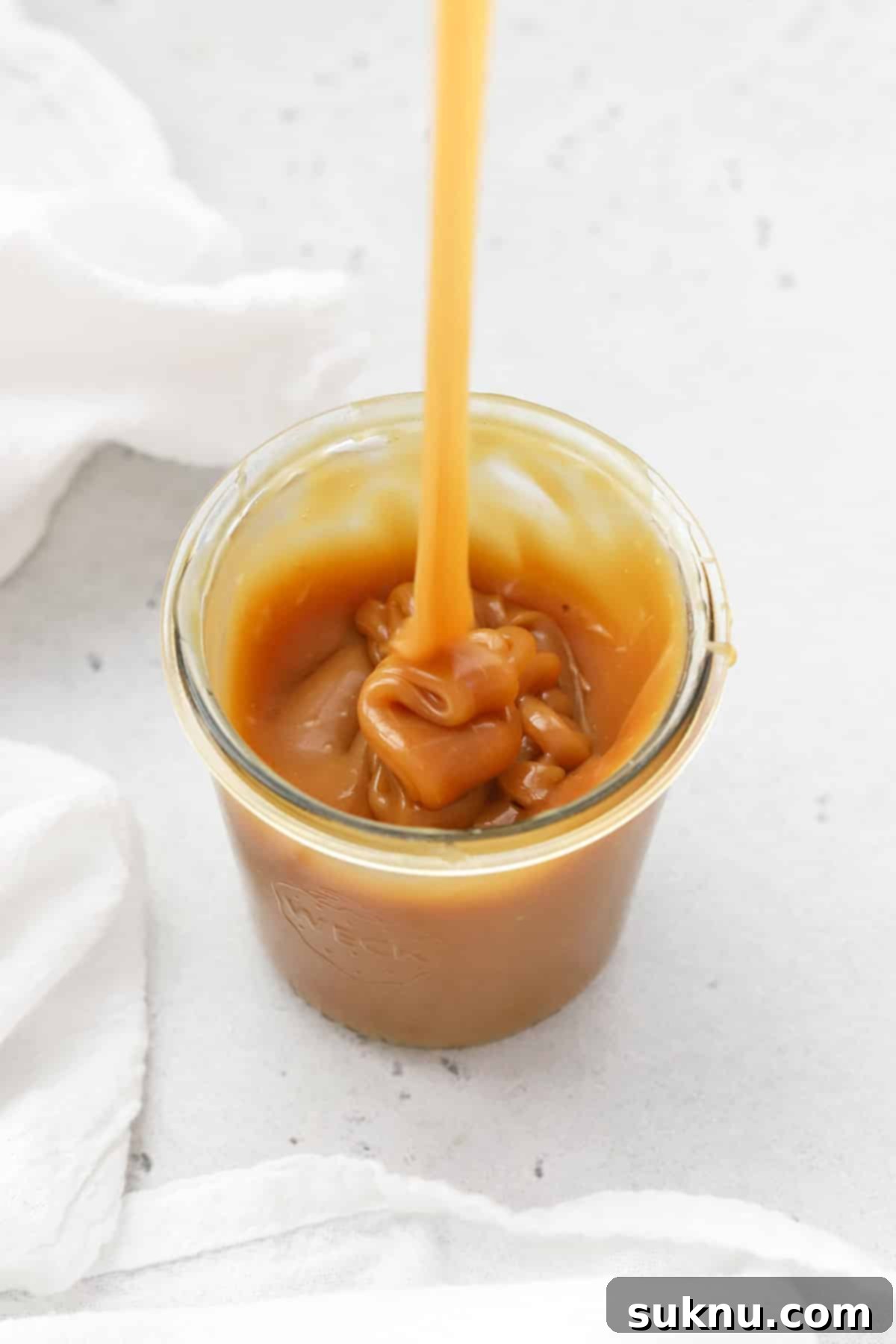
Unlock the secret to perfect homemade caramel sauce! Our easy, beginner-friendly recipe guarantees creamy, delicious caramel every time, ideal for drizzling over ice cream, cake, brownies, and more!
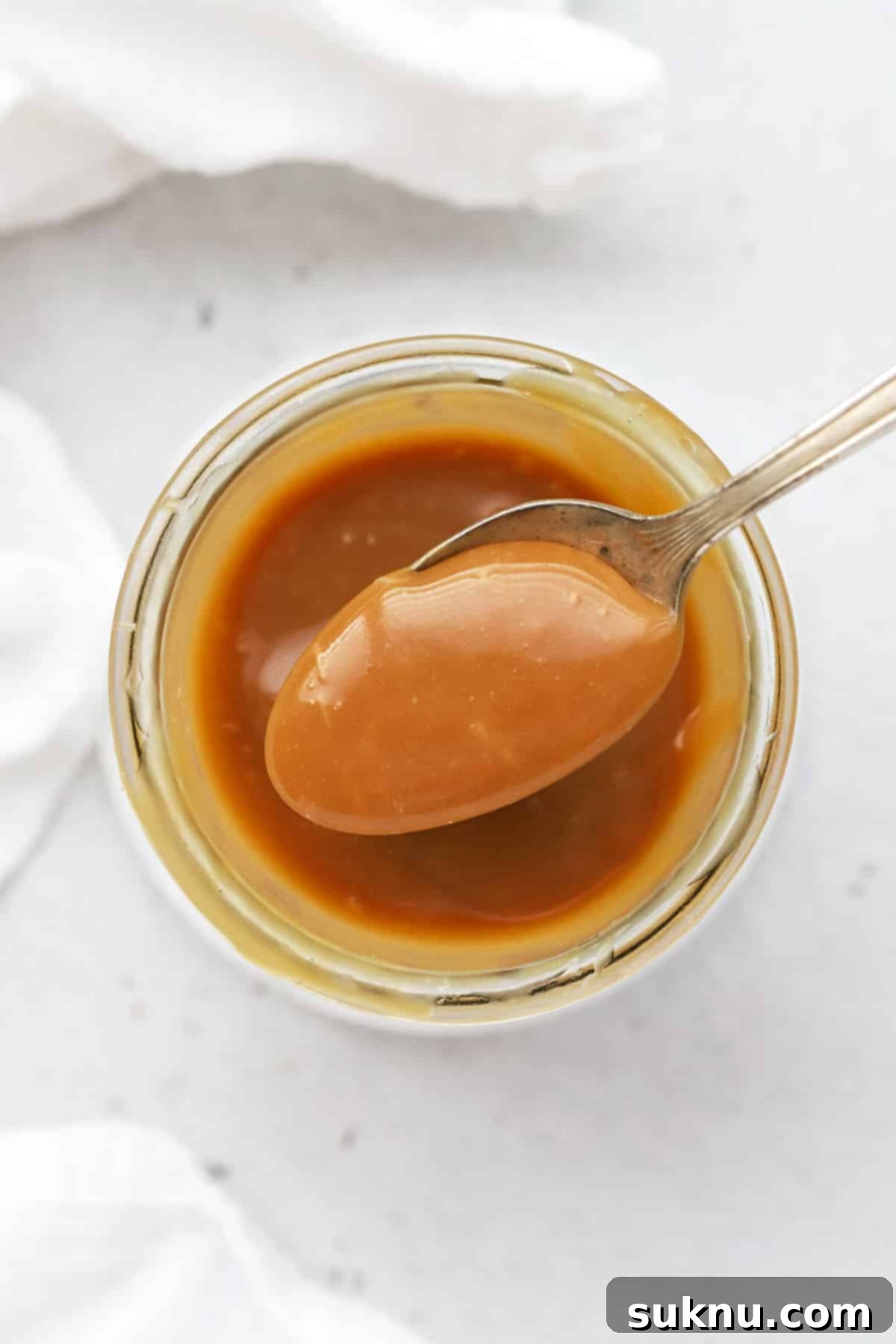
Mastering Homemade Caramel Sauce: A Foolproof Guide for Everyone
Do you have a particular baking challenge that always seems to elude you? Perhaps it’s crafting the perfect sourdough, achieving flaky pie crusts, or decorating elaborate cakes. For many home bakers, caramel sauce often falls into this category.
The journey to perfect caramel can be fraught with pitfalls: sugar crystallizing, caramel seizing, or a delicate balance between undercooking and burning. It’s a common frustration that can lead many to abandon the idea of making their own, settling for store-bought versions.
However, what if we told you there’s a simple secret, a game-changing trick involving just one small ingredient, that can virtually guarantee success? This revelation transformed my own caramel-making experience, turning a once daunting task into a consistently successful endeavor. Say goodbye to ruined batches and hello to perfectly smooth, rich caramel sauce, every single time.
If you’ve ever battled with scorched, crystallized, or otherwise troublesome caramel in the past, prepare for a culinary breakthrough. This incredibly easy caramel recipe is designed to demystify the process and build your confidence. Once you try it, a whole new world of deliciously caramel-infused desserts will open up before you.
Ready to embark on this sweet adventure? Let’s explore the essential ingredients you’ll need to create this amazing homemade caramel sauce – no candy thermometer required!
Gather Your Essential Ingredients for the Perfect Caramel Sauce
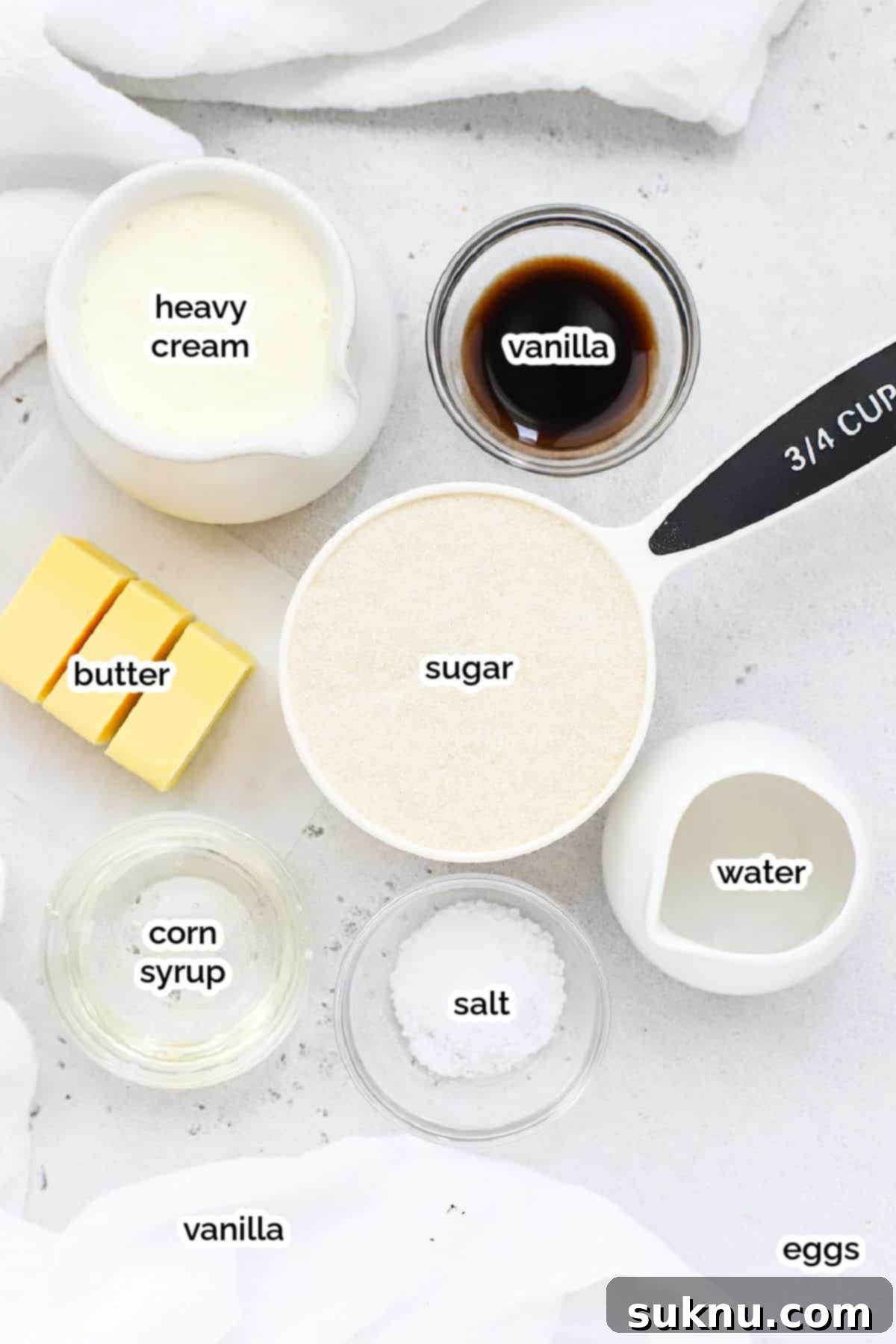
Creating a truly remarkable homemade caramel sauce starts with selecting the right ingredients. Here’s a detailed look at what you’ll need and why each component is crucial:
- Granulated Sugar: The very foundation of caramel, granulated sugar (also known as regular white sugar) undergoes a transformative process when heated. We highly recommend using organic cane sugar for its superior quality and cleaner taste, which truly shines through in the final sauce. Many bulk retailers, like Costco, offer excellent organic cane sugar options.
- Corn Syrup: This is our “magic ingredient” and the secret to this recipe’s foolproof nature. Corn syrup is an invert sugar, meaning it actively works to prevent sugar crystals from forming during the caramelization process. This ensures your caramel remains wonderfully smooth and doesn’t seize up. While glucose syrup can be used as an alternative, corn syrup is readily available and consistently delivers excellent results. It’s important to note that corn syrup is distinctly different from high-fructose corn syrup, which is often found in processed foods.
- Water: A simple yet vital component. A small amount of water helps dissolve the granulated sugar evenly before it begins to caramelize, ensuring a more consistent and controlled cooking process.
- Heavy Whipping Cream: Chilled heavy cream plays a dual role: it effectively halts the caramelization when added, preventing your sugar from burning, and it contributes significantly to the sauce’s luxurious, creamy texture. We strongly advise against substituting with milk or any lower-fat dairy product, as this will result in a much thinner, less satisfying caramel sauce.
- Butter: Butter is essential for rounding out the flavor profile and enhancing the sauce’s rich, silken texture. Salted butter is our preferred choice as it adds a delightful complexity, leaning towards a salted caramel flavor. If you’re using unsalted butter, consider adding an extra pinch or two of kosher salt to achieve a similar balance.
- Vanilla Extract: A splash of good quality vanilla extract deepens the caramel’s color and amplifies its sweet, complex notes, adding an aromatic finish that elevates the overall taste.
- Kosher Salt: For those who appreciate a touch of savory balance, kosher salt is key. The provided recipe offers a range for salt content, allowing you to customize your caramel. For a classic salted caramel, stick to the higher end of the suggested range. If you prefer a sweeter caramel, you can reduce the amount to 1/4 teaspoon or even just a tiny pinch.
Can I Make This Caramel Sauce Without Corn Syrup? Yes, you can, but be aware that omitting corn syrup will significantly increase the difficulty and risk of crystallization. Our recipe utilizes the wet caramel method, where corn syrup acts as a crucial barrier, preventing the formation of sugar crystals and ensuring a silky-smooth sauce. Traditional dry caramel methods, which don’t use corn syrup, are much trickier to master and prone to crystallization. If you choose to omit the corn syrup, increase the water by an additional two tablespoons to aid in dissolution.
How to Make Homemade Caramel Sauce: A Step-by-Step Tutorial
For precise ingredient measurements, detailed instructions, and additional tips, please refer to the comprehensive recipe card located further down.
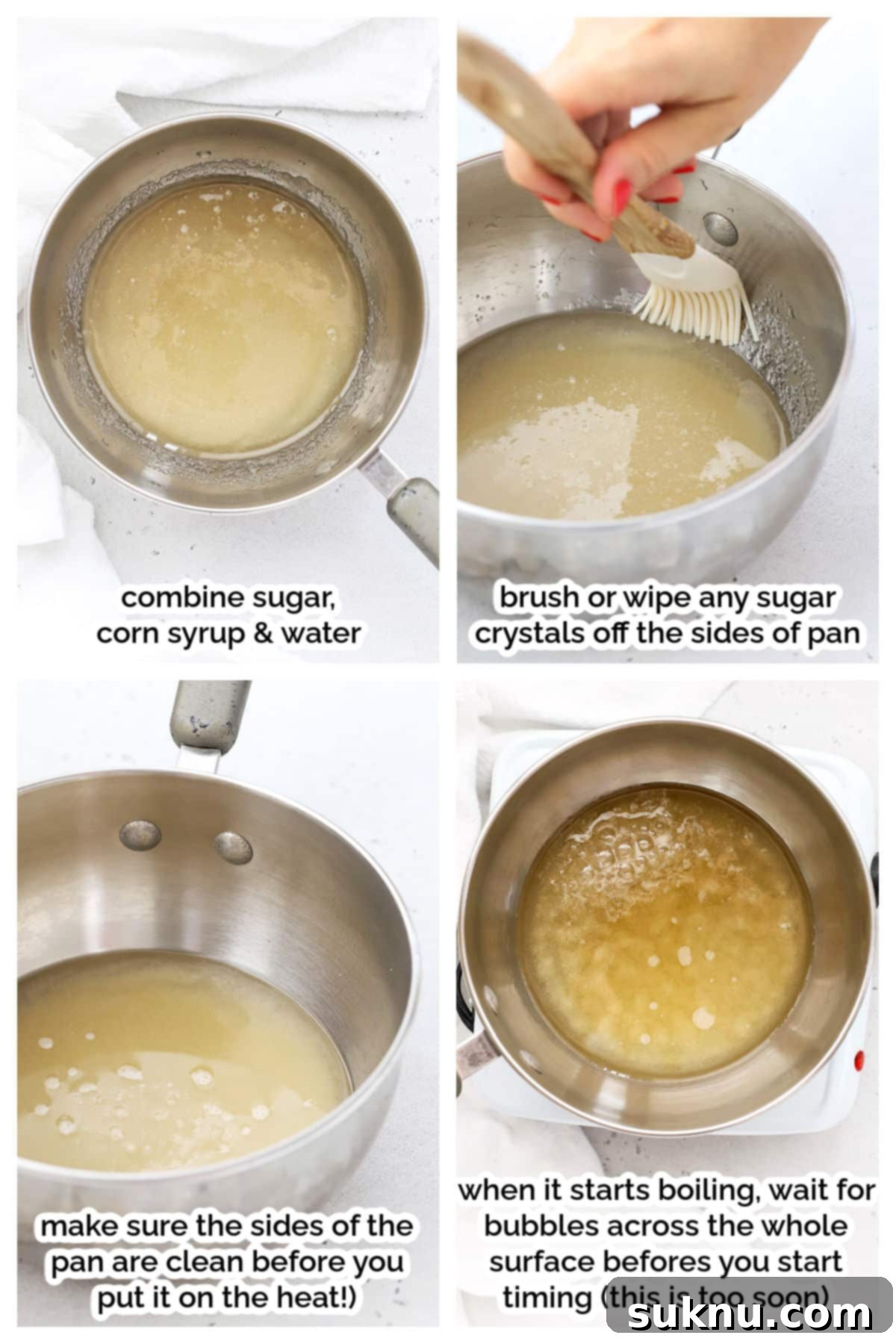
- Prepare Your Mise en Place (Get Everything Ready First): Caramel-making moves quickly, so efficiency is key. Before you even turn on the stove, measure out all your ingredients and have them within easy reach. This includes your cold heavy cream, butter, vanilla, and salt, as well as a heat-proof container for storage. This preparation ensures a smooth and stress-free process.
- Combine Sugar, Corn Syrup, and Water: In a medium-sized, heavy-bottomed saucepan or pot, combine the granulated sugar, corn syrup, and water. Whisk these ingredients thoroughly to ensure the sugar is well dissolved. Crucially, take a wet pastry brush and carefully wipe down the inner sides of the pan, removing any stray sugar crystals that might cling there. This step is vital for preventing crystallization, which can ruin your caramel.
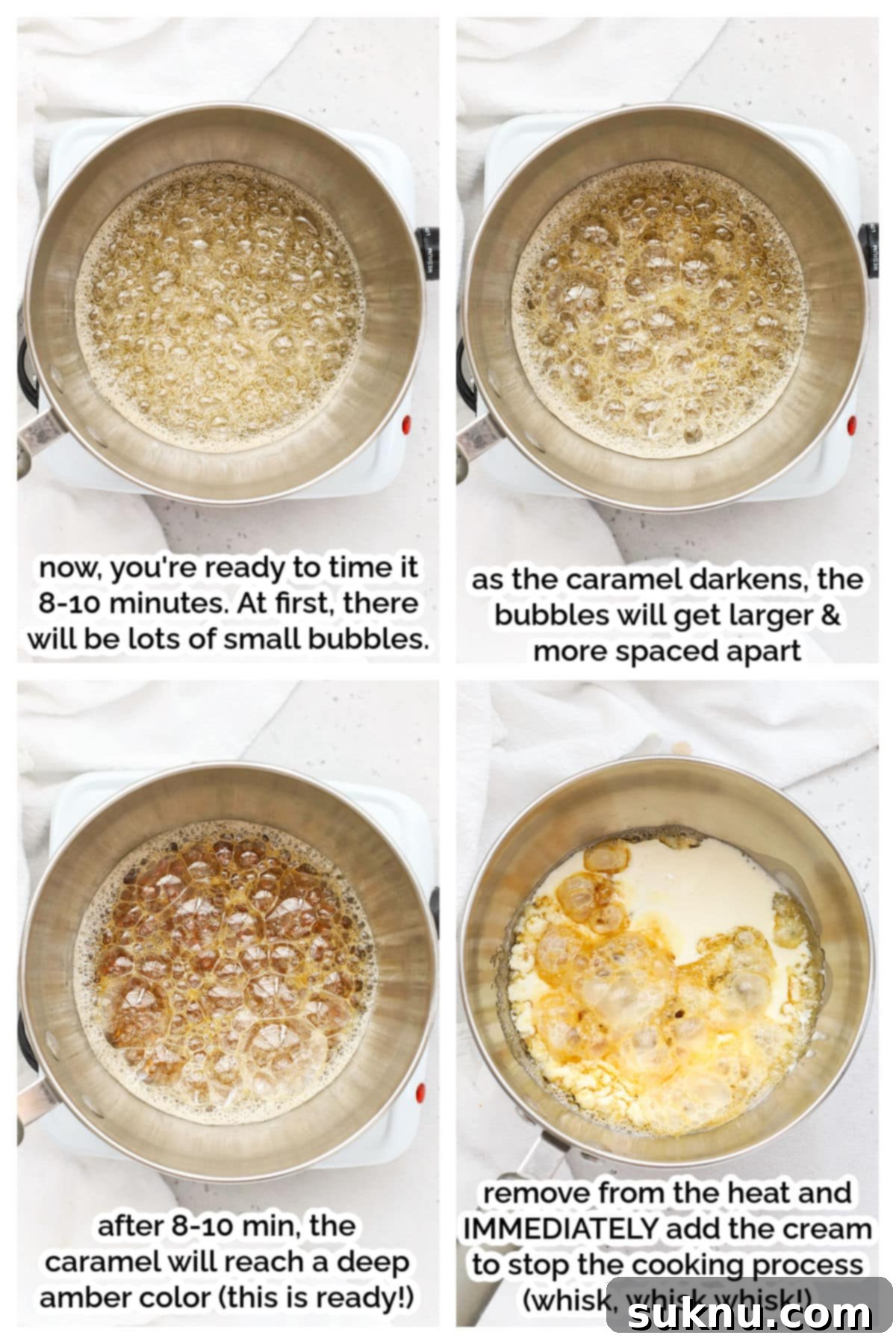
- Boil Until a Deep Amber Color Develops: Place the saucepan over medium-high heat. Now, for the most critical instruction: DO NOT STIR the mixture once it begins to boil. Simply allow the sugar mixture to melt and caramelize naturally. Observe the transformation: the bubbles will gradually slow, and the color will deepen. This stage typically takes about 8-10 minutes, but cooking times can vary based on your stove and pan. Aim for a rich, deep amber hue, similar to an old copper penny. The final caramel sauce will only be as flavorful and dark as your caramelized sugar, so resist the urge to remove it from the heat too early. Watch it carefully, as it can go from perfect to burnt very quickly.
- Carefully Whisk in the Cold Cream: Once your caramel reaches the desired deep amber color, immediately remove the pan from the heat. Slowly and carefully pour in the cold heavy cream while continuously whisking. Be prepared for a vigorous reaction: the mixture will bubble intensely and release a lot of steam. This is normal and expected, as the cold cream rapidly cools the hot sugar, stopping the cooking process. Continue whisking briskly until the sauce is smooth and uniform, ensuring there are no lumps.
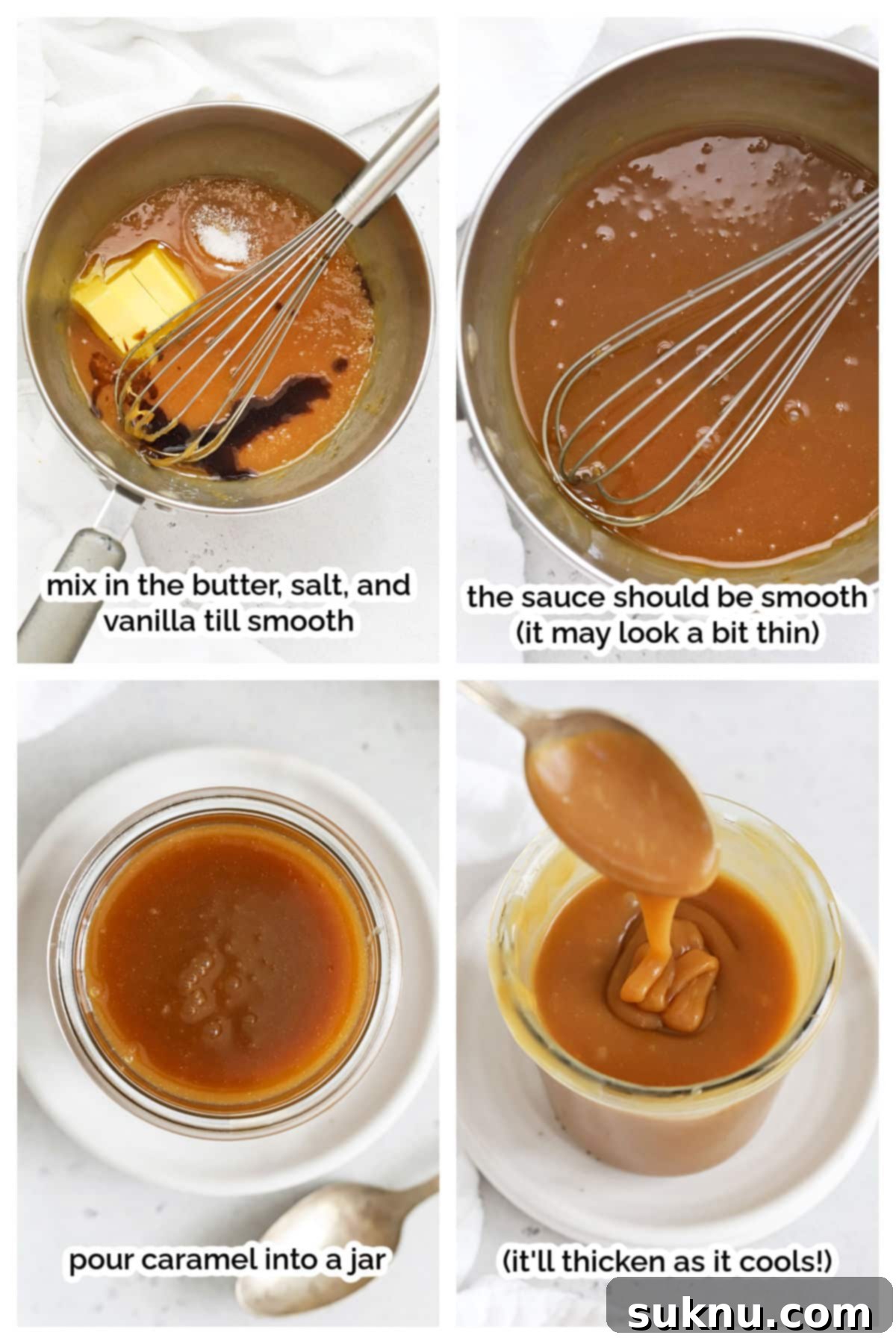
- Stir in Butter, Vanilla, and Salt: With the cream fully incorporated, add the softened butter, vanilla extract, and kosher salt to the warm caramel. Continue to whisk until all these ingredients are fully melted and smoothly blended into the sauce. This final step enhances the flavor, adds richness, and achieves the desired consistency.
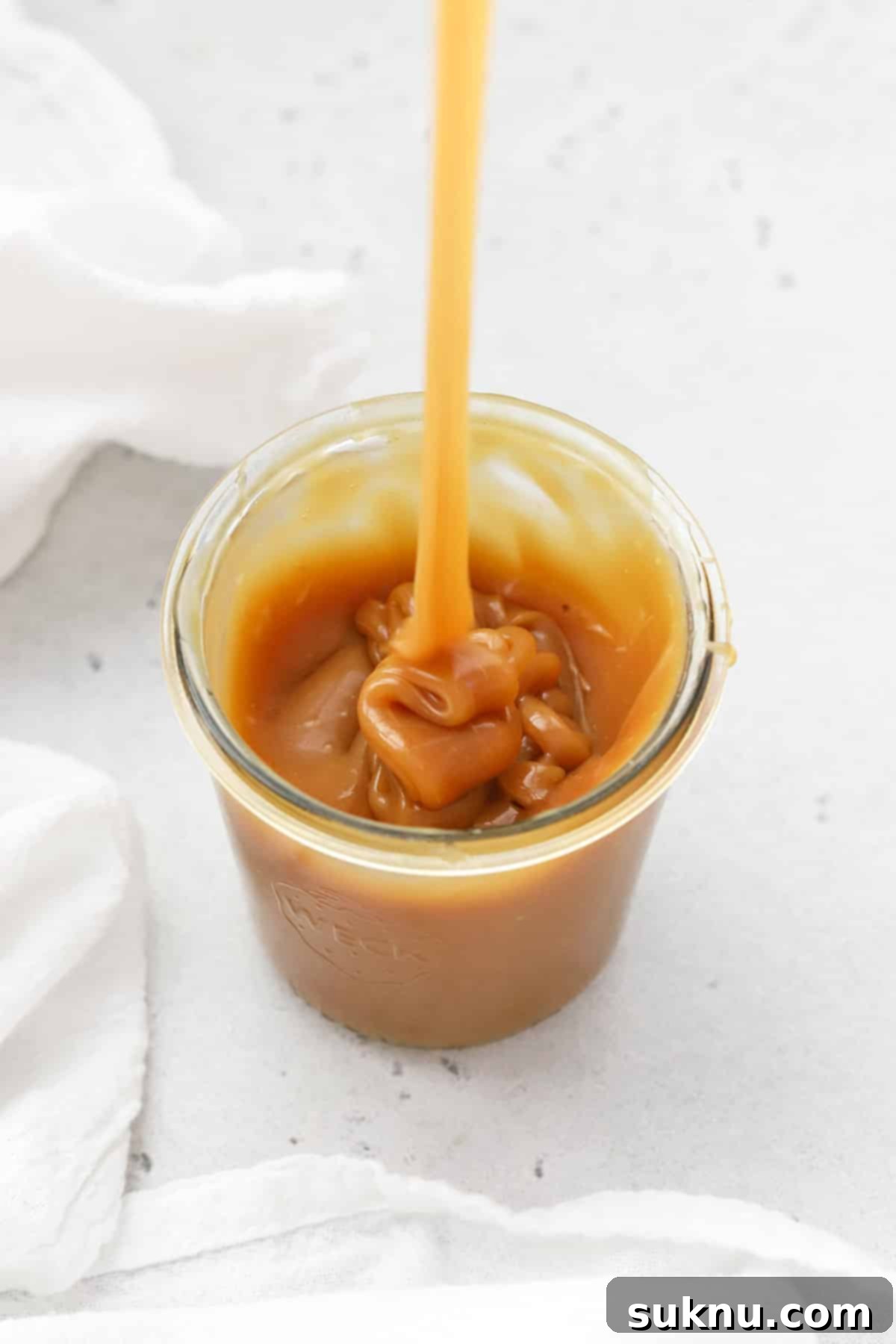
- Cool and Store: Allow the freshly made caramel sauce to cool completely to room temperature. You’ll notice that the hot caramel initially appears much thinner; it will thicken considerably and become more opaque as it cools. Once cooled, pour the caramel into a clean, heat-proof airtight container or glass jar. Store your homemade caramel sauce in the refrigerator for up to two weeks. To return it to a pourable consistency after refrigeration, simply let it sit at room temperature for about 30 minutes, or gently warm it in 10-20 second intervals in the microwave, stirring until smooth and glossy.
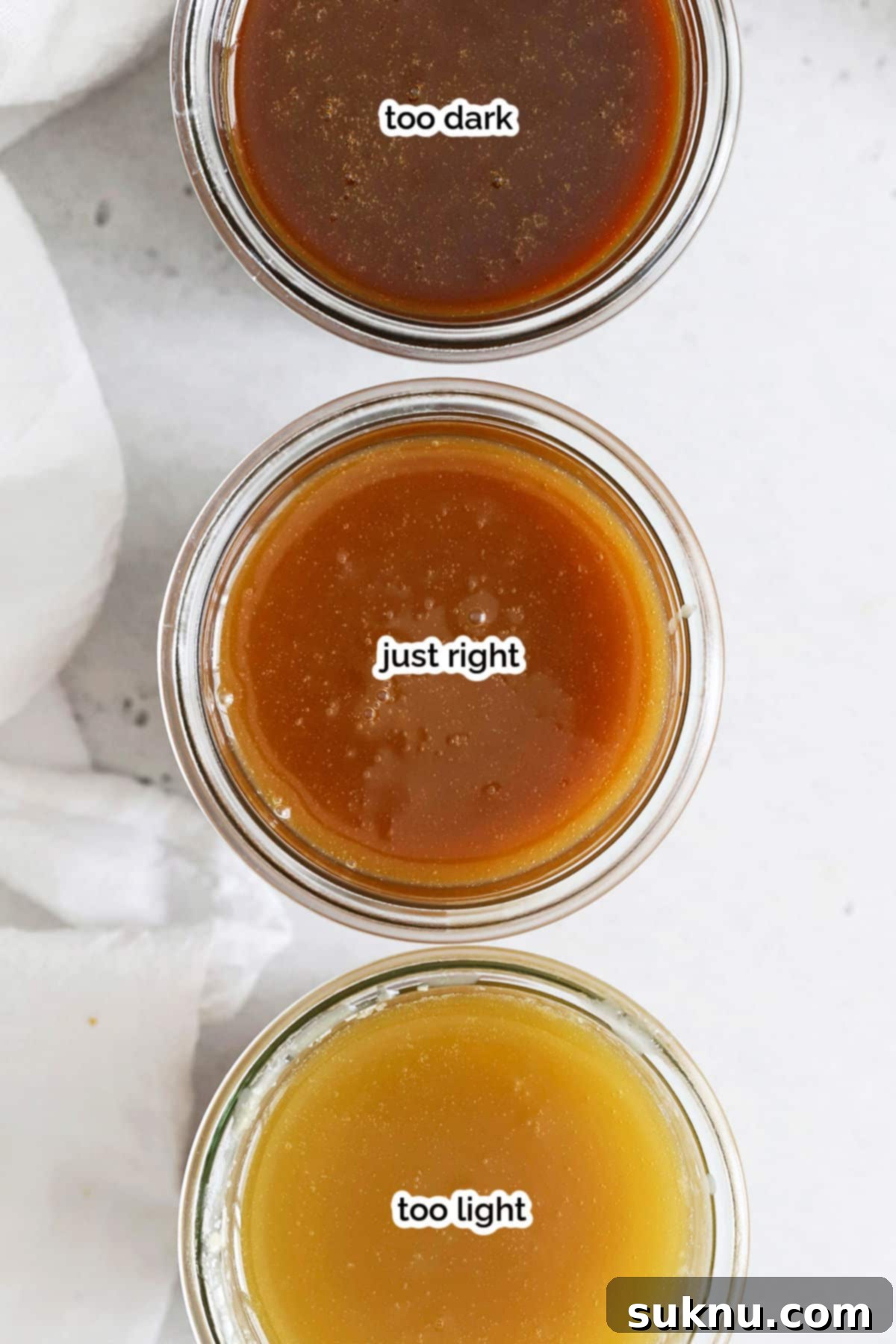
Important Note: What If You Burn the Sugar? If, during the boiling stage, the sugar mixture turns excessively dark or emits a burnt odor, it means the sugar has burned. At this point, do NOT proceed by adding the remaining ingredients. Burned caramel possesses a harsh, acrid, and deeply bitter taste that cannot be salvaged. For the best results and taste, you will need to discard the burned mixture and start over with fresh ingredients.
12+ Delicious Ways to Enjoy Your Homemade Caramel Sauce
Now that you’ve mastered the art of making flawless homemade caramel sauce, let’s explore the endless possibilities for enjoying this golden elixir!
- Brownies: Elevate your brownies from good to extraordinary. Drizzle warm caramel over a pan of freshly baked caramel brownies, create stunning caramel swirls, or use it as a decadent layer in turtle brownies or brownie sundaes.
- Pies: A simple pour of this rich caramel can transform any pie. It’s an exquisite topping for classic apple pie, a delightful addition to pear pie, and an absolute must-have drizzle for slices of banoffee pie.
- Ice Cream: This is arguably one of the best dessert toppings! Spoon a generous amount of caramel sauce over your favorite scoop of ice cream – vanilla, chocolate, brownie chunk, salted caramel, or snickerdoodle. It’s also fantastic swirled directly into homemade ice cream for an intense caramel flavor throughout.
- Cheesecake: Take your cheesecake to the next level. Swirl it directly into the cheesecake batter before baking, or artfully drizzle it over finished cheesecake bars, pumpkin cheesecake, apple cheesecake, and more for a stunning presentation and irresistible flavor.
- Cakes: Use this caramel sauce as a rich filling between cake layers, or simply drizzle it over individual slices for an elegant touch, as seen with this delicious apple spice bundt cake.
- Cookies: Add a gourmet touch to your cookies. Fill caramel-stuffed snickerdoodles, drizzle over warm brownie cookies, or use it as a glaze for various cookie recipes.
- Cupcakes: A swirl of frosting paired with a drizzle of homemade caramel is pure bliss! Use it to top your pumpkin cupcakes or inject it directly into the center for a delightful surprise.
- Drinks: Infuse your beverages with the sweet taste of caramel. Try a homemade caramel apple cider, create your own caramel macchiatos, or garnish a cozy cup of hot chocolate or your morning coffee with a generous swirl of caramel sauce and whipped cream.
- Buttercream: Whip up a dreamy batch of caramel frosting! Simply beat cooled caramel sauce into your favorite buttercream recipe for a truly unforgettable flavor.
- Dips: Transform your caramel into a luxurious fondue-style dessert dip. Serve it warm with an array of dippers such as pretzels, fresh apple slices, banana pieces, or crisp graham crackers.
- Bread Pudding: Finish off a warm, comforting bread pudding with a decadent drizzle of homemade caramel sauce for a truly inviting dessert.
- Apple Crisp: Prepare to be amazed! Drizzling this caramel sauce over a warm Caramel Apple Crisp is a flavor revelation you won’t want to miss.
- On A Spoon: We’re only half-kidding! Sometimes, the best way to enjoy perfectly made caramel sauce is straight from the spoon.
Can I Use This Homemade Caramel Recipe To Make Caramel Apples?
While this recipe yields a delightful, pourable caramel sauce perfect for drizzling and dipping, it is not designed for coating caramel apples. Caramel apples require a much thicker, candy-like caramel that sets firmly. For an excellent caramel apple recipe, we recommend exploring dedicated recipes like this one. Instead, feel free to serve this delicious sauce as a gourmet caramel dip for apple slices, or as a versatile drizzle for your favorite desserts and drinks!
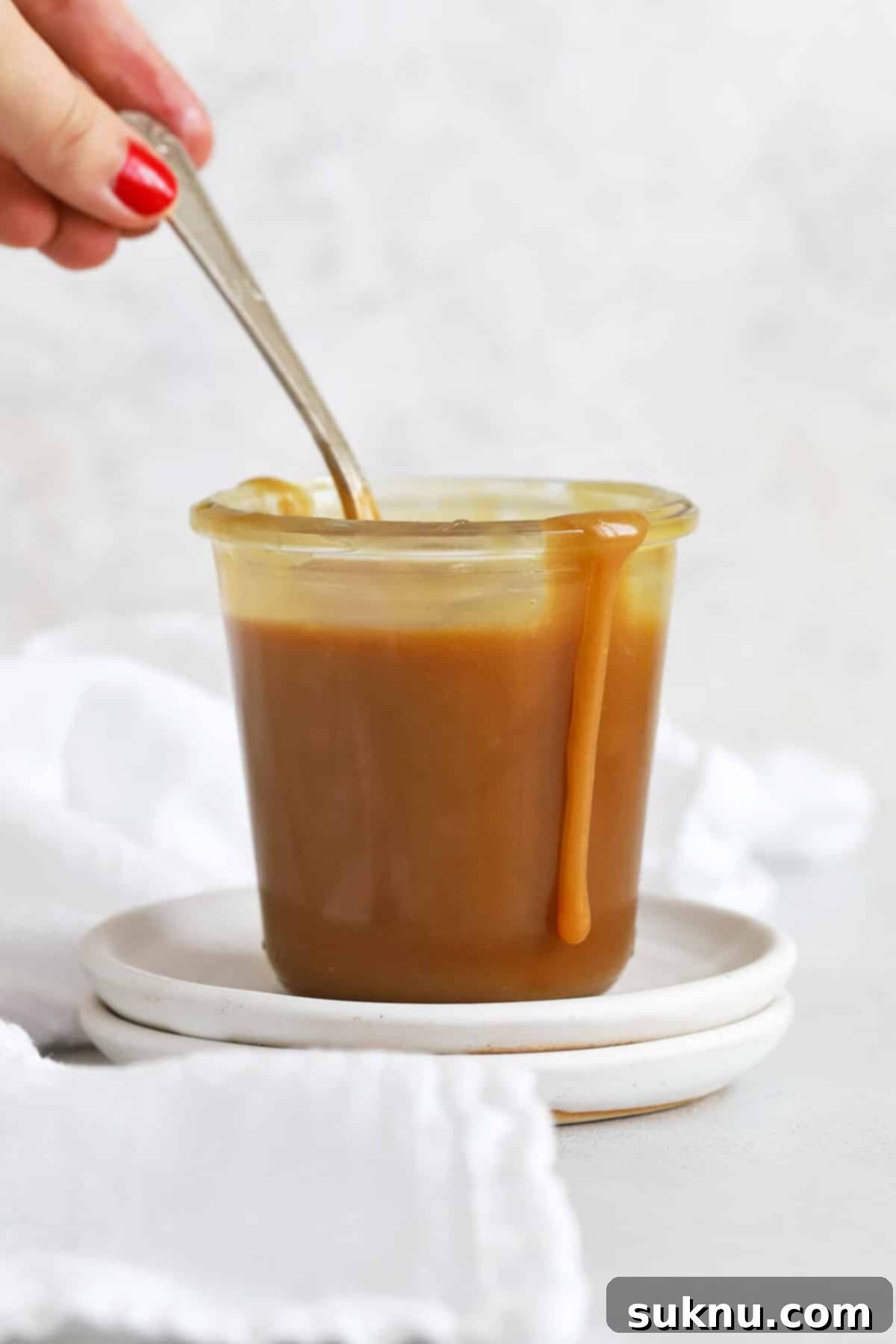
FAQ + Expert Tips and Tricks for the Best Caramel Sauce
Why Did My Caramel Sauce Crystallize? Understanding the Common Pitfalls
Crystallization is one of the most common challenges in caramel making, and it occurs when the sucrose molecules in the sugar begin to re-form into solid crystals rather than remaining in a smooth, liquid state. The primary culprits behind this phenomenon are:
- Stirring during the boiling phase: Once the sugar mixture begins to boil, stirring it can introduce tiny sugar crystals from the sides of the pan back into the supersaturated sugar solution. These tiny crystals then act as seeds, causing a chain reaction where all the dissolved sugar rapidly crystallizes.
- Improper sugar dissolution: If the sugar is not fully dissolved in the water before the heat is increased, any undissolved granules can also act as nucleation points for crystallization.
For a deeper dive into the chemical structure and science behind crystallization, resources like Bake School offer comprehensive articles on the subject.
How to Prevent Crystals in Caramel Sauce: Foolproof Techniques
Knowing what causes crystallization empowers you to prevent it. Here are my top tips for ensuring a consistently smooth and crystal-free caramel sauce:
- Utilize Corn Syrup (Invert Sugar): As discussed, corn syrup is your best friend in preventing crystallization. Its glucose and fructose components disrupt the sucrose molecules, effectively stopping them from bonding together and forming crystals. This is the simplest and most effective safeguard for beginners.
- Ensure Sugar Dissolution Before Heating: Before you even turn on the heat, thoroughly whisk the sugar into the corn syrup and water until it’s largely dissolved. Then, and this is crucial, use a wet pastry brush to meticulously wipe down the inner sides of your saucepan. This removes any stray sugar granules that could later trigger crystallization once the mixture starts to boil.
- Resist the Urge to Stir During Boiling: Once the sugar solution is simmering and boiling, put down your whisk or spoon. Do not stir it! Let the mixture cook undisturbed, allowing the caramelization process to occur naturally and evenly. Trust the process – the lack of agitation is key to preventing crystals.
Bonus Tip: How to Easily Clean Caramel or Burned Sugar Off a Saucepan
Accidents happen, and sometimes sugar can stubbornly stick or burn onto your pan. The easiest way to clean a saucepan with caked-on caramel or crystallized sugar is to fill it with hot water. For minor residue, let it sit for a few minutes. For more stubborn cases, place the pan with hot water over low heat. As the water warms, gently stir the mixture to help dissolve the sugar. It might take a few minutes, but this method consistently works wonders, loosening even the most tenacious sugar residue without harsh scrubbing.
Caramel Safety Tips: Handling Hot Sugar with Care
Working with hot caramel or melted sugar demands extreme caution, as it reaches very high temperatures and can cause severe burns. Please keep the following safety tips in mind:
- Use an Appropriately Sized Pan: Always choose a saucepan large enough to accommodate the caramel, allowing for bubbling and steaming without overflowing or splattering.
- Protect Your Hands: Have oven mitts or heat-resistant gloves ready, especially when adding cold cream to the hot sugar, as it will create significant steam and bubbles.
- Never Touch Hot Caramel: Do not attempt to touch or taste the hot caramel until it has cooled considerably. Its temperature is far too high for direct contact.
- Be Mindful of Children and Pets: Keep children and pets away from the stovetop area while making caramel to prevent accidental burns.
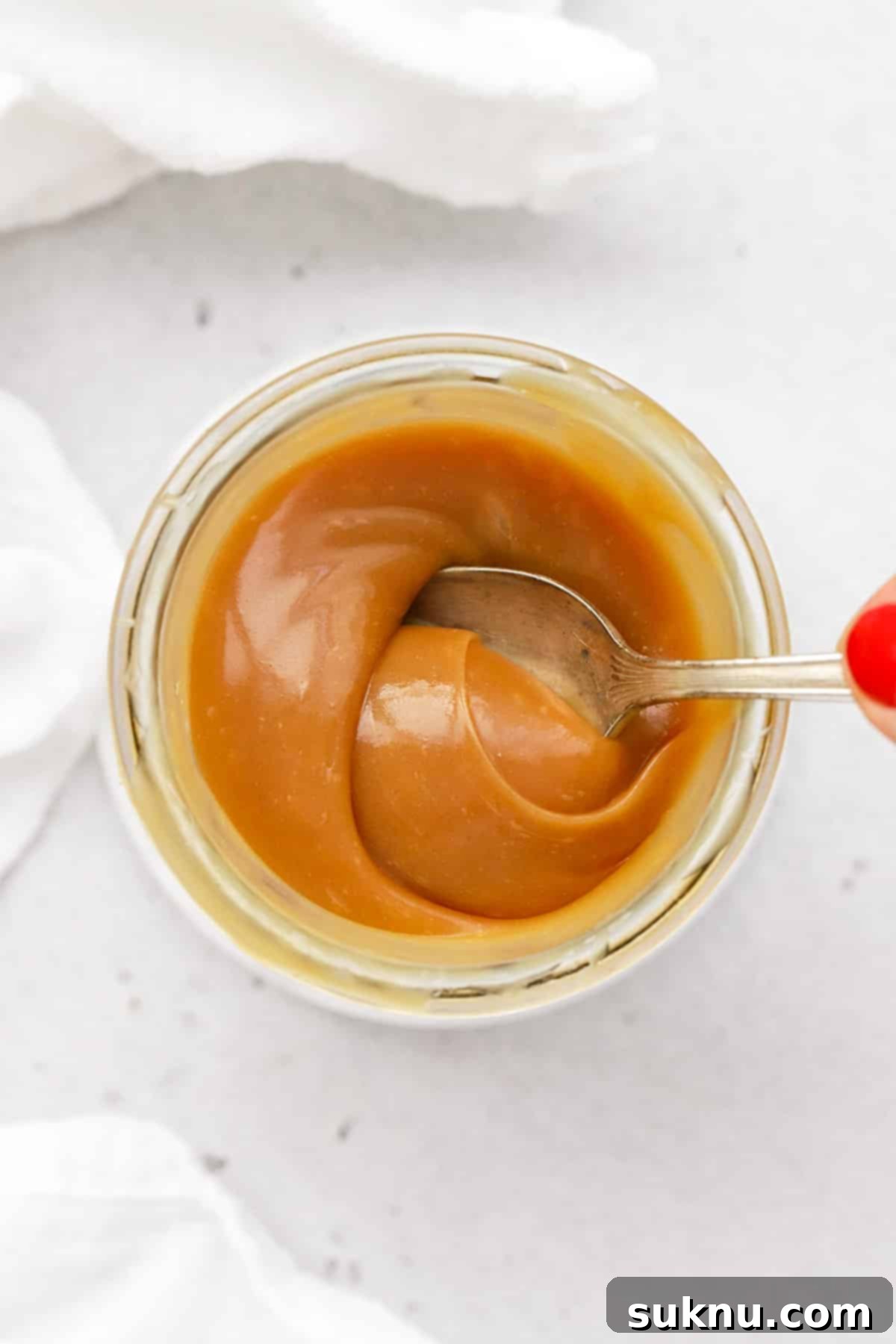
More Irresistible Recipes For Caramel Lovers
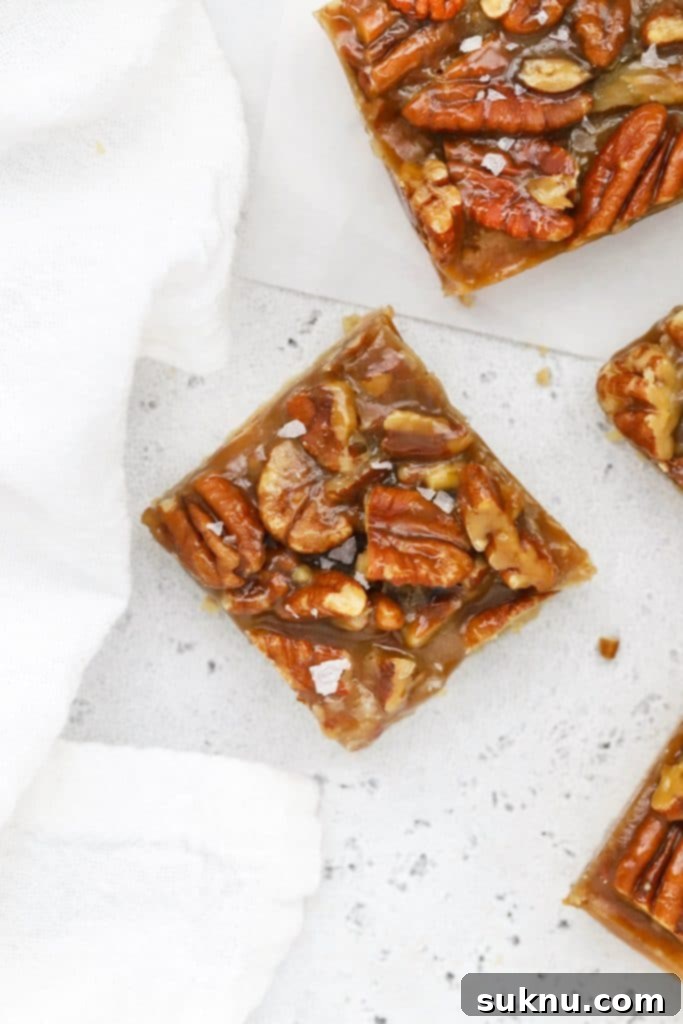
Gluten-Free Salted Caramel Pecan Bars
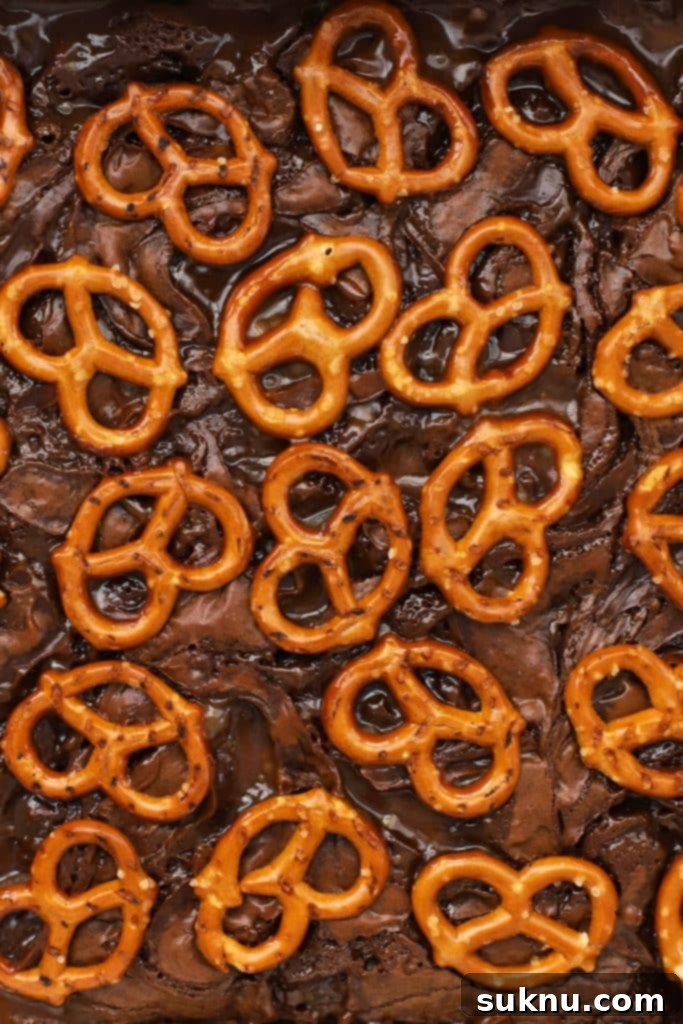
Gluten-Free Caramel Pretzel Brownies
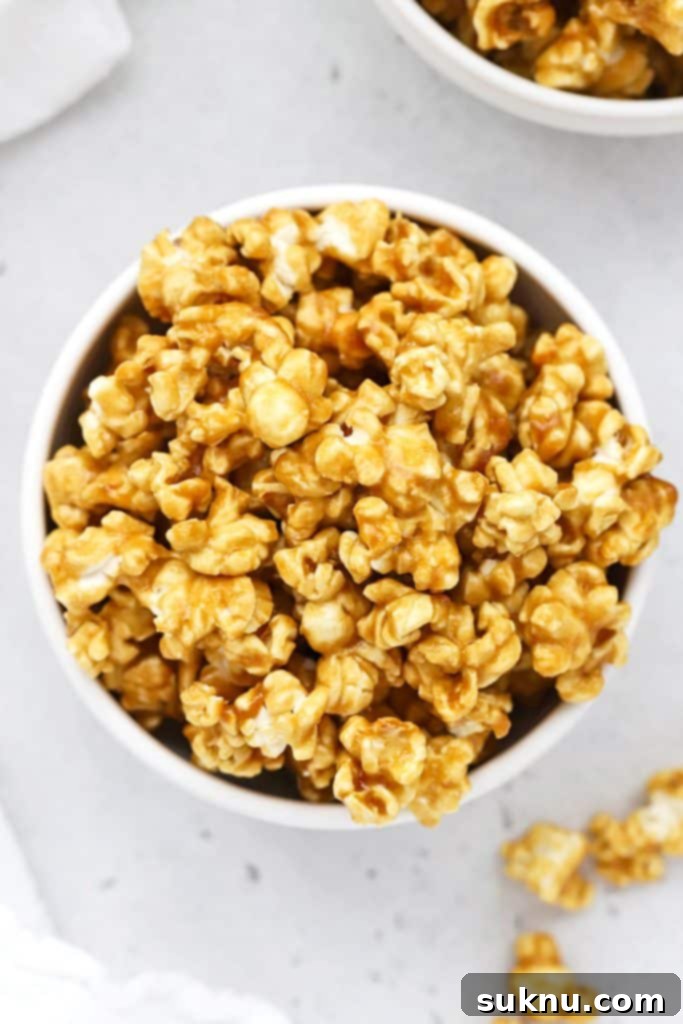
The BEST Caramel Popcorn
WE LOVE SWEETS & THANK YOU!
Recipe Card
🌟 Did you try this recipe?
Leave a star rating below when you try our Homemade Caramel Sauce recipe! We can’t wait to hear how it goes!
Easy Caramel Sauce (For Beginners!)
5 from 3 reviews
- Author: Emily Dixon, Sweets & Thank You
- Total Time: 12 minutes
- Yield: 1 cup caramel sauce
- Diet: Gluten Free
Description
Our easy caramel sauce recipe is great for beginners and pros alike. You’ll love it on ice cream, cake, brownies and more!
Ingredients
- 3/4 cup granulated sugar
- 2 Tablespoons corn syrup
- 2 Tablespoons water
- 1/2 cup heavy cream (reduce to 1/3 cup for thicker caramel sauce)
- 3 Tablespoons butter
- 1 teaspoon vanilla extract
- 1/2–3/4 teaspoon kosher salt
Instructions
- Get Everything Ready First. Things will move quickly once you get started, so measure and set aside all your ingredients close by so you can easily reach and add things as needed.
- Combine Sugar, Corn Syrup & Water. In a medium saucepan, combine granulated sugar, corn syrup, and water. Whisk to combine well and wipe down the sides of the pan so there aren’t a bunch of sugar crystals on the sides. (This helps prevent crystallization.) You can also use a pastry brush dipped in water to brush down the sides.
- Boil Till Deep Amber. Turn the heat to medium-high and WITHOUT STIRRING, let the sugar mixture come to a boil. Boil the caramel for 8-10 minutes, or until the bubbles slow down somewhat, and the color is deep amber (about the color of an old penny). The caramel sauce will only be as dark as the caramelized sugar, so don’t pull it off the heat early! The exact time will vary based on your environment and stove heat, so watch for color cues.
- Carefully Whisk In The Cream. Remove from the heat, and carefully whisk in the cold cream. The cream will stop the cooking process but will immediately bubble and steam. Whisk quickly and watch out for splatters! Whisk until it’s smooth.
- Stir In Butter, Vanilla & Salt. Add in the butter, vanilla, and salt and whisk until smooth and uniform.
- Cool & Store. Pour the caramel sauce into a heat-proof container or jar and store in the refrigerator up to 2 weeks. Caramel sauce will thicken and turn more opaque as it cools. To loosen it up to a pourable consistency, remove from the refrigerator 30 minutes before using and let it come to room temperature, or microwave in 10-20 second increments until smooth and glossy again.
Notes
- Resist The Urge To Stir! It’s incredibly tempting to stir the caramel as the sugar caramelizes, but this significantly increases your chances of crystallization, which can cause the caramel to seize. Simply prepare the pan properly (wiping down the sides with a wet pastry brush) and allow the sugar to dissolve and caramelize undisturbed.
- Prep Time: 2 minutes
- Cook Time: 10 minutes
- Category: Dessert
- Method: Stovetop
- Cuisine: American