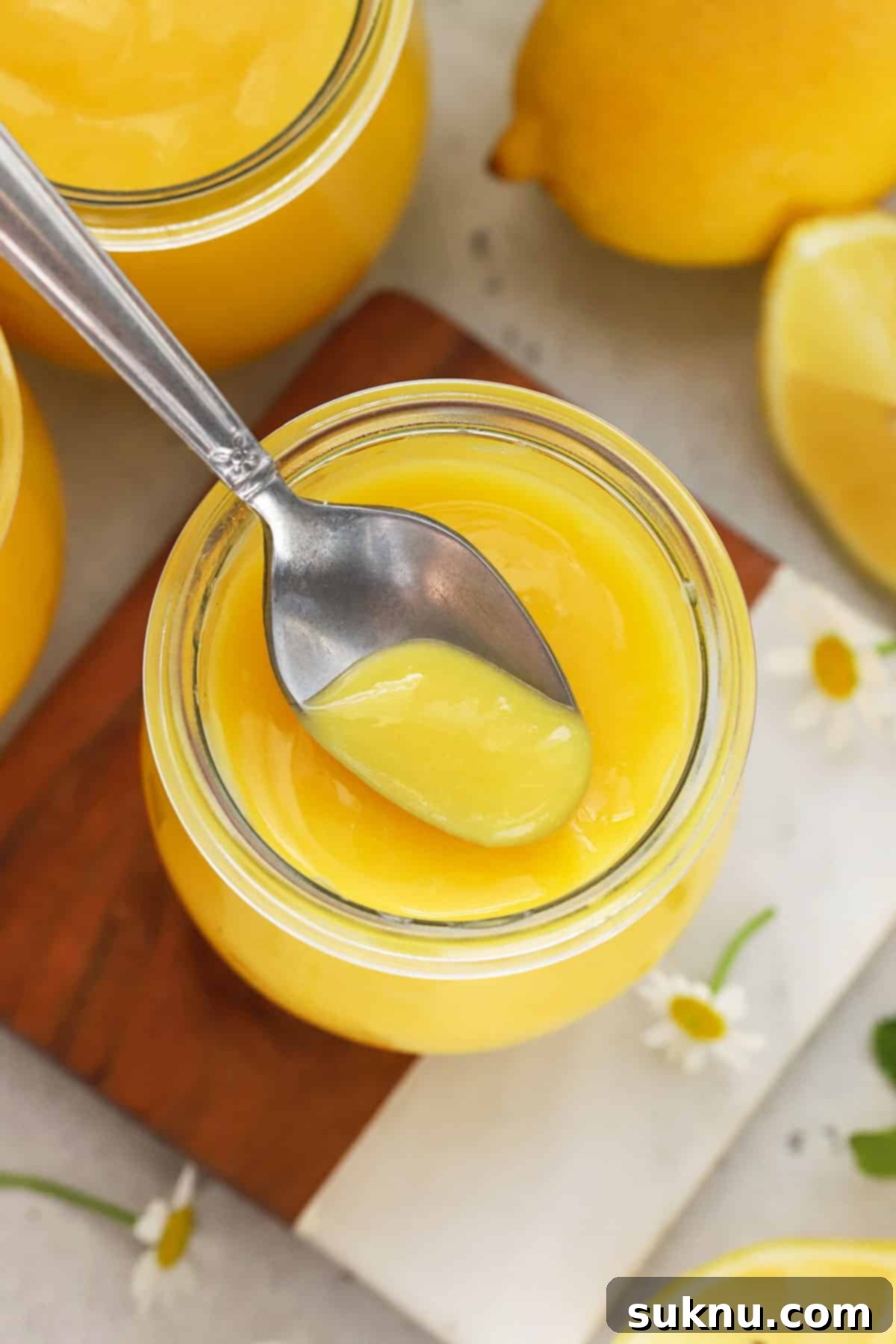
Homemade Lemon Curd: Your Essential Guide to Zesty Perfection
Experience the vibrant taste of sunshine with our incredibly easy lemon curd recipe! This luscious spread instantly elevates cheesecakes, scones, cakes, and a wide variety of delightful desserts. Once you try this homemade version, you’ll never look back!
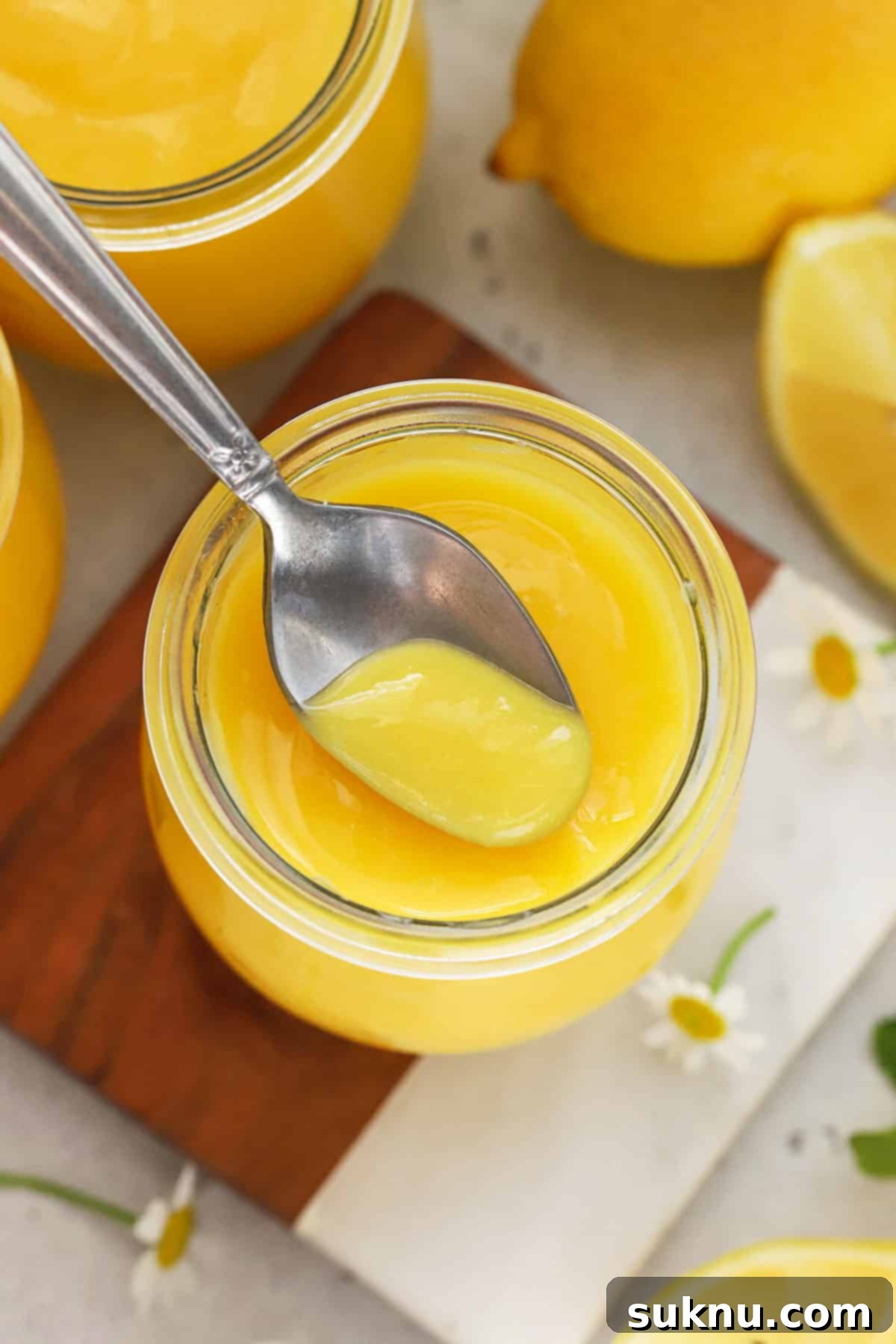
Few flavors captivate the senses quite like fresh lemon. Its bright, tangy notes are a favorite, consistently bringing a refreshing twist to everything from sweet treats to refreshing beverages. Here at Sweets & Thank You, our family adores lemon in all its forms, from fluffy lemon bundt cake and lemon cookies to zesty lemon brownies and invigorating lemonade drinks. Our recent endeavors in perfecting a gluten-free lemon cheesecake led us directly to the undeniable conclusion: it needed a topping that was nothing short of spectacular. And what could be more spectacular than homemade lemon curd?
While store-bought lemon curd offers convenience, it often falls short on flavor, frequently tasting either bland or excessively eggy. The homemade alternative, however, is a revelation. It bursts with sunny, bright, and intensely fresh lemon flavor that simply cannot be replicated by commercial varieties. The process of making your own lemon curd from scratch is surprisingly straightforward, yielding significantly superior results that are 100% worth the minimal effort. Forget everything you thought you knew about this classic spread—prepare to be amazed!
Our signature gluten-free lemon curd recipe is carefully crafted to minimize any overwhelming egg flavor, utilizing fewer eggs than many traditional recipes. This approach ensures a delicate balance, allowing the vibrant lemon to shine while still achieving that irresistibly smooth, luscious, and creamy texture that defines perfect lemon curd.
Are you ready to infuse your kitchen with the delightful aroma of fresh lemons and create a batch of this golden delight? Let’s embark on this delicious journey, fellow lemon lovers!
What Is Lemon Curd?
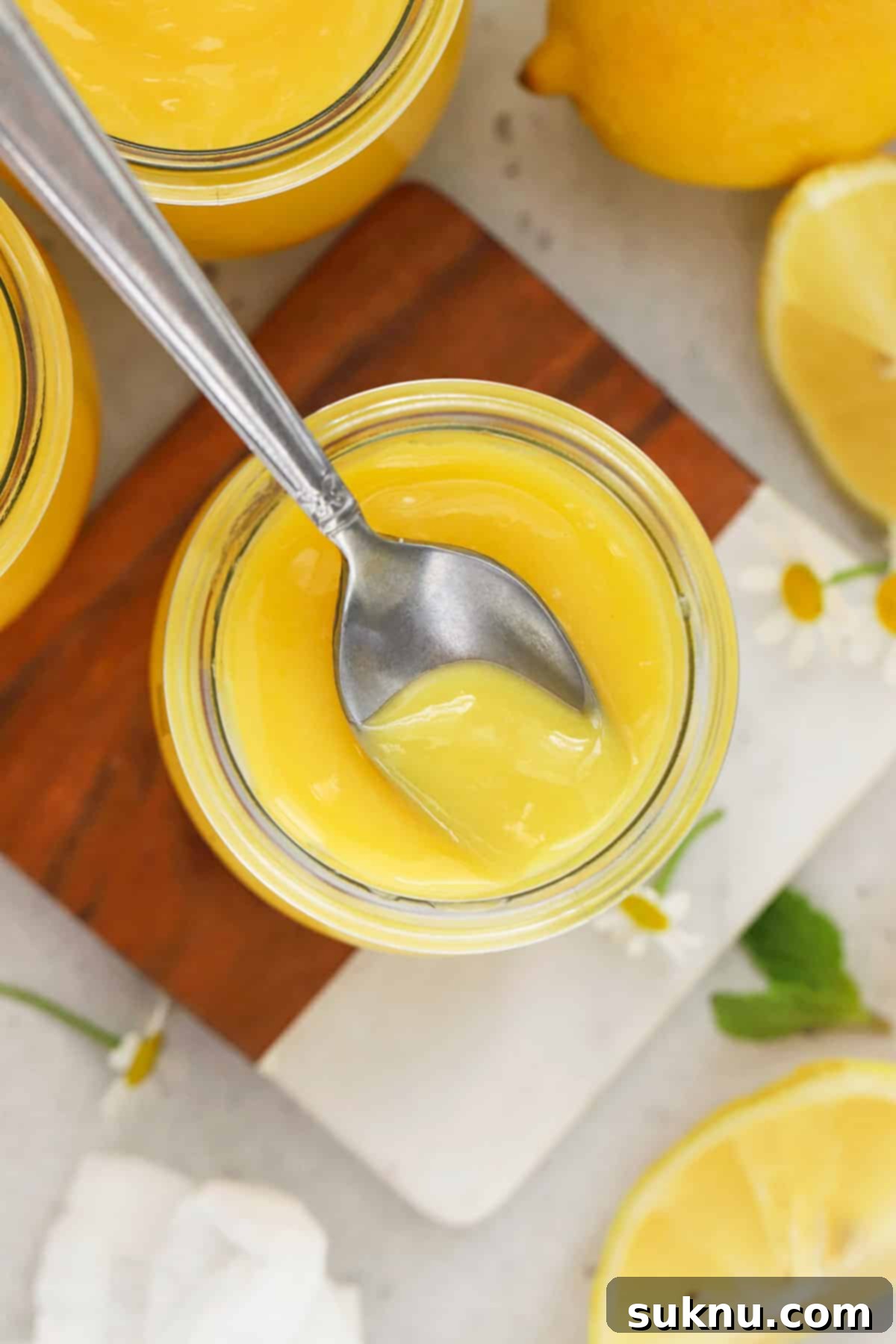
Lemon curd is a delightful, thickened fruit spread, renowned for its rich, tangy, and sweet profile. Traditionally, it serves as an exquisite dessert topping or filling, frequently gracing tarts, cakes, pastries, and even making a coveted appearance at sophisticated afternoon tea spreads alongside butter and various jams. Its versatility makes it a beloved staple in many culinary traditions, offering a burst of bright citrus flavor to any dish it accompanies.
The intriguing term “curd” originates from the process of acidulating milk or cream—where an acid is added, causing the proteins to separate and form curds, which are then typically strained from the whey. Historically, Lemon Curd was even referred to as “lemon cheese,” crafted through a similar method of adding lemon to cream and straining the mixture. This historical connection highlights its rich, dairy-like consistency, despite its modern preparation.
In contemporary culinary practices, lemon juice acts as the primary acid, though we are no longer aiming for traditional milk curds. Instead, we masterfully thicken fresh fruit juice and zest with eggs and butter, transforming them into a gloriously smooth, spreadable, and intensely flavored sauce. This modern lemon curd retains the essence of its origins while offering a refined texture and vibrant taste that is truly unparalleled.
Simple Ingredients To Start Your Lemon Curd Journey
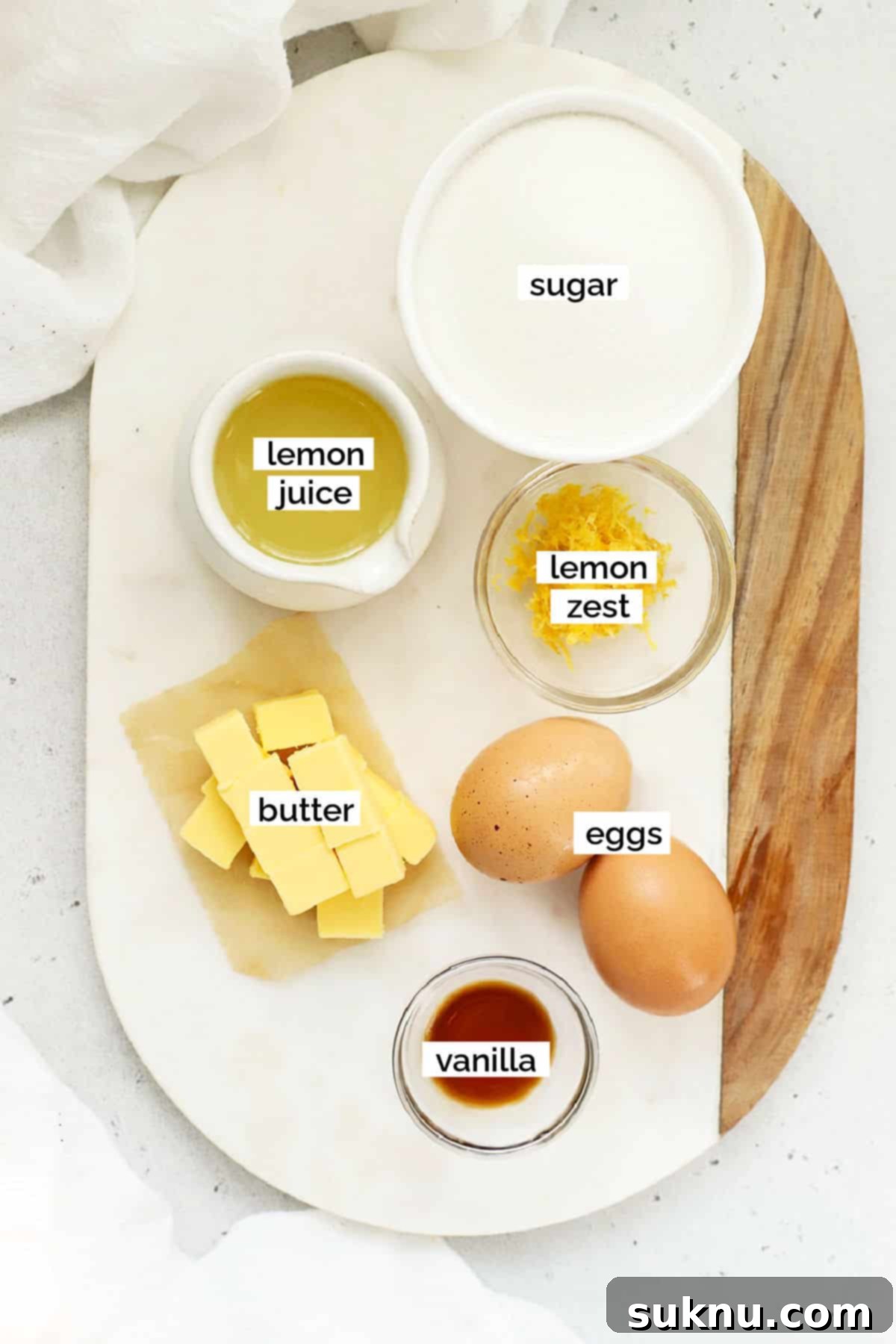
If you’ve ever wondered, “what exactly is lemon curd made of?”, you’ll be delighted by the sheer simplicity of the ingredients required for this naturally gluten-free delicacy! This recipe relies on just five fundamental components, each playing a crucial role in creating its signature bright flavor and silky texture. Let’s delve into these basic ingredients:
- Fresh Lemon Zest & Fresh Lemon Juice: These are the stars of the show! You’ll need both the finely grated yellow peel (zest) and the freshly squeezed juice from ripe lemons. Lemon zest is packed with essential oils, delivering an intense, aromatic lemon flavor that provides depth and brightness. The fresh lemon juice, on the other hand, contributes the necessary acidity, tang, and body to the curd. For the best flavor and to minimize wax, we highly recommend using organic lemons whenever possible.
- Granulated Sugar: Beyond its role as a sweetener, granulated white sugar is vital for achieving the perfect balance of sweetness against the tart lemon. It also contributes significantly to the silky-smooth, almost translucent texture of the finished curd, helping to dissolve and emulsify with the other ingredients.
- Eggs: Eggs are the primary thickening agent in lemon curd, responsible for its rich, custard-like consistency. While some recipes call for only egg yolks, and others a mix, our streamlined recipe uses four whole large eggs. This simplifies the process and still yields a beautifully creamy curd with less of an “eggy” aftertaste. Always opt for fresh, high-quality eggs for optimal results and flavor.
- Butter: Unsalted or salted, butter introduces a luxurious, velvety richness that perfectly complements the bright lemon. It contributes to the curd’s smooth mouthfeel and enhances its overall decadent quality. We personally prefer salted butter as it subtly balances the flavors without needing an extra pinch of salt, but unsalted works wonderfully too—just consider adding a tiny amount of salt to taste.
- Vanilla Extract (Optional, but Recommended): While not strictly essential, a tiny splash of pure vanilla extract added at the very end can work wonders. It doesn’t overpower the lemon but rather rounds out the flavors, adding a subtle warmth and depth that makes the curd even more irresistible.
How To Make Homemade Lemon Curd, Step By Step
As always, you can find the full recipe with precise ingredient amounts, detailed instructions, and helpful tips in the recipe card below!
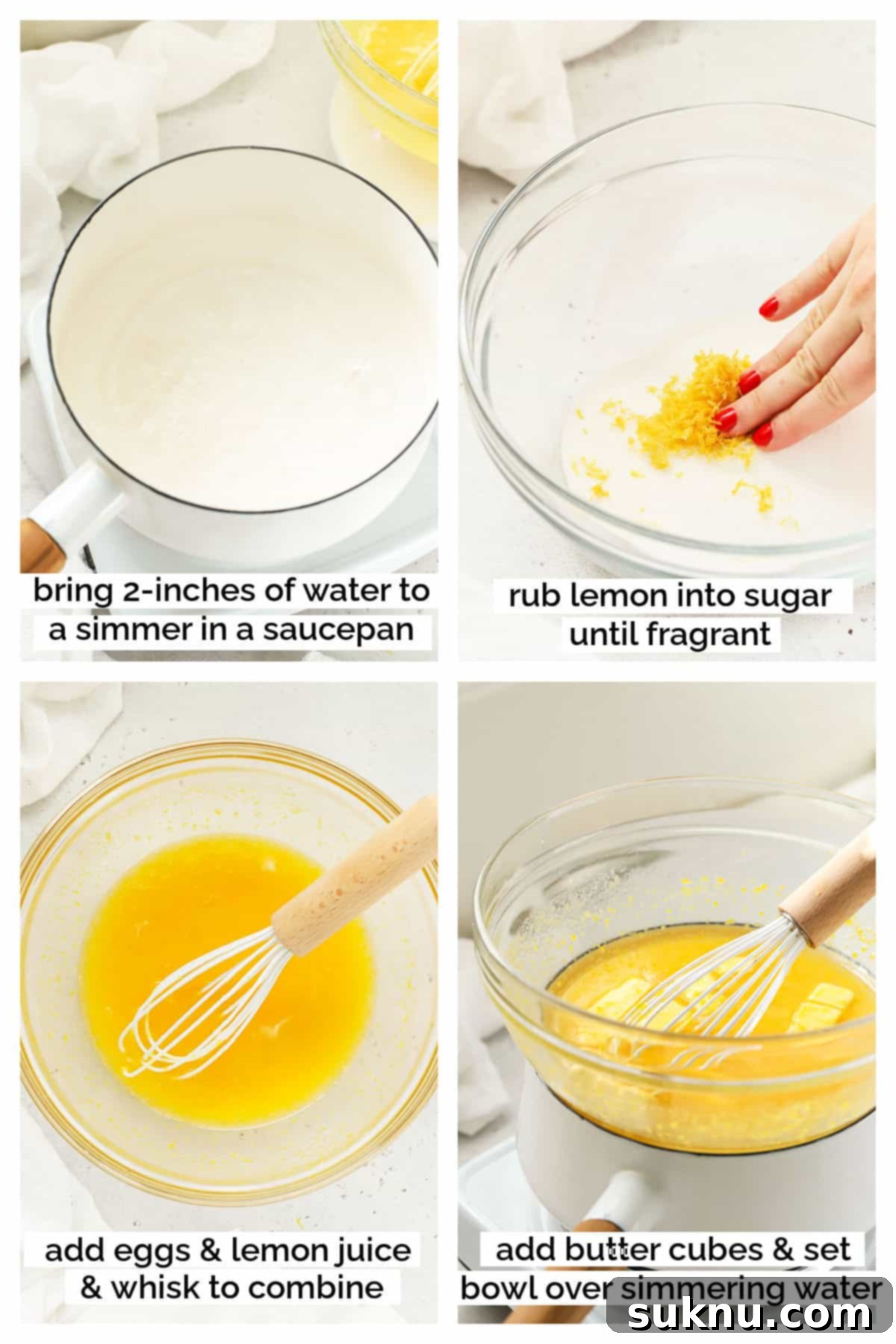
- Set Up Your Double Boiler: Begin by adding about 2-3 inches of water to a medium saucepan. Bring this water to a gentle simmer over medium heat. Crucially, select a heatproof bowl (stainless steel or glass works best) that can comfortably rest on top of your saucepan without its bottom touching the simmering water. This indirect heat method, known as a double boiler, is key to preventing the eggs from scrambling.
- Combine Ingredients: Into your heatproof bowl, add the fresh lemon zest, fresh lemon juice, granulated sugar, whole eggs, and the cubed butter. Once all ingredients are in the bowl, carefully place it over the saucepan of simmering water.
- Stir Continuously to Thicken: This step requires your full attention! Stir the mixture continuously and gently for approximately 20-25 minutes. Consistency is paramount here – constant stirring prevents lumps from forming and ensures an even, smooth cooking process. The lemon curd is ready when it has significantly thickened, easily coating the back of a spoon, and reaches a temperature of 170 degrees F (about 77 degrees C) on an instant-read thermometer. This temperature ensures the eggs are properly cooked without curdling. Avoid walking away or getting distracted during this stage to prevent any undesirable scrambled egg bits.
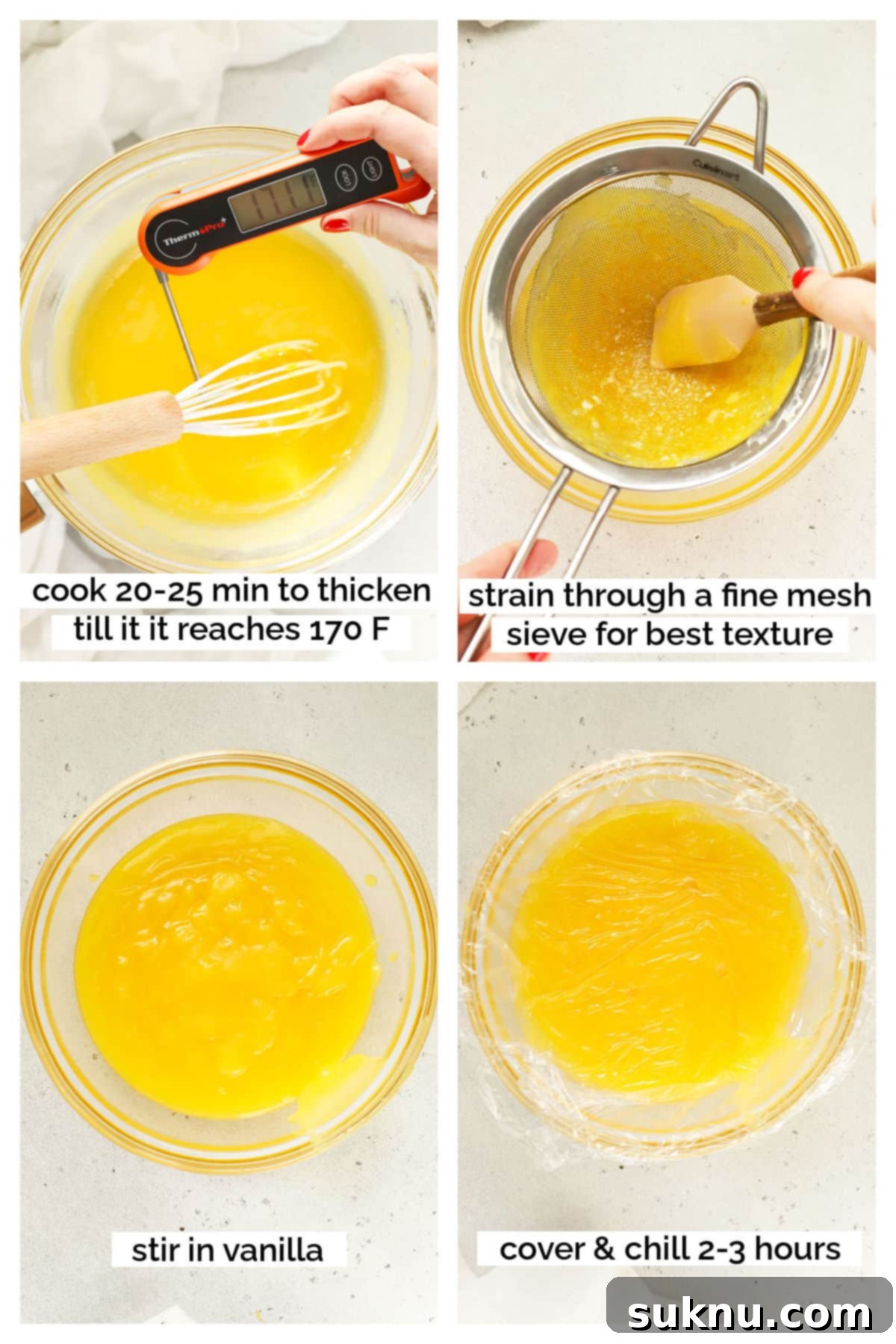
- Strain and Flavor: Once thickened, carefully remove the bowl from the heat. Immediately strain the warm lemon curd through a fine-mesh sieve directly into a clean glass bowl or jar. This crucial step removes any tiny bits of cooked egg or zest, ensuring an incredibly smooth and luxurious texture. Stir in the vanilla extract (if using) at this stage.
- Cover and Chill: To prevent a “skin” from forming on the surface, press a piece of plastic wrap directly onto the surface of the warm lemon curd. Allow it to cool slightly at room temperature, then transfer it to the refrigerator. Chill for at least 3-4 hours, or until it is completely cold and fully set. The curd will continue to thicken considerably as it cools, achieving its final, desired consistency.
- Serve and Store: Once thoroughly chilled, your homemade lemon curd is ready to enjoy! Store any leftover curd in an airtight container or jar in the refrigerator for up to 1 week. For longer storage, lemon curd freezes beautifully for up to 3 months. Remember to thaw frozen lemon curd in the refrigerator overnight before use.
Delicious Ways To Use Homemade Lemon Curd
Once you’ve made a batch of this glorious homemade lemon curd, you might wonder, “what can I do with all this deliciousness?” The answer is simple: SO MANY WONDERFUL THINGS! Its bright, tangy flavor and silky texture make it incredibly versatile. Here are some of our favorite ways to incorporate this sunny spread into your culinary creations:
- A Classic on Biscuits or Scones: Few pairings are as iconic as lemon curd on warm, flaky biscuits or tender English scones. It’s an absolute essential for any proper afternoon tea, often served alongside clotted cream and various jams. Try it with our delightful Gluten-Free Biscuits for an unforgettable treat!
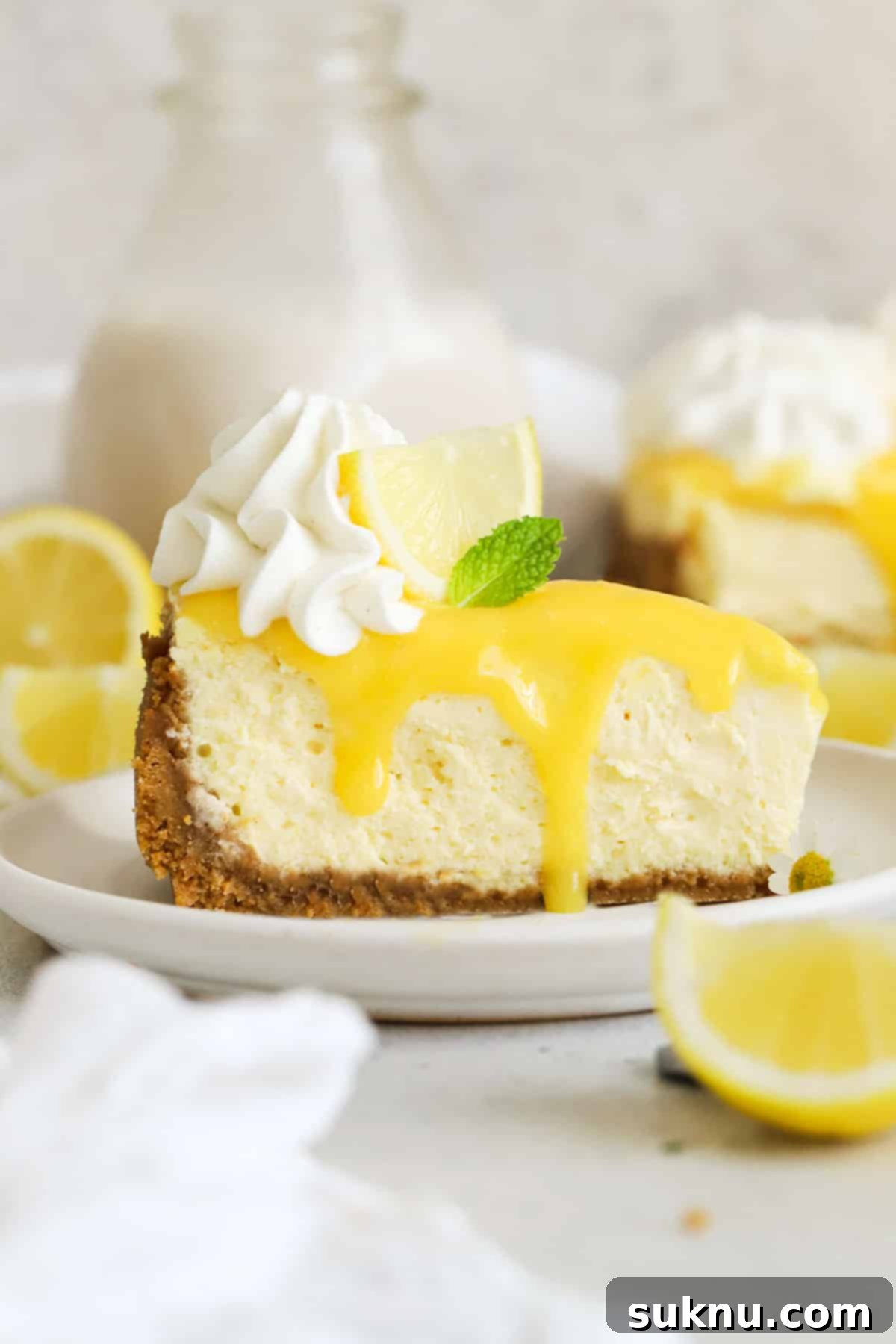
- Elevate Your Cheesecake: Homemade lemon curd is an exquisitely luxurious topping for cheesecakes. It adds a layer of vibrant citrus that cuts through the richness, creating a perfectly balanced dessert. It’s particularly divine on our Gluten-Free Lemon Cheesecake, but fantastic on any plain or vanilla cheesecake!
- In Cookies and Tarts: Replace traditional jam with lemon curd in Lemon Thumbprint Cookies for a bright, sunny twist on a beloved classic. Its tartness is a wonderful contrast to sweet cookie dough. It’s also the traditional filling for stunning lemon meringue pies and elegant lemon tarts.
- Flavor Your Dairy: Swirl a generous spoonful of lemon curd into plain yogurt or even homemade ice cream for an instant flavor upgrade. It adds a creamy tang that is incredibly refreshing. You can also fold it into whipped cream to create a delightful lemon-flavored whipped topping.
- Lemon Mousse or Parfaits: For a quick and easy dessert, gently fold lemon curd into freshly whipped cream. Layer this airy lemon mousse with additional lemon curd and some graham cracker crumbs or crushed shortbread for a delightful parfait.
- Cake Filling Extraordinaire: This easy-to-make spread serves as a classic, decadent filling for layer cakes. It pairs beautifully with a fluffy buttercream or fresh berries, adding moisture and a burst of citrus to every slice.
- Breakfast and Brunch Bliss: Drizzle warm lemon curd over fluffy gluten-free Belgian waffles or pancakes, especially when served with fresh berries. It also transforms simple crepes or French toast into a gourmet experience with a dollop and a dusting of powdered sugar.
- Beyond Desserts: Don’t limit it to sweets! A small amount can even brighten savory dishes, like a glaze for chicken or fish, though its primary use is in the dessert realm.
FAQ + Expert Tips And Tricks For The Best Lemon Curd
Achieving the Perfect Lemon Curd Consistency
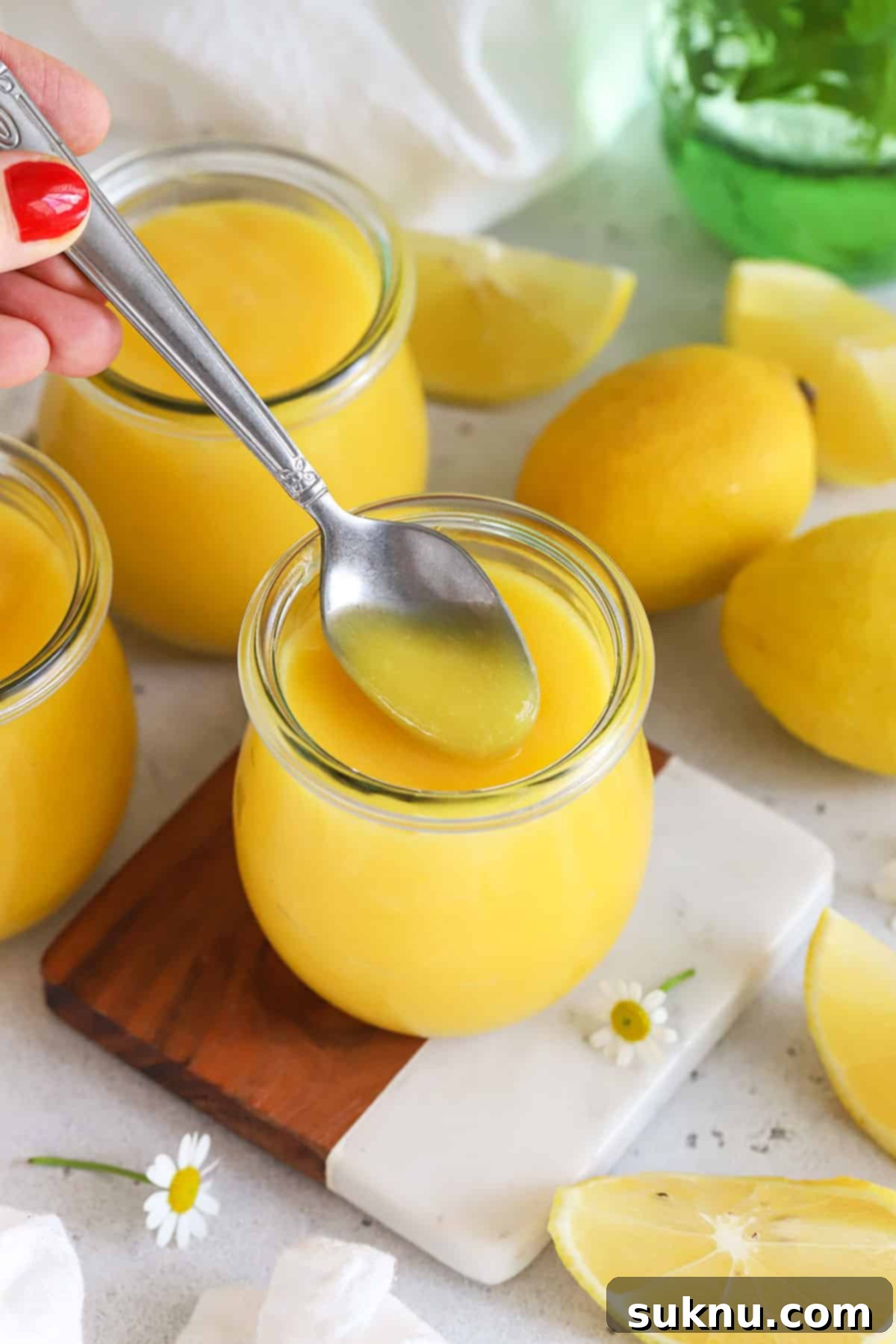
The texture of lemon curd is paramount—it should be thick, smooth, and spreadable, never runny or clumpy. Here are the most important tricks to master this:
- Maintain a Low and Gentle Cooking Temperature: The double boiler method is crucial. By using indirect heat, you prevent the eggs from cooking too quickly or scorching at the bottom of the pan, which are common culprits for scrambled eggs in your curd. Patience is a virtue here!
- Stir Constantly and Diligently: This cannot be stressed enough. From the moment the bowl is over the simmering water until it thickens, you must stir without interruption. Constant stirring ensures even cooking, prevents lumps from forming, and guarantees a silky-smooth final product. This is not the time to multitask!
- Ensure Proper Cooking Temperature: For food safety and optimal thickening, lemon curd should reach 170 degrees F (about 77 degrees C) on an instant-read thermometer. This temperature ensures the eggs are fully cooked and safe to consume while still maintaining their emulsifying properties.
- Look for Visual Cues of Readiness: Beyond the temperature, watch for visual indicators. Properly thickened lemon curd will coat the back of a spoon and hold its shape when you run your finger across it. It should not simply run off as a thin liquid would. Think of it having a consistency similar to a thick custard or a rich hollandaise sauce.
- Remember it Will Continue to Thicken as it Cools: It’s easy to overcook lemon curd thinking it’s not thick enough. Keep in mind that lemon curd achieves its final, firm consistency only after it has been completely chilled. It will set up considerably in the refrigerator, so don’t be alarmed if it seems slightly thinner than desired when still warm.
Lemon Curd Storage Tips
Proper storage ensures your homemade lemon curd stays fresh and delicious for as long as possible:
- How Long Does Lemon Curd Last In The Fridge? A batch of freshly made homemade lemon curd will stay beautifully fresh in an airtight container in the refrigerator for up to 1 week.
- Can You Freeze Lemon Curd? Absolutely! Freezing is an excellent method for extended storage, allowing your curd to keep for several months. You can freeze it in freezer-safe jars, in freezer bags (pressing them flat before freezing allows for quicker thawing), or even in ice cube trays for convenient individual portions. Once frozen, transfer the cubes to a freezer bag. Always thaw frozen lemon curd in the refrigerator before using.
Essential Recipe Tips To Keep In Mind
- ONLY Use Fresh Lemon Juice: This is non-negotiable for superior flavor. Bottled lemon juice, often containing preservatives and lacking the bright acidity of fresh lemons, will significantly diminish the quality and taste of your lemon curd. You’ll typically need 4-6 medium to large lemons to yield 1 cup of fresh lemon juice.
- Zest First, Then Juice: For maximum ease and efficiency, always zest your lemons before you cut them in half and juice them. It’s much harder to zest a lemon once it’s been juiced and softened. When zesting, be careful to only scrape off the bright yellow outer layer, avoiding the bitter white pith directly underneath.
- Butter Choice Matters: We often use salted butter in our recipes because it naturally enhances and balances flavors without needing to add extra salt. However, if you opt for unsalted butter, we recommend adding a small but generous pinch of fine sea salt to the curd as it cooks. This helps to brighten the overall flavor and prevent it from tasting flat.
- Flavor Variation with Meyer Lemons: For a delightful twist on the classic, consider using Meyer lemons. These unique citrus fruits offer a sweeter, less acidic flavor profile than regular lemons, with subtle hints of orange. They create a beautifully fragrant and mellow lemon curd that is truly special.
PRO BAKING TIP:
5 Ways To Zest A Lemon
You’ll need fresh lemon zest for this recipe, and there are LOTS of great ways you can get it! Our favorite is a microplane zester, but if you don’t have one, we’ve got lots of other options to choose from!
More Recipes For Lemon Lovers

Gluten-Free Lemon Bundt Cake

Gluten-Free Fruit Pizza Cookies
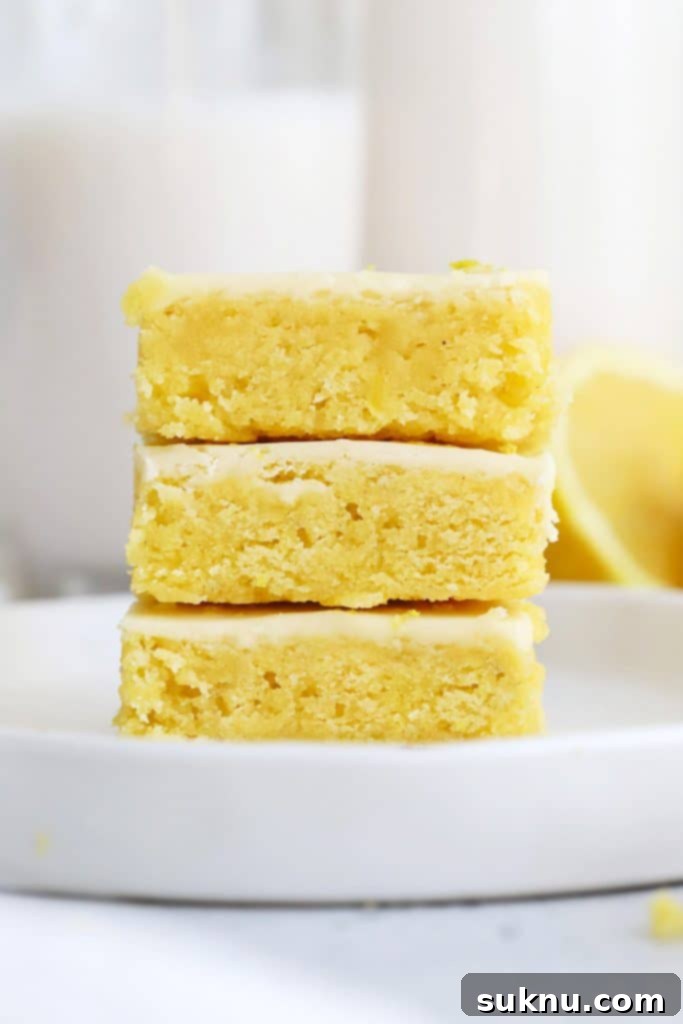
Gluten-Free Lemon Brownies
Recipe Card: Easy Homemade Lemon Curd
Did you make this recipe?
Leave a star rating below when you try our Easy Gluten-Free Lemon Curd recipe! We can’t wait to hear how it goes!

Easy Homemade Lemon Curd
5 Stars4 Stars3 Stars2 Stars1 Star
5 from 1 review
- Author: Emily Dixon, Sweets & Thank You
- Total Time: 35 minutes
- Yield: 1 1/2 cups
- Diet: Gluten Free
Description
You’ll be AMAZED by how easy it is to make gluten-free lemon curd from scratch! The flavor is sunny, vibrant, and fresh—SO much better than store-bought!
Ingredients
- 1 cup sugar (200 grams)
- 1 Tablespoon lemon zest (pack the zest in a bit!)
- 1/2 cup fresh lemon juice (120 ml)
- 2 large eggs
- 1/4 cup butter, cut into small cubes (4 Tablespoons/57 grams)
- 1/4 teaspoon vanilla extract (optional)
Instructions
- Start The Double Boiler. Add 2-3 inches of water to a medium saucepan and bring the water to a simmer over medium heat. You’ll also need a heatproof bowl that can rest on top of the saucepan WITHOUT touching the simmering water below.
- Combine. Add the lemon zest, lemon juice, sugar, eggs, and cubed butter to the heatproof bowl and place over the saucepan of simmering water.
- Stir To Thicken. Stir continuously for 20-25 minutes, or until the lemon curd has thickened and reaches 170 degrees F on an instant read thermometer. It should easily coat the back of a spoon at this point. (Keep in mind: you want to stir the whole time to avoid getting any clumps or scrambled egg bits.)
- Strain the lemon curd through a fine mesh sieve into a glass bowl or jar to remove any lumps and stir in vanilla extract.
- Cover & Chill. Cover the lemon curd with a piece of plastic wrap or food wrap and press the plastic wrap onto the surface of the lemon curd. (This prevents a film/”skin” from forming on top.) Chill the lemon curd 3-4 hours or until completely chilled through. The lemon curd will continue to thicken as it cools.
- Serve & Store. Enjoy after chilling and store in an airtight container or jar in the refrigerator up to 1 week or freeze up to 3 months. (Thaw frozen lemon curd in the fridge before using.)
Notes
- ONLY Fresh Lemon Juice. You do NOT want to use bottled lemon juice for this recipe. It ruins the flavor. You’ll need 4-6 lemons to get 1 cup of lemon juice.
- ZEST FIRST. For ease, zest the lemon before juicing it. Make sure to ONLY get the bright yellow zest, not the bitter white pith underneath.
- BUTTER. I like using salted butter so I don’t need to add salt later, but if you use unsalted butter, you’ll likely want to add a hefty pinch of salt to the curd as it cooks so the flavors are balanced.
- VARIATION. For a citrus twist, you can make this using Meyer lemons, which have a flavor between orange & lemon.
- Prep Time: 10 minutes
- Cook Time: 25 minutes
- Category: Condiment, Dessert Topping
- Method: Stovetop
- Cuisine: American, European