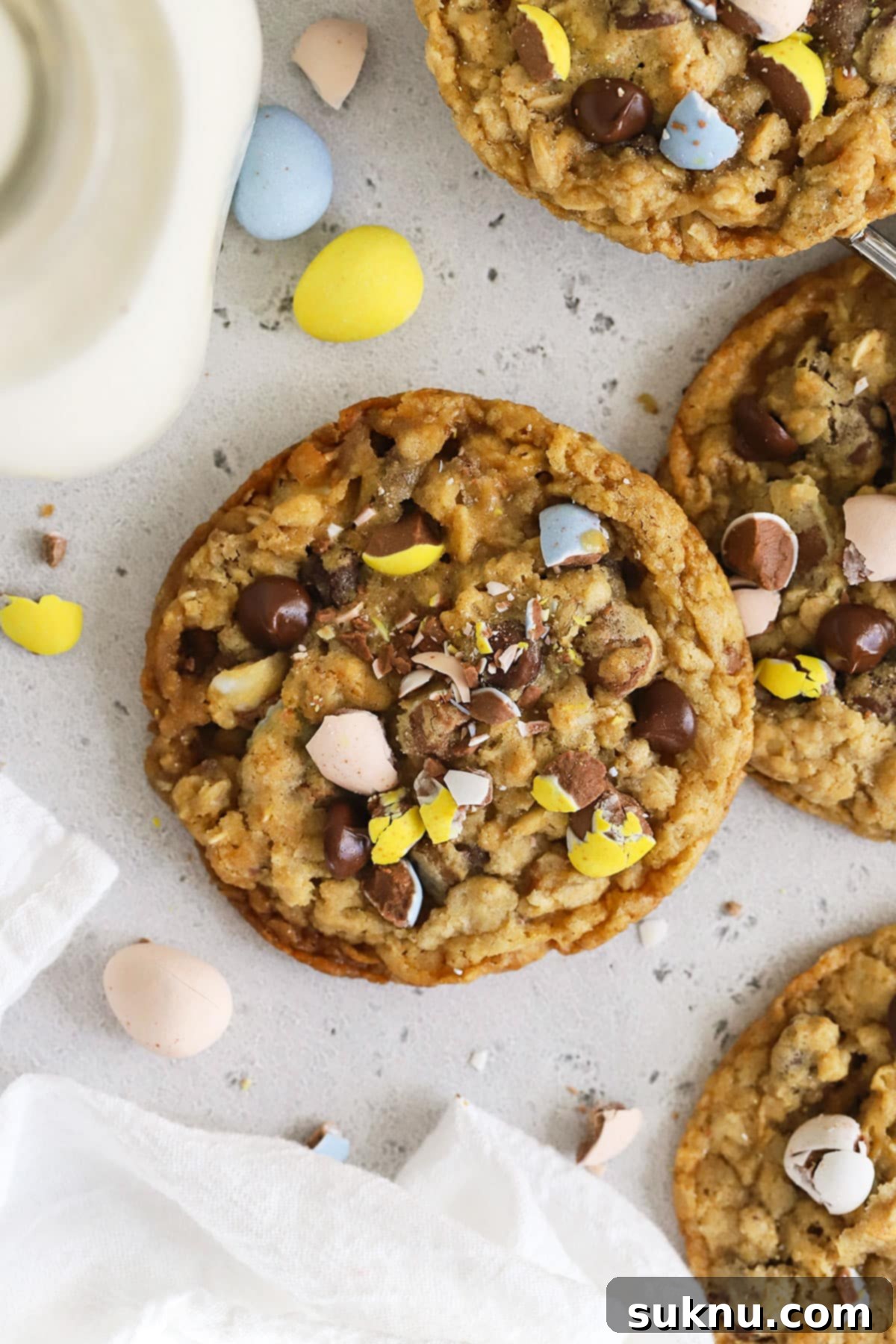
Indulge in the festive spirit of Easter with these delightful Gluten-Free Cadbury Mini Egg Cookies! Crafted with a wonderfully chewy oatmeal cookie base, generously studded with decadent chocolate chips, and bursting with colorful Cadbury mini eggs in every bite, these cookies are the ultimate Easter dessert.
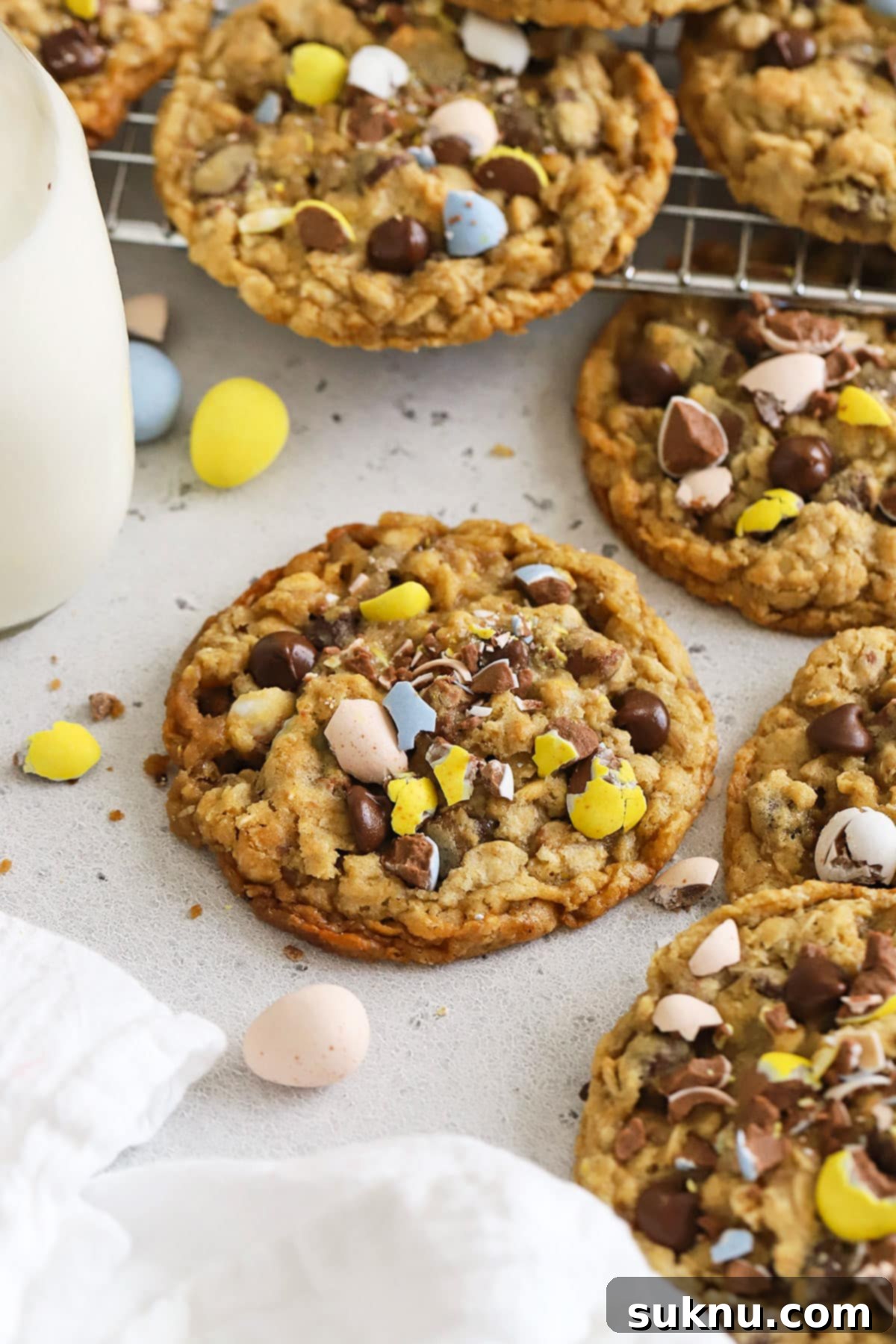
Easter is a time of renewal, joy, and, of course, delicious treats! This year, my kids are buzzing with excitement, eagerly anticipating springtime festivities. Whether it’s the thrill of an Easter egg hunt or the promise of a batch of our famous Bunny Bait Chex Mix, their enthusiasm is absolutely contagious. While we believe in keeping celebrations simple, I always make sure to add a touch of spring charm to our home and bake a special Easter treat. And this year, these irresistible Gluten-Free Cadbury Mini Egg Cookies are taking center stage!
These aren’t just any cookies; they’re a celebration in themselves. Each cookie begins with a foundation of wholesome, chewy oatmeal, elevated with a generous scattering of rich chocolate chips. But the real stars are the vibrant Cadbury mini eggs, which lend a delightful crunch and burst of color, making them perfectly suited for spring. They’re not only adorable to look at but also incredibly delicious and surprisingly simple to whip up. Get ready to bake a batch that will bring smiles to everyone’s faces!
Why You’ll Love These Gluten-Free Easter Cookies
These aren’t just any ordinary cookies; they’re a seasonal sensation! Here’s why these Gluten-Free Cadbury Mini Egg Cookies will quickly become your new favorite Easter tradition:
- Irresistibly Chewy Texture: The combination of gluten-free rolled oats and a balanced blend of sugars creates a cookie that’s perfectly chewy on the inside with just the right amount of crispness at the edges. It’s a texture dream come true!
- Festive & Fun: Cadbury Mini Eggs are synonymous with Easter. Their pastel colors and candy-coated crunch add a playful, festive touch that makes these cookies perfect for any spring gathering, egg hunt, or simply as a special treat for your family.
- Rich Chocolatey Goodness: Beyond the mini eggs, a generous helping of chocolate chips ensures a deep, satisfying chocolate flavor throughout. We recommend semi-sweet or dark chocolate to perfectly balance the sweetness of the Cadbury eggs.
- Naturally Gluten-Free (with care): This recipe is designed to be completely gluten-free, using certified gluten-free oats and a reliable 1:1 gluten-free flour blend. This means everyone can enjoy these delicious Easter cookies without worry, provided you select your ingredients carefully.
- Easy to Make: Despite their impressive appearance and delicious taste, these cookies are straightforward to prepare. With clear, step-by-step instructions, even novice bakers can achieve perfect results.
- Perfect for Sharing: This recipe yields a good batch of cookies, making them ideal for sharing with friends and family, gifting, or packing into lunchboxes for a delightful springtime surprise.
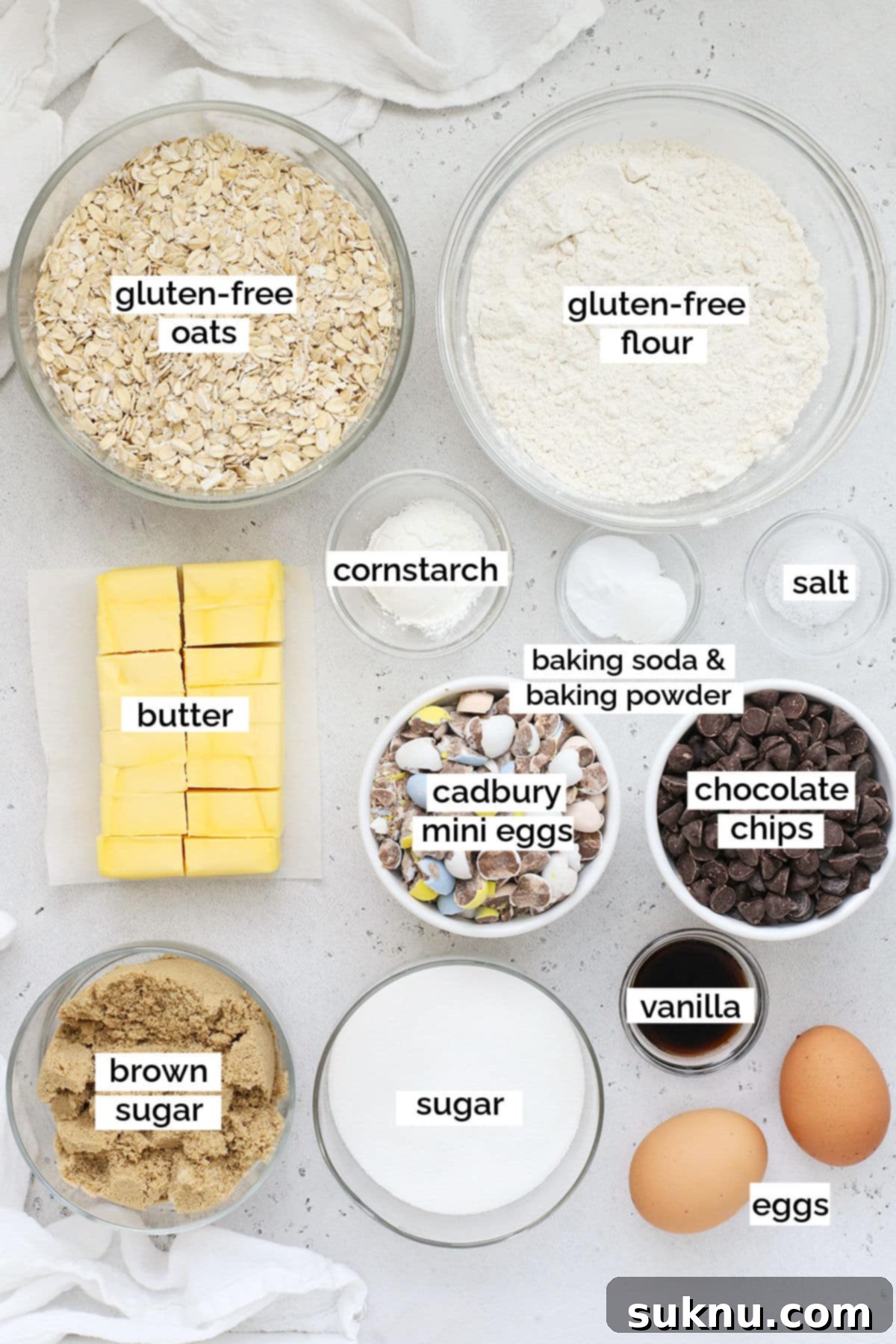
Essential Ingredients for Your Easter Cookie Masterpiece
If you’re familiar with our popular Gluten-Free Oatmeal Chocolate Chip Cookies or our Oatmeal Raisin Cookies, you’ll recognize the core of this recipe! These delicious Cadbury Mini Egg cookies build upon those beloved bases, infusing them with a fabulous springtime twist. Let’s delve into what you’ll need:
- Gluten-Free Rolled Oats: For that signature chewy texture, choose certified gluten-free rolled oats, sometimes labeled “old-fashioned oats.” It’s crucial they are certified to avoid cross-contamination with wheat. Avoid quick-cooking or steel-cut oats, as they will drastically alter the cookie’s texture and absorption properties. The oats are key to the wholesome, hearty bite of these cookies.
- Gluten-Free Flour Blend: Our top recommendation for consistently perfect gluten-free cookie recipes is King Arthur Measure-For-Measure Gluten-Free Flour. This blend is formulated to perform like traditional all-purpose flour. If you opt for another 1:1 gluten-free flour blend (such as Bob’s Red Mill), ensure it contains xanthan gum. Xanthan gum is vital for providing structure and elasticity in gluten-free baking. Always measure your flour correctly, ideally by weight with a kitchen scale, or by using the scoop and level method.
- Baking Powder & Baking Soda: These leavening agents work in harmony to give your cookies the perfect lift and tender crumb. Baking soda reacts with the acidic brown sugar, while baking powder provides additional aeration, ensuring a delightful puff and spread.
- Salt: A non-negotiable ingredient! Salt doesn’t just make things taste salty; it enhances and balances all the sweet flavors, preventing the cookies from tasting one-dimensional.
- Softened Butter: The secret to a smooth, evenly textured cookie dough. Your butter should be soft enough to leave a slight indentation when gently pressed with a fingertip, but it shouldn’t be greasy or shiny, which indicates it’s too warm and melted. Properly softened butter creams beautifully with sugar, incorporating air for a lighter cookie.
- Brown Sugar & Granulated Sugar: This dynamic duo offers the best of both worlds. Light brown sugar contributes to the cookies’ chewiness, moisture, and a subtle caramel-like flavor, while granulated sugar ensures the desired spread and crisp edges. The combination yields a perfectly balanced sweetness and texture.
- Eggs: Using room temperature eggs is crucial for this recipe. Cold eggs can cause your creamed butter and sugar mixture to seize or separate, leading to a less cohesive dough and potentially tougher cookies. Room temperature eggs emulsify better with the fats and sugars, resulting in a smoother batter and a more uniform bake.
- Vanilla Extract: A staple in almost any sweet treat, vanilla extract adds depth and warmth to the overall flavor profile, complementing the chocolate and oats beautifully. Always use pure vanilla extract for the best taste.
- Chocolate Chips: To avoid an overly sweet cookie, we highly recommend semisweet or dark chocolate chips. Milk chocolate or white chocolate chips, when combined with the already sweet Cadbury mini eggs, can make the cookies too rich. The slight bitterness of semisweet or dark chocolate provides a wonderful contrast.
- Mini Cadbury Eggs: You’ll need one full (9-ounce) bag of these iconic candy-coated chocolate eggs. They provide a delightful crunch and a burst of springtime color. For extra garnish and decorating, consider picking up a second bag. Be sure to break them up into smaller pieces for even distribution throughout the cookie dough.
Wait, Are Cadbury Mini Eggs Gluten-Free? A Closer Look
This is a common and important question for anyone following a gluten-free diet. Like many others, including Katie from Wheat By The Wayside, I’ve thoroughly researched and communicated with the Hershey company, which manufactures Cadbury mini eggs in the United States. I highly recommend reviewing her detailed post, which includes direct quotes and statements from Hershey, to help you make an informed decision that’s right for your personal needs.
Here’s the concise answer based on the most current information available at the time of this publication: Cadbury mini eggs are considered free of gluten-containing ingredients. They adhere to the FDA’s definition of gluten-free. Furthermore, Hershey’s robust allergen protocols explicitly state that they will always clearly disclose any potential allergens or the possibility of cross-contamination directly on their product labels.
At the time of writing, the only potential allergens listed on the Cadbury mini egg packaging are milk and soy. Our personal experience with this candy has been positive, with no adverse reactions reported. However, dietary needs and sensitivities vary greatly. We always advise checking the most up-to-date packaging information and making the choice that aligns best with your dietary requirements and comfort level. When in doubt, it’s always best to consult with a medical professional or registered dietitian.
How To Make Cadbury Egg Cookies, Step By Step
Below, you’ll find a comprehensive guide to crafting these delightful cookies. For precise ingredient amounts, a printable recipe card, and additional helpful tips, please refer to the recipe card at the end of this post.
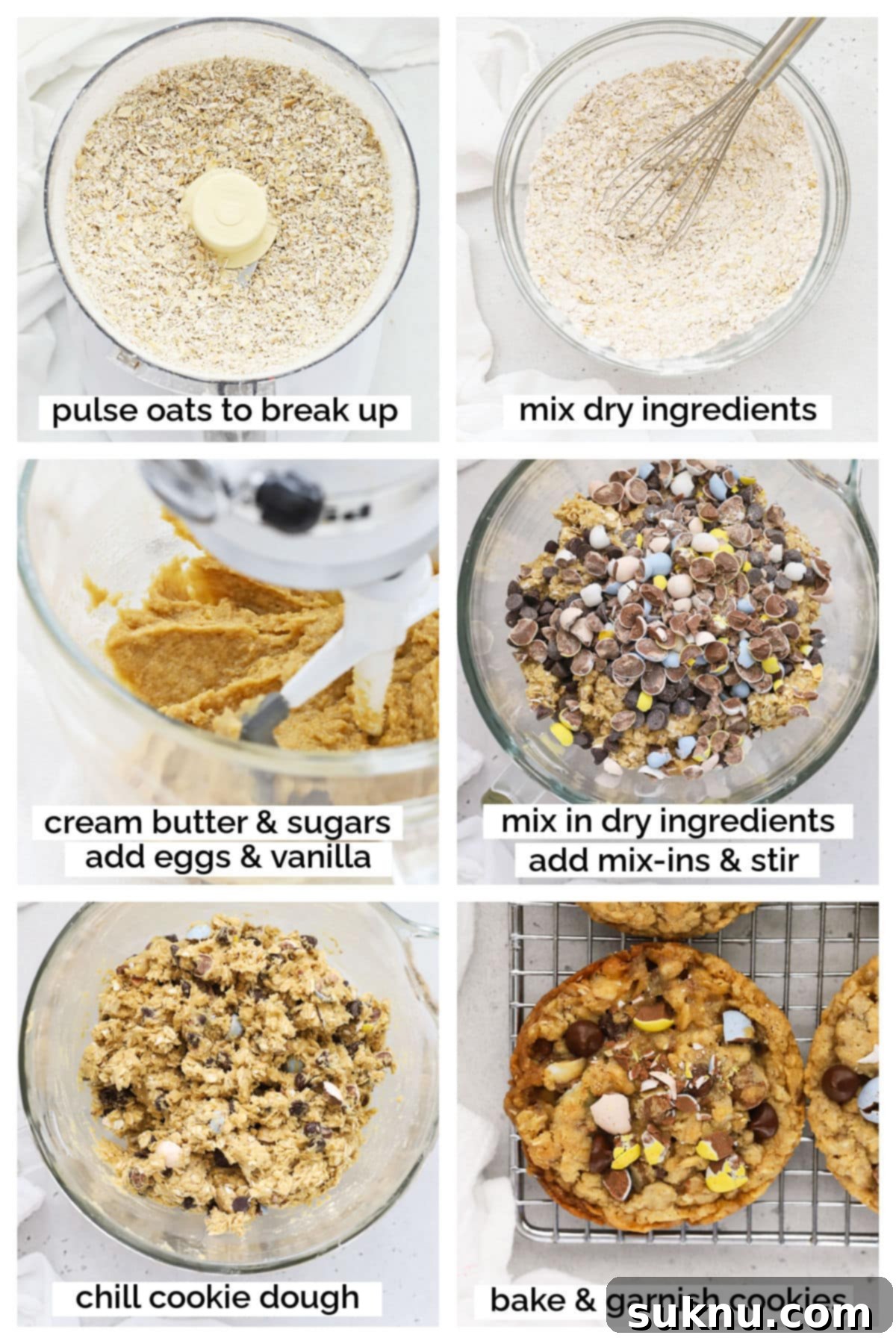
- Prepare the Oats: Begin by placing your gluten-free rolled oats into the bowl of a food processor or the jar of a sturdy blender. Pulse the oats a few times. The goal here is to break up some of the oats while leaving others whole, which contributes to the ultimate chewy and satisfying cookie texture. Be careful not to pulverize them into a fine flour, as this will significantly alter the final consistency of your cookies.
- Combine Dry Ingredients: In a medium-sized mixing bowl, combine the processed gluten-free oats, gluten-free flour blend, cornstarch, baking powder, baking soda, and kosher salt. Use a whisk to thoroughly combine these ingredients, ensuring an even distribution. Set this mixture aside.
- Cream Butter & Sugars: In the bowl of a stand mixer fitted with the paddle attachment (or a large mixing bowl with a hand mixer), combine the softened butter, light brown sugar, and granulated sugar. Beat these ingredients together on medium speed for 2-3 minutes. You’re looking for a mixture that is light in color, fluffy in texture, and visibly smooth. This creaming process incorporates air, which is crucial for the cookies’ rise and tender crumb. Remember to scrape down the sides of the bowl once or twice during this step to ensure everything is well combined.
- Add Eggs & Vanilla: Next, add the large room temperature eggs one at a time, mixing well after each addition until fully incorporated. Follow with the vanilla extract and mix until just combined. Again, scrape down the sides of the bowl to ensure no unmixed ingredients remain. Using room temperature eggs prevents the mixture from curdling.
- Incorporate Dry Ingredients: Gradually add the reserved dry ingredient mixture to the wet ingredients in the mixer bowl. Mix on low speed until just a few streaks of floury patches remain. It’s important not to overmix at this stage, as over-mixing can develop gluten in gluten-free flours (even if it’s less than wheat flour), leading to tougher cookies.
- Fold in Chocolate & Cadbury Eggs: Gently fold in the chocolate chips and 1 cup of the broken-up Cadbury Mini Eggs into the dough. Mix until they are just evenly distributed. Reserve the remaining Cadbury eggs for garnish after baking.
- Chill the Dough: Cover the cookie dough tightly with plastic wrap and refrigerate for a minimum of 1 hour, or up to 2 hours. This step is absolutely critical and should NOT be skipped! Chilling allows the oats to fully hydrate, the flour to absorb moisture, and the fats to solidify. This prevents the cookies from spreading excessively in the oven, ensuring a thicker, chewier texture and a more even bake.
- Preheat & Prep for Baking: Approximately 30 minutes before you plan to bake, preheat your oven to 350°F (175°C). Line two baking sheets with parchment paper. Having two prepared sheets allows you to alternate batches, giving each sheet a chance to cool down slightly between uses, which helps prevent over-spreading.
- Scoop & Roll Cookie Dough: Use a large cookie scoop (approximately 3-Tablespoon capacity) to portion out the chilled cookie dough. For perfectly round cookies, gently roll each scoop of dough between your palms until smooth. Place about 6 cookie dough balls onto each prepared baking sheet, ensuring they are spaced adequately apart to allow for spreading.
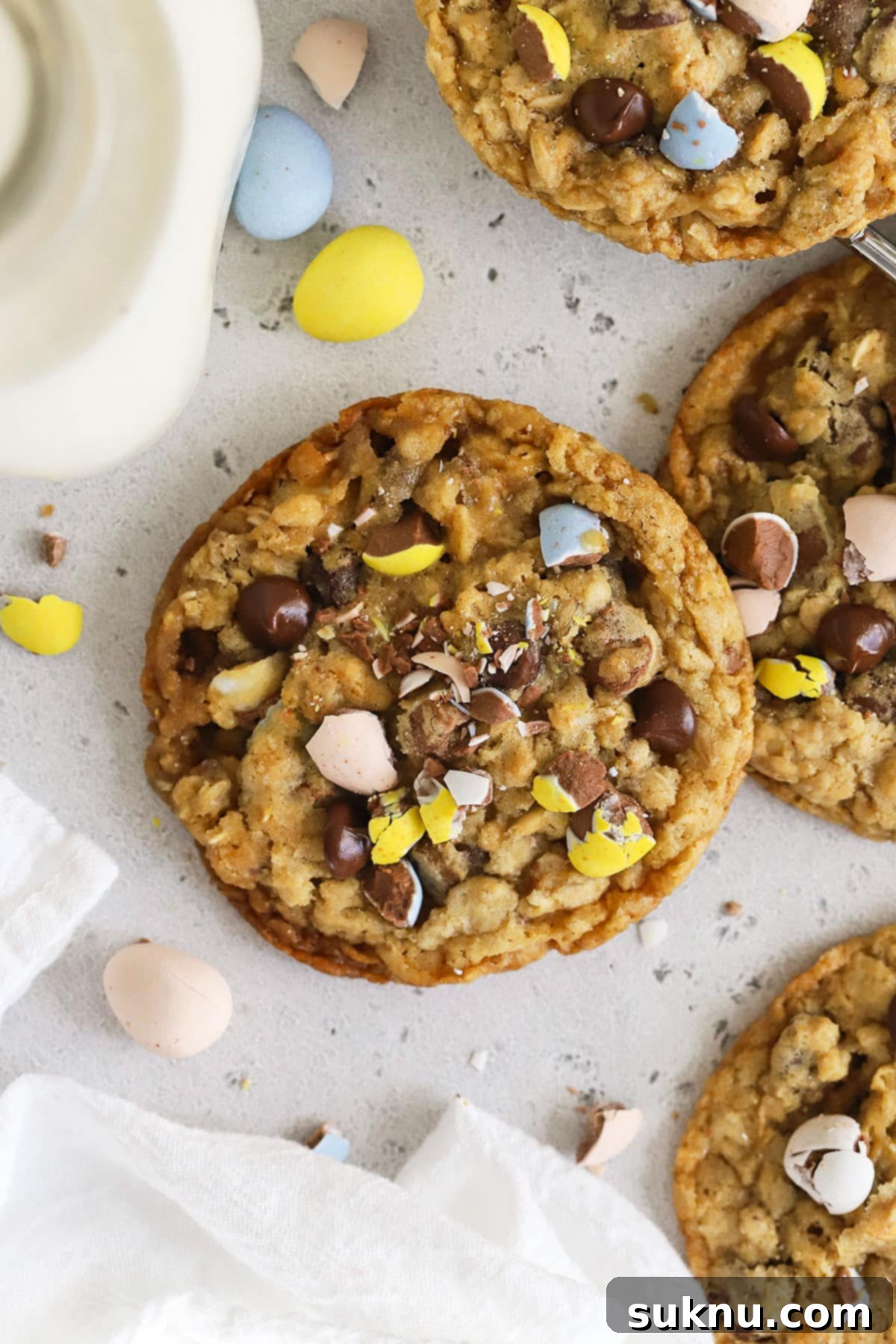
- Bake, Finish & Cool: Bake one sheet of 6 cookies at a time in the preheated oven for 10-12 minutes. Look for the edges to be lightly golden brown, while the centers still appear *just* slightly underdone. This indicates they will be wonderfully soft and chewy after cooling. Remove the baking sheet from the oven. For an extra polished look, you can gently shape the warm cookies into perfect circles using a round cookie cutter or the back of a spoon. Immediately after baking, press a few reserved chocolate chips and Cadbury egg pieces onto the tops of the warm cookies for a beautiful, enticing garnish. Let the cookies cool on the baking sheet for 1-2 minutes to set up before carefully transferring them to a wire cooling rack to cool completely.
- Repeat & Store: Continue this baking process with the remaining cookie dough, alternating between your prepared baking sheets. Allow each baking sheet to cool slightly before adding fresh dough to prevent excessive spreading. Once all cookies are baked and cooled, store any leftovers in an airtight container at room temperature for 2-3 days, or freeze them for up to 2 months for a longer shelf life.

Expert Baking Tips for Your Best Gluten-Free Cookies
Achieving bakery-quality gluten-free cookies is easier than you think with a few essential tips. Here’s how to ensure your Cadbury Mini Egg Cookies turn out perfectly every time:
- Precise Ingredient Measurement: In baking, especially gluten-free baking, accuracy is paramount. While the scoop and level method (spooning flour into a measuring cup and leveling with a straight edge) is better than scooping directly from the bag, using a kitchen scale for all dry ingredients (flour, oats, sugars) will yield the most consistent and professional results. Metric measurements by weight are always our first choice for perfect bakes.
- Room Temperature Ingredients are Key: This advice appears often for a good reason! For butter, it should be soft enough to make an indentation when pressed, but not melted. For eggs, they should be room temperature to properly emulsify with the butter and sugar, creating a smooth batter that won’t curdle. If you forget to take your eggs out, learn how to get eggs to room temperature FAST.
- Don’t Skip the Dough Chilling Step: We can’t stress this enough! Chilling the dough for 1-2 hours is non-negotiable. It allows the gluten-free flour to fully hydrate, preventing a gritty texture. It also firms up the butter, which significantly reduces cookie spread during baking, leading to thicker, chewier cookies. Skipping this step will result in thin, overly-spread cookies.
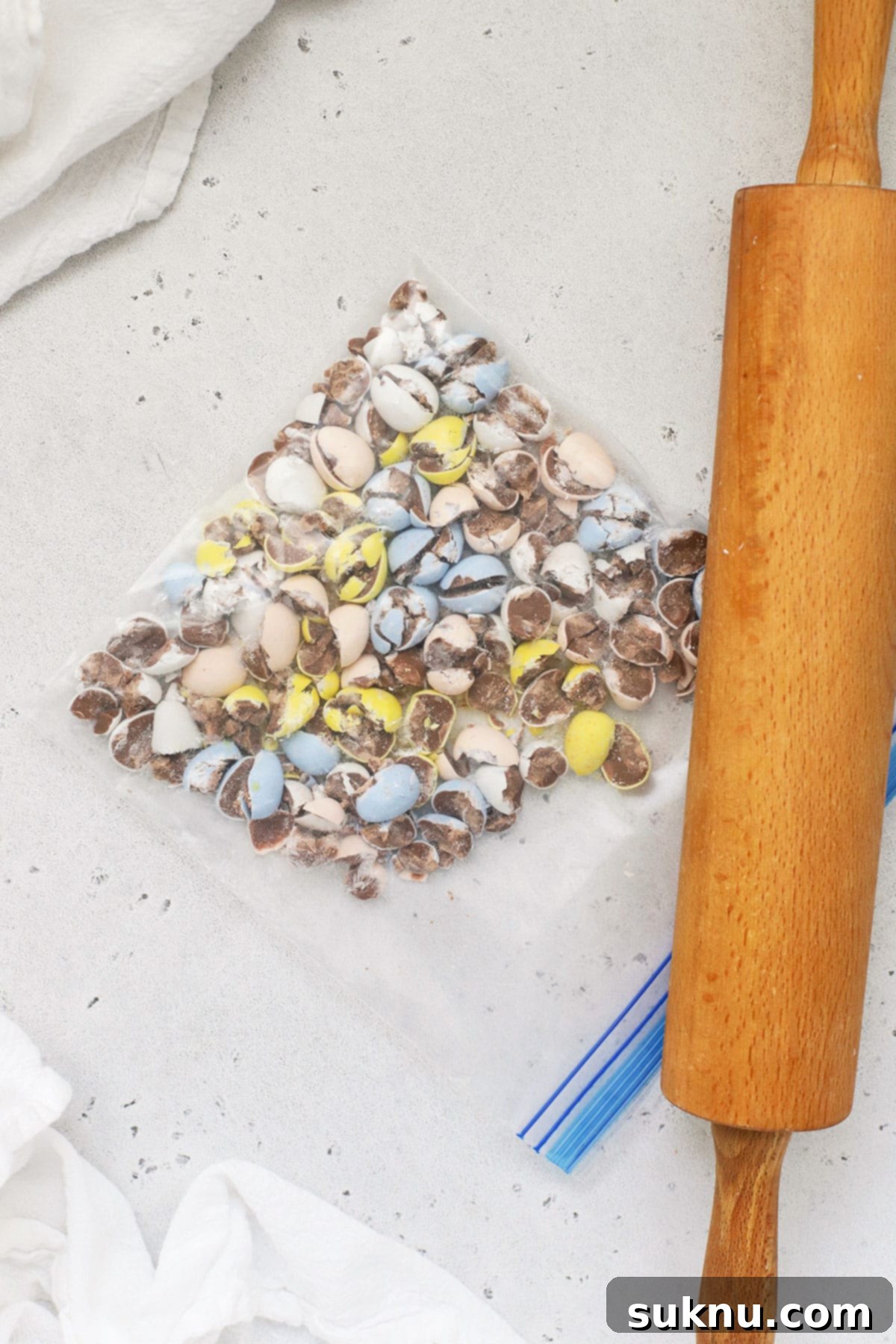
- Breaking Up the Cadbury Mini Eggs: For the best distribution and texture in your cookies, you want the Cadbury eggs in various small pieces. Chopping them with a knife can be tricky. The easiest method is to place the entire 9-ounce bag of mini eggs into a large zip-top bag, seal it, and then gently but firmly bang them with a rolling pin or a heavy bottomed pan. Aim for a mix of sizes and shapes – some finely crushed, some larger chunks – for a delightful surprise in every bite.
-
Ingredient Substitutions and Variations:
- Cadbury Mini Egg Alternatives: If Cadbury Mini Eggs are unavailable, or you prefer a different candy, pastel-colored M&M candies make an excellent substitute for these gluten-free Easter cookies. There’s no need to crush M&Ms before adding them.
- Adjusting Oat Quantity for Thinner Cookies: If you prefer a slightly thinner, crispier cookie, you can reduce the amount of gluten-free rolled oats from 3 cups (270 grams) to 2 1/2 cups (225 grams). This will result in a cookie that spreads a bit more and has a less dense, chewy interior.
- Check Your Leavening Agents: Old baking powder or baking soda can lead to flat cookies. It’s quick and easy to check if your baking soda and baking powder are fresh before you start baking.
Storage and Make-Ahead Tips
Planning ahead or want to savor your cookies longer? Here’s how to store your Gluten-Free Cadbury Mini Egg Cookies:
- At Room Temperature: Once completely cooled, store the cookies in an airtight container at room temperature for up to 3-4 days. For optimal freshness, a bread box or cookie jar works wonderfully.
- Freezing Baked Cookies: These cookies freeze beautifully! Once completely cooled, arrange them in a single layer on a baking sheet and freeze until solid (about 1-2 hours). Transfer the frozen cookies to a freezer-safe airtight container or zip-top bag, separating layers with parchment paper to prevent sticking. They can be frozen for up to 2 months. Thaw at room temperature for a quick treat.
- Freezing Cookie Dough: You can also freeze portions of the raw cookie dough. Scoop the dough into balls as directed in the recipe, then place them on a parchment-lined baking sheet and freeze until solid. Transfer the frozen dough balls to a freezer-safe bag and store for up to 2 months. When ready to bake, you can bake them directly from frozen, adding a few extra minutes to the baking time, or let them thaw slightly in the refrigerator for about 30 minutes before baking. For more detailed instructions on freezing dough, refer to our guide on how to freeze cookie dough.

More Gluten-Free Spring Treats To Try
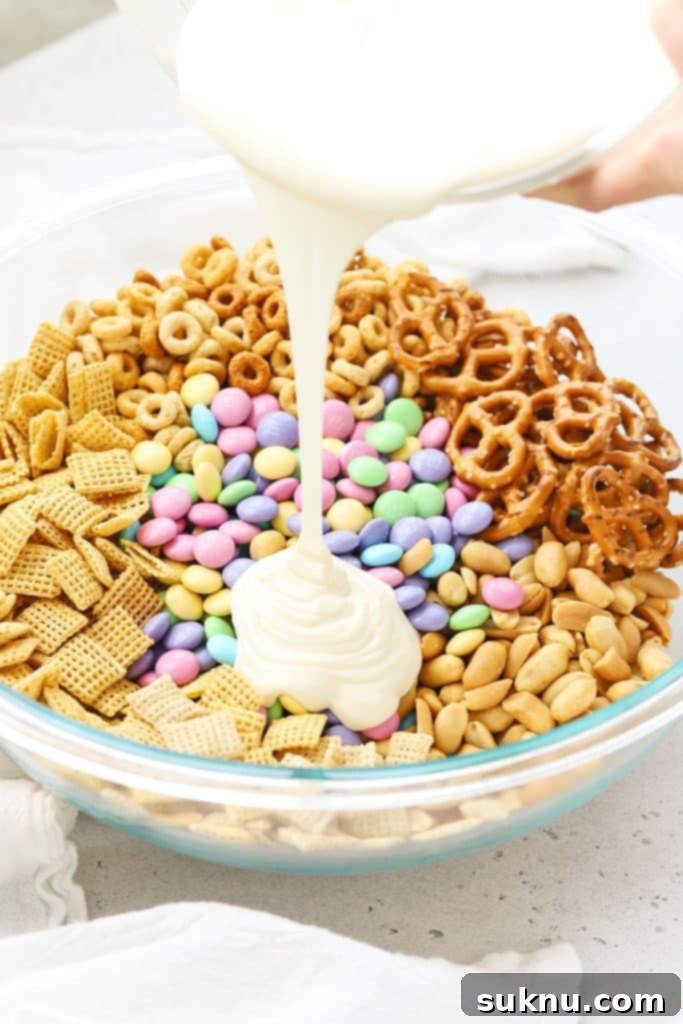
Easter Bunny Bait Chex Mix
This festive and vibrant Chex Mix is an absolute hit for spring! Loaded with sweet and salty ingredients, and coated in white chocolate, it’s perfect for snacking, gifting, or adding a pop of color to your Easter spread. Plus, it’s incredibly easy to make with the kids.
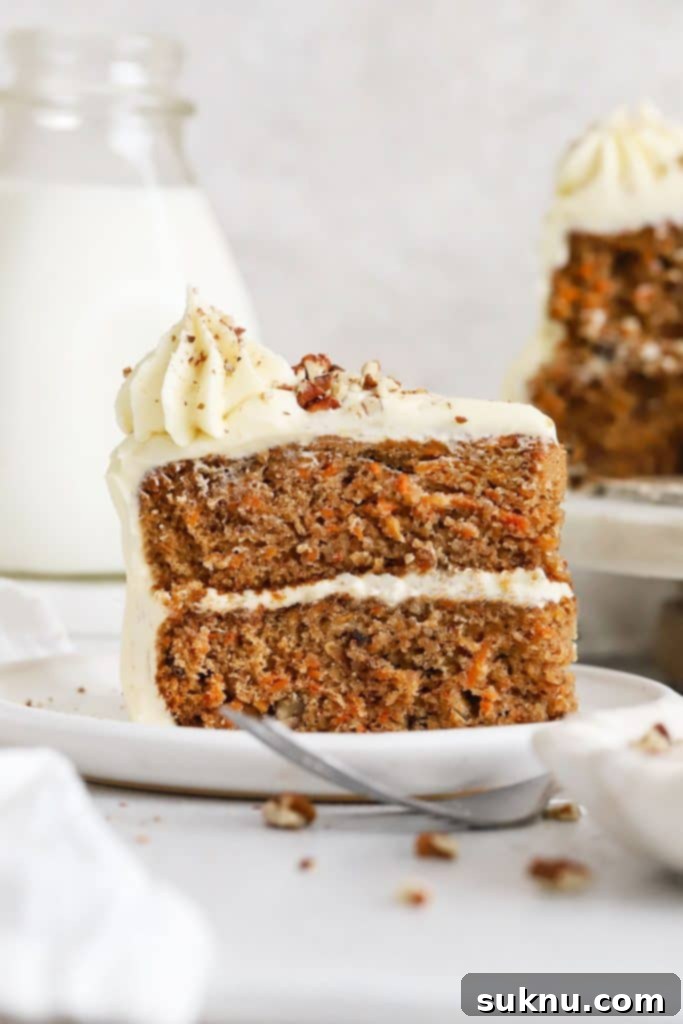
Gluten-Free Carrot Cake
No Easter celebration is complete without a classic carrot cake, and our gluten-free version is moist, spiced, and utterly delicious. Topped with a rich and tangy cream cheese frosting, it’s a showstopper dessert that everyone will adore.

Gluten-Free Lemon Curd Thumbprint Cookies
Brighten up your dessert table with these zesty and sweet lemon curd thumbprint cookies. The buttery, tender cookie base pairs perfectly with the vibrant, tangy lemon curd, making them an ideal treat for spring and summer.
Recipe Card
🌟 Did you make this recipe?
Leave a star rating below when you try our Gluten-Free Cadbury Egg Cookies recipe! We can’t wait to hear what you think!
Gluten-Free Cadbury Mini Egg Cookies Recipe

Gluten-Free Cadbury Mini Egg Cookies
5 from 2 reviews
- Author: Emily Dixon, Sweets & Thank You
- Total Time: 1 hour 15 minutes
- Yield: 26-28 Cookies
- Diet: Gluten Free
Description
Made from a chewy oatmeal cookie base with plenty of chocolate chips and Cadbury mini eggs, every single bite of these gluten-free Easter cookies is full of goodies!
(You’ll want a full 9-ounce bag of Cadbury mini eggs for these cookies. If you want to add extra garnish, you may want to pick up a second bag so you have a few more eggs to work with!)
Ingredients
- 3 cups gluten-free rolled oats (270 grams)
- 2 cups gluten-free measure-for-measure flour* (240 grams)
- 1 Tablespoon cornstarch (8 grams)
- 1 teaspoon baking soda
- 1 teaspoon baking powder
- 1/2 teaspoon kosher salt
- 1 cup butter, softened (226 grams/2 sticks)
- 1 cup brown sugar (200 grams), packed
- 1 cup granulated sugar (200 grams)
- 2 large eggs, room temperature
- 1 1/2 teaspoons vanilla extract
- 1 cup semisweet or dark chocolate chips (170 grams)
- 1 cup Cadbury milk chocolate mini eggs (190 grams), broken up*
To Top The Cookies:
- 1/4 cup additional chocolate chips
- the remaining mini eggs from a 9 oz. package (about 65 grams or 1/4 cup), broken up*
Instructions
- Break Up The Oats. Place the oats in the bowl of a food processor (or the jar of a blender) and pulse a few times to break up the oats. Ideally, you want some whole, and some broken up. This just gives the cookie the best texture. Try not to pulverize the oats into flour as this will drastically change the cookie’s texture.
Combine Dry Ingredients. In a medium bowl, combine gluten-free oats, gluten-free flour, cornstarch, baking powder, baking soda, and salt. Whisk to combine, then set aside.
Cream Butter & Sugar. In the bowl of a stand mixer (or a large bowl), combine softened butter, brown sugar, and granulated sugar. Cream together 2-3 minutes until smooth, fluffy, and lighter in texture. Scrape down the edges of the bowl.
Add Eggs & Vanilla. Next, add the eggs one at a time, followed by the vanilla extract. Mix to combine well, then scrape down the sides of the bowl again.
Mix In Dry Ingredients. Add the dry ingredients to the mixer and blend until just a few floury patches remain.
Add Chocolate Chips & 1 Cup Cadbury Eggs. Pour in chocolate chips and 1 cup of the Cadbury Eggs (reserve the rest of the Cadbury eggs for garnish). Mix until just blended.
Chill Dough 1 Hour. Cover the dough and refrigerate 1-2 hours. Do NOT skip this step, or your cookies will spread significantly more.
Preheat & Prep. When you’re about 30 minutes away from baking, preheat the oven to 350 degrees F. Line two baking sheets with parchment paper so you can alternate baking sheets with each batch.
Scoop & Roll Cookie Dough. Use a large cookie scoop to scoop 3-Tablespoon balls of cookie dough. Roll the dough smooth between your hands and place 6 cookie dough balls on a prepared baking sheet.
Bake, Finish & Cool Cookies. Bake 6 cookies at a time in the preheated oven for 10-12 minutes, or until the cookies are slightly golden brown around the edges and the centers look *just* underdone. (They’ll set more as they cool). Remove from the oven and gently shape with a round cookie cutter into perfect circles, if desired. Garnish with a few more chocolate chips and a sprinkle of Cadbury egg pieces. Let the cookies cool 1-2 minutes on the baking sheet before transferring to a wire rack to cool completely.
Repeat this process with remaining cookie dough until all cookies are baked, alternating baking sheets with each batch so you don’t put cold dough on a hot cookie sheet.
Serve & Store. Enjoy once the cookies have cooled. Store in an airtight container at room temperature 2-3 days, or freeze up to 2 months.
Notes
- Break Up The Mini Eggs. You want the Cadbury eggs in small pieces so they blend into the cookie dough better. You can break up the Cadbury mini eggs by either chopping them with a knife (trickier) or placing them in a zip-top bag and banging with a rolling pin to break them up. You want a mix of sizes and shapes, so no need to get too precious about this process.
- Gluten-Free Flour. We highly recommend King Arthur Measure-For-Measure Flour for this recipe. If you use another 1:1 blend, be sure it contains xanthan gum or the cookies won’t turn out properly.
- Measure Carefully. Metric measurements will make a BIG difference in getting the right measurements, but if you don’t have a kitchen scale, use the scoop and level method to measure the oats and flour. Spoon flour into the measuring cup, then level it with the back of a knife. (Rather than using the measuring cup to scoop flour–which packs in extra flour)
- If you want thinner cookies, you can use 2 1/2 cups oats (225 grams) instead of the full 3 cups (270 grams).
- Prep Time: 25 minutes
- Cook Time: 50 minutes
- Category: Dessert
- Method: Oven
- Cuisine: American